Symposium: Antropoloog zoekt maatschappelijke partner

Posted on August 25th, 2014 by martijn.
Categories: anthropology, Arts & culture, Headline, Notes from the Field.

Antropoloog zoekt maatschappelijke partner –

Kennisdeling buiten de muren van de universiteit –

3 september 2014

amsterdammuseum uva

Aanleiding

Er is onder antropologen een toenemende aandacht voor kennisdeling buiten de muren van de universiteit. Antropologische blogs, websites, ingezonden stukken in de krant, documentaires en tentoonstellingen, het is er allemaal. De inzet is vaak om een groter, niet-academisch publiek te bereiken. Kennisdeling (valorisatie) wordt daarbij in toenemende mate gezien als kerntaak van universiteiten en als voorwaarde gesteld door organisaties als NWO.

Tijdens het symposium ‘Antropoloog zoekt maatschappelijke partner’ wordt gezamenlijk gekeken naar effectieve en innovatieve methoden om antropologische inzichten te delen met een breder publiek. Wat zijn de kansen? En wat levert het op?

Lokatie: Amsterdam Museum, Kalverstraat 92, Auditorium

Datum en tijd: 3 september 2014, 10.00-16.00 uur

Panel I: kennis delen via tentoonstellingen
Museale presentaties lenen zich goed voor het delen van antropologische kennis. Samenwerking van antropologen en musea kan stimuleren dat mensen elkaar ontmoeten, in gesprek gaan, reflecteren, uitwisselen, et cetera. Vraagstukken daarbij zijn:

  • Wie is het publiek? Wat weet het publiek? Wat wil het publiek graag weten?
  • Hoe is de samenwerking met participanten? In hoeverre is het museum een platform, een podium, een (neutrale) ontmoetingsplaats? Wie zijn de stakeholders (bijvoorbeeld politici, beleidsmakers, kunstenaars)?

Panel II: communiceren via de (sociale) media
Sociale media zoals Facebook en Twitter bieden nieuwe mogelijkheden voor antropologen om in contact te staan met de participanten in hun onderzoek en met de buitenwereld in het algemeen. Vraagstukken daarbij zijn:

  • De vluchtigheid van sociale media: hoe verhoudt actualiteit zich tot kwaliteit, laagdrempeligheid zich tot diepgang, serieus zich tot leuk en luchtig, weetjes/anekdotische informatie zich tot kennisdeling? Voor wie doe je het? Wie is je publiek? Wat is de beste toon om je publiek aan te spreken? Likes and shares: hoe meet je succes?

Toegang gratis, aanmelding verplicht: rsvp@amsterdammuseum.nl o.v.v. van aanmelding symposium.

Programma
10.00-10.15 inloop + koffie/thee

10.15-10.30 opening symposium door Paul Spies, directeur Amsterdam Museum
10.30-12.00 Panel I – Tentoonstellingen – o.l.v. Martijn de Koning
Bekeerd, moslim worden – moslim zijn

Vanessa Vroon-Najem (UvA-AISSR)
Saskia Aukema (Zazquia Fotografie)
Kabra masker

Annemarie de Wildt (Amsterdam Museum)
Markus Balkenhol (Meertens Instituut/Imagine IC)
Chicks, Kicks & Glory
Jasmijn Rana (FU-Berlin)
Alia Azzouzi (communicatie- & tentoonstellingsadviseur)

12.00-12.45 Bezichtiging expositie Bekeerd en Kabra masker
12.45-13.30 Lunch

13.30-15.00 Panel II Sociale Media- o.l.v. Jasmijn Rana
Martijn de Koning – Communiceren via Facebook (UvA-AISSR/RU) (Closer Blog)
Linda Duits – Communiceren via Twitter (Diep/ICON) (@lalalalinder)
Lenie Brouwer – Communiceren via blogs (VU) (Standplaatswereld.nl)

15.00-16.00 Vragen & discussie o.l.v. Alia Azzouzi
16.00-17.00 Napraten in museumcafé Mokum


0 comments.

Anthropology @Amsterdam: Four PhD candidates Muslim Marriages project

Posted on June 14th, 2014 by martijn.
Categories: anthropology, Gender, Kinship & Marriage Issues, Marriage.

Four PhD candidates in Anthropology or closely related discipline

Projectname Muslim Marriages
Hours 38.0 hours per week
Salary € 2083 – € 2664
Education University Graduate
Deadline 1 July 2014

Job description

The AISSR and the Department of Sociology and Anthropology at the University of Amsterdam are looking for PhD candidates who will participate in the ERC-funded research project ‘Problematizing “Muslim Marriages”: Ambiguities and Contestations’, directed by Prof. Dr. Annelies Moors.

This ethnographic project employs the term ‘Muslim marriages’ in a broad sense, as it emerges in public debate and as a form of marriage practice that at least one of the parties concerned considers Islamically valid. It investigates both when and how particular marriage forms have become subject to public debate and what kinds of new (or new uses of old) marriage forms and wedding celebrations are emerging in everyday life. Depending on context, this includes, for instance, unregistered, visiting, temporary, interreligious, transnational, and polygamous marriages. Who are participating in these marriage forms, and how are they performed? Who are able to shape these new forms? How and by whom are such marriages authenticated, authorized or contested as Muslim marriages? Under which conditions do particular forms of Muslim marriages emerge and become licit while other forms become devalued and marginalized? The wider question this project addresses is what economic, political, religious and cultural work these new Muslim marriages do. What subjectivities and socialities do they produce? How do they shape economic relations, group boundaries, religious ethics, and cultural forms? Theoretically, this project intends to contribute to fields such as: Islam, public debate, legal practices, and everyday life; globalization, marriage and reproduction; the family, economy, and intimacy; the body, gender, and sexuality; religion, ethics and aesthetics.

PhD candidates will be based in Amsterdam at the AISSR and will conduct longer term ethnographic fieldwork, preferably in Indonesia, Lebanon, Morocco, the Gulf States and the Balkans. Candidates with strong arguments to do fieldwork elsewhere may also apply.

Tasks

  • Conduct ethnographic field research;
  • Write and complete a PhD dissertation within four years and submit articles to refereed journals or edited volumes;
  • Collaborate with supervisors and peers on research and publications;
  • Participate in conferences, workshops, seminars and other scholarly activities;
  • Participate in the AISSR PhD programme;
  • 10% teaching (contingent upon availability).

Requirements

Phd Candidates should have the following credentials:

  • A completed MA degree in anthropology or closely related discipline (such as Muslim family law);
  • Relevant ethnographic fieldwork experience, ideally in the fieldwork locations and/or related to the research themes;
  • Knowledge of current theoretical and societal debates on ‘Muslim marriages’;
  • Excellent written and spoken English and knowledge of the language(s) needed for fieldwork;
  • Ability and interest to work collegially with the other members of the research team.

Conditions of employment

The full-time appointments will be for a period of four years (12 months plus a further 36 months contingent on a satisfactory performance during the first year), starting 1 September 2014.

The gross monthly salary will be €2,083 in the first year and €2,664 in the fourth year, based on a full-time position of 38 hours per week, plus 8% holiday allowance and 8,3% end-of- year allowance, in conformity with the Collective Labour Agreement of Dutch Universities.

A part-time position may be discussed, but the PhD thesis needs to be completed before 1/9/2018.

Organisation

The Faculty of Social and Behavioural Sciences (FMG) is the largest social-science educational and research institution in the Netherlands. The Faculty serves around 9,000 students in numerous Bachelor’s and Master’s programmes in Political Science, Sociology, Anthropology, Communication Science, Psychology, Social Geography, International Development Studies and Educational Sciences. The academic staff is employed in education as well as research. There are over 1,200 employees at the Faculty, located in a number of buildings in the centre of Amsterdam.

The Department of Sociology and Anthropology is one of the Departments in the FMG. Research and education are carried out by special institutes. Research takes place under the aegis of the Amsterdam Institute for Social Science Research (AISSR), a multidisciplinary research institute, the biggest one of its kind in the Netherlands and possibly in Europe. The broad scope and pluralism of our education and research programmes are inspired by and reflect a strong degree of internationalisation.

Job application

Applications must include, in a single PDF file:

  • A motivation letter (maximum 400 words);
  • A preliminary proposal including research questions, research location, theoretical approaches and methodologies, and most important literature (maximum 1,000 words);
  • A full curriculum vitae;
  • Names and contact details of three references;
  • In a separate PDF file: two writing samples (thesis and/or essay or and/or article) which provide evidence of ethnographic fieldwork experience and ability to theorize.

All correspondence will be in English. Applications must be sent as attachments to application-soca-fmg@uva.nl before 1 July 2014. The subject of the message and the attachment must consist of the text “MUSMAR + applicant’s last name”, the file with the writing samples needs to have ‘sample’ added to the last name.

No agencies please

Additional information

For more information please contact the principal investigator:

For specifics on the Globalizing Culture programme group (institutional location of the project), please visit: aissr.uva.nl/programme-groups/item/globalizing-culture.html

Apply Now!

application-soca-fmg@uva.nl

0 comments.

Integere Antropologie – Congres over antropologie, integriteit en ethiek

Posted on June 11th, 2014 by martijn.
Categories: anthropology, Method.

Dit jaar organisteert de Antropologen Beroepsvereniging op vrijdag 13 juni 2014 een conferentie in het Tropenmuseum in Amsterdam voor antropologen in Nederland.

Centraal tijdens de ABv conferentie staan actuele ethische kwesties. De dag wordt geopend met een lezing van Tobias Kelly, University of Edinburgh. Hij houdt zich bezig met politieke antropologie, rechtsantropologie en zal tijdens zijn lezing ingaan op zijn huidige onderzoek naar de notie van gewetensvrijheid.

Daarna zal tijdens verschillende panels ingegaan worden op vragen als: ‘wat zijn de nieuwe ethische vraagstukken in deze tijd van sociale media?’, ‘hoe gaan onderzoekers om met de eis voor betere verificatie en centrale opslag van onderzoeksgegevens?’

Verder zal er aandacht zijn voor kwesties als samenwerking van antropologen met commerciële partners en de ethische dilemma’s die een antropoloog tegenkomt gedurende onderzoek binnen een gepolitiseerde context.

Kom luisteren en discussiëer mee over antropologie, integriteit en ethiek.

Aanmelden kan via:

secretaris@antropologen.nl

Dit e-mailadres wordt beveiligd tegen spambots. JavaScript dient ingeschakeld te zijn om het te bekijken.

De toegangsprijs voor de dag is inclusief toegang tot het museum, koffie/thee, lunch en de borrel na afloop.

Studentleden: 15 euro
Overige leden: 25 euro

Niet-leden studenten: 30 euro
Overige niet-leden: 45 euro

Vanwege het beperkte aantal plaatsen, is het aan te raden om vooraf te registreren.

Programma Conferentie “Integere Antropologie” – Antropologen.nl

9.00-9.30
Registratie

9.30-9.35
Opening Thijl Sunier (VU)

9.35-10.30
Keynote Tobias Kelly (University of Edinburgh)
The Integrity of Conscience? Commitments, Doubts and Pacifism.

10.30-11.00
Koffie en thee

11.00-12.30
Panel 1 & Panel 2

Panel 1
Wie controleert de antropoloog? (I)

Een gesprek over fraude, integriteit en antropologie.
Hoe wordt er binnen de discipline gedacht over fraude, integriteit en controleerbaarheid?

Voorzitter: Anouk de Koning (Radboud)

Gespreksleider: Rivke Jaffe (UvA)

Sprekers:

  • Janneke Verheijen (Radboud) vertelt waarom ze al haar veldwerkdata online heeft gezet.
  • Sjaak van der Geest (UvA) doet een boekje open over zijn eigen ‘zonden’ om zo de discussie over integriteit binnen antropologie op scherp te zetten.
  • Henk Driessen (Radboud) gaat in op de kwesties informed consent, small talk en de ‘fly on the wall’ positie. Wat voor consequenties heeft dit voor het denken over integriteit in antropologie?
  • Maja Lovrenovic (VU) doet zelf onderzoek in het gebied waar Mart Bax werkte. Zij reflecteert op de implicaties van Mart Bax’ fraude voor antropologie.

Panel 2
Veldwerk, sociale media en ethiek

Facebook, forumdiscussies, weblogs en video’s zijn tegenwoordig een vast onderdeel van antropologisch veldwerk. Deze nieuwe communicatiemiddelen roepen ook nieuwe ethische vragen op over de anonimiteit van respondenten, de relatie tussen onderzoeker en onderzochten en over wat privé en publiek is. In dit panel zullen drie antropologen vanuit de praktijk van hun veldwerk verschillende ethische dilemma’s ter discussie stellen.

Voorzitter: Lenie Brouwer (VU)

Sprekers:

  • Marloes Hamelinck (UU): moslimvrouwen en sociale media op Zanzibar. Hamelinck heeft onderzoek gedaan naar het sociaal media gebruik van moslimvrouwen op Zanzibar en hoe dit gebruik in relatie staat tot morele kwesties. Zij richt zich vooral op de rol van religie in het dagelijks leven en op het gebruik van onder andere Facebook. Zij vraagt zich af hoe je Facebook en online discussies als onderzoeksmateriaal kunt gebruiken. Hoe kun je de anonimiteit van informanten waarborgen? En hoe informeer je informanten?
  • Anke Tonnaer (Radboud): reisweblobgs en toerisme. Tonnaer houdt zich bezig met toerisme en vraagt zich af wat te doen met alle reisblogs die mensen op het web plaatsen. Hoe kun je hier op een ethisch verantwoorde manier mee omgaan?
  • Fridus Steijlen (KITLV): video’s en het dagelijks leven in Indonesië. Steijlen houdt zich al jaren bezig met het filmen van het dagelijks leven op bepaalde plekken in Indonesie. Hij loopt hierbij tegen vragen aan die betrekking hebben op de privacy van de mensen, zowel in het privé als publieke domein. En hoe open en toegankelijk mag en kan het materiaal zijn? Tenslotte, een belangrijk punt van aandacht is dat privacy altijd cultureel bepaald is.

12.30-13.30
Lunch

13.30-15.00
Panel 3 & Panel 4

Panel 3
Wie controleert de antropoloog? (II)
Een gesprek over facultaire richtlijnen en antropologische tactieken.

Wat voor gevolgen hebben diverse integriteitsrichtlijnen en -protocollen voor de verschillende antropologie-afdelingen en hoe gaan antropologen hiermee om?

Voorzitter: Thijl Sunier (VU)

Sprekers:

  • Katrien Klep (Utrecht)
  • Toon van Meijl (Radboud)
  • Overige sprekers worden nog bekend gemaakt.

Panel 4
Veranderend werkveld, nieuwe ethische vragen.

Wat voor ethische kwesties komen naar voren in de nieuwe velden waarin antropologen werkzaam zijn? Wat is, bijvoorbeeld, de ethische manier om samen te werken met mijnbouwbedrijven? En wat voor ethische dilemma’s kom je tegen als organisatieantropoloog?

Voorzitter: Roxane Beumer (Focus)

Sprekers:

  • Sabine Luning (Unversiteit Leiden)
  • Jacqueline Franssens (Culture at Work)
  • Siela Ardjosemito-Jethoe is cultureel antropoloog/sociologisch onderzoeker en docent aan de Haagse Hogeschool en actief met eigen adviesbureau DieVersheid. Vanuit DieVersheid focust zij zich op diversiteitsvraagstukken in de zorg-, welzijn- en educatiesector. Zij gaat in haar presentatie in op haar etnografische onderzoek naar gender in de multiculturele klas van vandaag en vertelt over haar worsteling met haar rol als onderzoeker vs haar rol als docent.
  • Wim Manahutu heeft als directeur van het Moluks Historisch Museum met ethiek en de dilemma’s van (antropologisch) onderzoek en de representatie en zelf-representatie van culturele/etnische groepen te maken gehad.
  • Hij bespreekt hoe de erfgoedsector zich verhoudt tot ontwikkelingen in de maatschappij.

15.00-15.30
Koffie en thee

15.30-17.00
Panel 5 & Panel 6

Panel 5
Politics, ethics and fieldwork.

Welke ethische kwesties kom je tegen als je je als antropoloog met studying-up bezig houdt, of in een politiek mijnenveld begeeft? In dit panel bespreken we de ethische dilemma’s in onderzoek naar Nederlandse salafisten, game farms in Zuidelijk Afrika, en in de relatie met een conservatieve politica in Mexico.

Voorzitter: Anouk de Koning (Radboud)

Sprekers:

  • Martijn de Koning (UvA/Radboud)

Between a game of football and Jihadi Da’wa in the streets of The Hague — The limits of online and offline fieldwork with militant networks.

“In 2012 I started a new research project together with two colleagues. The Public Islamic Mission (PIM) project focused on groups of Muslim militants who affiliated themselves with the ideology of Al Qaeda and, in various ways, showed support for the implementation of sharia laws in the countries where they were based: the Netherlands, Belgium and Germany. In this paper I will concentrate on my research among the Dutch groups and take up three issues: how does a new socio-political context create new strategic and ethical questions? What are the consequences of dealing with groups that many people in society regard as repulsive and dangerous? Where and how to draw the boundaries of participant observation? I will in particular focus on the relation between strategic, ethical and political issues. The paper is based on online and offline fieldwork.”

  • Marja Spierenburg (VU/CERES)

How multi-stakeholder is your multi-stakeholder workshop? Politics and power in stakeholder engagement in research.

“This presentation addresses the assumptions underlying stakeholder engagement in the planning and conducting of research, as well as in the dissemination of research findings. Funding agencies increasingly demand such engagement, assuming that multi-stakeholder platforms are neutral spaces for negotiation about research questions and the translation of research findings in policy-recommendations. Based on experiences with a research programme investigating the social impacts of conversions of farms to private wildlife conservation areas in South Africa, this presentation discusses the promises and pitfalls of stakeholder engagement in research. The presentation focuses on the power relations between the major stakeholders involved – (mainly white) farm owners and managers; farm workers and dwellers; NGOs representing farm dwellers; and government officials – and their differential access to the policy-making arena. The presentation furthermore addresses how these different groups tried to influence both the research questions as well as the outcomes of the research.”

  • Tine Davids (Radboud)

Trying to be a vulnerable observer

“In this article, I seek to further explore my engagements with Mexican female politicians. This encounter with these – in particular right-wing – women has not only led to me having a different understanding of agency, but has also caused me to critically examine the practice of conducting feminist research. Can feminist solidarity be encountered and critical standards met in research on conservative women? What kind of engagement or common ground can be found in this inter-subjective and transnational space, connecting myself as researcher to the Mexican women under study?”

Discussant: Tobias Kelly (University of Edinburgh)

Panel 6
LASSA panel: Ethische dillema’s onder studenten op veldwerk

Studenten komen tijdens hun studie verschillende ethische dilemma’s tegen, met name tijdens het veldwerk. Deze dilemma’s zijn ook nog eens erg divers. Waar ligt de grens tussen informant en vriendschap? Hoe ga ik om met mijn data? In hoeverre pas ik mijn onderzoek aan aan de wensen van de organisatie waarbij ik onderzoek doe? Tijdens het studentenpanel gaan we verder in op dergelijke vragen, die steeds belangrijker worden voor studenten.

Voorzitter: Jelte Verberne (Utrecht)

Sprekers:

  • Renske den Uil (VU)
  • Maartje van der Zedde (UvA)
  • Anne de Jonghe (UU)

17.00-17.15
Afsluiting door Ton Salman (VU)

17.15
Borrel

Kom luisteren en discussieer mee over antropologie, integriteit en ethiek. Aanmelden kan via

secretaris@antropologen.nl

Dit e-mailadres wordt beveiligd tegen spambots. JavaScript dient ingeschakeld te zijn om het te bekijken.

. In verband met de catering verzoeken wij iedereen zich voor 6 juni aan te melden.

De toegangsprijs voor de dag is inclusief toegang tot het museum, koffie/thee, lunch en de borrel na afloop.

  • Studentleden: 15 euro
  • Overige leden: 25 euro
  • Niet-leden studenten: 30 euro
  • Overige niet-leden: 45 euro

Vanwege het beperkte aantal plaatsen, is het aan te raden om vooraf te registreren.


N.B. Het is mogelijk ter plekke lid te worden van het ABv en de ledenprijs te betalen. Lidmaatschap voor studenten is 25 euro, voor anderen 45 euro per jaar. Leden krijgen twee keer per jaar het antropologisch tijdschrift Etnofoor thuisgestuurd.

0 comments.

In the forest of concepts – Thoughts and questions about racism and secularism in relation to Islam

Posted on April 26th, 2014 by martijn.
Categories: anthropology, islamophobia, Multiculti Issues, Notes from the Field.

I have been thinking about the relation between secularism and racism. Whereas on my blog I pay a lot of attention to the issue of race, in my articles for journals and edited volumes I think I mistakenly left out the issue of racism in most of my analysis of contemporary politics regarding Muslims in the Netherlands. And I still am, so this is just a thinking-out-loud-blog.

The Colony

When we look at the time when the Netherlands colonized Indonesia (back then Dutch East-Indies) we can find a remarkable uneven working of secularism. Dutch scholar on Islam and (albeit circumspect for many) Snoeck Hurgronje argued that Islam and Muslims needed to be modernized which at the time by definition meant following the European example. Islamic rebellious thought should be repressed while Islam and politics had to be separated as (according to Snouck Hurgronje) the entanglement of religion and politics was a central feature of Islam. In particular the school system had to acculturate the Dutch East-Indies subjects with the correct secular Dutch values.

At the same in the Netherlands the political elite was establishing the religious pillars allowing a certain degree of recognition and autonomy to religious circles while at the same time being able to monitor and regulate religious differences and inequalities; something that was probably most clear in the sphere of education where catholic and protestant schools received state funding. In the colony however education was used to regulate unruly colonial subjects and to teach them the superior Dutch culture whereby the Dutch state attempted to secularize religious differences and to repress politico-religious thought.

Note also the distinction that was being made between the Islamic nature of the East Indies (seen as non-political folk Islam) which needed modernization (meaning secularisation and education) on the one side and the fear for a violent Islam (thought of as originating in the Middle East) which needed to be banned in order not to influence the people of the East-Indies.

But there was another relation between secularism and colonization as well. An important category of people invented by the Dutch state was ‘Europeans’. A crucial criterion for being European was ‘originating from Europe’ but there is more to that. First of all it is male centred. The milieu and upbringing of a person that defined Europeanness were dependent on the husband’s position. Only ancestry in the male line mattered and women followed their husband’s legal status. When a native woman married a European man, she became European. When a European woman married a native man, she became native.

Origin did not suffice in defining Europeanness and the Dutch law therefore included the criterion of family law. People from elsewhere who in their country of birth were subjected to the same principles as Dutch family law, were categorized as European.  This meant that immigrants from outside Europe could be included as well and in fact meant the inclusion of a religious criterion into the law as the regulation referred to what one saw as Christian principles such as monogamy and privileging children who were born in a marriage between one man and one woman. In this way religion, ic Christianity, became an important marker of Europeanness even though the law did not explicitly mention those principles as Christian. Through this criterion of family law also white settler colonies outside Europe (such as US, Canada, the Afrikaners and Australia) could be included as well as the Armenians who were regarded as Europeans because of their Christian faith and social position.

Secularism, culturism and securitization

We see here how class, religion, secularism, skin color determined if and how people could be included or excluded in the category of European. Later the Dutch state created a category called social Dutch which included white or light-skinned Christians who lived in the Dutch sphere of influence in the Dutch East Indies.

If we turn then at the current politics in Europe regarding Muslims, minorities and migrants we can see a particular mixture of secularism, racism, securitization and culturism. The Muslim, who is usually the centre of these debates, features in the debates as a sort of icon detached from daily life and concrete individual lives as the dangerous, dis-integrated and intolerable migrant. Whereas in the past racism had a regulatory function by identifying the other and what was tolerable or not, nowadays secularism, securitization and culturism create the problem categories that identify what is tolerable. This pushes the issue of race and racism to the background but one can wonder if the current regulations and social imaginaries concerning Muslims are not shaped by the colonial and racist regulations and arrangements of the past while at the same time the issue of ‘race’ is dismissed through redefining race as solely based upon fenotypical features excluding culture and religion and by insisting that we are post-racial.

In the past in the Netherlands it was suggested that Article 23 on the freedom of education of the Dutch constitution should be removed in order to prevent (more) state funded Islamic schools and to promote as such the integration of Muslim minorities. In the case of the Swiss minaret ban and the French and Belgian headscarf bans, the insistence in the debates that diversity should be limited and boundaries should be set for tolerance and superstitions and sensibilities deriving from that should be mocked, the pleas for a liberal Islam, are often times seen as necessary not only for securing cohesion against the threat of terror, unruly diversity and the threat to women but also as civilizing missions for tolerance and inclusion. But one may wonder if these are not just a re-appropriation of past (racist, colonial) strategies, missions and regulations. Moreover, just like in colonial times being Christian entered through the backdoor as a criterion for being European (defined as white), the current emphasis on Europe and the Netherlands in having a so-called Judeo-Christian heritage while at the same time claiming ‘we are a secular country’ shows I think an interesting, subtle relation between secularism, culturism and racism.

How to move on?

I think any analysis of the position of Muslims in relation to secularism and securitization should take into account the issue of racism (and Islamophobia) but I don’t have a clear idea as of yet how to do that. In many publications dealing with securitization, culturalism or secularism, racism is absent and occasionally dismissed as incorrect, misleading and unhelpful. Nevertheless, I think it is clear that the current emphasis on secular values, threats to social cohesion and the need for Muslims to integrate is not so much a neutral post-racial mode of regulating people, it is the contemporary mode of racism. At the same time secularism, securitization and cultural integration provide the focus on Muslims with a self-evident, neutral and de-politicized mask and provides elites with the language to disconnect the Muslim issue from racism which in contemporary politics and debate is now reduced to a biological notion and a phenomenon of the past (holocaust and slavery). Furthermore it enables the dominant, white, majority to claim its own identity, and customs and values that are neutral and universal at the same time and which is under siege from intolerant and intolerable migrants. Culturism, secularism and securitization are not separable from race, do not present a break with racism but are the current racist strategies to regulate people, provide the language for racist identity politics and the mask that gives the dominant group the self image as the innocent and neutral norm.

Not including racism in the analysis means not questioning the (various) ways Muslims are essentialized in reducing them to the dangerous, over-religious, intolerant migrant and deconnects this issue from the Dutch (European) history of racism and the politics of inclusion and exclusion. Does it really matter if people are perceived as biologically/genetically incompatible with the purity and viability of the race nation or as incompatible through a cultural, secularist or security lens? When the states, politicians and opinion leaders propose a return to national values as the ‘leitkultur’ as a response to the perceived threat to social cohesion of society how is that different from the fear that the integrity of a race is threatened? Nevertheless, I have to revisit the issues of racism and secularism more thoroughly and think about, for how example, how they overlap and how they are separate strategies for regulating people. Also for example how are Islamophobia and securitization of Islam different modes of managing and talking about Islam but also have some common features. If racism is articulated in relation to Muslims through the language of secularism then what are the possibilities for Muslims for empowerment, activism and so on? If there are (and I think so) historical parallels between the management of religion and regulation people in the colonies and in current society, what are the similarities and differences and what are the consequences?

If by now you think he is lost and confused in a forest of concepts and societal developments, you are correct. That is what happens sometimes when you revisit and question your own work.

2 comments.

Forces that Bind or Divide

Posted on February 12th, 2014 by martijn.
Categories: Activism, anthropology, Headline, My Research, Notes from the Field, Public Islam.

I’m very happy announce my new project: Forces that Bind or Divide.

Conflicts related to the public presence and the representation of Islam have had an enormous impact on European societies over the past decades. Whereas most research considers Muslims as the object of integration policies, this proposal focuses on Muslims as active participants and investigates how their interventions produce ties that bind or divide (amongst and between Muslims and non-Muslims). Have such interventions contributed to development of a Muslim public sphere? To what extent and along which lines is this public sphere fractured? How does such a Muslim public intersect with other religious and non-religious publics? In short, what transformations have taken place in the binding or dividing force of Islam in the Netherlands?

To answer these questions, this proposal does not start with categorizing Muslims (in terms of ethnicity, religious conviction and so on), but sets out with mapping the variety of positions Muslims, and Muslim women in particular, have taken up in particular debates, both in terms of the substance of their interventions and with reference to their styles of presentation and the impact of particular forms of mediation. The broader question it addresses is whether and how such Muslim interventions and their societal effects are specific to the Dutch context or an expression of a far wider European or even global trends, by employing a historical, comparative and transnational perspective.

In this project I try to take up these questions together with my colleagues Annelies Moors, Sarah Bracke and Fouzia Outmany (PhD). The how, when, and what you can find on my blog HERE or on the blog that is dedicated to this project: ACT? – Inspiration, Intervention, Information.

2 comments.

Empire & Saving Muslim Women?

Posted on January 26th, 2014 by martijn.
Categories: Activism, anthropology, Gender, Kinship & Marriage Issues, Important Publications, islamophobia, Multiculti Issues.

Lila Abu-Lughod is professor of anthropology and women’s studies and director of the Middle East Institute at Columbia University in New York. In 2002 she published an article in the academic journal American Anthropologist: Do Muslim Women Really Need Saving? Anthropological Reflections on Cultural Relativism and Its Others. In this article she explores the ethics of the ‘War on Terror’ and how anthropology can contribute to a critical interrogation on the justification for the American intervention in Afghanistan in terms of liberating, or saving, Afghan women. Her article is a plea for a serious critical appreciation of differences among women in the world as the products of different histories, expressions of different circumstances, and manifestations of differently structured desires and tries to answer the implications for working together in changing their lives.

In her recently published book, Do Muslim Women Need Saving?, she presents the result of her attempt to deconstruct the popular often stereotyped images about Muslim women coming about in reports on honor killings, abuse, and (as criticized by her) in the propaganda of FEMEN with the complexity of the lives of women she met during her research. In a recent article, responding the Femen controversy about Topless Jihad and the counter-responses by Muslim women, she wrote for the National she criticized the assumption that muslim are oppressed:

Topless protests raise the question: Who can speak for Muslim women? | The National

his assumption makes everything from banning forms of dress to hysteria about “Sharia” arbitration courts appear rational. It makes politicians and feminists more interested in a piece of clothing than the women who wear it.

The photographs posted by these visibly Muslim women in their counter-protest raise some awkward questions. Who speaks for Muslim women? How did “freedom” and “choice” come to be the key terms in the debates about Muslim women’s rights? And how did Islam come to be blamed when a simple look around would confirm that Muslim women’s lives, political views and social positions are so diverse?

The problems they face are clearly shaped by many factors besides Islam, which itself is a constantly changing and contested tradition.

There is a long history of negative western representations of women in the “Orient”. Popular media have been breathing new life into these images ever since liberating the women of Afghanistan was offered as a rationale for military intervention. In 2001, I was suspicious of this justification for war, a justification that former first lady Laura Bush along with former secretary of state Hillary Clinton resuscitated last week in the face of the dismal situation in Afghanistan.

As an anthropologist who had studied and written about women and gender politics in the Muslim world for 20 years, I could not make sense then of the gap between what I was seeing in the media and what I knew from experience. I wondered which Muslim women were imagined as the objects of such humanitarian concern. Could one lump together refugees begging on the streets of Beirut with prime ministers of populous Muslim countries?

In the next videos she discusses her book:
You need to a flashplayer enabled browser to view this YouTube video

See also the New York Times Read Around Video: HERE.

In Time Magazine an excerpt of her book:

Lila Abu-Lughod: Do Muslim Women Need Saving? | TIME.com

A language of rights cannot really capture the complications of lives actually lived. If we were to consider the quandaries of a young woman in rural Egypt as she tries to make choices about who to marry or how she will make a good life for her children in trying circumstances, perhaps we would realize that we all work within constraints. It does not do justice to anyone to view her life only in terms of rights or that loaded term, freedom. These are not the terms in which we understand our own lives, born into families we did not choose, finding our way into what might fulfill us in life, constrained by failing economies, subject to the consumer capitalism, and making moral mistakes we must live with.

See also the Daily Beast

I think the book is timely and necessary addition to ongoing debates on gender, Muslim women, Islam, feminism and imperialism.

0 comments.

Empire & Saving Muslim Women?

Posted on January 26th, 2014 by martijn.
Categories: Activism, anthropology, Gender, Kinship & Marriage Issues, Important Publications, islamophobia, Multiculti Issues.

Lila Abu-Lughod is professor of anthropology and women’s studies and director of the Middle East Institute at Columbia University in New York. In 2002 she published an article in the academic journal American Anthropologist: Do Muslim Women Really Need Saving? Anthropological Reflections on Cultural Relativism and Its Others. In this article she explores the ethics of the ‘War on Terror’ and how anthropology can contribute to a critical interrogation on the justification for the American intervention in Afghanistan in terms of liberating, or saving, Afghan women. Her article is a plea for a serious critical appreciation of differences among women in the world as the products of different histories, expressions of different circumstances, and manifestations of differently structured desires and tries to answer the implications for working together in changing their lives.

In her recently published book, Do Muslim Women Need Saving?, she presents the result of her attempt to deconstruct the popular often stereotyped images about Muslim women coming about in reports on honor killings, abuse, and (as criticized by her) in the propaganda of FEMEN with the complexity of the lives of women she met during her research. In a recent article, responding the Femen controversy about Topless Jihad and the counter-responses by Muslim women, she wrote for the National she criticized the assumption that muslim are oppressed:

Topless protests raise the question: Who can speak for Muslim women? | The National

his assumption makes everything from banning forms of dress to hysteria about “Sharia” arbitration courts appear rational. It makes politicians and feminists more interested in a piece of clothing than the women who wear it.

The photographs posted by these visibly Muslim women in their counter-protest raise some awkward questions. Who speaks for Muslim women? How did “freedom” and “choice” come to be the key terms in the debates about Muslim women’s rights? And how did Islam come to be blamed when a simple look around would confirm that Muslim women’s lives, political views and social positions are so diverse?

The problems they face are clearly shaped by many factors besides Islam, which itself is a constantly changing and contested tradition.

There is a long history of negative western representations of women in the “Orient”. Popular media have been breathing new life into these images ever since liberating the women of Afghanistan was offered as a rationale for military intervention. In 2001, I was suspicious of this justification for war, a justification that former first lady Laura Bush along with former secretary of state Hillary Clinton resuscitated last week in the face of the dismal situation in Afghanistan.

As an anthropologist who had studied and written about women and gender politics in the Muslim world for 20 years, I could not make sense then of the gap between what I was seeing in the media and what I knew from experience. I wondered which Muslim women were imagined as the objects of such humanitarian concern. Could one lump together refugees begging on the streets of Beirut with prime ministers of populous Muslim countries?

In the next videos she discusses her book:
You need to a flashplayer enabled browser to view this YouTube video

See also the New York Times Read Around Video: HERE.

In Time Magazine an excerpt of her book:

Lila Abu-Lughod: Do Muslim Women Need Saving? | TIME.com

A language of rights cannot really capture the complications of lives actually lived. If we were to consider the quandaries of a young woman in rural Egypt as she tries to make choices about who to marry or how she will make a good life for her children in trying circumstances, perhaps we would realize that we all work within constraints. It does not do justice to anyone to view her life only in terms of rights or that loaded term, freedom. These are not the terms in which we understand our own lives, born into families we did not choose, finding our way into what might fulfill us in life, constrained by failing economies, subject to the consumer capitalism, and making moral mistakes we must live with.

See also the Daily Beast

I think the book is timely and necessary addition to ongoing debates on gender, Muslim women, Islam, feminism and imperialism.

0 comments.

Closing the year 2013: Conflict, Racism and Inspiration

Posted on December 31st, 2013 by martijn.
Categories: Activism, anthropology, Headline, Notes from the Field, Religious and Political Radicalization, Society & Politics in the Middle East.

In this post a short overview of 2013 in three themes: Islamophobia & Racism, Egypt and Syria which dominated my blog this year and also the themes that attracted the most visitors. After that I will reveal my plans for the upcoming year including my new research project! And there is something with this blog in 2014…

Islamophobia and Racism in the Netherlands
A huge topic this year was the Dutch blackface tradition of Black Pete. Although there is a debate since 1960s (flaring up in the 1980s and 1990s) the last couple of years the debate is getting broader, getting more attention on primetime tv and according to some a slightly shifting consensus among opinionleaders in favour of those opposing the tradition. People who support the tradition were also more vocal this year however resulting in, among others, a facebook petition called Pietitie (Piet+petition). I wrote about this in my most popular post this year: Pietitie, Blackface Pete and Nativism: Commodifying Popular Dissent Through Facebook. The petition was organized by a social media campaign agency (without disclosing so) and they used to show how powerful a social media campaign can be.

Debating the negative and islamophobic debate about Islam in Europe is also major topic among Muslims in Europe. Not surprisingly so of course and I blogged about one such attempt: a debate organized by the Oxford Student Union where, among others, in particular Mehdi Hassan left quite an impression: Debating Islam as a Peaceful Religion. That these attempts to counter islamophobia are important was shown in the UK this year where after the Woolwich murder an islamophobic backlash cost the life of one Muslim and where several attacks at mosques occurred and were prevented. At a different level the necessity of combating islamophobia and racism was shown in the Netherlands where Dutch parliament scheduled the ‘Moroccans-debate’ on its agenda. I’m not going to refer to the last time the Dutch parliament had an official debate about a specific minority. but you can read about the Moroccans-debate here: The Dutch ‘Moroccans’ Debate.

Also very popular this year were the posts in Dutch on white privilege: Niet mijn schuld, wel mijn zorg: structureel racisme en wit privilege in Nederland.(Not my fault, still my concern: structural racism and white privilege in the Netherlands) where I used my own position as a white male to explain the benefits of being white in this country. More controversial was my Dutch post: Muselmann – Joden als Moslims in de Concentratiekampen – (Musulmann – Jews as Muslims in the concentration camps). In this post I explored the meaning of the German term Muselmann, meaning Muslim, that was used in the nazi concentration camps for those prisoners who were almost dead. If I have time I will translate the post in English in 2014. Fortunately not all was negative this year. The aforementioned Dutch posts were number two and three in the popularity contest; the number one among the Dutch posts was one about a Dutch contestant of X Factor: a Muslim woman with a headscarf with the name Sevval Kayhan: Hallo dan! – X Factor, Sevval en Inspiratie.

Syria and Egypt
Syria and Egypt were the two other major themes at my blog. The second and fourth most popular posts dealt with Egypt and Syria. Number two was a post in which I explored the rise of and contestations over a new symbol that has emerged in the Middle East, online and offline, to remember the crackdown of the Rabaa al-Adawiya protest camp whereby many pro-Mursi citizens were killed. The ‘four-fingered’ salute is a black hand on a bright yellow background and posted on several social networking sites by people who want to express their solidarity with, remembrance of and anger about the death of the Rabaa protesters: R4bia – The Symbolic Construction of Protest. The symbol has recently been forbidden in Egypt so be careful if you use it on the internet.

Syria obviously is a major theme and I started a post called: European foreign fighters in Syria. I updated this post regularly until the summer and then decided to leave it up to the experts such as Aaron Zelin who are much better at this than me. I did updated it recently with a link to a new report of ICSR estimating the number of foreign fighters. Also the Dutch constituency of the fighters in Syria got quite some attention at my blog since my last research endeavours involves them. In particular my Dutch post Anatomie van een relletje op een Haagse trapveldje – (Anatomy of a small riot on a playing field in The Hague) describing a run in with the police during a football get-together where I was present as well, received a lot of attention.

The classics
Of course in the 14 years this site exists (of which 7 years as a blog) there are a number of classics here as well: posts that score high every year. The absolute all time favorite is my debunking of Islamizing Europe – Muslim Demographics. This post is not the most popular of all time (that is my pornofication post and as a second the one on sex, Arab women and orientalism) and I expect its position as the all time classic will be severely threatened by the R4bia post of this year. The 2012 interview of Veena Malik by Nazima Shaikh also scored high this year (she was in the news, wasn’t she?): Veena Malik: My Pakistan is infamous for many reasons other than me.

Another classic is the interview with John Bowen on France24, I know for a fact that some colleagues use it in the courses they give (I do too): Anthropologist John Bowen – Islam of France. The classic posts in Dutch are Stierf Michael Jackson als moslim? (Did Michael Jackson die as Muslim?). The answer is most likely ‘no’ by the way. And for some reason: Rwina – Stijl in debat. I can’t translate rwina into English but is a Moroccan term referring to absolute chaos and noise people make, in this case during a debate on tv in 2009.

2014
The new year will be an important year.

  1. My new project (working together with Annelies Moors and Sarah Bracke) ‘Forces that bind or divide?’ on interventions of Muslims in Dutch society and the islamdebate has already started. Together with our new PhD (more on her soon!) we will start with our research and also with several events that are interesting for a broader public for example an event about 25 years after Rushdie. The Rushdie Affair is only of the conflicts related to the public presence and representation of Islam that have had an enormous impact on European societies over the past decades. These conflicts have triggered debates about the binding or dividing function of religion in secular societies. Whereas most research considers Muslims as the object of integration policies, this project focuses on Muslims as active participants and investigates how their interventions produce ties that bind or divide both between Muslims and non-Muslims and amongst Muslims. Have such interventions contributed to development of a Muslim public sphere? To what extent and along which lines is this public sphere fractured? How does such a Muslim public intersect with other religious and non-religious publics? What transformations have taken place in the binding or dividing force of Islam in the Netherlands?
  2. Related to my new research (and that of the PhD in the same project) a new blog will be launched very soon. This will be focused on activism in the Netherlands, monitoring events and debates. Part of it will be in Dutch but the most important issues will be available in English as well.
  3. A new book, in Dutch, on Salafism will be published. This book is written by Carmen Becker, Joas Wagemakers and yours truly and is the final product of years of research.
  4. In 2014 a report will be published based upon joint research with two other colleagues. And that is all I can say right now. Keep you posted.
  5. Most likely in 2014 (God willing) something else will be published as well.
  6. An event will be organized dedicated to 25 years after Rushie and 10 years after Van Gogh.
  7. For my blog I plan to do a series of reports about doing online research: the usefulness of it as well as its predicaments. This most likely will also involve a Frequently Asked Questions post based upon questions of my interlocutors on Facebook.
  8. The Guest Posts section was qualitatively very good this year, in terms of number of authors and visitors however it was less succesful. I will try to change this in 2014.
  9. My new research means that more posts will be focused on: efforts by Muslims to put Islamophobia on the anti-racism agenda, debates among Muslims about (proper) activism and the role of women therein. Perhaps I will also include some post with historical topics.
  10. In 2014 my website exists 15 years. On 1 March to be exact. I think this calls for a little celebration, don’t you?

Next week I will publish an overview of my academic and professional publications of 2013. For now, I wish all of you and your loved ones the best for 2014. In particular thanks to all my readers and commentators here. But most in particular thanks to all the people I work with in my research online and offline!

0 comments.

Film & PhD – Moroccan Women Today: New Perspectives

Posted on November 19th, 2013 by martijn.
Categories: anthropology, Gender, Kinship & Marriage Issues, Ritual and Religious Experience, Society & Politics in the Middle East.


Moroccan Women Today: New Perspectives

November 29th, 2013

You are kindly invited to attend


I.

‘Female Religious Agents In Morocco: Old Practices and New Perspectives’

11.00  / Dissertation defense  –  Mrs. A. Ouguir

Location: Aula – Oude Lutherse kerk / Singel 411, Amsterdam


Aziza Ouguir will defend her doctoral dissertation, written in the context of the NWO project ‘Women & Islam: New Perspectives,’ on the history and contemporary reception of female saints in Morocco. Ouguir shows the continuation of female religious agency among women in Morocco that counters conventional images of Moroccan Muslim women as victims of patriarchal religious ideologies.

(Promoters:  Prof. dr. mr. R. Peters, Prof. dr. F. Sadiqi  /  co-promoter: dr. K.V. Q. Vintges)

&                    

II.

Moroccan Women Today

19.00 – 21.00 / Presentation of the documentary ‘Women Today: Morocco 2013’


Location: Doelenzaal – Universiteitsbibliotheek (UvA) / Singel 425, Amsterdam

The film gives voice to a number of Moroccan women in their attempt to develop new female emancipatory visions. Which vocabularies and sources do Moroccan women’s organizations make use of? How do Moroccan women today appropriate and / or  reinterpret religious and other cultural traditions so as to underpin women’s participation and rights? Is there or isn’t there a cooperative spirit among women in Morocco that may serve other communities?

Presentation of the documentary ‘Women Today: Morocco 2013’ summarizing the results of the NWO project ‘Women & Islam: New Perspectives’, by film director Nuria Andreu  and project leader Karen Vintges. After the screening there will be a debate with Fatima Sadiqi, Moha Ennaji – both from the University of Fes – and Aziza Ouguir, who are interviewed in the documentary. The film is in English, with Dutch subtitles.


The language of both events is English


Research team ‘Women & Islam: New Perspectives’:

Universiteit van Amsterdam: Dr. K.V.Q. Vintges / Prof. R. Peters / PhD candidate A. Ouguir

Rijksuniversiteit Groningen: Dr. M.W. Buitelaar / Prof. T.H. Zock / PhD candidate F. Ballah

University of Fes / Morocco: Prof. F. Sadiqi, Prof. M. Ennaji

Contact:  k.v.q.vintges@uva.nl

0 comments.

Film & PhD – Moroccan Women Today: New Perspectives

Posted on November 19th, 2013 by martijn.
Categories: anthropology, Gender, Kinship & Marriage Issues, Ritual and Religious Experience, Society & Politics in the Middle East.


Moroccan Women Today: New Perspectives

November 29th, 2013

You are kindly invited to attend


I.

‘Female Religious Agents In Morocco: Old Practices and New Perspectives’

11.00  / Dissertation defense  –  Mrs. A. Ouguir

Location: Aula – Oude Lutherse kerk / Singel 411, Amsterdam


Aziza Ouguir will defend her doctoral dissertation, written in the context of the NWO project ‘Women & Islam: New Perspectives,’ on the history and contemporary reception of female saints in Morocco. Ouguir shows the continuation of female religious agency among women in Morocco that counters conventional images of Moroccan Muslim women as victims of patriarchal religious ideologies.

(Promoters:  Prof. dr. mr. R. Peters, Prof. dr. F. Sadiqi  /  co-promoter: dr. K.V. Q. Vintges)

&                    

II.

Moroccan Women Today

19.00 – 21.00 / Presentation of the documentary ‘Women Today: Morocco 2013’


Location: Doelenzaal – Universiteitsbibliotheek (UvA) / Singel 425, Amsterdam

The film gives voice to a number of Moroccan women in their attempt to develop new female emancipatory visions. Which vocabularies and sources do Moroccan women’s organizations make use of? How do Moroccan women today appropriate and / or  reinterpret religious and other cultural traditions so as to underpin women’s participation and rights? Is there or isn’t there a cooperative spirit among women in Morocco that may serve other communities?

Presentation of the documentary ‘Women Today: Morocco 2013’ summarizing the results of the NWO project ‘Women & Islam: New Perspectives’, by film director Nuria Andreu  and project leader Karen Vintges. After the screening there will be a debate with Fatima Sadiqi, Moha Ennaji – both from the University of Fes – and Aziza Ouguir, who are interviewed in the documentary. The film is in English, with Dutch subtitles.


The language of both events is English


Research team ‘Women & Islam: New Perspectives’:

Universiteit van Amsterdam: Dr. K.V.Q. Vintges / Prof. R. Peters / PhD candidate A. Ouguir

Rijksuniversiteit Groningen: Dr. M.W. Buitelaar / Prof. T.H. Zock / PhD candidate F. Ballah

University of Fes / Morocco: Prof. F. Sadiqi, Prof. M. Ennaji

Contact:  k.v.q.vintges@uva.nl

0 comments.

Judith Butler & Cornel West: Honoring Edward Said

Posted on November 12th, 2013 by martijn.
Categories: anthropology, Society & Politics in the Middle East.

On the Tenth Anniversary of Edward Said’s passing, renowned scholars Judith Butler and Cornell West discuss what it means to be a public intellectual and Edward Said’s impact on the academic discourse of Palestine.

Introduction
Lila Abu Lughod, Director of the Middle East Institute and Professor of Anthropology & Gender Studies, Columbia University

Moderator
James Schamus, Professor of Professional Practice, School of the Arts, Columbia University

Judith Butler is a leading scholar in the fields of ethics, political philosophy, feminist philosophy and queer theory. Visiting Professor of the Humanities at Columbia University and Maxine Elliot Professor in the Department of Comparative Literature and the Program for Critical Theory at the University of California, Berkeley. Butler is the recipient of the Mellon Award for Distinguished Scholarship in the Humanities. Author of many influential books from Gender Trouble to Precarious Lives, her most recent book is Parting Ways: Jewishness and the Critique of Zionism. She is active in gender and sexual politics and human rights, anti-war politics, and a board member of Jewish Voice for Peace.

Cornel West is a prominent academic and provocative democratic intellectual, activist, and author. Professor of Philosophy and Christian Practice at Union Theological Seminary, he is emeritus from Princeton University. West has written 20 books on the subjects of race, gender and class in America including the influential Race Matters. Co-host of the popular radio show “Smiley & West” and co-author of a new book titled The Rich and the Rest of Us: A Poverty Manifesto, West keeps alive the legacy of Martin Luther King, Jr. – a legacy of telling the truth and bearing witness to love and justice.

Sponsored by the Center for Palestine Studies (CPS) with the generous support of the Institute for Research in African American Studies (IRAAS) and the Anthropology Department, as well as the Middle East Institute (MEI), Heyman Center for the Humanities, Institute for Research on Women and Gender (IRWAG), Center for International History (CIH), Center for the Study of Ethnicity and Race (CSER) and the Institute for Comparative Literature and Society (ICLS).

From: Center of Palestine Studies

You need to a flashplayer enabled browser to view this YouTube video

0 comments.

Judith Butler & Cornel West: Honoring Edward Said

Posted on November 12th, 2013 by martijn.
Categories: anthropology, Society & Politics in the Middle East.

On the Tenth Anniversary of Edward Said’s passing, renowned scholars Judith Butler and Cornell West discuss what it means to be a public intellectual and Edward Said’s impact on the academic discourse of Palestine.

Introduction
Lila Abu Lughod, Director of the Middle East Institute and Professor of Anthropology & Gender Studies, Columbia University

Moderator
James Schamus, Professor of Professional Practice, School of the Arts, Columbia University

Judith Butler is a leading scholar in the fields of ethics, political philosophy, feminist philosophy and queer theory. Visiting Professor of the Humanities at Columbia University and Maxine Elliot Professor in the Department of Comparative Literature and the Program for Critical Theory at the University of California, Berkeley. Butler is the recipient of the Mellon Award for Distinguished Scholarship in the Humanities. Author of many influential books from Gender Trouble to Precarious Lives, her most recent book is Parting Ways: Jewishness and the Critique of Zionism. She is active in gender and sexual politics and human rights, anti-war politics, and a board member of Jewish Voice for Peace.

Cornel West is a prominent academic and provocative democratic intellectual, activist, and author. Professor of Philosophy and Christian Practice at Union Theological Seminary, he is emeritus from Princeton University. West has written 20 books on the subjects of race, gender and class in America including the influential Race Matters. Co-host of the popular radio show “Smiley & West” and co-author of a new book titled The Rich and the Rest of Us: A Poverty Manifesto, West keeps alive the legacy of Martin Luther King, Jr. – a legacy of telling the truth and bearing witness to love and justice.

Sponsored by the Center for Palestine Studies (CPS) with the generous support of the Institute for Research in African American Studies (IRAAS) and the Anthropology Department, as well as the Middle East Institute (MEI), Heyman Center for the Humanities, Institute for Research on Women and Gender (IRWAG), Center for International History (CIH), Center for the Study of Ethnicity and Race (CSER) and the Institute for Comparative Literature and Society (ICLS).

From: Center of Palestine Studies

You need to a flashplayer enabled browser to view this YouTube video

0 comments.

PhD candidate for the NWO funded research project ‘Forces that bind or divide?’

Posted on October 19th, 2013 by martijn.
Categories: Activism, anthropology, Headline, My Research, Research International.

PhD candidate for the NWO funded research project ‘Forces that bind or divide?’

Faculty of Social and Behavioural Sciences – Department of Sociology and Anthropology

Publication date
18 October 2013
Level of education
University
Salary indication
€2,083 to €2,664 gross per month
Closing date
15 November 2013
Hours
38 hours per week
Vacancy number
13-340

The Department of Sociology and Anthropology is one of the departments in the Faculty of Social and Behavioural Sciences (FMG). Research and education are carried out by special institutes. The College of Social Sciences (CSS) and the Graduate School for the Social Sciences (GSSS) are responsible for the undergraduate and graduate teaching programmes in the social sciences. Research takes place under the aegis of the Amsterdam Institute for Social Science Research (AISSR), a multidisciplinary research institute, the biggest one of its kind in the Netherlands and possibly in Europe. The broad scope and pluralism of our education and research programmes are inspired by and reflect a strong degree of internationalisation.

The Amsterdam Institute for Social Science Research and the Department of Sociology and Anthropology at the University of Amsterdam are looking for a PhD candidate who will participate in the research project ‘Forces that bind or divide? Muslim interventions in the public realm 1989 – 2016’, directed by Annelies Moors.

Project description

Conflicts related to the public presence and representation of Islam have had an enormous impact on European societies over the past decades and have triggered debates about the binding or dividing function of religion in secular societies. Whereas most research considers Muslims as the object of integration policies, this proposal focuses on Muslims as active participants and investigates how their interventions produce ties that bind or divide both between Muslims and non-Muslims and amongst Muslims. Have such interventions contributed to development of a Muslim public sphere? To what extent and along which lines is this public sphere fractured? How does such a Muslim public intersect with other religious and non-religious publics? What transformations have taken place in the binding or dividing force of Islam in the Netherlands?

Although men have a far stronger presence in this field than women, the position of Muslim women is one of the main topics of debate. The PhD researcher will focus on the gendered ways of participation in the debates, the gendered construction of particular topics in the debates and in particular the theme of ‘Living Islam’ with its debates and contestations about marriages and dress. Fieldwork will be conducted mainly in the Netherlands but possibly also in Western Europe.

The PhD candidate will be based at the AISSR, which offers a stimulating intellectual environment across several social science disciplines. The PhD student will participate in courses and meet with supervisors and other faculty members to develop a detailed research proposal. The PhD student will contribute to the scholarly activities related to the project, conduct and report ethnographic field research and complete the PhD-thesis.

Tasks

  • Conduct ethnographic field research;
  • 10% teaching;
  • collaborate with supervisors and peers on research and publications;
  • write a PhD thesis and articles to be submitted to refereed journals;
  • maintaining contact with societal partner organization (ImagineIC) and our societal network;
  • participate in the AISSR PhD program;
  • participate in conferences, workshops, seminars and other scholarly activities.

Requirements

Candidates will have the following credentials:

  • a completed MA degree in socio-cultural anthropology or closely related discipline;
  • knowledge of the theoretical debates in the fields of Islam in Europe, gender, (social) media and/or activism;
  • knowledge of recent developments among Muslims in Europe; in particular the Netherlands;
  • demonstrated ability to write academic texts;
  • demonstrated ability to conduct ethnographic research;
  • strong social skills and willingness and ability to work collegially with other members of the research team and participate actively in the activities;
  • excellent written and spoken Dutch and English. Knowledge of other languages is an advantage.

Further information

For any additional information, contact senior researcher:

Appointment

The full-time appointment will be for a period of four years (12 months plus a further 36 months contingent on a satisfactory performance during the first
year), starting 1 January 2014.

The gross monthly salary will be €2,083 in the first year and €2,664 in the fourth year, in accordance with the Dutch salary scales for PhD candidates.
Secondary benefits at Dutch universities are attractive and include 8% holiday pay and an 8.3% end of year bonus.

Job application

Applications must include, in a single PDF file:

  • a curriculum vitae;
  • a motivation letter (maximum 400 words);
  • a pre-liminary note on preferred research themes and sites (maximum 400 words);
  • names and contact details of three references;
  • as separate files: two writing samples (thesis and/or essay or and/or article) which provide evidence of writing, analytical and theoretical skills.

All correspondence will be in English. Applications must be sent as e-mail attachments to
application-soca-fmg@uva.nl before 15 November 2013. E-mail message subject lines and attachment names must consist of the text ‘Muslim Interventions PhD applicant’s-last-name’.

0 comments.

PhD candidate for the NWO funded research project 'Forces that bind or divide?'

Posted on October 19th, 2013 by martijn.
Categories: Activism, anthropology, Headline, My Research, Research International.

PhD candidate for the NWO funded research project ‘Forces that bind or divide?’

Faculty of Social and Behavioural Sciences – Department of Sociology and Anthropology

Publication date
18 October 2013
Level of education
University
Salary indication
€2,083 to €2,664 gross per month
Closing date
15 November 2013
Hours
38 hours per week
Vacancy number
13-340

The Department of Sociology and Anthropology is one of the departments in the Faculty of Social and Behavioural Sciences (FMG). Research and education are carried out by special institutes. The College of Social Sciences (CSS) and the Graduate School for the Social Sciences (GSSS) are responsible for the undergraduate and graduate teaching programmes in the social sciences. Research takes place under the aegis of the Amsterdam Institute for Social Science Research (AISSR), a multidisciplinary research institute, the biggest one of its kind in the Netherlands and possibly in Europe. The broad scope and pluralism of our education and research programmes are inspired by and reflect a strong degree of internationalisation.

The Amsterdam Institute for Social Science Research and the Department of Sociology and Anthropology at the University of Amsterdam are looking for a PhD candidate who will participate in the research project ‘Forces that bind or divide? Muslim interventions in the public realm 1989 – 2016’, directed by Annelies Moors.

Project description

Conflicts related to the public presence and representation of Islam have had an enormous impact on European societies over the past decades and have triggered debates about the binding or dividing function of religion in secular societies. Whereas most research considers Muslims as the object of integration policies, this proposal focuses on Muslims as active participants and investigates how their interventions produce ties that bind or divide both between Muslims and non-Muslims and amongst Muslims. Have such interventions contributed to development of a Muslim public sphere? To what extent and along which lines is this public sphere fractured? How does such a Muslim public intersect with other religious and non-religious publics? What transformations have taken place in the binding or dividing force of Islam in the Netherlands?

Although men have a far stronger presence in this field than women, the position of Muslim women is one of the main topics of debate. The PhD researcher will focus on the gendered ways of participation in the debates, the gendered construction of particular topics in the debates and in particular the theme of ‘Living Islam’ with its debates and contestations about marriages and dress. Fieldwork will be conducted mainly in the Netherlands but possibly also in Western Europe.

The PhD candidate will be based at the AISSR, which offers a stimulating intellectual environment across several social science disciplines. The PhD student will participate in courses and meet with supervisors and other faculty members to develop a detailed research proposal. The PhD student will contribute to the scholarly activities related to the project, conduct and report ethnographic field research and complete the PhD-thesis.

Tasks

  • Conduct ethnographic field research;
  • 10% teaching;
  • collaborate with supervisors and peers on research and publications;
  • write a PhD thesis and articles to be submitted to refereed journals;
  • maintaining contact with societal partner organization (ImagineIC) and our societal network;
  • participate in the AISSR PhD program;
  • participate in conferences, workshops, seminars and other scholarly activities.

Requirements

Candidates will have the following credentials:

  • a completed MA degree in socio-cultural anthropology or closely related discipline;
  • knowledge of the theoretical debates in the fields of Islam in Europe, gender, (social) media and/or activism;
  • knowledge of recent developments among Muslims in Europe; in particular the Netherlands;
  • demonstrated ability to write academic texts;
  • demonstrated ability to conduct ethnographic research;
  • strong social skills and willingness and ability to work collegially with other members of the research team and participate actively in the activities;
  • excellent written and spoken Dutch and English. Knowledge of other languages is an advantage.

Further information

For any additional information, contact senior researcher:

Appointment

The full-time appointment will be for a period of four years (12 months plus a further 36 months contingent on a satisfactory performance during the first
year), starting 1 January 2014.

The gross monthly salary will be €2,083 in the first year and €2,664 in the fourth year, in accordance with the Dutch salary scales for PhD candidates.
Secondary benefits at Dutch universities are attractive and include 8% holiday pay and an 8.3% end of year bonus.

Job application

Applications must include, in a single PDF file:

  • a curriculum vitae;
  • a motivation letter (maximum 400 words);
  • a pre-liminary note on preferred research themes and sites (maximum 400 words);
  • names and contact details of three references;
  • as separate files: two writing samples (thesis and/or essay or and/or article) which provide evidence of writing, analytical and theoretical skills.

All correspondence will be in English. Applications must be sent as e-mail attachments to
application-soca-fmg@uva.nl before 15 November 2013. E-mail message subject lines and attachment names must consist of the text ‘Muslim Interventions PhD applicant’s-last-name’.

0 comments.

Eszter Spat – Yezidis and Following the Peacock

Posted on October 17th, 2013 by martijn.
Categories: anthropology, Arts & culture, Religion Other, Ritual and Religious Experience, Society & Politics in the Middle East.

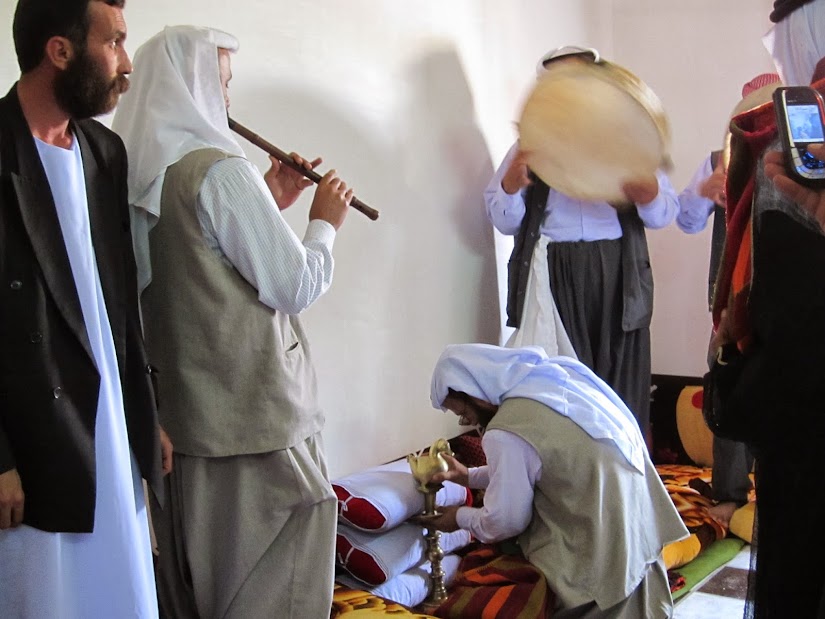
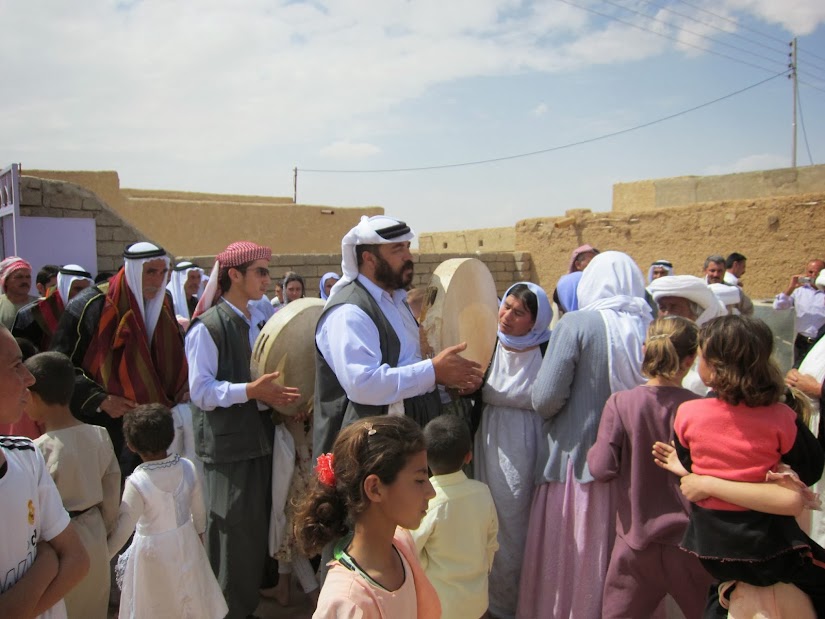
Eszter Spat obtained her Ph.D. at the Central European University, Department of Medieval Studies in 2009. Her post-doctoral research, “Processes of Integration, Identity Construction and the Role of Religion: The Case of the Iraqi Yezidis,” studies the role Yezidi religion in the Kurdish national movement, as well as the impact of modernity and Kurdish nationalism on the construction of Yezidi identity, and the transformation of Yezidi oral tradition and religious institutions in Northern Iraq. She is the author of Late Antique Motifs in Yezidi Oral Tradition and Yezidis.

There appears to be an increased interest in Yezidis in the last decades and one wonders how that is related to global and region political circumstances. They are part of identity politics among Kurds but apparently recently some Yezidis claim to be a people by themselves instead of being part of a Kurdish nation while others argue they are the original Kurds. Eszter Spat made a documentary, Following the Peacock, about the Yezidis and their ritual of parading the Peacock; a seldom, if ever, observed ritual by outsiders.

I deleted the film but the pictures you see here are all taken by Eszter Spat

On Facebook I saw reactions about this documentary that amounted to ‘leave these people and let them continue their secret religion in peace’ and that saw this documentary as an example of an Orientalist perspective by a Western scholar about people and their religion. I’m not specialized enough in the Kurdish regions and identity politics and I’m also not a specialist in Yezidi identity politics, culture and religion. Nevertheless, I do think this is an interesting and carefully made documentary about Yezidi people who recently appear to open up to outsiders.

All pictures taken by Eszter Spat. Used with kind permission

0 comments.

Ted Talk Brené Brown – The Vulnerability of Qualitative Research

Posted on September 23rd, 2013 by martijn.
Categories: anthropology, Method.

A “researcher storyteller,” Brené Brown colorfully discusses her experience as a qualitative researcher in this TED Talk. She explores the personal and professional journey she’s undertaken as a qualitative social science researcher and outlines her changing research perspective from “if you can’t measure it, it doesn’t exist” to becoming comfortable “lean[ing] into the discomfort of the work.” She does this based upon her interesting research on shame and vulnerability. For this research she drew upon a variety of methods, accumulating “thousands of pieces of data.” Brown brilliantly explains and shares the vulnerability of doing qualitative work, but also that of the people she works with who see vulnerability as an essential part of who they are and recognize the power of it without seeing it as something to be enjoyed.

Beverly M. Pratt (from whom I have taken this summary) shows Brown’s TED Talk to a few different sociology classes, including Introduction to Research Methods, Introduction to Sociology, and Contemporary Social Problems for three reasons. First, Brown’s presentation demonstrates to undergraduates the potential for qualitative methodologies to be fun, creative, non-linear, and profound. Second, the clip shows how social science research can measure—using qualitative methods such as interviews, focus groups, and content analysis—ostensibly tricky “variables” such as wholeheartedness and love. After showing the talk, I have the class discuss “variables” that they are now inspired to sociologically research, via qualitative methods. Finally, Brown validates the potential for social scientists to experience vulnerability when conducting qualitative research; this experience can potentially lead researchers to use their work toward remedying the social problems they study by connecting to their subject matter on an empathetic level.

0 comments.

Anatomie van een relletje op een Haagse trapveldje

Posted on September 13th, 2013 by martijn.
Categories: Activism, anthropology, islamophobia, Method, Notes from the Field, Public Islam, Ritual and Religious Experience.

De aftrap

Vorige week was er wat commotie over een vlag, een ADO-veldje en een stel moslims. Zie hier. Het gaat hier om een groepje moslims dat met enige regelmaat samenkomt in Den Haag om te voetballen, te barbecueën en met elkaar te zitten. Enkelen van hen worden regelmatig in verband gebracht met de Syriëgangers, maar er zijn ook tal van anderen bij.

Op zondag 8 september jl. ben ik er ook bij. Ik had al eerder gevraagd om er bij te kunnen zijn. Eigenlijk om twee redenen. De meesten ken ik via social media, demonstraties en debatten. Dit geeft mij de mogelijkheid om mensen ook eens in een andere omgeving te zien die veel minder politiek geladen is. Ten tweede is het een uitstekende manier om nieuwe mensen te leren kennen en bij te praten met oude bekenden in een rustige omgeving. Ten derde, want zo loopt het echt altijd, is het een manier om vragen over mijn onderzoeken te beantwoorden en erover te discussiëren met die groep waar ik ook over schrijf. Dat voedt mijn denken, mijn achtergrondkennis, mijn kennis over waar de gevoeligheden liggen en het is ook een manier van verantwoording afleggen aan de groep met wie ik werk.

De eerste helft

Afijn, ik ga dus op zondagmiddag naar Den Haag. Het voetbal zou niet plaatsvinden op het zelfde veldje maar in het Zuiderpark. Op het laatst wordt mij dan via Whatsapp medegedeeld dat het verplaatst is naar de Hondiusstraat in verband met het slechte weer. In alle gevallen, voor de goede orde, ging het naar mij toe om een uitnodiging om het voetbal en de barbecue bij te wonen. Ik moet even zoeken aangezien ik de buurt wel ken, maar die precieze straat niet. Pas als ik vlakbij de ingang ben hoor en zie ik de mannen die aan het voetballen zijn.

Ik loop door, begroet enkele bekenden en stel me voor aan anderen. Naast, naar ik schat, ongeveer 50 mannen van diverse leeftijden zijn er ook diverse kleine kinderen aanwezig. Mij wordt direct verteld dat er geen barbecue gaat plaatsvinden, maar een walima. Eén van de mannen was net getrouwd en wil, zoals een onderdeel is van een islamitisch huwelijk, zorgdragen voor het eten. Een soort huwelijksbanket zeg maar. Hij heeft voorgesteld om niet meer te barbecueën, maar om het vlees te regelen via een catering.

De tweede helft

Ik zit op een muurtje te praten met diverse jongens en tegelijkertijd te kijken naar het voetbal. Op het moment dat ik één van die mannen iets wil vragen, wordt onze  aandacht getrokken door een grote groep agenten (een stuk of vijftien à twintig) die het veld betreden. De mannen op het voetbalveld worden verzocht hun identiteitsbewijs te laten zien. Dit weigeren ze en vervolgens worden ze in cordon van het veld verdreven naar een hoek achter op het terrein. Ik sta op en film het gebeuren net als veel anderen.

Er wordt door de aanwezigen duidelijk gemaakt dat ze het onzin vinden dat ze hun identiteitsbewijs moeten laten zien; ‘we doen niks verkeerds’. Ze willen ook weten wat de aanleiding was voor dit verzoek. Volgens één van de agenten, zo begrijp ik, gaat het om het feit dat er gebarbecued wordt. Dat is echter niet het geval en dat zou ook niet gaan gebeuren. De mannen vertellen dat aan de agenten, maar meer toelichting kregen ze niet; de agenten blijven hetzelfde verhaal herhalen.

Ik besluit om bij de groep te blijven; ik ben immers hun gast, vind het interessant wat er gebeurt en ik zou zelf ook niet kunnen vertrekken zonder mijn identiteitsbewijs te laten zien. Mijn inschatting is op dat moment dat de mannen ook een punt hebben met hun weigering. Voor zover ik weet moeten agenten een reden geven voor hun verzoek aan mensen om zich te legitimeren en mij bleef op dat moment onduidelijk wat precies die reden was. Ook dienen, volgens mij, agenten zich te kunnen legitimeren als hen daar om gevraagd wordt.

Langzaam maar zeker worden we verder in een hoek gedreven en veel mannen discussiëren met de agenten en drijven de spot met hen. Er zijn agenten in gewoon uniform met witte blouse, anderen hebben een donker tenue met fluorescerend hesje en met wapenstok.  Opnieuw verzoeken enkele mannen dat de agenten hun ID laten zien voordat zij zich legitimeren; dat gebeurt niet.

Groepsdynamiek: druk, eenheid en schermutselingen

Op een gegeven moment wordt de discussie feller en het aantal agenten op het trapveldje is dan toegenomen tot ongeveer 30. Twee van de aanwezige mannen worden tegen de grond gewerkt en vangen de nodige klappen van de agenten met hun handen en stokken. Ze worden afgevoerd terwijl de anderen ‘Takbir!’ en vervolgens ‘Allahu Akbar’ roepen. Dat gebeurde daarvoor ook al en daarna nog diverse keren; telkens in reactie op het politie-optreden. Het cordon voor ons (achter ons staat een gebouw en zijn er hoge hekken) maakt de hoek waar we ons bevinden kleiner. Ik probeer voortdurend een beetje aan de rand van de groep te staan tot ik door agenten ook naar het midden van de hoek wordt gedreven. De agenten doen dat met zachte hand en één van de voetballers trekt mij rustig met zich mee aangezien ik de agenten achter mij niet zie.

Het is opmerkelijk dat iedereen in die hectiek erg bezig is met zichzelf (de eigen veiligheid, hoe men zich opstelt ten opzichte van andere voetballers en de agenten) en tegelijkertijd ook opgaat in een groep. Nou ja opmerkelijk, dat kan iedereen zich waarschijnlijk wel voorstellen, maar nu ervaar ik het zelf weer eens. Zo’n gebeurtenis lijkt op dat moment zowel het idee van individualiteit te versterken als het idee deel  uit te maken van een grotere groep. De gemoederen zijn dan al aardig verhit en de sarrende opmerkingen naar agenten zijn omgeslagen in woede die zich, in het heetst van de ‘strijd’ ook af en toe naar mij richt; iets wat na afloop keurig is uitgesproken en afgedaan.

De afloop

Langzaam wordt het weer rustiger en is er overleg met de agenten. Eén van de mannen gaat een lezing geven. Of eigenlijk twee, maar als het laatste deel van de lezing net op gang is, worden we onderbroken door de politie. Zij geven aan dat dit de laatste kans is voor iedereen om het legitimatiebewijs te tonen anders wordt iedereen die dat niet doet gearresteerd.  Ik vraag me af wat ik ga doen. Of ik nu vertrek of blijf, brengt dat mijn eigen positie als antropoloog niet in gevaar? Maak ik dan ongewild een politiek statement wat ik op dat moment helemaal niet wil? Als de rest besluit zich niet te identificeren en ik blijf bij hen, overschrijd ik dan niet een ethische grens in de zin dat een onderzoeker zich natuurlijk ook aan de wet moet houden?

Het wordt al snel duidelijk dat iedereen wel gewoon weg wil en gaat toegeven; men is moe, heeft honger en zo is de situatie uitzichtloos. Eén voor één loopt men met de agenten mee en na verloop van tijd ga ik ook mee.  De agent is vriendelijk en vraagt mij wat mijn reden is om hier te zijn. Ik leg dit aan hem uit en zegt dat ik verbonden ben aan de Radboud Universiteit.  Mijn paspoort wordt bekeken en er wordt een foto van gemaakt. Ik vraag me af hoe dat zich dan weer verhoudt tot de identificatieplicht, maar ik laat het gaan. Vervolgens word ik naar buiten begeleid en verzocht links het terrein te verlaten. Ik loop door naar enkele andere mannen die ik herken en ga bij hen staan.

Na verloop van tijd lopen we terug richting de ingang van het trapveldje waar de laatste jongens vandaan komen. Al het eten is buiten verzameld en de politie stelt zich opnieuw in cordon op en verzoekt iedereen nu te vertrekken. Dat gebeurt ook. Er moet toch zo’n 500 meter gelopen worden voordat we van de politie af zijn. Ook als we de auto van één van de mannen inladen duurt het snel te lang volgens de agenten. Nadat we dat gedaan hebben lopen we weg; ik ga met twee mannen mee omdat we naar het Zuiderpark gaan om te eten. Na wat oponthoud rijden we door naar het Zuiderpark. Daar aangekomen regent het nog harder dan het al deed en elders blijken jongens aan het schuilen te zijn. Het gaat nu vrij lang duren en ik besluit toch maar huiswaarts te gaan aangezien ik nog het nodige werk moet doen voor onderwijs. Ik word keurig afgezet bij Holland Spoor en vertrek.

Het relletje in vijf vragen:

Was het een manifestatie?

Achteraf blijkt dat het de politie niet te doen was om een illegale barbecue (niet dat iemand dat serieus nam; daar stuur je immers geen twintig agenten met wapenstok op af), maar om een ‘manifestatie’ op te breken. Het is mij onduidelijk wat bedoeld wordt met de term ‘manifestatie’. Wel is het zo dat een publieke manifestatie de politie het recht geeft op mensen om hun legitimatiebewijs te vragen. De intentie volgens mij van vrijwel alle aanwezigen was om een gezellige middag te hebben, te voetballen en met z’n allen te eten. Wel werd opnieuw de islam vlag opgehangen al voor de politie er was. Er was inderdaad ook een lezing, zoals u hierboven kunt lezen, maar deze lezing was spontaan en een reactie op het hele gebeuren op dat moment. De leuzen die werden geroepen, werden geroepen na het arriveren van de politie en tijdens en na de schermutselingen.

Hoe zit dat nu met die vlag?

De groep voetballers komt niet bij elkaar als sharia4(vul in); men komt bij elkaar als moslims en als ‘broeders’.  De islam vlag, waarop staat, “Niets of niemand heeft het recht om te mogen worden aanbeden, behalve Allah” is de vlag waaronder men verzamelt als het ware. Het is volgens hen niet bedoeld als politiek statement of manifestatie, maar simpelweg hun identiteit. Voor velen is het een vlag om trots op te zijn ook al vonden enkele aanwezigen het ‘niet handig’ om het zo te tonen. Anderen stellen echter dat ze in ieder geval nooit met een andere vlag zullen zwaaien aangezien een vlag symbool staat voor een land. Deze zwarte vlag, zo stellen zij, staat voor de Wet van Allah waar zij 100% achter staan. Overigens zijn er vaak ook niet-praktiserende moslimjongeren en niet-moslims die met het voetballen meedoen.

De eerste keer dat de vlag in deze context in de publiciteit kwam, was deze mee genomen om ‘rustig’ ergens op te hangen. Sommigen vergelijken het ook wel met een Ajax fan die met een israelische vlag zwaait of een oranje supporter die een Nederlandse vlag zwaait. Het was geen afgesproken werk zo stelt men om dat te doen. Eén van de jongens was de eerste keer nog niet klaar om te bidden en zag de rest op gebedstijd naast elkaar staan. Hij vroeg toen een andere jongen om wat foto’s te maken terwijl hij spontaan die vlag pakte (die toen niet was opgehangen) en het veld opliep achter de biddende mannen. Het was dus volgens hen niet bedoeld om te provoceren. Men stelt dat de intentie was om de foto’s onderling met elkaar te delen. Weliswaar werden ze publiekelijk gedeeld op Facebook, maar niemand van hen had verwacht dat ‘mensen zich druk zouden gaan maken om een vlag’. Via via is dit terechtgekomen bij een twitteraccount van ISIS (die wordt geassocieerd met Al Qaeda) in Syrië die een tekst erbij zette: ‘Onze broeders van Holland staan achter ons”.

Afgelopen zondag was de vlag opnieuw meegenomen en enkele mannen wilden laten zien dat ze ondanks (of juist dankzij) de commotie erover niemand vrezen en gewoon door zouden gaan met wat ze al deden: “voetballen met elkaar, gezellig eten en onze vlag erbij”, zoals één van de voetballers stelt. In beide gevallen zou je kunnen stellen dat de vlag zowel een serieuze ondertoon heeft als iets ludieks, maar voor veel buitenstaanders toch ook een politiek statement of provocatie. Men stelt dus dat dat laatste niet de bedoeling was, maar je kunt je dan wel afvragen of de mannen de politieke context en de wijze waarop in de publieke opinie tegen hen wordt aangekeken niet onderschat hebben. De vlag wordt geassocieerd met Al Qaeda en AQ gebruikt de vlag inderdaad. Maar niet alleen zij en de correcte benaming zou moeten zijn islam vlag. De associatie dat het een Al Qaeda vlag is, is dus niet altijd terecht. Maar in de huidige politieke context en met mannen van wie er enkelen verbonden zijn met de kringen van Syriëgangers zijn dergelijke associaties en categoriseringen snel gemaakt.

Waren het ‘radicale’ moslims?

Dat hangt natuurlijk van de definitie af. Maar het waren zeker geen mensen van Sharia4Belgium. Er waren mensen van andere vergelijkbare netwerken, maar ook mensen die daar niets mee te maken hadden en het ook niet altijd eens zijn met de werkwijze van dat soort netwerkjes. Daarbij was ook niet iedereen het eens met het standpunt om geen ID te laten zien. Sommigen wilden dat juist wel en spraken dat tijdens en na afloop ook uit. Ook vonden enkelen aanwezigen het ophangen van de vlag nodeloos provocerend en aandachttrekkend. Toen de situatie echter hectisch werd, verdwenen dat soort meningsverschillen: door de politie in een hoek gedreven worden is erg goed voor eenheid en ‘bonding’. Na afloop is er wel weer over gesproken. Alle aanwezigen over één kam scheren is derhalve geen accurate weergave van de situatie.

Wat zijn de reacties achteraf onder moslims?

Voor veel aanwezigen was het hele incident een bewijs voor en een illustratie van hoe er wordt omgegaan met moslims. Vrijwel iedereen was na afloop boos en teleurgesteld: ‘zonde van zo’n mooie middag!’. Enkelen laten duidelijk zien dat dit hele gebeuren hen sterkt in het idee dat ze op het juiste pad zitten en vooral moeten doorgaan met ze doen: “als jullie dit zo willen zien so be it”. Enkelen zijn kritisch over de opstelling van anderen naar de politie toe, het ophangen van de vlag en het weigeren om hun ID te laten zien. In de dagen erna worden de aanwezigen zowel geprezen als bekritiseerd. Er zijn er die hen prijzen omdat ze hebben laten zien dat moslims niet over zich heen laten lopen. Anderen bekritiseren de aanwezigen vanwege, wat zij zien als, nodeloze provocaties en aandachttrekkerij; wat volgens hen niet des islams zou zijn en moslims opnieuw een slechte naam zou geven. Deze reacties zijn overigens vooral gebaseerd op de berichten in de media hierover en dus op het idee dat het een homogene groep was. Overigens wordt de aanvankelijke media-aandacht door iedereen bekritiseerd, maar later in de week meer gewaardeerd.

Kun je als wetenschapper nog wel objectief zijn als je midden in zo’n groep staat en de politie staat voor je?

Mijn onderzoek en antropologisch veldwerk in het algemeen is gericht op het begrijpen van de wijze waarop mensen betekenis geven aan de wereld om hen heen. Daarbij werk je over het algemeen met kleine groepen en door middel van observatie en informele gesprekken. Deze manier van werken kenmerkt zich door distantie én onderdompeling. Wat er in dit concrete geval gebeurde is dat je  je helemaal ondergedompeld raakt in de groepsdynamica van dat moment. Het is moeilijk afstand te bewaren (letterlijk en figuurlijk) hoewel het filmen van het hele gebeuren wel helpt. Ik realiseer me dat ik, toen de politie ons in een hoek dreef, ik zelf behoorlijk geïrriteerd was  over het feit dat het voetballen werd opgebroken. De reden die men gaf, de aanwezigheid van zoveel  agenten op het veld, daaromheen en nog een helikopter in de lucht, kwamen op mij zwaar overdreven en intimiderend over.

Het hele gebeuren was  ook wel enigszins beklemmend, hoewel ik moet zeggen dat door de over het algemeen correcte opstelling van de agenten en de zorgzaamheid van de aanwezige voetballers ik me eigenlijk de hele tijd veilig heb gevoeld. Wat voor mij erg zwaar telde is dat ik uitgenodigd was en daar dus was als hun gast. Dat betekent voor mij dat het methodisch en ethisch niet correct was om te vertrekken. Reflectie en verantwoording achteraf stelt je in staat het hele incident en de eigen positie van een afstand te bekijken. Daarbij, zo merkte ik, is juist het aanwezig zijn en er (voor een deel althans) deel van uit maken een voorwaarde om de reacties van de mannen (en de verschillen daarbij) te begrijpen en de nuances te zien.


Rest mij de aanwezigen te bedanken voor hun hartelijke ontvangst, de open gesprekken voor / tijdens /  en na, de goede zorgen voor / tijdens /  en na en het keurig afzetten bij het station.


10 comments.

Junge Salafiyya-Anhänger suchen im Internet nach dem „wahren Glauben“

Posted on August 29th, 2013 by martijn.
Categories: anthropology, Important Publications, ISIM/RU Research, Religious and Political Radicalization, Ritual and Religious Experience, Young Muslims.

Carmen Becker hat den Einfluss des Internets auf den Glauben junger niederländischer und deutscher Muslime untersucht, die der Salafiyya folgen. Das Internet bietet einen Ort der Begegnung, einen religiösen Raum und zugleich die Möglichkeit, selbst nach den Quelltexten und ihrer Bedeutung zu suchen. Das wird die traditionellen Formen religiöser Autorität verändern, vermutet Becker, die am 9. September 2013 an der Nimweger Radboud Universität promovieren wird.

Ebenso wie die Jugendlichen, um die es geht, spricht Carmen Becker nicht von Salafisten, sondern von „Muslimen, die der Salafiyya folgen“. „Anhänger der Salafiyya streben danach, sich möglichst genau am Propheten Mohammed und den ersten drei Generationen von Muslimen, den sogenannten ‚frommen Vorfahren‘, zu orientieren. ‚Salafisten‘ werden häufig mit Radikalisierung und Gewalt in Verbindung gebracht. Dass sie sehr orthodoxe, mitunter radikale Auffassungen vertreten, bedeutet jedoch nicht automatisch, dass man deshalb radikales Verhalten und Gewalt befürwortet.“

Laut dem deutschen Verfassungsschutz gibt es in Deutschland 3.800 aktive Salafiyya-Anhänger aller Altersgruppen; in den Niederlanden geht der nationale Koordinator für die Terrorismusbekämpfung von 3.000 Anhängern aus. „Das sind jedoch Schätzungen, die auf selbstformulierten Definitionen beruhen und von denen nicht immer klar ist, wie sie zustande gekommen sind.“

In ihrem Forschungsprojekt folgte Becker zwischen 2007 und 2010 zahlreichen  Gesprächen und Aktivitäten in Foren sowie Chatrooms und sprach ausführlich mit 47 jungen Muslimen. Mitunter beteiligte sie sich zudem an Gesprächen im Internet, wobei sie sich immer als Forscherin zu erkennen gab.

Muslim werden – in einem Chatroom
Das Internet ist, so stellte Becker fest, für diese muslimischen Jugendlichen nicht nur ein Ort, an dem sie Informationen austauschen, sondern auch ein religiöser Raum, in dem sie ihren Glauben leben können. „Sie können dort reden, beten, Vorträge und Predigten hören, und es besteht auch die Möglichkeit, dem Islam beizutreten. Das setzt allerdings die Anwesenheit von Zeugen voraus, die feststellen, ob das Glaubensbekenntnis überzeugend vorgetragen wird. Das Internet stellt also für den Kern des Rituals keine Gefahr dar.“

Selbst auf die Suche gehen

Auf einer anderen Ebene übt das Internet ihrer Meinung nach mehr Einfluss aus: „Traditionell wird das Wissen über den wahren Glauben von einem Imam oder einer anderen Autorität in der Moschee vermittelt. Im Internet jedoch kann jeder – vor allem jetzt, da immer mehr Quelltexte in verschiedenen Sprachen digitalisiert werden, – die entsprechenden Texte selbst studieren. Das ist keine einfache Aufgabe: Es sind oft keine eindeutigen, unmissverständlichen Texte, und viele Übersetzungen aus dem Arabischen sind schlichtweg schlecht. Darüber hinaus dürfen sich die Gläubigen nicht selbst überschätzen und annehmen, sie könnten den Koran ohne weiteres auslegen. Der Einfluss anerkannter Autoritäten wie der islamischen Gelehrten ist deshalb weiterhin beträchtlich. Aber daneben begeben sich die Menschen selbst auf die Suche nach Belegen für bestimmte Aussagen in den religiösen Quellen und diskutieren Texte und Interpretationen mit anderen Gläubigen.“

Muslim sein im Westen
Die jungen Muslime aus dem Forschungsprojekt hören am liebsten sachkundigen Glaubensgenossen vor Ort zu, denen es gelingt, einen Bezug zwischen Lehre und Leben herzustellen. „Das kann ein junger Prediger oder ein populärer bekehrter Muslim sein – wichtig ist, dass sie sich in das Leben junger orthodoxer Muslime im Westen hineinversetzen können und ihre Sprache sprechen. Ihre Texte werden eifrig diskutiert, weil sie sich weniger mit der Frage beschäftigen, was der Prophet getan hat, als vielmehr damit, was der Prophet unter den gegebenen Umständen tun würde.“

Weniger strenggläubig? Anders!
Die Schlussfolgerung, dass der orthodoxe Glaube jugendlicher Salafiyya-Anhänger unter dem Einfluss des Internets „weniger streng“ wird, möchte Becker nicht ziehen. „Es ist noch zu früh, um zu sagen, welchen Einfluss das Internet letztendlich haben wird. Aber dass es Glaubenspraktiken verändert, davon bin ich überzeugt.“

Carmen Becker (Lindlar, Deutschland, 1977) studierte Politikwissenschaft (Schwerpunkt: Naher und Mittlerer Osten) an der Freien Universität Berlin. Ab 2004 arbeitete sie für das Auswärtige Amt in Berlin. 2007 begann sie mit der Forschung für ihre Doktorarbeit im Fachbereich Arabisch und Islam (Research Institute for Philosophy, Theology and Religious Studies) der Radboud Universität. Ihr Forschungsprojekt ist Teil eines größeren Forschungsprogramms der Radboud Universität zum Thema Salafismus, wofür die Nimweger Universität 2007 Fördermittel der Niederländischen Organisation für Wissenschaftliche Forschung (NWO) erhielt.

0 comments.

Jonge Salafiyya-volgelingen gaan op internet zelf op zoek naar het ‘ware geloof’

Posted on August 29th, 2013 by martijn.
Categories: anthropology, Headline, ISIM/RU Research, Religious and Political Radicalization, Ritual and Religious Experience.

Carmen Becker onderzocht de invloed van internet op het geloof van jonge Nederlandse en Duitse moslims die de Salafiyya volgen. Internet biedt hen een ontmoetingsplaats, een godsdienstige ruimte én de mogelijkheid om zelf op zoek te gaan naar bronteksten en hun betekenis. Dat zal traditionele vormen van religieus gezag veranderen, stelt Becker, die op op 9 september 2013 promoveert aan de Radboud Universiteit Nijmegen.

Net als de jongeren om wie het gaat, spreekt Carmen Becker niet over salafisten maar over ‘moslims die de Salafiyya volgen’. ‘Volgelingen van de Salafiyya streven ernaar de profeet Mohammed en de eerste drie generaties moslims, de zogenaamde vrome voorvaderen, zo nauwkeurig mogelijk te volgen. “Salafisten” worden vaak in verband gebracht met radicalisering en geweld. Maar het hebben van zeer orthodoxe, soms radicale opvattingen, betekent niet dat je dús voor radicaal gedrag en geweld bent.’
Volgens de Duitse Verfassungsschutz (binnenlandse veiligheidsdienst) zijn er in Duitsland 3800 actieve Salafiyya-volgelingen, jong en oud; in Nederland houdt de Nationale Coördinator Terrorismebestrijding het op 3000 volgelingen. ‘Dat zijn echter schattingen die op hun eigen definities zijn gebaseerd en waarvan niet altijd duidelijk is hoe ze tot stand zijn gekomen.’

Voor haar onderzoek volgde Becker tussen 2007 en 2010 veel gesprekken en activiteiten op fora en in chatrooms en sprak uitgebreid met 47 jongeren. Soms nam ze ook deel aan gesprekken op internet, waarbij ze zichzelf altijd bekendmaakte als onderzoekster.

Moslim worden in een chatroom
Internet is, stelde Becker vast, voor deze moslimjongeren niet alleen een plek om informatie uit te wisselen, maar ook een godsdienstige ruimte waar ze hun geloof kunnen beleven. ‘Ze kunnen er praten, bidden, naar lezingen en preken luisteren, maar moslim worden in een chatroom kan ook, mits er getuigen zijn die vaststellen of de geloofsbelijdenis overtuigend wordt uitgesproken. Internet tast dus niet de kern van het ritueel aan.’

Zelf op zoek
Op een ander vlak kan de invloed van internet groter zijn, denkt ze: ‘Traditioneel wordt kennis over het ware geloof overgedragen in de moskee, door een imam of een ander gezaghebbend persoon. Maar op internet, zeker nu er steeds meer bronteksten in verschillende talen gedigitaliseerd worden, kun je zelf die teksten bestuderen. Dat is niet eenvoudig: het zijn vaak geen eenduidige, niet mis te verstane teksten, en veel vertalingen uit het Arabisch zijn ronduit slecht. Bovendien mag je als gelovige jezelf niet overschatten en denken dat je de Koran even kunt interpreteren. Het gezag van erkende autoriteiten zoals de islamitische geleerden is dus nog steeds groot. Maar daarnaast gaan mensen zelf op zoek naar bewijsplaatsen voor bepaalde uitspraken en bespreken ze met andere gelovigen teksten en interpretaties.’

Moslim in het westen
De jongeren die Becker onderzocht, luisteren graag naar lokale deskundige geloofsgenoten die erin slagen om de leer en het leven te verbinden. ‘Dat kan een jonge prediker zijn, of een populaire bekeerde moslim – belangrijk is dat ze zich kunnen verplaatsen in het leven van jonge orthodoxe moslims in het westen én hun taal spreken. Hun teksten worden druk besproken, omdat ze minder gaan over de vraag: wat wat heeft de profeet gedaan, maar: wat zou de profeet gedaan hebben onder deze omstandigheden.’

Losser? Anders
Concluderen dat het orthodoxe geloof van jongeren die de Salafiyya volgen ‘losser’ wordt onder invloed van internet, wil Becker niet. ‘Het is nog te vroeg om te kunnen zeggen wat uiteindelijk de invloed zal zijn. Maar dat internet geloofspraktijken verandert – dat denk ik zeker.’

Carmen Becker (Lindlar, Duitsland, 1977) studeerde politicologie (specialisatie: Midden-Oosten) aan de Freie Universität Berlin Vanaf 2004 werkte zij voor het Duitse Ministerie van Buitenlandse Zaken. In 2007 startte ze haar promotieonderzoek bij de afdeling Arabisch en Islam/ Research Institute for Philosophy, Theology and Religious Studies van de Radboud Universiteit. Beckers promotieonderzoek maakt deel uit van een groter onderzoeksprogramma aan de Radboud Universiteit naar Salafisme, waarvoor de Nederlandse organisatie voor Wetenschappelijk Onderzoek (NWO) in 2007 subsidie verstrekte. 

0 comments.

Jonge Salafiyya-volgelingen gaan op internet zelf op zoek naar het 'ware geloof'

Posted on August 29th, 2013 by martijn.
Categories: anthropology, Headline, ISIM/RU Research, Religious and Political Radicalization, Ritual and Religious Experience.

Carmen Becker onderzocht de invloed van internet op het geloof van jonge Nederlandse en Duitse moslims die de Salafiyya volgen. Internet biedt hen een ontmoetingsplaats, een godsdienstige ruimte én de mogelijkheid om zelf op zoek te gaan naar bronteksten en hun betekenis. Dat zal traditionele vormen van religieus gezag veranderen, stelt Becker, die op op 9 september 2013 promoveert aan de Radboud Universiteit Nijmegen.

Net als de jongeren om wie het gaat, spreekt Carmen Becker niet over salafisten maar over ‘moslims die de Salafiyya volgen’. ‘Volgelingen van de Salafiyya streven ernaar de profeet Mohammed en de eerste drie generaties moslims, de zogenaamde vrome voorvaderen, zo nauwkeurig mogelijk te volgen. “Salafisten” worden vaak in verband gebracht met radicalisering en geweld. Maar het hebben van zeer orthodoxe, soms radicale opvattingen, betekent niet dat je dús voor radicaal gedrag en geweld bent.’
Volgens de Duitse Verfassungsschutz (binnenlandse veiligheidsdienst) zijn er in Duitsland 3800 actieve Salafiyya-volgelingen, jong en oud; in Nederland houdt de Nationale Coördinator Terrorismebestrijding het op 3000 volgelingen. ‘Dat zijn echter schattingen die op hun eigen definities zijn gebaseerd en waarvan niet altijd duidelijk is hoe ze tot stand zijn gekomen.’

Voor haar onderzoek volgde Becker tussen 2007 en 2010 veel gesprekken en activiteiten op fora en in chatrooms en sprak uitgebreid met 47 jongeren. Soms nam ze ook deel aan gesprekken op internet, waarbij ze zichzelf altijd bekendmaakte als onderzoekster.

Moslim worden in een chatroom
Internet is, stelde Becker vast, voor deze moslimjongeren niet alleen een plek om informatie uit te wisselen, maar ook een godsdienstige ruimte waar ze hun geloof kunnen beleven. ‘Ze kunnen er praten, bidden, naar lezingen en preken luisteren, maar moslim worden in een chatroom kan ook, mits er getuigen zijn die vaststellen of de geloofsbelijdenis overtuigend wordt uitgesproken. Internet tast dus niet de kern van het ritueel aan.’

Zelf op zoek
Op een ander vlak kan de invloed van internet groter zijn, denkt ze: ‘Traditioneel wordt kennis over het ware geloof overgedragen in de moskee, door een imam of een ander gezaghebbend persoon. Maar op internet, zeker nu er steeds meer bronteksten in verschillende talen gedigitaliseerd worden, kun je zelf die teksten bestuderen. Dat is niet eenvoudig: het zijn vaak geen eenduidige, niet mis te verstane teksten, en veel vertalingen uit het Arabisch zijn ronduit slecht. Bovendien mag je als gelovige jezelf niet overschatten en denken dat je de Koran even kunt interpreteren. Het gezag van erkende autoriteiten zoals de islamitische geleerden is dus nog steeds groot. Maar daarnaast gaan mensen zelf op zoek naar bewijsplaatsen voor bepaalde uitspraken en bespreken ze met andere gelovigen teksten en interpretaties.’

Moslim in het westen
De jongeren die Becker onderzocht, luisteren graag naar lokale deskundige geloofsgenoten die erin slagen om de leer en het leven te verbinden. ‘Dat kan een jonge prediker zijn, of een populaire bekeerde moslim – belangrijk is dat ze zich kunnen verplaatsen in het leven van jonge orthodoxe moslims in het westen én hun taal spreken. Hun teksten worden druk besproken, omdat ze minder gaan over de vraag: wat wat heeft de profeet gedaan, maar: wat zou de profeet gedaan hebben onder deze omstandigheden.’

Losser? Anders
Concluderen dat het orthodoxe geloof van jongeren die de Salafiyya volgen ‘losser’ wordt onder invloed van internet, wil Becker niet. ‘Het is nog te vroeg om te kunnen zeggen wat uiteindelijk de invloed zal zijn. Maar dat internet geloofspraktijken verandert – dat denk ik zeker.’

Carmen Becker (Lindlar, Duitsland, 1977) studeerde politicologie (specialisatie: Midden-Oosten) aan de Freie Universität Berlin Vanaf 2004 werkte zij voor het Duitse Ministerie van Buitenlandse Zaken. In 2007 startte ze haar promotieonderzoek bij de afdeling Arabisch en Islam/ Research Institute for Philosophy, Theology and Religious Studies van de Radboud Universiteit. Beckers promotieonderzoek maakt deel uit van een groter onderzoeksprogramma aan de Radboud Universiteit naar Salafisme, waarvoor de Nederlandse organisatie voor Wetenschappelijk Onderzoek (NWO) in 2007 subsidie verstrekte. 

0 comments.

Journalism and Language: The Politics of Naming

Posted on July 3rd, 2013 by martijn.
Categories: Method, Misc. News.

An interesting discussion on Al Jazeera following the change in AP’s Stylebook, the most influential stylebook for journalists.

The news business is a minefield of controversial terminology and last month, the news agency the Associated Press called time on one phrase, illegal immigrant.

The reason given was that the word ‘illegal’ should not be used to describe a person. ‘Illegal’, according to the AP, should only describe an action, such as living in a country illegally.

AP’s style guide is among the most influential in the news business. The agency provides wire services to thousands of news organisations – 1,400 print outlets in the US alone and 5,000 broadcasters around the world. So when the AP makes a change, it matters: not just for the agency, but for all who subscribe to its services and adopt its language.

After illegal immigrant was dropped from the AP Stylebook, publications including the New York Times and the Los Angeles Times followed.

Two days after changing the way it describes undocumented immigrants, the AP then announced it would be revising its use of the term “Islamist”.
[…]
Journalists reporting political events have to be careful, because the stories they report are already framed by the language used by those in positions of power.

And in the world of 24-hour news increasingly driven by digital content, some say styleguides may not be as influential as they once were, since social media and citizen journalism are undermining traditional news institutions using new terminology.

So, can controversial media language shape the way we see a story? Can words like “illegal immigrant”, “terrorist” and “Islamist” be weapons in a war of ideas? Media style guides under scrutiny with the Listening Post’s Marcela Pizzaro.

0 comments.

Antropologie & Relativisme: Een pleidooi voor ontwrichtende wetenschap

Posted on May 26th, 2013 by martijn.
Categories: anthropology, Headline.

Antropologie: een gevaarlijke bezigheid
Tot mijn grote vreugde heeft Geenstijl antropologie en sociologie uitgeroepen tot meest nuttelozen en gevaarlijke studies van het moment. In gebruikelijk Geenstijl proza sabelt Mathijs van den Beukel hier sociologie en antropologie neer. Het gaat namelijk niet alleen in tegen ‘common sense’ ideeën, maar is schadelijk (en het laatste volgt uit het eerste). Nou is uitgeroepen worden tot de meest schadelijke studie niet gelijk heel erg als dat gebeurt door de redactie van Geenstijl.

Ga maar na, een voorliefde voor het plaatsen van naaktfoto’s van minderjarigen en eveneens illegale naaktfoto’s van bekende Nederlanders in het verleden (alles voor de hits he), toen enkele jaren geleden toenmalig minister Rouvoet iets deed wat de redactie niet beviel vielen ze, nee niet hem, maar zijn minderjarige dochter aan, toen Stivoro bezig was met een anti-rook campagne, plaatsten ze telefoon en adresgegevens van de voorzitster, met de recente schoppartij in Eindhoven werd de verkeerde naam verspreid via de site, men trapt in zo ongeveer iedere hoax die een combinatie van sex, dood en islam heeft, toen men (onterecht) dacht dat Wilders aangifte had gedaan tegen een voormalig schrijver van de site (Bert Brussen) stelde hoofdredacteur Marck Burema dat Wilders net zo lang aangevallen zou worden totdat hij zijn aangifte zou intrekken, eerder al werd er een hetze gevoerd tegen een voorzitter van een christelijke jongerenorganisatie die vanwege een doodsbedreiging aangifte tegen geenstijl had gedaan, toen Felix Meurders de leugenachtigheid van de site doorprikte werd hij doodverklaard, Rutger Castricum die zo nodig vrouwen onder hun rokken moet filmen, nou ja ik houd op. Met andere woorden door zo’n site tot meest gevaarlijke studie te worden verklaard is zo slecht nog niet.

Antropologie is natuurlijk vaker het doelwit. En waarom eigenlijk? Wat hebben antropologen toch ooit uitgevreten dat het de moeite waard zou maken om hen aan te vallen? Nou eerlijk gezegd, meer dan genoeg. Het schedelmeten en andere praktijken in dienst van racistische en imperialistische kolonisatoren zijn een schandvlek van de discipline. Natuurlijk heeft ook antropologie een eigen geschiedenis van plagiaat en fraude. U ziet niets menselijks is ons vreemd. Maar opvallend genoeg gaat het daar niet over. Nee, antropologen praten misstanden goed, gaan in tegen het gezond verstand, zijn wereldvreemd en antropologie is een pseudo-wetenschap van linkse idioten. Nou zijn dit soort argumenten niet zo specifiek voor antropologie; we zien ze vaker in aanvallen op de wetenschap. Bij antropologie komt dat alles echter samen in een argument dat wel specifiek voor deze discipline opgaat: namelijk dat we cultureel relativistisch zijn. En dat is heel erg stellen bijvoorbeeld Asher Ben Avraham en Maja Mischke op De Jaap en vooraanstaande politici zoals Frits Bolkestein en Piet Hein Donner.

Over de mens in al haar diversiteit
Kloppen bovenstaande verwijten nu, ja of nee? Ja, Nee en Ja & Nee.

Antropologie kan het best gezien worden als de wetenschap van alle diversiteit in mensen en hun opvattingen, ervaringen, gedragingen en lichamen. Hoewel antropologie sterk bepaald is door hedendaagse Westerse academische tradities is haar geschiedenis mogelijk veel ouder en zijn er parallelle ontwikkelingen elders in de wereld waarin bijvoorbeeld geleerden als Abu Rayhan al- Biruni, een Perzische geleerde (973-1048) en Ibn Khaldoun, een Tunesische geleerde (1332-1406) een grote rol spelen.

Centraal in de hedendaagse antropologie staat het begrip cultuur voor ervaringen, voorstellingen en praktijken waarmee mensen betekenis geven aan de wereld om hen heen en waardoor mensen in hun betekenisgeving beïnvloed worden. Iets op antropologische wijze bestuderen betekent dat we kijken hoe mensen bepaalde zaken, zoals taal, kleding, gender rollen, eetgewoonten, enzovoorts aangeleerd krijgen, hoe zij anderen deze zaken leren en welke vertogen en praktijken op een gegeven moment en bepaalde plaats dominant worden en andere juist niet. Cultuur verklaart dus niet het gedrag van mensen, maar cultuur dient juist verklaard te worden.

Een antropologische studie is veelal kleinschalig en vergelijkend. We beginnen vanuit de assumptie van diversiteit en proberen die diversiteit in haar gedetailleerde aard te beschrijven en te begrijpen. De analyses van antropologen zijn daarmee niet statistisch te generaliseren, maar wel theoretisch. Vanuit het kleine en gedetailleerde (bijvoorbeeld identiteitsvorming onder Marokkaans-Nederlandse jongeren in Gouda) wordt geprobeerd iets te zeggen over ‘grote’ processen als identiteitsvorming, secularisering, etniciteit, enzovoorts.

Dit alles gebeurt vanuit het besef dat context ertoe doet. Zo is eerwraak onder Turken in Turkije iets anders dan eerwraak onder Turkse Nederlanders en Sinterklaas onder Marokkaanse Nederlanders in Marokko iets anders dan onder Australische Nederlanders in Australië. Economie, taal, gender-rollen, verwantschapsrelaties, politiek en religie spelen daar een rol bij en overal op een andere manier. Daarbij wordt geprobeerd het principe van cultureel relativisme hoog te houden; het idee dat iedere culturele categorie begrepen moet worden vanuit de eigen begripskaders en morele kaders die voor iedereen (en vaak verschillend per individu) een eigen waarde en betekenis hebben als het gaat om wat waar, belangrijk, goed, ethisch, legaal en normaal is.

‘common sense’
Wanneer we seksualiteit en relaties onderzoeken en geen cultuur-relativistisch kader aanhouden zouden we bijvoorbeeld ‘Nederlandse’ normen over seksualiteit en relaties gebruiken om daarmee de opvattingen van andere samenlevingen te analyseren. Dat is simpelweg niet heel informatief en vaak zelfs op z’n minst misleidend ook al lijkt dat juist vaak op het toepassen van gezond verstand. ‘Zo is het nu eenmaal’, ‘Zo doen wij de dingen nu eenmaal hier’, ‘Dit is nu eenmaal de beste manier’, ‘Dit is de realiteit’. Dit betekent echter niet dat antropologen maar alles ondersteunen en goedkeuren wat anderen doen; het tegendeel is het geval. Er wordt voortdurend gekeken naar waar bepaalde praktijken vandaan komen, in wiens voordeel bepaalde opvattingen en praktijken zijn.

Dit lijkt wellicht vanzelfsprekend als het gaat om antropologen die ‘ver weg’ onderzoek doen; naar die groepen die wij ‘anders’ vinden. Hetzelfde perspectief moet echter ook worden toegepast op de ‘eigen’ samenleving van de antropoloog. Deze dient dus niet zomaar opvattingen over vrijheid van meningsuiting, religie of wat dan ook als moreel ijkpunt te nemen, maar deze voortdurend aan een kritische analyse te onderwerpen. Of dat nu de heilige huisjes zijn van de ‘Ander’ of van de ‘wij-groep’; dat is geheel om het even. Alleen dan kun je mensen en groepen mensen begrijpen in hun eigen morele en pragmatische kaders. Het alternatief is namelijk dat je gaat concluderen dat mensen denken en handelen als de antropoloog zelf in zijn/haar privé-leven en dat we de mensen met wie we onderzoek doen zien als (afwijkende) varianten van onszelf.

Stel je voor dat een Warlpiri (Australische aboriginal) antropoloog hier onderzoek zou doen en daarbij sjablonen gebruikt die rechtstreeks uit zijn of haar eigen tradities afkomstig zijn. Deze persoon zou dan bijvoorbeeld een begrip als jukurrpa (meestal vertaald als Dromen of Droomtijd) gebruiken. Wanneer deze persoon hier naar vraagt in een gesprek met een Nederlander en hem/haar vraagt wat deze daaronder verstaat, dan zal deze Nederlander waarschijnlijk zeggen dat hij/zij daar niks onder verstaat; het begrip is onbekend. Als de antropoloog vervolgens de handelingen en gedragingen van deze Nederlander gaat verklaren aan de hand van het begrip jukurrpa, dan is de kans groot dat er helemaal niets klopt van die analyse. Als deze antropoloog de Nederlander zou veroordelen en geringschatten vanwege diens onbekendheid met de term, dan is dat ethisch gezien zeer twijfelachtig.

Nee, een antropoloog zal Warlpiri mensen vragen naar hun begrip jukurrpa en een Nederlander naar een begrip als ‘gezelligheid’. Hij of zij zal analyseren hoe verschillende mensen verschillende betekenissen aan deze begrippen toekennen en de ontwikkelingen die daarin te bespeuren zijn. We proberen daarmee het perspectief van mensen op de werkelijkheid en hun daarmee al dan niet corresponderende handelingen bloot te leggen en te begrijpen binnen specifieke contexten. Antropologie is dus eerder de studie van ‘common sense’ dan ‘common sense’.

De culturele gereedschapskist van de antropoloog
Dat is natuurlijk allemaal mooi en aardig (echt waar!), maar brengt ook een probleem met zich mee zowel voor een Warlpiri antropoloog als een Nederlandse antropoloog. Taal, concepten, ideeën zijn de gereedschappen waarmee we het veld ingaan. Maar juist vanwege onze eigen ervaringen zijn antropologen zich er uitermate van bewust dat taal geen neutraal iets is. Zowel de Warlpiri antropoloog als de Nederlandse antropoloog krijgen hun antropologische gereedschap mee vanuit een veelal Westerse taaltraditie en academische traditie. Ons gereedschap om bijvoorbeeld religie te onderzoeken is vaak ontleend aan het christendom. Zo kunnen we een studie doen naar de plaats van dominees in de islam en dan uitkomen bij imams, terwijl die echt een fundamenteel andere positie in moskeeën hebben. We lopen daarbij het risico dus bepaalde begrippen op te leggen aan onze onderzoeksgroep terwijl die nauwelijks of geen raakvlak met die doelgroep hebben. Als gevolg daarvan zouden we de verkeerde vragen stellen, de verkeerde veronderstellingen hanteren en de verkeerde conclusies trekken; de betrouwbaarheid van een dergelijk onderzoek lijkt hoog (vanwege de bekendheid met termen) maar de validiteit is ver te zoeken (we hebben geen idee of we wel weten wat we meten).

Wat het nog ingewikkelder maakt is dat sommige begrippen, die we vaak zien als Westers maar dat niet persé exclusief zijn, over de gehele wereld (maar op verschillende manieren en met verschillende definities) bekend zijn. Zo is de kans groot dat er wel Nederlanders zijn die het begrip jukurrpa denken te kennen door middel van toerismebrochures, vakanties, films, liedjes, enzovoorts. Door internationale handel, internationale politiek, moderne media, migratie, enzovoorts zijn de grenzen tussen, laten we zeggen, de Westerse cultuur en de Afrikaanse cultuur, niet scherp te trekken. Sterker nog de ‘de Westerse cultuur’ of ‘de Afrikaanse cultuur’ zijn onzin geworden (behalve voor politiek gebruik). Er is voortdurend wederzijdse beïnvloeding en weliswaar kan een begrip als ‘vrijheid’ wel sterk beïnvloed zijn door Europese tradities dat wil nog niet zeggen dat anderen buiten Europa geen waarde hechten aan en streven naar vrijheid.

Het is onmogelijk voor een antropoloog om helemaal te ontsnappen aan bovenstaande taalval, maar antropologen zijn wel voortdurend bezig met reflectie daarover en om bepaalde begrippen kritisch te bekijken. Omdat dit vaak Westerse begrippen zijn, lijkt die reflectie wellicht nog extra cultureel-relativistisch. Maar dit vergroot wel de validiteit van onderzoek en daarmee de wetenschappelijke waarde ervan. Neem bijvoorbeeld het huwelijk. Heel veel antropologen doen onderzoek naar hoe mensen een geschikte huwelijkspartner vinden. Maar wat is precies een huwelijk? Daar werd vroeger in Nederland anders over gedacht dan nu. Verschillende groepen hebben daar heden ten dage ook verschillende opvattingen over. Wat we dus niet doen is beginnen met vragen: ‘Hoe kiest u uw huwelijkspartner?’ maar met ‘Wat verstaat u eigenlijk onder huwelijk?’. Vervolgens kunnen we kijken naar hoeveel verschillende huwelijken er eigenlijk zijn. En daarop volgend: ‘Huwelijk? Waarom eigenlijk?’ Sommige mensen zullen daarop wellicht antwoorden: ‘Omdat dit volgens God de manier is om de voortplanting van de mensheid te verzekeren’. Dat is voor een antropoloog een belangrijk en veelzeggend antwoord, maar niet zomaar voldoende als verklaring. Er zijn immers mensen die niet trouwen. Er zijn mensen die trouwen maar samen geen kinderen willen of kunnen krijgen. Er zijn mensen die niet trouwen maar wel kinderen krijgen. We zoeken dus ook naar andersoortige verklaringen die de variaties binnen bepaalde categorieën mensen verklaren.

Macht & Autonomie
In hun verklaringen besteden antropologen veel aandacht aan machtsverhoudingen én aan de capaciteit die individuen hebben om zelfstandig te handelen. Mensen worden immers beperkt in hun mogelijkheden door politieke, sociale en economische machtsverhoudingen, maar hebben binnen dat kader altijd de mogelijkheid om een eigen weg te kiezen. Dit geldt zeker voor democratische samenlevingen waar de politieke elites niet proberen mensen te sturen door middel van repressie, maar door mensen ervan te overtuigen dat een bepaalde manier van denken en handelen in hun eigen voordeel is door het als ‘normaal’, ‘voor de eigen bestwil’ en ‘goed’ aan te merken. Zo besteden Europese overheden in het anti-radicaliseringsbeleid gericht op moslims veel tijd en energie aan het overtuigen van moslims dat het beter is om gematigd en liberaal te zijn (volgens de definities van de overheid). Dat geeft moslims de kans op een eigen platform (immers met hen schijnt wat aan de hand te zijn) en om in te vullen en te articuleren wat liberaal precies is. Het geeft moslims echter ook de mogelijkheid om precies het tegenovergestelde te benadrukken; dat islam juist niet liberaal hoort te zijn volgens de opvatting van de Nederlandse overheid. Ook dat geeft hen media-aandacht en een platform. Hindoes hebben zoiets niet en voor hen is het verwerven van een platform als ‘liberale hindoe’ dan ook veel lastiger.

Het is niet aan de antropoloog om een liberale of radicale positie van moslims (of van wie dan ook) te ondersteunen, laat staan heilig te verklaren. Het is evenmin aan een antropoloog om de positie van de overheid en de waarden die zij probeert over te brengen als absoluut en heilig en op basis daarvan individuele burgers te analyseren. Dat zou betekenen dat we blind zouden zijn voor machtsverhoudingen en met begrippen als ‘liberaal’ en ‘gematigd’ reduceren we de veelheid aan posities die moslims kunnen innemen tot twee die van bovenaf opgelegd worden. Met andere woorden we zouden bijdragen aan het verkleinen van de handelingscapaciteit van mensen. Dat is slecht onderzoek en onethisch onderzoek.

Meer cultuur-relativisme graag
Juist in een tijd waarin veel antropologisch en ander (overigens vaak heel redelijk) onderzoek toch al wordt uitgezet in opdracht van de overheid (met bijbehorende begrippenkaders) en waarmee dus de probleemdefinities van de overheid deels worden overgenomen, hebben we juist meer cultureel-relativisme nodig en is antropologie meer dan nuttig. Als dat er vervolgens toe leidt dat antropologie en sociologie tot meest gevaarlijke studie worden uitgeroepen, dan is dat heel mooi. Het betekent namelijk dat wij onze taak toch nog niet zo slecht doen. Toch zou het wel beter kunnen. Zo vindt veel antropologisch onderzoek plaats onder migranten in Nederland, maar veel minder onder autochtone inwoners van oude stadswijken of onder PVV-stemmers. Daarmee versterken antropologen juist het idee dat migranten anders zijn en een probleem en versterken ze dus het heersende verhaal over migranten.

Lang leve de antropologie dus. En op naar meer ontwrichtende, gevaarlijke wetenschap!

Zie ook Ton Salman’s stuk op StandplaatsWereld: Veldwerk-Turbulenties

Voorbeelden zijn deels overgenomen / geïnspireerd door: Eller, Jack David. 2007. Introducing anthropology of religion: culture to the ultimate. New York / London: Routledge.

6 comments.

Antropologie & Relativisme: Een pleidooi voor ontwrichtende wetenschap

Posted on May 26th, 2013 by martijn.
Categories: anthropology, Headline.

Antropologie: een gevaarlijke bezigheid
Tot mijn grote vreugde heeft Geenstijl antropologie en sociologie uitgeroepen tot meest nuttelozen en gevaarlijke studies van het moment. In gebruikelijk Geenstijl proza sabelt Mathijs van den Beukel hier sociologie en antropologie neer. Het gaat namelijk niet alleen in tegen ‘common sense’ ideeën, maar is schadelijk (en het laatste volgt uit het eerste). Nou is uitgeroepen worden tot de meest schadelijke studie niet gelijk heel erg als dat gebeurt door de redactie van Geenstijl.

Ga maar na, een voorliefde voor het plaatsen van naaktfoto’s van minderjarigen en eveneens illegale naaktfoto’s van bekende Nederlanders in het verleden (alles voor de hits he), toen enkele jaren geleden toenmalig minister Rouvoet iets deed wat de redactie niet beviel vielen ze, nee niet hem, maar zijn minderjarige dochter aan, toen Stivoro bezig was met een anti-rook campagne, plaatsten ze telefoon en adresgegevens van de voorzitster, met de recente schoppartij in Eindhoven werd de verkeerde naam verspreid via de site, men trapt in zo ongeveer iedere hoax die een combinatie van sex, dood en islam heeft, toen men (onterecht) dacht dat Wilders aangifte had gedaan tegen een voormalig schrijver van de site (Bert Brussen) stelde hoofdredacteur Marck Burema dat Wilders net zo lang aangevallen zou worden totdat hij zijn aangifte zou intrekken, eerder al werd er een hetze gevoerd tegen een voorzitter van een christelijke jongerenorganisatie die vanwege een doodsbedreiging aangifte tegen geenstijl had gedaan, toen Felix Meurders de leugenachtigheid van de site doorprikte werd hij doodverklaard, Rutger Castricum die zo nodig vrouwen onder hun rokken moet filmen, nou ja ik houd op. Met andere woorden door zo’n site tot meest gevaarlijke studie te worden verklaard is zo slecht nog niet.

Antropologie is natuurlijk vaker het doelwit. En waarom eigenlijk? Wat hebben antropologen toch ooit uitgevreten dat het de moeite waard zou maken om hen aan te vallen? Nou eerlijk gezegd, meer dan genoeg. Het schedelmeten en andere praktijken in dienst van racistische en imperialistische kolonisatoren zijn een schandvlek van de discipline. Natuurlijk heeft ook antropologie een eigen geschiedenis van plagiaat en fraude. U ziet niets menselijks is ons vreemd. Maar opvallend genoeg gaat het daar niet over. Nee, antropologen praten misstanden goed, gaan in tegen het gezond verstand, zijn wereldvreemd en antropologie is een pseudo-wetenschap van linkse idioten. Nou zijn dit soort argumenten niet zo specifiek voor antropologie; we zien ze vaker in aanvallen op de wetenschap. Bij antropologie komt dat alles echter samen in een argument dat wel specifiek voor deze discipline opgaat: namelijk dat we cultureel relativistisch zijn. En dat is heel erg stellen bijvoorbeeld Asher Ben Avraham en Maja Mischke op De Jaap en vooraanstaande politici zoals Frits Bolkestein en Piet Hein Donner.

Over de mens in al haar diversiteit
Kloppen bovenstaande verwijten nu, ja of nee? Ja, Nee en Ja & Nee.

Antropologie kan het best gezien worden als de wetenschap van alle diversiteit in mensen en hun opvattingen, ervaringen, gedragingen en lichamen. Hoewel antropologie sterk bepaald is door hedendaagse Westerse academische tradities is haar geschiedenis mogelijk veel ouder en zijn er parallelle ontwikkelingen elders in de wereld waarin bijvoorbeeld geleerden als Abu Rayhan al- Biruni, een Perzische geleerde (973-1048) en Ibn Khaldoun, een Tunesische geleerde (1332-1406) een grote rol spelen.

Centraal in de hedendaagse antropologie staat het begrip cultuur voor ervaringen, voorstellingen en praktijken waarmee mensen betekenis geven aan de wereld om hen heen en waardoor mensen in hun betekenisgeving beïnvloed worden. Iets op antropologische wijze bestuderen betekent dat we kijken hoe mensen bepaalde zaken, zoals taal, kleding, gender rollen, eetgewoonten, enzovoorts aangeleerd krijgen, hoe zij anderen deze zaken leren en welke vertogen en praktijken op een gegeven moment en bepaalde plaats dominant worden en andere juist niet. Cultuur verklaart dus niet het gedrag van mensen, maar cultuur dient juist verklaard te worden.

Een antropologische studie is veelal kleinschalig en vergelijkend. We beginnen vanuit de assumptie van diversiteit en proberen die diversiteit in haar gedetailleerde aard te beschrijven en te begrijpen. De analyses van antropologen zijn daarmee niet statistisch te generaliseren, maar wel theoretisch. Vanuit het kleine en gedetailleerde (bijvoorbeeld identiteitsvorming onder Marokkaans-Nederlandse jongeren in Gouda) wordt geprobeerd iets te zeggen over ‘grote’ processen als identiteitsvorming, secularisering, etniciteit, enzovoorts.

Dit alles gebeurt vanuit het besef dat context ertoe doet. Zo is eerwraak onder Turken in Turkije iets anders dan eerwraak onder Turkse Nederlanders en Sinterklaas onder Marokkaanse Nederlanders in Marokko iets anders dan onder Australische Nederlanders in Australië. Economie, taal, gender-rollen, verwantschapsrelaties, politiek en religie spelen daar een rol bij en overal op een andere manier. Daarbij wordt geprobeerd het principe van cultureel relativisme hoog te houden; het idee dat iedere culturele categorie begrepen moet worden vanuit de eigen begripskaders en morele kaders die voor iedereen (en vaak verschillend per individu) een eigen waarde en betekenis hebben als het gaat om wat waar, belangrijk, goed, ethisch, legaal en normaal is.

‘common sense’
Wanneer we seksualiteit en relaties onderzoeken en geen cultuur-relativistisch kader aanhouden zouden we bijvoorbeeld ‘Nederlandse’ normen over seksualiteit en relaties gebruiken om daarmee de opvattingen van andere samenlevingen te analyseren. Dat is simpelweg niet heel informatief en vaak zelfs op z’n minst misleidend ook al lijkt dat juist vaak op het toepassen van gezond verstand. ‘Zo is het nu eenmaal’, ‘Zo doen wij de dingen nu eenmaal hier’, ‘Dit is nu eenmaal de beste manier’, ‘Dit is de realiteit’. Dit betekent echter niet dat antropologen maar alles ondersteunen en goedkeuren wat anderen doen; het tegendeel is het geval. Er wordt voortdurend gekeken naar waar bepaalde praktijken vandaan komen, in wiens voordeel bepaalde opvattingen en praktijken zijn.

Dit lijkt wellicht vanzelfsprekend als het gaat om antropologen die ‘ver weg’ onderzoek doen; naar die groepen die wij ‘anders’ vinden. Hetzelfde perspectief moet echter ook worden toegepast op de ‘eigen’ samenleving van de antropoloog. Deze dient dus niet zomaar opvattingen over vrijheid van meningsuiting, religie of wat dan ook als moreel ijkpunt te nemen, maar deze voortdurend aan een kritische analyse te onderwerpen. Of dat nu de heilige huisjes zijn van de ‘Ander’ of van de ‘wij-groep’; dat is geheel om het even. Alleen dan kun je mensen en groepen mensen begrijpen in hun eigen morele en pragmatische kaders. Het alternatief is namelijk dat je gaat concluderen dat mensen denken en handelen als de antropoloog zelf in zijn/haar privé-leven en dat we de mensen met wie we onderzoek doen zien als (afwijkende) varianten van onszelf.

Stel je voor dat een Warlpiri (Australische aboriginal) antropoloog hier onderzoek zou doen en daarbij sjablonen gebruikt die rechtstreeks uit zijn of haar eigen tradities afkomstig zijn. Deze persoon zou dan bijvoorbeeld een begrip als jukurrpa (meestal vertaald als Dromen of Droomtijd) gebruiken. Wanneer deze persoon hier naar vraagt in een gesprek met een Nederlander en hem/haar vraagt wat deze daaronder verstaat, dan zal deze Nederlander waarschijnlijk zeggen dat hij/zij daar niks onder verstaat; het begrip is onbekend. Als de antropoloog vervolgens de handelingen en gedragingen van deze Nederlander gaat verklaren aan de hand van het begrip jukurrpa, dan is de kans groot dat er helemaal niets klopt van die analyse. Als deze antropoloog de Nederlander zou veroordelen en geringschatten vanwege diens onbekendheid met de term, dan is dat ethisch gezien zeer twijfelachtig.

Nee, een antropoloog zal Warlpiri mensen vragen naar hun begrip jukurrpa en een Nederlander naar een begrip als ‘gezelligheid’. Hij of zij zal analyseren hoe verschillende mensen verschillende betekenissen aan deze begrippen toekennen en de ontwikkelingen die daarin te bespeuren zijn. We proberen daarmee het perspectief van mensen op de werkelijkheid en hun daarmee al dan niet corresponderende handelingen bloot te leggen en te begrijpen binnen specifieke contexten. Antropologie is dus eerder de studie van ‘common sense’ dan ‘common sense’.

De culturele gereedschapskist van de antropoloog
Dat is natuurlijk allemaal mooi en aardig (echt waar!), maar brengt ook een probleem met zich mee zowel voor een Warlpiri antropoloog als een Nederlandse antropoloog. Taal, concepten, ideeën zijn de gereedschappen waarmee we het veld ingaan. Maar juist vanwege onze eigen ervaringen zijn antropologen zich er uitermate van bewust dat taal geen neutraal iets is. Zowel de Warlpiri antropoloog als de Nederlandse antropoloog krijgen hun antropologische gereedschap mee vanuit een veelal Westerse taaltraditie en academische traditie. Ons gereedschap om bijvoorbeeld religie te onderzoeken is vaak ontleend aan het christendom. Zo kunnen we een studie doen naar de plaats van dominees in de islam en dan uitkomen bij imams, terwijl die echt een fundamenteel andere positie in moskeeën hebben. We lopen daarbij het risico dus bepaalde begrippen op te leggen aan onze onderzoeksgroep terwijl die nauwelijks of geen raakvlak met die doelgroep hebben. Als gevolg daarvan zouden we de verkeerde vragen stellen, de verkeerde veronderstellingen hanteren en de verkeerde conclusies trekken; de betrouwbaarheid van een dergelijk onderzoek lijkt hoog (vanwege de bekendheid met termen) maar de validiteit is ver te zoeken (we hebben geen idee of we wel weten wat we meten).

Wat het nog ingewikkelder maakt is dat sommige begrippen, die we vaak zien als Westers maar dat niet persé exclusief zijn, over de gehele wereld (maar op verschillende manieren en met verschillende definities) bekend zijn. Zo is de kans groot dat er wel Nederlanders zijn die het begrip jukurrpa denken te kennen door middel van toerismebrochures, vakanties, films, liedjes, enzovoorts. Door internationale handel, internationale politiek, moderne media, migratie, enzovoorts zijn de grenzen tussen, laten we zeggen, de Westerse cultuur en de Afrikaanse cultuur, niet scherp te trekken. Sterker nog de ‘de Westerse cultuur’ of ‘de Afrikaanse cultuur’ zijn onzin geworden (behalve voor politiek gebruik). Er is voortdurend wederzijdse beïnvloeding en weliswaar kan een begrip als ‘vrijheid’ wel sterk beïnvloed zijn door Europese tradities dat wil nog niet zeggen dat anderen buiten Europa geen waarde hechten aan en streven naar vrijheid.

Het is onmogelijk voor een antropoloog om helemaal te ontsnappen aan bovenstaande taalval, maar antropologen zijn wel voortdurend bezig met reflectie daarover en om bepaalde begrippen kritisch te bekijken. Omdat dit vaak Westerse begrippen zijn, lijkt die reflectie wellicht nog extra cultureel-relativistisch. Maar dit vergroot wel de validiteit van onderzoek en daarmee de wetenschappelijke waarde ervan. Neem bijvoorbeeld het huwelijk. Heel veel antropologen doen onderzoek naar hoe mensen een geschikte huwelijkspartner vinden. Maar wat is precies een huwelijk? Daar werd vroeger in Nederland anders over gedacht dan nu. Verschillende groepen hebben daar heden ten dage ook verschillende opvattingen over. Wat we dus niet doen is beginnen met vragen: ‘Hoe kiest u uw huwelijkspartner?’ maar met ‘Wat verstaat u eigenlijk onder huwelijk?’. Vervolgens kunnen we kijken naar hoeveel verschillende huwelijken er eigenlijk zijn. En daarop volgend: ‘Huwelijk? Waarom eigenlijk?’ Sommige mensen zullen daarop wellicht antwoorden: ‘Omdat dit volgens God de manier is om de voortplanting van de mensheid te verzekeren’. Dat is voor een antropoloog een belangrijk en veelzeggend antwoord, maar niet zomaar voldoende als verklaring. Er zijn immers mensen die niet trouwen. Er zijn mensen die trouwen maar samen geen kinderen willen of kunnen krijgen. Er zijn mensen die niet trouwen maar wel kinderen krijgen. We zoeken dus ook naar andersoortige verklaringen die de variaties binnen bepaalde categorieën mensen verklaren.

Macht & Autonomie
In hun verklaringen besteden antropologen veel aandacht aan machtsverhoudingen én aan de capaciteit die individuen hebben om zelfstandig te handelen. Mensen worden immers beperkt in hun mogelijkheden door politieke, sociale en economische machtsverhoudingen, maar hebben binnen dat kader altijd de mogelijkheid om een eigen weg te kiezen. Dit geldt zeker voor democratische samenlevingen waar de politieke elites niet proberen mensen te sturen door middel van repressie, maar door mensen ervan te overtuigen dat een bepaalde manier van denken en handelen in hun eigen voordeel is door het als ‘normaal’, ‘voor de eigen bestwil’ en ‘goed’ aan te merken. Zo besteden Europese overheden in het anti-radicaliseringsbeleid gericht op moslims veel tijd en energie aan het overtuigen van moslims dat het beter is om gematigd en liberaal te zijn (volgens de definities van de overheid). Dat geeft moslims de kans op een eigen platform (immers met hen schijnt wat aan de hand te zijn) en om in te vullen en te articuleren wat liberaal precies is. Het geeft moslims echter ook de mogelijkheid om precies het tegenovergestelde te benadrukken; dat islam juist niet liberaal hoort te zijn volgens de opvatting van de Nederlandse overheid. Ook dat geeft hen media-aandacht en een platform. Hindoes hebben zoiets niet en voor hen is het verwerven van een platform als ‘liberale hindoe’ dan ook veel lastiger.

Het is niet aan de antropoloog om een liberale of radicale positie van moslims (of van wie dan ook) te ondersteunen, laat staan heilig te verklaren. Het is evenmin aan een antropoloog om de positie van de overheid en de waarden die zij probeert over te brengen als absoluut en heilig en op basis daarvan individuele burgers te analyseren. Dat zou betekenen dat we blind zouden zijn voor machtsverhoudingen en met begrippen als ‘liberaal’ en ‘gematigd’ reduceren we de veelheid aan posities die moslims kunnen innemen tot twee die van bovenaf opgelegd worden. Met andere woorden we zouden bijdragen aan het verkleinen van de handelingscapaciteit van mensen. Dat is slecht onderzoek en onethisch onderzoek.

Meer cultuur-relativisme graag
Juist in een tijd waarin veel antropologisch en ander (overigens vaak heel redelijk) onderzoek toch al wordt uitgezet in opdracht van de overheid (met bijbehorende begrippenkaders) en waarmee dus de probleemdefinities van de overheid deels worden overgenomen, hebben we juist meer cultureel-relativisme nodig en is antropologie meer dan nuttig. Als dat er vervolgens toe leidt dat antropologie en sociologie tot meest gevaarlijke studie worden uitgeroepen, dan is dat heel mooi. Het betekent namelijk dat wij onze taak toch nog niet zo slecht doen. Toch zou het wel beter kunnen. Zo vindt veel antropologisch onderzoek plaats onder migranten in Nederland, maar veel minder onder autochtone inwoners van oude stadswijken of onder PVV-stemmers. Daarmee versterken antropologen juist het idee dat migranten anders zijn en een probleem en versterken ze dus het heersende verhaal over migranten.

Lang leve de antropologie dus. En op naar meer ontwrichtende, gevaarlijke wetenschap!

Zie ook Ton Salman’s stuk op StandplaatsWereld: Veldwerk-Turbulenties

Voorbeelden zijn deels overgenomen / geïnspireerd door: Eller, Jack David. 2007. Introducing anthropology of religion: culture to the ultimate. New York / London: Routledge.

6 comments.

The moral maze: Dutch Salafis and the construction of a moral community of the faithful

Posted on May 15th, 2013 by martijn.
Categories: anthropology, Important Publications, ISIM/RU Research, My Research, Ritual and Religious Experience.

A new edition of the journal Contemporary Islam has been published: Moral Ambiguities and Muslim Lives. As the editors of this special issue, Susanne Dahlgren and Samuli Schielke state in their introduction:

As commonly pointed out by social scientists today, the way religions interact with processes of modernisation has not made them secondary in the lives of ‘modernising subjectivities’. As Peter L. Berger has put it, the world is as religious as it ever was and in some places even more religious than ever. What modernity brings about, is pluralisation of individual lifeworlds that consequently undermines all taken-for-granted certainties (Berger 2001: 445, 449). At the same time, religion has become an individual choice marking a difference between generations. Like with other religions, self-fashioning and active engagement in ‘making’ religion (Avishai 2008) are typical to Islam today. In this thematic volume, titled “Moral Ambiguities and Muslim Lives” we focus on the resurgence of Islam as a project of self-improvement and the search for a good life, surrounded by the various uncertainties, ambiguities and complexities of today’s world. As we see it, throughout the world today, discourses on being a Muslim crystallise around morality and good life – issues that are often deeply political but demand an understanding of politics as embedded in questions about worship, the meaningful structure for life and social relations, and contested visions of right and wrong, subjectivity and community. Recognising this centrality of everyday moral practice, an increasing number of ethnographic studies have taken up the task of looking at the ways the adherence to Muhammad’s message constitutes a part of people’s subjectivity and everyday experience. And yet it has proven difficult to take religion seriously without losing sight of the overall complexity of the human condition. Ethnographies focusing only on people’s practice of Islam with a narrow focus restricted to people active in groups of dedicated believers, can provide a partial image at best, and risk reproducing the limited bias of the activists’ groups they study. To provide directions for a more balanced image, the volume at hand presents an interdisciplinary spectrum (including anthropology, sociology, political science, and textual analysis) of approaches to the ambiguities that Islam embraces as a moral discourse and as an everyday practice in a time when the label ‘Muslim’ has become loaded with enormous normative promises and pressures.

I’m very happy to have been able to contribute to this interesting special issue with an article based upon my own research in the Netherlands.
The moral maze: Dutch Salafis and the construction of a moral community of the faithful

The Salafi movement presents itself as a moral guardian of Muslims in a world that, according to many, is filled with moral crisis, temptations and anti-Islam tendencies. Salafis claim that it is essential to return to the community of the pious forefathers seen as the most outstanding community of all times with the highest absolute moral standard. In this article I will show how individual participants engage with this idea of a moral community of believers yet remain vulnerable to the ambiguities and ruptures inherent in everyday life and within the Salafi movement. By exploring how Salafis passionately try to search for the ‘correct’ knowledge and strive to maintain a unity between knowledge, conviction and behavior, and the role of friendships therein, I argue that Salafism does not remain separate from the troubles of everyday but that these issues enter into and exist in Salafi thought and practice, not by being resolved but by being transformed into personal struggles. These ambiguities and ruptures may cause problems but also provide an incentive for Salafis to continuously work at the self-improvement of one’s piety, authenticity, and sisterhood and brotherhood.

You can find it HERE.

Other articles in this special issue are:

Many thanks to the editors for making such a wonderful special issue.

0 comments.

Hello world! Challenges for blogging as anthropological outreach

Posted on May 8th, 2013 by martijn.
Categories: anthropology, Blogosphere.

Together with my colleague Henk Driessen I organized the Anthropology and/in Publicity conference in 2010. Several anthropology bloggers had very interesting contributions to the theme of public anthropology which are still available at our conference blog. Together with the lectures of Thomas Hylland Eriksen, Ulf Hannerz, Mathijs Pelkmans and Annelies Moors the blogposts made great workshop.

In the Journal of the Royal Anthropological Institute (JRAI) Henk Driessen, Mathijs Pelkmans and yours truly have published our reflections on the theme of public anthropology as a commentary in the issue of June 2013 (Volume 19, Issue 2).

Going public: some thoughts on anthropology in and of the world (pages 390-393) by Henk Driessen

Unfortunately, too much anthropology is boring, unattractive, and unapproachable for wider audiences.4 My personal position is that as public servants we have a political and moral duty to communicate what we know in an accessible manner to wider audiences, at least now and again, depending on the nature of the requests and the quality of the media that seek our co-operation. I am convinced that in the long run we need to do so also for the benefit of the survival of anthropology.

Hello world! Challenges for blogging as anthropological outreach (pages 394–397) by Martijn de Koning

[I]s blogging really a solution for the lack of influence of anthropological knowledge? I will explore this issue by focusing on two questions: why do people blog and who is the audience of anthropology blogs? Based on the contributions of several blogs, including my own, I’ve come to the conclusion that our reach is limited to the extent that we appear mostly to attract fellow anthropologists in the West and that our blogs are Western-orientated.

A wider audience for anthropology? Political dimensions of an important debate (pages 398-404) by Mathijs Pelkmans

Why do we agree that anthropology has unused potential, and why would it be good for anthropology to be more widely heard (apart from this potentially attracting more students and generating more funding)? Answers can be found by looking at how we conceive of anthropology, what kind of public anthropologists we have in mind, but also what kind of audiences we are implicitly thinking of. Such a discussion, I argue, reveals that the desire for a public presence is politically and normatively informed.

Many thanks to Henk Driessen, Mathijs Pelkmans and Matthew Engelke for their valuable comments on earlier versions of my comment.

NOTE:

Kristina Killgrove (whose blog is mentioned and cited in my comment) has published a response on her blog. I hope my comment and her blog will contribute to a debate on the avenues for public anthropology. Read her critical response: Is Blogging Really the Future of Public Anthropology?

2 comments.