Turning point Pim Fortuyn 4 – Migrants, Danger and Muslims
After having established a broad framework to analyse Fortuyn’s ideas, in the upcoming posts I will elaborate a little more on the three main pillars of his thoughts pertaining to Muslims and Islam and how this fits within the more elaborate frames of Dutch politics and policies. In the next post I will focus on the idea of the Dutch have freed themselves from the burden of religion, but in this post I will concentrate on the idea of danger and the migrantization of Muslims and the Muslimization of migrants.
Danger and ‘the culture of migrants’
The issue of ‘the culture of migrants’ was already an important issue in the late seventies and early eighties prior to the establishment of the minority policy. Among government officials and scientific advisers, an approach to migrants that took cultural characteristics into account seemed to be dominant, but the disagreements focused on the boundaries of the ‘preservation of one’s own identity’. The political scientist Scholten shows how the discussion at the time focused on full equality on the one hand and what was seen as the potential dangers of migrant cultures on the other. One of the points of discussion was the compatibility of Islam with the law. Finally, a compromise was reached in which equality was sought without taking into account the danger of migrant cultures, but with the idea that this danger could arise in the event of conflicts. In that case, the (Dutch) cultural achievements had to be defended. This is how the Lubbers I cabinet put it in the Minorities Memorandum of 1983:
‘It goes without saying that people from minority groups will also have to respect the fundamental values and norms of the Dutch legal order. The wishes of members of minority groups who oppose this cannot therefore be met.’
With the immigrant policy that came about in the late eighties and early nineties, the culturalistic, group-oriented way of thinking was apparently partly abandoned for an approach in which the focus shifted more to a so-called ‘burrow blind’ and individualistic approach. Emphasis was placed on the migrant’s own responsibility, citizenship and participation, and culture and religion were referred to the private domain. However, such a more individualistic approach did not mean a decrease in the racialization of migrants, but rather makes us blind and wordless to discuss issues such as racialization, inclusion and exclusion. All the more so because an interesting paradox arises in the nineties: on the one hand, culture and religion are declared private matters in policy and on the other hand we see an increasing importance of a cultural doctrine in relation to migrants and Islam. This is not yet a cultural doctrine as Fortuyn introduced it. On the one hand, the minority policy was a reaction to the actions of Moluccan-Dutch activists in the seventies and was intended to prevent such unrest. But above all it was also very paternalistic. With his confrontation politics, Fortuyn would partly leave that paternalism behind him.
From the nineties onwards, there was a situation in which the degree of desirability of ethnic and religious diversity was questioned across the political spectrum. The social cohesion of a society would be threatened by ‘people with a different culture’, since cultural differences would guarantee conflicts. This attention to the cultural threat of migrants is partly related to a change in enemy images after the Cold War. In 1992, the BVD presented an analysis of the threat assessment for the first time. The BVD would have already started in the eighties with shifting (or broadening) its focus, which until then was mainly focused on the communist threat. In the threat analysis we can read under ‘Task fields and Tasks/Tendencies and Developments’ that a possible ‘side effect of migration from Southern European and North African’ countries is a ‘further radicalisation or fundamentalisation of Muslim communities abroad’ and that conflicts from countries of origin may spill over to the Netherlands, with ‘bloodshed, obstruction of freedom of expression or other fundamental rights, [and] serious disturbances of public policy’ as possible consequences. This came under the necessary criticism of the BVD: the rather direct and indiscriminate link between migration and internal conflicts with even ‘possible bloodshed’ was seen as very stigmatising, as was the reference to ‘further radicalisation or fundamentalisation’. In addition, the one-sided nature of the threat analysis was denounced: there was attention for the threat of migrant groups and Muslims, but no attention to the threat and violence against them.
The change in research objects of the BVD was not an isolated issue at that time. After the end of the Cold War, a new threat slowly but surely came into view, of which the first contours could already be seen during the eighties (after the Iranian revolution of 1979). Partly as a result of the Rushdie affair of 1989, Muslims in Europe came more into the crosshairs of security services and politicians and at the same time ethnic minorities from Muslim-majority countries were increasingly referred to as ‘Muslims’. In this context, politicians and opinion leaders were asked whether ‘we’ had not brought in a new threat with Islam and whether Islam and democratic values can go together. After Bolkestein (Luzerne speech) called for a debate on immigration and integration of minorities in an article in the Volkskrant. From the early nineties, minorities, combined with integration and immigration, became an important topic in political debates. The political scientists Irwin and Holsteyn, in their analysis of the 1994 elections, found that immigration was one of the three most important issues for voters and that this theme allowed politicians to attract votes right through existing ideological preferences. That was not the case before those elections. However, the fact that Bolkestein’s intervention succeeded in provoking a debate on minorities (note, about, and hardly with them) and the fact that immigration became so high on the agenda of the voter show that Fortuyn’s potential to attract votes on this issue is already present before he expressed himself emphatically about it. Slowly but surely, and especially after 9/11, attention has increasingly turned to Islam and to Islam as a threat. As a result, Islam has increasingly acquired a position as an exception in comparison with other religions and Muslims were seen as exceptions in comparison with other citizens in the Netherlands.
The Muslimization of migrants and the migrantization of Muslims
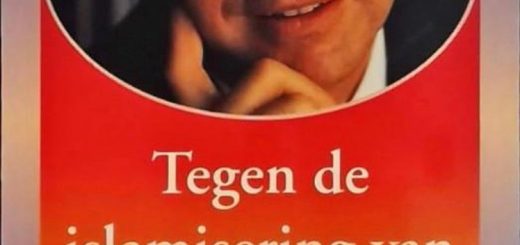
Striking in Fortuyn’s book (editions from 1997 and 2001) is the absence of the term ‘allochtoon’, with the exception of the reflection written by Abdullah Haselhoef in the 2001 edition. Fortuyn does use the term ‘autochtoon’ or ‘original (native) Dutch’ as a counterpart to Muslims. Remarkable, because Muslims can of course best ‘autochthonous’. They may have converted or their parents may have converted. Since no one in the Netherlands has a native tone or immigrant gene in them and the term ‘original Dutchman’ is also problematic, we can actually speak more about Dutch people who are either ‘geautochtonized’ or ‘alllochtonized’ in policy and debate. The first group then means Dutch people who can be counted among the dominant white majority. The second group are Dutch people who would not be from here (allochtoon literally means from foreign soil).
Over time, it turned out to be rather difficult for policymakers to determine exactly who fell under the term immigrants. It is often stated that the term allochtoon, originating from sociologist Hilda Verwey-Jonker, was first used in 1971. The tegenpool ‘autochtoon’ would have come later. At that time, in 1971, the term allochtoon referred to guest workers, returnees (from present-day Indonesia), Ambonese (Moluccans), Surinamese, Antilleans, Chinese, refugees and foreign students (from third world countries). In reality, the term autochthonous/immigrant is older and was used, for example, to refer to the religious differences between the ‘native population’ (Catholics) and the immigrants (Protestants) in Brabant in reports by, inter alia, Verwey-Jonker himself. But the term ‘autochthonous’ can also be found in the work of Multatuli, which refers to indigenous officials who served under a ‘European’ (Dutch) official.
The term autochthonous/immigrant only really became commonplace from 1989, when the wrr report ‘Allochtonenbeleid’ was published. It was proposed to replace the term minorities with immigrants, in order to prevent a group-oriented approach. Initially, there were all kinds of different definitions in circulation; something that in itself shows that the terms are anything but self-evident and that the boundary between native and immigrant is difficult to draw. If we look at who is actually covered by this policy, then in practice they are mainly Turkish, Moroccan, Surinamese and Antillean Dutch. Certainly in the last two cases, given the colonial history, we can question the immigrantization of these Dutchmen. After all, they have been part of the Netherlands for a long time and/or still are. After 1989, the term allochtoon has become more and more synonymous with Muslim and the term Muslim often also refers to immigrant, which can be seen in the reactions to Dutch people who convert to Islam. For example, in Paul Scheffer’s illustrious essay ‘The multicultural drama’, terms such as immigrants, Turks, Moroccans and Islam are completely mixed up. In 1999, CBS came up with a standard definition of the term allochtoon. When both parents (first generation immigrant) or at least one of the parents are/are born abroad, cbs speaks of immigrants. A distinction is then made between western and non-western immigrants. But Indonesians, for example, fall under the category of western immigrants, while people from Suriname or the Netherlands Antilles fall under non-western immigrants. It is about origin, but also about the implied idea that ‘western’ stands for (culturally closer to) Dutch, and European and ‘non-westerners’ for culturally distant, black and/or Islamic. Racialization is reinforced as the obvious members of the moral community are white Dutch, while white migrants are generally not considered immigrants. Instead of a neutral term to describe and categorize people, the contrast allochtoon/autochtoon has become a contradiction between so-called white (Christian) Dutch and foreigners/migrants/Muslims. We see this also reflected in the discussions about integration where Islam is almost always the subject of discussion and Christianity (including the Christianity of migrants) is close. In the case of Muslims, the immigrantization of them leads to making distinctions based on religion, biology (origin) and geography (origin). Muslims are then carriers of a religion that is foreign. The latter despite the fact that there are already spitting of Islam to be found in the Netherlands that date back to the sixteenth century, that the Netherlands has colonized present-day Indonesia for years and that the guest workers of the past have been staying here for decades and their children and grandchildren were born here.
The immigrantization of, for example, Turkish and Moroccan Dutch is a form of racialization in policy. This racialization is based on the country of origin (or that of the parents) and the social position, education, political and religious views and practices of the individual therefore do not matter. This does not mean that this form of racialization by means of the immigrantization of Dutch people is aimed at excluding these Dutch people. On the contrary, both in minority policy and in immigrant policy and integration policy, the policy is aimed at contributing to full citizenship of allochtonised Dutch people, with a strong emphasis on the individual responsibility of that citizen himself and with much less attention to the structurally unequal position of migrants in Dutch society. Fortuyn’s story does not deviate from this. Throughout his career he has been very consistent in his statement that the position of Muslims, of allied dutch people, is a matter of concern and that he wants to include them and not exclude them. The immigrantization of citizens is therefore not about exclusion versus inclusion, but about regulating the distinction between Dutch people who belong to the moral community and those who do not (yet) belong to it. This is not new in history, maar fits with the development of modern states in which it is of great importance to define who does and who does not belong to the nation. Religion has long played an important role in this. After decolonization and decolonization, the idea of the moral community was based on a shared culture that would be based on sexual freedoms, women’s emancipation, and freedom of expression. This dominant view of culture is accompanied by an increasing emphasis on citizenship, which no longer merely indicates a legal status, but increasingly becomes a moral concept. Since the nineties, the Netherlands has increasingly switched to an assimilation policy.
The ambiguities of moral citizenship
The sociologist Schinkel shows that a migrant is only considered a full citizen if he/she is willing to adapt to moral community by accepting certain fundamental norms and values. The concept of citizenship is becoming increasingly virtual and, in this new sense, indicates above all a possibility. However, this flexibility is not or not fully realized. In other words, two types of citizenship arise for migrants: formal citizenship and moral citizenship. For alllochtonized Dutch people, it therefore applies that they must first integrate sufficiently (culturally) before they are considered part of the moral community. The fact that they have acquired formal citizenship does not matter, because that does not make them one hundred percent full citizens.Schinkel argues that it is unclear what moral citizenship exactly entails. It is precisely this ambiguity that makes this moral citizenship a strategic mechanism for the inclusion and exclusion of people in a moral community. By defining Muslims as alelochtons, a mechanism is created to treat a group of Dutch people as citizens, but less fully than others and to impose additional demands on them (such as providing proof of acceptance of certain freedoms) that are not explicitly imposed on others. In Fortuyn we also see the distinction between formal citizenship and moral citizenship, and this makes its point of containment problematic. He argues for the integration of already present migrants and their descendants (Muslims) with the preservation or restoration of the Dutch identity. In other words, he imposes different standards on Muslims in the Netherlands than on autochtonized Dutch, based on his definition of what Islam is. At the same time, he also ‘closes the borders’ for all so-called economic refugees and to a limited extent also for political refugees. He thus combines an assimilation disillusionment with an exclusionary discourse.
Fortuyn’s focus on Muslim and migrants however entails more than a focus on danger and migrantization/Muslimization. His approach his entangled with (his and others’) voices that celebrate and claim a secular identity of the Dutch nation liberated from the burden of religion; this (among other things) will be the topic of the next post.
See (among many others):
Essed, Philomena, and Sandra Trienekens. 2008. ‘‘Who wants to feel white?’ Race, Dutch culture and contested identities’, Ethnic and Racial Studies, 31: 52-72.
Lentin, Alana, and Gavan Titley. 2012. ‘The crisis of ‘multiculturalism’ in Europe: Mediated minarets, intolerable subjects’, European Journal of Cultural Studies, 15: 123-38.
Özyürek, Esra. 2005. ‘The Politics of Cultural Unification, Secularism, and the Place of Islam in the New Europe’, American Ethnologist, 32: 509-12.
Rath, Jan, Rinus Penninx, Kees Groenendijk, and Astrid Meyer. 2001. Western Europe and its Islam: The Social Reaction to the Institutionalization of a ‘New’ Religion in the Netherlands, Belgium and the United Kingdom (Brill: Leiden).
Schinkel, Willem. 2010. ‘The Virtualization of Citizenship’, Critical Sociology, 36: 265-83.
Scholten, Peter. 2011. Framing immigrant integration: Dutch research-policy dialogues in comparative perspective (Amsterdam University Press).
Vasta, Ellie. 2007. ‘From ethnic minorities to ethnic majority policy: Multiculturalism and the shift to assimilationism in the Netherlands’, Ethnic and Racial Studies, 30: 713-40.
Yanow, Dvora, and Marleen Van Der Haar. 2013. ‘People out of place: allochthony and autochthony in the Netherlands’ identity discourse — metaphors and categories in action’, Journal of International Relations and Development, 16: 227-61.