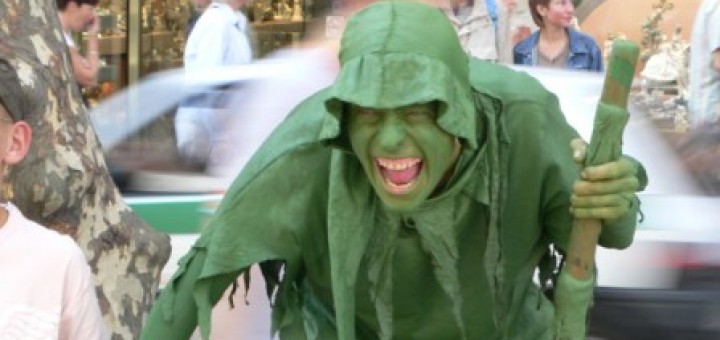
The following text was used for a spoken column at the ICCT’s expert meeting on Freedom from Fear: Answering Terrorism with Public Resilience on 3 October 2011. Fear is a drug, and policies and management tactics combined with politicians who use feelings of insecurity and plead loudly for ever harder measures to resolve fear, are nothing less than socially accepted models to achieve ritualistic highs and illusions of safety that in the end do nothing except than cultivate that fear.
Het wetenschappelijke tijdschrift voor Religie, Recht en Beleid heeft een themanummer over de relatie tussen religie en (gevoelens van) veiligheid. In dit themanummer, onder redactie van Beatrice de Graaf en Sipco Vellenga. Bijdragen onder meer van Ernst Hirsch Ballin, Bas van Stokkom, Beatrice de Graaf en uw favoriete blogger.
Afgelopen vrijdag was er in jongerencentrum Argan in Amsterdam een debat over de ‘final fatwa’ van GroenLinks Tweede Kamerlid Tofik Dibi. Tijdens deze avond onder leiding van Nadia Bouras ging Tofik Dibi in debat met jongerenimam Yasin elForkani en de zaal over de inhoud en vorm van Final Fatwa. Ik had de eer een inleiding te mogen geven. Hier de tekst van de inleiding en een korte impressie van de avond.
A weekly round up of writings on the Internet, some relevant for my research, some political, some funny but all of them interesting (Dutch/English). (As usual to a large extent based upon suggestions from Dutch, other European, American and Middle Eastern readers. Thank you all.) This week featuring 10 years after 9/11
Na de aanslagen van 11 september stond terrorisme natuurlijk hoog op de politieke agenda. En dan met name terreuraanslagen (mogelijkerwijze) gepleegd door moslims. Na 9/11 werden moslims dan ook nauwgezet gemonitored door de Nederlandse staat zoals blijkt uit een recent vrijgegeven ‘secret cable’ bij Wikileaks. Het beeld is ontluisterend.
Since 9/11 the issue of radicalization of Muslims is top priority on many policy and research agenda’s. A large industry of research, policy making and advising, counter-radicalization programs and so on has emerged. In this post I will focus on research and the very basic question of what we know by now about radicalization.
A weekly round up of writings on the Internet, some relevant for my research, some political, some funny but all of them interesting (Dutch/English). (As usual to a large extent based upon suggestions from Dutch, other European, American and Middle Eastern readers. Thank you all.) This week featuring politics of food, fasting and feasting.
Based on interviews with 1,033 Muslim Americans the PEW report looks at Muslim Americans’ political and social attitudes; religious views and practices; experiences and difficulties faced after 9/11; views of Islamic extremism; views of US efforts at combating terrorism; and views of national conditions. In addition to updating trends from earlier Pew Research surveys, the report includes comparisons of Muslim Americans with the general public and with Muslims in other countries, as well as detailed demographic information.
Het is tegenwoordig een geliefd tijdverdrijf “Wilders is hedendaags fascist” vs. Waarom Wilders geen fascist is. Nu is het maken van een dergelijke vergelijking voor politiek gebruik nogal riskant vind ik. Net zoals Wilders graag de vergelijking mag trekken tussen islam enerzijds en communisme en fascisme anderzijds. U weet waarschijnlijk allemaal wel hoe we van de vreselijke fascisten zijn afgekomen; niet (alleen) door met hen thee te drinken, maar door tegen hen te vechten. Maar een vergelijking als analyse instrument is wel zinvol; zowel voor die aspecten waar de analogie niet opgaat als voor de aspecten waar dat wel het geval is.
It is important I think to see how Breilvik’s ideas (but not his actions) not only are derived from bloggers and politicians but also who they resonate with and are grounded on a grassroots everyday level. I also think the Netherlands can give some clues to that and is relevant here since Breivik partly derived his inspiration from Wilders’ Freedom Party ideology. In this blog therefore I will present some material of the Dutch section of the Ethnobarometer research in which we held focus group discussions on issues of security and culture after 9/11, the murder of Van Gogh and the French riots and Muhammad Cartoons. It shows how people struggle with tolerance on the one hand (seen as an important part of Dutch identity) and fear of Islamization and Muslims on the other hand expressed by different modalities of culture talk. While in the case of Bawer, Breilvik and Wilders the presence of Islam and Muslims are seen as the cause of conflict and by definition leading to conflicts, the Ethnobarometer research also revealed mechanisms that can de-escalate conflicts.
Privacy & Cookies: This site uses cookies. By continuing to use this website, you agree to their use.
To find out more, including how to control cookies, see here:
Cookie Policy