| M | T | W | T | F | S | S |
|---|---|---|---|---|---|---|
| « Sep | ||||||
| 1 | 2 | 3 | 4 | 5 | ||
| 6 | 7 | 8 | 9 | 10 | 11 | 12 |
| 13 | 14 | 15 | 16 | 17 | 18 | 19 |
| 20 | 21 | 22 | 23 | 24 | 25 | 26 |
| 27 | 28 | 29 | 30 | |||
Pages
- About
- C L O S E R moves to….C L O S E R
- Contact Me
- Interventions – Forces that Bind or Divide
- ISIM Review via Closer
- Publications
- Research
Categories
- (Upcoming) Events (33)
- [Online] Publications (26)
- Activism (117)
- anthropology (113)
- Method (13)
- Arts & culture (88)
- Asides (2)
- Blind Horses (33)
- Blogosphere (192)
- Burgerschapserie 2010 (50)
- Citizenship Carnival (5)
- Dudok (1)
- Featured (5)
- Gender, Kinship & Marriage Issues (265)
- Gouda Issues (91)
- Guest authors (58)
- Headline (76)
- Important Publications (159)
- Internal Debates (275)
- International Terrorism (437)
- ISIM Leiden (5)
- ISIM Research II (4)
- ISIM/RU Research (171)
- Islam in European History (2)
- Islam in the Netherlands (219)
- Islamnews (56)
- islamophobia (59)
- Joy Category (56)
- Marriage (1)
- Misc. News (891)
- Morocco (70)
- Multiculti Issues (749)
- Murder on theo Van Gogh and related issues (326)
- My Research (118)
- Notes from the Field (82)
- Panoptic Surveillance (4)
- Public Islam (244)
- Religion Other (109)
- Religious and Political Radicalization (635)
- Religious Movements (54)
- Research International (55)
- Research Tools (3)
- Ritual and Religious Experience (58)
- Society & Politics in the Middle East (159)
- Some personal considerations (146)
- Deep in the woods… (18)
- Stadsdebat Rotterdam (3)
- State of Science (5)
- Twitwa (5)
- Uncategorized (74)
- Young Muslims (459)
- Youth culture (as a practice) (157)
General
- ‘In the name of Allah, Most Gracious, Most Merciful’
- – Lotfi Haddi –
- …Kelaat Mgouna…….Ait Ouarchdik…
- ::–}{Nour Al-Islam}{–::
- Al-islam.nl De ware godsdienst voor Allah is de Islam
- Allah Is In The House
- Almaas
- amanullah.org
- Amr Khaled Official Website
- An Islam start page and Islamic search engine – Musalman.com
- arabesque.web-log.nl
- As-Siraat.net
- assadaaka.tk
- Assembley for the Protection of Hijab
- Authentieke Kennis
- Azaytouna – Meknes Azaytouna
- berichten over allochtonen in nederland – web-log.nl
- Bladi.net : Le Portail de la diaspora marocaine
- Bnai Avraham
- BrechtjesBlogje
- Classical Values
- De islam
- DimaDima.nl / De ware godsdienst? bij allah is de islam
- emel – the muslim lifestyle magazine
- Ethnically Incorrect
- fernaci
- Free Muslim Coalition Against Terrorism
- Frontaal Naakt. Ongesluierde opinies, interviews & achtergronden
- Hedendaagse wetenswaardigheden…
- History News Network
- Homepage Al Nisa
- hoofddoek.tk – Een hoofddoek, je goed recht?
- IMRA: International Muslima Rights Association
- Informed Comment
- Insight to Religions
- Instapundit.com
- Interesting Times
- Intro van Abdullah Biesheuvel
- islaam
- Islam Ijtihad World Politics Religion Liberal Islam Muslim Quran Islam in America
- Islam Ijtihad World Politics Religion Liberal Islam Muslim Quran Islam in America
- Islam Website: Islam, Islamic Studies, Arabic, Religion
- Islamforum
- Islamic Philosophy Online
- Islamica Magazine
- islamicate
- Islamophobia Watch
- Islamsevrouw.web-log.nl
- Islamwereld-alles wat je over de Islam wil weten…
- Jihad: War, Terrorism, and Peace in Islam
- JPilot Chat Room
- Madrid11.net
- Marocstart.nl – De marokkaanse startpagina!
- Maryams.Net – Muslim Women and their Islam
- Michel
- Modern Muslima.com
- Moslimjongeren Amsterdam
- Moslimjongeren.nl
- Muslim Peace Fellowship
- Muslim WakeUp! Sex & The Umma
- Muslimah Connection
- Muslims Against Terrorism (MAT)
- Mutma’inaa
- namira
- Otowi!
- Ramadan.NL
- Religion, World Religions, Comparative Religion – Just the facts on the world\’s religions.
- Ryan
- Sahabah
- Salafi Start Siden – The Salafi Start Page
- seifoullah.tk
- Sheikh Abd al Qadir Jilani Home Page
- Sidi Ahmed Ibn Mustafa Al Alawi Radhiya Allahu T’aala ‘Anhu (Islam, tasawuf – Sufism – Soufisme)
- Stichting Vangnet
- Storiesofmalika.web-log.nl
- Support Sanity – Israel / Palestine
- Tekenen van Allah\’s Bestaan op en in ons Lichaam
- Terrorism Unveiled
- The Coffee House | TPMCafe
- The Inter Faith Network for the UK
- The Ni’ma Foundation
- The Traveller’s Souk
- The \’Hofstad\’ terrorism trial – developments
- Thoughts & Readings
- Uitgeverij Momtazah | Helmond
- Un-veiled.net || Un-veiled Reflections
- Watan.nl
- Welkom bij Islamic webservices
- Welkom bij vangnet. De site voor islamitische jongeren!
- welkom moslim en niet moslims
- Yabiladi Maroc – Portail des Marocains dans le Monde
Dutch [Muslims] Blogs
- Hedendaagse wetenswaardigheden…
- Abdelhakim.nl
- Abdellah.nl
- Abdulwadud.web-log.nl
- Abou Jabir – web-log.nl
- Abu Bakker
- Abu Marwan Media Publikaties
- Acta Academica Tijdschrift voor Islam en Dialoog
- Ahamdoellilah – web-log.nl
- Ahlu Soennah – Abou Yunus
- Ahlul Hadeeth
- Ahlul Hadeeth
- Al Moudjahideen
- Al-Adzaan
- Al-Islaam: Bismilaahi Rahmaani Rahiem
- Alesha
- Alfeth.com
- Anoniempje.web-log.nl
- Ansaar at-Tawheed
- At-Tibyan Nederland
- beni-said.tk
- Blog van moemina3 – Skyrock.com
- bouchra
- CyberDjihad
- DE SCHRIJVENDE MOSLIMS
- DE VROLIJKE MOSLIM ;)
- Dewereldwachtopmij.web-log.nl
- Dien~oel~Islaam
- Eali.web-log.nl
- Een genade voor de werelden
- Enige wapen tegen de Waarheid is de leugen…
- ErTaN
- ewa
- Ezel & Os v2
- Gizoh.tk [.::De Site Voor Jou::.]
- Grappige, wijze verhalen van Nasreddin Hodja. Turkse humor.
- Hanifa Lillah
- hayya~ala~assalaah!
- Het laatste nieuws lees je als eerst op Maroc-Media
- Homow Universalizzz
- Ibn al-Qayyim
- IslaamLive Mail
- IslaamLive Mail
- Islam Blog – Juli 2007
- Islam in het Nieuws – web-log.nl
- Islam, een religie
- Islam, een religie
- Islamic Sisters – web-log.nl
- Islamiway’s Weblog
- Islamtawheed’s Blog
- Jihaad
- Jihad
- Journalista
- La Hawla Wa La Quwatta Illa Billah
- M O S L I M J O N G E R E N
- M.J.Ede – Moslimjongeren Ede
- Mahdi\’s Weblog | Vrijheid en het vrije woord | punt.nl: Je eigen gratis weblog, gratis fotoalbum, webmail, startpagina enz
- Maktab.nl (Zawaj – islamitische trouwsite)
- Marocdream.nl – Home
- Marokkaanse.web-log.nl
- Marokkanen Weblog
- Master Soul
- Miboon
- Miesjelle.web-log.nl
- Mijn Schatjes
- Moaz
- moeminway – web-log.nl
- Moslima_Y – web-log.nl
- mosta3inabilaah – web-log.nl
- Muhaajir in islamitisch Zuid-Oost Azië
- Mumin al-Bayda (English)
- Mustafa786.web-log.nl
- Oprecht – Poort tot de kennis
- Said.nl
- saifullah.nl – Jihad al-Haq begint hier!
- Salaam Aleikum
- Sayfoudien – web-log.nl
- soebhanAllah
- Soerah19.web-log.nl – web-log.nl
- Steun Palestina
- Stichting Moslimanetwerk
- Stories of Malika
- supermaroc
- Ummah Nieuws – web-log.nl
- Volkskrant Weblog — Alib Bondon
- Volkskrant Weblog — Moslima Journalista
- Vraag en antwoord…
- wat is Islam
- Wat is islam?
- Weblog – a la Maroc style
- website van Jamal
- Wij Blijven Hier
- Wij Blijven Hier
- www.BenAyad.be – Islam en Actua
- www.moslima.web-log.nl
- Yakini Time
- Youth Of Islam
- Youth Of Islam
- [fikra]
Non-Dutch Muslims Blogs
- Lanallah __Islamic BlogZine__
- This journey ends but only with The Beginning
- ‘the middle place’
- …Never Judge a Person By His or Her Blog…
- …under the tree…
- A Comment on PMUNA
- A Dervish’s Du`a’
- A Family in Baghdad
- A Garden of Children
- A Muslim Mother’s Thoughts / Islamic Parenting
- A Struggle in Uncertainty, Such is Life
- About Afghanistan
- adnan.org: good design, bad idea
- Afiyah
- Ahmeds World of Islam
- Al Musawwir
- Al-Musharaka
- Almiraya tBLOG – O, happy the soul that saw its own faults
- Almusawwir
- an open window
- Anak Alam
- aNaRcHo AkBaR
- Anthology
- AnthroGal’s World
- Arabian Passion
- ArRihla
- Articles Blog
- Asylum Seeker
- avari-nameh
- Baghdad Burning
- Being Noor Javed
- Bismillah
- bloggin’ muslimz.. Linking Muslim bloggers around the globe
- Blogging Islamic Perspective
- Chapati Mystery
- City of Brass – Principled pragmatism at the maghrib of one age, the fajr of another
- COUNTERCOLUMN: All Your Bias Are Belong to Us
- d i z z y l i m i t s . c o m >> muslim sisters united w e b r i n g
- Dar-al-Masnavi
- Day in the life of an American Muslim Woman
- Don’t Shoot!…
- eat-halal guy
- Eye on Gay Muslims
- Eye on Gay Muslims
- Figuring it all out for nearly one quarter of a century
- Free Alaa!
- Friends, Romans, Countrymen…. lend me 5 bux!
- From Peer to Peer ~ A Weblog about P2P File & Idea Sharing and More…
- Ghost of a flea
- Ginny’s Thoughts and Things
- God, Faith, and a Pen: The Official Blog of Dr. Hesham A. Hassaballa
- Golublog
- Green Data
- gulfreporter
- Hadeeth Blog
- Hadouta
- Hello from the land of the Pharaoh
- Hello From the land of the Pharaohs Egypt
- Hijabi Madness
- Hijabified
- HijabMan’s Blog
- Ihsan-net
- Inactivity
- Indigo Jo Blogs
- Iraq Blog Count
- Islam 4 Real
- Islamiblog
- Islamicly Locked
- Izzy Mo’s Blog
- Izzy Mo’s Blog
- Jaded Soul…….Unplugged…..
- Jeneva un-Kay-jed- My Bad Behavior Sanctuary
- K-A-L-E-I-D-O-S-C-O-P-E
- Lawrence of Cyberia
- Letter From Bahrain
- Life of an American Muslim SAHM whose dh is working in Iraq
- Manal and Alaa\’s bit bucket | free speech from the bletches
- Me Vs. MysElF
- Mental Mayhem
- Mere Islam
- Mind, Body, Soul : Blog
- Mohammad Ali Abtahi Webnevesht
- MoorishGirl
- Muslim Apple
- muslim blogs
- Muslims Under Progress…
- My heart speaks
- My Little Bubble
- My Thoughts
- Myself | Hossein Derakhshan’s weblog (English)
- neurotic Iraqi wife
- NINHAJABA
- Niqaabi Forever, Insha-Allah Blog with Islamic nasheeds and lectures from traditional Islamic scholars
- Niqabified: Irrelevant
- O Muhammad!
- Otowi!
- Pak Positive – Pakistani News for the Rest of Us
- Periphery
- Pictures in Baghdad
- PM’s World
- Positive Muslim News
- Procrastination
- Prophet Muhammad
- Queer Jihad
- Radical Muslim
- Raed in the Middle
- RAMBLING MONOLOGUES
- Rendering Islam
- Renegade Masjid
- Rooznegar, Sina Motallebi’s WebGard
- Sabbah’s Blog
- Salam Pax – The Baghdad Blog
- Saracen.nu
- Scarlet Thisbe
- Searching for Truth in a World of Mirrors
- Seeing the Dawn
- Seeker’s Digest
- Seekersdigest.org
- shut up you fat whiner!
- Simply Islam
- Sister Scorpion
- Sister Soljah
- Sister Surviving
- Slow Motion in Style
- Sunni Sister: Blahg Blahg Blahg
- Suzzy’s id is breaking loose…
- tell me a secret
- The Arab Street Files
- The Beirut Spring
- The Islamic Feminista
- The Land of Sad Oranges
- The Muslim Contrarian
- The Muslim Postcolonial
- The Progressive Muslims Union North America Debate
- The Rosetta Stone
- The Traceless Warrior
- The Wayfarer
- TheDesertTimes
- think halal: the muslim group weblog
- Thoughts & Readings
- Through Muslim Eyes
- Turkish Torque
- Uncertainty:Iman and Farid’s Iranian weblog
- UNMEDIA: principled pragmatism
- UNN – Usayd Network News
- Uzer.Aurjee?
- Various blogs by Muslims in the West. – Google Co-op
- washed away memories…
- Welcome to MythandCulture.com and to daily Arrows – Mythologist, Maggie Macary’s blog
- word gets around
- Writeous Sister
- Writersblot Home Page
- www.BenAyad.be – Islam en Actua
- www.Mas’ud’s blog
- \’Aqoul
- ~*choco-bean*~
General Islam Sites
- :: Islam Channel :: – Welcome to IslamChannel Official Website
- Ad3iyah(smeekbeden)
- Al-maktoum Islamic Centre Rotterdam
- Assalamoe Aleikoem Warhmatoe Allahi Wa Barakatuhoe.
- BouG.tk
- Dades Islam en Youngsterdam
- Haq Islam – One stop portal for Islam on the web!
- Hight School Teacher Muhammad al-Harbi\’s Case
- Ibn Taymiyah Pages
- Iskandri
- Islam
- Islam Always Tomorrow Yesterday Today
- Islam denounces terrorism.com
- Islam Home
- islam-internet.nl
- Islamic Artists Society
- Leicester~Muslims
- Mere Islam
- MuslimSpace.com | MuslimSpace.com, The Premiere Muslim Portal
- Safra Project
- Saleel.com
- Sparkly Water
- Statements Against Terror
- Understand Islam
- Welcome to Imaan UK website
Islamic Scholars
Social Sciences Scholars
- ‘ilm al-insaan: Talking About the Talk
- :: .. :: zerzaust :: .. ::
- After Sept. 11: Perspectives from the Social Sciences
- Andrea Ben Lassoued
- Anth 310 – Islam in the Modern World (Spring 2002)
- anthro:politico
- AnthroBase – Social and Cultural Anthropology – A searchable database of anthropological texts
- AnthroBlogs
- AnthroBoundaries
- Anthropologist Community
- anthropology blogs
- antropologi.info – Social and Cultural Anthropology in the News
- Arabist Jansen
- Between Secularization and Religionization Vrije Universiteit Amsterdam
- Bin Gregory Productions
- Blog van het Blaise Pascal Instituut
- Boas Blog
- Causes of Conflict – Thoughts on Religion, Identity and the Middle East (David Hume)
- Cicilie among the Parisians
- Cognitive Anthropology
- Comunidade Imaginada
- Cosmic Variance
- Critical Muslims
- danah boyd
- Deep Thought
- Dienekes’ Anthropology Blog
- Digital Islam
- Erkan\’s field diary
- Ethno::log
- Evamaria\’s ramblings –
- Evan F. Kohlmann – International Terrorism Consultant
- Experimental Philosophy
- For the record
- Forum Fridinum [Religionresearch.org]
- Fragments weblog
- From an Anthropological Perspective
- Gregory Bateson
- Islam & Muslims in Europe *)
- Islam, Islamic Studies, Arabic, Religion
- Islam, Muslims, and an Anthropologist
- Jeremy’s Weblog
- JourneyWoman
- Juan Cole – ‘Documents on Terrorist Abu Musab al-Zarqawi’
- Keywords
- Kijken naar de pers
- languagehat.com
- Left2Right
- Leiter Reports
- Levinas and multicultural society
- Links on Islam and Muslims
- log.squig.org
- Making Anthropology Public
- Martijn de Koning Research Pages / Onderzoekspaginas
- Material World
- MensenStreken
- Modern Mass Media, Religion and the Imagination of Communities
- Moroccan Politics and Perspectives
- Multicultural Netherlands
- My blog’s in Cambridge, but my heart is in Accra
- National Study of Youth and Religion
- Natures/Cultures
- Nomadic Thoughts
- On the Human
- Philip Greenspun’s Weblog:
- Photoethnography.com home page – a resource for photoethnographers
- Qahwa Sada
- RACIAL REALITY BLOG
- Religion Gateway – Academic Info
- Religion News Blog
- Religion Newswriters Association
- Religion Research
- rikcoolsaet.be – Rik Coolsaet – Homepage
- Rites [Religionresearch.org]
- Savage Minds: Notes and Queries in Anthropology – A Group Blog
- Somatosphere
- Space and Culture
- Strange Doctrines
- TayoBlog
- Teaching Anthropology
- The Angry Anthropologist
- The Gadflyer
- The Immanent Frame | Secularism, religion and the public sphere
- The Onion
- The Panda\’s Thumb
- TheAnthroGeek
- This Blog Sits at the
- This Blog Sits at the intersection of Anthropology & Economics
- verbal privilege
- Virtually Islamic: Research and News about Islam in the Digital Age
- Wanna be an Anthropologist
- Welcome to Framing Muslims – International Research Network
- Yahya Birt
Women's Blogs / Sites
- * DURRA * Danielle Durst Britt
- -Fear Allah as He should be Feared-
- a literary silhouette
- a literary silhouette
- A Thought in the Kingdom of Lunacy
- AlMaas – Diamant
- altmuslimah.com – exploring both sides of the gender divide
- Assalaam oe allaikoum Nour al Islam
- Atralnada (Morning Dew)
- ayla\’s perspective shifts
- Beautiful Amygdala
- bouchra
- Boulevard of Broken Dreams
- Chadia17
- Claiming Equal Citizenship
- Dervish
- Fantasy web-log – web-log.nl
- Farah\’s Sowaleef
- Green Tea
- hayya~ala~assalaah!
- Hilsen Fra …
- Islamucation
- kaleidomuslima: fragments of my life
- Laila Lalami
- Marhaban.web-log.nl – web-log.nl
- Moslima_Y – web-log.nl
- Muslim-Refusenik The official website of Irshad Manji
- Myrtus
- Noor al-Islaam – web-log.nl
- Oh You Who Believe…
- Raising Yousuf: a diary of a mother under occupation
- SAFspace
- Salika Sufisticate
- Saloua.nl
- Saudi Eve
- SOUL, HEART, MIND, AND BODY…
- Spirit21 – Shelina Zahra Janmohamed
- Sweep the Sunshine | the mundane is the edge of glory
- Taslima Nasrin
- The Color of Rain
- The Muslimah
- Thoughts Of A Traveller
- Volkskrant Weblog — Islam, een goed geloof
- Weblog Raja Felgata | Koffie Verkeerd – The Battle | punt.nl: Je eigen gratis weblog, gratis fotoalbum, webmail, startpagina enz
- Weblog Raja Felgata | WRF
- Writing is Busy Idleness
- www.moslima.web-log.nl
- Zeitgeistgirl
- Zusters in Islam
- ~:: MARYAM ::~ Tasawwuf Blog
Ritueel en religieuze beleving Nederland
- – Alfeth.com – NL
- :: Al Basair ::
- Abu Marwan Media Publikaties
- Ahlalbait Jongeren
- Ahlul Hadeeth
- Ahlul Hadeeth
- Al-Amien… De Betrouwbare – Home
- Al-Ummah
- Al-Ummah
- Al-Ummah
- Al-Wasatiyyah.com – Home
- Anwaar al-Islaam
- anwaaralislaam.tk
- Aqiedah’s Weblog
- Arabische Lessen – Home
- Arabische Lessen – Home
- Arrayaan.net
- At-taqwa.nl
- Begrijp Islam
- Bismillaah – deboodschap.com
- Citaten van de Salaf
- Dar al-Tarjama WebSite
- Dawah-online.com
- de koraan
- de koraan
- De Koran . net – Het Islaamitische Fundament op het Net – Home
- De Leidraad, een leidraad voor je leven
- Dien~oel~Islaam
- Dien~oel~Islaam
- Faadi Community
- Ghimaar
- hayya~ala~assalaah!
- hayya~ala~assalaah!
- Ibn al-Qayyim
- IMAM-MALIK-Alles over Islam
- IQRA ROOM – Koran studie groep
- Islaam voor iedereen
- Islaam voor iedereen
- Islaam: Terugkeer naar het Boek (Qor-aan) en de Soennah volgens het begrip van de Vrome Voorgangers… – Home
- Islaam: Terugkeer naar het Boek (Qor-aan) en de Soennah volgens het begrip van de Vrome Voorgangers… – Home
- IslaamLive Mail
- IslaamLive Mail
- IslaamLive Mail
- islam :: messageboard
- Islam City NL, Islam en meer
- Islam, een religie
- Islamia.nl – Islamic Shop – Islamitische Winkel
- Islamitische kleding
- Islamitische kleding
- Islamitische smeekbedes
- islamtoday
- islamvoorjou – Informatie over Islam, Koran en Soenah
- kebdani.tk
- KoranOnline.NL
- Lees de Koran – Een Openbaring voor de Mensheid
- Lifemakers NL
- Marocstart.nl | Islam & Koran Startpagina
- Miesbahoel Islam Zwolle
- Mocrodream Forums
- Moslims in Almere
- Moslims online jong en vernieuwend
- Nihedmoslima
- Oprecht – Poort tot de kennis
- Quraan.nl :: quran koran kuran koeran quran-voice alquran :: Luister online naar de Quraan
- Quraan.nl online quraan recitaties :: Koran quran islam allah mohammed god al-islam moslim
- Selefie Nederland
- Stichting Al Hoeda Wa Noer
- Stichting Al Islah
- StION Stichting Islamitische Organisatie Nederland – Ahlus Sunnat Wal Djama\’ah
- Sunni Publicaties
- Sunni.nl – Home
- Teksten van Aboe Ismaiel
- Terug Naar De Dien – Home
- Terug Naar De Dien – Home
- Terug Naar De Dien – Home
- Uw Keuze
- www.ahloelhadieth.com
- www.ahloelhadieth.com
- www.al-thabaat.com
- www.hijaab.com
- www.uwkeuze.net
- Youth Of Islam
- Zegswijzen van de Wijzen
- \’\’ Leid ons op het rechte pad het pad degenen aan wie Gij gunsten hebt geschonken\’\’
Muslim News
Moslims & Maatschappij
Arts & Culture
- : : SamiYusuf.com : : Copyright Awakening 2006 : :
- amir normandi, photographer – bio
- Ani – SINGING FOR THE SOUL OF ISLAM – HOME
- ARTEEAST.ORG
- AZIZ
- Enter into The Home Website Of Mecca2Medina
- Kalima Translation – Reviving Translation in the Arab world
- lemonaa.tk
- MWNF – Museum With No Frontiers – Discover Islamic Art
- Nader Sadek
Misc.
'Fundamentalism'
Islam & commerce
2
Morocco
[Online] Publications
- ACVZ :: | Preliminary Studies | About marriage: choosing a spouse and the issue of forced marriages among Maroccans, Turks and Hindostani in the Netherlands
- ACVZ :: | Voorstudies | Over het huwelijk gesproken: partnerkeuze en gedwongen huwelijken onder Marokkaanse, Turkse en Hindostaanse Nederlanders
- Kennislink – ‘Dit is geen poep wat ik praat’
- Kennislink – Nederlandse moslims
Religious Movements
- :: Al Basair ::
- :: al Haqq :: de waarheid van de Islam ::
- ::Kalamullah.Com::
- Ahloelhadieth.com
- Ahlul Hadeeth
- al-Madinah (Medina) The City of Prophecy ; Islamic University of Madinah (Medina), Life in Madinah (Medina), Saudi Arabia
- American Students in Madinah
- Aqiedah’s Weblog
- Dar al-Tarjama WebSite
- Faith Over Fear – Feiz Muhammad
- Instituut voor Opvoeding & Educatie
- IslaamLive Mail
- IslaamLive Mail
- islamtoday
- Moderate Muslims Refuted
- Rise And Fall Of Salafi Movement in the US by Umar Lee
- Selefie Dawah Nederland
- Selefie Nederland
- Selefienederland
- Stichting Al Hoeda Wa Noer
- Teksten van Aboe Ismaiel
- www.ahloelhadieth.com
- www.BenAyad.be – Islam en Actua
- Youth Of Islam

Het Nederlands Instituut Marokko (NIMAR) moet open blijven!
Posted on February 4th, 2014 by martijn.
Categories: ISIM/RU Research, Morocco.
Het Nederlands Instituut Marokko (NIMAR) ondersteunt en faciliteert alle vormen van uitwisseling en samenwerking met Marokko op het gebied van hoger onderwijs en wetenschappelijk onderzoek. Het NIMAR is dan ook een onmisbare schakel in samenwerking van Europese en Marokkaanse onderzoekers, studenten, journalisten en andere belangstellenden.
Het NIMAR is sinds 2007 gevestigd in Rabat, de hoofdstad van Marokko. Op het NIMAR worden diverse onderwijsprogramma’s aangeboden. Naast de minor Arabisch, is dat een minor Social Studies of Morocco en zomercursussen Marokkaans Arabisch en (Klassiek) Arabisch. In samenwerking met verschillende universiteiten en hogescholen worden programma’s op maat aangeboden.
Het brede publiek van het NIMAR
Onderzoekers kunnen bij het NIMAR terecht voor vele vormen van ondersteuning, studenten die een stage in Marokko willen doen worden door het NIMAR geholpen en groepen die op studiereis naar Marokko willen kunnen een beroep doen op het NIMAR voor de invulling van hun reisprogramma.
Hier kunnen studenten en onderzoekers op een veilige manier studeren of werken. Dat daar veel belangstelling voor is, blijkt uit de grote toeloop van studenten naar het NIMAR, het Nederlands Instituut in Marokko. Op 3 februari beginnen maar liefst 34 studenten hier aan hun minor Arabisch. Nog niet eerder mocht het NIMAR, dat al zeven jaar is gevestigd in Rabat, zich op zo’n grote toeloop verheugen. Dat heeft uiteraard veel te maken met de onrust in de regio, waardoor studenten een veilige plaats opzoeken. Ook voor buitenlandse studenten geldt dat zij vaker voor Marokko kiezen dan voor andere Arabische landen. Amerika heeft zelfs alle studenten uit de Arabische regio terug getrokken: zij mogen alleen in Marokko verblijven.
Ondersteuning en veiligheid
Voor Nederlandse studenten en onderzoekers is het aantrekkelijk om op een Nederlands instituut zoals het NIMAR terug te kunnen vallen. Hier is immers de deskundigheid aanwezig om ze op een hoogwaardige wijze onderwijs te geven en te begeleiden. Door de voortdurende onrust in Egypte is het zusterinstituut in Cairo (NVIC) op dit moment niet toegankelijk voor studenten; hun veiligheid kan niet gegarandeerd worden. Het Nederlands Instituut in Damascus (NIASD) is in 2013 opgeheven. Het NIMAR is gelukkig nog wel open. Het feit dat de Arabische wereld zeer onrustig is, maakt dat de noodzaak dat studenten deskundigheid en ervaring in deze regio kunnen opdoen alleen maar groter; zij verkrijgen hierdoor kennis over de Arabische wereld waar veel om te doen is. Ook is de aandacht voor arabistiek gunstig. Nederland heeft immers behoefte aan goed opgeleide arabisten om contact te houden met regio en de problemen te kunnen duiden.
Voor de studenten heeft het volgen van onderwijs op een Nederlands instituut in het buitenland veel voordelen. De kans op studievertraging is minimaal omdat de kwaliteit van het programma bij hun opleiding bekend is en de behaalde studiepunten volledig worden erkend. Dat geldt niet zonder meer voor het studeren aan een buitenlandse universiteit. Het niveau van het programma is bovendien gegarandeerd door de intensieve contacten tussen het instituut en de Nederlandse instellingen.
De groep die momenteel voor een halfjaar op het NIMAR verblijft is als volgt samengesteld: 18 studenten van Nederlandse universiteiten, 13 van Nederlandse hogescholen en 3 van een Vlaamse universiteit. Daarvan volgen 24 studenten de minor Arabisch voor gevorderden en 10 de minor voor beginners.
NIMAR in zijn voortbestaan bedreigd
Helaas wordt het NIMAR in zijn voortbestaan bedreigd omdat de financiering van het NIMAR na 2015 stopt.
Om sluiting te voorkomen heeft het NIMAR nu een online petitie gestart waarin het ministerie van Onderwijs en de bestuurders van hogescholen en universiteiten worden opgeroepen mee te werken aan een oplossing.
Like het NIMAR op Facebook en teken de petitie om het NIMAR open te houden: HIER!
Marriage as punishment: documentary about women’s rights in Morocco
Posted on March 15th, 2013 by martijn.
Categories: Activism, Arts & culture, Gender, Kinship & Marriage Issues, Headline, Morocco.
Guest Author: Hasna Ankal
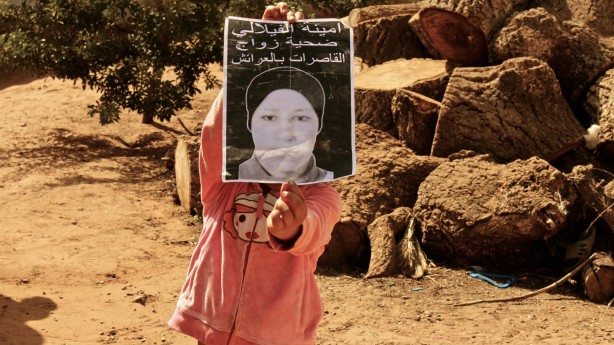
Little sister of Amina Filalli holding the picture of Amina. © Riley Dufurrena
Nadir Bouhmouch, a 22-year-old film student in the US, was determined to shoot a documentary during his summer vacation in Morocco. The suicide of the 16-year-old Amina Filali from Larache, who presumably was forced to marry her rapist, gave him the idea to use her story as the main topic for a documentary about women’s rights in his country of birth. He named the film 475 – When Marriage Becomes Punishment, with 475 referring to the article of the Moroccan penal code that made Filali’s marriage possible.
Bouhmouch released the film online on 21 February this year, in commemoration of another Moroccan woman: on 21 February 2011 Fadoua Laroui set herself on fire after she was excluded from a social housing scheme as a single mother. He also chose February because in that month the 20 February Movement, a Moroccan movement that organises demonstrations for democracy, marked its second anniversary.
As a way to protest he didn’t ask the Moroccan authorities for permission to make the documentary. “We didn’t want any permission”, he says. By ‘we’ he is referring to the members of Guerrilla Cinema, a collective of young Moroccan film makers who want to make films without censorship. “To make films without permission is a form of civil disobedience. This is a protest against the government’s regulation of films. We didn’t want to be endorsed by something we don’t believe in.”
For Bouhmouch and his crew the obstacles were limited to a few questionings by local judges and a wali (regional governor) who allowed the film makers to film because they were students. Sometimes it’s obvious the film was made by students lacking expensive professional material. “That was to not attract any attention. It’s a clandestine way of making films at Guerrilla Cinema: not always with a big stick with a microphone, no big camera and no interviews in public. We minimised our crew and that has aesthetic and technical consequences.”

The film crew during an interview with the father of Amina Filali in Larache, August 2012. © Hamza Mahfoudi
The idea for the documentary came a year ago when Moroccan activists started a discussion in Morocco about women’s rights and the unjust laws. “I didn’t even know such a law existed, or at least not in the way media presented it, because it sounded very barbaric.” Based on article 475 of the Moroccan penal code a rapist could avoid punishment if he would marry his victim. Could, because in January 2013 the minister of Justice announced plans to change this law.
When watching the film it soon becomes clear there are different versions to Filali’s story. “We don’t know what exactly happened either”, Bouhmouch says. “The media presented a typical orientalist story of a Muslim girl who became a victim of what is illustrated as a barbaric culture. We discovered that there were different stories. I think Amina had a relationship, but got raped while she was in that relationship. The Moroccan government doesn’t recognise rape within a relationship or marriage. We discovered a very complex story and that is what the media missed.” Bouhmouch concludes further that Amina’s family wanted a marriage after her relationship became public, and that her rapist’s parents didn’t want a daughter-in-law who lost her virginity. “So her parents brought the case to court to force them to get married. For girls like Amina in that situation there is no other option but to agree.”
In his film Bouhmouch shows a second story: that of the second wife of Amina Filali’s father. This woman reveals how her husband is making her life hell with abuse. This story sharply contrasts with her husband declaring in front of the camera how he mourns his daughter’s fate and wishes no woman would be treated like that. “His attitude resembles that of the Moroccan government. It is extremely patriarchal: it discriminates women in its own country but then talks about how it fights inequality in international fora”, Bouhmouch explains.
‘It’s not your fault’
But for the film crew the goal of the documentary was not to change the law, but to restart a discussion about feminism. Bouhmouch: “I don’t want to tell people what to think of the case. I am a man too and have been exposed to a patriarchal society in both Morocco and the United States, so I also have this type of mindset.” The women in his crew reminded him of this. “Working with Houda Lamqaddam was great”, he says. Lamqaddam, 21 years old and a student in computer science and communication, became a rape victim when she was 17. She is a co-producer and narrator of 475 – When Marriage Becomes Punishment.
Last year when many Moroccans were discussing the death of Amina Filali and women’s rights online, Lamqaddam wrote on her blog about her experience as a rape victim. “I wanted to enter into the debate with my voice. I wanted to say to people that they should stop with the way they talk about rape victims. It was all about ‘how they feel’ and ‘what they should do’. For once I wanted to speak out myself.” On her blog she called on other girls and women to not hesitate to file a complaint if they were raped. ‘It’s not your fault’, she reassured them. She also wrote about how her family supported her all along. “Online I also received support after writing my story, but it felt so unfair: this support should go to a lot more women.”

The crew with Khadija Riyadi (president of the Moroccan human rights association AMDH). From left to right: Layla Belmahi, Nadir Bouhmouch, Khadija Riyadi, Amina Benalioulha, Youness Belghazi, Houda Lamqaddam and Hamza Mahfoudi. © Naji Tbel
It is Lamqaddam with whom the second wife of Amina Filali’s father shares her story in the film. “That was heartbreaking”, says Lamqaddam. “First because she told us a story no one had asked about. There were journalists and activists who went to talk with Amina Filali’s family and neighbours, but as a second wife she stayed in the background. She came to us herself. We were there with three people who had inferior filming equipment and an Iphone while the rest of the crew was elsewhere. She spoke, we recorded, and it felt as if there was nothing we could do for her.” Now this second wife is in contact with women’s organisations who could help her get a divorce.
Whether such women’s organisations can bring feminism forward in Morocco is a question to which Lamqaddam’s answer is mixed. “There are women who do a really good job, but their hands are tied by the government. Actually there are two kinds of women’s organisations. Either they exist for ‘make believe’: to show on television how we have human rights organisations in Morocco and to show to foreign government bodies that our government cares about women’s rights, because that is often a condition for financial support. Or there are women’s organisations of people who actually want to do something but can’t, because of the state structure that blocks them.”
‘Embarrassing’
The 18-year-old Layla Belmahi, another co-producer of 475 – When Marriage Becomes Punishment, also thinks the situation of Moroccan women deserves more attention. Belmahi is the founder of Woman Choufouch, the Moroccan version of the SlutWalk that denounces sexual harassment in the streets of Morocco. “Moroccan verbal harassment often start with the expression ‘Woman choufouch?’ (‘Can’t we even look?’)”, she explains. “We don’t just want media attention when a rape victim dies.” According to Belmahi Moroccan media and institutions make the work of women’s organisations unnecessarily difficult. “When an association wants a campaign on television, it has to pay the same airtime fee companies pay.” Until now Belmahi didn’t organise a demonstration against street harassment, but she and her supporters did participate with other associations in a sit-in for victims like Amina Filali.
Woman Choufouch, Guerrilla Cinema and the 20 February Movement have in common that they are led by the young generation of Moroccans who demand respect for human rights. Belmahi: “Activists are the most sensitive people in a society. They are the first to notice problems, to understand where they come from and to have the courage to denounce them.” Lamqaddam’s experience brings in a nuance. She noticed this kind of activists, too, sometimes see feminism as a luxury. “This even goes for some of my friends in the 20 February Movement who describe themselves as human rights activists or anarchists. If you talk with them about men and women, it’s still about the same gender roles. The way they talk about female politicians is embarrassing. For example, they nicknamed Nabila Mounib, who is the head of the socialist political party PSU, milf. That stands for mother I’d like to fuck. That’s how they describe attractive older women. This is something universal. Everytime I try to say something about this I’m the ‘hysterical feminist with no sense of humor’.”
That this mentality exists within the 20 February Movement troubles Lamqaddam. “The last thing we need is another structure that calls itself independent, free and positive and at the same time brings oppression with it.”
To watch the English version of the film:
Arab Version: HERE.
Hasna Ankal is editor of al.arte.magazine, journalist at Belgian newspaper Het Belang van Limburg, and a member of the Flemish youth press agency StampMedia. She writes about Islam, Amazigh culture, feminism, and Morocco. She wrote this piece for al. arte.magazine (Dutch and English) It is re-published here with permission of the author and al.arte.magazine. The photo’s have been used with kind permission of Nadir Bouhmouch.
Steunpunt Remigranten Marokko – Open Brief aan de Tweede Kamer
Posted on January 17th, 2012 by martijn.
Categories: Morocco, Multiculti Issues.
Aan Fractievoorzitters en leden tweede Kamer der Staten Generaal
Geachte heer, mevrouw,
Wij zijn verbijsterd over de besluitvorming van de Tweede Kamer betreffende het amendement van Spekman 33 000-VII nr. 7., dd 22.12.11. In dit amendement gaat het om een overbruggingssubsidie om het voortbestaan van de Stichting Steun Remigranten (SSR) in Marokko verder te verzekeren. Het gaat om een eenmalig bedrag van 100.000 die de doorstart en verdere ontwikkeling tot een zelfstandige organisatie mogelijk maakt. Het amendement is echter afgewezen!!
De afgelopen 23 jaren heeft SSR sociaal-juridische hulp verleend aan remigranten: vrouwen, mannen en jongeren uit Nederland op het gebied van belasting, SVB-zaken – AOW en ANW, gewijzigde wetgeving, beroepszaken en remigrantenregelingen. Vanuit deze basisvoorziening als steun- en meldpunt is door SSR al jarenlang sociaal-juridische hulp geboden aan vrouwen, kinderen en jongeren die slachtoffer zijn van achterlating en huwelijksdwang. Als het steunpunt wegvalt, valt daarmee ook de basis weg voor de eerste primaire hulp en begeleiding. Dit is fataal voor deze kwetsbare groepen.
Wie staan er nu in de kou?
Gedwongen achtergelaten vrouwen en kinderen, slachtoffers van huwelijksdwang en remigranten staan nu in de kou. Gedwongen achterlating en huwelijksdwang zijn ernstige vormen van geweld en in strijd met mensenrechten: rechten van vrouwen, kinderen en jongeren. Oorzaken voor achterlating zijn naast huwelijksdwang vaak relatie- en opvoedingsproblemen. De samenhang tussen achterlating, huwelijksdwang, huiselijk- en eergerelateerd geweld vereist afstemming en een gezamenlijke aanpak.
In Europees verband is SSR als transnationale organisatie dan ook een uniek voorbeeld inzake hulpverlening aan slachtoffers van achterlating en gedwongen huwelijk. De aanbevelingen in het rapport ‘Tegen de wil achtergelaten’ en het rapport ‘Tot het huwelijk gedwongen’ van de Advies Commissie voor Vreemdelingenzaken in 2005 hebben de samenwerking van SSR met betrokken organisaties in Nederland en Marokko sterk geïntensiveerd met name wat betreft vroegsignalering, voorlichting, preventie en hulpverlening. Het werk van SSR heeft een duidelijke meerwaarde op het gebied van sociaal-juridisch advies, hulp en ondersteuning richting bewustwording en zelfstandigheid van vrouwen en jongeren.
SSR heeft als transnationale organisatie de afgelopen jaren in samenwerking met o.a. de landelijke werkgroep Mudawwanah een belangrijke expertise opgebouwd op dit gebied. De keten van hulp-verlening vanaf de eerste melding tot en met de opvang is versterkt en SSR is een cruciale schakel tussen de Nederlandse ambassade in Marokko, IND, advocaten, vrouwenorganisaties en hulpverlenings-instellingen in Nederland en Marokko. Verwijzing naar de Nederlandse Ambassade in Rabat biedt geen oplossing voor deze groep.
Het opheffen van de SSR op dit moment is niet alleen fataal voor achtergelaten vrouwen, kinderen, jongeren en remigranten, maar ook voor dienst- en hulpverleners in Nederland en Marokko waarvoor SSR een belangrijke intermediair is. In het tegengaan van achterlating en huwelijksdwang blijft netwerkopbouw en versterking van samenwerking op nationaal en internationaal niveau voorwaarde voor een efficiënte aanpak. SSR is hier onmisbaar als bruggenbouwer.
Er zijn Kamervragen gesteld door PvdA en SP over gedwongen achterlating, niet alleen in Marokko maar in diverse landen van herkomst. Daarom is de overdracht van de expertise en ‘best practice’ van SSR naar partners in andere concentratielanden essentieel.
Door de afwijzing van het amendement blijkt dat de volksvertegenwoordiging geen oog heeft voor het belang van deze kwetsbare groepen maar alleen voor politiek eigenbelang. SSR heeft zich ingespannen voor de steun van Marokko op dit gebied en juist op het moment dat de Marokkaanse overheid haar verantwoordelijkheid gaat nemen laat Nederland het afweten. Gaan partijpolitieke belangen vóór de strijd tegen achterlating en huwelijksdwang?
Oproep aan politici en beleidsmakers:
Speel geen politiek machtsspel maar toon daadkracht in het tegengaan van achterlating en huwelijksdwang.
11 januari 2012
Landelijke Werkgroep Mudawwanah
e.mail: Mudawwanah@upcmail.nl
Ritual slaughter in the Netherlands – From animal to ethical meat
Posted on June 29th, 2011 by martijn.
Categories: anthropology, Morocco, Public Islam, Religion Other.
Update: see below
The Dutch banned ritual slaughtering by Muslims and Jews. In a proposal heavily condemned by Muslim and Jewish organizations the Party of the Animals wanted a complete ban on dhabiha and shechita in cases where the animals were not stunned before the killing; the ritual slaughtering by Muslims and Jews. The ban will mostly effect orthodox Jews since all of the shechita slaughtering involves animals fully conscious while in the case of dhabiba this is the case in only 25%-40%. In order to get this bill passed through the lower house of parliament (a second vote is necessary in the senate) a so-called typical Dutch compromise was established: Jewish and Muslim communities have a year to provide evidence that animals slaughtered by dhabiba and shechita (and not stunning them) do not experience more pain than those animals that are stunned before killing.
Food is much more than..just food. And even when it is just food it is of basic and existential importance to people. Many societies have food restrictions and so do many religions. Besides the Jewish and Islamic kosher and halal restrictions we have Hindu traditions pertaining to food pollution of different castes and within the Catholic tradition fish on Fridays is still (even in secular circles) a well-known phenomenon. Such food restrictions have several functions. First of all they are boundary markers; food culture practices mark who is ingroup and who is outgroup. Food practices are also reminders (and often daily reminders) to people’s moral responsibilities and obligations towards what is sacred. At the same time food is more than a reminder; it involves bodily practices and devotion as well, for example during prayer before dinner and during fasting. They also have a symbolic function in the sense that they explain, express and teach people about certain doctrines and dogmas; for example during fasting, the Eucharist and in vegetarianism. Food practices are also related to social structures of religious and ethnic groups; for example the role of the rabbi in Judaism with regard to kosher food but also differences between men and women in the production of food. And food has a very strong social function; producing and consuming food can reaffirm or even change (think about a first date with your partner) relationships with other people and there are elaborate etiquettes about how to eat. It can bring people together who may not share anything else or even have opposed understandings of the world as well as interests.
As one of my great examples in anthropology, Mary Douglas, has taught us, people distinghuish between food that is polluted (‘matter of out place’) and that which is not polluted. For example we usually do not like flies in our soup or worms in our salad. With regard to religious restrictions for food, (particular) animals are ‘out of place’. Food that is haram or not kosher is like a fly in a soup for some people. Purity and impurity should not be mixed and people should not eat impure or hybrid food; not only the fly in the soup is impure but the fly makes the whole soup impure. These food restrictions come from old (not in the sense of not modern) of what was good (even healthy) to eat and what not. At the same rituals can transform animals that are taboo into food that is allowed. It is not always clear whether these restrictions are implemented top down or bottom up; in the sense that food restrictions can also be religious legitimation of what was already common practice. Whatever is the case food ties people in contemporary society in practices, discourses and memories with their ancestors and with traditions that are larger than their individual lives in the here and now. What it comes down to is that ritual and food pertains to deeply held values, beliefs, practices and memories. For some people for example the idea of having to eat dogs, worms or insects is enough to be repulsed and shocked; the idea of having to eat other food that is taboo can invoke the same bodily reactions and emotions.
I think more or less the came can be said about food restrictions from the point of view of vegetarians and animal rights activists. This makes ‘food’ in the recent Dutch debates about ritual slaughtering a field where people battle over political, religious, economic, social and animal welfare issues. The Netherlands is now the second country to ban ritual slaughtering in recent years. Other countries such as Switzerland and the Scandinavian and Baltic countries also have bans which date from before World War II and probably not totally unrelated to anti-semitic tendencies of that time. So why now in the Netherlands?
Ritual Slaughter Controversy Unites Jews, Muslims door NewsLook
I do not think it is that speculative to say that the Animal Party has profitted from three major developments in Dutch society. First of all the animosity on ritual slaughtering is clearly related to the animosity about Islam. When the proposal for the bill was mentioned for the first time, the debate was about Islam and not about Jews.
Second the proposal and also the current result signals a change in the relation between the religious and the secular. With the current compromise the burden of proof is not on the state but on religous communities that ritual slaughtering without stunning is does not lead to animals experiencing greater pain than those that are stunned before they are killed. Given the evidence on that issue right now and because they have to show that something ‘is not’ this will be an almost impossible endeavour. In the voting in parliament the support for the Jewish and Muslim communities came largely from the three Christian parties who voted unanimously against the law. For some this is the victory of modernity and secular society over ancient or even backward religion, for the other it is attacking the freedom of religion in society and a few have even referred back to World War II when the shechita was forbidden by the Nazis. In this process both camps are created and subsequently heavily targeted. Certainly not all Muslims and Jews prefer the old way of slaughtering; some of them have spoken out, many have not and some have chosen sides with the community leaders opposing the ban. In the debate however it appears that all Muslims and Jews are against the new law. The other side is often targeted as supporters of the Freedom Party of Wilders (who struggled with this issue since the result is not only that Muslims will be targeted but also Jews and they want to uphold an image as defenders of the Jewish community and Israel; which in their rhetoric is almost the same). The idea that there may be people who are not anti-religion in general or anti-islam in particular but support the ban because they think animal welfare is more important that religious convictions, is lost somehow in the debates.
A third development may be signalling a trend that has already been set in motion when the Party for the Animals was elected in parliament several years ago. Although in many respects environmentalists are not hold high regard by the more rightist political parties and their constuencies, the Party for the Animals is regarded as a decent, somewhat atypical, party that deserves respect for its quest on animal rights. There seems to be a strong place for animal rights in Dutch society as long as it appears decent, not too left wing and outside the circles of the established parties. They are too small (two seats of out 150) to have actual power (but they are not aiming at being part of a government) but with the right timing they can gain momentum and accomplish things that would otherwise have been impossible. Whereas in the past religious groups had relatively much autonomy, and partly the case of ritual slaughtering is a remnant of that system, the Party for the Animals has now succeeded in putting animal rights first and making the regulations more state-centred.
The debate over ritual slaughtering is not over yet. Given the compromise we can have the same debate next year over the question if ritual slaughtering is good for animals (which to some people would be nonsense anyway) and also the bill has still to pass the senate. Both the supporters of the ban and certainly its opponents will continue their campaigns which will probably revolve around the three developments I have mentioned here. Until then we have some time to catch up with reading about the importance of food:
- The anthropology of food and eating by Mintz and Du Bois in Ann. Rev. of Anthropology (2002) gives a good overview of the debates and publications in anthropology
- Regulating halal and kosher foods: Different arrangements between state, industry and religious actors by Tetty Havinga in Erasmus Law Review (2010) comparing the Netherlands with US on the regulation of halal food and kosher food.
- The vegetarian anthropologist by David Sutton in Anthropology Today (1997) on what it means to be an anthropologist and a vegetarian and what it means in terms of masculinity.
- The Food and Culture Bibliography of the University of Texas
Update 14-12-2011
In a marathon meeting the Dutch senate debated the proposal on banning ritual slaughter. The conservative liberals already had withdrawn their support and last night also the social democrats rejected the proposal although their fellow party members at first supported it. (The Dutch system has two houses of debate. The senate is always the last one to debate and only has the right to approve or disapprove.) This means the proposal has been rejected.
Dakira 40 jaar migratiegeschiedenis in Nederland
Posted on June 5th, 2009 by martijn.
Categories: (Upcoming) Events, Morocco, Multiculti Issues.
Marokkaans-Nederlandse organisaties vieren dit jaar dat 40 jaar geleden de wervingsakkoorden werden gesloten tussen Nederland en Marokko.
“Dakira” ( Arabisch voor herdenking) is de naam van het platform van verschillende Marokkaanse organisaties die zich hebben verenigd voor de viering van de Marokkaanse geschiedenis in Nederland. De formele aanleiding is de ondertekening op 14 mei 1969 van het wervingsverdrag tussen Marokko en Nederland.
Wij dachten handen te hebben geïmporteerd, achteraf blijken het mensen die met hun eigen cultuur, hun geschiedenis en hun geheugen naar Nederland zijn ge-emigreerd.
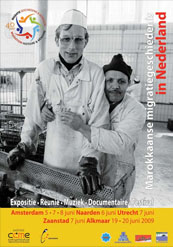
webposter 40jaar-marokkanen.nl
Dit beroemde citaat in de literatuur over de komst van de ‘gastarbeiders’ naar Nederland vat de beleving van de Marokkaanse geschiedenis in Nederland samen. Voor “Dakira” is het belangrijk om stil te staan bij deze ontwikkeling en een schets te geven van de verschillende fasen van deze geschiedenis, waarin Marokkanen van ‘gastarbeiders’ Nederlandse burgers zijn geworden. De geschiedenis van de eerste generatie Marokkanen in Nederland staat niet los van de Nederlandse naoorlogse geschiedenis. Reden temeer voor Dakira om deze herdenking met de tweede en derde opgroeiende Nederlandse Marokkanen en Nederlandse burgers uitbundig te vieren en memoriseren.
Het programma van Dakira
De herdenking bestaat uit diverse activiteiten die van juni tot en met december 2009 in verschillende steden zullen gehouden worden.
- Op 5 juni (13.00 uur – 23.00 uur) wordt de start gegeven aan deze activiteiten in de Amsterdamse Mozes & Aäronkerk. Deze kerk diende als uitvalsbasis voor de 182 Marokkaanse hongerstakers (de kerk-Marokkanen) in de tweede helft van de jaren ’70. Het programma bestaat uit een foto-expositie over de leefsituatie van de Marokkaanse pioniers, de actie van de hongersstakers, een filmdocumentaire over de geschiedenis van de Marokkaanse migratie, debatten over recente publicaties naar aanleiding van 40 jaar migratiegeschiedenis en toespraken van diverse maatschappelijke organisaties. Twee speciaal uit Marokko afkomstige muziekgroepen zullen de avond muzikaal begeleiden. De minister van justitie, de heer Hirsch Ballin, en de ambassadeur van Marokko in Nederland, de heer Jawad El Himdi zullen bij het avondprogramma aanwezig zijn.
- Op 6 juni in Naarden, op 7 juni in Utrecht, Zaanstad en de Rivierenbuurt te Amsterdam, op 8 juni in Slotervaart te Amsterdam en op 19 en 20 juni in Alkmaar. In de zomermaanden juli en augustus kunnen er exposities, debatten, conferenties en culturele dagen worden bezocht in de Marokkaanse steden Al Hoceima, Tanger, Larache, Rabat en Casablanca, Agadir.
- Op 11, 12 en 13 december wordt het herdenkingsjaar afgesloten met een groot festival in Amsterdam. Tijdens dit festival is er een kinderprogramma, treden er verscheidende muziekgroepen op, zijn er exposities en theatervoorstellingen te bezichtigen en debatten en lezingen te volgen
Programma in de Mozes & Aaronkerk
Vrijdag 5 juni 2009 van 13.00 tot 23.00 uur
=====================
13.30 uur Inloop middagprogramma.
14.00 uur Opening en verwelkoming door dhr. Cor Bon directeur Mozeshuis / Mozes & Aaronkerk
14.10 uur Opening van de foto-expositie door eregasten.
14. 20 uur Vertoning van Filmdocumentaire 40 jaar Marokkaanse geschiedenis, in geleidt door
Bart Römer(Directeur/hoofdredacteur MTNL), Regie Karim Traida, Productie Multiculturele Televisie Nederland(MTNL).
15.30 uur Pauze
15.45 uur Rosalie Smit interviewt drie schrijfsters van drie recente publicaties over het thema Migratiegeschiedenis over hun boeken en motieven.
- Nadia Bouras: “Marokkanen in Nederland, de pioniers vertellen“
- Ineke van der Valk: “Harde Werkers“
- Khadija Arib: “Couscous op zondag“
16.35 uur Pauze
17.00 uur Debat onder leiding van Fenna Ulichki met kopstukken uit de politiek, kerk, moskee, wetenschap, migranten en maatschappelijke organisaties
Herman Obdeijn; Ineke van der Valk; Mient Jan Faber(onder voorbehoud); Rene Danen; Abdou Menebhi; Fatima EL Atik; Mohammed Charrouti; Nora Azerkan;
Centrale punten in het debat:
- De motieven van de arbeidsmigratie en leefomstandigheden in Nederland.
- Regulering en vreemdelingenwetgeving. “van gastarbeid naar vreemdeling”
- Sociale strijd en opkomst van Marokkaanse organisaties.
18.00 uur Marokkaans culinaire buffet
19.00 uur Inloop avondprogramma
19.10 uur Start avondprogramma: Welkom en toelichting van het programma
door Rachid Jamari en Ibtissam Gzouny
19.15 uur Eerste rond.
- Dhr. Abdou Menebhi namens de Dakira Platform
- De Minister van justitie de heer Hirsch Ballin.
- De ambassadeur van Marokko. Dhr. Jawad El Himdi
19.50 uur Verering van vertegenwoordigers van de eerste pionieren Marokkanen in Nederland
20.05 uur Marokkaanse vrouwen muziekgroep Al Ikhlass uit Tetouan.
20.25 uur Tweede rond toespraken van Maatschappelijke organisaties
- Mw. Nora Azerkan voormalige voorzitter Marokkaanse vrouwen vereniging.
- Dhr. Rene Danen namens Nederlandse maatschappelijke organisaties
- Dhr. Mustafa Ayranci namens Turkse Arbeiders Organisatie HTIB
- Dhr. Nonoi Hacbang namens TMP, Transnationaal Migrant Platform
20.50 uur Start van muzikaal en cultureel gedeelte met de Riffijnse muziekgroep van Tarwa N Cheikh Mohand.
[flashvideo filename=http://www.youtube.com/watch?v=vPHsEiDyTyE /]
21.30 uur Pauze
21.45 uur Vervolg van het muzikaal programma met de Marokkaanse vrouwen muziekgroep Al Ikhlass uit Tetouan.
22.45 uur Einde van het avondprogramma.
Meer informatie zie website:
Verklaring van Vereniging Imams Nederland betreffende ophef bezoek imams aan Marokko
Posted on November 9th, 2008 by martijn.
Categories: Islam in the Netherlands, Morocco, Multiculti Issues, Religious and Political Radicalization.
Vereniging Imams Nederland VIN, Imamonline.nl
Verklaring van Vereniging Imams Nederland betreffende ophef bezoek imams aan Marokko
Wij van de Vereniging Imams Nederland betreuren het ten zeerste dat er grote ophef is ontstaan naar aanleiding van het bezoek van imams naar Marokko. Wij willen graag de volgende punten aanhalen en toelichten.
Zo werd er gesproken over een aantal van 40 tot 50 imams die weg geweest zijn. Dit is echter niet het geval. Het exacte aantal imams dat heeft deelgenomen aan deze conferentie vanuit Nederland bedroeg 35 imams.
Ook is het onjuist dat er moskeeën leeg zijn achter gelaten. Dit onderwerp gaat naast de imams ook het moskeebestuur aan en onze imams kennen hun verantwoordelijkheden goed. Zij zullen dan ook nooit de moskeegangers in de steek laten. De imams die aan de conferentie hebben deelgenomen hebben tijdig gezorgd voor vervanging.Het bezoek aan Marokko vloeide voort uit een initiatief van verschillende Islamitische organisaties die zich bezig houden met religieuze zaken uit de volgende landen; België, Duitsland, de Scandinavische landen en Nederland. Deze organisaties hebben ervoor gekozen deze conferentie in Marokko te houden. Dit om ervaringen met elkaar uit te wisselen zonder enige dwang van buitenaf. Het ministerie van religieuze zaken in Marokko heeft zich niet gemengd in deze conferentie, zij hebben enkel bijgedragen aan het organiseren ervan.
Het ministerie van religieuze zaken in Marokko heeft altijd verklaard dat Marokkanen die buiten Marokko leven en wonen de vrijheid en eigenheid hebben om hun religieuze zaken zelf te regelen en te organiseren zonder enige bemoeienis van wie dan ook. Het ministerie biedt echter wel haar ervaring op het gebied van het structureren van religieuze zaken aan. Hierbij kun je denken aan hoe om te gaan met radicalisme. Het ministerie staat dan ook altijd klaar voor wie hier gebruik van wenst te maken.
Één van onze doelen als Vereniging Imams Nederland is de imams te motiveren hun rol naar behoren te vervullen en de imam te blijven steunen zodat hij naar behoren kan functioneren in zijn werk . Dit kan alleen gewaarborgd worden door ontmoetingen met anderen te organiseren, bezoeken te brengen aan allerlei verschillende organisaties in zowel het binnen- als het buitenland en conferenties bij te wonen waarin men dezelfde doelstellingen voor ogen heeft die wij als Vereniging Imams Nederland ook hebben.
Wij zijn ons zeker bewust van het feit dat wij ons dienen te houden aan de Nederlandse wetten en er is zeker geen sprake van overtreding van deze wetten. Wij hebben in Nederland herhaaldelijk conferenties en studiedagen georganiseerd waarbij ook publieke figuren aanwezig waren. Deze conferenties en studiedagen zijn gefinancierd door bekende Nederlandse organisaties en overheidsinstanties.Hoogachtend, het bestuur van de VIN
Uproar over prayer calls in Muslim Morocco – MSNBC Wire Services- msnbc.com
Posted on August 10th, 2008 by martijn.
Categories: Morocco.
Uproar over prayer calls in Muslim Morocco – MSNBC Wire Services- msnbc.com
Decibel levels deepen line between drive to modernize and political Islam
The Associated Press
RABAT, Morocco – The muezzins’ calls echo well before daybreak, summoning the Muslim faithful to daily prayers and reminding foreign tourists in the Moroccan capital how far they are from home.
But the rising decibel level is deepening fault lines between a government drive to modernize and a wave of rigorous political Islam.
Morocco, a country of 33 million people, gets more than 7 million tourists a year. And there are worries that some may be put off by the five heavily amplified calls a day, each lasting five minutes, to “hasten to the prayer, hasten to the prayer.”
Muslim purists counter that authorities are compromising religion to please Westerners and the country’s liberal elite.
The frictions are happening in a country that is considered moderate on matters of religion and is a U.S. ally and at a time when there are fears that al-Qaida is establishing itself in North Africa.
Morocco has lately been shaken by two different cases in which the government, or wealthy Westerners, have been accused of plotting to force down the volume on the muezzins who make the call to prayer. (more…)
Protected: Trouw, hetNieuws| nederland – Gedumpte vrouw kan sneller naar Nederland
Posted on July 31st, 2008 by martijn.
Categories: Gender, Kinship & Marriage Issues, Morocco.
Enter your password to view comments.
Protected: Trouw, hetNieuws| nederland – Gedumpte vrouw kan sneller naar Nederland
Posted on July 31st, 2008 by martijn.
Categories: Gender, Kinship & Marriage Issues, Morocco.
Enter your password to view comments.
Moroccan Islamist prisoners "in danger" during hunger strike | TopNews Law
Posted on July 8th, 2008 by martijn.
Categories: Morocco.
Moroccan Islamist prisoners “in danger” during hunger strike | TopNews Law
Casablanca, Morocco – Families of Moroccan hunger-striking Islamist prisoners demonstrated Tuesday in front of Casablanca’s Oukacha prison, saying that the lives of more than 50 inmates were in danger.
The inmates have been on hunger strike for two months over the deterioration of their prison conditions.
“Their lives are seriously in danger,” Abderrahim Mouhtade, president of the association Annassir that defends them, told Deutsche Presse-Agentur dpa.
Some of the inmates have been hospitalized.
The inmates say their prison conditions have deteriorated, with the prison authorities refusing to grant them any concessions after nine Islamists escaped from a prison in Kenitra near Rabat in April.
The nine had been convicted of links with the 2003 Casablanca suicide bombings that killed 45 people. One of them was caught a week later, while the others are still on the run. dpa
Moroccan Islamist prisoners “in danger” during hunger strike | TopNews Law
Posted on July 8th, 2008 by martijn.
Categories: Morocco.
Moroccan Islamist prisoners “in danger” during hunger strike | TopNews Law
Casablanca, Morocco – Families of Moroccan hunger-striking Islamist prisoners demonstrated Tuesday in front of Casablanca’s Oukacha prison, saying that the lives of more than 50 inmates were in danger.
The inmates have been on hunger strike for two months over the deterioration of their prison conditions.
“Their lives are seriously in danger,” Abderrahim Mouhtade, president of the association Annassir that defends them, told Deutsche Presse-Agentur dpa.
Some of the inmates have been hospitalized.
The inmates say their prison conditions have deteriorated, with the prison authorities refusing to grant them any concessions after nine Islamists escaped from a prison in Kenitra near Rabat in April.
The nine had been convicted of links with the 2003 Casablanca suicide bombings that killed 45 people. One of them was caught a week later, while the others are still on the run. dpa
In Morocco, a festival where tolerance is traditional and Jews pray together with Muslims – International Herald Tribune
Posted on July 8th, 2008 by martijn.
Categories: Morocco.
In Morocco, a festival where tolerance is traditional and Jews pray together with Muslims – International Herald Tribune
In Morocco, a festival where tolerance is traditional and Jews pray together with Muslims
The Associated Press
Published: July 8, 2008
SAFI, Morocco: It’s an uncommon sight for an Arab country: hundreds of joyous Jewish pilgrims gathering without fear around a rabbi’s tomb, greeted by local Muslim officials who share a prayer with them at a synagogue.Yet most of the 400 Jews who converged on the Moroccan coastal town of Safi — some from nearby cities, others from as far as France or Israel — at a weekend pilgrimage said they felt welcome here.
While religious tensions flare in Jerusalem and beyond, in Morocco, Jews and Muslims say they nurture a legacy of tolerance and maintain common sanctuaries where adherents of both religions pray. Decades of emigration to Israel by Morocco’s Jews and terrorist bombings in Casablanca that targeted Jewish sites haven’t diminished the draw of these annual pilgrimages.
During the festival that began Friday, visitors prayed and feasted around the shrine of Abraham Ben Zmirro, a rabbi reputed to have fled persecution in Spain in the 15th century and then lived in Safi, where he is buried with six siblings.
A half-Jewish, half-Muslim band played local tunes during a banquet, including a song in French, Arabic and Hebrew with the line: “There is only one God, you worship Him sitting down and I while standing up.”
The pilgrims were joined Sunday by Aaron Monsenego, the great rabbi of Morocco, who prayed alongside the regional governor and several other Muslim officials at the shrine’s synagogue for the good health of Morocco’s King Mohammed VI and his family.
“It’s very important for us to pray altogether,” Monsenego told The Associated Press.
Regional governor Larbi Hassan Sebbari said, “We’re also very proud of it: it gives a lesson to other countries of what we do together without any taboo.”
While several Arab states refuse to recognize the Jewish state’s right to exist, reject Israeli visitors and ignore the remnants of their local Jewish heritage, Moroccans insist it is not the case in this moderate Muslim nation and U.S. ally.
Once home to some 300,000 Jews, Morocco hosts the Arab world’s only Jewish museum, funds Jewish institutions and frequently holds events to celebrate Judeo-Moroccan heritage.
Still, the Jewish population here has dwindled to about 4,000 — most in Casablanca. Economics, fears of living in an Arab state and sporadic discrimination drove hundreds of thousands of Moroccan Jews to Israel, Europe or America over the past few decades.
Many left in 1948 when the state of Israel was created, or in 1956 when Morocco won independence from France. Other waves followed after the Israeli-Arab conflicts of 1967 and 1973 caused riots in some Moroccan towns.
Jewish leaders who stayed say they practice their religion freely and that synagogues are well protected by police, especially since the 2003 bombings in Casablanca. And despite the bombings, Casablanca — Morocco’s commercial capital — still boasts 32 active synagogues.
“There was never any racism in Safi,” said Haim Ohana, one of only 10 Jewish people remaining in a town where 6,000 Jews once lived. “People left from here because they were poor,” said Ohana, who helped organize the pilgrimage and runs several businesses.
The pilgrimage rituals are called Moussem in Arabic and Hilloula in Hebrew.
Many of the pilgrims, including ultra-Orthodox Jews from Israel and French and Canadian businessmen, are emigres who say they come to pray in Safi because of their emotional ties to Morocco.
Therese Elisha, an Israeli, said she makes the pilgrimage every other year. “This is the town where I grew up, the synagogue where I prayed,” she said. “I feel at home.”
“We’re maintaining a bridge over the divide of the exodus,” said Simone Merra, a human resources manager in Paris.
Some of Morocco’s Jews wonder how long their community will remain. Nadia Bensimon, who runs a fashion boutique in a coastal town, said she had no plans to leave. “But that could change if the Islamists become too powerful,” she said.
Morocco’s main Islamist opposition party — Adl wal Ihsan — enjoys broad support, but it is banned from politics; secular parties dominate parliament.
Though most of his relatives now live abroad, Ohana said his family traces its arrival in Morocco to 2,076 years ago.
“As for Safi, we’ve been here for nine centuries,” he said. “It’s my town, I’d see no reason to leave.”
Protected: nrc.nl – Binnenland – ‘Marokkanen vochten niet om Europa te redden’
Posted on May 5th, 2008 by martijn.
Categories: Morocco, Multiculti Issues.
Enter your password to view comments.
What does it mean to be Muslim in Morocco ? | sur Jeunes Du Maroc, Portail des Jeunes
Posted on December 14th, 2007 by martijn.
Categories: ISIM/RU Research, Morocco, Religious and Political Radicalization, Young Muslims, Youth culture (as a practice).
What does it mean to be Muslim in Morocco ? | sur Jeunes Du Maroc, Portail des Jeunes
The Moroccan constitution updated in 1996 states that people who are born in Morocco are by tradition Muslims- 85% to 90% are Sunnis
(Lamchichi, 1995, p.239). It implies that Moroccan citizens are not religiously free and have no choice in term of religion direction while it represents a public affair, yet it should private. According to Oxford Advanced Learner’s dictionary, “religion is one of the systems of faith that are based on the belief in the existence of a particular god or gods”. In reality, Moroccans do not follow Islam’s precepts and rules because of the educational system, the western influence, and the cult’s freedom. In fact, for example, in the Islamic religion as it is written is the Koran, the sacred book for Muslims, it is prohibited to have premarital relations for both men and women and it is forbidden to drink wine. However, Moroccans do it without paying attention to Islam and society. Also, politically, some Moroccans believe that the increasing of the Islamic party, PJD, is going to be a disaster since they strongly believe that they will live in the same context that people lived in Iran during 1979. All these ideas give no homogenous religious identity – in accordance with Oxford Advanced Learner’s dictionary “who or what somebody or something is”- to Moroccans. Indeed, what does it mean to be Muslim in Morocco ? I will try to propose a possible answer to this question in six parts : first, Moroccans’ points of view through a survey, second the conception of Islam by Moroccan intellectuals, third the ideas of famous figures in Muslim World, fourth foreign authors’ point of view, fifth the feedback of a seminar organized by a scholar group HEM (High Studies of Management), and finally position of Moroccan government about Moroccan citizens’ religious identity.
What does it mean to be Muslim in Morocco ? | sur Jeunes Du Maroc, Portail des Jeunes
Posted on December 14th, 2007 by .
Categories: ISIM/RU Research, Morocco, Religious and Political Radicalization, Young Muslims, Youth culture (as a practice).
What does it mean to be Muslim in Morocco ? | sur Jeunes Du Maroc, Portail des Jeunes
The Moroccan constitution updated in 1996 states that people who are born in Morocco are by tradition Muslims- 85% to 90% are Sunnis
(Lamchichi, 1995, p.239). It implies that Moroccan citizens are not religiously free and have no choice in term of religion direction while it represents a public affair, yet it should private. According to Oxford Advanced Learner’s dictionary, “religion is one of the systems of faith that are based on the belief in the existence of a particular god or gods”. In reality, Moroccans do not follow Islam’s precepts and rules because of the educational system, the western influence, and the cult’s freedom. In fact, for example, in the Islamic religion as it is written is the Koran, the sacred book for Muslims, it is prohibited to have premarital relations for both men and women and it is forbidden to drink wine. However, Moroccans do it without paying attention to Islam and society. Also, politically, some Moroccans believe that the increasing of the Islamic party, PJD, is going to be a disaster since they strongly believe that they will live in the same context that people lived in Iran during 1979. All these ideas give no homogenous religious identity – in accordance with Oxford Advanced Learner’s dictionary “who or what somebody or something is”- to Moroccans. Indeed, what does it mean to be Muslim in Morocco ? I will try to propose a possible answer to this question in six parts : first, Moroccans’ points of view through a survey, second the conception of Islam by Moroccan intellectuals, third the ideas of famous figures in Muslim World, fourth foreign authors’ point of view, fifth the feedback of a seminar organized by a scholar group HEM (High Studies of Management), and finally position of Moroccan government about Moroccan citizens’ religious identity.
Maroc Telecom & Youtube: Update at Maghrebism
Posted on May 30th, 2007 by .
Categories: Morocco.
Maghrebism
Youtube is finally unblocked by Maroc Telecom!
Maroc Telecom & Youtube: Update at Maghrebism
Posted on May 30th, 2007 by martijn.
Categories: Morocco.
Maghrebism
Youtube is finally unblocked by Maroc Telecom!
The struggle over the public spaces of internet: Maroc Telecom
Posted on May 29th, 2007 by .
Categories: Morocco.
States always try to control the public sphere. Sometimes it concerns messages that incite hatred or more subtle (?) by allowing only state controlled press or by banning certain movies. The internet therefore is always a challenge for states, whether it concerns democratic states or authoritarian states. The possibility for internet users to spread their own messages for example via Youtube or their own blogs, is a way to circumvent state control. No wonder states also try to control the internet. Reports over censorship are abundant: Youtube and Thailand, Google and China, Youtube and US, and we can go on.
A new episode in this continuous struggle over the internet as a public space for communication and contestation, can be found in Morocco. Dutch-Moroccan blogger Youssef living in London pointed me to the case of Maroc Telecom, a French-run internet provider, that blocks access to Youtube. Websites such as Google Earth and Livejournal have been blocked already. According to Youssef:
The King and the government told us about their new steps towards openness. Some steps were taken indeed but recently it seems that Morocco is sliding back to a state where media is heavily censored.
Not only the traditional media but also web-based media are being attacked.The state of Morocco tries to portray itself as a liberal and open muslim country. An example for the rest of the Middle East and North Africa.
There is no reason in keeping up this charade if in the meantime the government practices the same tactics as the other countries in the region.
The king & government have to realize that progress is not only words. Saying that you’re progressing is not enough. You actually have to take action to progress.
Youssef is actively trying to remove the ban on Youtube, as do other bloggers as you can read on Global Voices (by Sami Ben Gharbia – a Dutch Tunesian blogger). You can also stay updated at MidEast Youth and Mashable.com. You can find the petition here. The considerable attention and actions of all these bloggers show that it is very difficult for a state to control everything; the state’s power is almost never absolute but instead challenged and contested. Moreover because for every internet restriction there will be at least one person who is trying to circumvent these restrictions as Youssef also clearly shows.
Correctie: Homo-huwelijk in Marokko
Posted on April 12th, 2007 by .
Categories: Gender, Kinship & Marriage Issues, Morocco.
Dat homo-huwelijk in Marokko zat me toch niet helemaal lekker. Het ging om een symbolische voltrekking bij een heiligenfeest in Marokko. Maar hoe serieus moeten we dat nemen, aangezien er bij dergelijke feesten wel meer dingen gebeuren die ingaan tegen het algemene beeld dat we van Marokko hebben. Zie voor een mooie foto-impressie van zo’n heiligenfeest (in Fez) de site van View from Fez, hier en hier.
En inderdaad het ging eerder om een soort boerenbruiloft zoals we dat hier kennen met Carnaval waarbij een stel in de ‘onecht’ wordt verbonden. Dit is een omkeringsritueel waarbij sociale rollen worden omgedraaid en normen en waarden met betrekking tot gewenst gedrag (behorende bij een sociale rol) worden opgeschort. Een omkeringsritueel bespot daarmee de bestaande sociale orde, maar bevestigt hem ook; immers een dergelijk ritueel vindt alleen plaats tijdens speciale dagen en door het tegenovergestelde te benadrukken wordt ook naar voren gehaald hoe het eigenlijk zou moeten.
Hoe een dergelijke ‘mock wedding‘ zoals in Meknes precies geinterpreteerd moet worden weet ik niet (daarvoor zul je er toch echt bij moeten zijn), maar het zou zowel een bevestiging kunnen zijn van de bestaande sociale orde (zoals we kunnen zien aan de reacties erop) als een bespotting van de bestaande sociale praktijken omtrent homoseksualiteit in Marokko.
Een andere vraag is natuurlijk waarom het nieuws over het homo-huwelijk hier relatief veel aandacht krijgt. Immers, die festivals vinden jaarlijks plaats en er gebeurt wel wat meer dan alleen dat. Waarom wordt het homo-huwelijk eruit gepikt en waarom zonder veel achtergrond informatie dat de betekenis ervan wat duidelijker maakt (ja,ja ook door ondergetekende).