ISIM/RU Research
You are looking at posts in the category ISIM/RU Research.
| M | T | W | T | F | S | S |
|---|---|---|---|---|---|---|
| « Sep | ||||||
| 1 | ||||||
| 2 | 3 | 4 | 5 | 6 | 7 | 8 |
| 9 | 10 | 11 | 12 | 13 | 14 | 15 |
| 16 | 17 | 18 | 19 | 20 | 21 | 22 |
| 23 | 24 | 25 | 26 | 27 | 28 | |
Pages
- About
- C L O S E R moves to….C L O S E R
- Contact Me
- Interventions – Forces that Bind or Divide
- ISIM Review via Closer
- Publications
- Research
Categories
- (Upcoming) Events (33)
- [Online] Publications (26)
- Activism (117)
- anthropology (113)
- Method (13)
- Arts & culture (88)
- Asides (2)
- Blind Horses (33)
- Blogosphere (192)
- Burgerschapserie 2010 (50)
- Citizenship Carnival (5)
- Dudok (1)
- Featured (5)
- Gender, Kinship & Marriage Issues (265)
- Gouda Issues (91)
- Guest authors (58)
- Headline (76)
- Important Publications (159)
- Internal Debates (275)
- International Terrorism (437)
- ISIM Leiden (5)
- ISIM Research II (4)
- ISIM/RU Research (171)
- Islam in European History (2)
- Islam in the Netherlands (219)
- Islamnews (56)
- islamophobia (59)
- Joy Category (56)
- Marriage (1)
- Misc. News (891)
- Morocco (70)
- Multiculti Issues (749)
- Murder on theo Van Gogh and related issues (326)
- My Research (118)
- Notes from the Field (82)
- Panoptic Surveillance (4)
- Public Islam (244)
- Religion Other (109)
- Religious and Political Radicalization (635)
- Religious Movements (54)
- Research International (55)
- Research Tools (3)
- Ritual and Religious Experience (58)
- Society & Politics in the Middle East (159)
- Some personal considerations (146)
- Deep in the woods… (18)
- Stadsdebat Rotterdam (3)
- State of Science (5)
- Twitwa (5)
- Uncategorized (74)
- Young Muslims (459)
- Youth culture (as a practice) (157)
General
- ‘In the name of Allah, Most Gracious, Most Merciful’
- – Lotfi Haddi –
- …Kelaat Mgouna…….Ait Ouarchdik…
- ::–}{Nour Al-Islam}{–::
- Al-islam.nl De ware godsdienst voor Allah is de Islam
- Allah Is In The House
- Almaas
- amanullah.org
- Amr Khaled Official Website
- An Islam start page and Islamic search engine – Musalman.com
- arabesque.web-log.nl
- As-Siraat.net
- assadaaka.tk
- Assembley for the Protection of Hijab
- Authentieke Kennis
- Azaytouna – Meknes Azaytouna
- berichten over allochtonen in nederland – web-log.nl
- Bladi.net : Le Portail de la diaspora marocaine
- Bnai Avraham
- BrechtjesBlogje
- Classical Values
- De islam
- DimaDima.nl / De ware godsdienst? bij allah is de islam
- emel – the muslim lifestyle magazine
- Ethnically Incorrect
- fernaci
- Free Muslim Coalition Against Terrorism
- Frontaal Naakt. Ongesluierde opinies, interviews & achtergronden
- Hedendaagse wetenswaardigheden…
- History News Network
- Homepage Al Nisa
- hoofddoek.tk – Een hoofddoek, je goed recht?
- IMRA: International Muslima Rights Association
- Informed Comment
- Insight to Religions
- Instapundit.com
- Interesting Times
- Intro van Abdullah Biesheuvel
- islaam
- Islam Ijtihad World Politics Religion Liberal Islam Muslim Quran Islam in America
- Islam Ijtihad World Politics Religion Liberal Islam Muslim Quran Islam in America
- Islam Website: Islam, Islamic Studies, Arabic, Religion
- Islamforum
- Islamic Philosophy Online
- Islamica Magazine
- islamicate
- Islamophobia Watch
- Islamsevrouw.web-log.nl
- Islamwereld-alles wat je over de Islam wil weten…
- Jihad: War, Terrorism, and Peace in Islam
- JPilot Chat Room
- Madrid11.net
- Marocstart.nl – De marokkaanse startpagina!
- Maryams.Net – Muslim Women and their Islam
- Michel
- Modern Muslima.com
- Moslimjongeren Amsterdam
- Moslimjongeren.nl
- Muslim Peace Fellowship
- Muslim WakeUp! Sex & The Umma
- Muslimah Connection
- Muslims Against Terrorism (MAT)
- Mutma’inaa
- namira
- Otowi!
- Ramadan.NL
- Religion, World Religions, Comparative Religion – Just the facts on the world\’s religions.
- Ryan
- Sahabah
- Salafi Start Siden – The Salafi Start Page
- seifoullah.tk
- Sheikh Abd al Qadir Jilani Home Page
- Sidi Ahmed Ibn Mustafa Al Alawi Radhiya Allahu T’aala ‘Anhu (Islam, tasawuf – Sufism – Soufisme)
- Stichting Vangnet
- Storiesofmalika.web-log.nl
- Support Sanity – Israel / Palestine
- Tekenen van Allah\’s Bestaan op en in ons Lichaam
- Terrorism Unveiled
- The Coffee House | TPMCafe
- The Inter Faith Network for the UK
- The Ni’ma Foundation
- The Traveller’s Souk
- The \’Hofstad\’ terrorism trial – developments
- Thoughts & Readings
- Uitgeverij Momtazah | Helmond
- Un-veiled.net || Un-veiled Reflections
- Watan.nl
- Welkom bij Islamic webservices
- Welkom bij vangnet. De site voor islamitische jongeren!
- welkom moslim en niet moslims
- Yabiladi Maroc – Portail des Marocains dans le Monde
Dutch [Muslims] Blogs
- Hedendaagse wetenswaardigheden…
- Abdelhakim.nl
- Abdellah.nl
- Abdulwadud.web-log.nl
- Abou Jabir – web-log.nl
- Abu Bakker
- Abu Marwan Media Publikaties
- Acta Academica Tijdschrift voor Islam en Dialoog
- Ahamdoellilah – web-log.nl
- Ahlu Soennah – Abou Yunus
- Ahlul Hadeeth
- Ahlul Hadeeth
- Al Moudjahideen
- Al-Adzaan
- Al-Islaam: Bismilaahi Rahmaani Rahiem
- Alesha
- Alfeth.com
- Anoniempje.web-log.nl
- Ansaar at-Tawheed
- At-Tibyan Nederland
- beni-said.tk
- Blog van moemina3 – Skyrock.com
- bouchra
- CyberDjihad
- DE SCHRIJVENDE MOSLIMS
- DE VROLIJKE MOSLIM ;)
- Dewereldwachtopmij.web-log.nl
- Dien~oel~Islaam
- Eali.web-log.nl
- Een genade voor de werelden
- Enige wapen tegen de Waarheid is de leugen…
- ErTaN
- ewa
- Ezel & Os v2
- Gizoh.tk [.::De Site Voor Jou::.]
- Grappige, wijze verhalen van Nasreddin Hodja. Turkse humor.
- Hanifa Lillah
- hayya~ala~assalaah!
- Het laatste nieuws lees je als eerst op Maroc-Media
- Homow Universalizzz
- Ibn al-Qayyim
- IslaamLive Mail
- IslaamLive Mail
- Islam Blog – Juli 2007
- Islam in het Nieuws – web-log.nl
- Islam, een religie
- Islam, een religie
- Islamic Sisters – web-log.nl
- Islamiway’s Weblog
- Islamtawheed’s Blog
- Jihaad
- Jihad
- Journalista
- La Hawla Wa La Quwatta Illa Billah
- M O S L I M J O N G E R E N
- M.J.Ede – Moslimjongeren Ede
- Mahdi\’s Weblog | Vrijheid en het vrije woord | punt.nl: Je eigen gratis weblog, gratis fotoalbum, webmail, startpagina enz
- Maktab.nl (Zawaj – islamitische trouwsite)
- Marocdream.nl – Home
- Marokkaanse.web-log.nl
- Marokkanen Weblog
- Master Soul
- Miboon
- Miesjelle.web-log.nl
- Mijn Schatjes
- Moaz
- moeminway – web-log.nl
- Moslima_Y – web-log.nl
- mosta3inabilaah – web-log.nl
- Muhaajir in islamitisch Zuid-Oost Azië
- Mumin al-Bayda (English)
- Mustafa786.web-log.nl
- Oprecht – Poort tot de kennis
- Said.nl
- saifullah.nl – Jihad al-Haq begint hier!
- Salaam Aleikum
- Sayfoudien – web-log.nl
- soebhanAllah
- Soerah19.web-log.nl – web-log.nl
- Steun Palestina
- Stichting Moslimanetwerk
- Stories of Malika
- supermaroc
- Ummah Nieuws – web-log.nl
- Volkskrant Weblog — Alib Bondon
- Volkskrant Weblog — Moslima Journalista
- Vraag en antwoord…
- wat is Islam
- Wat is islam?
- Weblog – a la Maroc style
- website van Jamal
- Wij Blijven Hier
- Wij Blijven Hier
- www.BenAyad.be – Islam en Actua
- www.moslima.web-log.nl
- Yakini Time
- Youth Of Islam
- Youth Of Islam
- [fikra]
Non-Dutch Muslims Blogs
- Lanallah __Islamic BlogZine__
- This journey ends but only with The Beginning
- ‘the middle place’
- …Never Judge a Person By His or Her Blog…
- …under the tree…
- A Comment on PMUNA
- A Dervish’s Du`a’
- A Family in Baghdad
- A Garden of Children
- A Muslim Mother’s Thoughts / Islamic Parenting
- A Struggle in Uncertainty, Such is Life
- About Afghanistan
- adnan.org: good design, bad idea
- Afiyah
- Ahmeds World of Islam
- Al Musawwir
- Al-Musharaka
- Almiraya tBLOG – O, happy the soul that saw its own faults
- Almusawwir
- an open window
- Anak Alam
- aNaRcHo AkBaR
- Anthology
- AnthroGal’s World
- Arabian Passion
- ArRihla
- Articles Blog
- Asylum Seeker
- avari-nameh
- Baghdad Burning
- Being Noor Javed
- Bismillah
- bloggin’ muslimz.. Linking Muslim bloggers around the globe
- Blogging Islamic Perspective
- Chapati Mystery
- City of Brass – Principled pragmatism at the maghrib of one age, the fajr of another
- COUNTERCOLUMN: All Your Bias Are Belong to Us
- d i z z y l i m i t s . c o m >> muslim sisters united w e b r i n g
- Dar-al-Masnavi
- Day in the life of an American Muslim Woman
- Don’t Shoot!…
- eat-halal guy
- Eye on Gay Muslims
- Eye on Gay Muslims
- Figuring it all out for nearly one quarter of a century
- Free Alaa!
- Friends, Romans, Countrymen…. lend me 5 bux!
- From Peer to Peer ~ A Weblog about P2P File & Idea Sharing and More…
- Ghost of a flea
- Ginny’s Thoughts and Things
- God, Faith, and a Pen: The Official Blog of Dr. Hesham A. Hassaballa
- Golublog
- Green Data
- gulfreporter
- Hadeeth Blog
- Hadouta
- Hello from the land of the Pharaoh
- Hello From the land of the Pharaohs Egypt
- Hijabi Madness
- Hijabified
- HijabMan’s Blog
- Ihsan-net
- Inactivity
- Indigo Jo Blogs
- Iraq Blog Count
- Islam 4 Real
- Islamiblog
- Islamicly Locked
- Izzy Mo’s Blog
- Izzy Mo’s Blog
- Jaded Soul…….Unplugged…..
- Jeneva un-Kay-jed- My Bad Behavior Sanctuary
- K-A-L-E-I-D-O-S-C-O-P-E
- Lawrence of Cyberia
- Letter From Bahrain
- Life of an American Muslim SAHM whose dh is working in Iraq
- Manal and Alaa\’s bit bucket | free speech from the bletches
- Me Vs. MysElF
- Mental Mayhem
- Mere Islam
- Mind, Body, Soul : Blog
- Mohammad Ali Abtahi Webnevesht
- MoorishGirl
- Muslim Apple
- muslim blogs
- Muslims Under Progress…
- My heart speaks
- My Little Bubble
- My Thoughts
- Myself | Hossein Derakhshan’s weblog (English)
- neurotic Iraqi wife
- NINHAJABA
- Niqaabi Forever, Insha-Allah Blog with Islamic nasheeds and lectures from traditional Islamic scholars
- Niqabified: Irrelevant
- O Muhammad!
- Otowi!
- Pak Positive – Pakistani News for the Rest of Us
- Periphery
- Pictures in Baghdad
- PM’s World
- Positive Muslim News
- Procrastination
- Prophet Muhammad
- Queer Jihad
- Radical Muslim
- Raed in the Middle
- RAMBLING MONOLOGUES
- Rendering Islam
- Renegade Masjid
- Rooznegar, Sina Motallebi’s WebGard
- Sabbah’s Blog
- Salam Pax – The Baghdad Blog
- Saracen.nu
- Scarlet Thisbe
- Searching for Truth in a World of Mirrors
- Seeing the Dawn
- Seeker’s Digest
- Seekersdigest.org
- shut up you fat whiner!
- Simply Islam
- Sister Scorpion
- Sister Soljah
- Sister Surviving
- Slow Motion in Style
- Sunni Sister: Blahg Blahg Blahg
- Suzzy’s id is breaking loose…
- tell me a secret
- The Arab Street Files
- The Beirut Spring
- The Islamic Feminista
- The Land of Sad Oranges
- The Muslim Contrarian
- The Muslim Postcolonial
- The Progressive Muslims Union North America Debate
- The Rosetta Stone
- The Traceless Warrior
- The Wayfarer
- TheDesertTimes
- think halal: the muslim group weblog
- Thoughts & Readings
- Through Muslim Eyes
- Turkish Torque
- Uncertainty:Iman and Farid’s Iranian weblog
- UNMEDIA: principled pragmatism
- UNN – Usayd Network News
- Uzer.Aurjee?
- Various blogs by Muslims in the West. – Google Co-op
- washed away memories…
- Welcome to MythandCulture.com and to daily Arrows – Mythologist, Maggie Macary’s blog
- word gets around
- Writeous Sister
- Writersblot Home Page
- www.BenAyad.be – Islam en Actua
- www.Mas’ud’s blog
- \’Aqoul
- ~*choco-bean*~
General Islam Sites
- :: Islam Channel :: – Welcome to IslamChannel Official Website
- Ad3iyah(smeekbeden)
- Al-maktoum Islamic Centre Rotterdam
- Assalamoe Aleikoem Warhmatoe Allahi Wa Barakatuhoe.
- BouG.tk
- Dades Islam en Youngsterdam
- Haq Islam – One stop portal for Islam on the web!
- Hight School Teacher Muhammad al-Harbi\’s Case
- Ibn Taymiyah Pages
- Iskandri
- Islam
- Islam Always Tomorrow Yesterday Today
- Islam denounces terrorism.com
- Islam Home
- islam-internet.nl
- Islamic Artists Society
- Leicester~Muslims
- Mere Islam
- MuslimSpace.com | MuslimSpace.com, The Premiere Muslim Portal
- Safra Project
- Saleel.com
- Sparkly Water
- Statements Against Terror
- Understand Islam
- Welcome to Imaan UK website
Islamic Scholars
Social Sciences Scholars
- ‘ilm al-insaan: Talking About the Talk
- :: .. :: zerzaust :: .. ::
- After Sept. 11: Perspectives from the Social Sciences
- Andrea Ben Lassoued
- Anth 310 – Islam in the Modern World (Spring 2002)
- anthro:politico
- AnthroBase – Social and Cultural Anthropology – A searchable database of anthropological texts
- AnthroBlogs
- AnthroBoundaries
- Anthropologist Community
- anthropology blogs
- antropologi.info – Social and Cultural Anthropology in the News
- Arabist Jansen
- Between Secularization and Religionization Vrije Universiteit Amsterdam
- Bin Gregory Productions
- Blog van het Blaise Pascal Instituut
- Boas Blog
- Causes of Conflict – Thoughts on Religion, Identity and the Middle East (David Hume)
- Cicilie among the Parisians
- Cognitive Anthropology
- Comunidade Imaginada
- Cosmic Variance
- Critical Muslims
- danah boyd
- Deep Thought
- Dienekes’ Anthropology Blog
- Digital Islam
- Erkan\’s field diary
- Ethno::log
- Evamaria\’s ramblings –
- Evan F. Kohlmann – International Terrorism Consultant
- Experimental Philosophy
- For the record
- Forum Fridinum [Religionresearch.org]
- Fragments weblog
- From an Anthropological Perspective
- Gregory Bateson
- Islam & Muslims in Europe *)
- Islam, Islamic Studies, Arabic, Religion
- Islam, Muslims, and an Anthropologist
- Jeremy’s Weblog
- JourneyWoman
- Juan Cole – ‘Documents on Terrorist Abu Musab al-Zarqawi’
- Keywords
- Kijken naar de pers
- languagehat.com
- Left2Right
- Leiter Reports
- Levinas and multicultural society
- Links on Islam and Muslims
- log.squig.org
- Making Anthropology Public
- Martijn de Koning Research Pages / Onderzoekspaginas
- Material World
- MensenStreken
- Modern Mass Media, Religion and the Imagination of Communities
- Moroccan Politics and Perspectives
- Multicultural Netherlands
- My blog’s in Cambridge, but my heart is in Accra
- National Study of Youth and Religion
- Natures/Cultures
- Nomadic Thoughts
- On the Human
- Philip Greenspun’s Weblog:
- Photoethnography.com home page – a resource for photoethnographers
- Qahwa Sada
- RACIAL REALITY BLOG
- Religion Gateway – Academic Info
- Religion News Blog
- Religion Newswriters Association
- Religion Research
- rikcoolsaet.be – Rik Coolsaet – Homepage
- Rites [Religionresearch.org]
- Savage Minds: Notes and Queries in Anthropology – A Group Blog
- Somatosphere
- Space and Culture
- Strange Doctrines
- TayoBlog
- Teaching Anthropology
- The Angry Anthropologist
- The Gadflyer
- The Immanent Frame | Secularism, religion and the public sphere
- The Onion
- The Panda\’s Thumb
- TheAnthroGeek
- This Blog Sits at the
- This Blog Sits at the intersection of Anthropology & Economics
- verbal privilege
- Virtually Islamic: Research and News about Islam in the Digital Age
- Wanna be an Anthropologist
- Welcome to Framing Muslims – International Research Network
- Yahya Birt
Women's Blogs / Sites
- * DURRA * Danielle Durst Britt
- -Fear Allah as He should be Feared-
- a literary silhouette
- a literary silhouette
- A Thought in the Kingdom of Lunacy
- AlMaas – Diamant
- altmuslimah.com – exploring both sides of the gender divide
- Assalaam oe allaikoum Nour al Islam
- Atralnada (Morning Dew)
- ayla\’s perspective shifts
- Beautiful Amygdala
- bouchra
- Boulevard of Broken Dreams
- Chadia17
- Claiming Equal Citizenship
- Dervish
- Fantasy web-log – web-log.nl
- Farah\’s Sowaleef
- Green Tea
- hayya~ala~assalaah!
- Hilsen Fra …
- Islamucation
- kaleidomuslima: fragments of my life
- Laila Lalami
- Marhaban.web-log.nl – web-log.nl
- Moslima_Y – web-log.nl
- Muslim-Refusenik The official website of Irshad Manji
- Myrtus
- Noor al-Islaam – web-log.nl
- Oh You Who Believe…
- Raising Yousuf: a diary of a mother under occupation
- SAFspace
- Salika Sufisticate
- Saloua.nl
- Saudi Eve
- SOUL, HEART, MIND, AND BODY…
- Spirit21 – Shelina Zahra Janmohamed
- Sweep the Sunshine | the mundane is the edge of glory
- Taslima Nasrin
- The Color of Rain
- The Muslimah
- Thoughts Of A Traveller
- Volkskrant Weblog — Islam, een goed geloof
- Weblog Raja Felgata | Koffie Verkeerd – The Battle | punt.nl: Je eigen gratis weblog, gratis fotoalbum, webmail, startpagina enz
- Weblog Raja Felgata | WRF
- Writing is Busy Idleness
- www.moslima.web-log.nl
- Zeitgeistgirl
- Zusters in Islam
- ~:: MARYAM ::~ Tasawwuf Blog
Ritueel en religieuze beleving Nederland
- – Alfeth.com – NL
- :: Al Basair ::
- Abu Marwan Media Publikaties
- Ahlalbait Jongeren
- Ahlul Hadeeth
- Ahlul Hadeeth
- Al-Amien… De Betrouwbare – Home
- Al-Ummah
- Al-Ummah
- Al-Ummah
- Al-Wasatiyyah.com – Home
- Anwaar al-Islaam
- anwaaralislaam.tk
- Aqiedah’s Weblog
- Arabische Lessen – Home
- Arabische Lessen – Home
- Arrayaan.net
- At-taqwa.nl
- Begrijp Islam
- Bismillaah – deboodschap.com
- Citaten van de Salaf
- Dar al-Tarjama WebSite
- Dawah-online.com
- de koraan
- de koraan
- De Koran . net – Het Islaamitische Fundament op het Net – Home
- De Leidraad, een leidraad voor je leven
- Dien~oel~Islaam
- Dien~oel~Islaam
- Faadi Community
- Ghimaar
- hayya~ala~assalaah!
- hayya~ala~assalaah!
- Ibn al-Qayyim
- IMAM-MALIK-Alles over Islam
- IQRA ROOM – Koran studie groep
- Islaam voor iedereen
- Islaam voor iedereen
- Islaam: Terugkeer naar het Boek (Qor-aan) en de Soennah volgens het begrip van de Vrome Voorgangers… – Home
- Islaam: Terugkeer naar het Boek (Qor-aan) en de Soennah volgens het begrip van de Vrome Voorgangers… – Home
- IslaamLive Mail
- IslaamLive Mail
- IslaamLive Mail
- islam :: messageboard
- Islam City NL, Islam en meer
- Islam, een religie
- Islamia.nl – Islamic Shop – Islamitische Winkel
- Islamitische kleding
- Islamitische kleding
- Islamitische smeekbedes
- islamtoday
- islamvoorjou – Informatie over Islam, Koran en Soenah
- kebdani.tk
- KoranOnline.NL
- Lees de Koran – Een Openbaring voor de Mensheid
- Lifemakers NL
- Marocstart.nl | Islam & Koran Startpagina
- Miesbahoel Islam Zwolle
- Mocrodream Forums
- Moslims in Almere
- Moslims online jong en vernieuwend
- Nihedmoslima
- Oprecht – Poort tot de kennis
- Quraan.nl :: quran koran kuran koeran quran-voice alquran :: Luister online naar de Quraan
- Quraan.nl online quraan recitaties :: Koran quran islam allah mohammed god al-islam moslim
- Selefie Nederland
- Stichting Al Hoeda Wa Noer
- Stichting Al Islah
- StION Stichting Islamitische Organisatie Nederland – Ahlus Sunnat Wal Djama\’ah
- Sunni Publicaties
- Sunni.nl – Home
- Teksten van Aboe Ismaiel
- Terug Naar De Dien – Home
- Terug Naar De Dien – Home
- Terug Naar De Dien – Home
- Uw Keuze
- www.ahloelhadieth.com
- www.ahloelhadieth.com
- www.al-thabaat.com
- www.hijaab.com
- www.uwkeuze.net
- Youth Of Islam
- Zegswijzen van de Wijzen
- \’\’ Leid ons op het rechte pad het pad degenen aan wie Gij gunsten hebt geschonken\’\’
Muslim News
Moslims & Maatschappij
Arts & Culture
- : : SamiYusuf.com : : Copyright Awakening 2006 : :
- amir normandi, photographer – bio
- Ani – SINGING FOR THE SOUL OF ISLAM – HOME
- ARTEEAST.ORG
- AZIZ
- Enter into The Home Website Of Mecca2Medina
- Kalima Translation – Reviving Translation in the Arab world
- lemonaa.tk
- MWNF – Museum With No Frontiers – Discover Islamic Art
- Nader Sadek
Misc.
'Fundamentalism'
Islam & commerce
2
Morocco
[Online] Publications
- ACVZ :: | Preliminary Studies | About marriage: choosing a spouse and the issue of forced marriages among Maroccans, Turks and Hindostani in the Netherlands
- ACVZ :: | Voorstudies | Over het huwelijk gesproken: partnerkeuze en gedwongen huwelijken onder Marokkaanse, Turkse en Hindostaanse Nederlanders
- Kennislink – ‘Dit is geen poep wat ik praat’
- Kennislink – Nederlandse moslims
Religious Movements
- :: Al Basair ::
- :: al Haqq :: de waarheid van de Islam ::
- ::Kalamullah.Com::
- Ahloelhadieth.com
- Ahlul Hadeeth
- al-Madinah (Medina) The City of Prophecy ; Islamic University of Madinah (Medina), Life in Madinah (Medina), Saudi Arabia
- American Students in Madinah
- Aqiedah’s Weblog
- Dar al-Tarjama WebSite
- Faith Over Fear – Feiz Muhammad
- Instituut voor Opvoeding & Educatie
- IslaamLive Mail
- IslaamLive Mail
- islamtoday
- Moderate Muslims Refuted
- Rise And Fall Of Salafi Movement in the US by Umar Lee
- Selefie Dawah Nederland
- Selefie Nederland
- Selefienederland
- Stichting Al Hoeda Wa Noer
- Teksten van Aboe Ismaiel
- www.ahloelhadieth.com
- www.BenAyad.be – Islam en Actua
- Youth Of Islam

New Book – Identity and Participation in Culturally Diverse Societies: A Multidisciplinary Perspective
Posted on November 15th, 2010 by martijn.
Categories: International Terrorism, ISIM/RU Research, Murder on theo Van Gogh and related issues, Religious and Political Radicalization, Young Muslims.
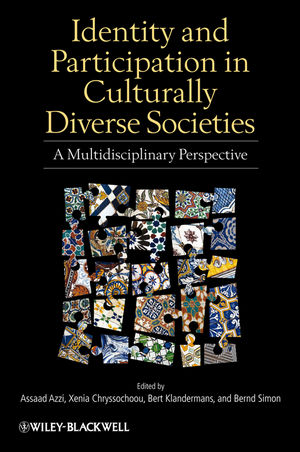 Together with Roel Meijer I wrote a chapter Going All the Way: Politicization and Radicalization of the Hofstad Network in the Netherlands. In this chapter we analyze the shift from a politicized identity to a radicalized identity of (members of) the Hofstad network. Our findings are based on an analysis of texts written by the Hofstad network by Meijer who acted as an expert witness at one of the trials involving the network. We also include my observations and transcripts of chats and online debates that I gathered when I followed the activities of the Hofstad network on the Internet between 2002 and 2005 and conducted interviews with three informants within the network. After introducing the Hofstad network, we provide an analysis of the “assimilationist” discourse and the rise of the Salafi movement as a background for the politicization and radicalization of the members of the Hofstad network. This process is analyzed from a social movement perspective, following Gamson (1992), by focusing on their perception of injustice, the agency of the people, and their identity.
This chapter will be published in Identity and Participation in Culturally Diverse Societies: A Multidisciplinary Perspective edited by
Assaad E. Azzi, Xenia Chryssochoou, Bert Klandermans, Bernd Simon
ISBN: 978-1-4051-9947-6
Hardcover
400 pages
October 2010, Wiley-Blackwell
£75.00 / €90.00
You can order online at Wiley.
Identity and Participation in Culturally Diverse Societies presents an original discussion in an edited volume of how the links between identity, political participation, radicalization, and integration can provide a scientific understanding of the complex issue of coexistence between groups in culturally diverse societies.
- Offers a scientific understanding of the complex issue of coexistence between groups in culturally diverse societies
- Utilizes original theory which combines social psychology, sociology, and political science
- Includes an original and extensive discussion of combining the concepts of identity and diversity
- Innovatively and engagingly employs the latest research and state-of-the-art theory
Introduction (Xenia Chryssochoou, Assaad E. Azzi, Bert Klandermans, and Bernd Simon).
Part I Development, (Re)Construction, and Expression of Collective Identities (Xenia Chryssochoou).
1 The Role of Nationalism, Ethnicity, and Class in Shaping Greek American Identity, 1890–1927: A Historical Analysis (Yannis G. S. Papadopoulos).
2 Religious Identity and Socio-Political Participation: Muslim Minorities in Western Europe (Maykel Verkuyten).
3 The Bicultural Identity Performance of Immigrants (Shaun Wiley and Kay Deaux).
4 Perceptions of (In)compatibility between Identities and Participation in the National Polity of People belonging to Ethnic Minorities (Xenia Chryssochoou and Evanthia Lyons).
Part II Collective Identity and Political Participation (Bernd Simon).
5 Winners and Losers in the Europeanization of Public Policy Debates: Empowering the Already Powerful? (Ruud Koopmans and Paul Statham).
6 New Ways of Understanding Migrant Integration in Europe (P. R. Ireland).
7 Collective Identity and Political Engagement (Bernd Simon).
8 Collective Identity, Political Participation, and the Making of the Social Self (Stephen Reicher and John Drury).
Part III Radicalization (Bert Klandermans).
9 Radicalization (Jacquelien van Stekelenburg and Bert Klandermans).
10 Citizenship Regimes and Identity Strategies Among Young Muslims in Europe (Catarina Kinnvall and Paul Nesbitt-Larking).
11 Going All the Way: Politicization and Radicalization of the Hofstad Network in the Netherlands (Martijn de Koning and Roel Meijer).
12 Trajectories of Ideologies and Action in US Organized Racism (Kathleen M. Blee).
13 No Radicalization without Identification: How Ethnic Dutch and Dutch Muslim Web Forums Radicalize Over Time (Jacquelien van Stekelenburg, Dirk Oegema, and Bert Klandermans).
Part IV Integration (Assaad E. Azzi).
14 Immigrant Acculturation: Psychological and Social Adaptations (John W. Berry).
15 Ethnic Social Networks, Social Capital, and Political Participation of Immigrants (Dirk Jacobs and Jean Tillie).
16 Naturalization as Boundary Crossing: Evidence from Labor Migrants in Germany (Claudia Diehl and Michael Blohm).
17 Confronting the Past to Create a Better Future: The Antecedents and Benefits of Intergroup Forgiveness (Nyla R. Branscombe and Tracey Cronin).
Conclusion: From Identity and Participation to Integration or Radicalization: A Critical Appraisal (Assaad E. Azzi).
Name Index.
Subject Index.
Authors
Assaad Azzi is Professor of Psychology and Director of the Social Psychology unit at the Université Libre de Bruxelles. His research focuses on identity, resource-distribution, and the perception of justice and injustice in majority-minority relations.
Xenia Chryssochoou is Associate Professor at Panteion University, Athens. She currently works on mobility, migration and justice and on perceptions of globalization and political participation.
Bert Klandermans is Professor in Applied Social Psychology at the VU-University, Amsterdam, The Netherlands. He is co-editor (with Suzanne Staggenborg, 2002) of Social Movements, Protest, and Contention and co-author, most recently, of the Handbook of Social Movements Across Disciplines (with Conny Roggeband, 2007).
Bernd Simon is Professor of Social and Political Psychology and one of the Directors of the Institute of Psychology at the Christian-Albrechts-University in Kiel, Germany. His research investigates inter- and intragroup processes.
Review/promo
This is a timely, incisive, and groundbreaking book on participation amidst societal change. Its fascinating chapters discuss a set of related topics – identity, intergroup relations, inequality, and migration – providing rich insight into dynamics of inclusion and exclusion. It is a great read that capably charts the course for future research on complex and global social issues.’
— Professor Susan Opotow, City University of New York, US
‘This is really a remarkable book on an important, complicated and challenging topic. It is a brilliant example of the fruitfulness of true interdisciplinarity, which is not interested in just being right, but in solving a problem with the serious and open use of contributions from different sources. And it shows that a strictly analytic perspective is not only possible in these soft fields of identity and political engagement, but also the only chance to find a way out of the various traps of more or less open discourses or casual descriptions that we are mostly used to seeing in these fields.’
— Professor Hartmut Esser, University of Mannheim, Germany
‘Multi-disciplinarity is extolled by many, but practiced by very few. This international team of contributors moves across levels of analysis, disciplines, and contexts with real intellectual verve. The volume impresses with its genuine and serious attempt to examine identity as a rich latticework of society and subjectivity. The esteemed team of editors – learned scholars all – provide what may prove to be the new social science of identity in society. I am excited by the possibilities.’
— Professor Colin Wayne Leach, Department of Psychology, University of Connecticut, US
‘Bridging psychology and sociology, this book demonstrates the importance of self and identity for analyzing and understanding social movements in diverse societies. With essays by some of the most eminent scholars, this volume is a must-read for scholars interested in how identity influences social movement recruitment, activism, and maintenance.’
—Professor Verta Taylor, University of California Santa Barbara, US
‘This volume represents a turning point in the study of cultural diversity. Migrations in a globalised world have rendered the question of identity within diversity such a complex matter that it requires the coordinated effort of several disciplines in the social and human sciences. Identity and Participation in Culturally Diverse Societies achieves this coordination through the scientific rigour of an outstanding group of international scholars with the insight derived from the added value of genuine interdisciplinarity.’
— Professor Fabrizio Butera, University of Lausanne, Switzerland
Handboek en symposium over jongeren en religie
Posted on November 11th, 2010 by martijn.
Categories: Important Publications, ISIM/RU Research, My Research, Religion Other, Young Muslims.
 Zappers, relishoppers, legobouwers. Jongeren in Nederland; je ziet ze nauwelijks nog in de kerk of de moskee. Toch zijn ze wel degelijk bezig met zingeving en religieuze activiteiten. Ze bewegen zich in diffuse sociale netwerken en zijn moeilijk te traceren, laat staan langdurig te binden. Hoe stellen deze jongeren hun eigen bouwpakket van zingeving samen en waaruit kiezen ze? Uit de tradities van de grote wereldreligies? En waaruit nog meer? Welk effect heeft de religieuze erfenis van ouders op jongeren? Welke bronnen boren moslimjongeren aan voor hun religieuze zingeving? Wat voor adviezen kunnen jongerenwerkers geven aan religieuze instituten?
Het Handboek jongeren en religie toont de stand van zaken en laat zien welke rol voor godsdienstige instituten als de kerk en de moskee kan zijn weggelegd. Met behulp van een nuttige typologie van de verschillende groepen jongeren wordt het veld van religieus jongerenwerk inzichtelijk. Actueel onderzoek door verschillende specialisten in het veld van jongerenpastoraat, jeugdwerk en islamitisch jongerenwerk, wordt afgewisseld met best practices: voorbeelden van succesvolle projecten met jongeren, waaronder swingende jeugdkerken uit neo-evangelicale hoek, eucharistievieringen voor tieners, een bezoekgroep voor jonge gedetineerde moslims en een Ramadan festival. Bij de best practices worden telkens ook tips, contactgegevens én valkuilen vermeld. Het handboek bevat eveneens een state of the art overzicht van onderzoek naar christelijke en moslimjongeren van de afgelopen tien jaar.
Het boek verschijnt in de reeks Utrechtse studies van de Faculteit Katholieke Theologie (Universiteit van Tilburg) en het departement Religiewetenschap en Theologie (Universiteit Utrecht).
Symposium
Het Handboek jongeren en religie wordt op 11 november gepresenteerd tijdens het symposium ‘Jongeren en religie?!’ in de Universiteitsbibliotheek. Het programma omvat lezingen door Abdelilah Ljamai (universitair docent Islam en Humanisme aan de Universiteit voor Humanistiek te Utrecht) en Martin Tensen (theoloog, auteur en docent/trainer op De Wittenberg, ex-programmaleider EO-Ronduit) en workshops rondom best practices.
Bekijk het programma (PDF).
NB: als u zich aanmeldt voor het symposium en de boekpresentatie op 11 november, dan ontvangt u voor de toegangsprijs van € 35,- ook meteen het boek! Het boek ligt op de dag zelf voor u klaar op de boekentafel in de zaal. Aanmelding voor de studiedag (incl. boek) gaat via de website van de Universiteit van Tilburg:
Over de auteurs
Het Handboek jongeren en religie verschijnt onder redactie van Monique van Dijk-Groeneboer, die als universitair docent verbonden is aan het Departement Religiewetenschap en Theologie (UU) en aan de Faculteit Katholieke Theologie (UvT).
Het handboek bevat bijdragen van Nora Asrami, Angela Berben-Schuring, Clazien Broekhoff-Bosman, Monique van Dijk-Groeneboer, Toke Elshof, Joris Kregting, Martijn de Koning, Jacques Maas, Johan Roeland en Hijme Stoffels.
Datum, tijd: 11 november 2010, 10.00-16.00 uur
Locatie: Boothzaal, Universiteitsbibliotheek Uithof, Heidelberglaan 3, 3584 CS Utrecht
Titel: Handboek jongeren en religie. Katholieke, protestantse en islamitische jongeren in Nederland
Auteurs): Monique van Dijk-Groeneboer (red.)
isbn: 978 90 79578 18 4
Prijs: € 29,90
Uitgeverij: 2010, Parthenon
Cartoonesque 17: That is (not) funny!
Posted on November 9th, 2010 by martijn.
Categories: anthropology, ISIM/RU Research, Public Islam.
Jokes can be funny, or not. What matters is who has the power to define what is funny and what the position of the target of the joke is. It is the transgressive quality of jokes that makes them funny but also very suitable for political uses. Which jokes are made and the responses to these jokes reveal important processes, hierarchies and discourses in society.
In the next video you will see a famous (at least in the Netherlands) Dutch speed skater: Sven Kramer. He, of course, wins the race and then rips his suit so you can see his behind. The video is in Dutch, but is nevertheless comprehensible for non-Dutch speaking as well, I think. Try it:
The pizza guy in the last scene of the commercial says ‘What a failure’ and then the other people stop laughing. What is happening here? First you see how Kramer’s girlfriend laughs at him and then she plays the video again for her friends and then, I think, for the entire neighbourhood. All of them sort of belonging to the ingroup; friends, neighbours laughing amongst each other because of the failure of one them. The pizza guy who is there can laugh with them but he is an outsider and when in the end he says a little too loud ‘What a failure’ he transgresses the line. According to anthropologist Radcliffe-Brown the best joking relationship exists when two groups have ‘both attachment and separation, both social conjunction and social disjunction’. Take for example the Dutch jokes on the Belgians in which the latter group usually features as the dumb ones. The Dutch and Belgians are neighbours, they share each others language (between the Dutch and the Flemish anyway), they share a large part of history that still lives in on both countries. Nevertheless, or maybe because of those shared features, they also are separated and occupy different political and cultural positions nowadays. In the Belgian jokes, the Belgians become the stupid and funny versions of the Dutch.
Anthropology of Laughter and Humor – Open Anthropology Cooperative
Carty & Musharbash (2008) call a ‘sense of humour’ the “strangely nebulous heart of understanding, and belonging, within social relationships” (p. 209). Humour is seen as a boundary between in- and outgroups: “Laughter is a boundary thrown up around those laughing, those sharing the joke. Its role is demarcating difference, of collectively identifying against an Other, is as bound to processes of social exclusion as to inclusion” (p. 214, emphasis by the authors). And although humour and laughter are universals, “they remain intimately and often elusively localised in their nuance and content” (p. 213).
The video shows both: humor as a way to demarcate difference between the pizza guy as an outsider and the others as insiders. And among the insiders humor as a way to bond: they even get some food to share with each other and watch the video. Humor also draws people together. Depending on the context humor can be offensive (and in fact the offense is often part of the joke as it is intended to ridicule a particular group) but humor can also be protective against outsiders (when intended to protect the group from ridicule) and can be both at the same as well.
Humor is often build on stereotypes:
European Heaven And Hell
In Heaven…
* the mechanics are German
* the chefs are French
* the police are British
* the lovers are Italian
* and everything is organized by the Swiss.In Hell…
* the mechanics are French
* the police are German
* the chefs are British
* the lovers are Swiss
* and everything is organized by the Italians.
And consider the next joke used by Don L.F. Nilsen in a class about humor:
Why aren’t Jews concerned about the abortion controversy?
Because they don’t consider a fetus viable until after it graduates from medical school.
According to Nilsen if the tellers or listeners of this joke are gentiles, it may be anti-semitic, criticizing Jews as being overly ambitious and arrogant. But if the tellers or listeners are Jews, it may be an expression of Jewish pride and the extraordinarily high standards of child rearing. Nilsen goes on by saying:
When a group member tells an ethnic or religious joke, it opens the door for inner-group communication and invites group members to examine their attitudes and behavior.
But if outsiders tell the same joke, the effect is the opposite, because the outsider focuses on the group’s most obvious characteristics and implies that these characteristics belong to everyone in the group.
This is something that directly pertains to the video as well of course. And as mentioned before ridicule is often part of the joke because the ridicule is what makes it funny for one and offensive for the other. What is funny for one crosses the boundary of what is acceptable for the other. This means that power is also part of joking. Usually the targets of jokes are those groups that are at the periphery of society as Nilsen explains: migrants, ‘white trash’, mentally ill and so on. If these outsiders feel offended and complain about the jokes they ‘just can stand a joke’ sometimes attributed to their lack of integration, education or individual pathology. We could witness this phenomenon during the Muhammad Cartoons affair in which during the debates Muslims were sometimes envisaged as the ultimate Other and backward because they lack any sense of humor, fun and joy and therefore cannot laugh at themselves. Such a discourse makes people blind to the long standing traditions of jokes and humor that every group has, including Muslims with regard to religious matters but also in relation to politics. The discourse about Muslims without humor therefore served to strenghten the Muslims as being outside our ‘normal”secular’ ‘rational’ ‘modern’ public sphere. At the same time among the opponents of the cartoons often all of the cartoons were seen as offensive while in reality many people exhibit different responses to the different cartoons; some were really funny others were offensive and most of them are ambiguous. It shows the political uses of humor. Giselinde Kuipers in a very interesting exposé on the Muhammad Cartoons (asking herself why is it that cartoons are so important in this case) for example shows how every society knows it past controversies about humor going to far, social movements using humor and mockery to state their claims or opposing to particular forms of humor that transgres the boundaries of what, according to them, should be acceptable. In another article Asef Bayat shows how islamists use humor (or forbid or regulate fun) for their political messages.
Humor is a powerful political tactic because, as Kuipers explains, it leaves the target with only few elegant responses. In the above mentioned video skater Sven Kramer chooses to laugh along with the joke that is at his expense. What else can he do? An angry reaction would have made it only more funny, a violent reaction or forcing to not show the video anymore would have made the situation only more ridiculous for him. Because it is a joke people can say, come on this is only a joke, don’t take it so personally. If he objects he makes clear that is not ‘in on the joke’ the same way as some Muslims made clear that they were not in on the joke of the Muhammad cartoons. Not in on the joke results in saying I’m not in to your social conventions. And why are they not in to ‘our’ social conventions? Because they have a strict religiosity and religiosity is at odds with fun and humor according to some Islam pundits but also according to some religious puritans. Ignoring and laughing along are, according to Kuipers, the typical reactions of those with little power and objecting to humor by demonstrations, going to court or whatever, is the strategy of groups that aim to empower their constituency and at the same time a sign of a growing consciousness about themselves as part of a group that is being mocked. Responding, in particular by joking back, requires power as Kuipers explains, also because apparently some people have the power define what is humor and what is not, while others are in a subaltern position.
Of course, jokes can be used as well against people in power for example in the past when in the Netherlands humor was used to disparage the churches or, still, people in government. In that sense humor also has the quality the empower and is also a sign of already apparent self-respect and confidence. The difference is that the latter is part of a countermovement against those in power while Muslims in the West opposing to the Muhammad cartoons are the outsiders targeted by those who belong to the dominant majority. Now the Muhammad cartoons were, partly, produced as a result of an attempt to teach Muslims a lesson: that they should comply do the Danish standards of humor and religion criticism. But as Nilsen explains “because outsiders have little power to bring about internal change, the effect is to stereotype the group, and this lessens the chances for change”. If that is correct, the cartoons produced the opposite of what was intended actually by the pundits which as a result (for them) proves their point once more.
Nilsen, Alleen Pace, and Don L. F. Nilsen. “Just How Ethnic is Ethnic Humour?” Canadian Ethnic Studies/Études Ethniques au Canada 38.1 (2006): 131-139.
Nilsen, Alleen Pace, and Don L. F. Nilsen. “Ethnic Humor.” Encyclopedia of 20th Century American Humor. Westport, CT: Greenwood, 2000, 115-118.
Nilsen, Alleen Pace, and Don L. F. Nilsen, Eds. “Names and Ethnicity.” a Special Issue of Names 56.1 (March 2008): 1-54.
Nilsen, Don L. F. “Ethnic Humor.” New Mexico English Journal 6.2 (1991): 20-25.
Nilsen, Don L. F. Humor in Irish Literature: A Reference Guide. Westport, CT: Greenwood Press, 1996.
Rappoport, Leon. Punchlines: The Case for Racial, Ethnic, and Gender Humor. Westport, CT: Prager, 2005.
NGG International Autumn Conference: Religious Authority – Past and Present
Posted on October 22nd, 2010 by martijn.
Categories: ISIM/RU Research, My Research.
Nederlands Genootschap voor Godsdienstwetenschap
22-23 October 2010
The International Autumn Conference of the Dutch Association for the Academic Study of Religion is devoted to “Religious Authority – Past and Present.”
Keynote speakers are Dr. Sophie Gilliat-Ray, Director of the Centre for the Study of Islam in the UK at Cardiff University, and Prof. Dr. Almut-Barbara Renger, Free University of Berlin, Germany.
Begin: Friday, 22 October 2010, 14.00 h
End: Saturday, 23 October 2010, 16.00 h
The Conference includes the annual members’ meeting of the NGG
OUTLINE OF THE THEME
Sometimes certain phenomena, which are not only rooted in but also seem to transcend daily life, inspire awe in people. People then may attribute authority to these phenomena. We speak of religious authority if this authority is related to a religious context. Not only persons and institutions but also concepts can embody religious authority. Examples are oral or written messages, which are experienced and acknowledged as ‘revelation’. Meta-empirical entities, deemed to be superior to human beings, are a source of religious authority as well. Believers claim to obey the authority of such entities, while these entities themselves are not empirically verifiable. Religious authority – both in its abstract and concrete forms – is the research object of many disciplines, and especially for the academic study of religion, anthropology and sociology.
What is religious authority exactly? Which insights are supplied by the academic discourse on this topic?
The concepts that we use in studying religious authority offer a rich array of approaches which will be scrutinized in this conference. The extensive debate on concepts, such as charisma, authority, power and status, shows that ‘religious authority’ is a captivating object of research in the academic study of religion. Under the influence of Max Weber’s ideas, ‘charisma’ is defined as a characteristic that is not inherent in a person but can only be attributed to such a person by a community, according to sociological approaches. Authority is then a social process. In anthropological and psychological circles, however, studies aim at establishing a set of characteristics that a person needs to make their authority effectual. Symbols of power and authority within a community are research object within anthropology as well. Discourse-theoretical approaches focus on power relationships that determine the ‘capital’ of a person in relation to other people.
Nowadays we notice a decrease in authority in traditional religious contexts. Secularisation processes, globalisation and anti-authoritarian movements have made a substantial impact. The relationship between the state (or politics) and religion is an important factor of influence on the dynamics of religious authority. Many traditional scholars within Islamic traditions, for instance, have lost authority because they were hedged in by the structures of official Islam (which is partly a political and partly a bureaucratic problem; cp. the ideas of Weber). The sociologists Heelas and Woodhead observe a ‘spiritual revolution’, marked by a sacralisation of the ‘Self’ and subjectivity. According to the philosopher Peter Sloterdijk, the facts supplied by modern scholarship and arts are unmistakable evidence that the era in which revelations were merely received is over.
Into which directions will religions and societies develop? Could we say that there is a general decrease in respect for external social authority? Political religions, an increase of ideology and totalitarian organisation – are these reactions to loss of authority? Does ‘new’ religious supply arise, wherever possible, as the Rational Choice theory maintains? For which ways do religious leaders opt nowadays? How do they manipulate ‘religious notions’? How can scholars of religion, anthropology and sociology collaborate in their historical and empirical research in order to gain insight into contemporary phenomena related to power, politics and religious authority? These are leading questions for the International Autumn Conference of 2010.
PROGRAM
Friday, 22 October
14.00 Arrival with coffee and tea
14.15 Welcome by Gerard Wiegers (University of Amsterdam), President of the Dutch Association for the Academic Study of Religion (NGG)
Session 1 (Paper 20 minutes, discussion 10 minutes) (chair: Yme Kuiper)
14.20 Frans Jespers, RU Nijmegen: Feminine Authority in Holistic Spiritualities
14.50 André van der Braak, philosopher and publicist: The Charismatic Master as Living Embodiment of Enlightenment: Religious Authority in Classical Chan Buddhism and its Relevance for Zen in the West
15.20 Coffee Break
Session 2: Trans-Nationalism and Religious Authority: Exploring the Salafi Movement (chair: Gerard Wiegers)
15.40 Joas Wagemakers, RU, Nijmegen: The Transnational vs. the Local: Abu Muhammad al-Maqdisi’s Transnational Religious Authority and the Locally-Inspired Midad al-Suyuf Forum
16.00 Carmen Becker, RU, Nijmegen: Struggling with Authenticity: Staying on the Path of the Salafi al-salih in Chat Rooms and Online Forums
16.15 Zoltan Pall, RU, Nijmegen: Religious Authority of Salafism: The Challenge of the Saudi Liberals
16.30 Martijn de Koning, RU, Nijmegen: Networks of Authorization – Transnational Connections of Authority in Salafi Networks
16.45-17.30 Short break followed by discussion (45 min.)
18.00 Dinner
Session 3: Key note lecture (chair: Wim Hofstee)
20.00 Sophie Gilliat-Ray, Cardiff University, UK: Religious Authorities in British Muslim Communities: Gendered, Contested and Politicised (45 minutes lecture plus 15 minutes discussion)
21.00 Social time
Saturday 23 October
9.00 General Members’ Meeting NGG
10.00 Coffee Break
Session 4: Key note lecture (chair: Kocku von Stuckrad)
10.15 Almut-Barbara Renger, Free University Berlin, Germany: Apollonius of Tyana – Rival Authority toward Jesus Christ. Explorations into an Internet Fad (45 minutes lecture plus 15 minutes discussion)
11.15 Coffee Break
Session 5 (chair: Brenda Bartelink)
11.30 Mohammed Ghaly, Leiden University: Religious Authority in Islam between the Jurists and the Physicians: Early and Modern Discussions on Embryology
12.00 Jane Lee, Melbourne College of Divinity: Religious Authority in the Work of Religious Philosopher Romano Guardini with Particular Reference to the Period of National Socialism
12.30 Lunch Break
Session 6 (chair: Jacqueline Borsje)
14.00 Cyril Kuttiyanikkal, Tilburg University: The Image and Power of Catholic Gurus
14.30 Pieter Boersema, E.T.F., Leuven: Religious Authority Construction within Contemporary Christian Migrant Communities
15.00 Closing and departure (Gerard Wiegers)
REGISTRATION FOR THE CONFERENCE
Registration for 2 days: Ordinary members of the NGG pay 120.- EUR, students and other members who are entitled to a discount pay 80.- EUR, non-members pay 150.- EUR.
This fee includes accomodation (one-person rooms with shower), a three-course dinner on Friday, breakfast and lunch buffet on Saturday, as well as coffee breaks.
Registration for Friday only: 50.- EUR fixed price (including the three-course dinner).
Registration for Saturday only: 40.- EUR fixed price (including lunch buffet).
If you want to register, please send an e-mail to the General Secretary of the NGG, Prof. Kocku von Stuckrad (c.k.m.von.stuckrad@rug.nl), indicating (a) the arrangement you want to register for, (b) the status of your membership, (c) dietary preferences if applicable. Please note that your registration is binding.
Members of the NOSTER Thematic Group “Religious Authority” are entitled to a discount and will be informed seperately.
We are also investigating the possibility to subsidize the participation of student members of the NGG. Please contact the General Secretary if you want to apply for such a reimbursement.
Date(s): 22-23 October 2010
Location: Soesterberg, Netherlands
Address: Kontakt der Kontinenten
Amersfoortsestraat 20
3769 AS Soesterberg
Website: http://www.kontaktderkontinenten.nl/
Introducing Anthropology and Publicity
Posted on October 17th, 2010 by martijn.
Categories: anthropology, Featured, Headline, ISIM/RU Research.
Although anthropology is by definition ‘public’, the relationship between its practitioners and society, its social relevance and its connections with the wider audience, have always been controversial and complex. This will be the general theme of the meeting on 5 November 2010 at Ravenstein. To be sure, it is a vast and multifaceted topic.

The focus is on the dissemination of anthropological knowledge to relevant groups in the societies to which anthropologists belong and those where they conduct their research. We will address the reasons for the underexposure of anthropological knowledge (albeit there is considerable variation in this regard according to national anthropological traditions) and explore ways to improve its dissemination and application in society.
Since the emergence of academic anthropology, the discipline has had the double mission of, on the one hand, describing and interpreting cultural differences and, on the other, generating cross-cultural knowledge about humankind. The inherent tension between the particular and the general requires a balancing act on the part of anthropologists and complicates the translation of anthropological knowledge for ‘consumption’ by the wider public, media and policy makers. Given the increased complexity of societies in a globalizing world, anthropological knowledge has become potentially more relevant, yet remains underexposed to wider audiences.

Bridge over the river Waal (Waalbrug) Nijmegen
The meeting in Soeterbeeck will be structured by four intimately related questions. First, in which ways can anthropological knowledge be improved in order to become more relevant and accessible for non-collegial groups in their own society and in the societies where they do their fieldwork? Second, what are the pros and cons of popularizing anthropological publications and moving them to the ‘front lines’? Third, to what extent can cultural relativism play a role in the public debate on social issues? And, finally, what role can the new digital media play in enhancing the public value of anthropology?
These questions will be addressed by the following speakers: Ulf Hannerz (Stockholm University), Thomas Hylland Eriksen (University of Oslo), Jeremy MacClancy (Oxford Brookes University), Annelies Moors(University of Amsterdam), Mathijs Pelkmans (London School of Economics) and discussed in a small gathering of colleagues at the conference centre Soeterbeeck of Radboud University Nijmegen.
Henk Driessen, Martijn de Koning, 27/08/2010
You can find more information about the seminar and contributions of guest writers on the weblog Anthropology & Publicity.
Brief van Jason W.: Herziening
Posted on October 16th, 2010 by martijn.
Categories: ISIM/RU Research, Murder on theo Van Gogh and related issues, My Research, Religious and Political Radicalization.
De Volkskrant maakt vandaag melding van een brief van Jason W. waarin hij terugkomt op zijn eerdere denkbeelden en acties. Dit herzienings- of herroepingsdocument is hieronder volledig geplaatst:
De idealen die ik eens huldigde zijn teloor gegaan en ik ben tot het besef gekomen dat ze moreel bankroet zijn. Met afgrijzen heb ik toegezien hoe een ooit hooggestemde ‘vrijheidsstrijd’ die het startsein zou moeten zijn voor een nieuwe, rechtvaardige wereld – met name in Irak – is verworden tot een bloedige escalatie van geweld, sektarisme en godsdienstwaanzin. Daarbij zijn ongehoorde wreedheden en misdaden begaan.
Mensen in landen die (mede) door Islamisten zijn bevrijd van dictaturen zoals Irak hebben massaal de ideologie verworpen in welke naam ze ‘bevrijd’ zouden zijn nadat ze er in de praktijk onder hebben moeten leven. Ze concludeerden dat deze geen enkel toekomstperspectief beidt. Dit heeft mij ertoe gedwongen mijn standpunten kritisch te herzien, wat heeft geleid tot het besef van de onhoudbaarheid ervan.
Ik schrijf dit om de samenleving te informeren dat ik mij niet langer identificeer met de vroeger door mij gehuldigde standpunten en hoop een constructieve bijdrage te leveren aan onze verdeelde samenleving. Ik hoop hiermee jongeren te waarschuwen om zich niet te laten misleiden door valse beloften en idealen.
Het streven om een Islamitische Staat te realiseren is op een totale mislukking uitgelopen. Dit heeft naar mijn inzicht verschillende redenen. Zo heeft de Islam een oorlogsrecht en legt het zijn volgelingen een hoge ethische standaard op. Deze is echter moeten voeten getreden in de vele, volslagen willekeurige moordpartijen op onschuldige (moslim)burgers.
Maar er is meer aan de hand. De hele achterliggende wereldbeschouwing, berust op een ondeugdelijke basis. Het beeld dat de wereld slechts bestaat uit gelovigen en ongelovigen, waarbij de laatsten er slechts op uit zijn om de eersten te vernietigen, is een kinderachtige en grove simplificatie van de werkelijkheid. Het gaat voorbij aan de complexiteit en vele nuances die de werkelijkheid rijk is. En aan het feit dat de meeste van de huidige problemen in de Islamitische wereld niet het resultaat zijn van complotten van interne en externe vijanden, maar historisch gegroeide problemen. Daar bestaan geen snelle of makkelijke oplossingen voor. De bewering dat deze problemen zullen verdwijnen wanneer moslimgemeenschappen terugkeren naar de ‘zuivere islam’, is veel te kort door de bocht.
Dit wereldbeeld wortelt voor een belangrijk deel in het verwerpen van ongeloof. Het is de radicale variant van dit concept dat munitie levert om iedereen die niet exact hetzelfde religieuze wereldbeeld deelt tot ongelovige te verklaren en daarmee zijn bloed en bezit buiten de wet te stellen. Het is een extreem exclusieve, uitsluitende opvatting, die slechts leidt tot een constante vergroting van het aantal te bestrijden vijanden.
Het kan geen probleem oplossen, doordat het elke mogelijkheid om compromissen te sluiten en te participeren in wereldse politiek bij voorbaat onmogelijk maakt. Het is een heilloze visie welke ten onder gaat aan zijn eigen rigoureus gesloten ideologische kaders.
De wereldvreemdheid van de Islamisten kenmerkt zich door het ontbreken van banden met de samenlevingen namens welke het beweert te vechten. Het roept conflicten uit tot jihad die in werkelijkheid vooral nationalistisch zijn en historische gronden hebben. Deze samenlevingen hebben hun eigen doelen en zitten er niet op te wachten dat hun strijd wordt gekaapt door salafisten met een heel andere agenda. Dit gebrek aan binding verklaart waarom in alle conflicten sinds de jaren ’80 geen enkele heeft geleid tot een Islamitische staat.
Islamisten dienen derhalve de wapens neer te leggen en andere, vruchtbaarder methoden aan te wenden. Ze moeten zich omvormen tot sociale en politieke partijen om zo de gewenste hervormingen tot stand te brengen. De problemen in Palestina, Afghanistan, Tsjetsjenië enzovoorts, vereisen oplossingen op politiek niveau. De tot nu toe gevolgde strategie is contraproductief geweest en heeft mogelijke oplossingen alleen maar verder weggebracht.
Maar er is een belangrijker, bredere issue en dat betreft het Islamisme zelf. Is het echt nodig om te streven naar een Islamitische staat? We dienen te beseffen dat zich in de laatste drie eeuwen zeer ingrijpende en radicale veranderingen hebben voorgedaan, globaal aangeduid met modernisering. De meeste problemen in de Islamitische wereld zijn een gevolg van het achterop raken in het moderniserings- en industrialiseringsproces. De stelling dat de Sharia de oplossing is voor alle partijen lijkt in dit licht bezien achterhaald. Het is veeleer zo dat we behoefte hebben aan een fundamentele herbezinning over de plaats van religie in de moderne wereld. De Sharia is geënt op traditionele, rurale gemeenschappen en lijkt een anachronisme in de moderne wereld, die in toenemende mate urbaniseert, liberaliseert en globaliseert, en waar het gevoel van gemeenschapszin is vervangen door ideologisch en economisch individualisme. Ook heeft religie door de opkomst van de moderne wetenschap en het rationele denken zijn waarheidsmonopolie verloren, en kan het geen aanspraak meer maken op het belang en de status die het eens had. Al deze problemen zijn uniek voor de moderne tijden kunnen niet opgelost worden met voormoderne oplossingen.
Ik roep daarom moslims, vooral salafisten, op om goed na te denken over deze zaken. Een terugkeer naar het verleden zit er niet meer in. We moeten de moderne tijd met al zijn verworvenheden, waaronder de democratische rechtstaat, accepteren, en ons van daaruit oriënteren op onze plek in de samenleving. We moeten voor onszelf erkennen dat het verleden voorbij is en niet meer terugkomt, en ons richten op de toekomst.
Dit betekent niet dat wij onze religie moeten verloochenen; wel betekent het dat we de realiteit moeten accepteren en ons eraan aan moeten passen. Slechts dan zullen wij werkelijk in staat zijn om onze problemen op te lossen.
Jason.
Beluister HIER een kort gesprek met de advocaat van Jason W.
Nu Online: Zoeken naar een 'zuivere' Islam
Posted on August 22nd, 2010 by martijn.
Categories: [Online] Publications, Gouda Issues, ISIM/RU Research, Murder on theo Van Gogh and related issues, My Research, Religious and Political Radicalization, Ritual and Religious Experience, Young Muslims, Youth culture (as a practice).
Sinds enige tijd kun je via de VU repository mijn proefschrift Zoeken naar een ‘zuivere’ islam downloaden. Dat kan ook via deze site.
- Het proefschrift is online te lezen: HIER
- Samenvatting in het Nederlands lezen én downloaden: HIER
- Artikel Migrantenstudies lezen én downloaden: HIER
- Samenvatting in het Engels lezen én downloaden: HIER
- Artikel ISIM Review in het Engels lezen én downloaden: HIER
Veel leesplezier, en commentaar wordt op prijs gesteld.
Nu Online: Zoeken naar een ‘zuivere’ Islam
Posted on August 22nd, 2010 by martijn.
Categories: [Online] Publications, Gouda Issues, ISIM/RU Research, Murder on theo Van Gogh and related issues, My Research, Religious and Political Radicalization, Ritual and Religious Experience, Young Muslims, Youth culture (as a practice).
Sinds enige tijd kun je via de VU repository mijn proefschrift Zoeken naar een ‘zuivere’ islam downloaden. Dat kan ook via deze site.
- Het proefschrift is online te lezen: HIER
- Samenvatting in het Nederlands lezen én downloaden: HIER
- Artikel Migrantenstudies lezen én downloaden: HIER
- Samenvatting in het Engels lezen én downloaden: HIER
- Artikel ISIM Review in het Engels lezen én downloaden: HIER
Veel leesplezier, en commentaar wordt op prijs gesteld.
Radicalization Series IV – Salafism as a Utopian Movement
Posted on August 6th, 2010 by martijn.
Categories: Featured, Headline, ISIM/RU Research, My Research, Religious and Political Radicalization, Young Muslims.
Introduction
There are many different approaches for research on Salafism and they all make clear that, although Salafism has some distinguishing features, the movement is quite diverse with many doctrinary contradictions and clashes and different politico-theological tendencies. Almost all definitions emphasize that the term Salafism is derived from ‘al-salaf al-salih, (the pious predecessors); the first three generations of Muslims who are, according to tradition, the best generations of Muslims ever lived. They also emphasize that Salafists treat Quran and Sunna (the life of the prophet Muhammad) as the only legitimate sources for reason and behaviour of Muslims. It is therefore difficult to define Salafism in a clear, consistent way. One of the main frames for research on Salafism is Quintan Wiktorowicz’ work on Islamic activism; based upon social movement theory. He makes a distinction between Purists, Politicos and Jihadis. The purists, according to Wiktorowicz are not interested in politics, while Politicos (often influenced by Muslim Brotherhood networks) do engage in politics while the Jihadis see the world in such a deplorable state that only a violent Jihad can bring peace and (Islamic) justice to Muslims. Several authors in the book Global Salafism (in particular Thomas Hegghammer) have criticized his model among other things for being internal inconsistent (because jihadis should be a subsubdivision of politicos based upon him seeing political strategy as the defining issue), the definition is still too much based upon theology that does not tell us very much about people’s actual behaviour and claiming to be a-political (as purists do) is a political claim because it indirectly supports the status quo. Hegghammer propes a different typology based upon the structural presence of resources, strategies and rationales for action. Although helpful this model does not solve the problem that it cannot take into account identity, gender or the idea that security and radicalization (two angles in which both approaches fit) are themselves cultural constructions with specific local, national and transnational dimensions. Both models are also top down: they take up the official doctrines, methods and identities of spokespersons and religious authorities but ignore the perspectives, ideas and practices of participants in the movements.
In my research I choose for a more anthropological account of Salafism as a religious movement, taking seriously the political and religious subjectivities of participants. Based upon an article on Grounded Utopian Movements by Price, Nonini and Fox Tree in Anthropological Quarterly, I regard Salafism as a movement trying to revitalize Islam based upon a homogenuous ideal of Islam of the days of the first generation Muslims. The Salafi movement aims to cleanse Islam from so-called non-Islamic accretions, such as Sufism, Shi‘a Islam, or local practices and doctrines, which have sullied a “pure” Islam (Meijer, in Global Salafism). The only way to lead a pure and authentic life and to inherit paradise is to return to the period of the prophet Muhammad and his companions and to emulate their lives. The sources of the Islam, the Qur??n and the ?ad?th are seen as the written version of the authentic and pure Islam. All human action has to be covered by the sources of Islam to be legitimate, otherwise they are condemned as bid’a or worse: in some cases such illegitimate acts may lead to takfir. Moreover since the prophet Muhammad is considered to be an exemplary, perfect Muslim, the Sunna, a close reading of the Qurann and hadth are essential sources with guidelines for leading the correct life and staying on the righteous path. This applies to thought, behaviour as well as appearance. Based upon this ideal the movement tries to develop a lifestyle participants find more just and satisfying than at present. The transnational Salafi movement consists of local and global branches and is characterized by a loosely coupled network structure that is non-hierarchical and characterized by a segmentary-like mobilization and fission and fusion of several sub-networks. The different Salafi networks share the same doctrine of tawhid (the unity and uniqueness of God) as Wiktorowicz explains, but (contray to Wiktorowicz’ claim) do not agree on all aspects of this principle such as what constitutes belief and unbelief and how to interpret particular attributes of Allah. Furthermore, Salafi networks share the method of reading and interpreting the sources of Islam but they differ on the methods of worship and the manner of achieving their goals.
Utopian Movement
Just like in the case of Salafism, Price et al make clear that movements such as Global Justice, Rastafari, Maya Movement and Pentecostalism can be seen as Grounded Utopion Movements whereby grounded refers to the idea that identities, values and imaginaries are grounded in local histories and are embodied and experienced by concrete persons with their own histories. They use the term grounded to refute that we are not talking about irrational, obsolete and romantic ideas; instead they rooted, constructed and nurtured by interactions and practices binding people to the idea of being and becoming part of a community. They admit that all movements have utopian dimensions; this dimensions directs actions in terms of goals and the correct trajectory towards achieving those goals. Grounded Utopian Movements however are distinct from other movements because their utopian imaginaries pertain to the protection of the moral integrity of one’s own community and of one’s own identity against different modalities of oppression and injustice. It is in particular their capacity to create new, alternative realities that make state institutions and elites wary of them and perceive these movements as a threat for social cohesion, security and existing arrangements in society.
Establishing Utopia: politics of lifestyles, distinction and resistance
The Salafi movement is a modern social movement aimed at guarding the identity and integrity of Muslims in a world perceived to be full of seduction, oppression and injustice. Convincing and teaching Muslims to be part of common life, a common heritage and common practices determining a good and correct life is crucial for establishing a ‘true’ moral community emulating the model of the prophet Muhammad. Many activities of the Salafi movement therefore are aimed at constructing the moral community and teaching people the proper ways of being part of that community. The most important strategy of the Salafi movement for de-corrupting Islam and the Muslim community is da’wa: inviting people to Islam (mission). With their da’wa activities the movement spreads its ideas of a virtuous life based upon the idea of commanding good and forbidding evil (al-amr bi-l-ma’ruf wa nahy ‘an almunkar). We can distinguish between three different types of activities sustaining that principle: politics of lifestyles, politics of distinction and politics of resistance (de Koning, 2009b).
All Salafi networks in the Netherlands and other European countries are engaged in one way or another in these type activities. Politics of lifestyles are activities aimed at shaping and nurturing the correct Islamic identity and lifestyle of participants. Preachers of the Salafi movement give lessons, lectures, organize conferences about the correct islamic lifestyle (dress, marriage, ways to interact, being Muslim in a Western society, and so on). The different networks publish books and leaflets about these topics and every networks has its own (sometimes overlapping) circles of lectures and courses by which they aim at a moral rehabilitation of Muslim youth. This does not mean that people are passive consumers of Salafi ideas; in daily life they have to make compromises which most of them do with regard to for example dress and interaction between men and women. Also the courses and conferences are not only about transferring knowledge; they are also meant to establish a sense of belong, brotherhood/sisterhood. It is the combination of knowledge and being together that accounts for many people using the knowledge circles to boost their imaan (faith).
The politics of distinction are aimed at protecting a minority position of Muslims in a society where the majority tries assimilate them. Particular lifestyle practices such as wearing the niqab can become part of the politics of distinction when they are part of public debate or even forbidden. As a result the Salafi movement tries to engage with the public debate and at the same time such plans offer them a platform to disseminate their ideas to a larger (Muslim and non-Muslim) audience. Also self-identification is part of the politics of distinction for example pertaining to the internal quarrels over using the label Salafi method, Salafi (in Dutch also selefie) and criticizing other groups. The boundaries between different branches of the Salafi movement may appear very strong and impermeable when looking at the daily life of participants a more nuances picture emergers because for example economic motivations can lead to people of one network working in the institutes of another (antagonistic) network. And indeed, building their own institutions such as Islamic schools and home care are also part of this type of politics as well as criticizing other Muslim organisations for their allegedly complacent attitude in the Islam debate.
The third type, resistance politics, involves activities aimed against what the Salafi movement perceives as oppressive structures in Europe and Muslim countries. This can pertain to preaches about ‘zionist’ aggression against Palestinians, the necessity of fighting against injustice and severe attacks at Muslim representatives outside the Salafi movement. Travels of some youths to Chechnya, Afghanistan, Pakistan (Kashmir), Iraq and Somalia to participate in the fighting against the US, is also part of this, as well as publishing jihad texts and videos on the internet. Most networks of the Salafi movement do not differ with regard to life style politics but are in fierce disagreement over the other two types.
Welcoming utopia
The call for unity, purity and religionization coming from the Salafi movement can be seen as an attempt to establish itself as the only true representatives of ‘true’ Islam in the Netherlands protecting the Muslim communities from attacks from inside and outside. Moreover, given the practice of Salafi preachers to base their statements upon ‘evidence’ from Islamic sources and explaining them at the same time, the Salafi movement does not only provide Muslim youth a way to engage with a vision of ‘true’ Islam and create a sharp distinction between them and their parents and them and Dutch society, but also a method and path to immerse oneself into a ‘new’ tradition. As I have shown in my contribution to Global Salafism by analyzing the life-stories of two female Salafists, the process by Moroccan-Dutch youth turn to Islam after a period of ‘being not so religious’ or ‘sleeping Muslims’ and affiliate themselves with the Salafi movement can be described as a type of conversion; a re-affiliation within the same religious tradition. These women seek a strong identity, self-realisation and a symbolic transformation of a personal crisis. The Salafi doctrines enable them to rewrite their own life stories and to construct their sense of self as strong people who find their purpose of life in Islam. They have rebuild their own life-stories in the process of seeking wholeness and connected their own individual trajectories, predicaments, ideals and ideas to the Salafi interpretation of Islam.
The rigorous and sometimes rigid Salafi creed and piety creates a stark contrast with the often conflicting and troublesome experiences of daily life. This, as is the same as with the other Muslim youth searching for a ‘true’ Islam, does not mean people actually follow every aspect of the Salafi way. Many of them see it as an attempt to follow a life as a ‘true’ Muslim, as a personal project that has to be fulfilled and as a means to revive ones personal faith (imaan) without fully living up to it. The utopian Islam and the dark, messy, chaotic daily life coexist and, this contradiction is exactly what both is the strength and weakness of the Salafi movement. The utopia with its high moral standards can become an obstacle for functioning in daily life with family, work and education where other rules and loyalties exist. At the same time it gives the Salafi movement its power for it means that people can hold on to the ideal without diluting it and it makes people striving for more all the time: the utopia lies somewhere at the horizon (it is concrete) although impossible to reach. By framing the ideas about the correct lifestyle, building up a position as a minority in Europe and its fight against oppression and justice, in terms of commanding good and forbidding evil the actions of the Salafi movement become moral issues by which the Salafi movement tries to construct a moral community and emphasizes its integrity and tries to safeguard it.
Een verlate impressie van het Nationaal Islam Congres 2010
Posted on June 6th, 2010 by martijn.
Categories: ISIM/RU Research.
„Jullie zijn hier te gast. We hebben hier een Nederlandse cultuur en die willen we houden. We willen niet dat allerlei invloeden aan die cultuur gaan knibbelen en dat gaat ook niet gebeuren.”
Ik vrees voor de heer Brinkman. Het tweede Nationaal Islam Congres was nog groter dan de vorige keer en nog multicultureler en het werd nog meer duidelijk hoezeer de islam al lang in Nederland geworteld is. Het is groter dan de vorige keer en nog iets beter opgezet. De organisatie claimt dat dit het grootste islamitische festijn in Nederland is. Dat betwijfel ik overigens. Ik denk dat het Multifestijn groter is, behalve dan wanneer het gaat om diversiteit en aantallen lezingen; er zullen niet veel events multicultureler zijn dan het islamcongres en ook de diversiteit aan sprekers was behoorlijk groot. Vooraf was er de nodige commotie geweest naar aanleiding van een preek van imam Fawaz over het Islamcongres. Deze preek was behoorlijk hard en een iets verzachte versie (met daarin ook een verwijzing naar het FION congres) staat op de site Al Yaqeen en op Ontdekislam. Ik begrijp niet helemaal waarom Fawaz deze preek deed aangezien er vorig jaar diverse andere predikers van As Soennah/Al Yaqeen hebben meegedaan en ik had niet de indruk dat men heel ontevreden was. Op de dag van het islamcongres was er geen prediker van Al Yaqeen die meedeed waardoor het programma omgegooid werd. Dat getuigt van flexibiliteit en professionalisme in de organisatie ook al kon men de enigszins rommelige indruk die daardoor ontstond niet helemaal wegnemen.
Na de plenaire opening te hebben bijgewoond en diverse mensen te hebben begroet, ga ik als eerste naar de lezing van Haitham al Haddad en daarna naar Abdul-Jabbar van de Ven. Hij wordt aangekondigd door Nouredine Steenvoorden die de opmerking maakt over mijn bijdrage over leiderschap bij het multifestijn (er schijnt een onderzoeker te zijn die je heeft uitgeroepen tot één van de leiders van de moslims in Nederland).
De vragen die aan hem gesteld worden zijn onder meer:
1) bent u sheikh? Volgens AJ noemen de geleerden zich niet eens sheikh en introduceert hij zich niet voor niets met ‘in het land der blinden is eenoog koning’.
2) Een vrouw hoorde dat een teken voor het einde der tijden is dat er een onbekende voor de moskee staat en de ulama doodverklaart. AJ zegt dat hij dat zeker niet doet.
Ik loop wat rond en zie opmerkelijk veel dames met niqaab; veel meer dan vorig jaar. Ze vallen daardoor op,maar toch ook weer niet; de sfeer is er één alsof dat gewoon onderdeel is van het hele pakket. Heb eigenlijk alleen via twitter er een opmerking over gezien, verder niet.
Ik kom daarna bij de vragen sessie na de lezing van Bilal Phillips over sharia. Iemand vraagt wat ze moet doen als haar vader haar niet wil kennen, een ander iemand over een onduidelijke scheiding en een derde over als je iemand kwaad gedaan, kan alleen hij of zij je dan vergeven. Phillips heeft onder meer gesproken over polygamie en dat dat moet kunnen. Dan moet je wel alle vrouwen gelijk behandelen. Dat laatste is onderdeel van een gesprek van een groepje jongens die naar de uitgang lopen. Dat type vragen staat overigens in schril contrast met het hele debat over sharia dat voortdurend gaat over handen afhakken, stenigen en de al dan niet vermeende incomptabiliteit tussen sharia en Nederlands recht. Moslims op het islamcongres zijn daar helemaal niet mee bezig; het gaat hen vooral om kleinere (maar wel belangrijke) alledaagse zaken en familiezaken.
Als ik weer terugloop kom ik diverse bekenden tegen van predikers tot jongeren. Na diverse koppen koffie en thee ga ik naar de uitreiking van de Awards, onder meer één voor Remy Soekirman door een ge-emotioneerde Saoed Khadjé en aan Elkhattab, Gretta Duisenberg enzovoorts. Daarna begint het grote islamdebat. Er wordt een manifest voorgelezen over verdraagzaamheid en dat wordt ook het thema van het, nogal rommelige, debat. Het idee met twee debatleiders is niet echt handig; geen van beiden heeft echt de regie en lijkt vooral op de ander te wachten. Debatleider Erik vraagt als een meerderheid van de Nederlandse bevolking moslim is, wie is er dan voor invoering van de sharia. Een belangrijke vraag volgens hem, want het is een angstbeeld onder veel autochtone niet-moslims. Volgens joods-christelijk pastor Ben Kok zou ongeveer de helft voor zijn, terwijl 20% tegen was en de rest zich van stemming onthield. Een grote groep, onder wie nogal wat dames stemde inderdaad ja (waaronder ook mijn complete onderzoeksgroep). Een kleine groep is voor het niet-invoeren van de sharia als moslims de meerderheid hebben. Ben Kok’s observatie is volgens mij net helemaal terecht. Joris Luyendijk wijst er op dat juist het grootste deel van de zaal zich onthoudt van stemming. En volgens mij is dat correct. De hele vraag was trouwens onzinnig, zelfs al zou het een grote angst zijn onder de bevolking. De opvattingen over sharia variëren zozeer, dat je met een dergelijke vraag eigenlijk niet goed weet waar mensen nu antwoord geven: een modern sharia rechtstelsel? De wil van God? Rechtvaardigheid? Dat kan allemaal.
Eén van de jongemannen uit het publiek moet reageren en zegt islam is mijn hele leven. “Iedere keer hoor en zie ik op tv de debatten over islam en waar hebben jullie je kennis vandaan? Van de boeken van Hirsi Ali?” Een oudere man in het publiek houdt een gloedvol betoog dat ook nog eens grappig is, vooral als hij zegt (ook typerend voor de inhoud van zijn bijdrage) Wilders heeft gestudeerd van mijn geld!
Vanuit het publiek wordt duidelijk gemaakt dat het gaat om acceptatie. Niet om tolerantie, maar om acceptatie. De vertegenwoordigster van D66 zegt daarbij dat het moet gaan om acceptatie van twee kanten. Iemand uit de zaal had haar gevraagd of zij ook geaccepteerd zou worden als ze een niqaab of hoofddoek zou dragen. Volgens haar moet dat niks uitmaken of zij dat draagt (ik heb het idee dat ze het anders opvat dan de bedoeling van de vragensteller was) want het geloof zit in het hart. Dat kan op nogal wat boegeroep uit de zaal rekenen. Waarschijnlijk mede doordat het komt uit een hoek die vindt dat een hoofddoek er wel bij hoort en dat het (volgens sommigen typische christelijke) adagium van innerlijk geloof is voldoende niet klopt; het gaat ook om de juiste praktijken. Het boe-geroep kon overigens ook wel weer op afkeuring rekening mede omdat dat zo vertelde een aanwezige me, dat eigenlijk het hele idee van verdraagzaamheid ter discussie stelt.
Na het debat is er een afsluitende sessie. Saoed Khadjé verontschuldigt zich nog voor het late begin en het omgooien van het programma ook omdat er enkele afzeggingen op het laatste moment waren. De oproepen van de geleerden aan tafel varieerden van believe in god, do good and avoid evil. The purpose of islam is to gain access to paradise and to safe ourselves from hell fire. Secure ourselves, not as individuals, but as a community and push Europe to accept pluralism and that Muslims are an integral part of every community. If we don’t become part our (Muslims) blood will be shed. We cannot compromise in our Faith: Allah wil not be satisfied. And who knows, one day we may have an Islamic Republic of Europe. Bilal Phillips maakt ook nog gebruik om te wijzen op zijn online university, waar mensen (deels) gratis cursussen kunnen volgen. Remy Soekirman sluit af, met een pleidooi dat deze conferentie de boodschap van de liefde in zich draagt. Naast allerlei lezingen waren er ook standjes van Malaysia tourism t/m Wij Moslims. De vrijwilligers van Dar al Ilm waren gekleed in het zwart met een rode omslagdoek/hoofddoek. De organisatie was weer goed verzorgd ook al was het programma door de veranderingen wel onduidelijk.
De al eerder genoemde Ben Kok was ook aanwezig en wist zich niet aan de regels van de organisatie te houden: niet filmen en beschuldigde de organisatie van nogal ‘Gestapo-achtige’ werkwijze. Dat lijkt mij zowel een belediging aan de organisatie van het congres (die dringend maar vriendelijke te werk gingen) als aan de slachtoffers van de Gestapo. Dat leidde hem tot de volgende opmerking:
Islamcongressen 29 mei te Amsterdam + VIDEO – AmsterdamPost
Voor het eerst voelde ik het islamsysteem: het is onze ruimte, met veel controle en bewakers en regels, wij oefenen de macht hier uit.
Zo is het in onze moskee, in onze conferentieruimtes, in het ware moslimland.
En dat vinden sommige mensen heel fijn, die leven op in een totalitair systeem.
Sommigen krijgen mooie machtsfuncties, al was het maar bij de religieuze kledingpolitie en anderen laten zich gezeggen als makke schapen in het systeem, want denken hoeft niet meer, dat scheelt een stuk eigen verantwoordelijkheid en zo.
Waarschijnlijk is meneer nog nooit op een congres geweest en gezien zijn taalgebruik hier had de organisatie ook achteraf groot gelijk hem te verwijderen. Hij wijst niettemin wel op een punt. Het islamcongres was inderdaad een ‘islamitische’ vrijhaven. Er waren enkele niet-moslims, maar het had zeker een sfeer van ‘wij moslims onder elkaar’ waarbij men zich vrijelijk kon uitten; in woord, gedrag en uiterlijk. Het gaat hierom een sfeer van ‘broederschap’ of ‘zusterschap’ zoals je die ook bij andere evenementen ziet:
C L O S E R » Blog Archive » Een wekelijks portie burgerschap 21 – Passie
Nogal wat onderlinge gesprekken tijdens de conferenties gaan niet alleen over de inhoud, maar ook over de sfeer, het elkaar ontmoeten, het samen zijn met ‘broeders’ en ‘zusters’, de geest van ware ‘broederschap’ of ‘zusterschap’. Ideeën en gevoelens over broederschap en zusterschap zorgen ervoor dat mensen ervaren deel uit te maken van een gemeenschap van gelovigen, temeer daar zij actief zoeken naar kennis over de islam bij de ‘juiste’ predikers. Veel bezoekers komen met vrienden en familieleden, hun partners en soms ook met hun kinderen. Op discussiefora en chatrooms wordt van tevoren afgesproken om elkaar daar te ontmoeten en er ontstaan ook vriendschappen tijdens deze bijeenkomsten. In hun vriendenkring binnen de salafi-beweging vinden zij een groep van gelijkgestemden
van wie ze steun en erkenning krijgen en soms ook advies over bepaalde rituelen of het correcte gedrag. Het onder elkaar zijn, het luisteren naar lezingen
stimuleert hun geloofsbeleving en is dan ook niet alleen een uiting van hun affiliatie met de salafi-beweging, maar ook een manier om deel uit te maken van de gemeenschap van ware gelovigen en hun betrokkenheid daarbij te bestendigen en versterken.Ook het hier al eerder genoemde Multifestijn en het Nationaal Islam Congres hebben soortgelijke functies. De laatste heeft in korte tijd (het is pas de tweede keer) al behoorlijk wat status gekregen en één van de veel gehoorde vragen van de laatste week is dan ook ‘Ga jij ook naar het Islam congres’? Dergelijke vragen en statements dat men gaat (of juist niet) zijn manieren van het uitdragen van het geloof, net als de gang er naar toe. Het gaat om het uitdragen én ervaren van verbonden met islam en ‘de’ moslimgemeenschap.
Al met al kon je zeker spreken van een islamitische ruimte. Een enkele keer werden mensen verzocht ergens anders te gaan zitten om de scheiding tussen mannen en vrouwen te handhaven, maar over het algemeen ging dat vanzelf.
Bij het verlaten van de RAI stuitte ik op enkele jongeren van de Hizb ut Tahrir. Diverse mensen kregen van hen een flyer en sommigen stonden met hen te discussiëren. Ik kreeg nadat ik erom vroeg ook een flyer en daaruit werd duidelijk dat men mensen oproept niet te gaan stemmen. Het is een campagne die de HuT eigenlijk iedere keer organiseert en volgens mij niet veel navolging krijgt, maar wel veel discussie oplevert onder moslims. Zoals één tegen hen zei: “Ik heb de hele dag naar geleerden geluisterd die zeiden dat een moslim mag stemmen of nu zelfs moet stemmen en nu gaan jullie mij vertellen dat ik niet moet gaan stemmen?” Voor wie de hele discussie van HuT te lang is, kijk dan even naar de volgende site die ik recent in netwerksites mocht ontvangen (dank aan S.): Stemniet.nl een volgens mij anarchistische site die eigenlijk min of meer dezelfde punten maakt, maar zonder religieuze opsmuk en zonder een pleidooi voor een kalifaat.
Al met al was het congres in ieder geval voor mij de moeite waard. Iedereen die ik niet heb kunnen bedanken voor de aardige gesprekken, groeten, grappen en het wuiven: bij deze bedankt.
Cartoonesque 16 – Freedom: Drawing Muhammad and Banning the Burqa
Posted on May 24th, 2010 by martijn.
Categories: Gender, Kinship & Marriage Issues, ISIM/RU Research, Religious and Political Radicalization.
Last week it was Everybody Draw Muhammad Day. Originally begun as a protest against a South Park episode was censored after a threat (or was it a warning) not to depict the Prophet Muhammad (as a bear) in the series. The protest started with an announcement on the internet by cartoonist Molly Norris calling people to create a drawing representing the prophet Muhammad in order to protest against what was framed as (violent and/or threatening) efforts of Islamists to limit the freedom of speech or even as religious thuggery. The call received support from different sides who saw it as a celebration of the love of free speech and to protest against those who try to dictate the limits of a fundamental right.
As is the case in many of the cartoon-like controversies of recent, the complexity of political and religious issues pertaining to depictions of the sacred key symbols and freedom of speech, was reduced to a polarization of two antagonistic and mutually intolerant activisms: islamist groups vs. free speech. Referring to Islam as a religion that prohibits depictions of the prophet is neglecting the rich traditions in different parts of the world that do depict the prophet. The statement by Revolutionmuslim (the ones behind the threat)was quickly taken up by the mass media effectively supporting the production of such stereotypes and thereby supporting the claims of Revolutionmuslim that they represent Islam. It also serves to support the free speech protagonists’ claim of free speech as an unassailable virtue beyond all criticism and dismissing Muslim sensibilities and critique without any attempt to understand them and without any minor inquiry and reflection. Some even go so far as to use the picture of a Dutch Muslim politician in the Muhammad Cartoon of Muhammad with the bomb turban as to celebrate the love of freedom of speech (and to win votes for the upcoming elections). The claim on free speech in current European and US societies seems to be a reduced to a claim of freely reinforcing stereotypes and ignorance about Islam and an easy, shallow public performance of expressing solidarity with Enlightenment values; showing off that you are really on the good side. Somehow I think the protesters would be happy of this event would provoke violent reactions; it would ‘prove’ not only their case but also their righteousness. The Everybody Draw Mohammad Day as a means to stand up against people wanting to limit free speech is not so innocent as it may seem. By deliberately desecrating a key religious symbol of many Muslims (not only the radical ones) it by definition pushes Muslims (not only the radical ones) outside the circles of restraint and consideration; not worthy of the respect we think we should pay to those inside those circles. By taking the symbol of the prophet Muhammad the cartoonists are in fact saying we do not care about your sensibilities and your feelings and critique have no place in public sphere. It is not only aimed anymore at the radical Muslims of Revolutionmuslim but at all Muslim bystanders.
Besides my impression that Everybody Draw Muhammad Day is a rather childish form of political vandalalism many of the statements concerning free speech also seem to be based upon the assumption is that Islam is the last religion standing; the last religion that is not submitted by satire and humor. In the weeks leading up to the Everybody draw… however, Belgium has moved to ban niqabs and burqas, Italy is fining women wearing niqab, Quebec has set a ban for women wearin a niqab in public places, France has decided it will ban the niqab and burqa. In all cases because wearing one is seen as an offense of the nations’ traditions and public morals. The burqa has become a signifier or an icon so you will of the Islamic threat to society and attempts to civilize Muslims in our moral order. While many women wearing the niqab or burqa (in very small numbers) state they do so because God asks them to, other definitions are imposed on them even if they do not want to. They are seen as out of the realm of ‘our’ culture’, out of state’s attempts to gain more control over public space and out of the sexist gaze of men reducing women in public as objects of sexual desires. Not all these definitions are imposed of course; some of the women claim them too rendering burqas and niqabs probably even more problematic as an ostentatiouss form of cultural and political critique). It doesn’t really matter. As with the cartoons their is no criticial engagement with the question as to why some women wear the burqa or (perhaps more important) why most women don’t.
Banning female face covering is a piece of social engineering meant to bring the public domain back into compatibility with ‘our’ values of freedom and democracy. Both the Everybody Draw Muhammad Day and the burqa bans have in common that they are attempts to express and affirm a moral superiority over Muslims that need to be freed from their patriarchic religion that limits people’s freedom. It is a form of culturalizing citizenship whereby Muslims have to comply with our standards of reason, openness and freedoms. Both may be aimed at so-called radical Muslims but it imposes its intolerance on all Muslims. If the Everybody Draw Muhammad Day were to be directed only against radical Muslims why not, for example, invite people to draw caricatures of radicals instead of a key symbol of all Muslims? If the burqa ban were directed at radical Muslims why not only target those ones instead of claiming that veiled women are oppressed and backward (and women with a burqa the most of course) which has been refuted many times by now? And if these women are really oppressed, why punish them for that? And why is forcing someone to veil worse that forcing someone not to veil?
Hollanda Multifestijn Festivali 2010 – Leiderschap en onbehagen
Posted on May 18th, 2010 by martijn.
Categories: ISIM/RU Research, Multiculti Issues, Young Muslims.

Markthal Multifestijn 2010 - Foto: SICN
Afgelopen week vond in de Veemarkthallen in Utrecht het Multifestijn plaats. Het programma is na de vliegramp enigszins aangepast, maar niettemin kan gesproken worden van een megafestatie. Van hypotheken tot tapijten (voor spotprijzen!), van de prachtige Ebru kunst tot politieke debatten, van de politie tot reisbureau’s en van de koninklijke marechaussee tot Hogeschool Inholland tot lekkernijen. Een hele hal voor kinderen (ach was ik nog maar kind). Het thema van dit festival, georganiseerd door de Stichting Islamitisch Centrum Nederland is ‘Alliance of Cultures’. Doel was nadrukkelijk om mensen met elkaar in contact te brengen ‘in een tijd waarin met de dag de multiculturele samenleving met nieuwe definities wordt ondermijnd en de tolerantie steeds meer plaats maakt voor sancties’. SICN is een Turks-Nederlandse islamitische organisatie die zo’n 50 moskeeën beheert en is de oudste vertegenwoordiger van een Turks-islamitische stroming in Nederland. De SICN behoort tot de Süleymanci-beweging in navolging van de in het midden van deze eeuw actieve Nakshibendi-seys Süleyman Hilmi Tunahan (de aanhangers worden daarom “Süleymanc?lar” genoemd). Vaak wordt deze beweging in Nederland niet zo invloedrijk geacht; dat is onterecht. De SICN behoort misschien wel tot de best georganiseerde clubs en SICN leden of daarmee verbonden personen bezetten diverse sleutelposities. Daarnaast is men zeer actief op het gebied van islam-educatie via het Euro Ilim Instituut. Dit instituut heeft tijdens het Multifestijn samen met Hogeschool Inholland (in het bijzonder de afdeling Islam Educatie) een miniconferentie georganiseerd met als titel ‘Het maatschappelijk onbehagen over de islam in de Nederlandse samenleving. Kwestie van falend leiderschap?’ Met deze conferentie willen zij het thema van het maatschappelijk onbehagen benaderen vanuit de invalshoek van nieuw religieus leiderschap. Sprekers waren Rasit Bal, voorzitter van het Contact Orgaan Moslims en Overheid (CMO) en coördinator van de imamopleiding aan Hogeschool InHolland. Abdulwahid van Bommel schrijver, vertaler en docent islam was spreker. Evenals ondergetekende.
Vooraleer ik inga op mijn bijdrage en het debat even nog een paar opmerkingen over het festival. Hoewel gepresenteerd als een multicultureel festival kan ik me voorstellen dat niet iedereen het zag als een multiculti festival aangezien het erg gericht was op Turkse Nederlanders. De ambiance van de Veemarkthallen is niet geweldig; aan de andere kant er zijn weinig hallen van dergelijke formaat die wel ‘gezellie’ zijn en waar toch zoveel mensen heen kunnen. Veel bijschriften bij de standjes waren in het Turks, maar veel ook gemengd Turks en Nederlands. En vragen stellen kon over het algemeen gewoon in het Nederlands. De bezoekers waren (op vrijdag althans) veelal Turkse Nederlanders hoewel het debat gemengder was: Turkse en autochtone Nederlanders, moslims en niet-moslims (ook al waren de Turks-Nederlandse moslims wel duidelijk in de meerderheid). Kijk je verder dan je neus lang is, dan was het getoonde aanbod wel degelijk erg multicultureel al is het maar omdat de Turks-islamitische geschiedenis nogal multicultureel is en de Turks-islamitische traditie in het westen dat gewoon heeft doorgezet. Het festival was verder zeer toegankelijk dus iedereen die belangstelling had, had er gewoon heen kunnen gaan. Wellicht wisten veel mensen het niet aangezien de communicatie vooral via Turks-Nederlandse kanalen liep en er, bedroevend, weinig belangstelling was van de pers. Schijnbaar kan men kolommen volschrijven met twee conferenties die men niet uit elkaar kan houden, zodra het lijkt alsof er iets radicaals te bespeuren valt, maar een megabeurs voor de hele familie is minder interessant?
Lezing en debat
Inleiding
Laten we even drie voorbeelden nemen zonder te stellen dat deze representatief zijn, maar misschien zijn ze wel exemplarisch voor de fragmentarisering van religieus gezag onder moslims. Als eerste Abdul-Jabbar van de Ven. Bekend of berucht toen hij in 2004 bij Knevel beaamde dat hij het niet erg zou vinden als Wilders zou overlijden aan kanker. Van de Ven geniet een zekere mate van populariteit en aanzien onder moslimjongeren in Nederland en heeft er mede voor gezorgd dat sommige jongeren uit het criminele circuit konden komen. Hij heeft in Saoedi Arabië Arabisch gestudeerd (maar niet afgemaakt) en is één van de eersten geweest die lezingen in het Nederlands ging geven en redelijk vrij sprak over de mogelijkheden en onmogelijkheden, voorwaarden en beperkingen voor het voeren van een gewelddadige jihad voor, wat hij zag als, rechtvaardigheid in de oorlog tegen de islam. Niet verwonderlijk gaat veel aandacht uit naar figuren zoals hij en degenen die zijn lezingen bij wonen.
Voorbeeld nummer twee is Yassin el Forkani. ‘Jongerenimam’ in Amsterdam, welbespraakt met een goed ontwikkeld gevoel voor sociale verhoudingen zowel onder moslims als onder autochtone niet-moslims. Probeert duidelijk op lokaal niveau een rol als bemiddelaar op zich te nemen. Heeft niettemin ook, maar veel minder dan Van de Ven, te maken met oppositie vanuit niet-moslim kant die zijn motieven wantrouwen en tot op zekere hoogte ook wel vanuit moslimkant.
Voorbeeld drie is Tariq Ramadan. Eén van de meest vooraanstaande islamitische denkers in Europa die moslims probeert te mobiliseren om te participeren in hun samenleving zonder daarbij de Islam te veronachtzamen. Tegelijkertijd ook één van de meest omstreden van religieuze leiders. Aan de ene kant onder niet-moslims die hem beschuldigen van het hebben van een dubbele agenda, die zijn uitspraken over homoseksualiteit en het stenigen van vrouwen (hij heeft gepleit voor een moratorium daarop) als bewijs zien voor de onverzoenlijkheid tussen islam en Europa. Aan de andere kant ook onder islamitische bewegingen die hem ervan beschuldigen zowel Allah als de wereld tevreden te willen houden en in dat proces uiteindelijk doorschiet naar het laatste. Onder vooral moslimstudenten trekt hij echter letterlijk volle zalen. Zijn rustige wijze van spreken, zijn verzorgde uiterlijk, maar ook zijn enigszins abstracte en tot op zekere hoogte vage teksten lijken aantrekkelijk te zijn voor velen. Het voorbeeld van Ramadan maakt ook duidelijk dat religieus gezag niet alleen een Nederlandse component heeft, maar ook een transnationaal aspect.Waarom religieus gezag belangrijk is
Dat zijn drie voorbeelden van moslims met religieus gezag; in ieder geval voor bepaalde mensen. Hun rol lijkt heel belangrijk en tot op zekere hoogte is dat ook zo. Hoewel een groot deel van de moslims helemaal niet zoveel actieve betrokkenheid met de islam toont als sommige predikers zouden willen, het huidige islamdebat maakt het bijna onmogelijk om geheel onverschillig ten opzichte van de islam en identiteit als moslim te blijven. Hoewel velen helemaal geen actieve participanten van religieuze bewegingen zijn, maar ook geen passieve volgelingen van de tradities van hun ouders, zoeken zij wel (af en toe) naar islamitische kennis die voor hen van betekenis is in de context van het leven in Europa. De dragers van deze religieuze kennis zijn niet persé imams (daarover later nog wat meer), maar vaak ook familie, vrienden, mede-studenten en collega’s. Als die er niet uit komen of men vertrouwt de antwoorden op vragen niet helemaal, ook niet nadat ze al op internet zijn gesteld, gaat men (al dan niet weer via email of internet) naar één van de genoemde predikers en leraren toe of anderen. Zij zijn daarmee dus belangrijke en gezaghebbende bronnen van kennis. Het gezag ligt daarbij zeker niet alleen bij de kennis over de geschriften en tradities van de islam. Het gezag wordt mede opgebouwd door de connecties die men heeft, de eigen levenswandel en levensgeschiedenis, de groep of beweging waarmee men zich identificeert, de mate van onafhankelijkheid die men hoog houdt, de sfeer die men schept, de toegankelijkheid die men heeft, de kennis over de samenleving waarin men leeft enzovoorts. Religieus gezag met andere woorden wordt mede bepaald door niet-religieuze en niet-tekstuele bronnen. De drie genoemde predikers maar we zouden de lijst best langer kunnen maken, getuigen daar ook van. Abdul-Jabbar van de Ven geldt in zijn kring als één van de weinigen die de ‘waarheid hard durven te brengen, maar is volgens anderen weer juist te hard.’ Yassin el Forkani geldt onder jongeren als één van de weinigen die hen begrijpt, maar voor hem geldt dat de kritiek soms luidt dat hij te dicht bij de autochtone machthebbers staat. Tariq Ramadan geldt als verademing wegens zijn losse en gemoedelijke, maar toch intellectuele manier van optreden, maar anderen bekritiseren hem juist vanwege zijn uiterlijk en gedrag als ‘popster’. Tegelijkertijd laat ook de commotie rondom Abdul-Jabbar van de Ven en Tariq Ramadan zien hoe groot de maatschappelijke impact van hun optreden kan zijn.Waarom religieus gezag niet zo belangrijk is
Er zijn echter ook redenen genoeg, op basis van mijn eigen onderzoek en dat van anderen in Nederland en de rest van Europa, om de invloed van religieuze gezaghebbers te betwijfelen. De genoemde discussie over de drie predikers maakt al duidelijk dat het veld van islamitische gezagsdragers aardig gefragmenteerd en versplinterd is; een ontwikkeling die niet nieuw is maar versneld en ge-intensiveerd is met de komst van satelliet televisie en internet. Vooral bij dat laatste lijken individuele jongeren nogal selectief te werk te gaan met het samenstellen van een eigen knip- en plak islam (wat overigens niet wil zeggen dat men maar wat doet en dat men een islam ontwikkelt die compleet los staat van de gangbare tradities). Tevens lijken jongeren een soort autonome ruimte te zoeken buiten de moskee, buiten de staat en buiten de eigen ouders. Dat maakt vooral de groep van leeftijdsgenoten belangrijker ten koste van die van de meer formele gezaghebbers; een gebruikelijk proces overigens onder tieners in het algemeen.Met religieus gezag denken we, natuurlijk zou ik bijna zeggen, in de eerste plaats vooral aan imams en hoca’s in moskee-organisaties. De invloed van deze organisaties en meer in het bijzonder van de imams, is echter zwaar overschat. Imams worden vaak gezien als priesters of dominees en hen worden dan ook allerlei pastorale functies toegeschreven die men van oudsher helemaal niet heeft. U herinnert zich wellicht nog wel de affaire met imam El Moumni in 2001 die stelde dat homoseksualiteit een ziekte of afwijking was. Na het verzoek van Minister van Boxtel om een overleg met islamitisch Nederland, kwamen er zo’n 50 imams opdagen; alsof zij (zowel volgens het ministerie als volgens zichzelf) de meest voor de hand liggende, geschikte en representatieve vertegenwoordigers waren. Imams krijgen speciale inburgeringscursussen en speciale rollen toegewezen in het integratie-beleid en anti-radicaliseringsbeleid. Let wel, daar is op zich niks op tegen (hoewel de discussie over de scheiding kerk-staat natuurlijk wel op de loer ligt), maar we moeten echt hun invloed niet overschatten. De grote rol van de imam is namelijk deels toch echt typisch Nederlands; in België bijvoorbeeld hebben ze helemaal niet zo’n belangrijke rol dat is daar meer weggelegd voor islam leraren op scholen.
Vergeten wordt dat de daadwerkelijke macht vaak niet zozeer bij deze imams ligt, maar bij de moskeebestuurders. Kijken we naar deze moskeeorganisaties en ook naar de overkoepelende moslimorganisaties, dan vallen enkele zaken op. Allereerst hebben zij een ontzettend slechte reputatie onder veel (zeker niet alle) jonge moslims als zouden zij er alleen zitten voor status en subsidie. Dat doet naar mijn mening geen recht aan het vele goede werk van bestuurders, maar is wel een verwijt dat ook niet zomaar weggewoven kan worden. Het komt namelijk voort uit een vorm van onmacht die we bijvoorbeeld zagen in de periode van Fitna. Veel organisaties namelijk hebben zich toen namelijk vooral beziggehouden (zo lijkt het althans) met het rustig houden van de eigen achterban, in het bijzonder de jongeren. Niet helemaal onbegrijpelijk, maar deels wel onwenselijk omdat er geen ruimte was om hun ongenoegen op politiek-bewuste en/of creatieve wijze te uiten. Zo was er één moskee-organisatie die, tijdens openbare bijeenkomst, verbood dat mensen vragen stelden over Fitna uit angst voor onrust en ongenuanceerde uitspraken. Op die manier krijgen de organisaties de naam dicht tegen de Nederlandse staat aan te zitten, maar niet op te komen voor de moslimburgers van dit land.
Religieus leiderschap in een seculiere samenleving; het falen van de reguliere moslimorganisaties
Moslimorganisaties en –leiders zouden een veel pro-actievere rol moeten spelen als vertegenwoordigers van moslims. Daarbij dient men zich goed te realiseren dat de publieke ruimte voor debat de laatste jaren een fundamentele wijziging lijkt te ondergaan. Voortdurend staat de vraag centraal hoe onze publieke ruimte er uit moet zien en welke plaats religie daarin heeft en of het überhaupt wel een plek heeft. Dit spitst zich niet alleen toe op islam, ook al gaat het daar wel vaak over, maar ook op christelijke groepen. Er zijn zowel onder christenen als moslims groepen die zich niet neerleggen bij het idee dat religie een privé zaak zou zijn. Aan de andere kant zijn er groepen die, in hun ogen althans, de seculiere identiteit van Nederland proberen te verdedigen en zich daarbij vaak, maar niet uitsluitend richten op moslims bijvoorbeeld als het gaat om vrijheid van meningsuiting. Het gevolg is dat in die publieke ruimte verschillende groepen elkaar bestoken met claims op eigen identiteit, vrijheid van godsdienst en vrijheid van meningsuiting. Dit gaat gepaard met allerlei schijntegenstellingen zoals moslims die weerstand bieden aan wat zij zien als opzettelijke provocaties en beledigingen door niet-moslims versus niet-moslims die zich opkomen voor de vrijheid van meningsuiting door moslims. In beide gevallen lijken de genuanceerde tussenposities te verdwijnen: er is een wij-zij tegenstelling en mensen lijken het gevoel te hebben te moeten kiezen tussen twee partijen. Dat is het speelveld waarin moslimorganisaties, moslimleiders zich bevinden en waartoe ze zich moeten verhouden. Het gaat daarbij allang niet meer om uitwisseling van feiten en argumenten alleen. Als moslimleiders en organisaties denken dat zij er komen met meer uitleg over islam en het benadrukken van de positieve kant van islam (die er ontegenzeggelijk is) dan vergissen zij zich. Dat gaat voorbij aan het diepgewortelde gevoel van niet-moslims dat de eigen levensstijl onder druk staat door de opkomst van religie in het algemeen en islam in het bijzonder waardoor allerlei beperkingen die we in de jaren 50 hadden weer terug zouden komen. De veranderende situatie in Nederland vraagt een duidelijk standpunt van moslims over hun positie als moslim, als burger en eventueel als moslimburger in Nederland. Daar zullen jongeren en vrouwen bij betrokken dienen te worden en daarbij past een pro-actieve communicatie strategie en aanwezigheid, bijvoorbeeld op internet.
Wat is eigenlijk de positie van moskeeorganisaties en overkoepelende organisaties als het gaat om de positie van moslims in Nederland. Let wel, niet moslims als migranten of nakomelingen van gastarbeiders, maar als volwaardige burgers in Nederland. Dit is, zo is de indruk op basis van mijn onderzoek, volledig onduidelijk voor veel mensen. De overkoepelende organisaties (niet tegenstaande het vele nuttige werk waarvan ik weet dat zij dat ook doen) zullen zich daar op moeten bezinnen, zullen dat moeten uitdragen en zullen hun status als vertegenwoordigers van moslims in Nederland ook moeten leren verdienen. Doen zij dat niet, dan worden zij irrelevant voor de Nederlandse samenleving als geheel en moslimburgers (in het bijzonder jongeren en vrouwen) in het bijzonder.
Er waren diverse vragen en opmerkingen na de lezing. Ik licht er een paar uit. De drie genoemde gezaghebbende figuren zijn geenszins representatief. Zo zijn ze ook niet bedoeld en ze zijn ook niet representatief weer gegeven maar vooral zoals mensen ze kennen om aan te geven welke aspecten om de hoek komen kijken bij gezag (let wel, om gezag in het algemeen; zij zijn geen representanten van falend leiderschap). Naast religieus leiderschap gaat het zoals werd opgemerkt natuurlijk ook om politiek leiderschap. De vraag is echter of moslims daar (naar politici) kunnen blijven wijzen. Als men gaat wachten op politici die moslims moeten gaan ondersteunen, dan kan men lang wachten.

Optreden Multifestijn 2010 - Foto: SICN
Politici lijken zo gevangen te zitten in het keurslijf van het wij-zij denken en men lijkt zo bang te zijn om voor ‘theedrinker’ uitgemaakt te worden, dat er nauwelijks beweging in dat hele politieke islamdebat zit. Dat riep bij anderen de vraag op of mijn bijdrage niet erg pessimistisch en defaitistisch was; er is toch niks te doen tegen dat onbehagen. Dat is zeker niet de bedoeling van mijn bijdrage, maar de bedoeling was wel om de reguliere moslimorganisaties een spiegel voor te houden. Zo zijn er in de afgelopen diverse debatten geweest in de kranten en op blogs van moslims onderling over politiek en over de hoofddoek. Die debatten werden gevoerd door jonge moslims vanuit religieus en seculier perspectief. Waar waren de moslimorganisaties in dat debat? Hoe verhouden zij zich tot die onderwerpen die besproken zijn? Hun rol als vertegenwoordiger lijkt nagenoeg overgenomen te zijn door salafistische organisaties. Dat is op zich geen probleem ware het niet dat velen zich daar niet bij thuisvoelen en zich niet door hen vertegenwoordigd willen weten. De reguliere organisaties zoals CMO en SICN blijven teveel op de achtergrond. Waar is een pro-actieve mediastrategie? Waar is hun aanwezigheid op internet? Waar de overheid zich ten tijde van Fitna inspande om de gemoederen rustig te houden (om niet te zeggen om moslims koest te houden) deden deze organisaties daaraan mee. De vraag is of het verstandig is en getuigt van volwaardig burgerschap als men zo de agenda van de staat overneemt. Het emancipatorisch leiderschap waar Bal op duidde is niet aanwezig en de reguliere organisaties lijken dan ook volledig los te staan van de emancipatorische ontwikkelingen die zich wel degelijk voordoen onder salafistische en andere moslims.
Zie verder ook het verslag en de discussie bij het VKblog van Johanna Nouri.
Shariah4Belgium en Al Qaeda
Posted on May 12th, 2010 by martijn.
Categories: ISIM/RU Research, Religious and Political Radicalization.
Vorige week wisten diverse kranten en blogs te melden dat Sharia4Belgium in de persoon van Abu Imraan steun en advies heeft gekregen van Abu Muhammad al Maqdisi: Al Qaeda topman, Al Qaeda terrorist, en raadgever Al Qaeda. De link met Al Qaeda past aardig in de toch al overdreven hype rondom deze club. Zonder overigens iets af te doen aan de intenties van de mensen achter Sharia4Belgium, kun je je toch echt afvragen hoeveel steun deze club heeft en hoe groot deze is.
Ik heb al eerder hier geschreven over Al Maqdisi n.a.v. een nieuwe publicatie van hem:
C L O S E R » Blog Archive » Het glazen huis – Al Maqdisi Jihadi Controverse en nieuwe publicatie
Abu Mohammed al-Maqdisi is een Jordaans-Palestijnse islam-geleerde. Hij is één van de meest invloedrijke ‘jihad-theoretici’ en ideologen van de mondiale jihad. In zijn werk gaat het om een oppositionele interpretatie van de islam waarbij de huidige regimes in het Midden-Oosten als afvallig gezien worden. Deze regimes kunnen daarom, indien mogelijk, bestreden worden met als doel een ‘ware’ islamitische staat te vestigen. Hij heeft bij het bredere publiek vooral bekend genoten als mentor en inspirator van Abu Musab Al-Zarqawi; één van de meest beruchte strijders in Irak onder de Amerikaanse bezetting.
Wat nu precies zijn invloed is, hoe hij anderen heeft beïnvloed en waarom is lastig vast te stellen.
Er vanuit gaande dat de Abu Imraan inderdaad dezelfde is als die van Sharia4Belgium (en ik denk dat je daar vanuit mag gaan) wat betekent dit contact dan? Allereerst is het vrij simpel om met islampredikers, ideologen en geleerden in contact te treden als ze tenminste toegang hebben tot telefoon en internet. Dit gebeurt al jaren en het contact op zich is niets bijzonders. Natuurlijk is het wel zo dat Abu Imraan niet voor niets Al Maqdisi om raad vraagt en niet iemand als bijvoorbeeld Al-Madkhali die voor hem nauwelijks gezag zal hebben. Dat Al Maqdisi zowel de vraag als het antwoord op zijn site publiceert, is ook niet voor niets: hij kan het gebruiken om zijn eigen boodschap te verspreiden. Zowel de vraag als het antwoord zijn op de site van Al Maqdisi te vinden: HIER. Hieronder vindt u de vertaling door MEMRI; weliswaar niet altijd even betrouwbaar, maar de vertaling lijkt prima:
MEMRI – Middle East Media Research Institute
Abu Imran’s Letter to Al-Maqdisi
“A Request to Sheikh Abu Muhammad Al-Maqdisi, May Allah Preserve Him, for Advice and Direction, from His Brothers in Belgium:
“In the name of Allah the Merciful the Compassionate,
“To the honorable Sheikh Abu Muhammad Al-Maqdisi, may Allah preserve him, from his brothers the believers in Allah’s unity in Belgium.
“Peace be upon you, and Allah’s mercy and blessings.
“Our dear sheikh, with Allah the Mighty as witness, we love you in Allah a love that only Allah knows. And with Allah the Exalted as witness, we love in Allah all those who participate with you in your blessed proselytizing and in spreading beneficial religious knowledge on this pulpit [minbar; i.e. Al-Maqdisi’s website, Minbar Al-Tawhid Wa’l-Jihad], from which we benefit whenever we visit it. May Allah bring us more people like you, and may Allah grant you the best of rewards for [the benefit you bring to] Islam and the Muslims.
“We are a group of your brothers living in Belgium. Allah willing, we are engaged in the duty of calling people to Allah and spreading words of truth about the unity of Allah. A short time ago, we established, by Allah’s grace, a special organization dedicated to calling for the implementation of and support for Allah’s shari’a and to the refutation of democracy, so that people will know that we, as Muslims, will never accept any religion other than Islam or any law other than Allah’s law.
“As you know better than we, anyone who calls people to the truth finds the enemies of Allah – the hypocrites and the infidels – in his path trying to defame him and disparage him. But by the grace of Allah, this has only added to our steadfastness and has stiffened our spine. We see every day that people’s opinion of us is the opposite of what the media say about us.
“Those who are most hostile to us are those so-called Muslims in the Muslim diaspora [in Belgium] who call for moderation and temperance. They are the people who are farthest from Allah’s religion. Some of them do not pray, and some of them are democrats. Even some of the mosque imams have spoken ill of us from the pulpits and pronounced on the radio and in the newspapers that Islam has nothing to do with [these] extremist fools. But there is no power and strength save in Allah.
“We now ask you, honorable sheikh, to offer us some brief advice and some directions that will be of benefit to us in calling people to Allah, and that will serve us a proof to people [of the correctness of our path], after the Quran and the sunna of Allah’s Prophet, Allah’s prayer and peace be upon him. [We ask this] because many accuse us of heretical tendencies and say we have strayed from the right path. And we pray to Allah the Exalted that he have those close to Him [i.e. the righteous] support us with good advice and correct our ways…
“Peace be upon you, and Allah’s mercy and blessings,
“Your brothers and sons in Belgium.
“Written by: Abu Imran.”
Abu Imraan wijst op zijn eigen organisatie die gericht is op de implementatie van sharia en weerlegging (kritiek op) van democratie; waarbij hij eveneens wijst op de tegenstand die ze ondervinden van andere moslims. Hij vraagt Al Maqdisi om advies voor hun missiewerk dat tevens kan dienen als bewijs dat het pad dat zij bewandelen ‘correct’ is en gebaseerd zou zijn op de Quran en de Sunna. Hieronder, Al Maqidisi’s antwoord:
Al-Maqdisi’s Response
“Answer from Abu Muhammad Al-Maqdisi:
“In the name of Allah, praise be to Allah, and prayer and peace be on the Prophet of Allah;
“I ask Allah the Exalted to preserve my brothers who call people to belief in Allah’s unity and who champion his shari’a everywhere.
“May Allah love you, you who have loved me in Him, and may Allah grant you reward for thinking well of me. As long as you ask for advice, I will advise you, with fear of Allah in my soul and in striving to attain the honor of upholding the affairs of this religion in this time, wherever you may be, to join the caravan of the sect-made-victorious that [as related in the hadith] champions Allah’s commands and upholds them, and continues to do so until Allah’s decree comes to pass.”
Support Your Brothers the Mujahideen By Aiding Their Jihad
“And I advise you to be a support for your brothers the mujahideen in the battlefields of jihad by aiding their jihad to the best of your ability, whether this be in funds, in men, in prayer, or by refuting the spurious doubts of the ‘ulama who have strayed from the right path and the polytheists’ ‘ulama, whose only concern is to defame the jihad and the mujahideen and to aid their enemies, be they the worst polytheists. This has reached the point that, by the grace of Allah, the ranks have become distinguished, and every impostor who was associated with proselytizing, religious knowledge, and religion while at the same time championing falsehood, forsaking the mujahideen, and refraining from dissociating from the polytheists has been exposed.
“Given this situation, a Muslim should not stand by looking on at this turmoil as though he has no role in aiding the religion, as though it is of no consequence, and without providing anything, neither his life nor his funds, neither spear nor tongue. The enemies have attacked the Islamic nation and its shari’a from all sides and have banded together to extinguish the light of its shari’a. They have made common cause to put out the ember of its jihad at every level, and the ‘ulama of evil and the wicked media have supported them in this, thinking that [the enemies] will be victorious.
“But Allah has given his trustworthy promise [Quran 8:36-37]: ‘Those who disbelieve spend their wealth to hinder people from the path of Allah; they will spend it and then they will suffer regret, and then they will be conquered; and those who disbelieve will be gathered in Hell; that Allah may separate the wicked from the good, and put the wicked one atop another, piling them up and placing them in Hell; these are the losers’.
“There is a hadith from the Prophet related by Imam Ahmad [Ibn Hanbal] in the name of Tamim Al-Dari, who said that he heard the Prophet of Allah, Allah’s prayer and peace be upon him, say: ‘… Allah will leave no house, whether among city-dwellers or tent-dwellers, without bringing into it this religion, either in glory or in ignominy: glory by which Allah strengthens Islam, and ignominy by which he lays low unbelief’. Tamim Al-Dari would say: ‘I knew this from my own family: those who converted to Islam attained the good, honor, and glory, and those of them who were unbelievers attained ignominy, humiliation, and the jizya’.
“A while ago I read that ‘the Belgian newspaper Le Soir reported that more than 40,000 Belgian citizens have converted to Islam in the last few years, making of Brussels [i.e. Belgium] the country on the European continent with the highest rate of conversion of its citizens to Islam. The newspaper explained that Belgium has a population of 10 million, among whom are 450,000 Muslims, meaning that the conversion rate of Belgian citizens relative to the total population is the highest in Europe. This has driven the extreme right-wing in Belgium to issue warnings emphasizing the dangers of mixed marriages! A number of citizens ascribed their conversion to Islam to their complete conviction in [the truth of] the Islamic shari’a, saying that it is a religion that has no intermediaries between the servant and his Lord, and that this is what they were searching for. These Muslims criticized the media campaigns directed against the Muslims which distort many of the truths of the true religion, as well as attempting to falsify the justifications for the citizens’ embrace of Islam’.[7]
“This news is without doubt good tidings and a confirmation of Allah’s promise and the saying of the Prophet, Allah’s prayer and peace be upon him.”
Muslims in Europe Need to Study the Shari’a and to Learn the True Meaning of “There Is No God But Allah”
“Given that things are such, and that there is today no Muslim country to which a Muslim would be obliged to emigrate, and which, if it existed, would make it prohibited to not emigrate and to live in the abode of unbelief; given that this is the case, then Muslims in those countries [in the abode of unbelief] need to work and strive to be on a level of religious learning, shari’a knowledge, jurisprudence, and thinking that will make them qualified to lead and direct the Muslims [in those countries], and keep them safe from the abysses of schism [lurking] behind the various types of heterodox preachers at the gates of Hell – the Hararian Ahbash, Rafidite Shi’ites, extremist takfiris, extremist Murji’ites,[8] and other heterodox sects that take advantage of newly-converted Muslims to foist their wicked heterodoxies on them.
“[To reach this level of qualification] requires shari’a study, guidance of the youth to it, and providing what the youth are lacking in religious knowledge and in their thinking. They need to receive enlightenment as to the most important duties in religion and in the world, things that are necessary for proselytizing and for jihad, and which are considered among the preparations they are required to make for proselytizing and for jihad. Among these, the most important one to start with is to learn [the true meaning of the profession of faith] ‘there is no God but Allah’, and all that depends on it: the foundations of belief in the unity of Allah, learning true creed and knowing those things that contradict Islam and nullify [one’s faith], the conditions for [the efficacy of the statement] ‘there is no God but Allah’ [in granting one status as a Muslim], what it requires, the rights it entails [i.e. what it obliges a Muslim to do], and its most firm bond [i.e. belief in Allah and rejection of idolatry; cf. Quran 2:256].
“Likewise, [this requires] learning what every Muslim needs to know, the most basic keys of religious knowledge, according to one’s ability. These allow him to receive [knowledge] from Allah [i.e. from the Quran] and from His Prophet [i.e. from the hadith], Allah’s prayer and peace be upon him and his family. They protect one from being seduced by schismatic preaching, and make one immune to schism and to being swept into the abysses of laxity or extremism. Likewise, [this requires] keen insight into reality and into the true nature of the global war that is being waged against Islam and the Muslims in our times, and which, in order to be stopped and confronted, requires that all Muslims stand shoulder to shoulder, in all their varying classes, areas of expertise, fields of knowledge, and capabilities. In this war, every individual Muslim mans a front, and it is not permitted to someone who considers himself a Muslim to have no role in stopping [the war against Islam], each one in accordance with the level of correction he is capable of among those mentioned by our noble Prophet, Allah’s prayer and peace be upon him, in the hadith: Whoever of you who sees an evil, let him correct it [with his hand; and if he is not able, then with his tongue; and if he is not able, then with his heart, and that is the weakest form of faith].
“One who is resolute and has done this in his actions or in his words, with his hand or with his tongue, has a substantial portion in aiding the religion in these times of ours before the conquest, and is striving to return the rule of Islam and its laws to the earth. There is no doubt that he will be [considered] among those who perform good deeds, who have given of themselves before the conquest and have engaged in the fight, if he has joined proper action to pure intention. Let one who plays this role train himself to bear the hostility and the harm that will come to him from near and from afar, whether this be from the rulers and their supporters or from the masses and the ignorant – and even from those who consider themselves proselytizers for Islam but have not understood the preaching of the prophets, its foundations, and the most important duties [it requires of one]. This is the way of Allah with the followers of this path…
“Given that this is the case, there is nothing strange in what you mentioned regarding the hostility, harm, slander, and revilement that have been directed at you by some ignorant people, and even by some of those who consider themselves proselytizers, preachers, imams, or religious scholars, but who do not know the true meaning of the prophets’ call and the most important duties of this religion. You need to patiently bear the harm they do you and consider it a sacrifice for which Allah will give reward in the future, and as something that is for the sake of Allah. You should turn away from them and not occupy yourselves with them. Do not let their calumnies and slanders against you give you pause or cause you to let up. [The hadith] describes the sect-made-victorious that upholds this religion in these words: “Those who oppose them and those who betray them can do them no harm, until Allah’s decree comes to pass.”
“Together with this forbearance and turning away from their harm, there is no reason not to refute their spurious arguments with wisdom, with proofs, and with learned discourse which unmask their spurious arguments and reveal the truth and Allah’s unity to the people and make these known to them. This is of the best and most beneficial kinds of speech, [as Allah said in Quran 41:33:] ‘Who is better in speech than he who calls to Allah, does righteous works, and says ‘I am of those who submit’ (muslimin)?'”
Do Not Get Drawn into Secondary Battles; Focus on Guiding People to Allah
“The greatest good in existence is belief in Allah’s unity, and the greatest evil in existence is polytheism. For this reason, I advise you to not occupy yourselves in your dealings with others – whether Muslim or non-Muslim – with secondary battles that could divert you from truly calling people to belief in Allah’s unity and to dissociation from polytheism in all its forms – new and old – and teaching them the duties this entails. Concentrate on these foundations and duties, which were the call of the prophets. Do not divert [people from] the true field of struggle and do not draw people’s attention away from it, and do not occupy yourselves and others with distractions. Engage, together with them, in the battles that are the building blocks of the path. Derive benefit from the experiences of [Islamist] groups in various countries, and do not repeat their mistakes. Remember the saying of the Prophet, Allah’s prayer and peace be upon him: ‘By Allah, to have Allah use you to guide one man to the truth is better than to have high-bred she-camels [i.e. something of great value]’.”
Muslim Youth Who Take “Spoils” From the Unbelievers Have Tarnished the Image of Islam
“For these reasons, when it comes to dealing with others when proselytizing, I advise you to not adhere literally to the plain meaning of the traditional jurisprudential division of people into harbis [unprotected infidels in the abode of war], infidels protected by treaty, and dhimmis, in accordance with the classifications in the jurisprudential literature. [This is not the best approach] in light of the fact that [today] there is no Islamic state, and it is under the aegis of the Islamic state that these classifications operate in their complete and true manner. This [i.e. the application of these classifications] is an issue that has led some of the [Muslim] youth in the West to get involved in the matter of [taking] spoils [from unbelievers], theft, and even the taking of captives and the like, as I have heard occurs, while ignoring proselytizing, championing religion, and working for its sake. In so doing these people have brought detriment and reprehensible things on themselves and on the call to Islam, as is known.
“I even advise you, in light of the absence of an Islamic state, to deal with people in accordance with the political behavior prescribed by the shari’a (al-siyasa al-shar’iyya) and with the prudential interests (maslaha) of Islam, Muslims, and the call to Islam – all according to the guidelines of the shari’a and taking into account the Muslims’ weakness. An unbeliever who does not commit aggression against Muslims and who does not appear to slander their religion – there is nothing wrong with dealing with him kindly and in a manner that makes him take an interest in the religion, and one may call him to Islam. As for an unbeliever who does openly slander Islam, mock its laws, and machinate against the Muslims – if the Muslims in his land are unable to requite him [for his actions] as he deserves, due to their weakness and weak position, then they should turn away from him, dissociate from him and from his actions, and make manifest their dissociation or their hostility in accordance with their ability, and he should be hated and rudely shunned. If he is of the kind that disputes publicly, then he should be disputed publicly, and if he is a merchant then he should be boycotted and shunned, and so forth.
“Likewise, I advise Muslims [in the West] to take into account the mentality of their audience and to speak to them in accordance with [their audience’s] way of thinking, approaching them through issues that will have an effect on them. The means [that are allowed in] Islamic proselytizing are wide, as long as they remain regulated by the guidelines of the shari’a.”
Muslims Should “Not Get Entangled in Beginning the Conflict with the Regimes Too Early, While They Are Still in a State of Weakness and Are Incapable of Concluding the Conflict”
“Likewise, I give you the same advice that I give to Muslims in a state of weakness in general, in every land in which they do not have a plan for [conducting] armed confrontation with the regimes under which they live, due to the weakness of their abilities, the fact that the circumstances are not ripe, or because the place is unfitting for such [a confrontation], or for other reasons that are to be evaluated by those knowledgeable about the reality [of this country], the [Muslims’] abilities, and the stage that has been reached in their proselytizing. [I advise them] to not get entangled in beginning the conflict with the regimes too early, while they are still in a state of weakness and are incapable of concluding this conflict, while they are still lacking in expertise and abilities, and while their strategy at the present time does not allow this.
“I advise them, as long as they are incapable [of armed confrontation], to occupy themselves with calling people to belief in Allah’s unity, as I said earlier, and to be good ambassadors for the Islamic nation. They should demonstrate the morals of Islam in their dealings with people. They should not betray others or act treacherously or dishonestly. They have an excellent role model in the Prophet, Allah’s prayer and peace be upon him.
“[The Muslims] must avoid the ills of Western societies and their permissiveness, and keep their children away from these ills. They must strive to create Islamic alternatives in which to raise them and educate them. They should live in communities close to one another that are in mutual contact, act in solidarity, and aid one another in obedience to Allah and in reverence and piety, so as to inoculate themselves to the temptations of those countries and so as to hold fast together to the rope of Allah. They should abandon internal quarrels and fortify their communities against the penetration of outsiders, people with wrongheaded notions, and the unorthodox sects, until Allah grants the establishment of the Islamic state that rules by the shari’a and hoists the banner of Allah’s unity. At that time they will be obligated to emigrate to the Islamic state, and it will not be permitted to live in the lands of unbelief under the rule of unbelievers.
“I ask Allah the Exalted to grant me and you obedience to Him, and that He use us all to champion His religion.”
Al Madisi’s antwoord begint vrij gebruikelijk. Hij roept moslims op om vast te houden aan tawhid (de enigheid van God) en op het pad van de waarheid te blijven en daartoe te blijven oproepen rekeninghoudend met de belangen van moslims en de, in zijn ogen, zwakheid van de moslims in België. Tevens roept hij hen op de mujahideen te ondersteunen door bij te dragen aan jihad al naar gelang de eigen mogelijkheden zoals door middel van geld, mankracht, gebed of het weerleggen van de islamgeleerden die van het rechte pad afwijken. Al Maqdisi verwijst naar de Belgische krant Le Soir die gesteld zou hebben dat er in de laatste jaren meer dan 40.000 Belgen zich tot de islam bekeerd zouden hebben; het hoogste percentage in Europa. Dit is moeilijk te verifiëren. Het enige dat ik terug kon vinden was een verwijzing op IslamOnline naar een bericht van Le Soir van 18 februari 2006. Bij Le Soir heb ik het echter niet kunnen vinden. Er is wel een bericht uit 2002 dat melding maakt van 450.000 moslims en 40.000 moslims die hebben deel genomen aan de verkiezingen voor de Moslim Executieve. In één rapport zijn cijfers te vinden over 1998 waarin gesproken wordt over ‘30.000 Belgische en Europese bekeerlingen‘. Het getal van 40.0000 lijkt mij in ieder geval erg hoog, gezien het feit dat Nederland (met meer inwoners) naar schatting 12.000 bekeerlingen heeft. Frankrijk heeft overigens wel 40.000 bekeerlingen naar schatting op 4.155.000 in totaal.
ij vertelt eerst het gebruikelijke (houd vast aan tawhid, wijk niet af van de waarheid, wees niet extreem naar welke kant dan ook) en adviseert ze om te blijven oproepen tot de waarheid en daarbij rekening te houden met de belangen van de moslims en niet uit het oog te verliezen dat moslims in België zwak zijn. Hij adviseert hen ook om niet alle contacten met niet-moslims af te zweren omdat sommige niet-moslims de islam goed gezind zijn. Hoewel me dit zeker niet verbaast van al-Maqdisi, is het toch wel aardig om te lezen dat hij ook nu niet oproept tot jihad of zo maar als een verantwoordelijke vaderfiguur tot deze mensen spreekt. Na de aanslagen van 9/11 dook er een videoboodschap op van Bin Laden die juist naar Nederland wees als een land waar na die aanslagen veel mensen zich tot de islam zouden hebben bekeerd. Dat soort boodschappen is vaak moeilijk terug te herleiden tot een bron en dienen dan ook met de nodige terughoudendheid bekeken te worden.
Al_Maqdisi stelt voorts dat het voor moslims toegestaan is om te leven buiten het gebied van de dar al islam ondermeer omdat er momenteel geen ‘echte’ islamitische landen zouden zijn. Hij benadrukt daarvoor het belang voor de jeugd dat zij de correcte islamitische kennis opdoen en iedere moslim heeft als taak om samen met anderen te strijden voor islam, te streven naar het goede en te vermanen wanneer anderen van het pad afwijken. Opvallend, want bepaald niet activistisch, is dat hij stelt dat moslims geduld moeten hebben in de beproevingen die hen opgelegd worden onder meer via de vijandigheid die zij ervaren van moslims die van het correcte pad afgeweken zouden zijn. Zij moeten zich van die laatsten afkeren en zullen later voor het doorstaan van deze beproeving beloond worden en zij moeten zich dan ook niet laten kisten door vijandigen. Verder moeten moslims (van sharia4belgium)) zich niet laten afleiden door secundaire zaken in de relatie met moslims en niet-moslims die hen af zouden kunnen leiden van de ware strijd. Tevens wijst hij erop dat er niets mis mee is om vriendelijk om te gaan met ongelovigen die zich niet agressief gedragen ten opzichte van moslims. Diegenen die dat wel doen moet men links laten liggen en publiekelijk weerlegd worden of geboycot. Zolang het om diverse redenen (Al Maqdisi laat dit deels over aan mensen die kennis hebben van de landen waarin moslims wonen) niet mogelijk is om een gewapende confrontatie aan te gaan, moet men zich beperken tot het oproepen tot geloof en goed gedrag laten zien in naam van de islam.
De berichtgeving hierover die Sharia4Belgium via Al Maqdisi linkt aan Al Qaeda suggereren een link met gewelddadige jihad. Die oproep doet Al Maqdisi dus heel duidelijk niet; hij stelt zich op als wijze vaderfiguur die zijn mensen maant tot geduld, eenheid en hen oproept het correcte pad van de islam te bewandelen, anderen daartoe het goede voorbeeld te geven, zich niet in te laten met degenen die islam slecht gezind zijn en degenen die dat niet zijn niet van zich te vervreemden. Hij wijst hen op de zwakheid en verdeeldheid van moslims en het ontbreken van een ‘echte’ islamitische staat waardoor het aangaan van gewelddadige confrontaties onverstandig en incorrect is.
Warning to Europe for banning the burqa?
Posted on May 7th, 2010 by martijn.
Categories: ISIM/RU Research, Religious and Political Radicalization.
Belgian newspaper HLN reports that an ‘Arab group threatens with attacks in Belgium’ for approving a ban of burqas. It probably refers to the following video on youtube:
This channel is managed by someone with the name Mujahid Zaib Khan who also has another youtube channel: Talib Jan that also features the video. Another account (zaibkhanmujahid) was suspended after it was picked up by online activists during what they call Operation YouTube Smackdown. This online initiative attempts to ‘countering the cyber-jihad one video at a time’. For them sometimes YouTube ‘gets it right’ like on the next video:
The activists protest against Youtube hosting videos ‘celebrating the death of Coalition Soldiers (and pretty much everyone else’. According to them freedom of speech does not apply to these videos and therefore they should be banned.
The text in the video of Mujahid Zaib Khan is clear although the English is poor. It warns Belgium and other European countries that bad things can happen if they continue to ban the burqa. The video shows man, children and women hiding their faces and with weapons in different settings. The video claims to speak for all Muslims (certainly not the case) and that it is a Muslim woman’s right to be veiled. The video is apparently made by M. ZaibKhan who also maintains his own weblog: Mujahideen Media Centre
Dedicated to our Mujahideens Brothers who Fight for the Sake of Allah in all over the world In Afghanistan, Pakistan, Chechniya, Palestine, Kashmir, Somalia, Iraq etc.
According to the Belgian blog People Against Islam (formerly known as Flemish Comite of Ex-Muslims) the person is also active on the Jamia Hafsa Urdu Forum; the ‘official’ internet forum of the Pakistan Taliban. People Against Islam calls upon the Belgian state to take extra security measures.
It is always to difficult to assess how serious these films are but given the hardly subtle references to violence it is understandable that people are worried. At the same time publishing such statements on the Internet makes it easy for law enforcement and counter-terrorism agencies to gather intelligence and make their cases. For example the recent arrests in the US of the Hutaree Militia and of Norman Leboon are clear examples of how Internet publications are important parts of investigations. What is important in such cases is to not only look at the content of these messages. The content must be related to larger frames ‘out there’ (this one clearly is, as well as in the case of the ‘smackdown operations’ by the way). Furthermore one should look not only at user-generated content but also at user-generated connections; how particular messages are distributed on the web and outside and who is involved in that distribution and in what way. A very superficial analysis of the user-generated connections in the case of this video gives the impression that is it is not distributed very widely. On Talib Jan only 530 people have viewed the channel and 25 people have a subscription to this channel (including at least one researcher…). At the other channel 2169 people have viewed it and 15 people have subscribed to the channel (also with at least one researcher). These figures pertain to the channels after the release of the report on People Against Islam and the report in the Belgian newspaper. Although it does not mean that we should not take it seriously (or that we should take it seriously) the channels seem to be rather isolated from other channels and forums severely limiting the impact and mobilizing qualities.
De betwiste vrijheid van meningsuiting
Posted on May 6th, 2010 by martijn.
Categories: ISIM/RU Research, Multiculti Issues, Public Islam.
1. VvM betwist maar niet bedreigd
Wie durft tegenwoordig te pleiten voor het afschaffen van de vrijheid van meningsuiting? Enkele jaren geleden waren er her en der nog pleidooien te horen om de vrijheid van onderwijs af te schaffen en zelfs het verbod op discriminatie. Een enkeling durfde het zelfs aan om te bepleiten de vrijheid van religie maar af te schaffen. Dat heb ik bij de vrijheid van meningsuiting nog niet gehoord. Natuurlijk er zijn pleidooien om de vrijheid van meningsuiting te beperken, maar zelfs degenen die daartoe het lef hebben, komen woorden tekort om te benadrukken hoezeer zij houden van en belang hechten aan de vrijheid van meningsuiting. Het principe van de vrijheid van meningsuiting staat daarmee als een huis en zelfs de sterkste orkaan lijkt het niet omver te kunnen blazen. Integendeel, voortdurend wordt benadrukt dat de vrijheid van meningsuiting de kern is van onze democratie, meer nog van onze cultuur, Westerse waarden en identiteit.
Nou is de vrijheid van meningsuiting een transcendent begrip; het verwijst niet naar iets concreets, maar naar iets abstracts, iets dan groter is dan onszelf en tegelijkertijd de kern vormt van ons bestaan in het alhier. Om het concreet en tastbaar te maken en daarmee open voor betekenisgeving (en de betwisting daarover) heeft de vrijheid van meningsuiting martelaren gekregen in de personen van Pim Fortuyn en Theo van Gogh. De vrijheid van meningsuiting heeft haar reeks van heilige iconen; namelijk de Mohammed Cartoons. Kenmerk van iconen is dat zij niet zomaar staan voor de vrijheid van meningsuiting, maar dat zij de vrijheid van meningsuiting zelf zijn geworden en, omgekeerd, dat hun kenmerken ook weer de kenmerken zijn geworden van de vrijheid van meningsuiting. Natuurlijk is er censuur, maar probeer zelf even een afbeelding van de profeet Mohammed-in-berenpak van South Park te vinden. Het kostte mij 50 seconden. South Park speelde zelf al, geniaal, met zelfcensuur door de profeet niet te laten zien maar hem een berenpak aan te trekken. Die zelfgecensureerde afbeelding van de profeet werd vervolgens gecensureerd en is overal terug te vinden. Wat een zege voor de vrijheid van meningsuiting en wat een lange neus. Die martelaren en iconisering zijn belangrijk zoals gesteld want daarmee wordt de vrijheid van meningsuiting open voor betekenisgeving en tegelijkertijd ook voor twisten over die betekenisgeving. Vooral liberale secularisten lijken daarbij de opvatting te huldigen dat vrijheid van meningsuiting iets is dat geclaimd kan worden in plaats van toegekend. Maar als de claim van een absolute vrijheid van meningsuiting (dus zonder grenzen) tegenover die van anderen wordt gesteld die een nagenoeg onbeperkte vrijheid van godsdienst claimen of een onbeperkt verbod op discriminatie, dan zal dat debat alleen maar leiden tot patstellingen in plaats van oplossingen.
2. Gevalletje censuur en DeJaap
Een recente discussie DeJaap naar aanleiding van een gevalletje censuur van de South Park aflevering met de profeet Mohammed is exemplarisch. Dit gevalletje censuur gebeurde na dreigementen door radicale moslims…twee om precies te zijn. Joep Smaling stelde daarbij het volgende:
Een langzame knieval | DeJaap
De bewijzen stapelen zich op: bijna iedere dag vindt er wel ergens een zelfmoordaanslag plaats. Criticasters als Wilders, Hirsi Ali, Westergaard, Rusdie en nu zelfs de makers van South Park, moeten en zullen buigen voor de wetten van de radicale islam. De critici krijgen keer op keer gelijk. Maak in een cartoon duidelijk dat de islam velen tot geweld inspireert en je krijgt een golf van haat over je heen. Het pijnlijkste: de rij van bange politici en intellectuelen die zelfcensuur toepassen (onder het mom van ‘moraliteit’) en diegenen die dat niet doen en bedreigd worden, wordt steeds langer.
Verzet
Wat is de toekomst van het vrije woord? Overheden kunnen moeilijk iedereen met een pittige mening gaan beveiligen. Daar ligt de oplossing niet. De enige uitweg, het enige verzet dat vruchtbaar zal blijken, is massale solidariteit. Een enkel moedig individu dat de islam openbaar durft te kritiseren is weerloos en een makkelijk doelwit. Wordt het massaal gedaan en tonen media en andere partijen onderlinge verbondenheid, dan hebben de barbaren geen kans. Of toch wel: eventueel kunnen ze hun acties uitbreiden, bomaanslagen plegen, nog meer dood en verderf zaaien. Dan zal het leger moeten optreden. Het westen heeft maar een keuze: solidair verzet of knielen, een middenweg is er niet.
In feite roept Smaling daarbij op tot solidariteit met de bedreigden of zelfs oorlog tegen de ‘vijfde colonne’ die volgens hem daadwerkelijk actief is in Nederland bijvoorbeeld in de Moslimbroederschap. De reactie, ook op De Jaap, van Linda Duits was spot on:
Ultralinkse socioloog weigert weg te kijken | DeJaap
Het stuk van Joep Smaling is debiel vanwege de gechargeerde samenvoegingen die het bevat. Mensen die zeggen dat vrijheid van meningsuiting niet betekent dat je respect en fatsoen moet laten varen, worden door Smaling weggezet als tegenstanders van die vrijheid van meningsuiting. Hij noemt ze medestrijders van radicale islamieten. Hij maakt geen onderscheid tussen Islam en radicale Islam, tussen orthodoxe en militante Moslims. De aanwezigheid van Het Moslimbroederschap in Nederland is voor hem bewijs dat de vijand die Islam heet er in slaagt de Westerse samenleving van binnenuit uit te hollen.
Het stuk is onzinnig vanwege die apocalyptische visie op de staat waarin vrijheid verkeert in Nederland. Naast het feitelijk maken van een vijfde colonne, doet Smaling alsof er in Nederland een taboe heerst op zeggen wat je denkt. Critici van Islam zouden hun hoofd buigen en hun mond houden. Smaling zelf is als dat kleine dorpje in Gallië echter dapper. Hij durft wel nou eindelijk eens te zeggen waar het op staat. Applaus voor Smaling, ridder van het vrije woord. Smaling doorbreekt echter helemaal geen taboe. Op vele plaatsen spreken mensen dezelfde angst uit als Smaling. Op vele plaatsen wordt de Islam bekritiseerd. De vrijheid van meningsuiting wordt in Nederland uitgebreid verdedigd en besproken. Dat deze een farce zou zijn is niet waar.
Wat Smaling inderdaad doet is de vrijheid van meningsuiting verbinden aan de ‘ons’ categorie en intolerantie aan de ‘zij’ categorie: moslims. Daarmee hanteert hij een opvatting van de vrijheid van meningsuiting die als een recht dat geclaimd kan (en moet) worden in plaats van iets dat toegekend kan worden om een arena van vrije discussie te genereren en gewelddadige conflicten te voorkomen. Opvallend is daarbij dat destijds het publiceren van de Mohammed cartoons op basis van de vrijheid van meningsuiting juist leidde tot enkele gewelddadigheden in het Midden-Oosten. Verbonden met die vrijheid van meningsuiting als claim is het punt dat zowel religieuzen als secularisten de publieke ruimte betreden met claims van hun eigenheid, in het geval van Smaling en anderen is de vrijheid van meningsuiting centraal in die eigenheid. Daar horen moralistische claims en eisen bij zoals een teken van moslims dat zij hun loyaliteit aan de vrijheid van meningsuiting betuigen en daarmee aan ‘onze’ waarden en zo het sein afgeven dat zij aan de ‘goede’ kant staan. De vrijheid van meningsuiting krijgt daarmee totalitaire trekjes en komt los te staan van de oorspronkelijke bedoeling van vreedzame conflictbeslechting en kritisch debat in een open democratie. Zo stelde Hirsi Ali naar aanleiding van de rustige reacties van moslimorganisaties op de film Fitna:
Fitna is een blamage voor het kabinet – Opinie – de Volkskrant
Fitna heeft zijn waarde al bewezen. En het blijft niet bij de wijze woorden van Aboutaleb alleen; andere islamitische groepen in Nederland zijn al bezig een tegenfilm te maken. Een tegenfilm, geen bloedvergieten! Woorden met woorden, beelden met beelden. Provocatie werkt dus.
Zes jaar geleden vond Aboutaleb kritische vragen over de islam ‘pissen in het eigen nest’. En nu spreekt hij de enige juiste woorden. Zonder provocerende vragen te stellen, hadden we dit nooit bereikt.
Het afwijzen van kritiek op islam is dus fout en Aboutaleb’s reactie laat zien dat hij dat geleerd zou hebben na de vele provocaties. Of, zoals een reaguurder op Geenstijl recent zei, bek houden en eelt kweken. De vrijheid van meningsuiting wordt ingezet om moslims de mond te snoeren in een situatie, mede geschapen door de zogenaamde islam-critici, waarin de wij-zij tegenstelling hoogtij viert. Dat verklaart waarschijnlijk mede de denigrerende reacties aan het adres van Linda Duits, niet in het minst door Joep Smaling zelf in zijn repliek:
Een langzame knieval (2) | DeJaap
Zoals een collega erudiet omschreef: daarvan moet ik in een hoekje gaan staan kotsen. Puur uit onbegrip en machteloosheid. Als ik een radicale islamiet was zou ik nu hele nare dingen met Linda willen doen, er zijn veel precedenten die tot de verbeelding spreken, maar dat ben ik niet. Ik kan een betoog gaan houden en argumenteren tot ik blauw zie, maar waarom zou ik niet gewoon de feiten laten spreken? Daaraan vooraf wil ik – genuanceerd als ik ben – toevoegen: feiten hebben duiding nodig en moeten in de context geplaatst worden. Toch neemt dat niet weg dat concrete aanvallen op het vrije woord alomtegenwoordig zijn.
[…]
Ik kan natuurlijk nog even doorgaan, maar ik hoop dat mijn punt duidelijk is. De vrijheid van meningsuiting staat onder druk. Natuurlijk zijn er ook bedreigingen geuit door niet-moslims. Ook zij brengen het vrije woord in gevaar. Zelfs Wilders, met zijn domme oproep de Koran te verbieden, is een bedreiging voor de vrijheid van meningsuiting.
Is mijn visie apocalyptisch? Misschien, maar is de werkelijkheid en de toekomst van het vrije woord niet in gevaar? Zeer zeker. Wil je dat ontkennen? Prima, maar besef wel dat je de vrijheid van meningsuiting in de rug steekt.Er vierkant achter staan
Natuurlijk zegt Duits: “Dat doet niets af aan het belang die vrijheid van meningsuiting te beschermen. Het doet niets af aan het belang doodsbedreiging te veroordelen. Ik sta daar vierkant achter.” Het is een nogal aparte manier van er vierkant achter staan. Het is tegelijk een hele typische manier van ‘er achter staan.’ Op die manier staan heel veel mensen ‘achter’ de vrijheid van meningsuiting. Het is het bagatelliseren van de feiten, het in de steek laten van die vrijheid, het voor lief nemen van die vrijheid en maar niet willen inzien dat die onder druk staat.
In feite wordt daarmee de integriteit van Duits in twijfel getrokken; een nogal laag bij de grondse streek voor iemand die inderdaad zeer eenzijdig het probleem bij de moslim legt. Als Smaling serieus zou zijn geweest in zijn verdediging van de vrijheid van meningsuiting had hij ook de dreigementen richting Abdul-Jabbar van de Ven meegenomen, de pogingen om Khalid Yasin het spreken onmogelijk te maken, de geslaagde poging om Tariq Ramadan eruit te werken, de inmiddels indrukwekkende reeks van brandstichtingen van moskeeën, het feit dat ik (schreef de gek) schijnbaar geen lezing op de VU kan houden zonder dat er extra beveiliging moet zijn vanwege reacties uit radicaal-rechtse hoek of het feit dat Geenstijl bewust naar mijn en andere websites linkt om die plat te leggen, de oproepen in het verleden om de AEL te verbieden (alvoor die in Nederland gevestigd was), het uitzetten van imams omdat hun preken onwelgevallig zouden zijn, de commotie over de ‘banned frank’ kaart van boomerang, de veroordeling in het parlement van de politie die het gewaagd had om een student te arresteren die jihad-vlaggen weg had gehaald en zo kunnen we nog wel even door gaan. Niets van dat alles. Met name de controverse over de jihad-vlaggen en Anne Frank tonen aan dat ook aan seculiere zijde mensen beledigd kunnen worden en actie ondernemen om hun gevoel maatgevend te maken voor wat er in een publieke ruimte te zien of te horen mag zijn. Of zijn die inperkingen van de vrijheid van meningsuiting wel legitiem? En wat te denken van andere vormen van beperking zoals de wetgeving over copyright, sex met kinderen, belediging, smaad en laster enzovoorts.
3. Vrijheid van Meningsuiting uit balans
De grootste bedreiging voor de vrijheid van meningsuiting zijn niet zozeer de radicale moslims met (hun dreiging van) geweld; zij maken de waarde van de vrijheid van meningsuiting als heilig symbool alleen maar sterker. De grootste bedreiging wordt gevormd door degenen die de wij-zij tegenstellingen aanwakkeren door eerst over de kook te raken van dreigementen van twee moslims en vervolgens alle moslims daarvoor verantwoordelijk te maken. Zij sluiten hen buiten sluiten van onze morele gemeenschap en iedereen die een tussenpositie in neemt (of geen positie) wordt ingedeeld in het kamp van de vijand die uiteindelijk met geweld bevochten dient te worden.
De controverse die iedere keer ontstaat na publicatie van een van de Mohammed cartoons of ditmaal South Park (of de censuur daarop) is dan ook niet alleen te herleiden tot gekwetste gevoelens over de bespotting van een profeet die als dierbaar gezien wordt, maar ook tot pogingen van ‘verlichte Westerse denkers en staten’ om moslims en hun gevoeligheden te onderwerpen. Dit laatste zorgt ervoor dat er vaak een veel grotere groep moslims zich druk maakt in die controverse dan die enkele militante activist. Controverses zoals deze zijn onderdeel van een veel breder conflict over de inrichting en aanzicht van de public sphere waarbij militante religieuze groepen zich weigeren neer te leggen bij het idee dat religie privé hoort te zijn en secularisten zich beijveren tot een homogenisering van de public sphere door verdergaande secularisering en het eisen van loyaliteit aan een ideale voorstelling van wat westerse seculiere waarden zouden zijn.
Dat grondrechten (bijv. de vrijheid van meningsuiting en vrijheid van godsdienst en het verbod op discriminatie) voortdurend botsen, is geen probleem. Sterker nog, dat is het hele idee. Het gaat juist om het in balans houden van de verschillende rechten die mensen hebben en er voor te zorgen dat geen van de rechten absoluut wordt ten koste van de ander. Die erkenning lijkt er nauwelijks te zijn in het verhaal van mensen als Smaling. Integendeel er hoeven maar twee moslims iets te roepen over een televisieprogramma en men ervaart een zoveelste frontale aanval op de vrijheid van meningsuiting. Smaling manoeuvreert zich daarmee in de positie van slachtoffer, de onderliggende partij, precies zoals die twee radicale moslims die protesteerden tegen deze South Park aflevering ook deden. Het is van beide zijden een tactiek in de publieke discussies die voorkomt dat men inhoudelijk moet in gaan op elkaars zaak (en daarmee onvermijdelijk nuances gaat aanbrengen zoals Linda Duits wel doet). Het is een tactiek die ertoe leidt dat de mening van de ander irrelevant wordt als zijnde een kwestie van intolerantie, haat, angst en irrationeel gedrag; niet de moeite waard om mee te discussiëren. Dit maakt de vrijheid van meningsuiting tot een volledig leeg en overbodig begrip; daar zit wel degelijk een dreiging dus voor de vrijheid van meningsuiting. Temeer omdat seclaristen een overheid achter zich hebben die wel degelijk vooral (maar zeker niet alleen) moslims de dupe maakt van een bestrijding van radicale ideeën (bijvoorbeeld door de uitzettingen en politici die proberen bepaalde geestelijke leiders tegen te houden, het burqa/niqab verbod, veroordelingen tot terrorisme mede op basis van het hebben van jihad-lectuur). Dat maakt hen gevaarlijker voor de vrijheid van meningsuiting dan die twee moslims die boos waren over South Park.
Ik schreef al eerder over een stuk naar aanleiding van de genoemde discussie op DeJaap; ook de status van sociaal-wetenschappelijke kennis kwam daar namelijk aan bod. Daar kunt u HIER over lezen.
Reflectie op publieke sociaal-wetenschappelijke kennis
Posted on May 1st, 2010 by martijn.
Categories: anthropology, Headline, ISIM/RU Research, Method, My Research, Some personal considerations.
Logboek november 2002
Jawad: Wie denk je wel niet dat je bent? Jij zegt, ja ik weet, ik snap, ik snap wat je bedoelt. Nou, je weet helemaal niks! Jij hebt niet te maken met racisme! Mensen kijken niet raar naar jou als je een winkel binnenkomt! Mensen kijken je niet aan van, daar gaat weer een terrorist. Je weet niks! Misschien ben je nog wel erger dan al die racisten. Je bent maar een witte autochtoon die ons wil vertellen hoe de dingen in elkaar zitten en rommelt met ons hoofd!
1. Inleiding
Van 1999 tot en met 2005 heb ik als coördinator en begeleider gewerkt bij de huiswerkbegeleiding en andere sociaal-culturele activiteiten in moskee An Nour in Gouda. In die periode heb ik ook mijn onderzoek verricht naar de wijze waarop Marokkaans-Nederlandse jongeren in Gouda hun moslimidentiteit construeren. Jawad is één van mijn sleutelinformanten in de moskee. Hij doet bovenstaande uitspraken tijdens een verhitte discussie met enkele Marokkaans-Nederlandse collega’s van RCJ/Het Woonhuis (een jeugdhulpverleningsinstelling die samenwerkte met moskee An Nour) en mij over uitlatingen van Hirsi Ali. Hij en de andere Marokkaans-Nederlandse collega’s wilden van mij weten of ik het met hem eens was en aan wiens kant ik stond: de moslims of de Nederlanders. Ik stelde mij op het standpunt dat ik als coördinator en onderzoeker niet wil kiezen en eigenlijk ook vindt dat er geen keuze gemaakt hoeft te worden. Op het moment dat ik na herhaald aandringen expliciet weiger om een keuze te maken wordt Jawad boos.
Zijn uitbarsting komt op een moment dat het islamdebat in Nederland in volle hevigheid woedt. De aanslagen op 11 september 2001, de verkiezingscampagne met Pim Fortuyn (en zijn moord), de bedreigingen tegen Hirsi Ali en de aanslagen op Bali hebben de verhouding tussen moslims en niet-moslims op scherp gesteld. Begrippen als cultuur en identiteit hebben in een dergelijke situatie een politieke lading doordat ze gebruikt worden door politici, opinieleiders en religieuze leiders om mensen uit te sluiten of juist in te sluiten. Uit het fragment blijkt dat hij mij op verschillende manieren ziet als buitenstaander. Allereerst gaat het daarbij om de ervaringen die hij zou hebben en ik niet. Tegelijkertijd categoriseert Jawad mij als ‘witte autochtoon’. Jawad geeft aan dat hij mij wantrouwt en hij trekt in twijfel of ik eigenlijk wel enige kennis heb over het onderwerp van mijn onderzoek: de constructie van moslimidentiteit door Marokkaanse-Nederlandse jongens en meisjes in Gouda. De wijze waarop Jawad mij categoriseert levert informatie op over de ontwikkelingen in de onderzoeksgroep, maar roept ook vragen op over de geldigheid van het materiaal dat ik via mijn onderzoek produceer. Is de kennis die ik verzamel inderdaad beïnvloed door mijn aanwezigheid, het feit dat ik met hun ‘hoofd rommel’ en dus vanalles oproep? Is mijn kennis inderdaad beperkt of vertekend doordat ik niet te maken heb met racisme of doordat ik een witte autochtone Nederlander ben?
Omgekeerd komt het natuurlijk voor bijvoorbeeld in een reactie op het artikel van Linda Duits over Wilders’ vrouwonvriendelijkheid:
Wilders misbruikt vrouwen | DeJaap
Het is volgens mij algemeen bekend hoe ontstellend variabel menselijke interpretatie van zelfs de simpelste beelden, woorden en geluiden is. De historie staat bol van de gruwelijkste misdaden die als onschuldig verschil van mening begonnen. Wat geeft je in vredesnaam het idee dat je op een eenduidige manier naar een beladen filmpje als Fitna kunt kijken, en dat ‘wetenschap’ te noemen? Het is natuurlijk leuk om Wilders een hak te zetten, en net zoals elke politicus moeten ook zijn uitspraken zorgvuldig worden getoetst aan objectieve gegevens; maar mijn hemel zeg, doe het in het vervolg alsjeblieft daarmee en niet met zo’n gekleurde bril.
En ook in een recente discussie naar aanleiding van een stuk van Joep Smaling werd ze er weer fijntjes aan herinnerd:
Ultralinkse socioloog weigert weg te kijken | DeJaap
Als ik wel reageer, wordt dat gezien als genuanceerd willen theedrinken; als ik niet reageer, onttrek ik me aan het debat en trek in me terug in de ivoren toren. ‘Damned if you do, damned if you don’t’ noem je dat. Toen ik dit voorlegde aan mijn mederedactieleden, werd ik bedolven onder precies de bespotting die ik vreesde. Nuanceren is – zo werd mij uitgelegd –een manier van geïndoctrineerde, gesubsidieerde sociaalwetenschappers om feiten te negeren dan wel te ontkennen. Het is grachtengordel-correctheid van ideaaltypische oud-linkse wegkijksoosjologen die niet verder komen dan drie vierkante meter beschermde ruimte rondom de Universiteit van Amsterdam. Zijdelings werd ik beticht van het in het zadel houden van een religieus-orthodox patriarchaat; uiteindelijk werd ik vooral beschuldigd van arrogantie vanwege het claimen van moreel gelijk.
Het recente sharia-onderzoek uitgevoerd door Laurens Bakker e.a. was zo’n voorbeeld. Zowel de redactie als Geenstijl.nl, journalist Carel Brendel en diverse andere bloggers en reaguurders waren ervan overtuigd dat ik de onderzoeker was van het onderzoek en daarmee was het onderzoek per definitie niks: als salafistenknuffelaar, links, Radboud communist moest ik wel de waarheid wel verdoezelen. Dat niemand van hen ook maar de moeite nam om het ook eens aan mij te vroegen, doet er niet veel toe. In dit stuk ga ik in op het onbehagen ten opzichte van sociaal-wetenschappelijk onderzoek, de (twijfels omtrent de) geldigheid ervan en de rol van wetenschappers.
2. Geldigheid van sociaal-wetenschappelijk onderzoek
De voorbeelden laten zien dat de vraag die Jawad aan mij stelde: ‘Wie denk je wel niet dat je bent? is van groot belang voor de geldigheid van antropologisch onderzoek en eigenlijk voor ieder sociaal-wetenschappelijk onderzoek. De vraag raakt namelijk niet alleen aan mijn positie en mijn eigen identiteit in het veld. De vraagt komt op in een situatie waarin Marokkaanse Nederlanders in de media en door politici in toenemende mate als moslims gecategoriseerd worden, waarbij steeds vaker een wij-zij discours de verhoudingen tussen moslims en niet-moslims bepaalt. In hoeverre is het materiaal dat is verzameld ook ingebed in dat discours? Is het construeren van een moslimidentiteit in 2005 (aan het einde van mijn onderzoek) nog wel hetzelfde proces als in 1999 (het begin van mijn onderzoek)? Heeft de centrale vraag van het onderzoek (hoe construeren Marokkaans-Nederlandse jongens en meisjes in Gouda hun moslimidentiteit?) nog wel dezelfde betekenis in deze snel veranderende omstandigheden? Al deze zaken kunnen van invloed zijn op de geldigheid van het onderzoek omdat ze gevolgen hebben voor de mate waarin gegevens, begrippen, beschrijvingen en analyses een goede weergave vormen van de sociale werkelijkheid van de onderzoeksgroep.
The truths are held to be certain, settled, and independent of context or formulation. Especially since Thomas Kuhn’s classic The Structure of Scientific Revolutions, however, this presumption has been widely treated with skepticism or rejected. Even those who disagree with particulars of Kuhn’s argument mostly recognize the importance of his central point: that “truths” are formulated and stabilized within scientific paradigms that allow for the “normal science” of effective testing of propositions and elaboration of theories, but that revolutionary breakthroughs in science often derive from growing recognition of contradictions and aporias within these paradigms, which in turn they shatter and replace.[4] This is not an argument against truth or for an anything goes relativism. But it is an argument for seeing science as a historical process, always open-ended in ways large as well as small. And this in turn is an argument for a more democratic vision of science, one in which possession of current “truths” is less of a trump card for certified experts to play in relation to lay people.
Social scientists engaging public questions need to offer truth. If scholarly knowledge has no authority, if it doesn’t provide good reasons to believe that some courses of action are better than others, or riskier, or less reliable, then it doesn’t have a distinctive value. But the authority of scholarly knowledge isn’t and can’t be perfect. Science is, after all, in large part a process of learning from errors, not just a process of accumulating truths. And especially in social science, truths are often highly contextual and conditional, predictions of what is more or less likely under certain circumstances, not statements of absolute and unvarying causal relationships. Social scientists bring real knowledge, but inevitably incomplete knowledge. The truths of social science are, moreover, graspable in different ways. They have to be communicated and this always means rendering them in ways that foreground certain aspects more than others, that illuminate some dimensions and leave others in the shadows. Knowledge is part of culture, not easily and fully abstractable from the rest of culture. But it is partly through the effort to communicate knowledge to non-specialists that researchers (like teachers) see new implications of what they know, new dimensions to issues they thought they understood fully, and sometimes limits to their own grasp of what they thought were established truths.
De oude positie waarbij de onderzoeker als het ware onzichtbaar was gedurende het onderzoek en zijn/haar objectieve resultaat presenteert als de waarheid, wordt binnen het etnografisch onderzoek bijna niet meer aangehangen. Er is nu meer aandacht voor subjectiviteit, de interactie met de onderzochten, machtsprocessen en de context waarbinnen het onderzoek plaatsvindt, met veel kritische aandacht voor de waarheidsclaim van de onderzoeker. De vraag daarbij is onder meer of datgene wat de onderzoeker laat zien niet een weerspiegeling is van zijn/haar achtergrond en wereldbeeld.
Reflectie kan gezien worden als een extra middel om de betrouwbaarheid van de onderzoeksgegevens te toetsen en de geldigheid ervan te verhogen. Vaak staat in een dergelijke reflectie de onderzoeker centraal. Het gaat om de bewuste en onbewuste motieven en achtergronden van de onderzoeker. Daarmee is deze zelfreflexiviteit niet meer dan een poging om de onderzoeker als objectieve wetenschapper boven het onderzoeksveld uit te tillen. In de oude objectief-positivistische onderzoekstraditie stond de onderzoeker onzichtbaar buiten het veld van onderzoek. In de kwalitatieve en reflexieve traditie wordt de onderzoeker zichtbaar. De eenzijdige focus op de onderzoeker verhult echter dat kwalitatief onderzoek een relationeel proces is: de onderzoeker gaat een relatie aan met de onderzoeksgroep en is daar slechts één van de spelers. Het moet gaan om een reflectie op de relatie tussen de onderzoeker en onderzochten en niet (alleen) om reflectie op de onderzoeker. Deze reflectie is noodzakelijk om processen te analyseren die van invloed zijn op het onderzoeksmateriaal zoals insluiting en uitsluiting, veranderingen en bredere maatschappelijke omstandigheden.
Reflectie is derhalve belangrijk, maar daarmee is nog niet aangetoond hoe reflectie een bijdrage kan leveren aan de analyse en daarmee aan de geldigheid van het onderzoek. Geldigheid heeft betrekking op de overeenstemming van de bevindingen in het onderzoek met de werkelijkheid. Zeker met betrekking tot etnografisch onderzoek zijn er de nodige vraagtekens te plaatsen of geldiger resultaten worden bereikt in vergelijking met meer positivistische onderzoeken, terwijl er ook onderzoekers zijn die beweren dat juist etnografisch onderzoek de meest geldige gegevens oplevert. Dit is niet de plaats om te beslissen wat nu de meest geldige methode is, wel zijn er met betrekking tot kwalitatief onderzoek enkele uitdagingen als het gaat om geldigheid. Wanneer met geldigheid bedoeld wordt dat de onderzoeker de werkelijkheid juist representeert, dan spelen in onderzoek dat over langere tijd plaatsvindt veranderingen een cruciale rol. Zo kunnen er veranderingen optreden in de betekenis van bepaalde begrippen (zoals identiteit) en kunnen respondenten in het onderzoek ook veranderen (zeker in het geval van jongeren). De kleine setting waarin een kwalitatief onderzoeker zich begeeft, bemoeilijkt ook het vertalen van de onderzoeksresultaten naar bredere populaties. Niettemin blijft geldigheid naar mijn mening een belangrijke zaak voor kwalitatief onderzoek.
Het vaststellen van de geldigheid van onderzoeksresultaten in mijn onderzoek betekent niet dat het gaat om het vaststellen van de geldigheid van één centraal discours in de constructie van een moslimidentiteit, of om het vaststellen of de opvattingen over moslimidentiteit in overeenstemming zijn met een normatieve islam en Nederlandse cultuur, maar om het creëren van een plausibele representatie van de verschillende manieren waarop jongeren (in mijn onderzoek althans) zoeken naar een ‘zuivere’ islam.
3. In het veld
Het verrichten van veldwerk betekent dat een onderzoeker een relatie aangaat met mensen uit de onderzoeksgroep en deelgenoot wordt van processen die zich in die groep afspelen en van allerlei lokale, nationale en internationale ontwikkelingen die daar een rol bij spelen. Een onderzoeker kan zich daar niet aan onttrekken, maar dit dient deze zichtbaar te maken om op die manier verantwoording af te leggen over het onderzoeksresultaat. Juist in een in een zeer gepolitiseerde situatie kan de positie en achtergrond van een onderzoeker grote consequenties hebben voor allerlei processen van insluiting en uitsluiting en wordt tevens de vraag opgeroepen in hoeverre de wijze waarop een onderzoeker de sociale werkelijkheid interpreteert, beïnvloed is door die processen en dominante discoursen. Zeker nu begrippen als cultuur, identiteit en radicalisering zo sterk ideologisch geladen zijn dat ze direct van invloed zijn op de uitkomsten van een onderzoek en onderzoekers zich daar zelf ook moeilijk aan kunnen onttrekken, is reflectie op de geldigheid van de uitkomsten noodzakelijk.
De relatie tussen geldigheid en reflectie komt neer op de vraag waarom een onderzoek bepaalde uitkomsten heeft. De wijze waarop jongeren mij categoriseren bepaalt de toegang tot het onderzoeksveld, bepaalt mede welke informatie zij mij wilden geven (bijvoorbeeld een positief beeld over de islam en over zichzelf als vrome moslims) en maakt mij ook onderdeel van allerlei interne verwikkelingen. Deze reflectie dient niet alleen betrekking te hebben op de achtergronden van de onderzoeker, maar vooral op de relatie tussen onderzoeker en onderzoeksgroep. In een tijd waarin het onderwerp van het onderzoek een extra lading krijgt door allerlei gebeurtenissen en het publieke debat, heeft de categorisering door de onderzoeksgroep een grote invloed op de wijze waarop materiaal kan worden verzameld en ook op de inhoud van dat materiaal en hoe het materiaal kan worden gelezen. Categoriseringen zijn niet per definitie exclusief, maar de politisering van islam en de polarisatie tussen moslims en niet-moslims, kan daartoe wel leiden. Dit heeft als consequentie gehad dat ik als onderzoeker te maken kreeg met vragen over mijn loyaliteit. Ook hoogoplopende interne conflicten (al dan niet beïnvloed door het publieke debat) dragen daar aan bij. Dergelijke aspecten negeren doet afbreuk aan de wetenschappelijke en maatschappelijke relevantie van de uitkomsten van het onderzoek. Sterker nog, het is deze reflectie in combinatie met een systematische, wetenschappelijk gefundeerde methode en onderzoek geïnformeerd door theoretische modellen en verklaringen, die maakt dat sociaal-wetenschappelijke kennis gezaghebbend is. Die combinatie zorgt er namelijk voor dat sociaal-wetenschappelijke kennis ‘truth value’ heeft. De waarheden van sociaal-wetenschappelijk onderzoek mogen weliswaar beperkt zijn, onder de nodige voorbehouden staan en in verschillende omstandigheden op verschillende manieren uitgedrukt kunnen worden, maar ze geven wel een meer accurate en beter begrip geven van de wereld om ons heen dan andere. Sociaal-wetenschappelijke kennis over islam, jongerencultuur, politieke processen is plausibeler dan vele andere verklaringen over dergelijke en andere fenomenen. Het is juist de twijfel, de reflectie en de wetenschappelijke discussies over onderzoek die wetenschappelijk onderzoek beter maken. Duits stelt terecht dat de gewone man daar niet altijd zicht op heeft en dus veel studies ook niet op waarde kan schatten. In het geval van de islam en moslims: veel lezen in de krant, het bezoeken van het Midden-Oosten, positieve of negatieve ervaringen met moslims, maakt u nog niet tot een deskundige over ontwikkelingen met betrekking tot islam in Europa of onder moslims in Europa.
4. Tot slot: Het onbehagen over sociaal-wetenschappelijk onderzoek
Het gaat denk ik nog een stap verder zoals ik recent ook betoogde in een post over de kleine recente cartoonaffaire:
C L O S E R » Blog Archive » Cartoonesque 15 – Muhammad Cartoons and Public Anthropology
I think, or like to believe anyway, that this is exactly what I’m doing and this is also exactly what is unsettling about anthropological research. I try to move back and forth in a world that is for some people dominated by us vs. them and therefore as a native man I transgress the boundaries of ‘us’. The fact that in the video I did not defend ‘freedom of speech’ against acts of ‘radical’ imams (although the team of Islaam.tv knows my views about it) or at least was not clear about own position probably contributed to that feeling of uneasiness, the fear that I secretly belong to ‘the other side’ or even the conviction that I am (which according to some makes me a ‘traitor’). For example in another post I questioned a British research about the Muslim Arbitrage Tribunals in the UK. I stated that regulating Islamic arbitration might be a good idea in order to monitor such practices and prevent problems but that religious arbitration (even when regulated) also has several problems attached to it. This comment contributed to the idea that I was in favour of sharia courts in the Netherlands, full stop. Hence, the comment quoted in the beginning of this post. What is a position of distance to me, for them is an attack and for those who objected to the cartoons it was a sign of neutral comments or maybe even friendly towards Muslims. This does not make public anthropology any easier but it does make it more necessary and relevant as Jovan Maud also stated at Culture Matters. And indeed, it will not give anthropologists a high ranking in popularity contests.
Een belangrijke taak van een sociaal-wetenschapper die zijn/haar publieke taak ook serieus neemt, is het publiekelijk ter discussie stellen van ‘aangename waarheden’: waarheden die mensen vanzelfsprekend vinden en comfortabel omdat het hen in staat stelt hun leven te leiden zonder al te pijnlijke vragen te moeten stellen. Een wetenschapper moet de vraag kunnen stellen waarom de overheid en opinieleiders het noodzakelijk vinden bepaalde groepen moslims als ‘radicaal’ te bestempelen zonder de door hun aangedragen verklaringen (ze zijn gevaarlijk, bedreigen de democratische orde, enz.) voor lief aan te nemen. De wetenschapper dient juist de eigen samenleving kritisch onder de loep te nemen ook al vind het publiek deze vragen (laat staan de antwoorden) onprettig of zelfs ronduit gevaarlijk. Als wetenschappers het dan ook nog eens onderling oneens zijn hierover, is dat natuurlijk nog eens oncomfortabeler. Het slechtste antwoord wat de wetenschapper hierop kan geven is het zich opsluiten in de ivoren toren; juist het naar buiten treden levert betere sociaal-wetenschappelijke kennis op.
Dit betekent overigens wel dat een wetenschapper zich bewust dient te zijn van zijn/haar publieke rol. Het onbehagen ten opzichte van veel sociaal-wetenschappelijk onderzoek (dat tegen de eigen mening en waarheden van de individuele burger ingaat) is niet alleen terug te voeren op een gebrek aan erkenning onder de burgers. Het is ook het onvermogen van veel wetenschappers om in begrijpelijke taal te communiceren over hun eigen onderzoek, om zich te verdiepen in dat onbehagen van de burger zonder gelijk een en ander te veroordelen en het gebrek aan waardering en erkenning voor wetenschappers die wel een publieke taak op zich durven te nemen.
Dit stuk is een bewerking van:
“’Wie denk je wel niet dat je bent?’ Etnografisch onderzoek onder moslimjongeren in Gouda.” Kwalon. Tijdschrift voor Kwalitatief Onderzoek 13(1): 81-96. 2008
Over de controverse op DeJaap.nl tussen Joep Smaling en Linda Duits zal donderdag as. nog een stukje verschijnen.
Later dit jaar vindt er op de Radboud Universiteit een internationale workshop plaats over sociale wetenschappen (antropologie) en publiciteit.
Muslim Brotherhoods in the Netherlands
Posted on April 11th, 2010 by martijn.
Categories: ISIM/RU Research, Public Islam.

Logo of the FION - Dutch branch of the FIOE
There is a lot of attention for the Muslim Brotherhood, for being the mother of all (violent) Islamists whereas among radical islamists they are condemned for rejecting jihad and embracing democracy. Also, contrary to popular belief, the Muslim Brotherhood is not a hierarchical organization that is organized in one particular centre. Given the ‘considerable‘ variation between the group’s different branches and tendencies (at least in competition with each other and sometimes hostile) that should not be conflated, it is therefore better to talk about networks of Muslim Brotherhoods. The Muslim Brotherhood has been active in the Netherlands for quite some time now. The NEFA Foundation has published a rather flawed report (because mostly based on flawed publications in the press) about the influence of the Muslim Brotherhood in the Netherlands.
One of the organisations listed as a Muslim Brotherhood organisation is the Federation of Islamic Organisations in Europe (FIOE) that is related to Islamic scholar Yusuf al Qaradawi. The FIOE has a Dutch branch the FION apparently headed by Yahia Bouyafa who is very active in a national umbrella organisation of Muslims and previously also played a role in the recent controversies about public broadcasting for Muslims. Bouyafa was involved in an initiative the establish a new Islamic broadcasting company that, contrary to the old ones) would also include other branches of Islam such as Shia and Ahmadiyya. In the past Dutch newspaper Telegraaf had to issue a rectification for its allegations that Bouyafa was part of the Muslim Brotherhood. A while ago the FIOE announced the establishment of a new organisation for Muslim youth and students in the Netherlands. Also activists and scholars affiliated with FIOE haven regularly visited the Netherlands, for example last year Gamal Badawi who held a lecture at a Rotterdam students organization.
The FIOE also has announced that, in cooperation with the FION it is organizing a conference in Amsterdam from 28-30 May 2010: Islam in Holland – Meditating on the Present and Future Horizons. According to the FIOE:
The International Support Organization in Collaboration with the Federation of Islamic Organizations in Holland
his conference aims at initiating positive methodological dialogue between Muslims and Dutch political, intellectual and religious activists, hoping to clarify opinions and remove misunderstandings around controversial or critical issues pertaining to Muslims or other segments, in order to achieve positive communication and strengthen social co-existence and support cooperation amongst members of the community, to serve the general good within the context of citizenship. The conference will issue a concluding statement under the title of the “Document of Diverse Consensus” which will be presented in the final session, after deliberations with all participating parties in the conference, such that it tackles all points which were under discussion in brief summaries. These results will be considered as starting points for work and collaboration in society during the period after the conference as well as the possibility of cascading them to societies and institutions to gain their endorsement of this document, so that it could become like a constitution of common effort in Dutch society.
Following is a list of intellectuals who were invited to attend the conference from various European regions:
Dr.Salman Bin Fahd Al Ouda
Dr.Ali Al Kardaghy
Dr.Gamal Badawy
Dr.Gaafar Al Sheikh Idrees
Dr.Ahmed Gab Allah
Dr.Heba Raouf Ezzat
Dr.Fouad Elwy
Dr.Adel Al Fallah
Dr.Mutlak Al Karawy
Dr.Adel Salahy
Invitees from Holland
Professor Wassef Shedid – University of Tilburg
Professor Terboch – University of Leiden
Professor Peter Van Koningsfeld – University of Leiden
Professor Rod Peter – University of Amsterdam (I think Professor Ruud Peters is meant here, MdK)
Professor Kassem Al Samaraey – University of Leiden
Dr.Mohamed Ghaly – University of Leiden
It is not very remarkable that much of the controversy about Muslim Brotherhoods in the Netherlands focus in the FIOE and its Dutch branch. It is clearly an organization with a strong presence in the Islamic representational infrastructure and one of the most clearly visible branches (that European organization that is) on the world wide web. It is remarkable though that another branch of the Muslim Brotherhoods is neglected in most of the news reports and analysis. The offshoot of that branch (although not connected anymore to any Muslim Brotherhoods branch) merits much more scrutiny in my opinion than the alledged connection of the FIOE with Muslim Brotherhoods. Maybe I will write something more about that in the future.
The FIOE and several other organizations in Europe have profited from the European preference work with formal organized groups to establish organisations for representation of Muslims in order to co-opt ethnic and religious elites. Such a policy is (indeed) elitist and severly restricts democratic participation of individuals and organisations that to not have the same resources as for example the FIOE. Nevertheless the FIOE has made some interesting contributions among and about Muslim life in Europe and it is worthwhile to see what this conference will bring.
Cartoonesque 15 – Muhammad Cartoons and Public Anthropology
Posted on March 27th, 2010 by martijn.
Categories: anthropology, Blogosphere, ISIM/RU Research, Public Islam.
Also on the side of Fawaz (a salafi imam, MdK) is religion researcher Martijn de Koning, anthropologist at Radboud University. Minister Hirsch Ballin trusted Radboud University to do research on sharia courts in the Netherlands. I hope Martijn de Koning is not conducting this research because one might as well let Willem Holleeder (a well known convicted leader of organized crime, MdK) do research about organized crime.
Note: all translations of Dutch quotes are mine.
As an anthropologist on Muslim youth, Salafism, public Islam, radicalization and multicultural issues I think it is important to take up a role in public as well. As I have explained earlier:C L O S E R » Blog Archive » Public Anthropology – 10 Years from Researchpages to Closer (1999/2000 – 2009/2010)
public science and addressing public issues is not just giving answers to questions the public has. It is as much, or even more, about questioning why particular issues are addressed in the way they are addressed by particular people and what the consequences of that are. How are particular issues and the way they are debated related to (changing) historical and cultural contexts, what is taken-for-granted and what does it mean?
Now as my regular readers now, last week in the Netherlands we had a mini-cartoon crisis after the publication of one of the Muhammad cartoons by a Dutch newspaper in a story about an alleged terrorist plot against Swedish cartoonist Lars Vilks. A group of Muslims protested against it and the newspaper withdrew the cartoon because they no longer deemed it relevant to publish it. Other newspapers, websites and magazines reported this withdrawal and with it published the same cartoon. This was followed by another action by the same Muslim group. One of their actions was a second video in which Salafi imam Fawaz appeared with several others, including myself.
This yielded a lot of criticism even more so because the comment above was copied by Dutch shocklog (yes that is me in the picture! like the blouse too?) in order to disqualify me:
GeenStijl : ZondagMiddagEssay: Carel Brendel over de CartoonRel
dr Martijn de Koning, the Albert Verlinde (A Dutch gossip king, MdK) van Islam.TV
.
It seems that my appearance on that video makes a me a ‘dhimmi‘ similar the newspaper AD for removing the cartoon after complaints:
The Dhimmi News From the Netherlands
This video would almost be as hilarious as a Monty Python sketch, if it were not deadly serious. No one in the video rejects the death threats against Lars Vilks, nor, most importantly, do they reject the Muslim plot to murder him.
[…]
Daily Standard comments in their article “Cowardly internet editors ofAlgemeen Dagblad remove Muhammad-cartoon after complaints by hate-imam”: “Above all, by removing the cartoon the Algemeen Dagblad reveals itself to be the Dutch version of the Danish Politiken. With the only difference being that the AD yielded to only a few angry e-mails, whereas Politiken at least was waited for some Muslim violence.”
From the same site (and also at Gates of Vienna), this is a transcript of my contribution:
The Dhimmi News From the Netherlands
01:16.00 I think the way this business is going now is a typical example of…
01:20.00 how the debate on Islam now taking shape in the Netherlands, especially also…
01:24.00 with these cartoons.
01:28.00 The AD [Algemeen Dagblad] has posted it. You may indeed wonder why…
01:32.00 and whether in any case they considered at all why they had…
01:36.00 to post that cartoon. Islam.tv and others have responded to it…
01:40.00 and partly as a result, AD removed this cartoon…
01:45.00 and now the AD gets the blame for having removed the cartoon.
01:50.00 In this way freedom of speech is placed against freedom…
01:54.00 of religion, in which the posting of this cartoon…
01:58.00 in fact only has one purpose, namely to teach the other, …
02:02.00 in this case the Muslim, a lesson about who in this country…
02:06.00 is the boss. Nah, you might wonder whether that…
02:10.00 is the meaning of freedom of speech or freedom of eh… religion.
Now according to some this is no less then a plea to limit the freedom of speech (and therefore to make that freedom void) or even more so a plea for preventive censorship. I don’t want to go into that because I think I have clarified my position already in a previous post (Cartoonesque 14), where you also can find more information about this whole event. I want to adress a few issues here that I think are relevant for debates about public anthropology.
- First of all, it is (and should) be clear that the video of Islaam.tv was part of their campaign against these cartoons. So why did I appear in that? Well to begin with a reject the notion of ‘guilt by association’ and if I was asked for example by Elsevier to comment upon them publishing the cartoon I would have said the same. A possible appearance in that magazine does not imply that I’m in favour of publishing the cartoon (as they did), nor does my appearance in the Islaam.tv imply the opposite (and to be fair other bloggers such as Ewoud Butter and Prediker at webmagazine FrontaalNaakt recognized that and criticized me being compared to a criminal). In my opinion anyway. Of course, as said, the video was part of the campaign, and the makers of the video were very upfront about that. So I knew what I was going into. Those who have read Cartoonesque 14 carefully know that I reject the way the publication is framed by the imam (and more implicitly also stated that in the film). In the video I tried to reflect upon the issue by asking myself what does this whole chain of events say about the current Islam debate in the Netherlands. Islaam.tv gave me the opportunity to do this without any restriction or directions from their side. It should be noted that several commenters at the shocklog and also on other websites fully acknowledged that (with or without fully endorsing my view).
- There is another good reason for me as an anthropologist to take requests such as those of Islaam.tv into consideration and to respond positively to it. The group of which Islaam.tv is part of, Muslims claiming to be part of the Salafi manhaj, is the group of my current research. The central question in this research is why do Muslims turn to Salafi sources of knowledge and take part in Salafi ‘knowledge practices’ to acquire their sense of what Islam ‘really’ is? This means I visit the mosques and other meetingplaces where lectures, courses and other types of meetings are held, I conduct formal and informal interviews with participants on a regular base and I publish in scientific magazins and editted volumes. Share my views on particular issues with them and for them is, as I see it, part as my obligation as an anthropologist. When I would by definition say no to such requests it would mean that I would not do my work properly; sharing anthropological knowledge with outsiders of the scientific community is necessary and important and people among whom I do research or about who I write are always among the first of that responsibility. So yes, next time I would seriously consider doing it again because I see it as an important part of public accountability and reciprocity.
- What does this event tell us about the Islam debate. Most of it of course I have already explained in the video and in my previous Cartoonesque post. But also the debate about my appearance tell us something I think. The most obvious of course is the escalation of us vs. them. The representation of Islam is public seems to divide that same public in two: us (the freedom loving Dutch) vs. them (the angry easy to irritate Muslim who cares more for his God and prophet than freedom).GreenLeft know-it-all ‘Tofu’ Dibi limits freedom « indedelta.nl:
Then (based upon my comments in the video, see transcript, MdK) you show that you do not get it, De Koning! Itis not about making an opposition between issues; it is about correcting the one-sided nonsens of radical Islam with reasonable arguments. It is about the fact that there are people in this country who feel that this irrational religious stuff and in particular the intolerant Islam, is ridiculous and want to share that! With the matching illustrations! In ALL freedom!
If it is not freedom of speech vs freedom of religion than it certainly shows idea of a (radical) Islam (intolerant) or religion (irrational) vs. freedom of speech (reason, tolerance, not one-sided) whereby the latter is learning the former to become reasonable. The title of the piece (‘Tofik Dibi limits freedom) refers to a Moroccan-Dutch MP who cautioned the publishing of these cartoons and called for restrained; interpreted by the person who wrote the comment, as well as did others, as an attack on the freedom of speech or (based upon the title of the piece of the first comment of this post) ‘throwing away the DNA of the Netherlands‘ to imam Fawaz. The critique on Tofik Dibi is important because he presents himself, and is seen as such by many, as a liberal. Earlier he stated that he (re-)discovered the DNA of the Netherlands: freedom of speech, right of self-determination, non-discrimination, equality of men and women and the separation of church and state). According to his critics, he is exposed here as a tool of intolerant Islam and a supporter of radical Islam and radical Muslim community. The freedom of speech is sacred and every restriction is seen as an attack with the Muhammad Cartoons as ‘icons of freedom speech’: they symbolize as I have explained the freedom of speech. Removing them after complaints of religious Muslims is therefore an attack on the freedom of speech, making the freedom of speech even more sacred because it is under attack. Hence the headline at the shocklog about ‘solidarity’ with the newspaper and magazine who received complaints by Muslims. Freedom of speech is absolute, hence the claims of people having the right to insult. Having a closer look reveals however that the situation is more complex. Also people who hold the freedom of speech as very important for Dutch society, do sometimes agree with my viewpoints and I have received emails from Muslims who, although agreeing for a large part with my viewpoints, think it is necessary to publish these cartoons as much as possible until radical Muslims keep silent about it and also at Islaam.tv one can read several comments by non-Muslims who support their action. And again, and I cannot say it often enough, the depiction of the Netherlands as a country trapped in that us vs. them dichotomy does not do justice to the social realities out here.
- And to close this post: what does this tell us about public anthropology? The debate about public anthropology could have been given a boost by a recent publication in American Anthropologist that featured three blogs: Savage Minds, Zero Anthropology and AAA Blogs. Unfortunately it wasn’t anything more than a crash course about blogs for the digitally challenged. Certainly the first two deserved the attention: the are the best anthropological blogs have to offer in my opinion. In fact the comments on Savage Minds‘ following the publication are more insightful about public anthropology than the article in the journal. (For a strong but fair critique read Finds and Features and Ancient World Bloggers Group.With two colleagues of mine (E.B. and D.K) I’m preparing an article for a special issue of Fieldwork in Religion about well…fieldwork and religion. The article we are writing is about the politicization of the field. What are the consequences for researchers when their research field politicizes while the research takes place. One of the themes in this article is the issue of neutrality. People want neutral researchers and for some critics simply appearing in such video is compromising my neutrality. Interestingly, for others (and not only Muslims) it increases my neutrality because I know all sides of the conflict from within: as a native citizen and as a person who frequently mingles among so-called radical Muslims. For those who see the freedom of speech as sacred and absolute, my appearance is enough to question my neutrality not only in this research but also in the sharia research of which they think I’m the researcher as well (which is not the case by the way). It appears that saying that neutrality does not exist is enough; as we conclude (as some other researchers did as well) neutrality itself appears to be subject of interpretation. This situation becomes more complicated because of how people understand anthropological research. One of the things I did for example was announce on my Twitter account that I was going to a mosque. Indeed I went to the mosque that day to attend a lecture. The notice itself was seen as a sign of islamization and me going to the mosque as a lack of distance. The very fact of trying to inmerse oneself, to observe and, as far as (ethically) possible to participate, invalidates my research according to those people. In his classic study Time and the Other: How anthropology makes its object (1983) Fabian writes:
“[Anthropology] patrols, so to speak, the frontiers of western culture. In fact it has always been a Grenzwissenschaft, concerned with boundaries: those of one race against another, those between one culture and another, and finally those between culture and nature. Those liminal concerns have prevented anthropology from settling down in any one accepted domain of knowledge other than the residual field of ‘social science'”
I think, or like to believe anyway, that this is exactly what I’m doing and this is also exactly what is unsettling about anthropological research. I try to move back and forth in a world that is for some people dominated by us vs. them and therefore as a native man I transgress the boundaries of ‘us’. The fact that in the video I did not defend ‘freedom of speech’ against acts of ‘radical’ imams (although the team of Islaam.tv knows my views about it) or at least was not clear about own position probably contributed to that feeling of uneasiness, the fear that I secretly belong to ‘the other side’ or even the conviction that I am (which according to some makes me a ‘traitor’). For example in another post I questioned a British research about the Muslim Arbitrage Tribunals in the UK. I stated that regulating Islamic arbitration might be a good idea in order to monitor such practices and prevent problems but that religious arbitration (even when regulated) also has several problems attached to it. This comment contributed to the idea that I was in favour of sharia courts in the Netherlands, full stop. Hence, the comment quoted in the beginning of this post. What is a position of distance to me, for them is an attack and for those who objected to the cartoons it was a sign of neutral comments or maybe even friendly towards Muslims. This does not make public anthropology any easier but it does make it more necessary and relevant as Jovan Maud also stated at Culture Matters. And indeed, it will not give anthropologists a high ranking in popularity contests.
Cartoonesque 14 – Muhammad Cartoons and Dutch media
Posted on March 21st, 2010 by martijn.
Categories: ISIM/RU Research, Multiculti Issues, Public Islam.
One of the most pressing issues in todays secular pluralist countries is how to prevent escalation in conflicts. Many conflicts pertain to religious people being offended by representations of their religion by others. The Muhammad Cartoons are one such case and they are in the center of attention again after the arrests of Jihad Jane and others for plotting an attack on Swedish cartoonist Lars Vilks. Dutch newspaper AD reported about the death threats against Vilks and in that same article also showed the cartoon he draw. This led to complaints in some Muslim circles.
So far nothing new, except those complaints. Not the complaints itself but the fact that is was done in a much more professional way than in the past. In the past there have been a few individual complaints combined with public statements from imams and in the case of the Muhammad Cartoons in 2006 three badly run demonstrations. During the affair with Fitna the Movie almost all imams (including Salafi imams) only called upon people to remain calm. This is not to say that people were not angry, offended or whatever. They were. And they turned to the imams for advice on what to do. The advice to remain calm helped in most cases but was not sufficient for a large group who saw the imams as acquiescing when they should stood up for their interests. This time however the Dutch site Islaam.tv (a Salafi media site) launched a small campaign with the film ‘Everything but the prophet‘ while Al-Yaqeen (a Salafi site belong the As Soennah mosque with imam Fawaz in The Hague) published a statement (as they did before). Both Islaam.tv and Al-Yaqeen framed the article of AD as ‘disgraceful’ and a ‘new provocation’ and ‘mockery’ against Muslims in the name of journalism. Under the guise of freedom of speech ‘they’ keep offending and hurting the prophet by depicting him in the most awful ways. According to them by using the freedom of speech as an instrument for deliberate insult journalists do not unite society but attack its social cohesion. They called upon the newspaper to remove the cartoon and asked Muslims and sympathizers to send an email to the AD with the request to take the cartoon of the site. The content of this message shows a classic blasphemy approach whereby the protection of holy symbols is aimed at protecting social cohesion in society. The protection of holy symbols is twofold: first of all the symbol itself that should not be desecrated but second (and in modern times more so) the feelings of believers that should not be offended. The accusation of offense in this sense is a way of protecting the status quo within a group and of protecting the status of a group within society. There is reason however to doubt the framing of the newspaper as deliberately offending and provocative. My idea is, also based upon earlier experiences with this newspaper, that they did not really think about it that much. They published it without thinking about the possible consequences just because they needed a picture with the article and not with the intend to offend people. More on that below.
The newspaper AD, after having received several complaints, removed the cartoon from its site. With a very interesting logic. According to them the complaints direct our attention to a sensitive topic but they are not the reason for removing it. After internal debate the newspaper came to the conclusion that they had decided too quickly that this was a fitting illustration. Now they think the picture is not relevant. Earlier they did show the cartoon when ‘it was functional.’ Apparently giving in to such complaints based upon offended religious feeling and maybe also statements of solidarity by non-Muslims, is not the correct way of handling this. Decisions should be based upon relevance and functionality which appear to be neutral and rational arguments instead of the irrational and one-sided complaints by Muslims. Although this particular frame is easy to criticize because they probably would not have removed the cartoon if they received no complaints. That has been picked up by others as well, such as Elsevier, who severly criticized AD for being cowards, bowing for radical Muslims, another step back, and complaints were seen as the birth of an Islamic vice police and ‘mail from talibanistan‘. All these sites and newspaper De Pers use the cartoon in their articles except shocklog Geenstijl in an article about ‘wining Muslims‘. What do these comments along with the publishing of the cartoon mean? Does the defense of the freedom of speech mean that those cartoons have to be published because otherwise one is a coward and giving in to Muslims?
The Salafi websites Al-Yaqeen and Islaam.tv in turn responded to the publications in De Pers and Elsevier. Al Yaqeen sees at the last straw for De Pers (a newspaper in trouble) and an attempt to do something with so-called ‘real journalism’. Their hate against Muslims is so big that they seize every opportunity to hurt Muslims (again, I doubt this). They call upon people not to read this free newspaper. Islaam.tv published another film called ‘Do we remain silent?‘. The title is I think chosen very well because it mirrors the feeling among many Muslims (not only Salafi) that there are limits and that it is about time to speak up. The fact that Al Yaqeen and Islaam.tv are both at the front of this campaign seems to indicate that also the imams have slightly shifted their stance from harsh condemnations in the past (until 2002-2004) to acquiescence and calls for restraint (2004-2009) to moderate collective action via the internet. The content of the last video (in which I’m also giving my similar view on the whole thing) does show this. Imam Fawaz is calling for action based upon the principle of commanding good and forbidding evil: “If one of you sees something wrong, let him change it with his hand; if he cannot, then with his tongue, if he cannot, then with his heart” based upon a hadith. The way Fawaz does this is open for interpretation. At FrontaalNaakt (criticizing shocklog Geenstijl.nl for publishing the cartoon out of solidarity) it stated that Fawaz and others such as rapper Appa appear to be agitated in the film while Elsevier interprets it as ranting. In both cases emphasizing the idea that when going public one should do that in a moderate way withouth screaming. In the film the writer Fawaz calls upon people here to change things with their hand. If Muslims cannot change things, such as in a minority situation, they should express their disapproval. This is important because as a real social movement the Islaam.tv network and Al Yaqeen network do not only frame the particular grievances: in the caption belonging to this film on the site, again reference is made to publishing this cartoon as a provocation. They also direct the focus to those against whom claims for compensation should be made. And, very important in the process of politicization, they seek allies among Muslims and non-Muslims for example by publishing sympathy statements on Al-Yaqeen of Maurice Berger, professor of Islam in the West at University Leiden, lawyer Gerard Spong and spokseman of the national organization of employers Roelf van der Kooy. Furthermore they also provide people the ‘correct’ way for expressing their grievances; correct in their view about Islam (not necessarily shared by other Muslims) but also suitable for the Dutch political culture.
The second action has led to response (of course). This time shocklog Geenstijl.nl states its solidarity with De Pers and Elsevier and does publish the cartoon. One of the reasons for publishing it this time is that they also got criticized for being cowards a day earlier when they did not publish the cartoon. It seems that the Muhammad Cartoons have become icons for the freedom of speech. Usually icons are religious artifacts or more broadly objects that are more than just representations of a particular person; it represents the person itself and it becomes the person itself. It seems that the discussion is not about the content of the cartoons itself anymore but the cartoons represent the freedom of speech and have become the freedom of speech itself. The importance, value and meaning attached to the freedom of speech passed over to the cartoons during the affair in 2006 and now the meaning attached to those cartoons (and the idea that they are under siege by angry Muslims) transfers back to the freedom of speech. We can see God as a transcendent concept, it is not ‘really’ here in the sense that we can touch, see or smell. The same goes for the freedom of speech: a concept of secular societies with transcendent qualities. The cartoons make this elusive concept ‘real’, imaginable and concrete and therefore open to signification. The concept of freedom of speech has been sacralized and (as with blasphemy) accusing others of threatening the freedom of speech can therefore be seen as an attempt to preserve the status quo of society; in this case against the perceived islamization of society. The freedom of speech has become a disciplining frame and the repeated publishing of the cartoons after complaints against it by Muslims, can be seen as an attempt to teach those Muslims who is boss here. A conflict such as this reveals the moral underpinnings of dealing with religious feelings and of secularist and believers going public in a time of islamophobia and the rise of religious movements that do not without conditions surrender to the secular truce.
![Reblog this post [with Zemanta]](http://img.zemanta.com/reblog_e.png?x-id=51e9b4ec-58e4-4633-8421-9b535a97d2d4)
De curieuze verdwijning van Mohammed Chentouf
Posted on March 10th, 2010 by martijn.
Categories: International Terrorism, ISIM/RU Research, Murder on theo Van Gogh and related issues, Religious and Political Radicalization.
Enige tijd geleden zonder netwerk een item uit over Mohammed Chentouf. die is uitgezet nadat hij zijn straf heeft uitgezeten wegens terrorisme gerelateerde activiteiten:
Mohammed Chentouf is veroordeeld in de zogenaamde Piranha-zaak
Openbaar Ministerie – Piranha
Wapengebruik, jihadistisch-salafi stische bedreigingen, voorbereidingen van aanslagen en een apothekersgesprek. Onderdelen van “Piranha”, de hogerberoepzaak, waarin het met name ging om de vraag of er sprake was van een terroristische organisatie.
Mohammed Chentouf werd destijds (2006) tot vier jaar cel veroordeeld in het proces waarin Samir A. de spil was. Hij was eveneens betrokken bij het hofstad netwerk en getrouwd met een dochter van Abu Khaled die hij had leren kennen in het IPC in Schiedam; de leraar van het netwerk die op de dag van de moord op Theo van Gogh vluchtte naar Syrie. Chentouf heeft nog enige tijd contact met hem onderhouden. Chentouf kon uitgezet worden omdat, hoewel in Nederland geboren, hij nooit een Nederlands paspoort heeft aangevraagd en dus alleen de Marokkaanse nationaliteit heeft.
Nu is Marokko alles behalve een bananenrepubliek, maar personen verdacht van of (zeker) veroordeeld wegens terrorisme gerelateerde activiteiten worden daar niet bepaald zachtzinnig behandeld. Mohammed C. is niet de enige die een dergelijk onzeker lot wacht of te verdragen heeft gekregen: Ahmed Said is een ander voorbeeld. Illegaal in Nederland en door de VS verdacht van banden met Al Qaeda. Er volgt een uitleveringsverzoek van de VS maar het bewijs is volgens de rechter onrechtmatig verkregen. Direct daarna is hij opgepakt en uitgezet naar een geheime gevangenis in Egypte alwaar hij gemarteld zou zijn. Nog een voorbeeld is Abu Hanan (kunya) die gezien werd als een spil van de Tirana groep. Hij is echter niet opgepakt maar snel uitgezet naar Mauritanië en zijn financiën zijn bevroren zonder enige strafrechtelijke verdenking. Behalve dus dat de Nederlandse staat voor terrorisme veroordeelde verdachten kan uitzetten naar landen met een twijfelachtig rechtsysteem, kan ze dat zelfs doen zonder veroordeling, sterker nog zonder enige strafrechtelijke grond. Nog een voorbeeld is Otman C. (broer van de in Engeland veroordeeld Houria C.) die is aangemerkt als ‘sympathisanten van de internationale gewelddadige jihad’ en een ‘gevaar voor de nationale veiligheid’. Ook voor hem zijn er plannen om uitgezet te worden naar Marokko samen met zijn jongere broer wiens naturalisatieverzoek was geweigerd. Wellicht zijn er nog enkelen meer onder wie Abu S.
Het standpunt van de VVD in de video lijkt hier exemplarisch. Nederland lijkt beducht voor alle invloed vanuit Marokko in Nederland, zelfs als het gaat om activiteiten tegen radicalisering, maar men is niet te beroerd om ongewenste personen daar te dumpen en de eigen handen in onschuld te wassen. De VVD, net als de Nederlandse staat, werpt zich op als de kampioen van de rechtsstaat en mensenrechten en schroomt niet andere landen te bekritiseren, maar als men van de eigen problemen af moet komen lijkt de gebrekkige rechtsstaat van anderen ‘ineens’ niet zo’n groot probleem. Het gaat volgens mij niet eens zozeer tegen de Nederlandse wetgeving in, maar dat komt omdat de anti-terreur maatregelen de rechtsstaat voor de dergelijke verdachten op afstand heeft gezet. Dat doet vrezen dat de steun voor de rechtsstaat helemaal niet zo principieel is. De rechtsstaat is dan niet bedoeld om de vrijheid van de individuele burger ten opzichte van de staat te waarborgen, maar om de burger onder controle te houden. Nog even en we zijn allemaal terrorist:
Wordt vervolgd.
Rapporten Radicalisering, Salafisme en Jihadisme
Posted on March 9th, 2010 by martijn.
Categories: ISIM/RU Research, Religious and Political Radicalization.
Er zijn recent diverse rapporten gepubliceerd over radicalisering, salafisme en jihadisme. Een kort overzicht.
De Nationale Coordinator Terrorismebestrijding (NCTb) heeft vorige week twee nieuwe rapporten gepubliceerd:
Ideologie en strategie van het jihadisme
De jihadistische beweging vormt de motor achter de huidige wereldwijde terroristische golf die wordt uitgevoerd onder het mom van een religieuze gewapende strijd, de ‘jihad’. Deze beweging ontleent voor een groot deel haar kracht aan haar ideologie. Steeds meer groeit het besef dat de strijd tegen het jihadisme niet alleen repressief moet worden gevoerd, in de vorm van een oorlog tegen terrorisme of met behulp van inlichtingenorganisaties en politie, maar juist ook op het ideologische vlak. De kennis over de jihadistische ideologie is echter nog beperkt. Deze studie wil die ideologie, de daarvan afgeleide strategie en de wijze van (re)productie en verspreiding inzichtelijk maken om zo beter in staat te zijn het jihadistisch terrorisme te bestrijden.
Jihadistisch terrorisme in Nederland
Rapport van het WODC (Wetenschappelijk Onderzoeks- en Documentatiecentrum van het Ministerie van Justitie op basis van opsporingsonderzoeken rond jihadistrisch terrorisme in de periode 2001-2005. Het doel van dit rapport is niet het verschijnsel jihadistisch terrorisme te verklaren. Het belangrijkste doel van dit onderzoek is te beschrijven hoe dit verschijnsel zich tussen 2001 en 2005 in Nederland heeft gemanifesteerd, door concrete zaken die de politie in deze periode heeft onderzocht, te analyseren. Hiertoe zijn twaalf opsporingsonderzoeken naar ihadistische activiteiten uit deze onderzoeksperiode systematisch geanalyseerd.
Bij deze rapporten hoort ook een brief voor de kamer (Salafisme in Nederland) en een toelichting (Toelichting op onderzoeksrapporten over het jihadisme).
Daarnaast heeft het WODC een literatuurstudie gespresenteerd geschreven door Alfons Fermin van het RISBO (Erasmus Universiteit)
Islamitische en extreem-rechtse radicalisering in Nederland; een vergelijkend literatuuronderzoek
In dit rapport worden de resultaten gepresenteerd van een studie naar de onderzoeksliteratuur over islamitische en extreem-rechtse radicalisering in Nederland. Deze twee vormen van radicalisering worden door de overheid momenteel als het meest bedreigend beschouwd. Het doel van de studie is een vergelijkend overzicht te bieden van de belangrijkste inzichten uit de literatuur over beide vormen van radicalisering, en op basis hiervan zowel aanknopingspunten te bieden voor te voeren beleid op dit terrein als aan te geven hoe niet of onvolledig beantwoorde onderzoeksvragen kunnen worden beantwoord in vervolgonderzoek.
De radicale islam manifesteert zich in Nederland vooral in de vorm van het salafisme. Extreem-rechts is daarentegen verdeeld, waarbij de meest scherpe scheidslijnen lopen tussen de rechts-extremistische of neonazistische formaties enerzijds en de meer gematigde formaties anderzijds. De ideologieën van extreem-rechts en van het salafisme zijn uiteraard totaal verschillend, maar op een hoger abstractieniveau zijn er overeenkomsten wat betreft de radicale elementen, zoals superioriteitsgevoelens en wantrouwen tegenover de overheid. In hun inhoudelijke kritiek zijn beide op te vatten als tegenbewegingen, die zich afzetten tegen het in Nederland breed gedragen progressieve, tolerante gedachtegoed. Beide bewegingen vormen geen eenheid, maar zijn verdeeld in stromingen. De meest radicale vormen betreffen neonazistische en jihadistisch-salafistische stromingen. Deze kenmerken zich beide doordat ze gewelddadige actie legitiem achten om hun doelen te realiseren.
Wat betreft organisatievormen verschillen de relatief gematigde vormen van beide bewegingen wezenlijk: het (a)politieke salafisme via een religieuze infrastructuur en de typische relatief gematigde extreem-rechtse formaties zijn politieke partijen. De radicale formaties van beide bewegingen – jihadistisch-salafistische en rechts-extremistische – vertonen meer overeenkomsten, doordat het formaties met een lage organisatiegraad zijn, vaak besloten en veelal met niet-geformaliseerd leiderschap.
Internet speelt een grote rol in beide bewegingen. Er is echter een duidelijk verschil in bereik: de salafistische websites trekken een breder publiek dan de extreem-rechtse webfora. Activiteiten en extreme gedragingen van beide bewegingen verschillen in sterke mate.
De kenmerken van degenen die worden aangetrokken door beide bewegingen, en vooral door de meer radicale stromingen, vertonen veel overeenkomsten: vooral jongeren zijn actief in de meer radicale netwerken, met een oververtegenwoordiging van jongens bij extreem-rechts. Opvallend is verder dat vooral Marokkaans-Nederlandse jongeren goed vertegenwoordigd zijn binnen het salafisme. Het salafisme is een religie en in deze zin is ze meer ingebed in de samenleving – door een religieuze infrastructuur – dan extreem-rechts. Extreem-rechts heeft wel banden met de bepaalde subculturen.
Het literatuuronderzoek is op vele kennislacunes gestuit. Met name de kennis van de extremistische formaties binnen beide bewegingen en van processen van radicalisering is beperkt. Ter opvulling van de kennislacunes wordt een zestal onderzoekslijnen uitgewerkt. Het betreft vervolgonderzoek naar actuele ontwikkelingen en grensgevallen, de relatie tussen levensfasen en radicalisering, de rol van ouders als opvoeders, de samenhang van radicalisering met andere jongerenproblemen, de rol van internet bij radicalisering, en een aantal vormen van vergelijkend onderzoek.
En last but not least nog een rapport van het ACB geschreven door Ewoud Butter en Lisa Arts:
Rapport Radicaal, orthodox, extremist gepubliceerd
Het rapport is opgesteld voor mensen die zich willen verdiepen in de achtergronden van radicalisering, extremisme en, in iets mindere mate, polarisatie. Het is bedoeld voor bestuurders, professionals, vrijwilligers en andere burgers die willen voorkomen dat jongeren zodanig radicaliseren dat ze tot extremistische daden in staat zijn of die ongewenste vormen van polarisatie willen voorkomen. Daarbij valt te denken aan mensen die werkzaam zijn bij de lokale overheid, bij onderwijs- en welzijnsinstellingen, bij vrijwilligersorganisaties en moskeeorganisaties en bij (lokale) media.
Het rapport is het verslag van een verkennend onderzoek van ACB Kenniscentrum naar radicalisering en in mindere mate polarisatie. Vanuit de deskundigheid en de betrokkenheid van ACB bij islamitische bevolkingsgroepen, ligt het accent in deze notitie op islamitische vormen van radicalisering, maar er is ook aandacht voor extreemrechts.
Er wordt in dit rapport gekeken naar het landelijke en lokale beleid, in het bijzonder naar de activiteiten die in het kader van preventie van radicalisering en polarisatie al plaatsvinden. Ook is er aandacht voor de rol van het internet, wordt gekeken naar ervaringen in het buitenland, naar activiteiten van moskeeën en moskeeorganisaties en naar de praktijk in het onderwijs en het welzijnswerk. Als Noordhollandse instelling heeft ACB Kenniscentrum hierbij bijzondere aandacht voor de provincie Noord-Holland. Het rapport is hier te downloaden.
Ik moet toch nodig eens de begrippen radicalisering, jihadisme en vooral salafisme hier onder de loep gaan nemen. Ik hoop dat ik er binnenkort aan toe kom.
Anthropology of user-generated connections and mobilization
Posted on March 3rd, 2010 by martijn.
Categories: Blogosphere, ISIM/RU Research, Some personal considerations.
I have been thinking about online mobilization by social movements for quite some time now. It is clear by now that social movements (environmental, women, labor, religious, and so on) try to recruit and mobilize their constituency online by building and disseminating collective action frames and while participation in social movements back in the old days seem to have been limited to activists, today a broader group maybe involved in online mobilization. How to research this? We can look at connections between people that are generated online and collective action online. A lot of research has been done about that by now but what is missing then is the social context. By only looking at those online connections and online collective actions we have some information about these individuals, but we do not exactly know what that means within the context of social reality online and offline. A good example research that goes beyond mere content analysis is Michael Wesch’s research on ‘user-generated organization’ (instead of only user-generated content) and ‘user-generated distribution’ for example in his Anthropological Introduction to Youtube. Wesch traces the spread of music by including re-posts and re-mixtures, visuals, stories and relationships by looking a computer meta-data and offline ethnography. This user-generated content is not about the actual content of the videos but the organization and distribution: user-generated connections.
This is important for research on social movements online as well. Social movements of whatever kind use the internet to convery their messages. In these messages a social movement identifies particular shared grievances, an outgroup against which claims for compensation are raised and particular actions to accomplish their goals for example by instilling a sense of purpose, effectiveness and identity among (potential) followers. They frame their ideas and proposed actions:
Talk To Action | Imagining Satan (Part Two)
Klandermans explains that the “social construction of collective action frames” involves “public discourse” where “media discourse and interpersonal interaction” interface with “persuasive communication during mobilization campaigns by movement organizations, their opponents and countermovement organizations;” and that the process of “consciousness raising” occurs “during episodes of collective action.”~33
Our analysis should not only focus on the content of these frames but we should also look into how such messages are distributed, re-interpreted and re-worked online and offline. Discussionplatforms, weblogs, Youtube, Twitter, Facebook and so on, they all provide means to forward messages (in the case of Twitter, re-tweet) messages to other people in ways that cannot be fully controlled by the people disseminating the original message. They can define the content (in this case the particular possibilities to connect) but users, within those parameters, can establish their identity, raise awareness among others, mock the messages and even gain fame. Key in this are reference groups or the question: who is the (intended) public. People at Twitter send tweets to their followers and for themselves (lets not forget the latter), on Facebook and MySpace we are sending to our friends and on Youtube to those who are friends and/or have subscribed to our channel.
Missing the social in on-line social life « meaningfulconnections
It is a community in the sense of displaying a set of institutions not reducible to individual motives or intentions but, instead, shaping those.
Twitter for example has been used make the recent protests in Iran available to a wider audience in unforeseen ways as well as in Canada. Also websites have been used to sparkle protest online sometimes turning a crowd of users into a lynch mob. A recent article in the Guardian gives an example from research to show how a crowd can turn into a lynch mob:
When the net’s wisdom of crowds turns into an online lynch mob | Technology | The Observer
The paradox of the “wisdom of online crowds” is that it only works in clubbable, relatively small groups of like-thinking minds. The reason why the richest and most productive audiences online are for the most arcane subjects – on the relationship between economics and law, for example, or how to care for cats – is because everyone involved feels part of an exclusive club dedicated to finding out more about the same thing.
However, it’s for exactly the same reason that many of these clubs can become breeding grounds for vicious tribalism. The brevity required for communication on Twitter does not lend itself to decorous etiquette, but neither is it the soul of wit to circulate snide, snarky tweets to an enthusiastic group of followers.
Too often the online audience separates into a series of rival gangs, each of them patting each other on the back and throwing stink-bombs at the other side. In this environment civility can disappear, with the result that those who do not take an extreme approach in offering their views decide that online forums are not for them.
When everyone is reinforcing everyone else’s opinion in an online echo-chamber, there’s little need to state a case or debate one’s opponent. It’s easier – like the schoolyard bully – just to abuse them. The other problem with online “communities” is that decisions about quality often become snagged in a highly conservative and self-reinforcing feedback loop in which everyone queues up to follow the leader.
In an intriguing experiment, three social network theorists at Columbia University used the web to invite more than 14,000 young people to rate songs by relatively unknown bands and download the ones they liked. The researchers began by dividing their subjects into two groups. The first group was asked to make their decisions independently of each other, while the second was allowed to see a rolling chart of how many times, in descending order, each song had been downloaded by others – telling them, in effect, which songs were the most popular among their peers.
When they came in, the results were as clear as day. Those who could see the download charts, the researchers discovered, tended to give higher ratings to the songs at the top of the chart and were more likely to download those songs. People tended to like songs more, in other words, if other people liked them. The result was to make the choices of those in the second group highly unpredictable, with a great deal depending on who rolled up to make their choices first. Identical songs were judged to be hits or flops depending on whether other people had been seen to download them earlier.
In their haste to rustle up an audience, mainstream institutions have not quite grasped the implications of all this, which is why they keep trying to flatter the vast, anonymous masses by inviting them in. The results can be ruinous.
This to a certain extent this could also explain why particular inciting messages online can be so dangerous. Maybe not always intended by those sending the message initially, it particular frame can encourage particlar interpretations and obscure alternatives in particular when frame-alignment occurs: when frames held by individuals are congruent with and complentary to those of the movement. Sometimes politicians, movements and infotainment websites use such knowledge to disturb other people’s website and online actions. Not by saying: go their and wreck it, but by merely quoting out of context making it in line with a particular frame and provide a link of someone’s profile or weblog. They know nasty comments (to say the least) will be made but they will not explicitly call for it. The original message then functions more or less the same way as the chart with songs in the example above. Other websites will take up the same message and re-interpret them but with the same links and thereby contributing to the online attacks. In order to understand the major impact of this, merely looking at content is not enough, the content must be related to larger frames ‘out there’ and user-generated connections; together they can explain user-generated mobilization.
Radicalization Series – Part III The state, secularism and securitization
Posted on January 24th, 2010 by martijn.
Categories: Headline, ISIM/RU Research, Religious and Political Radicalization.
The second type of radical Islam emphasises the resistance against Western cultural oppression. The focus is primarily on the ‘baneful’ Western lifestyle, which is considered a threat to ‘pure Islam’. This type of radical Islam can be described as radical-Islamic puritanism. Its adherents loathe the way in which human relations are given shape in Western society. They despise Western views on equal rights of men and women (in particular the right of women to participate in public life on an equal footing as men), freedom of speech, respect for ideological multiformity, autonomy in privacy, the secular nature of society, et cetera.
From Dawah to Jihad – AIVD
In the Netherlands Islam has grown into a religion with a large constituency. Accepting this as a reality is not always easy for the strongly secularized native population. This is partly caused because of the much more manifest expressions of Islamic faith, than ‘we’ were used to from other religious groups during the last decades. In combination with a constant threat of radical currents within Islam, people experience the changed societal positions as a threat of their safety. When people are also confronted with criminal or intimidate behaviour or migrant youth groups, tensions arise.
Integration policy report 2007-2011 Make sure you belong!
Introduction
In this third part of the radicalization series, I will take up an issue raised in part II; the need for critically analyzing the role of the state in counter-radicalization. The above quotes are exemplary for the point I’m trying to make here. In the first quote radical Islam (mainly pertaining to Salafism) is contradicted with Western lifestyle and the ‘secular nature of society’. In the second Islam is treated as something from the outside and besides Islam also ‘radical currents’ and ‘more manifest expressions’ of Islam are noted. Since 9/11 and the murder on Dutch film director Van Gogh in 2004 by a young Muslim, radicalism among Muslim youthis perceived to threaten the security of a society based upon liberal, democratic and secular values (AIVD 2006; AIVD 2007). Such a dichotomy between the secular and (radical) Islam usually leaves the secular order uninvestigated and unquestioned. This post will contribute to ongoing efforts to problematize an unquestioned opposition between the secular and the religious by critically investigating the secularist assumptions of Dutch state’s counter-radicalization policy.
Secularism and the moral community
As Asad (2003, 25) argues the secular and the religious are not fixed categories. In secular societies particular modes of reasoning and argumentation, behaviours, knowledge and sensibilities are seen as the embodiment of a universal reason which religious people have to comply to, while only modestly expressing their religiosity (cf. Asad 2006, 515). This brings us to the notion of secularism as a political doctrine. Secularism is thought to create a neutral and objective arena where people with different religious viewpoints can meet on the basis of subscribing to the same political principles (cf. Taylor 1998). Secularism is also the product of a specific history and embedded in a complex of influences that reflect and influence national political and religious culture (Amiraux en Jonker 2006, 16). Different nation-state conceptions, different historical experiences with immigration and different models of church-state relations lead to different trajectories of secularism and (related to these different trajectories) differences in people in self-positioning and claiming recognition, and different modalities of the public sphere (Amir-Moazami 2005, 211). Secularism then is more than just a political stand about the place of religion in society or just the label for the alleged decline of religion. Secularism can be seen as a particular kind of a cultural repertoire with its own beliefs, practices and experiences that can be organized, activated and mobilised by social actors to defend their interests and give meaning to the social world (especially the state) surrounding them (Gorski en Alt?nordu 2008). Asad (2006) has been an important inspiration for research into the ‘cultures of secularism’ for example by Mahmood (2006, 327) who argues that secularism proffers a political solution. This solution lies not so much in a neutral state tolerating difference and diversity but in remaking certain kinds of religious subjectivities to render them compliant with prevailing liberal political rule. Research into the cultural repertoires of secularism and its uses by social actors is therefore important in appreciating the challenges posed by migrants and the second generation to the nation-state and its citizenship politics on the one side, and the debates about multiculturalism and the management of religion on the other side.
The central issue of the Dutch state in managing in its relation with religion in general and churches in particular has been an attempt to monitor, regulate and set the parameters for the participation of religious groups in public life; not by banning religion altogether from the public sphere but by creating a framework within which religious groups could work to construct and define their collective identities. The result has been an attempt to ‘change’ the development of a Muslim community into a ‘more liberal ‘Dutch’ direction that is according against orthodoxism, aimed at dialogue and organized in a manner that the Dutch were accustomed to. And this is exactly what has happened in the 1980s and 1990s. Most claims and demands by Muslims were (in particular because they fitted into the system) acculturative instead of dissociative and controversial and based upon a consensual style of politics instead of a politicization of culture and religion as occurred after 2000.
Furthermore, the idea of the Dutch nation-state was constituted by the idea that every member of society, irrespective of their background and religious affiliation, should subscribe to an imagined moral community; an imagined community based upon ideas about what constitutes a good and virtuous life. Rather than a strong sense of national pride, this idea of the moral community seems to be central in opting in the Dutch national project (cf. Sunier 2000). The Dutch public sphere, in particular since 2001, has partly been dominated by controversies about competing perspectives on moral citizenship and moral order, and about the need of educating and assimilating migrants to comply to an idealized vision of the Dutch moral community consisting of citizens who find virtue in secular freedoms and tolerance (cf. Mepschen 2009).
The Dutch Moral community
While in the time of pillarization (and before) nationalism was in part based upon belonging to a religious or ideological community (and vice versa), now belonging to the Dutch moral community seems to be more and more based upon the idea of a ‘shared culture’ in which sexual freedoms, emancipation of women and the freedom of expression are believed to be the hallmark. It is in particular Muslims who are feared because of the alleged opposition against these freedoms and because of their religiosity. They remind native Dutch people of the (religious) constraints of the past with regard to these freedoms (Van der Veer 2006).
The focus on ‘Dutch’ values is part of a trend emerged in the Netherlands and throughout Europe during 1990s as argued by Stolcke (1995). Stolcke (1995: 7-12), focusing on new rhetoric of exclusion and inclusion based upon cultural essentialism (a rhetoric she calls ‘cultural fundamentalism’) shows how in the process of building nation-states, national belonging and identity are interpreted as cultural singularity. Internal differences are homogenized and cultural identity and sameness become the prerequisite to access to citizenship rights. With this interpretation of citizenship, the need for migrants to accept ‘Dutch norms and values’ became central. Therefore the need to educate and mould migrants into assimilated citizens came about. Migrants should abide by the same ideas of virtuous citizenship and a good life as native Dutch citizens are believed to hold in high regard (see: Tonkens, Hurenkamp, en Duyvendak 2008; Verkaaik 2008; Mepschen 2009). The rhetoric of culture produces an homogenized and idealized vision of the national moral community and exclusion of migrants (Butler 2008). The ongoing emphasis on Muslims as outsiders who need to be adjusted to this unquestioned idea of a shared Dutch culture, has been maintained over the years and produced what Schinkel (2007) describes as ‘the paradox of integration’ This paradox of integration means that migrants are inevitably part of society but re-casted as outsiders who have to be transformed in order to fit into the moral community. At the same time they remain outsiders since even second and third generation are categorized as such.
Radicalization of secularism: liberal Islam vs. Radical Islam
After 9/11 the debate shifted to key themes as violence, fundamentalism, intolerance, hidden agendas, religious tensions, and an orientation on the Islamic world instead of the European world. This has led to a dual track approach in Dutch policies. On the one hand the emphasis on integration remains, albeit with an almost exclusive focus on Islam and Muslims. What is new since 9/11 and especially since the murder of Van Gogh is a radicalization of secularist discourses. In these discourses we see a changing focus: particular trends in Islam are not incorporated, changed and adjusted, but are deterred and fought against by a counter-radicalization policy.
Dutch counter-radicalization policy can be seen as an attempt to exclude those religious practices and beliefs (labelled under ‘radical islam’) that are deemed to be incompatible with liberal political rule (cf. Mahmood 2006). Both the debate and policy primarily target the Salafi movement. This movement aims to revitalize Islam based upon the life of the first Muslims and strives to live according to that idealized vision which its followers find more just and satisfying than the present (De Koning 2009). During the 1980s and 1990s the Salafi movement emerged in the Netherlands via transnational networks, mosques and Islamic schools. Although this movement initially remained quietist, after 2002 it became more visible after incidents with youth trying to go abroad to fight jihad, the murder of Theo van Gogh, Friday prayer sermons whereby imams attacked the Dutch government and politicians and stated that it is allowed to ‘correct’ women with force (De Koning 2009). For the Salafi movement and its participants religion is not and should not be private. Moreover particular modalities of going public as Muslim by Salafi participants are controversial, such as refusing to shake hands and wearing the niqab by women.
Before going into the construction of liberal vs. radical Islam, a few remarks concerning secularism and liberal Islam are in place. As Haddad and Balz (2008) explain: the overall tendency in Europe with regard to integration, security and secularism is a convergence towards the French model with a more rigid separation of church and state and a stricter approach of Islamic authorities. We should not forget however that the overall secularist outlook is shaped by compromises and remains contested because, at least in the Dutch case, there is no agreement over the management of (public) religion by the state. Orthodox Christian parties try to defend the status quo while the Christian-Democrats try to defend the status of religion in public by making the laws more apt to a pluralistic society. The Green Left, progressive and conservative liberals try to further limit the public appearance of religion. The conservative and progressive liberals seem to opt for a stricter separation of church and state while the right wing PVV seems to be mainly interested in banning Islam. The ideas about the correct secular outlook for Dutch society therefore differ and do not only pertain to Islam although Islam is the center of all debates. There is also no agreement on what liberal Islam is. With the exception of the PVV (for which there does not exist a moderate or liberal Islam) generally speaking we can argue that ‘liberal islam’ is perceived by most political parties as a social-cultural and religious phenomenon (much in the same way as Christianity is perceived as a Dutch cultural tradition) with no political aspirations, kept private or with only a modest public appearance.
The background of this debate about radical or liberal Islam involves the ethics of going public by religious groups. As Casanova (1994) has convincingly shown, secularization of a society does not necessarily lead to a decrease in religiosity nor does it necessarily lead to a privatization of religion. The emergence of groups that are unwilling to comply to the frame of liberal Islam and to the secular political culture has been labelled as radicalism (for example:AIVD 2006; AIVD 2007). An important characteristic of this labelling is categorizing and lumping together all (Islamic) ideologies that threaten the democratic order of Dutch society. The distinction liberal Islam and radical Islam pertains to ‘good Islam vs. bad Islam’, a distinction made by Mamdani (2004). ‘Good Islam’ can be relegated to specific areas in the public sphere, but when Islam is experienced as entering into in the public sphere in an assertive or even aggressive way it can be typified as ‘bad Islam’. ‘Radical’ Islam divides the Muslim community and separates them from their identity as an integrated, tolerant and liberal citizens (cf. Birt 2006: 294). As such in particular the Salafi imams are denounced. A well-known incident is that of Salafi imam Ahmad Salam refusing to shake hands with the then Minister of Integration Rita Verdonk. After his refusal she asked the imam “are we not equal?” and stated “well we have a lot to discuss then”. Later on the ministry explained that Minister Verdonk wanted to make clear shaking hands was a conventional Dutch habit. In her view it is important for imams to be aware of this and adjust to it. Refusing to shake hands but also for example wearing the niqab are seen by the Dutch government as symbols of a form of Islam that does not fit Dutch society (In: Moors 2009, 401). What is at stake here is not only rejection of a public display of religion or an Islam that is expressed in ways that people experience as strange and different. It is also a denunciation of what is felt as an assertive and intrusive expression of Islamic religiosity and as an ostentatious, provocative rejection of the Dutch moral community. While for the right wing PVV there is no thing as a moderate Islam, other parties (including the secular ones) tend to support the establishment of a ‘moderate’ or ‘liberal’ Islam, albeit this support is contested within their own ranks. With regard to radical Muslims however all parties oppose their practices out of a firm support for liberal principles or in order to neutralize the PVV and co-opt its constituency (cf. Moors 2009).
It may appear to be self-evident for a democratic country to fight against intolerant ideas or for a secular country to try to contain religion, but it is not. Much of the ideas among Salafists for example pertaining to homosexuality and the rights of women, do not differ very much from orthodox Protestants and members of churches as Pentecostals. Even ‘conservative’ Catholics in the Netherlands agree on this matter. Also the visibility of religion in society and public sphere is not seen in the same way for Muslims as for Christians. Among orthodox protestants there are also groups becoming more visible in the public sphere and refuting the secular contract (cf. Roeland 2009). But that is not labelled as radicalization nor is there any other policy trying to contain for example the Pentecostal movement or active migrant churches. Left wing, right wing and animal rights radicalization are recognized but there is no policy countering radicalization from these sides, albeit that there are some efforts to counter right wing radicalization among native Dutch youth. Schools and other institutions report more incidents about right wing radicalization than radicalization among Muslims, the operationalization of radicalization policy is clearly aimed at Muslim youth given the inclusion of imams, ‘moderate’ Islamic organizations, activities aimed at integration. In plans combating radicalization the dichotomy between ‘Western’ and ‘(radical) Islam’ is central. The dual track policy with regard to Muslims, combining integration policy and counter-radicalization policy, shows that the main difference between orthodox Christians and right wing youth on the one hand and (radicalizing) Muslim youth on the other hand is that the first is seen as part of Dutch moral community while the latter is not.
Conclusion
Lacking in much of the analyses is a critical reflection on the role of the state and its institutions, the ethical-normative aspects counter-radicalization policies, and the discursive foundations which make ‘radicalism studies’ and counter-radicalization policies possible in the first place. Why do states and their institutions label particular individuals, groups and movements as radical and what are the consequences in terms of rights, policies and the position and daily lives of the targeted groups? A more critical and reflexive approach is urgently needed, whether it is about issues of radicalization or secularism.The Netherlands has witnessed an increasing Islamization of the public debate in which Islam becomes a standard for integration and that is combined with policies trying to make Muslims abide by ‘typical Dutch’ values. In particular secular freedoms pertaining to sexuality, women and freedom of speech are instrumentalized into a cultural program of inclusion and citizenship producing a demarcation between a free secular society and Muslim immigrants. These freedoms work as a modality of the secular governance of Islam and the need to protect them is more compelling since 9/11 and the murder of Theo van Gogh by Muslims who adhere to a ‘bad Islam’. The distinction between ‘good Islam’ (that still has to be adjusted) and ‘bad Islam’ (that has to be excluded) reveals a paradox within Dutch secularism and integration policy. While Islam is regarded as coming from outside and therefore it has to be changed, it is also acknowledged as a religion already institutionalized in the Netherlands (therefore it is also inside). Furthermore, radical Islam or ‘bad Islam’ has to be banned. These representation of Islam vis a vis Dutch society reproduces and nurtures the image of the Netherlands as a homogenous secular country, based upon a Christian tradition threatened by radicals, as has been noted by several scholars (for example Butler 2008). It does however do more than that. This becomes clear by looking at the practices of creating a moral community. The distinction between liberal and radical Islam produces unity among different political factions in society and therefore unity within the moral community. The Dutch moral community is created by excluding radical Islam. All parties share the same idea of Muslims and Islam as being outside the moral community and the need to fight against ’radical’ Islam. The main difference between the right wing PVV and others is that the first is convinced that a moderate Islam doesn’t exist, while others do regard Islam as something that can be accommodated to Dutch political culture and its management of religion. Regarding Islam as something from outside and the distinction between ‘good and bad Islam’ allows political parties to criticize and focus on problems with Islam and Muslims, without the need to take up an extreme position as that of the PVV which is regarded as unethical and counterproductive (cf. Schinkel 2008).
References
- AIVD. 2006. Violent Jihad in the Netherlands. Current trends in the Islamist terrorist threat.
- —. 2007. Radicale dawa in verandering, de opkomst van islamitisch neoradicalisme in Nederland. Den Haag: Ministerie van Binnenlandse Zaken en Koninkrijksrelaties.
- Amiraux, Valérie, en Gerdien Jonker. 2006. Introduction: Talking about visibility, actors, politics, forms of engagement. In Politics of visibility. Young Muslims in European Public Spaces. Bielefeld: Transcript.
- Amir-Moazami, Schirin. 2005. Reaffirming and Shifting Boundaries: Muslim Perspectives on Gender and Citizenship in France and Germany. In Islam and the New Europe. Continuities, Changes, Confrontations., 209-233. Yearbook of the Sociology of Islam 6. New Brunswick / Bielefeld: Transcript.
- Asad, Talal. 2003. Formations of the Secular: Christianity, Islam, Modernity (Cultural Memory in the Present). New York: Cambridge University Press.
- —. 2006. Trying to understand French secularism. In Political Theologies. New York: Fordham University Press.
- Bloemraad, Irene, Anna C. Korteweg, en Gökçe Yurdakul. 2008. Citizenship and Immigration: Multiculturalism, Assimilation, and Challenges to the Nation-State. Annual Review of Sociology 34: 153-179.
- Boender, Welmoet. 2007. Imam in Nederland. Amsterdam: Bert Bakker.
- Butler, Judith. 2008. Sexual politics, torture, and secular time. British Journal of Sociology 59, no. 1: 1-23. doi:10.1111/j.1468-4446.2007.00176.x.
- Casanova, Jose. 1994. Public Religion in the Modern World. Chicago: University Of Chicago Press.
- Cliteur, Paul. 2002. Moderne Papoea’s, Dilemma’s van een multiculturele samenleving. Amsterdam/Antwerpen: De Arbeiderspers.
- Gorski, Philip S., en Ate? Alt?nordu. 2008. After Secularization? Annual Review of Sociology 34: 55-85.
- Haddad, Yvonne Yazbeck [1], en Michael [2] Balz. 2008. Taming the Imams: European Governments and Islamic Preachers since 9/11. Islam and Christian-Muslim Relations 19 (April): 215-235. doi:10.1080/09596410801923980.
- Kennedy, James C., en Markha Valenta. 2006. Religious Pluralism and the Dutch state: Reflections on the future of article 23. In Geloven in het publieke domein. Verkenningen van een dubbele transformatie. Amsterdam: Amsterdam University Press.
- Koning, Martijn de. 2009. Moslimjongeren. De salafi-beweging en de vorming van een morele gemeenschap. Tijdschrift voor Criminologie, no. 4: 375-385.
- Lijphart, A. 1968. The politics of accommodation: pluralism and democracy in The Netherlands. Berkeley: University of California Press.
- Mahmood, Saba. 2006. Secularism, Hermeneutics, and Empire: The Politics of Islamic Reformation. Public Culture 18, no. 2: 323-347.
- Mamdani, Mahmood. 2004. Good Muslim, Bad Muslim: America, the Cold War and the Roots of Terror. New York: Pantheon.
- Mepschen, Paul. 2009. Erotics of persuasion. Sexuality and the politics of alterity and autochthony. Amsterdam: Amsterdam School for Social Science Research (ASSR).
- Moors, Annelies [1]. 2009. The Dutch and the face-veil: The politics of discomfort. Social Anthropology 17, no. 4: 393-408. doi:10.1111/j.1469-8676.2009.00084.x.
- Rath, J., R. Penninx, K. Groenendijk, en A. Meyer. 1999. The politics of Recognition of Religious Diversity in Europe. Social Reactions to the Institutionalizaton of Islam in the Netherlands, Belgium and Britain. The Netherlands’ Journal of Social Sciences 35, no. 1: 53-68.
- Rath, J., Thijl Sunier, en A. Meyer. 1997. Islam in the Netherlands: The establishment of Islamic Institutions in a De-pillarizing society. Journal of Economic and Social Geography 88, no. 4: 389-395.
- Roeland, Johan. 2009. Selfation. Dutch Evangelical Youth Between Subjectivization and Subjection. Amsterdam: Amsterdam University Press.
- Rooden, Peter. 1996. Religieuze regimes : over godsdienst en maatschappij in Nederland 1570-1990. Amsterdam: Bert Bakker.
- Schinkel, Willem. 2007. Denken in een tijd van sociale hypochondrie. Aanzet tot een theorie voorbij de maatschappij. Kampen: Uitgeverij Klement.
- —. 2008. De gedroomde samenleving. Kampen: Uitgeverij Klement.
- Stolcke, Verena. 1995. Talking Culture: New Boundaries, New Rhetorics of Exclusion in Europe. Current Anthropology 36, no. 1: 1-24.
- Sunier, Thijl. 2000. Civil enculturation: Nation-state, school, and ethnic difference in four European countries. Journal of International Migration and Integration 1, no. 3: 305-329. doi:10.1007/s12134-000-1016-2.
- —. 2006. Religious newcomers and the nation-state. In Paths of integration: migrants in Western Europe 1880-2004, red. Leo Lucassen, David Feldman, en Jochen Oltmer, 239-261. Amsterdam: Amsterdam University Press.
- Taylor, Charles. 1998. Modes of Secularism. In Secularism and its Critics, red. Rajeev Bhargava, 31-53. New Delhi: Oxford University Press US.
- Tonkens, Evelien, Menno Hurenkamp, en Jan Willem Duyvendak. 2008. Culturalization of citizenship in the Netherlands. Amsterdam: Amsterdam School for Social Science Research (ASSR).
- Van der Veer, Peter. 2006. Pim Fortuyn, Theo van Gogh, and the Politics of Tolerance in the Netherlands. Public Culture 18, no. 1: 111-124.
- Verkaaik, Oskar. 2008. The Cachet Dilemma: Ritual and Agency in New Dutch Nationalism. Amsterdam: Amsterdam School for Social Science Research (ASSR).
Radicalization Series
1. The slippery slope of ethnic profiling
2. What is it? A plea for critical radicalization studies
- John L. Esposito: Combating Muslim Intolerance
- Ed Gurowitz, Ph.D.: The New Enemy – It’s Worse Than We Thought
- Emanuele Ottolenghi: Iran’s Righteous Martyrs
- A dangerous anachronism | Jeremy Havardi
- Jihad! The Musical at the Jermyn Street Theatre, review
- Is Islamophobia real? | Andrew Brown
- Religious tolerance runs both ways
- The Luton protesters should not have been convicted
- Britons are suspicious towards Muslims, study finds
![Reblog this post [with Zemanta]](http://img.zemanta.com/reblog_e.png?x-id=09a8e880-6869-41a2-890c-84f72c6247c2)
The Dutch Iraq Report – No Mandate, No Introspection
Posted on January 15th, 2010 by martijn.
Categories: International Terrorism, ISIM/RU Research, Religious and Political Radicalization.
The Netherlands joined the US as part of the Iraq Stabilization Force (SFIR) in the province of Al-Muthanna in Southern Iraq until March 2005. From the start there were requests for an official inquiry into the government’s decision to support the US during the invasion (politically, not military). These requests were based upon doubts about the legal basis for the war. The report was published this week and more or less destroys the Dutch argument for supporting the invasion. This support was based upon Saddam Hussein’s refusal to comply with UN resolutions and because he possessed weapons of mass destruction. This argument was flawed from the onset since the objective of the US and the UK was regime change; as a small country it makes no sense to have other aims and arguments for an invasion of which you do not support its main objective.
Chairman David’s presentation of the report is very clear (download it here, it has a large English summary). The Dutch loyalty with the US and UK took precedence over the need to ensure the legality of the invasion. There was no UN mandate for the attack according to the committee:
BBC News – Dutch inquiry says Iraq war had no mandate
It said “the wording of [UN Security Council] Resolution 1441 cannot reasonably be interpreted as authorising individual member states to use military force”.
Iraq’s alleged breach of Resolution 1441, which gave Iraq “a final opportunity to comply with its disarmament obligations”, was used by the coalition, and the Netherlands, to justify its invasion.
However, a memo from the time by Dutch foreign ministry lawyers, subsequently leaked, suggested the war was in fact illegal under international law.
The inquiry said there was no evidence to support rumours that the Dutch military took part in the invasion.
Dutch PM Balkenende initially refuted all the main (negative) conclusions of the report and supported the positive ones, but later had to back away.
The alliance and loyalty with the US and UK led to a political tunnelvision in which information that countered their goals and intentions was ignored and (as importantly) not shared with parliament.
Not part of the inquiry, but part of my research has been the role of the invasion in Iraq (and the whole trajectory leading up to it) in the identification of Muslim youth with the idea of global Muslim ummah and Jihad in Iraq. The invasion was important in at least two ways:
1) Jihadi propagandists published texts, leaflets and videos about atrocities against Iraqi’s, Afghani’s and other Muslims elsewhere and, moreover, linked them with perceived injustice against Muslims in Europe for example by Dutch politicians attacking Islam (Hirsi Ali, Wilders, Van Gogh). In strong compelling images and words they connected seemingly different cases to eachother under the header of War against Islam (see also Nesser, subs).
2) The attack on Iraq took place from March 20 to 1 May 2003. Also in the period the Arab European League (AEL), a militant Belgian organization of ‘angry’ and ‘proud’ Muslim youth (see here Van der Welle), trying to set up shop in the Netherlands, failed to appoint a leader in April 2003. The intended leader refused after a controversy of his alledged radical views and the newly appointed board wasn’t strong enough to cope with the external pressure by press and security agencies. The failure of this democratic, albeit controversial and militant, organization combined with the (then already) flawed democratic process leading up to the invasion, led to two related conclusions among Dutch radicals about democracy: 1) Democracy is not an effective way for Muslims to claim compensation for their grievances and, even worse b) the democratic process is detrimental for Islam and Muslims.
See also Muqtedar Khan and John L. Esposito. Part of this is rhetoric, but rhetoric doesn’t mean it is any less ‘real’. The anger and disillusionment among parts of the Muslim youth at that time in 2003 can not be overemphasized; it laid the foundation for a trajectory of radicalization leading up to the murder of Theo van Gogh in 2004. Interestingly, but not suprising, is that the Dutch decision of going to Iraq and Afghanistan and its support for the US is hardly ever considered in counter-radicalization reports and plans rendering the Dutch state blind for all kinds of transnational aspects of Muslim youth’s lifeworlds. You don’t have to be a Muslim radical, or a radical or a Muslim to criticize the state of affairs in the past. But that almost 7 years after still no introspection takes place shows most of all that the tunnelvision still exists: the whole Iraq war is reduced to a matter of international laws and agreements.
Wantrouwen in de Telegraaf
Posted on December 23rd, 2009 by martijn.
Categories: ISIM/RU Research, Multiculti Issues, Public Islam, Religious and Political Radicalization.
Stem op het beste en slechtste!.
De Telegraaf komt met een bericht over de conferentie van de Al Fourqaan moskee.
Wantrouwen islamconferentie – Binnenland – Telegraaf.nl [24 uur actueel, ook mobiel] [binnenland]
Wantrouwen islamconferentie
door Bart Olmer
EINDHOVEN – Inlichtingendiensten uit binnen- én buitenland zijn in de hoogste staat van paraatheid vanwege een vijfdaagse internationale islamitische conferentie in Eindhoven, die vandaag start. Inlichtingendiensten vrezen dat congresgangers in het geheim fondsen werven voor de gewapende islamitische strijd. Ook wordt gevreesd dat sprekers op de conferentie de integratie van moslims in Nederland terugdraaien.
Volgens de Telegraaf is een van aanwezige sprekers vanwege zijn radicale opvattingen door Saudi Arabië op de zwarte lijst gezet en zou de verborgen agenda zijn het tegenhouden van de integratie van moslims in Nederland en het werven van geld voor islamitische strijd. Nederlandse imams die wél positief zouden staan tegenover integratie zouden fel tegen de conferentie zijn omdat zo’n spreker uit SA de Nederlandse samenleving niet kent en zijn antwoorden dus desintegrerend zouden kunnen werken en alle goede bedoelingen van Nederlandse imams zouden hiermee gefrustreerd worden. De AIVD zou verder vooral geinteresseerd zijn in geheime bijeenkomsten buiten het congres om.
Ik blijf me verbazen over het gebrek aan kritisch vermogen. Internet zou het de MSM moeilijk maken en deze onder een kritische loep leggen? Daar blijkt werkelijk niks van, men doet er vooral nog een onkritisch schepje bovenop. Maar er is toch echt het nodige af te dingen op dit bericht. De ‘Nederlandse imams die voor integratie zijn’, ja ze zijn er maar ze worden niet met name genoemd. Wie heeft de Telegraaf gesproken? De woordvoerder van de Al Fourqaan moskee geeft aan dat ze niets te verbergen hebben en geen deurbeleid hebben. Dat klopt ook, de moskee is makkelijk toegankelijk tijdens dagen als deze. Als de Telegraaf dan iets vermoed, waarom sturen ze niet gewoon een verslaggever? Daarbij blijkt het niet te gaan om de conferentie zelf, maar om ‘geheime bijeenkomsten’ buiten de conferentie om. Dus waarom dan een kop als ‘wantrouwen islamconferentie’? En waarom noemt men die islamitische prediker niet bij naam. Ik denk zelf dat ze verwijzen naar sheikh Saad Al-Shatry die uit de Raad van Islamitische geleerden is gezet of gestapt (is mij niet helemaal duidelijk) vanwege zijn afkeuring over de beslissing om gemengd onderwijs toe te staan. Er is ook onder de verschillende netwerken in Nederland de nodige discussie over hem. Hier zie je een kort filmpje met hem:
[flashvideo filename=http://www.youtube.com/watch?v=PN2yGMztaJY /]
Maar goed het kan evengoed iemand anders zijn en sinds wanneer nemen we hier de normen die de Saudische overheid stelt zomaar over? Iemand die in Saudi Arabië openlijk een democratie naar Nederlands model nastreeft, kan ook wel eens op die lijst van radicalen terechtkomen.
Uit artikelen van Omroep Brabant en het Eindhovens Dagblad blijkt dat de Fourqaan moskee van zich afbijt en dat men de Telegraaf wil aanklagen wegens smaad en lasterOmroep Brabant: Al Fourkaan: bericht Telegraaf onzin
De Al Fourkaan moskee in Eindhoven gaat De Telegraaf aanklagen voor smaad en laster. De krant meldt dat een Arabischtalige conferentie die woensdagavond in de moskee begint een dekmantel is voor een geheime werving van fondsen voor de gewapende islamitische strijd. Een woordvoerder van de moskee noemt dit onzin. Ook volgens de AIVD klopt er niets van het bericht.
De Al Fourkaan moskee roept juist op tot ‘participatie in de samenleving’, aldus de zegsman. Volgens hem zijn er geen geheimen en is iedereen welkom op de conferentie, die vijf dagen gaat duren.
In het ED:
Vijfdaags symposium in Al Fourqaan – Eindhoven Stad – Regio – ED
de aantijging is ongefundeerd, volgens de AIVD (Algemene Inlichtingen- en Veiligheidsdienst). “Wij herkennen ons echt niet in het verhaal dat in De Telegraaf staat”, aldus een AIVD-woordvoerder.
Het verhaal in de Telegraaf liegt er dus niet om, maar is dus zeer twijfelachtig. De reacties zijn niet minder mals echter en ook op Spitsnieuws Online lusten sommigen er wel pap van (hoewel er ook zijn die proberen er een normale discussie van te maken:
SpitsNieuws : Islamconferentie Eindhoven verdacht
Afslachten.
En-el Hak | 23-12-09 | 11:32
En hetzelfde kunnen we zien op Elsevier.nl.
Op ICCA Eindhoven vinden we een aankondiging van deze conferentie.
[flashvideo filename=http://www.youtube.com/watch?v=Jun61_bKeIM /]
Zou het niet kunnen dat het bericht in de Telegraaf een uitdrukking is van een ander bericht in de Telegraaf:
Integratie vaak mislukking – Binnenland – Telegraaf.nl [24 uur actueel, ook mobiel] [binnenland]
De kloof tussen autochtone en allochtone Nederlanders groeit, ook al is de positie van immigranten verbeterd op het gebied van onderwijs, de positie van vrouwen, werkgelegenheid, behuizing en taalvaardigheid.
Een groeiend aantal van oorsprong Nederlandse burgers vreest dat ze zich steeds meer aan de wensen van immigranten moeten aanpassen.
In 2000 was 28 procent het met die stelling eens, nu 39 procent. Ze zien immigratie dan ook vaker als een bedreiging van de Nederlandse cultuur, zo stemde in 2000 26 procent met dat standpunt in en nu 39 procent.
Met andere woorden op basis van objectieve factoren zoals onderwijs, positie van vrouwen, werkgelegenheid, behuizing en taalvaardigheid neemt de integratie toe, maar de subjectieve is erg groot; iets waar Entzinger en Dourleijn ook al op wezen. Het stuk is gebaseerd op de Jaarrapport Integratie van het CBS, dat ik nog moet lezen maar op het eerste gezicht lijkt het bericht me een adequate weergave. Er is dus onbegrip, wantrouwen en autochtone Nederlanders vrezen dat zij zich moeten aanpassen aan allochtone Nederlanders en, gezien alle praat over islamisering, vooral aan moslims schat ik zo. Het zijn, terecht of onterecht, vooral de salafistische centra die ‘verdacht’ zijn omdat zij religie niet tot het privé-domein zouden beperken, (in het verleden) betrokken zouden zijn geweest bij allerlei praktijken met betrekking tot de islamitische strijd en (naar mijn mening onjuist) omdat zij zouden streven naar een islamisering van de samenleving. Afgezien van het feit dat het de gebruikelijke, laten we zeggen slordige journalistiek is van de Telegraaf is het bericht ook uiting van het wantrouwen en onbegrip en zal het dat ook niet verminderen.