Society & Politics in the Middle East
You are looking at posts in the category Society & Politics in the Middle East.
| M | T | W | T | F | S | S |
|---|---|---|---|---|---|---|
| « Sep | ||||||
| 1 | 2 | 3 | 4 | |||
| 5 | 6 | 7 | 8 | 9 | 10 | 11 |
| 12 | 13 | 14 | 15 | 16 | 17 | 18 |
| 19 | 20 | 21 | 22 | 23 | 24 | 25 |
| 26 | 27 | 28 | 29 | 30 | 31 | |
Pages
- About
- C L O S E R moves to….C L O S E R
- Contact Me
- Interventions – Forces that Bind or Divide
- ISIM Review via Closer
- Publications
- Research
Categories
- (Upcoming) Events (33)
- [Online] Publications (26)
- Activism (117)
- anthropology (113)
- Method (13)
- Arts & culture (88)
- Asides (2)
- Blind Horses (33)
- Blogosphere (192)
- Burgerschapserie 2010 (50)
- Citizenship Carnival (5)
- Dudok (1)
- Featured (5)
- Gender, Kinship & Marriage Issues (265)
- Gouda Issues (91)
- Guest authors (58)
- Headline (76)
- Important Publications (159)
- Internal Debates (275)
- International Terrorism (437)
- ISIM Leiden (5)
- ISIM Research II (4)
- ISIM/RU Research (171)
- Islam in European History (2)
- Islam in the Netherlands (219)
- Islamnews (56)
- islamophobia (59)
- Joy Category (56)
- Marriage (1)
- Misc. News (891)
- Morocco (70)
- Multiculti Issues (749)
- Murder on theo Van Gogh and related issues (326)
- My Research (118)
- Notes from the Field (82)
- Panoptic Surveillance (4)
- Public Islam (244)
- Religion Other (109)
- Religious and Political Radicalization (635)
- Religious Movements (54)
- Research International (55)
- Research Tools (3)
- Ritual and Religious Experience (58)
- Society & Politics in the Middle East (159)
- Some personal considerations (146)
- Deep in the woods… (18)
- Stadsdebat Rotterdam (3)
- State of Science (5)
- Twitwa (5)
- Uncategorized (74)
- Young Muslims (459)
- Youth culture (as a practice) (157)
General
- ‘In the name of Allah, Most Gracious, Most Merciful’
- – Lotfi Haddi –
- …Kelaat Mgouna…….Ait Ouarchdik…
- ::–}{Nour Al-Islam}{–::
- Al-islam.nl De ware godsdienst voor Allah is de Islam
- Allah Is In The House
- Almaas
- amanullah.org
- Amr Khaled Official Website
- An Islam start page and Islamic search engine – Musalman.com
- arabesque.web-log.nl
- As-Siraat.net
- assadaaka.tk
- Assembley for the Protection of Hijab
- Authentieke Kennis
- Azaytouna – Meknes Azaytouna
- berichten over allochtonen in nederland – web-log.nl
- Bladi.net : Le Portail de la diaspora marocaine
- Bnai Avraham
- BrechtjesBlogje
- Classical Values
- De islam
- DimaDima.nl / De ware godsdienst? bij allah is de islam
- emel – the muslim lifestyle magazine
- Ethnically Incorrect
- fernaci
- Free Muslim Coalition Against Terrorism
- Frontaal Naakt. Ongesluierde opinies, interviews & achtergronden
- Hedendaagse wetenswaardigheden…
- History News Network
- Homepage Al Nisa
- hoofddoek.tk – Een hoofddoek, je goed recht?
- IMRA: International Muslima Rights Association
- Informed Comment
- Insight to Religions
- Instapundit.com
- Interesting Times
- Intro van Abdullah Biesheuvel
- islaam
- Islam Ijtihad World Politics Religion Liberal Islam Muslim Quran Islam in America
- Islam Ijtihad World Politics Religion Liberal Islam Muslim Quran Islam in America
- Islam Website: Islam, Islamic Studies, Arabic, Religion
- Islamforum
- Islamic Philosophy Online
- Islamica Magazine
- islamicate
- Islamophobia Watch
- Islamsevrouw.web-log.nl
- Islamwereld-alles wat je over de Islam wil weten…
- Jihad: War, Terrorism, and Peace in Islam
- JPilot Chat Room
- Madrid11.net
- Marocstart.nl – De marokkaanse startpagina!
- Maryams.Net – Muslim Women and their Islam
- Michel
- Modern Muslima.com
- Moslimjongeren Amsterdam
- Moslimjongeren.nl
- Muslim Peace Fellowship
- Muslim WakeUp! Sex & The Umma
- Muslimah Connection
- Muslims Against Terrorism (MAT)
- Mutma’inaa
- namira
- Otowi!
- Ramadan.NL
- Religion, World Religions, Comparative Religion – Just the facts on the world\’s religions.
- Ryan
- Sahabah
- Salafi Start Siden – The Salafi Start Page
- seifoullah.tk
- Sheikh Abd al Qadir Jilani Home Page
- Sidi Ahmed Ibn Mustafa Al Alawi Radhiya Allahu T’aala ‘Anhu (Islam, tasawuf – Sufism – Soufisme)
- Stichting Vangnet
- Storiesofmalika.web-log.nl
- Support Sanity – Israel / Palestine
- Tekenen van Allah\’s Bestaan op en in ons Lichaam
- Terrorism Unveiled
- The Coffee House | TPMCafe
- The Inter Faith Network for the UK
- The Ni’ma Foundation
- The Traveller’s Souk
- The \’Hofstad\’ terrorism trial – developments
- Thoughts & Readings
- Uitgeverij Momtazah | Helmond
- Un-veiled.net || Un-veiled Reflections
- Watan.nl
- Welkom bij Islamic webservices
- Welkom bij vangnet. De site voor islamitische jongeren!
- welkom moslim en niet moslims
- Yabiladi Maroc – Portail des Marocains dans le Monde
Dutch [Muslims] Blogs
- Hedendaagse wetenswaardigheden…
- Abdelhakim.nl
- Abdellah.nl
- Abdulwadud.web-log.nl
- Abou Jabir – web-log.nl
- Abu Bakker
- Abu Marwan Media Publikaties
- Acta Academica Tijdschrift voor Islam en Dialoog
- Ahamdoellilah – web-log.nl
- Ahlu Soennah – Abou Yunus
- Ahlul Hadeeth
- Ahlul Hadeeth
- Al Moudjahideen
- Al-Adzaan
- Al-Islaam: Bismilaahi Rahmaani Rahiem
- Alesha
- Alfeth.com
- Anoniempje.web-log.nl
- Ansaar at-Tawheed
- At-Tibyan Nederland
- beni-said.tk
- Blog van moemina3 – Skyrock.com
- bouchra
- CyberDjihad
- DE SCHRIJVENDE MOSLIMS
- DE VROLIJKE MOSLIM ;)
- Dewereldwachtopmij.web-log.nl
- Dien~oel~Islaam
- Eali.web-log.nl
- Een genade voor de werelden
- Enige wapen tegen de Waarheid is de leugen…
- ErTaN
- ewa
- Ezel & Os v2
- Gizoh.tk [.::De Site Voor Jou::.]
- Grappige, wijze verhalen van Nasreddin Hodja. Turkse humor.
- Hanifa Lillah
- hayya~ala~assalaah!
- Het laatste nieuws lees je als eerst op Maroc-Media
- Homow Universalizzz
- Ibn al-Qayyim
- IslaamLive Mail
- IslaamLive Mail
- Islam Blog – Juli 2007
- Islam in het Nieuws – web-log.nl
- Islam, een religie
- Islam, een religie
- Islamic Sisters – web-log.nl
- Islamiway’s Weblog
- Islamtawheed’s Blog
- Jihaad
- Jihad
- Journalista
- La Hawla Wa La Quwatta Illa Billah
- M O S L I M J O N G E R E N
- M.J.Ede – Moslimjongeren Ede
- Mahdi\’s Weblog | Vrijheid en het vrije woord | punt.nl: Je eigen gratis weblog, gratis fotoalbum, webmail, startpagina enz
- Maktab.nl (Zawaj – islamitische trouwsite)
- Marocdream.nl – Home
- Marokkaanse.web-log.nl
- Marokkanen Weblog
- Master Soul
- Miboon
- Miesjelle.web-log.nl
- Mijn Schatjes
- Moaz
- moeminway – web-log.nl
- Moslima_Y – web-log.nl
- mosta3inabilaah – web-log.nl
- Muhaajir in islamitisch Zuid-Oost Azië
- Mumin al-Bayda (English)
- Mustafa786.web-log.nl
- Oprecht – Poort tot de kennis
- Said.nl
- saifullah.nl – Jihad al-Haq begint hier!
- Salaam Aleikum
- Sayfoudien – web-log.nl
- soebhanAllah
- Soerah19.web-log.nl – web-log.nl
- Steun Palestina
- Stichting Moslimanetwerk
- Stories of Malika
- supermaroc
- Ummah Nieuws – web-log.nl
- Volkskrant Weblog — Alib Bondon
- Volkskrant Weblog — Moslima Journalista
- Vraag en antwoord…
- wat is Islam
- Wat is islam?
- Weblog – a la Maroc style
- website van Jamal
- Wij Blijven Hier
- Wij Blijven Hier
- www.BenAyad.be – Islam en Actua
- www.moslima.web-log.nl
- Yakini Time
- Youth Of Islam
- Youth Of Islam
- [fikra]
Non-Dutch Muslims Blogs
- Lanallah __Islamic BlogZine__
- This journey ends but only with The Beginning
- ‘the middle place’
- …Never Judge a Person By His or Her Blog…
- …under the tree…
- A Comment on PMUNA
- A Dervish’s Du`a’
- A Family in Baghdad
- A Garden of Children
- A Muslim Mother’s Thoughts / Islamic Parenting
- A Struggle in Uncertainty, Such is Life
- About Afghanistan
- adnan.org: good design, bad idea
- Afiyah
- Ahmeds World of Islam
- Al Musawwir
- Al-Musharaka
- Almiraya tBLOG – O, happy the soul that saw its own faults
- Almusawwir
- an open window
- Anak Alam
- aNaRcHo AkBaR
- Anthology
- AnthroGal’s World
- Arabian Passion
- ArRihla
- Articles Blog
- Asylum Seeker
- avari-nameh
- Baghdad Burning
- Being Noor Javed
- Bismillah
- bloggin’ muslimz.. Linking Muslim bloggers around the globe
- Blogging Islamic Perspective
- Chapati Mystery
- City of Brass – Principled pragmatism at the maghrib of one age, the fajr of another
- COUNTERCOLUMN: All Your Bias Are Belong to Us
- d i z z y l i m i t s . c o m >> muslim sisters united w e b r i n g
- Dar-al-Masnavi
- Day in the life of an American Muslim Woman
- Don’t Shoot!…
- eat-halal guy
- Eye on Gay Muslims
- Eye on Gay Muslims
- Figuring it all out for nearly one quarter of a century
- Free Alaa!
- Friends, Romans, Countrymen…. lend me 5 bux!
- From Peer to Peer ~ A Weblog about P2P File & Idea Sharing and More…
- Ghost of a flea
- Ginny’s Thoughts and Things
- God, Faith, and a Pen: The Official Blog of Dr. Hesham A. Hassaballa
- Golublog
- Green Data
- gulfreporter
- Hadeeth Blog
- Hadouta
- Hello from the land of the Pharaoh
- Hello From the land of the Pharaohs Egypt
- Hijabi Madness
- Hijabified
- HijabMan’s Blog
- Ihsan-net
- Inactivity
- Indigo Jo Blogs
- Iraq Blog Count
- Islam 4 Real
- Islamiblog
- Islamicly Locked
- Izzy Mo’s Blog
- Izzy Mo’s Blog
- Jaded Soul…….Unplugged…..
- Jeneva un-Kay-jed- My Bad Behavior Sanctuary
- K-A-L-E-I-D-O-S-C-O-P-E
- Lawrence of Cyberia
- Letter From Bahrain
- Life of an American Muslim SAHM whose dh is working in Iraq
- Manal and Alaa\’s bit bucket | free speech from the bletches
- Me Vs. MysElF
- Mental Mayhem
- Mere Islam
- Mind, Body, Soul : Blog
- Mohammad Ali Abtahi Webnevesht
- MoorishGirl
- Muslim Apple
- muslim blogs
- Muslims Under Progress…
- My heart speaks
- My Little Bubble
- My Thoughts
- Myself | Hossein Derakhshan’s weblog (English)
- neurotic Iraqi wife
- NINHAJABA
- Niqaabi Forever, Insha-Allah Blog with Islamic nasheeds and lectures from traditional Islamic scholars
- Niqabified: Irrelevant
- O Muhammad!
- Otowi!
- Pak Positive – Pakistani News for the Rest of Us
- Periphery
- Pictures in Baghdad
- PM’s World
- Positive Muslim News
- Procrastination
- Prophet Muhammad
- Queer Jihad
- Radical Muslim
- Raed in the Middle
- RAMBLING MONOLOGUES
- Rendering Islam
- Renegade Masjid
- Rooznegar, Sina Motallebi’s WebGard
- Sabbah’s Blog
- Salam Pax – The Baghdad Blog
- Saracen.nu
- Scarlet Thisbe
- Searching for Truth in a World of Mirrors
- Seeing the Dawn
- Seeker’s Digest
- Seekersdigest.org
- shut up you fat whiner!
- Simply Islam
- Sister Scorpion
- Sister Soljah
- Sister Surviving
- Slow Motion in Style
- Sunni Sister: Blahg Blahg Blahg
- Suzzy’s id is breaking loose…
- tell me a secret
- The Arab Street Files
- The Beirut Spring
- The Islamic Feminista
- The Land of Sad Oranges
- The Muslim Contrarian
- The Muslim Postcolonial
- The Progressive Muslims Union North America Debate
- The Rosetta Stone
- The Traceless Warrior
- The Wayfarer
- TheDesertTimes
- think halal: the muslim group weblog
- Thoughts & Readings
- Through Muslim Eyes
- Turkish Torque
- Uncertainty:Iman and Farid’s Iranian weblog
- UNMEDIA: principled pragmatism
- UNN – Usayd Network News
- Uzer.Aurjee?
- Various blogs by Muslims in the West. – Google Co-op
- washed away memories…
- Welcome to MythandCulture.com and to daily Arrows – Mythologist, Maggie Macary’s blog
- word gets around
- Writeous Sister
- Writersblot Home Page
- www.BenAyad.be – Islam en Actua
- www.Mas’ud’s blog
- \’Aqoul
- ~*choco-bean*~
General Islam Sites
- :: Islam Channel :: – Welcome to IslamChannel Official Website
- Ad3iyah(smeekbeden)
- Al-maktoum Islamic Centre Rotterdam
- Assalamoe Aleikoem Warhmatoe Allahi Wa Barakatuhoe.
- BouG.tk
- Dades Islam en Youngsterdam
- Haq Islam – One stop portal for Islam on the web!
- Hight School Teacher Muhammad al-Harbi\’s Case
- Ibn Taymiyah Pages
- Iskandri
- Islam
- Islam Always Tomorrow Yesterday Today
- Islam denounces terrorism.com
- Islam Home
- islam-internet.nl
- Islamic Artists Society
- Leicester~Muslims
- Mere Islam
- MuslimSpace.com | MuslimSpace.com, The Premiere Muslim Portal
- Safra Project
- Saleel.com
- Sparkly Water
- Statements Against Terror
- Understand Islam
- Welcome to Imaan UK website
Islamic Scholars
Social Sciences Scholars
- ‘ilm al-insaan: Talking About the Talk
- :: .. :: zerzaust :: .. ::
- After Sept. 11: Perspectives from the Social Sciences
- Andrea Ben Lassoued
- Anth 310 – Islam in the Modern World (Spring 2002)
- anthro:politico
- AnthroBase – Social and Cultural Anthropology – A searchable database of anthropological texts
- AnthroBlogs
- AnthroBoundaries
- Anthropologist Community
- anthropology blogs
- antropologi.info – Social and Cultural Anthropology in the News
- Arabist Jansen
- Between Secularization and Religionization Vrije Universiteit Amsterdam
- Bin Gregory Productions
- Blog van het Blaise Pascal Instituut
- Boas Blog
- Causes of Conflict – Thoughts on Religion, Identity and the Middle East (David Hume)
- Cicilie among the Parisians
- Cognitive Anthropology
- Comunidade Imaginada
- Cosmic Variance
- Critical Muslims
- danah boyd
- Deep Thought
- Dienekes’ Anthropology Blog
- Digital Islam
- Erkan\’s field diary
- Ethno::log
- Evamaria\’s ramblings –
- Evan F. Kohlmann – International Terrorism Consultant
- Experimental Philosophy
- For the record
- Forum Fridinum [Religionresearch.org]
- Fragments weblog
- From an Anthropological Perspective
- Gregory Bateson
- Islam & Muslims in Europe *)
- Islam, Islamic Studies, Arabic, Religion
- Islam, Muslims, and an Anthropologist
- Jeremy’s Weblog
- JourneyWoman
- Juan Cole – ‘Documents on Terrorist Abu Musab al-Zarqawi’
- Keywords
- Kijken naar de pers
- languagehat.com
- Left2Right
- Leiter Reports
- Levinas and multicultural society
- Links on Islam and Muslims
- log.squig.org
- Making Anthropology Public
- Martijn de Koning Research Pages / Onderzoekspaginas
- Material World
- MensenStreken
- Modern Mass Media, Religion and the Imagination of Communities
- Moroccan Politics and Perspectives
- Multicultural Netherlands
- My blog’s in Cambridge, but my heart is in Accra
- National Study of Youth and Religion
- Natures/Cultures
- Nomadic Thoughts
- On the Human
- Philip Greenspun’s Weblog:
- Photoethnography.com home page – a resource for photoethnographers
- Qahwa Sada
- RACIAL REALITY BLOG
- Religion Gateway – Academic Info
- Religion News Blog
- Religion Newswriters Association
- Religion Research
- rikcoolsaet.be – Rik Coolsaet – Homepage
- Rites [Religionresearch.org]
- Savage Minds: Notes and Queries in Anthropology – A Group Blog
- Somatosphere
- Space and Culture
- Strange Doctrines
- TayoBlog
- Teaching Anthropology
- The Angry Anthropologist
- The Gadflyer
- The Immanent Frame | Secularism, religion and the public sphere
- The Onion
- The Panda\’s Thumb
- TheAnthroGeek
- This Blog Sits at the
- This Blog Sits at the intersection of Anthropology & Economics
- verbal privilege
- Virtually Islamic: Research and News about Islam in the Digital Age
- Wanna be an Anthropologist
- Welcome to Framing Muslims – International Research Network
- Yahya Birt
Women's Blogs / Sites
- * DURRA * Danielle Durst Britt
- -Fear Allah as He should be Feared-
- a literary silhouette
- a literary silhouette
- A Thought in the Kingdom of Lunacy
- AlMaas – Diamant
- altmuslimah.com – exploring both sides of the gender divide
- Assalaam oe allaikoum Nour al Islam
- Atralnada (Morning Dew)
- ayla\’s perspective shifts
- Beautiful Amygdala
- bouchra
- Boulevard of Broken Dreams
- Chadia17
- Claiming Equal Citizenship
- Dervish
- Fantasy web-log – web-log.nl
- Farah\’s Sowaleef
- Green Tea
- hayya~ala~assalaah!
- Hilsen Fra …
- Islamucation
- kaleidomuslima: fragments of my life
- Laila Lalami
- Marhaban.web-log.nl – web-log.nl
- Moslima_Y – web-log.nl
- Muslim-Refusenik The official website of Irshad Manji
- Myrtus
- Noor al-Islaam – web-log.nl
- Oh You Who Believe…
- Raising Yousuf: a diary of a mother under occupation
- SAFspace
- Salika Sufisticate
- Saloua.nl
- Saudi Eve
- SOUL, HEART, MIND, AND BODY…
- Spirit21 – Shelina Zahra Janmohamed
- Sweep the Sunshine | the mundane is the edge of glory
- Taslima Nasrin
- The Color of Rain
- The Muslimah
- Thoughts Of A Traveller
- Volkskrant Weblog — Islam, een goed geloof
- Weblog Raja Felgata | Koffie Verkeerd – The Battle | punt.nl: Je eigen gratis weblog, gratis fotoalbum, webmail, startpagina enz
- Weblog Raja Felgata | WRF
- Writing is Busy Idleness
- www.moslima.web-log.nl
- Zeitgeistgirl
- Zusters in Islam
- ~:: MARYAM ::~ Tasawwuf Blog
Ritueel en religieuze beleving Nederland
- – Alfeth.com – NL
- :: Al Basair ::
- Abu Marwan Media Publikaties
- Ahlalbait Jongeren
- Ahlul Hadeeth
- Ahlul Hadeeth
- Al-Amien… De Betrouwbare – Home
- Al-Ummah
- Al-Ummah
- Al-Ummah
- Al-Wasatiyyah.com – Home
- Anwaar al-Islaam
- anwaaralislaam.tk
- Aqiedah’s Weblog
- Arabische Lessen – Home
- Arabische Lessen – Home
- Arrayaan.net
- At-taqwa.nl
- Begrijp Islam
- Bismillaah – deboodschap.com
- Citaten van de Salaf
- Dar al-Tarjama WebSite
- Dawah-online.com
- de koraan
- de koraan
- De Koran . net – Het Islaamitische Fundament op het Net – Home
- De Leidraad, een leidraad voor je leven
- Dien~oel~Islaam
- Dien~oel~Islaam
- Faadi Community
- Ghimaar
- hayya~ala~assalaah!
- hayya~ala~assalaah!
- Ibn al-Qayyim
- IMAM-MALIK-Alles over Islam
- IQRA ROOM – Koran studie groep
- Islaam voor iedereen
- Islaam voor iedereen
- Islaam: Terugkeer naar het Boek (Qor-aan) en de Soennah volgens het begrip van de Vrome Voorgangers… – Home
- Islaam: Terugkeer naar het Boek (Qor-aan) en de Soennah volgens het begrip van de Vrome Voorgangers… – Home
- IslaamLive Mail
- IslaamLive Mail
- IslaamLive Mail
- islam :: messageboard
- Islam City NL, Islam en meer
- Islam, een religie
- Islamia.nl – Islamic Shop – Islamitische Winkel
- Islamitische kleding
- Islamitische kleding
- Islamitische smeekbedes
- islamtoday
- islamvoorjou – Informatie over Islam, Koran en Soenah
- kebdani.tk
- KoranOnline.NL
- Lees de Koran – Een Openbaring voor de Mensheid
- Lifemakers NL
- Marocstart.nl | Islam & Koran Startpagina
- Miesbahoel Islam Zwolle
- Mocrodream Forums
- Moslims in Almere
- Moslims online jong en vernieuwend
- Nihedmoslima
- Oprecht – Poort tot de kennis
- Quraan.nl :: quran koran kuran koeran quran-voice alquran :: Luister online naar de Quraan
- Quraan.nl online quraan recitaties :: Koran quran islam allah mohammed god al-islam moslim
- Selefie Nederland
- Stichting Al Hoeda Wa Noer
- Stichting Al Islah
- StION Stichting Islamitische Organisatie Nederland – Ahlus Sunnat Wal Djama\’ah
- Sunni Publicaties
- Sunni.nl – Home
- Teksten van Aboe Ismaiel
- Terug Naar De Dien – Home
- Terug Naar De Dien – Home
- Terug Naar De Dien – Home
- Uw Keuze
- www.ahloelhadieth.com
- www.ahloelhadieth.com
- www.al-thabaat.com
- www.hijaab.com
- www.uwkeuze.net
- Youth Of Islam
- Zegswijzen van de Wijzen
- \’\’ Leid ons op het rechte pad het pad degenen aan wie Gij gunsten hebt geschonken\’\’
Muslim News
Moslims & Maatschappij
Arts & Culture
- : : SamiYusuf.com : : Copyright Awakening 2006 : :
- amir normandi, photographer – bio
- Ani – SINGING FOR THE SOUL OF ISLAM – HOME
- ARTEEAST.ORG
- AZIZ
- Enter into The Home Website Of Mecca2Medina
- Kalima Translation – Reviving Translation in the Arab world
- lemonaa.tk
- MWNF – Museum With No Frontiers – Discover Islamic Art
- Nader Sadek
Misc.
'Fundamentalism'
Islam & commerce
2
Morocco
[Online] Publications
- ACVZ :: | Preliminary Studies | About marriage: choosing a spouse and the issue of forced marriages among Maroccans, Turks and Hindostani in the Netherlands
- ACVZ :: | Voorstudies | Over het huwelijk gesproken: partnerkeuze en gedwongen huwelijken onder Marokkaanse, Turkse en Hindostaanse Nederlanders
- Kennislink – ‘Dit is geen poep wat ik praat’
- Kennislink – Nederlandse moslims
Religious Movements
- :: Al Basair ::
- :: al Haqq :: de waarheid van de Islam ::
- ::Kalamullah.Com::
- Ahloelhadieth.com
- Ahlul Hadeeth
- al-Madinah (Medina) The City of Prophecy ; Islamic University of Madinah (Medina), Life in Madinah (Medina), Saudi Arabia
- American Students in Madinah
- Aqiedah’s Weblog
- Dar al-Tarjama WebSite
- Faith Over Fear – Feiz Muhammad
- Instituut voor Opvoeding & Educatie
- IslaamLive Mail
- IslaamLive Mail
- islamtoday
- Moderate Muslims Refuted
- Rise And Fall Of Salafi Movement in the US by Umar Lee
- Selefie Dawah Nederland
- Selefie Nederland
- Selefienederland
- Stichting Al Hoeda Wa Noer
- Teksten van Aboe Ismaiel
- www.ahloelhadieth.com
- www.BenAyad.be – Islam en Actua
- Youth Of Islam

Closing the week 17 – Featuring Sex, Arab Women and Orientalism
Posted on April 29th, 2012 by martijn.
Categories: Blogosphere, Gender, Kinship & Marriage Issues, Society & Politics in the Middle East.
Most popular on Closer this week:
- Seks, Dood en Islam
- Art, Islam & Europe
- Film: Dochters van Malakeh
- Interview Veena Malik: My Pakistan is infamous for many reasons other than me
UPDATED 3 MAY 2012, SEE BELOW
Foreign Policy: The Sex Issue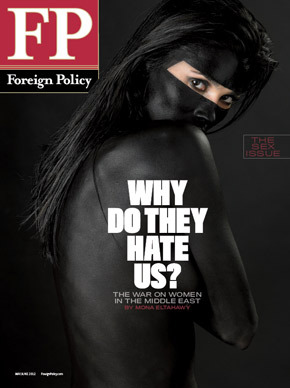
The Sex Issue | Foreign Policy
Women’s bodies are the world’s battleground, the contested terrain on which politics is played out. We can keep ignoring it. For this one issue, we decided not to.
The Ayatollah Under the Bed(sheets) – By Karim Sadjadpour | Foreign Policy
In the Islamic Republic of Iran, all politics may not be sexual, but all sex is political.
The Worst Places to Be a Woman – By Valerie M. Hudson | Foreign Policy
Mapping the places where the war on women is still being fought.
Why Do They Hate Us? – By Mona Eltahawy | Foreign Policy
There is no sugarcoating it. They don’t hate us because of our freedoms, as the tired, post-9/11 American cliché had it. We have no freedoms because they hate us, as this Arab woman so powerfully says.
Yes: They hate us. It must be said.
Some may ask why I’m bringing this up now, at a time when the region has risen up, fueled not by the usual hatred of America and Israel but by a common demand for freedom.
Foreign Policy Debating the War on Woman; six commenters
Sondos Asem: Misogyny exists, but blaming it for women’s suffering is simplistic
Eltahawy uses a combination of hyperbole and perhaps benign neglect to highlight offensive stances and bury more women-centered ones. Far from constituting a solution, this type of one-dimensional reductionism and stereotyping is one of the problems facing Arab women. Let’s be clear: There is misogyny in the Arab world. But if we want progress for Arab women, we must hack at the roots of evil, not at its branches.
Shadi Hamid: Arab women have more agency than you might think
The fact of the matter is that Arab women, throughout the region, are exercising their moral and political agency, but not necessarily in the ways we might expect.
Hanin Ghaddar: We need more badass ladies
Mona Eltahawy is right. They hate us. But they also fear us, as much as our dictators feared us. And we can break them, as much as we broke and will keep on breaking our tyrants. Today, their fear of the public sphere is multiplied because of the revolutions. We should use that fear to our advantage.
Imam Feisal Abdul Rauf: The Prophet Mohammad was a revolutionary feminist
Mona Eltahawy describes cultural practices in Egypt and the Middle East that predate Islam yet have been embraced by many people now as part of Islam. The practice of genital mutilation of women, for example, is found only in Africa. If it were part of Islam, it would be practiced by Muslims all over the world.
For his time, the Prophet Mohammed was a revolutionary feminist.
Naheed Mustafa: “Nekkid Burqa Woman” is lazy and insulting
Here’s a quick reenactment of me reading Mona Eltahawy’s cover essay as my eyes involuntarily (I swear!) flit over to Nekkid Burqa Woman: “So, yes, women all over the world have problems — BOOBS! — yes, the United States has yet to elect a female president — BOOOBS! — and yes, women continue to be objectified in many “Western” countries — BOOOOOBS!” And so on.
When I was asked to contribute this critique, I had to ask myself what exactly my problem was. I’ve narrowed it down to two things: The image of Nekkid Burqa Woman is lazy and insulting.
Leila Ahmed: Eltahawy misreads Alifa Rifaat
Disconcertingly, Eltahawy strangely misreads (in my view) the Rifaat story with which she begins her essay. After enduring “unmoved,” as Eltahawy correctly says, her husband’s sexual exertions, the story’s central character then eagerly rises to wash herself and perform ritual prayers. Eltahawy reads these actions as indicating Rifaat’s “brilliant” portrayal of “sublimation through religion.”
Talking about Sex, women’s bodies and Orientalism: my selection
Mona Eltahawy and Leila Ahmed discuss FP “Why Do They Hate US” piece on Melissa Harris Perry Show April 28th 2012
The Duck of Minerva: “Seriously, Guys!”: How (Not) to Write About Gender and Foreign Affairs
Below are three big do’s and don’ts for foreign policy magazines aiming to “take women’s issues seriously.”
Foreign Policy: The Sex Issue « Saira Says
This cover is offensive and disrespectful; it demonstrates the inherent disregard by Western society for women who do wear niqabs and hijabs. The cover also sets the tone for the entire issue.
The Intersection between Gender, the Ghost of Colonialism, and Religion « confessionsofamuslimpunk
I believe Ms. Eltahawy has attempted to explain away the misogyny of Arab nations as something indicative of Muslim and Arab cultures. This reasoning does contain some validity considering the inequality that has existed between males and females throughout the region’s history (e.g. females being given half of the inheritance of male family members upon the passing of a parent). It, however, fails to incorporate a long-form analysis of how misogyny among Arab cultures has evolved through the interplay between culture, religions, warfare, and general historical events.
Why Do They Hate Us? They Don’t. | loonwatch.com
Racists don’t see nuance. They lump all people of a certain group altogether. That’s exactly what Mona Eltahawy does in her article. She paints the entire people of that region–or at least its men–with one broad bush. They hate women. All 170 million of them.
The primary focus is Islam and its production and repression of sex and gender politics in the Middle East. In discussing the role of fatwas in the regulation of sexual practices, Karim Sadjadpour parades a tone of incredulity. Leaving aside his dismissal of the centuries old tradition of practicing Muslims asking and receiving advice on sexual and gender practices, the article assumes an unspoken consensus with its readers: the idea of a mullah writing about sex is amusing if a little perverted.
Then there is the visual. A naked and beautiful woman’s flawless body unfolds a niqab of black paint. She stares at us afraid and alluring. We are invited to sexualize and rescue her at once. The images reproduce what Gayatri Spivak critiqued as the masculine and imperial urge to save sexualized (and racialized) others. The photo spread is reminiscent of Theo van Gogh’s film Submission, based on Ayyan Hirsli Ali’s writings, in which a woman with verses of the Quran painted on her naked body and wearing a transparent chador writhes around a dimly lit room. Foreign Policy’s “Sex Issue” montage is inspired by the same logic that fuels Submission: we selectively highlight the plight of women in Islam using the naked female body as currency. The female body is to be consumed, not covered!
Do Arab men hate women? It’s not that simple | Nesrine Malik | Comment is free | guardian.co.uk
To heed Eltahawy’s call and indulge in cultural absolutism – if we are to use the west as a model, basic women’s and even minority rights, did not become enshrined until there was a political environment when traditional structures (particularly the church) had sufficiently receded.
The call to arms, therefore, should not be to the outside world to recognise the truth of men’s hatred towards women, but rather to Arabs. And in a time of political upheaval this call should ask them to look inwards and continue to recognise and dismantle the structures that have been perpetuated for too long. This reform is already under way when it comes to women’s rights thanks to the efforts of several Arab feminists, such as Nawal El Saadawi and Tawakul Karman, who recognise that we need to fight the patriarchy, not men.
Mona: Why Do You Hate Us? « Tahrir & Beyond
The fundamental problem of Mona’s essay is the context and framework of how she analyzes why women in the Middle East are oppressed and the only reason she could give is because men and Arab societies (culturally and religiously) hate women.
t this point, I have successfully lost count of the number of women who told me that the title of her article bothered them – but they couldn’t quite figure out why it was. I will tell you why: it is because the title divorces the countless number of women who might identify with the very real grievances they have living under a ruthless system that hates women, from the broader war on women. To claim that the “real war on women is in the Middle East” stakes the legitimacy of Arab women in the war against women, that I view as a global phenomenon not unique to Arab women, while leaving millions of non-Arab women, also victims of systemic misogyny, to fend for themselves.
Us and Them: On Helpless Women and Orientalist Imagery | Frustrated Arab
There are also unanswered questions:
- Why not publish the article in Arabic, therein engaging with the intended audience more directly?
- Why choose Foreign Policy as the platform and not a media outlet which would direct her piece at those she addresses?
- Why is there so much orientalist imagery present? If she was not aware that these photographs would be used, did she take it up with Foreign Policy after realizing this?
Mainstream media and the Orient
the veiled bodies. The exposed bodies. The veiled yet exposed bodies. The hunger. The squalor. The eccentricity. The modest eroticism. The yearning for modernity, civilization and freedom. Welcome to the world of orientalist imagery.
In line with our Bernard Lewis Award, we would like to introduce an award for the “Orientalist Image of the Week”. This week’s award (won with honours) goes to Foreign Policy, for its Sex Issue cover.
On Mona Eltahawy’s “Why Do They Hate Us?” « RanaBaker’s Blog
Indeed, Eltahawy’s argument that the reason behind Middle Eastern and North African oppression of women is “hatred” is a simplistic one that ignores the social, cultural and political contexts in which these women live. But not only that. Eltahawy went as far as to say that it is the Islamic philosophy that enables men to “hate” and hence “oppress” and “sexually harass” women.
While this is true for certain groups that practice religious exploitation to justify crimes against all sectors of a society, including women of course, the Arab world, especially prior to the outbreak of the Arab Spring, had long lived under the rule of secular authoritarian governments who took no issue with their “security apparatus” committing sexual harassments here, virginity tests there and in some few cases rape crimes.
Dear Mona Eltahawy, You Do Not Represent “Us” – Al-Monitor: the Pulse of the Middle East
The issue is framing and presenting women in the region as a monolith and pitting their struggles against the backdrop of an argument which points to “hate.” The argument dismisses the role of figures like Tawakul Karman, Zainab and Maryam al-Khawaja, and others — women who rose through the revolutions and were present in the public sphere during protests and demonstrations, standing alongside their compatriots demanding change and an end to injustices of all kinds. These women stood up as individuals and not as self-proclaimed representatives of Arab women.
Jillian C. York » On Listening (a response to the Mona Eltahawy criticism)
the idea behind some of these comments is essentially: “Hey – foreigners find this valuable, shut up dissenters!” I even spotted one foreigner–who presumably lives in Egypt–telling various Egyptian women on Twitter that they were simply wrong.
The thing is, Arab women, in Eltahawy’s piece, are not active participants in the conversation, but subjects. That, I think, is why so many women took issue to her use of “us” — it felt disingenuous. I realize, of course, that there’s backstory here and she has a considerable number of non-fans and trolls, but this article in particular provoked a stronger reaction than any I’ve ever seen, and there’s a reason for that.
‘Why Do They Hate Us?’ A Blogger’s Response – Al-Monitor: the Pulse of the Middle East
Women like Manal Al-Sharif, Rasha Azab and Samira Ibrahim are not less “feminist” than other prominent female figures in the world. The veiled Bahraini protester Zainab Alkhawaja, for example, can speak well of the women’s struggle as she protests alone in the street and gets arrested for the sake of her detained father. He is Abdulhadi Al-Khawaja, the prominent Bahraini-Danish human rights activists who has been on a hunger strike in prison for 76 days. He, I am sure, does not hate her.
Monica L. Marks: Do Arabs Really ‘Hate’ Women? The Problem With Native Informants
Books by these “native voices” — including Ayaan Hirsi Ali’s “Infidel,” Azar Nafisi’s “Reading Lolita” in Tehran, and Irshad Mandji’s “Faith Without Fear” — have flown off the shelves in post-9/11 America despite being roundly rebuffed by leading feminist academics such as Columbia University’s Lila Abu-Lughod and Yale’s Leila Ahmed. Saba Mahmood, another respected scholar, noted that native informants helped “manufacture consent” for the wars in Iraq and Afghanistan by serving up fear-inducing portrayals of Islam in “an authentic Muslim woman’s voice.”
??????? ?? ????: Love, Not Hatred, Dear Mona !
I was attracted to the opening of your article. Your style is interesting and you do poke the issues, and our issues are one, Mona. There’s no doubt that the facts in your article are accurate, that the problems highlighted are real, and that the suffering you write of is experienced by Arab women, even if they are not always aware of it. My anger faded as I read, slowly…until I reached the section where you explain “The Arab men’s hatred toward women”. Hatred?
Let’s see. In our Arab society, does the son hate his mother? The brother his sister? The father his daughter? And the husband hates his wife, and the lover his beloved? And the male colleague hates his female colleague, and the male friend his female friend, and the male neighbor his female neighbor?
Tahrir Spirit: I don’t really think they hate us!
I refuse to be lumped into this monolithic group of oppressed, abused and hated victims. Arab women’s problems are not the same across the board. Even within one country like Egypt, what I see as a problem, might not be the most pressing issue for the woman next door. So, I refuse to have Eltahawy talk on my behalf as if she is the expert who can accurately identify my plight.
Mona ElTahawy, stop victimizing us « Gold & Glitz’s Blog
Mona, who tries to empower women, marginalized us with this article, making a minority seem like the majority when in fact it is not and I say this while being a non-hijabi living in Southern Lebanon. Yes, I will be honest- I have been disallowed to do certain things because of my gender. But not because I am simply a girl, but because people fear for my well being. In the whole world, not just the Middle East, everywhere is a scary place to be. Now imagine how it would be for a woman to just walk out thinking she is equal to everyone else when she’s not because of teachings that existed before the Middle East did. She will only end up hurt. There is no reality in Mona’s extreme feminism and instead of empowering women to do something they’re good at and inform us of the rights we should be asking for, she marginalizes us and seeks pity. This works right into misogynistic hands, to make the woman seem like she is a victim when Arab women are damn strong.
Between You and Me | The Majalla Magazine
And for those women wishing to be treated equally to men, then it’s time to take these revolutions to the next level.
What many have taken issue with, however, is not this. It is Eltahawy’s assertion that men’s hatred of women is the cause for the absence of women’s freedoms in the Middle East. Though she has been criticized up and down for this claim— this is understandable when considering her lack of nuance and sophistication—there is some truth to it in that human rights are violated all the time because of a deep-seated hatred for a person or a group.
Mona, misogyny and the Middle East « Field Notes
Instead, let’s focus on the political and economic systems that depersonalize women’s discrimination. Let’s focus on divorce, citizenship and criminal laws that are vague and arbitrary. Let’s start by framing women’s relationship to the state: assume that women are citizens of the state—as they should be, that they enjoy the rights of the state—as they should enjoy, and from that, call out those persons—judges, politicians, army—that violate that relationship between a citizen and the state, violate that trust, violate those rights.
2 cents in favour of Mona Eltahawy
You gonna believe Mona Eltahawy or the grand mufti? | Butterflies and Wheels
Meaning what? We shouldn’t worry about women stoned to death, girls taken out of school and forced into marriage, girls who are held down while their genitals are sliced off, women whipped for not wearing a burqa? We should just say “that’s their culture, it’s none of our business” and go on our way rejoicing? We should be insular and selfish and indifferent?
MEI Editor’s Blog: Eltahawy and Sadjadpour in Foreign Policy’s “Sex Issue”
These issues will not go away, and it’s refreshing to see them addressed directly and not sensationally.
It’s Complicated: Mona Eltahawy’s Arab Violence Against Women Story Arouses Passions
As one critic put it: “Some Muslim women from Muslim backgrounds have been willing to join forces with media and governments in seeking to discipline unruly Muslim communities. Ayaan Hirsi Ali being the most prominent international example. However, other Muslim women…are painfully aware of the ease with which discussion of social problems within Muslim communities can be appropriated to vilify Muslims in general.”
That fear is understandable for both Arab societies and Muslim communities in the West, but it has been used to silence appropriate criticism such as Eltahawy ‘s and Hirsi Ali who, unfortunately, never runs out of examples of violence against women within the culture she knows a great deal about…
Mona Eltahawy Agonistes – Under the Black Blanket
The backlash started immediately, and she’s being attacked by Islamist supporters, and their women.
Mona Eltahawy sparks debate on plight of women in the Middle East « democrati.net
What must be remembered is this is a new age in the region, women are integral to Arab Awakening as Eltahawy mentioned — as the bearers of children, the top notch of the educated, the teachers, and even the bread makers — we must not let their plight be ignored. Women have come a long way, from not being allowed to go to school, to work in office regular or political – some of the biggest talking heads in activism and politics are women. To ignore the imperfection of women’s rights is to ignore the past struggles our mother and grandmothers have come to endure. Women still struggle to make it, there is no denial of that; whether the glass ceiling is in Cairo or Washington. My own aunt was not allowed to go to college by her husband. When he passed away some years ago at the age of 64, she attended university and got a bachelors in history. The renowned stories of the struggles women Mona mention are a reality and must not be ignored.
MEDIAinEGYPT: Mona Eltahawy: ‘Why Do They Hate Us?
Eltahawy tells the BBC’s Katty Kay that post-Mubarak Egypt has not provided women with the basic freedoms that all Egyptians asked for during the revolution.
Why do they hate Mona Eltahawy for speaking about Arab women? « Major Karnage
If no one says anything, nothing will ever get done about this. Good on Eltahawy for standing up to the cultural pressures trying to crush her into silence. Elections in Egypt will not bring democracy so long as female candidates cannot even have their faces on electoral material.
As we see from the efforts — whether effective or ineffective, wholehearted or otherwise — of the Egyptian government under Mubarak, not even the Egyptian government can break down the doors of the Egyptian household and prevent abuses against women. I have strong reservations about the capacity of Foreign Policy’s largely American liberal, neo-liberal and right-wing readers to contribute to the betterment of Arab women in their households. I’d be happy if positive revolutionary changes were made, from any party. But there are so many examples of do-gooders hurting more than they help.
some of this must be true: Mona Eltahawy and the silencing of women
The depth of awfulness in the five or so responses I have read is such that I can’t hope to counter it all. The sheer variety of ridiculousness of argument present is stunning, ranging from old tropes such as “men are victimised too, therefore you can’t talk about women” and “the Arab world is very diverse, therefore no aspect of it can be criticised” to arguments I have never heard before, such as “the problem is not to do with religion or culture, but with the state” (say what?). I feel so utterly overwhelmed by the sheer volume of this shit that I am going to focus on just one type of response, which is endemic, but is also perfectly objectified in this article by one Samia Errazzouki: Dear Mona Eltahawy, you do not represent “Us”. This article engages in a vast amount of obfuscation using dizzying array of techniques, but it is primarily about silencing: the silencing of Mona Eltahawy, and ultimately, the silencing of any woman who dares to state the truth about patriarchy.
For Argument’s Sake | Out of the Black
Like all good polemicists, Ms Eltahawy uses strong language and a broad brush. Predictably, the blogosphere has objected rather facetiously to the implication that all Arab men are consumed with hate for the fairer sex. Yet however polemical Ms Eltahawy’s article, there is a germ of truth that deserves more credit than condemnation. The difference between Ms Eltahawy and the editors of a Danish magazine who mocked Islam some years ago to widespread derision is that Ms Eltahawy is not wilfully ignorant, as those magazine editors were. On the contrary, she is well aware of the issues she is describing. So to deride her sensationalist style, as Nesrine Malik does in The Guardian, is beside the point. Ms Malik goes on to admit that all of the issues described are true enough but suggests, isn’t politics the answer?
Why do they hate us? | A World of Progress
Eltahawy’s despair should be taken seriously. Yes, she quotes only the most extreme evidence in support of her thesis. But the events she describes took place. Twelve-year-old girls are dying in childbirth in Yemen because child marriages are legal. A woman caught driving in Saudi Arabia was sentenced to ten lashes and needed a pardon to avoid them, another woman, gang-raped, was sentenced to prison for having entered a car driven by a man not related to her. And in Morocco, a sixteen-year-old did drink poison because she had been forced to marry her rapist (which the law allows for him not to be punished for the rape) who then continued beating her.
University Diaries » “Hatred of women.”
Mona Eltahawy pulls no punches in this spectacular essay, one of the few UD‘s seen worthy to be read alongside the essays of George Orwell. Eltahawy and Orwell share an incandescent anger which lies unsteadily under hyper-controlled prose. This latent, labile, anger sustains the riveting tension and clarity of their unsettlingly poised voice. After you read Eltahawy, read Orwell’s How the Poor Die. The same outrage, the same strange, meticulous composure; and of course the same focus upon a large segment of hated humanity.
Why Do They Hate Mona? | VoVatia
The thing is, it seems like the vast majority of the criticism and attacks come from Islamic fundamentalists, with a smattering from people who are totally opposed to Islam throw in. Eltahawy identifies as a liberal Muslim. I read a few of the comments on this article, and they were basically along the lines of “So who cares if women are treated like crap? That’s what Muhammad told us to do!” These religious fundamentalist trolls (and not all of them are Muslim by any means) presumably spend all their time searching for things to be outraged about, then leaving angry comments that could never possibly change anyone’s mind. That said, cultural relativism also comes into play, and there’s some criticism from liberals of the “hey, they’re making progress, so don’t rush them” variety. These people are sort of glacially progressive, I guess. “What do we want? Better treatment for women! When do we want it? Sometime in the next thousand years!” It really seems to me, however, that most of the people who hate Eltahawy hate ALL women, so there’s real reason to single her out. From what I’ve seen and heard of her, I really like her.
Young Kurdish Woman Found Stabbed in Swedish Town | KURDISTAN COMMENTARY
It is Eltahawy’s article and it is Blesa’s life story. It is Maria’s life story and it is my personal experiences. It is not black and white and the more efforts are put into making it so, will only derail us from helping more young women escape the vindictive knives of scorn families.
Taking step back
Responses to Mona Eltahawy’s “Why Do They Hate Us?” « Muslim Reverie
The vast number of critiques written by Arab, Muslim, and South Asian women call attention to how Mona’s simplistic analysis and characterization of Arab women as “helpless” plays into larger discourses that have a real impact in the world, particularly in the way the US oppresses racialized people in Muslim-majority countries. This construction of the “helpless woman of color” who must be saved from the “dangerous man of color” has a long history of sexual violence, colonialism, and racism.
Arab News Blog » Firestorm of Debate on Mona Eltahawy’s “Why Do They Hate Us?”
Whatever you think of Mona Eltahawy’s article (and I was struck by its sad truths from the beginning), she got our attention. She threw down a gauntlet and managed to get the whole Middle East commentary community talking for a couple of days. That is what opinion journalism, informed by fact, does at its very best. And that should please the author and her editors.
Article on women in the Middle East triggers debate | The Stream – Al Jazeera English
Mona Eltahawy’s article “Why Do They Hate Us?” about what she calls the “war” on Arab women in the Middle East has sparked an online debate.
While some netizens have defended the piece, many have criticised it for its tone, presentation and its depiction of Arab women and men.
What 6 Egyptian women say about Mona Eltahawy » Mohamed Abdelfattah: An Egyptian Journalist
These are quotes from the articles and responses against the thesis of Mona Eltahawy’s recent notorious article:
Tahrir Spirit: Compiled list of Eltahawy reaction pieces
So, here’s a comprehensive list of reaction articles and blog posts to Mona Eltahawy’s Foreign Policy article Why do they hate us? Most of the pieces were written by Arab women. After reading these, you be the judge if these Arab women are a handful or not.
Eltahawy’s controversial article & the ensuing dialogue « Iqadh – Awakening
A friend of mine sent me this great critique of Eltahawy’s piece. I posted it on another forum with her permission and it sparked a great dialogue.
» Visualizing the Polarized Discourse of “Why Do They Hate Us?” Blog — Alex Hanna
Although the substance of the debate itself is highly engaging, I was particularly taken by the polarization and how it quickly emerged. And it wasn’t all against one – my Twitter timeline was clearly marked by those who were siding with Eltahawy and those resolutely against her. There wasn’t exactly a rhyme or reason to the division. Some quipped that most American and Western readers lauded the article, while Arabs were critical. But there were some important exceptions.
PUKHTUNKHWA TIMES: After the Arab spring, the sexual revolution?
An explosive call for a sexual revolution across the Arab world in which the author argues that Arab men “hate” Arab women has provoked a fierce debate about the subjugation of women in countries such as Egypt, Morocco and Saudi Arabia. Women are deeply divided over the article entitled “Why do they hate us?” by prominent American-Egyptian journalist Mona Eltahawy, which fulminates against “the pulsating heart of misogyny in the Middle East” and builds to an early crescendo by stating: “We have no freedoms because they hate us … Yes: They hate us. It must be said.”
Misc.
Egypt ‘necrophilia law’? Hooey, utter hooey. – CSMonitor.com
Today, Egypt’s state-owned Al Ahram newspaper published an opinion piece by Amr Abdul Samea, a past stalwart supporter of the deposed Hosni Mubarak, that contained a bombshell: Egypt’s parliament is considering passing a law that would allow husbands to have sex with their wives after death.
[…]
There’s of course one problem: The chances of any such piece of legislation being considered by the Egyptian parliament for a vote is zero.
Egyptian Chronicles: Necrophilia Law is a Rumor Ya People !!
This is a rumor so far , I really wish people to be careful on what they are spreading.
Extra
To conclude this sex issue, different magazine, different issue, similar audience, similar shit:
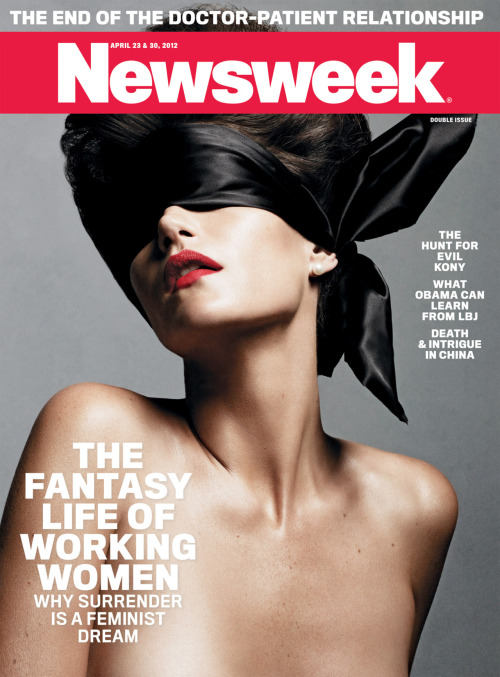
UPDATE 3 MAY 2012
Does Mona Eltahawy’s Radicalism Advance Arab Women’s Rights?
History has shown that it is never the right time to fight for women’s rights. And that is precisely why the incrementalists need the radicals to “poke the painful places.” Without the latter, the millions of Arab and Muslim feminists who are the real heroes will not have the political space to permanently heal those painful places.
Ali A. Rizvi: Misogyny in the Middle East: The Real Elephant in the Room
This fight is going to be harder than that. Mona Eltahawy has done a fantastic, brave thing by starting up the conversation in the way that she did, particularly after the horror of what she went through in Egypt last year. But unless all of the contributing causes are acknowledged and fought — as dangerous as this may be to do — these things will continue. If you want to fight patriarchy, but stop short of criticizing religion — you’re not fighting patriarchy. Period.
Arab societies suffer from deep misogyny, but the problem is not as particularly Arab or Islamic as you might think.
On “Why do they hate us?” and its critics – Blog – The Arabist
The responses to El Tahawy’s piece came fast and furious. I will admit to only having read about twenty of them, though I am sure there are dozens more. Even before reading the responses, I could have guessed what most would say, for indeed El Tahawy’s piece is reductive and essentialist, at the same time that it generalizes and perpetuates some of the very stereotypes individuals like her have long struggled to debunk.
However, El Tahawy’s piece and the responses to it get caught in the same circular debates that feminist theorists have been trying to address for some time, and highlight the significance of two theories in particular: intersectionality and the double-bind.
tabsir.net » The Real War on Women
The “real war” here is not about groping; it is a battle for minds, not bodies. The “real” enemy is a politics charged with a dogmatic rhetoric that is less about what men and women do in the bedroom than how they conform to an imposed tyranny that benefits the proverbial one percent, be they dictators or clerics. After the opening tease of a fictional Egyptian woman unmoved by sex with her husband, Eltahawy identifies the broader problem: “An entire political and economic system — one that treats half of humanity like animals — must be destroyed along with the other more obvious tyrannies choking off the region from its future.” Yes, but the numerous dead bodies of young men martyred in opposing these tyrannies prove that it is more than half of humanity that is being treated like animals.
On Mona Eltahawy’s “Painful Places” and the Power of Stories « A Muslimah Writes
What Ahmed alerted readers to is something I want to expand on here: faith and a powerful spiritual inner existence does not feed off of systematic, entrenched injustice, whether it be in the form of misogyny, racism, or any other system of oppression. In light of prevailing stereotypes about Muslim women, it’s too easy to say “Well, of course she has to believe in God, she has to meditate and escape from her reality, look at what a sodden sex life she has!” Sodden sex life or not, the places where women are truimphant–whether it be affirming their individuality through prayer or marching in the streets against tyranny–deserve to be examined on their own terms, not some heinous, monolithic, patriarchal hell they have to escape. Mona Eltahawy keeps stressing how she wants to “shake people up” and “poke the painful places,” but it’s one thing to poke that place, and quite another to aggravate it.
On Mona El Tahawy and ‘Native Informants’ | wadistocracy ??????????
The problem with Tahawy’s article, as others have pointed out, is that she attempts to depoliticize the patriarchy and make it about emotion–hatred–because, you know, Arabs are all ‘hot-blooded’ and whatnot. Such a reductive argument would never be accepted as an explanation for patriarchal practices in the West. But her thesis seems to fold in on itself: if oppression of Arab women is rooted in hatred fed by a uniquely misogynistic religion and culture, then oppression in other places is rooted in what, general malaise? To say misogyny is rooted in hatred is just redundant. Misogyny isn’t rooted in hatred, it IS hatred, and hatred of women is a symptom, not a cause, of the patriarchy in which both men and women participate.
An American journalist writing exclusively for European, US and Israeli media outlets, Mona El Tahawy is not interested in helping Middle Eastern activists to bring about the legislative and social changes required, or to identify the practical ways this might be achieved. No easy clues here: there’s only hate to confront. How does one confront hate – by drone attacks, invasion or forced conversion? She does not say. More importantly still, Arab men and women are not really her main target – her piece is written in the tone of a native informer bringing the White (Wo)Man her exclusive insights about the twisted minds of her fellow natives. That article is more a career move, à la Irshad Manji or Ayaan Hirsi Ali (but without the latter’s islamophobia), than a sincere contribution to a fight for equality that is both morally necessary and socially unavoidable, as Youssef Courbage and Emmanuel Todd have shown.
Throw Off the White Woman’s Burden, Mona « KADAITCHA
While western feminists focus on Islam and Arab men for the plight of Arab women, scrutiny of the predations of western imperialism and capitalism is minimised, and any potential threat from an evolution of the Islamic economic system nullified.
Here’s a collection of the best crits of Mona’s article “Why do they hate us?“:
Some Issues with Foreign Policy’s “Sex Issue”: Part One
We’ve got some responses from several MMW writers coming, today and tomorrow, but to start off, here’s a roundup of some of the (many, many) other reactions to Eltahawy’s article. There are many missing from this list; feel free to link and quote your favourites in the comments.
Some Issues with Foreign Policy’s Sex Issue: Part Two (MMW Responds)
The recent Foreign Policy issue focused on sex drew a number of responses around the internet. Earlier today, we posted a round-up of some of the other blog posts and articles that were written about the issue; here, Sharrae, Azra, Tasnim, Nicole and I discuss our many thoughts on the issue as a whole and on Mona Eltahawy’s article.
Seks, Dood en Islam
Posted on April 28th, 2012 by martijn.
Categories: Blind Horses, Society & Politics in the Middle East.
Als je al jaren bij Mama-magazine hebt gewerkt en je 15 seconds of fame zijn beperkt gebleven tot het openbaar maken van de klachten die tegen jou zijn ingediend bij dat magazine en je werkt nu bij het recalcitrante Geenstijl, dan wil je wel eens een eigen relletje hebben en een topic met minimaal 1000 comments. Dat betekent dat je onderwerp al snel moet gaan over seks of over de dood of over islam. Nog beter is het dan als je een onderwerp hebt waarin alledrie de elementen zitten:
GeenStijl : Ondertussen in Egypte. Necrofilie = halal
Jeej Egypte: seks met een morsdood lijk MAG binnenkort gewoon, als het parlement een fatwa van een Marokkaanse geestelijke overneemt tenminste. Zomaar de eerste de beste mummie aanduwen is dan weer niet de bedoeling: het stoffelijk overschot mag maximaal zes uur dood zijn. Is ook wel gezelliger, dan is de boel nog een beetje lauw. Oja, ook moet de betreurde bij leven en welzijn uw echtgenote zijn geweest. Lijkenneuqseks okee, maar we gaan natuurlijk niet buitenechtelijk necrofileren he. Deze Afscheidsseks-wet maakt deel uit van een heel stelsel aan wetten en regels waarmee het nieuwe, democratisch gekozen parlement dat in meerderheid uit Islamisten bestaat alle vrouwenrechten wil kapotmaken bij de baard van de profeet. Trouwen mag met meisjes van 14 jaar, en eenmaal getrouwd is de Egyptenaresse behalve het bokje qua postmortem goedmaakseks ook min of meer gevangene. Vrouwen kunnen nauwelijks meer zelf een scheiding regelen. De Arabische lente heeft geen rokjesdag, maar verder: wat een verlichting en vooruitgang! Pedofilie en necrofilie als democratische verworvenheden, de gevallenen van het Tahrirplein draaien zich om in hun graf. Na de afscheidsseks, uiteraard.
A. Nanninga | 25-04-12 | 18:08
Tuurlijk het is ook te mooi om te laten liggen, niet waar? Het past prachtig in onze orientalistische kijk op het Midden-Oosten waarin alles wat ons vreemd en anders lijkt aan die regio wordt bekeken in een racistische, sensuele en sensationele waas. Vrouwen zijn in deze blik inferieure wezens die of wachten op hun redders uit het westen of in een staat van ontkenning verkeren over hoe onderdrukt ze wel niet zijn. Mannen zijn een stel barbaren die doen wat ze doen omdat in hun cultuur mannen nu eenmaal vrouwen haten. De vrouw is exotisch, erotisch en verlaten, de man beestachtig en sadistisch. Nu zelfs na de dood van de vrouw. Kijk die achterlijke Arabieren nou eens, dat krijg je ervan wanneer je ze Westerse vrijheid geeft.
Jammer alleen dat er geen enkel bewijs is voor het verhaal. Of jammer…een goed verhaal moet je ook niet kapotchecken natuurlijk zeker niet als je daarmee je eigen gevoelens van superioriteit weer eens kunt uitleven. Maar laten we toch even kijken waar het nu over gaat en waar het vandaan komt.
- Enkele dagen geleden schreef Amr Abdel Samaii in Al Ahram over vrouwen en media dat de Egyptische islamisten een necrofilie wet wilden voorstellen in het parlement. Volgens dit wetvoorstel zou een man in ieder geval één keer seks met zijn vrouw mogen hebben, binnen zes uur na haar dood. Meer details dan dit waren er niet en wie precies de wet indiende werd ook niet vermeld. Naar alle waarschijnlijkheid had hij het ‘nieuwtje’ van Tawfik Okasha, de Egyptische Glenn Beck die een hekel heeft aan de revolutie in Egypte en aan de islamisten.
- Vervolgens werd dit opgepikt door TV personality Gabr Amouty.
- Journalisten in Egypte die zich eerder zeer kritisch toonden ten opzichte van de islamisten (mede naar aanleiding van hun vergeefse pogingen om enkele wetten met betrekking tot huwelijk en scheiding door het parlement te krijgen) hebben geen enkele bevestiging kunnen vinden.
- In de islamitische sharia is er niets wat dit zou kunnen rechtvaardigen. Een echtgenoot mag niet eens bij de wassing van zijn overleden vrouw aanwezig zijn.
(bron: Egyptian Chronicles)
- Inderdaad er was een Marokkaanse prediker die stelde dat deze vorm van afscheidseks is toegestaan, maar dat wil nog niet zeggen dat het wetsvoorstel bestaat. En goed, deze prediker stelde ook dat zwangere vrouwen alcohol mogen drinken. Daarmee behoort hij toch ook niet echt tot de mainstream volgens mij, sterker nog hem gelijk stellen aan mainstream islam is net zo dom als stellen dat Nanninga van Geenstijl een belangrijke schrijfster is in Nederland.
(bron: CSMonitor)
- Ook de bronnen Al Ahram en Amr Abdul Samaii zijn in deze niet heel betrouwbaar; de laatste was een fervent aanhanger van Mubarak en Al Ahram wordt gecontroleerd door de SCAF.
- Daarnaast halen van berichten aan dat de Nationale Vrouwenraad sterk protesteert tegen dit wetsvoorstel. Dat is niet zo. Er is geen officieel protest, simpelweg omdat niemand dat officiële wetsvoorstel kan vinden.
(bron: Sarah Carr en MoslimVandaag)
Nou als het alleen Geenstijl was, was dit alles niet heel erg de moeite waard. Gezien hun eerdere geschiedenis met het afbeelden van naakt en halfnaakte minderjarigen hoeft hun obsessie met pedofilie en necrofilie niemand te verbazen. Maar dit verhaal is natuurlijk zo ranzig dat het eigenlijk wel aan ieders onderbuikgevoel appelleert:
Noot: bekijk de foto. Kopten. Serieus NOS?
Welke kenners hebben jullie gevraagd?
- Egyptenaren willen afscheidsseks met dode partner – RTL Nieuws.nl
- Welingelichte Kringen – Afscheidsseks:van Egyptische wet mag je nog één keer tot 6 uur na haar dood seks met je vrouw hebben
- Egyptische vrouwen woest om ‘afscheidsseks’ – Vrouwelijke Opinie – Nieuws – Werk – Maatschappij – Cultuur – Forum – Opzij
- Egyptische wet : nog één keer tot 6 uur na haar dood seks met je vrouw #zaplog
- ‘Egyptische mannen mogen seks hebben met dode echtgenote’ – BUITENLAND – PAROOL
- Egyptenaren voor legalisering necrofilie | www.dagelijksestandaard.nl
En welke rare ideeën hebben jullie dan?
Echt waar…de politiek correct media kijken weg?
Wedden dat de Telegraaf dit gewoon verwijderd?
Ook al experts gesproken? Dezelfde als die van AD?
Ahh ok, deze hebben het wel door.
Een belangrijke rol in deze is weggelegd voor de Daily Mail. Deze was er natuurlijk als de kippen bij om dit bericht te plaatsen en vrijwel de gehele westerse pers heeft dat weer overgenomen. Gezien de staat van dienst van de Daily Mail zegt dat erg veel over de kwaliteitsmedia. Het commentaar van Carr over de Lee Moran van de Daily Mail, lijkt me dan ook zeer gepast voor de andere journalisten:
Rumour has it: absurd bericht over seks na de dood gaat de wereld rond | DeWereldMorgen.be
“Ik waardeer de Daily Mail voor het dagelijks afstruinen van het internet naar nieuwsfeiten die het beeld bevestigen dat moslims boekverbrandende, vrouwenopsluitende, tulbanddragende maniakken zijn, en ik begrijp dat dit nieuwsitem in het bijzonder aantrekkelijk is vanwege de perversiteit ervan, maar had Lee Moran de moeite genomen om een beetje onderzoek te doen buiten het vertalen van een opiniestuk, dan had hij ontdekt dat er in werkelijkheid helemaal geen wetsvoorstel bestaat die mannen toestaat om hun overleden echtgenotes te bespringen.”
Film: Dochters van Malakeh
Posted on April 24th, 2012 by martijn.
Categories: Gender, Kinship & Marriage Issues, Society & Politics in the Middle East.
De beschrijving, hier via Holland Doc, doet wat stereotiep aan:
‘Dochters van Malakeh’ toont hoe vrouwen in het hedendaagse Iran worstelen tussen twee werelden om de zeggenschap over hun eigen leven te houden.
Maryam, Ghazal en hun moeder Malakeh dragen in de Iraanse buitenwereld de verplichte hoofddoek en houden zich aan de strenge regels van de staat. Maar in de binnenwereld van de familie zijn het deze drie vrouwen die bepalen wat er gebeurt. Wanneer kostwinner Maryam wil gaan trouwen, blijkt hoezeer deze twee werelden met elkaar botsen en dat brengt de hele familie in beweging. Eén van de familieleden is Sharog Heshmat Manesh, die in Nederland woont. Via deze broer, zoon en co-regisseur betreden we een binnenwereld die normaal gesproken gesloten blijft. Dochters van Malakeh is daardoor een unieke blik op Iraans familieleven.
De docu zelf echter is veel subtieler. Het maakt juist duidelijk dat er niet zoiets bestaat als ‘tussen twee werelden’ (hoewel mensen dat wel zo kunnen ervaren). De posities traditioneel en modern worden soms expliciet en soms heel subtiel ingenomen met verschillen tussen generaties en binnen generaties. Het is duidelijk dat de vrouwen niet zomaar alles kunnen doen en laten wat ze willen: ze hebben rekening te houden met Iraanse autoriteiten en wetten, met familie gewoonten en tradities, maar tegelijkertijd hebben ze wel het degelijk het vermogen een eigen betekenis te geven aan hun leven en dat doen ze dan ook.
Muslim Brotherhood and Egyptian Politics
Posted on April 17th, 2012 by martijn.
Categories: Society & Politics in the Middle East.
During a debate at Georgetown University’s Alwaleed Bin Talal Center for Muslim-Christian Understanding a delegation of representatives from the Egyptian Muslim Brotherhood’s Freedom and Justice Party (FJP) was present. They spoke about the FJP’s vision for Egypt and a recent announcement that leading Muslim Brotherhood member Khairat al-Shater would run for president, despite earlier pledges by the party not to participate in the election. They also responded to questions from the audience.
Watch the video HERE.
H/T: Islamopedia
Closing the Week 12 – Featuring The Rise and/or Waning of Radical Islam?
Posted on March 25th, 2012 by martijn.
Categories: Blogosphere, International Terrorism, Society & Politics in the Middle East.
Most popular on Closer this week
Salafisme: de vijand die we graag haten
Amshir – Music, Habitus and Revolution in Egypt by Samuli Schielke
Wie beschermt de burger tegen mediageweld – En waarom geweld door burgers tegen de media begrijpelijk is
Brussels
Islam in Europe: Brussels: Imam dies in Salafist attack on Shia mosque
Brussels: Imam dies in Salafist attack on Shia mosque
Belgian mosque attack baffles both Brussels police and local Muslims | FaithWorld
A firebomb attack on a Shi’ite Muslim mosque in Brussels that killed a popular local imam triggered an anti-terrorist investigation on Wednesday, but police remained uncertain of the detained suspect’s identity and local Muslims baffled about his motives.
Call for unity after killing of imam – The Irish Times – Wed, Mar 14, 2012
THE KILLING of an imam in an arson attack on a Shia mosque in Brussels was widely condemned yesterday as Muslim leaders called for unity.
While there appears to be a consensus that sectarian violence is no longer limited to Iraq but has expanded to influence developments from the Gulf to Lebanon, public debate in the Arab world offers interesting insights about how both sides view the possible repercussions of deepening sectarian divisions.
The consensus in both Sunni and Shia circles appears to be that attempts to emphasise Sunni- Shia rivalries are intended to deflect attention from both the US occupation of Iraq and continuing Israeli aggression.
Toulouse
Toulouse killings: Death in the morning | The Economist
CANDIDATES for France’s upcoming presidential election suspended campaigning today after the massacre of three young Jewish schoolchildren, and one adult, in a religious school in Toulouse, in south-west France.
French Salafi militant’s road to radicalisation from Toulouse to Kandahar | FaithWorld
For Mohamed Merah, the Frenchman suspected of killing four Jews and three Muslim soldiers in southwestern France, the road to radicalisation ran from Toulouse to Kandahar in Afghanistan.
The man thought to be responsible for killing seven in a murder spree in southern France is dead, French Interior Minister Claude Guéant confirmed on Thursday. Mohamed Merah, who claimed he belonged to al-Qaida, had brought the country to a near standstill after killing three soldiers and four people at a Jewish school.
.:Middle East Online::Toulouse siege over: Suspect jumps to his death in hail of bullets:.
Self-professed Al-Qaeda militant Mohamed Merah died during a police assault on his besieged flat after jumping out the window while still shooting, Interior Minister Claude Gueant said.
Mohamed Merah
Le Nouveau Normal – By Justin Vaïsse | Foreign Policy
The sociological profile of Mohamed Merah is a sad copy of that of his jihadist predecessors of decades past, from Herve Djamel Loiseau to Zacarias Moussaoui: It includes social relegation, identity troubles, and a feeling of injustice, mixed with petty crime, Islamist radicalization (not in a regular French mosque but while serving time in prison), then travel to Afghanistan and Pakistan. These are not deeply religious men, but rather actors crazed by a desire to take destiny into their own hands and live a more fulfilling life by appointing themselves defenders of victimized Muslims.
AFP: French shooting suspect’s journey from petty crime to jihad
Born in the southwestern French city of Toulouse on October 10, 1988, Merah had been tracked for years by France’s DCRI domestic intelligence service, but nothing suggested that he was preparing a major crime.
French suspect showed no sign of militant leanings – Boston.com
Just a few weeks ago, Mohamed Merah partied at a nightclub, and an acquaintance noticed nothing out of the ordinary. Another friend said the former car body shop worker liked to talk about “cars, bikes, girls and sports.’’
Toulouse siege: Mohamed Merah’s transformation to angry young jihadist – Telegraph
Mohamed Merah’s descent into darkness began in the grim housing estates on the edge of Toulouse.
ICSR – The International Centre For The Study Of Radicalisation And Political Violence
News reports today have linked the Toulouse gunman responsible for the murders of seven people, now identified as French citizen Mohammed Merah, to a recently banned French extremist group with connections to Britain.
Named Forsane Alizza (FA – the Knights of Pride), the group bears many similarities to the UK-based al-Muhajiroun/Islam4UK network.
A Tragedy in Toulouse – By Eric Pape | Foreign Policy
In isolation, the attack might appear to be the act of a lunatic, probably an anti-Semitic one, but an array of factors make this attack into something even more troubling, particularly that it is the third murderous attack in eight days — and that all seem to be linked to race and/or religion.
The Fallout from Toulouse – By Eric Pape | Foreign Policy
Merah’s demise put an end to a saga that has shaken a nation already anxious about its sputtering economy and a nerve-wracking election campaign in which economic and xenophobic populism risks becoming the norm. But the 10-day rampage of the “motor scooter killer” was like nothing France has ever seen. The French have become sadly accustomed to hostage crises, radical and anti-Semitic bombings, and assassinations in recent decades, but a Natural Born Killers-style murder tour by motor scooter was something else. In a country where guns are relatively rare, a single man executed three French paratroopers of North African descent, seriously wounded a black soldier, and engaged in a callous assault on a Jewish school in Toulouse before going down firing. For most French people, this could only take place in America — or in a Hollywood film.
Toulouse Killings Illuminate Salafist-Far Right Alliance in France | World | AlterNet
A Salafist group in France linked to the Toulouse killings is in an open alliance with neo-fascist figures and extreme right-wing Catholic groups.
New Laws Pushed by Nicolas Sarkozy After Toulouse Massacre Go Too Far – The Daily Beast
The French president is overreacting to France’s 9/11 with proposals for laws that criminalize traveling abroad for terrorist indoctrination, and consulting jihadist websites. Both would be disastrous for France, says Barry Lando.
Behind the Toulouse Shootings – Tariq Ramadan
Religion was not Mohamed Merah’s problem ; nor is politics. A French citizen frustrated at being unable to find his place, to give his life dignity and meaning in his own country, he would find two political causes through which he could articulate his distress : Afghanistan and Palestine. He attacks symbols : the army, and kills Jews, Christians and Muslims without distinction. His political thought is that of a young man adrift, imbued neither with the values of Islam, or driven by racism and anti-Semitism. Young, disoriented, he shoots at targets whose prominence and meaning seem to have been chosen based on little more than their visibility. A pathetic young man, guilty and condemnable beyond the shadow of a doubt, even though he himself was the victim of a social order that had already doomed him, and millions of others like him, to a marginal existence, and to the non-recognition of his status as a citizen equal in rights and opportunities.
Radical Salafists on the rise in Germany | Germany | DW.DE | 11.03.2012
While right-wing terrorism is currently the focus of attention in Germany, the threat posed by religiously motivated extremism remains. Radical Salafists are considered especially dangerous.
Despite shootings, extremist Islam waning in France: experts | Radio Netherlands Worldwide
Muslims in French suburbs remain vulnerable to extremist indoctrination but those lured into radicalism are an “ultra-minority” and the spread of jihadism is declining, experts say.
Dutch
‘Die Islam is verderfelijk’ – AMSTERDAM – PAROOL
Waarin heeft Breivik gelijk?
‘We lijden enorm onder de politiek correcte opvatting dat je de islam niet mag bekritiseren. Dat zie je overal en dat belemmert een open debat over de islam enorm.’
En plots was daar de islam – Religie – TROUW
De Britse schrijver Tom Holland laat treffend zien dat het orthodoxe verhaal van het ontstaan van de islam zwakker is dan het lijkt. Maar hij had nog wel een stap verder mogen gaan
Leestip: ‘De vrijheidsimpuls van de islam’ : Nieuwemoskee
In de islam staan de vrije wil en de predestinatie op gespannen voet met elkaar – maar geldt dat niet voor iedere religie? In de bundel De vrijheidsimpuls van de islam bespreken Ibrahim Abouleish, Christine Gruwez, John van Schaik en Cilia ter Horst verschillende aspecten van de spanning tussen vrijheid en predestinatie in de islam. Met een voorwoord van Abdulwahid van Bommel.
Oprecht geloven in vrijheid (III): casus islam in het gedoogakkoord
In het artikel in Ars Aequi worden, aan de hand van het kader uit deel II van deze miniserie, de volgende actuele casus behandeld: het gedoogakkoord, het boerka-verbod, weigerambtenaren en de SGP, en ritueel slachten en mannenbesnijdenis. In deze post staat de eerste casus centraal.
Salafisme: Is islam ongeneeslijk ziek? De ontwikkeling van Al Qaeda in een notendop | Stichting Iman
Een van de hoofdartikelen uit de eerste editie van MUHARRAM Magazine. Met uitdrukkelijke toestemming van de houder van dit artikel geplaatst.
Amshir – Music, Habitus and Revolution in Egypt
Posted on March 20th, 2012 by martijn.
Categories: Guest authors, Headline, Society & Politics in the Middle East.
Guest Author: Samuli Schielke
Today is the last day of the Coptic month of Amshir, a month that is known for stormy and unpredictable weather, bringing cold weather in one day and heat in another, rain in the morning and sun in the afternoon. (For practical purposes, the Coptic solar calendar has since long been replaced by the Gregorian calendar in Egypt, but agricultural calendar and common wisdom about weather changes stick to the Coptic months.) If we want to use a seasonal metaphor for Egypt after the January 25 Revolution, Amshir is certainly more appropriate than the awful “Arab spring” that was invented by western media and has also been appropriated in Arabic usage.
I returned to Egypt in mid-February, or early Amshir, entering a season of unpredictable and bad weather, as well as bad nerves and general worry, and most importantly a sense of disorientation. People far from political activism have lost much of their early enthusiasm and express fear of crime and insecurity – not without a reason, for violent crime has sensibly increased in the past months. Revolutionaries sense that the revolution has been stolen or lost. Protesters shortly filled the squares in great numbers in a new show of strength on 25 January 2012, but soon thereafter the massacre at the football stadium in Port Said and an ongoing campaign against NGOs and anti-military public media figures has shown that the situation has become rather worse than better. The two Islamist parties that gained an overwhelming majority of the parliament have quickly began to lose their aura of piety in the ordinary business of politics. The military council continues to rule the country with much brutality, and yet it has lost most of the credibility and authority it once had also in the eyes of those who do not support the revolutionary movement.
There is a shakiness of everything, a nervous disorientation and expectation of things to come, with shifting moods between hope and a sense of impending doom – underlined by the rapid changes of weather, days of beautiful sunshine and others of pouring rain and cold wind that compel people to stay home and wrap themselves with blankets for the lack of heating.
The inhabitants of Alexandria say that they love the rain and storms of the city. Rainy weather clears the air and gives it a fresh, pleasant taste. Empty lots of land otherwise bare are covered by a thick growth of weeds and flowers. Wet streets glimmer, and there is a sort of magic in the air. But when one tries to meet somebody in Alexandria on a rainy day, people cancel their appointments and tell that they are not going out as long as it rains.
Looking back at things I have written on this blog since the beginning of the revolution, I notice that over and again I have stated that things are contradictory, that some things are getting better and others worse, and many things are getting better and worse at once. Success and failure go hand in hand, as do frustration and action. This shifting, contradictory nature of things and emotions is indeed a characteristic feature of the entire revolutionary period that began in January 2011, a season of emotional, political, and societal Amshir. And just like the ways in which the Alexandrine deal with stormy weather are contradictory, so are the ways in which Egyptians relate to their revolutionary experience.
The sense of freedom that overwhelmed the country since January 2011, the now proverbial “breaking the knot of fear”, has in practice meant an emboldenment that has made life both better and worse. It has opened paths for open expression of political discontent, for a flourishing cultural life, for the rise of Islamist movements to political power, for rapid construction of houses on the scarce agricultural land, for a crime wave, and for good business opportunities for those who have the nerves and wits to seize the day.
F., a man around thirty from a provincial town in the Nile Delta, returned from Sharm el-Sheikh some months ago where he worked as a sales representative for safaris. The Bedouins, the original inhabitants of the Sinai who have profited very little from tourism, have made themselves increasingly independent first from the state, and eventually even from their own tribal leaders. There have been shootouts and kidnappings that have seriously affected tourism. F. had never considered tourism a job with a future, and with a friend he invested his savings to open the first up-market coffee shop in his home town, in style similar to those where the affluent of Cairo and Alexandria gather – only with much cheaper prices. F. doesn’t hold much of the revolution. He says: “People want to have everything at once, as if it that was possible. They don’t realise that things change step by step, and one has to work for it. The customers in the coffeeshop hang around there telling: ‘Down with military rule!’ until early morning but do nothing. They don’t search for work or try to build a future.” F. holds the military council for responsible for all the disasters and massacres that Egypt has gone through in the past months but sees little point in open resistance against them. He argues that the military leadership is corrupt and rich and determined to fight with all brutality to hold it, but picking a fight with them will make it only worse. But while critical of the revolutionaries, he is very well aware that the revolution is a golden chance to make a lucky break. Many people don’t want to invest at the moment, and prefer to wait and see. But F. argues that in a revolutionary time, those who can seize the moment win, and those who wait lose. And business is in fact going very well. While everybody talks these days about the difficult economical situation, F. says that people are actually very happy to consume, and his coffee shop is full every night. While F. is critical of the revolution, and suspicious of Egyptians being capable of democracy and freedom, he seems to be one of the winners, one of those who knew to seize the day.
One of truly tangible successes of the revolution has been a tremendous wave of cultural and artistic activity. Theatres, lectures, concerts, and exhibitions are crowded, and the past year and so has brought new styles of music and art into wider circulation. Y, listening to a new political song on his mobile phone, commented to me in this regard: “The two, and only two accomplishments of the revolution are in music, and in arts. There is so much music, good music, different music these days. And there is all the art in the streets.” There is the art of the revolutionary graffiti, most prominently produced by people from the artist scene on the walls of Tahrir Square and Muhammad Mahmoud Street in Cairo, but much more widely produced by football ultras around the country. There are the many singers and bands like Rami Essam, Cairokee, Iskenderella and many others who have connected revolutionary attitude with the sound of the guitar, with rap, or with a revival of the 1970’s style of protest songs in a way that has significantly expanded the musical taste of many people in Egypt. At the same time, however, this explosive flourishing of arts and music has become a distinctive marker of a revolutionary attitude, and as such also a problem.
AA., one of the young leftist revolutionaries from the village in the Nile Delta who organised a cleanup campaign and a meeting with the village mayor in February and March last year, confronted me yesterday with a self-critique of the revolutionaries’s isolation and inability to reach out to the wider majority of people. “We are so good at arguing, and understand the situation and can analyse it well, but why are we not able to convince ordinary people although they otherwise seem so easily influenced?” The campaign in the village eventually failed, he says, because the activists were not able to gain a popular base that would extend beyond a group of mostly young men, most of them with higher education and living most of the year outside the village. AA., too, lives in Alexandria and only comes to the village on weekends. Relating to the downtown cultural scene of Alexandria which we both frequent, he wonders why it is that a leftist political attitude so often also comes along with a style: guys with beard and long hair, girls smoking imported rolling tobacco, and people wearing Palestinian kufiyas when going to a demonstration. “What do long hair, rolling tobacco, and kufiyas have to do with being revolutionary? And yet I, too, put on a kufiya when I go to a demonstration.” AA. thinks that the development of a revolutionary attitude hand in hand with a revolutionary style and jargon has the detrimental effect of making it in fact more difficult for the left wing revolutionaries to reach out to the people. The spread of a revolutionary habitus in the shape of music, kufiyas, etc. certainly has reached people across class and educational backgrounds, creating a space for creative expressions of a politically and socially critical attitude. But at the same time it has become a distinctive marker of that attitude (very much in the sense of Bourdieu’s theory of habitus, taste, and distinction), and as such it is by nature exclusive. The pop rock of Cairokee has become the sound of a revolutionary attitude among many who did not have a liking for such sound (or such attitude) before, but it is not the music that one would ever hear in a minibus, in a toktok, or in a popular wedding.
[Edit 10 March: An important correction regarding this point: Jakob Lindfors just wrote to me and says that most of the music I mention in this note is very commercial and close to establishment, and that I have completely ignored the politically uncontrollable and quite anti-system wave of popular music called Mahragan which is not played on the tv channels or included in the official soundscape of the revolution. Songs about Port Said, about burning police stations on 28 Feb. etc. It is the sound of the popular youth, the music one does hear in a toktok or in a popular wedding. So I think I was wrong about this. There is no lack of serious revolutionary music on the street level, but there is a lack of awareness and appreciation of it even in many of the revolutionary cicrles. Great music, too, btw./Edit)
The biggest contradictions and uncertainties concern the very issue of revolution itself. Was it a good or bad thing? Was it successful or did it fail? Was it really a revolution? Yesterday evening, some of the village revolutionaries gathered again in S’s guest room in his home in the village. In this circle, much as in circles of leftist and liberal revolutionaries in Alexandria, there was a sense of failure, even impending doom. There is good reason for that sense. A number of public media figures are facing charges for incitements against the state and the military at a military court. Egyptian employees of NGO’s are still facing charges in court after foreign citizens accused in the case were allowed to leave the country following a diplomatic deal that has become a major justice scandal in Egypt. Revolutionaries are facing insults and accusations of being foreign agents, traitors, and infidels. H. is one of the handful of village revolutionaries who lives full-time in the village, working for very little pay in a call shop. His key revolutionary experience was his participation in the street battles of Muhammad Mahmoud Street in November. Frustrated about how little the village revolutionaries were capable of accomplishing, he wonders: “Was the revolution successful, or did it fail? The problem is that it was neither successful nor did it fail. Was there a revolution in the first place? If there was one, it was stolen.” He is contradicted by M.A., an older Marxist teacher, who argues: “Revolutions are not to be measured by their success and failure, because a revolution is an explosive event, and as such fundamentally unpredictable. The very fact that we are sitting here and talking about revolution is proof that there was one. And the attacks that we face are also sign of our success. There can be no revolution without enmity and struggle.” The others in the circle are not so keen to share M.A.’s positive assessment of the situation; they have expected more tangible successes.
Both have a valid point. On short term, the revolution has brought a very brutal and incompetent military government into power, and on middle term, it is bringing the much more competent but fundamentally authoritarian Muslim Brotherhood into power. At the same time, the revolutionary movement has most likely successfully prevented the consolidation of military rule, which seemed quite keen on taking a more permanent hold of power by last summer, but has become dramatically discredited since then. The military rule over Egypt that began in 1952 is causing terrible havoc on its final metres, but it is effectively coming to an end (although that end is likely to take several years to complete). What comes after the stormy changes of revolutionary and counter-revolutionary turns during a year and half of emotional Amshir, is a different question. It may or may not be better. The revolutionary faction will not rule the country for the next few years the come, and it probably never will, except at the cost of selling out its own principles. However, if they are able to even partly overcome their social limitations, and if they are able to defend themselves against violent suppression, they will be a crucial oppositional and critical power that will rule indirectly by compelling those in power to reckon with them.
E., a cultural activist from Alexandria’s leftist intellectual scene, says that this has in fact already taken effect. “The people in Egypt now curse the revolutionaries and the revolution, because Egyptians always curse those in power. By cursing the revolution, they recognise it as in fact being in charge.”
Samuli Schielke is a research fellow at Zentrum Moderner Orient (ZMO), Berlin. His research focusses on everyday religiosity and morality, aspiration and frustration in contemporary Egypt. In 2006 he defended his PhD Snacks and Saints: Mawlid Festivals and the Politics of Festivity, Piety and Modernity in Contemporary Egypt at the University of Amsterdam, Faculty of Social and Behavioural Sciences. During his stay in Cairo at the time of the protests at Tahrir Square he maintained a diary. This article was also published on his blog.
Samuli Schielke wrote earlier:
Anthropology and Egyptian Revolution – Beyond the Visible
Posted on March 15th, 2012 by martijn.
Categories: anthropology, Society & Politics in the Middle East.
Great, American Ethnologist has a special issue on the Arab Spring! And even better: Free Access!. What they have in common is that the contributions go beyond the easy and very visible dimensions of Egyptian society such as the secular and the religious (that rule much of the media discourse on the Arab spring) and the highly mediatized protests at Tahrir (by for example looking at how people in a particular village or women at home in Cairo experienced the uprising and the collapse of the regime). I’m listing the titles and abstracts here. The links bring you the AE website and there you can access Wiley.com
Living the “Revolution” in an Egyptian Village
Living the “Revolution” in an Egyptian Village
By Lila Abu-LughodMedia coverage of the uprising in Egypt in 2011 focused almost exclusively on Tahrir Square in Cairo. How was the revolution lived in other parts of Egypt, including the countryside? I offer a glimpse of what happened in one village in Upper Egypt where, as elsewhere, daily lives were deeply shaped by devastating national economic and social policies, the arbitrary power of police and security forces, and a sense of profound marginalization and disadvantage. Youth were galvanized to solve local problems in their own community, feeling themselves to be in a national space despite a history of marginalization. They also used a particular language for their activism: a strong language of social morality, not the media-friendly political language of “rights” and “democracy.”
Beyond Secular and Religious: An intellectual genealogy of Tahrir Square
Beyond Secular and Religious: An intellectual genealogy of Tahrir Square
By Charles HirschkindCompeting visions of Egypt’s future have long been divided along secular versus religious lines, a split that both the Sadat and Mubarak regimes exploited to weaken political opposition. In this context, one striking feature of the Egyptian uprising that took place last spring is the extent to which it defied characterization in terms of the religious–secular binary. In this commentary, I explore how this movement drew sustenance from a unique political sensibility, one disencumbered of the secular versus religious oppositional logic and its concomitant forms of political rationality. This sensibility has a distinct intellectual genealogy within Egyptian political experience. I focus here on the careers of three Egyptian public intellectuals whose pioneering engagement with the question of the place of Islam within Egyptian political life provided an important part of the scaffolding, in my view, for the practices of solidarity and association that brought down the Mubarak regime.
Reflections on Secularism, Democracy, and Politics in Egypt
Reflections on Secularism, Democracy, and Politics in Egypt
By Hussein Ali AgramaI reassess dominant understandings of the relations between secularism, democracy, and politics by comparing the Egyptian protests that began on January 25, 2011, and lasted until the fall of Mubarak with some of the events that occurred in their aftermath. The events that occurred after these protests demonstrated the obliging power of what I call the “problem-space of secularism,” anchored by the question of where to draw a line between religion and politics and the stakes of tolerance and religious freedom typically attached to it. By contrast, the protests themselves displayed a marked indifference to this question. Thus, they stood outside the problem-space of secularism, representing what I call an “asecular” moment. I suggest that such moments of asecularity merit greater attention.
Sectarian Conflict and Family Law in Contemporary Egypt
Sectarian Conflict and Family Law in Contemporary Egypt
By Saba MahmoodEgypt continues to experience interreligious sectarian conflict between Muslims and Copts since the overthrow of the Mubarak regime. The same factors that had contributed to escalating violence between the two communities continue to be at play in postrevolutionary Egypt. One of the key sites of sectarian conflict is interreligious marriage and conversion, an issue that ignites the passion and ire of both communities. While issues of sexuality and gender are at the center of these conflicts, religion-based family law plays a particularly pernicious role. In this essay, I rethink the nexus between family law, gender, and sectarian conflict through an examination of both the history of the emergence of Egyptian family law and the simultaneous relegation of religion and sexuality to the private sphere in the modern period.
Meanings and Feelings: Local interpretations of the use of violence in the Egyptian revolution
Meanings and Feelings: Local interpretations of the use of violence in the Egyptian revolution
By Farha GhannamI trace the shifting feelings of some of my close interlocutors in a low-income neighborhood in Cairo and explore some of the cultural meanings that informed their attempts to make sense of the changing situation during the first days of the Egyptian revolution. Specifically, I reflect on how existing concepts that structure uses of violence have been central to the way men and women interpreted the attacks of baltagiyya (thugs) on the protestors in Tahrir Square and how these interpretations ultimately framed my interlocutors’ feelings and views of the revolution, Mubarak’s regime, and its supporters.
The Egyptian Revolution: A Triumph of Poetry
The Egyptian Revolution: A Triumph of Poetry
By Reem SaadThe 11-day interval between the fall of Tunisia’s Ben Ali and the onset of the Egyptian revolution is now almost forgotten. These days were important mainly as the time when inspiration was nurtured and the big question on people’s minds was, could a revolution happen in Egypt? Never before had this question been debated so intensely. I look at two contrasting ways of addressing it. On the one hand, seasoned political analysts (mostly political scientists) were predominantly saying no, Egypt is not Tunisia. On the other hand, activists were talking dreams and poetry, especially invoking lines from two famous Arab poets on the power of popular will and the inevitability of revolution. In this case, poetry prevailed. It was not only a source of inspiration but also carried more explanatory power than much social science. Here I document this moment and pay tribute to poetry and dreams.
No Longer a Bargain: Women, masculinity, and the Egyptian uprising
No Longer a Bargain: Women, masculinity, and the Egyptian uprising
By Sherine HafezAlthough, according to eyewitness accounts, women made up 20 to 50 percent of the protestors in Tahrir Square, the events immediately following the Egyptian uprising revealed that women would not be part of the political deliberations between various contending parties and the Supreme Military Council in charge of the country. In this essay, I take a close look at the sociocultural dynamics behind the inclusion–dis-inclusion of women in the political sphere to question how this contradiction has, in recent years, characterized the nature of gender relations in Arab countries like Egypt. Multilayered, rapidly changing, and challenged patriarchal power lies at the very core of the uprising in Egypt. What the events of this uprising have revealed is that notions of masculinity undermined by a repressive regime have observably shifted the terms of the patriarchal bargain.
The Privilege of Revolution: Gender, class, space, and affect in Egypt
The Privilege of Revolution: Gender, class, space, and affect in Egypt
By Jessica WinegarIn this commentary, I challenge assumptions about political transformation by contrasting women’s experiences at home during the Egyptian revolution with the image of the iconic male revolutionary in Tahrir Square. I call attention to the way that revolution is experienced and undertaken in domestic spaces, through different forms of affect, in ways deeply inflected by gender and class.
Strength and Vulnerability after Egypt’s Arab Spring Uprisings
Strength and Vulnerability after Egypt’s Arab Spring Uprisings
By Sherine F. HamdyFollowing the revolts that unseated Hosni Mubarak in February 2011, a contradictory discourse has emerged in which Egyptians imagine themselves to be resilient in body and spirit but also enfeebled by years of political corruption and state negligence. During the mass protests in Cairo’s Tahrir Square, the regime’s orchestrated violence neither crushed the movement nor provoked activists to abandon their vow of peaceful protest. However, Egyptians’ pride in the physical and moral resilience that enabled this feat is infused with an understanding of its fragility; many face vulnerabilities to disease within the context of environmental toxins, malnutrition, and a broken, overtaxed health care system. And they mourn the deterioration of moral principles and values after years of brutal oppression and social injustice. These conflicting views—of vitality and vulnerability—have led to a dizzying oscillation between optimism and despair; even as people celebrate the accomplishments of the uprisings, they are also keenly aware of the formidable challenges that lie ahead.
The issue has more than only the Arab Spring. Two interesting articles, for my readers, are:
Angels in Swindon: Public religion and ambient faith in England
Angels in Swindon: Public religion and ambient faith in England
By Matthew EngelkeIn this article, I introduce the idea of “ambient faith” in an effort to clarify the stakes in long-standing debates about public and private religion. I take as my starting point the increasingly common recognition that conceptual distinctions between publicity and privacy are difficult to maintain in the first place and that they are, in any case, always relative. The idea of “ambient faith,” which I connect to work on the turn to a materialist semiotics, can serve as both a critique of and supplement to the ideas of “public” and “private” religion. Introducing ambience—the sense of ambience—allows one to raise important questions about the processes through which faith comes to the foreground or stays in the background—the extent to which faith, in other words, goes public or stays private. I use my research on a Christian organization in England, the Bible Society of England and Wales, to illuminate these points, discussing the society’s campaign in 2006 to bring angels to Swindon and its promotion of Bible reading in coffee shops. I also consider Brian Eno’s music and recent advertising trends for additional insights into the notion of “ambience.”
The Judge as Tragic Tero: Judicial ethics in Lebanon’s shari‘a courts
The Judge as Tragic Tero: Judicial ethics in Lebanon’s shari‘a courts
By Morgan ClarkeIn this article, I present ethnography of judicial practice in Lebanon’s shari‘a courts and find a tension between the identity of the judges presiding as Islamic religious specialists and their identity as legal professionals. Just applying the rules of the law is incompatible with true religious vocation, which demands personal engagement with the morally needy. But to ignore legal strictures is to be dismissed as a mere sermonizer. I find this case illustrative of a deeper tension between the use of rules and the disciplining of virtuous selves and argue for a new anthropology of rules to set alongside the new anthropology of ethics.
See also a recent issue of Current Anthropology:
HOT SPOTS: REVOLUTION AND COUNTER-REVOLUTION IN EGYPT | Cultural Anthropology
On this first anniversary of the “official” beginning of the Egyptian revolution, we find an ever more complex, and constantly shifting, social and political landscape. The military regime and gerontocracy remains entrenched, cutting deals with the older leadership Muslim Brotherhood, which recently took the lion’s share of seats in Parliament. For many Egyptians, the revolution is not over. As the one-year anniversary demonstrations showed, they have not given up on their clear set of demands to overthrow the broader regime and to regain dignity in their lives. For others, notably Islamists, the revolution brought tangible victories and the ability to speak and congregate freely for the first time in thirty years. In the eyes of some, especially those on the precarious edge of the wage economy, the revolution brought instability and “social chaos” and may not have been worth it. Anthropologists trying to make sense of these complex shifts in society, and to support Egyptians in their struggle, find themselves having to rework the tools of their discipline and what it means to be an anthropologist. These issues, and more, are discussed by the authors of the pieces in this Hot Spot.
This Hot Spot was originally conceived by the editors of Cultural Anthropology during the events of January-February 2011, when most observers and participants were far more optimistic than today about a speedy transformation of power in Egypt. Through no fault of the editors, it took much longer to put these pieces together, for reasons we discuss in some of the articles that follow, especially in Elyachar and Sabea. As it turns out, we believe that the outcome is much stronger than it would have been a year ago. Just this week, as we finally began to post these pieces, events again took a tragic turn. 74 Egyptians were recently killed in a soccer stadium, in what most Egyptians call a massacre (magzara), due to the widespread perception that they were planned or at least facilitated by the army and police, in part to take revenge on the role of soccer fan clubs in the ongoing revolution. These most recent events are not discussed in the Hot Spot. But by reading what follows, we hope that you will gain a much better sense of what is underway in Egypt and the region, learn more about the challenges posed by the massive revolts of the past year around the world for the writing of ethnography, and know more about where to turn for information and analysis of Egypt and the region. As editors of the Hot Spot, we thank everyone who took the time to dare to write about so much that is so uncertain, and for the help and cooperation of our colleagues at Jadaliyya and American Ethnologist as well as to the editors of Cultural Anthropology, Charles Piot and Anne Allison, and its managing editor, Alison Kenner, for their endless patience and immense help.
For interesting related posts see also:
Believing in religious freedom « The Immanent Frame
Like a good movie, the story of international religious freedom offers something for everyone. It pits cowardly oppressors against heroic saviors. It is a story of the triumph of international law over those who fail to adhere to global norms and standards. It is a story of secular tolerance versus violent religion. And today especially, it is a story of the need for the U.S. government and its friends to “convince” others—particularly Muslims—that they should endorse a particular model of religious liberty as a template for organizing and democratizing their politics and societies. It is a story of human progress and emancipation, of transforming conditions of religious oppression to liberate individuals—particularly women—from their primitive, pre-modern, discriminatory ways. Working alone and in tandem, these narratives justify intervention to save, define, shape, and sanctify parts of people’s (religious and non-religious) individual and collective lives. The projects with which they are associated are diverse yet intertwined, at times supporting and at times vying with one another. It is a mixed bag.
One common feature of these accounts is the notion that belief is the defining feature of religion. Although occasionally paying respect to other aspects of religious life and belonging, belief as the core of religiosity is a powerful unifying trope to which religious freedom advocates return again and again. Rallying around religion as belief, and the assumption that there can be no religion without belief, plays a central role in international religious freedom campaigns. This post asks whether it would be possible to continue promoting religious freedom as a universalizable construct if this modern construct of belief were seen as a political discourse situated in history, rather than as the mark of the sacred. And if it isn’t possible, then what is religious freedom advocacy actually promoting?
In his contribution to the new Cambridge Companion to Religious Studies, Talal Asad questions the universality of the liberal democratic requirement that belief or conscience is what properly defines the individual and, for many liberals in particular, represents the essence of religiosity. His argument helps cast in a new light the position that belief is the defining moment of religion, underwriting protection of religious freedom as the right to believe by states as well as by various transnational actors and authorities.
And to conclude, interesting work is also done on CLOUD anthropologist » Arab Spring
Women of Tahrir Square
Posted on March 8th, 2012 by martijn.
Categories: Gender, Kinship & Marriage Issues, Society & Politics in the Middle East.
Two short films on the role and position of women in the Egyptian uprising. Both celebrating the various positions women have taken up. When the people in Tahrir called for “Dignity, Freedom, and Social Justice.” they challenged stereotypes of Arabs as apathetic, politically backward and submissive to their authoritarian leaders. For women these stereotypes were even stronger since they were seen as not only having to deal with the authoritarian leaders in the political elite but also at their homes. Now with the revolutions it were in particular the men who were portrayed as the hero’s and there (sometimes justified and/or understandable) worries that women would become victims of the revolution. Both films challenge that assumption.
The first one is by NDTV:
The next one is more pamflet by Yasmin Moll, highlighting “the powerful role women played in Egypt’s January 25th revolution.”
The Women of Tahrir from Yasmin Moll on Vimeo. Read the blog about the documentary written by her.
Interview Veena Malik: My Pakistan is infamous for many reasons other than me
Posted on February 25th, 2012 by martijn.
Categories: Gender, Kinship & Marriage Issues, Headline, Society & Politics in the Middle East.
Guest Author: Nazima Shaikh
Closer has the honor to do the first exclusive interview with Veena Malik for the Netherlands by Nazima Shaikh. On 7 March 2011, the whole world knew instantly who the actress Veena Malik was. The Middle East Media Research Institute (MEMRI), uploaded a clip from a live interview on Express TV (Pakistani channel):
With 1.120.786 million viewers on You Tube, thousands and thousands people discussing and debating about Veena in (social) media worldwide the bridge to the West opens. Now one year later let’s meet Miss Veena Malik.
Caring Celebrity or Controversial Queen?
My Pakistan is infamous for many reasons other than me says Veena Malik
Who is Veena Malik?
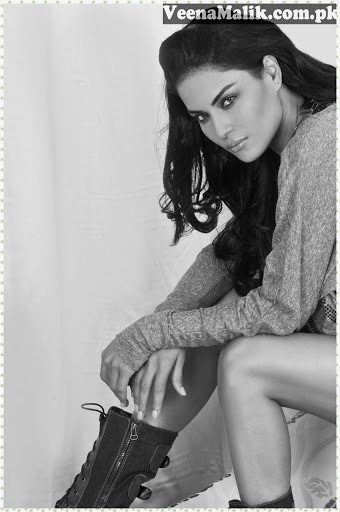 I’m a free soul and spirit who loves to be creative and expressing myself. My freedom is precious and I follow my heart and dreams! Born as Zahida Malik, in Rawalpindi, in the beautiful Punjab in my beloved Pakistan on the 26th of February 1987. Looking forward celebrating it and being thankful to Allah. My zodiac sign is Pisces. The creativity and most spiritual sign off all. I have a Bachelor of Arts with major subjects, Psychology, Sociology, and Persian. I speak Urdu, English, Punjabi, Syraki, and a bit Persian.
My height is 5 feet 7 inches, my bust is 36 my waist is 26 my hips are 36 and my weight 50 kg. My hobbies are, besides my work, taking long drives, reading books and shopping. I am a fashion model, film actor, reality TV Star and social worker.
I have the BBBB, Beauty, Body, Brains and Blessed.
My favorite expression is
‘To live and let other people live.’ I believe God gave every individual their own life; it’s a gift, and everyone has equal right to it. No one has a right to interfere in someone else’s and limit their God-given freedom, or impose anything.”
Caring Celebrity
Asalamalaikum Miss Malik. Adaap arz hai, thank you. I feel blessed and a bit excited interviewing you. How are you doing? Walaikumsalaam. Adaap, it’s my pleasure Nazima. I’m fine thank you. Great that The Netherlands thinks of me. I read on Twitter and on Facebook that you post the good and bad stuff (from the media) about me. As I am a sensitive person I intuitively felt it was good. I choose you because being a half-Pakistani Muslim woman, in the (social) media, living in The Netherlands, gives me a connection from woman to woman. I will be happily answering all your questions.
Thanks for noticing my efforts, shukria ji! I’m feeling a lot of warmth and energy. You don’t want to see me blushing here right now. I don’t know if I’m gone use this answer it maybe a bit…No, no I insist. We women have to have faith, trust, confidence in ourselves, and support each other. There are enough backstabbers in the world. Some women are the worst. Especially for strong women like us, who are making the insecure women sizzle personally and professionally! And please call me Veena dear!
 How is it to be a Celebrity, being in the news daily? I don’t have a private life or a secret life just a public life. Everything I do, like having a cup of coffee with someone in a public place, is news. Every smartphone is a camera these days. Of course that comes with being a Celeb. For several years I work hard to reach my dreams and goals as an entertainer in the showbiz industry.
Caring by adopting the boys Zain and Zafar who were earthquake victims in Pakistan. Sponsoring the young girl Payal who was a victim of human trafficking in India is natural to you? I feel like it, so I do it. My thoughts go to assassinated governor of Punjab, Sir Salmaan Taseer, RIP who said: ”Pehle Insaan Bano, Phir Muselman Bano.” It means, be a human being first and then be a Muslim. Don’t get me wrong, Alhamdulillah, I’m blessed and proud to be a Muslim. What I mean to say is: charity begins at home!
Also caring for the animals? Definitely! I made the decision in 2010, gosh two years ago already, to become a veggie. Why do animals have to lose their lives, for us human beings? Tell me please Nazima! Allah made us all with love!
Why are you in Dubai? Various reasons. I love the climate over here that’s for one. I lived in Pakistan, India and now Dubai. Like a gipsy (laughs, N.S.)! I have been here for four or five years now. Also easy travelling from here to Pakistan and India. There is good food as well and for a girl like me who’s hobby is also to shop, they have amazing shopping malls here. Not to forget the photo-shoot in Dubai and your privilege to use them first!
Cinema Lollywood (Pakistan) & Bollywood (India)
My acting debut as actress was in Lollywood. The movie Tere Pyar Mein (2000) was a box office hit! This year, 2012, it’s my Bollywood Bang. Four movies, three special appearances. The first launch in the movie Gali Gali Mein Chor Hai. This movie is about corruption. (In every street is a thief) and I will appear “Item Song” as an “Item Girl“ called “Chhanno”. It’s a great honor to be asked and launched like this. I’m happy with the result and response. My second item song Fan ban Gayi (I became a fan) was released yesterday and is from the movie Teri Naal Love Hoo Gaya.
Your acting debut in my beloved Bollywood will be in the movie Dal Mein Kuch Kala Hai (There is something fishy about it). You have a double role and only you are on the banner. It’s a big challenge to perform a double role. Regarding the banner, that’s the decision of the director. I’m also appearing in “Mumbai 125 KM” (3D Horror movie, N.S.), Zindagi 50-50 (All U Need…Love. N.S.) and I have my third special appearance in a song for Mr. Money.
How do you manage to schedule all this work at the moment? I get a lot of energy by working on the different parts of a movie. One time I act, the other time I’m play backing and dancing. Yes it’s hectic, but what’s new about that? Story of my life. So actually it doesn’t feel like work, but I know my responsibility to the producers and filmmakers, they know my schedule. Do you like Bollywood? Any proof of that?
Proof that I love Bollywood? Look at this (photo to the left
Looking too good! Up, close and personal with Arjun Rampal (actor, N.S.) Hot! Your eyes are exactly like mine, we have deep and watery eyes
Career @ International Cinema
I’m taking my first international step in British Cinema. I will be the leading actress in a powerful role. Just two weeks ago I had a meeting with the film crew in Dubai. I can’t go in to details at this moment. Maybe the Dutch Cinema next? No problem to learn Dutch. Suppose a casting or film director wants me for an acting role, it’s necessary for my work, so I will happily do it.
Career @ The Netherlands
 What you want to do in the Netherlands? It’s just like Karachi for you a city of 16 million citizens! I can speech, debate on TV or University on several topics about women empowerment from a Muslim female actress/model view. Furthermore, I can do many things at the same time being a creative entertainer. I can be a fashion model, host a program, perform on Indian and Pakistani songs, act and perform in music videos, but also be a show stopper in any fashion shows. I hear there are lots of events every year. I really want to be part of these kinds of programs. I have a lot of fans all over the world. I have such sweet memories of the Netherlands. Let me think… It was probably 2005 or 2006 when in visited your beautiful green country. I was there on 14 August on behave of a charity foundation. You know I’m from Punjab and when I was there I had a lot of fresh milk and your butter, hmmm, loved it.
Career @ Reality Television Shows
Being the first Pakistani doing a political comedy show on national tv in 2008. Next step in 2009 was mimicking celebrities in Miss Duniya. This fame brought you to India in 2010 as celebrity contestant in Bigg Boss. The main presenter was Bollywood actor Salman Khan. This concept and format of reality television Big Brother is created by the Dutch production company Endemol. In 2006 Endemol India was making programs in Hindi from Mumbai. Most successful program celeb format Bigg Boss. Gosh, really? That’s hilarious! I experienced Bigg Boss as a platform in developing my career. That was leading to the media calling me “The hero of liberal Pakistan” because of my ethics, values and my representation of my culture. And later on debating about Bigg Boss on air with the mufti.
The life changing reality television show this year turning you from a Miss to a Mrs. is Swayamvar -Veena Ka Vivaah I have been approached to do this show. I will pick an appropriate groom, marrying him. I gave it a lot of thoughts, of course being skeptical, but I understand the format and concept. I’m excited and nervous to meet my mister Right. The promos have been shot in Agra with the Taj Mahal on the background!
According to Vivek Bahl, Chief Content Officer, “Swayamvar is one of the most sought after shows on our channel, with a very strong viewer connect. We are delighted to bring its fourth season with the dynamic Veena Malik. We at Imagine shall leave no stone unturned to make it a grand affair for her as she makes the decision of her lifetime.”
The promos are inventive. Touchy music, a super dress and the Taj Mahal as symbol of love, it has to trigger many. Just one question: why Veena? Oh, Nazima. (laughing loud and long, N.S.) Don’t you believe in love ? I want to give love one more chance and I believe in the institute of marriage, Vivaah, Nikaah.
Veena, of course I believe in love. Who doesn’t? Surely give love more than one chance. Like you, I believe in love and marriage. You’re a smart lady of just 26 years young.
Nazima, I have no luck in my love life. Being a Celebrity, never knowing whether he is with me Veena Malik, or just with the girl Zahida Malik? I was 20 years old when I fell for a guy, but then he started hitting me. He was very aggressive towards me. He beat me. That made me really sensitive. Ever since then I’ve been too scared of being hurt to be in a relationship. I believe in love. But to me, it’s scary now, because of that experience. I’ve been thinking about giving it another chance, so this is my chance! As I told you earlier, I’m a very sensitive person. Intuitive, spontaneous and a sucker for love. My zodiac sign is Pisces. Pisces don’t breathe air, they breathe love as air. Like love is our soul to run life on. We dream during daytime and nighttime. You know there were more than 75.000 entries worldwide? Mister Right has called from the globe. It’s a world record, imagine that!
 More than 75.000 entries worldwide? Wow. Meaning in my city Nijmegen (165.000 citizens) that’s more or less half of the men in my city. A world record? Hardly can imagine such a response. Too bad that you didn’t meet Endemol earlier for this reality show. I think they will love the format and the 75.000 global entries.
Hahaha, now that’s the spirit Nazima! Selections are made. The next step is bringing the 17 grooms together in one place. You will see their real personalities when they will do a series of tasks to test their compatibility with me and prove their love for me! In April, we start and it will be broadcasted in May/June. My mister Right, adding my life with joy and understanding. And Nazima, friends and family will help me, support me in the most important decision of my life. I will send you an invite to be my personal guest, ok? That’s a deal, Nazima!
Insha Allah, meet your mister Right. You’re first Ramadan in July, as a married woman Mrs. Right, so romantic dear! Thanks for the invitation most appreciated.
Controversial Queen
Are you controversial or is it your reputation? No I’m not controversial. My reputation is because of my line of work, as a female, as a Muslim. I’m just a little girl who is lucky that my work is my biggest hobby. People who work in the Art industry want to create, are expressive, want to feel the adrenaline and are feeding the energy, they want to share it with their audience. Ask any person who creates a poem, who creates a book, who creates a song, who creates music, dance, movies, etc.
How do you deal with the negative response? The threats? My father forced my sisters, who were 12 and 13, to marry. I come from a very poor family. I looked at them and I stood up for myself, and I said no, I’m not going to face this future, and I won’t get married. From then on, I started living my life. We were very, very poor, but I was studying and working. My father wasn’t able to afford my studies. So I said, ok, I will work. People were talking about me, and they were like, ‘Oh, don’t go into this profession, it’s really cheap, you will lose respect.’ But I said no, I have to support myself and my family. I learned all these things from experience. Now my family is very supportive, because I have been supporting them for the last eight years. I’m getting threats, people from Pakistan and India saying they will kill me. But this will not stop me from going back to Pakistan. God willing, I’ll be able to return one day; but I haven’t spent a full week in the country over the past year. And the Taliban, they are threatening me as well. And also those nationalist conservatives in Pakistan who see me as neglecting my own country by appearing on Indian platforms. I don’t know which of these groups my biggest enemy is; they are all my enemies.
Are you the voice of Liberal Muslims? What’s liberal? I’m Allah thankful for blessing me how he made me. I am proud to be a Muslim. Mine religious identity is a personal relation between me and Allah. We women have to have trust, faith and confidence in ourselves. Role model is “Bibi Khadija”(PBUB), the first wife of our beloved Rasoelllah! She sets the norm and standard to be a self-made, independent, working woman and that we have not only our duties as daughter and wives but also our rights as Muslim women. It’s sad I think that in my beloved country Pakistan, where there are more girls and women than men, we are not demanding their rights on education, work, demanding our right to choose and making a stand together. Islamic wise women need respect, no matter what you’re cultural or society background is. Respect your men. Love your men. But don’t forget that God created you for a reason. For whom you are. For how you want to live your life. You should be aware of yourself, of who you are, before you give birth to a new generation of human beings. You must know about the world, you must know yourself, in order to raise the next generation. You’re not worth less than a man. You have every right to whatever you want to be! Always be positive. Life and death is not in our hands, but we can make a difference. As a human being, you can give hope to at least four or five people around you, you can be creative, you can live a life that matters.
I think circumstances forced me to become who I am today, and that’s what’s made me truly independent. Gladly I have so much love and support of my fans. They look up to me, they are proud and that gives so much energy and vibes, like spiritual happiness. The price I am paying to follow my dream and living on my owns terms, is sometimes hard, lonely and though.
 The world gets to now you in a passionate debate with a mufti. He admitted to not having watched the tv show Bigg Boss. Claiming you were engaging in immoral behaviour as a contestant. You exposed the double standards of Pakistani media against women. The response from all over the world was huge. So heart touching, supporting and lots of positive energy. Thanking you all again my dear supporters and fans. About the show, first of all, I didn’t know there would be a mufti present, live; it was a complete surprise. Secondly, the presenter and the mufti were saying all kinds of stuff and having no respect. I had no other choice then to stand up for my rights. React spontaneously. I’m involved in an industry in which women are regularly criticized. I’m an independent woman; this is a very big deal in our conservative society. Men in our society cannot tolerate this, they don’t know how to process it. That’s why they criticize me being working in the entertainment industry, it’s about my dignity and freedom. There are so many problems in Pakistan, I’m not the problem.
In Pakistan there was controversy over your nude image on the cover of FHM magazine India. There was ISI written on your arm. ISI, are the initials of Pakistan Inter-Services Intelligence. You say you where topless not posing complete nude and suing the magazine for all the images.
 Oh, no really, Nazima, once again? (deep breath, N.S.) I don’t want to talk about it anymore. It’s all said and done. I have a case in court. Let your readers think about it however they want to think about it.
Still I really want to know the answer because there was a Turkish actress, Sila Sahin who was completely nude for the German Playboy. And chief-editor from Dutch Playboy said on the radio he will not ask a female from a cultural Muslim background because of the fuss, fear and threats. Nazima, this FHM stuff is a hard way to learn life trough experience. These images, were morphed and edited by computer software. That’s the reason I’m suing the magazine so people will realize it automatically that I’m on the right stand. Let’s rule something out, ok? If a male actor, or male model, is doing a cover shoot for a magazine, shining his six-pack, do we have a fuss on that? Don’t we all hypostatically run to shop and buy the magazine?
 It’s my freedom of choice to do what I want, it’s the freedom of choice of Sila Sahin that she wants to do a shoot for the German Playboy. Furthermore, these magazines are bought by men, made for men from any cultural background. The upsetting thing for men who buy it is that they feel “caught” seeing a female model with their same cultural background. We are Muslim as well, like them. And saying “it’s not from our culture, but I want to see it”, that doesn’t give them the right to treat us bad. Now that’s immoral behavior! These double standards! It’s too bad there are so much hypocrites. They do everything negative and they just criticize people. Believe me when I say I have my own and know my own limits. It’s up to me to decide when and where I draw the limit. I have my own dignity and self-respect!
Omg, really one hour flies fast my dear Nazima, have to go now. It was just like sitting on your kitchen table, so comfy. And this is the first time we met. Next time we will talk about fashion and my singing career.
Miss Veena Malik thanks once again for your time. This is like you said in the beginning of this interview a connection from woman to woman just in different positions. Also a big thank you for your Spokesman & PR-manager Sohail Rashid.
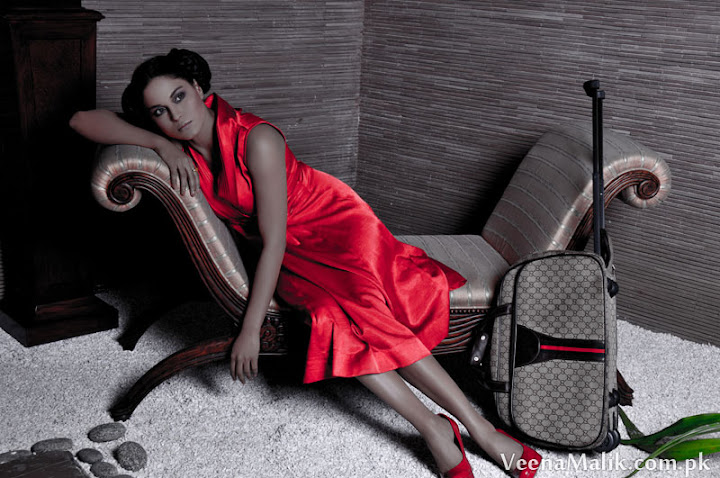
Veena Malik Official Twitter: @iveenamalik
Veena Malik Official FanPage on Facebook
Veena Malik Official Youtube Channel
 Nazima Shaikh (1974), half Surinami-Hindustani, half Pakistani, born and based in the Netherlands, is a well-known publicist/journalist/radio-debater on news topics, Islam, Bollywood, political issues and gender in the Netherlands and has extensive knowledge of Pakistan.
Closer is the number one academic anthropology weblog in the Netherlands, founded in 2006 and maintained by anthropologist Martijn de Koning, working as a lecturer and postdoc at Radboud University, Nijmegen and also lecturing at University of Amsterdam. Closer has a large readership ranging from politicians to Muslim activists, from journalists of quality news outlets to academics from Europe, United States and the Middle East and interested readers from all kinds of religious and ethnic backgrounds. Closer is dedicated to all kinds of debates, developments and phenomenons related to Islam and Muslims in Europe and has a special section ‘Society and Politics of the Muslim World’.
Copyright notice:
Copyright belongs to Nazima Shaikh and Closer. Quotes with links to this article are always allowed. It is not allowed to quote more than 200 words. It is not allowed to use the pictures that are displayed here.
Malika Zeghal – The Road Ahead in Tunisia
Posted on February 21st, 2012 by martijn.
Categories: Society & Politics in the Middle East.
As Tunisia celebrates its first democratic election, Annette Young speaks to Malika Zeghal, Professor of Modern Islamic Thought and Culture at Harvard University, about the tough road ahead for the country’s new rulers. They discuss whether the Islamist party Ennahda will be able to keep its promise of creating a new model for the Arab world, one that reconciles Islamic principles with Western-style democracy.
Uitstel of afstel – Nederlandse militairen weg uit Mali?
Posted on February 9th, 2012 by martijn.
Categories: Guest authors, International Terrorism, Society & Politics in the Middle East.
DEN HAAG/BAMAKO • De training van tientallen Nederlandse mariniers en commando’s in Mali is afgeblazen. De Malinese regering en de Amerikaanse organisator AFRICOM vinden het er te gevaarlijk vanwege de bloedige burgeroorlog, zegt Defensie.
De afgelopen weken zijn bij gevechten tussen rebellen en het regeringsleger veel doden gevallen. Zo’n 15.000 Malinezen zijn het land ontvlucht.
De Nederlandse militairen zouden meedoen aan de internationale anti-terreuroefening Flintlock. Acht westerse landen trainen militairen uit acht Afrikaanse militairen voor hun strijd tegen de Noord-Afrikaanse tak van al-Qaeda.
Aan de training die later deze maand in het onrustige Noord-Mali gepland stond, zouden 2000 militairen meedoen. Maar na de aanval op enkele steden in de regio door Toeareg-rebellen kan de Malinese regering de veiligheid niet garanderen.
Bronnen meldden deze krant al dat de trainingslocaties in het noorden waren geschrapt. Ook zeiden enkele westerse landen dat ze minder militairen zouden sturen.
,,Het leger kan niet overal zijn,’’ zegt Willem Snapper, een Nederlander in Mali. ,,Het gebied is te groot en er zijn te weinig militairen.’’
Volgens Defensie was Nederland niet betrokken bij het besluit om Flintlock te annuleren en is een dergelijk dergelijk verzoek ook niet gedaan. ,,AFRICOM en de Malinese autoriteiten zijn verantwoordelijk voor de beveiliging van de locaties,’’ zegt woordvoerster Marloes Visser.
Bronnen in Mali zeggen dat Flintlock ‘zeer waarschijnlijk’ niet doorgaat, maar de Amerikanen willen niets bevestigen.
AFRICOM is verbaasd over het bericht uit Nederland. Een zegsvrouw van de Amerikaanse ambassade in Mali spreekt alleen van ‘uitstel’ en niet van ‘afstel’.
Volgens Defensie geldt deze twijfel alleen nog voor het ‘eindsymposium’. De Nederlanders maken de voorbereidende training in Senegal en Burkina Faso af en keren daarna terug.
De SP en D66 eisen in Kamervragen opheldering van defensieminister Hans Hillen. Ze willen weten of hij de risico’s van de missie in Mali vooraf niet onderschat heeft en of Nederland wel meedoet aan een vervolg van Flintlock.
Tonny van der Mee en Jeroen Kostense zijn onderzoeksjournalisten. Dit stuk stond, in een iets andere versie, eerder in het AD en in verkorte versie in het Parool. Dit stuk is een update van een eerdere bijdrage: Nederlandse leger & Flintlock – Trainen of vechten in de Sahel.
Nederlandse leger & Flintlock – Trainen of vechten in de Sahel
Posted on February 5th, 2012 by martijn.
Categories: Guest authors, International Terrorism, Society & Politics in the Middle East.
Guest Authors: Tonny van der Mee en Jeroen Kostense
Dertig Nederlandse commando’s en mariniers zijn naar Afrika vertrokken voor de grote anti-terreuroefening Flintlock. En dat uitgerekend in Mali, waar een ontvoerde Nederlander nog altijd spoorloos is, al-Qaeda trainingskampen heeft en rebellen een bloedige strijd voeren met de regering. ‘De minister doet alsof het een training op de Veluwe is met een hek eromheen. Dat is niet zo.’
Flintlock: Training of Operatie?
Zo roerig als de politieke discussie rond de politiemissie in Kunduz is, zo stilzwijgend trainen Nederlandse elitetroepen Afrikaanse militairen in de Sahel voor de strijd tegen terrorisme. Interpol noemt de Sahel ‘het nieuwe Afghanistan’ , vanwege de criminele drugsbendes, zwaarbewapende rebellen en Noord-Afrikaanse tak van al-Qaeda (AQIM).
Toch doet Nederland al sinds 2007 mee aan Flintlock, een internationale oefening binnen de Amerikaanse oorlog tegen terreur (Operation Enduring Freedom). De Nederlandse militairen zijn nu in Burkina Faso en Senegal om de Afrikaanse collega’s te trainen voor de eindoefening in Mali (22 februari tot en met 24 maart).
Ook de VS, Duitsland, Frankrijk, Italië, Spanje en Groot-Brittannië sturen militairen. Ze trainen speciale eenheden uit twaalf Afrikaanse landen in verkennen, eerste hulp, patrouilleren, schieten en controleposten inrichten. Het kabinet vindt het niet nodig Flintlock te melden aan de Tweede Kamer. Het is een ‘oefening’ en ‘geen operationale inzet’.
video Flintlock 2007, MdK
Maar volgens de SP en defensiespecialist Ko Colijn is Flintlock vergelijkbaar met de omstreden politiemissie in Kunduz. ,,In feite is het hetzelfde verhaal als Kunduz. Goed bewapende Toeareg-rebellen die eerst in Libië zaten, zijn nu afgezakt naar de Sahel en zorgen voor een oorlogssituatie in Mali. Het is daar zeer gevaarlijk.’’ Daarom vindt hij dat het kabinet deze ‘oefening’ moet melden aan de Tweede Kamer. ,,Het gaat om de vraag: waar ligt de grens tussen trainen en deelname aan een actieve operatie.’’ SP en D66 eisen opheldering van defensieminister Hans Hillen. ,,De omstandigheden zijn gewijzigd,’’ zegt SP-Kamerlid Harry van Bommel. ,,Dat was bij de regering bekend. Toch doen we, tegen beter weten in, mee. Dat is onverstandig. Het is wachten op incidenten. En als er wat gebeurt, kan het goed zijn dat dit wordt stilgehouden.’’ D66-Kamerlid Wassila Hachchi wil met spoed van Hillen weten of de veiligheid van Nederlandse militairen gegarandeerd kan worden gezien de huidige burgeroorlog. ,,Kunnen we nog wel spreken van een trainingsmissie? Ik wil snel de onderste steen boven hebben, aangezien onze troepen er binnenkort al zitten.’’
Matrix van geweld
Dat uitgerekend Mali nu gastheer is, is pikant. Flintlock vond daar – met Nederlandse deelname – ook in 2007, 2008 en 2010 plaats. Maar sindsdien is de veiligheid in het grensgebied met Algerije en Niger aanzienlijk verslechterd. Volgens een brandstofcontract van het Amerikaanse leger blijkt dat de training nu gepland stond op vijf plekken in dat risicogebied: Gao, Kidal, Menaka, Tessalit en Timboektoe. Voor al deze gebieden ontraadt Buitenlandse Zaken alle reizen. Daar bevinden zich kampen van al-Qaeda (AQIM). De terreurorganisatie gijzelt al ruim twee maanden de in Timboektoe ontvoerde Woerdenaar Sjaak Rijke. AQIM dreigt hem te doden als geprobeerd wordt hem te bevrijden. Bovendien zijn de voormalige huurlingen van Kadhaffi – voornamelijk afkomstig van de Toeareg bevolking – met veel wapens en geld teruggekeerd naar Noord-Mali (update: zie With Libyan Arms, Mali Fighting is Revived). Ze vechten een bloedige strijd met regeringstroepen en hebben twee beoogde trainingslocaties (Tessalit en Menaka) aangevallen. Daarbij zijn vele tientallen doden gevallen.
Vanwege de terreurdreiging en bloedige burgeroorlog verplaatst de Malinese regering de trainingslocatie. De oefening staat nu gepland op een basis in Kati, ten noordwesten van Bamako. Maar deze week is de onrust dus ook overgeslagen naar die steden met felle protesten tegen de regering. De risico’s voor Nederlandse militairen zijn erg groot. Defensieminister Hans Hillen zei vorig jaar dat Nederlanders niet betrokken zijn geweest bij vuurgevechten, maar hij zegt ook niet dat dat uitgesloten is. Bovendien verstrekte Hillen de Kamer onjuiste informatie. In antwoord op SP-vragen na een publicatie in het AD, stelde hij dat de Nederlanders alleen op afgeschermde militaire terreinen trainen.
Dat blijkt niet het geval, zeggen Malinese en Nederlandse bronnen die bij Flintlock betrokken zijn (geweest). ,,De echte training, zoals het schieten, vond buiten in de woestijn plaats. En ’s nachts werd gepatrouilleerd.’’ Serge Doreleyers, die voor Defensie op de Vredesschool in Mali werkte, bevestigt dat. ,,Er wordt ook in het veld getraind. In dit soort gebieden is het diffuus waar het oefenterrein begint en ophoudt.’’ Doreleyers was in 2010 zijdelings betrokken bij Flintlock in Mali. De Nederlanders zaten op een basis in Gao. ,,Toen stond een oefening in Menaka gepland. Dat ging niet door vanwege de grote risico’s. Met Flintlock maak je ook een soort statement. Als je daar traint, weet je dat je bekeken wordt. Dat schrikt ook af.’’ SP’er Van Bommel:?,,De minister doet voorkomen alsof dit een oefening op de Veluwe is, op een terrein met een hek eromheen. Dat is niet zo. De militairen doen ‘training on the job’. Ze leiden mensen op die lokaal strijden tegen terrorisme, en gaan samen op pad. Je kunt vijandige elementen tegenkomen, of aangevallen worden.’’
Verplaatsing, verkleining en verdediging
Volgens Defensie doen dit jaar 2000 militairen aan Flintlock mee. Maar vorig weekend meldden Amerikaanse en Malinese vertegenwoordigers tijdens een briefing dat het er ruim duizend worden. Enkele westerse landen sturen minder militairen. Bovendien zijn alle trainingslocaties in het gevaarlijke noorden geschrapt. Ondanks de belofte dat Mali grond- en luchttroepen paraat heeft om in te grijpen, heeft het regeringsleger de handen vol aan de burgeroorlog. De Amerikanen zeggen terug te vechten als militaire bases worden aangevallen. Dat geldt ook voor de Nederlanders, zegt AFRICOM. ,,Elk mens heeft het recht zichzelf te verdedigen. Dus als de Nederlanders aangevallen worden, mogen ze terugschieten.’’ Defensie en Buitenlandse Zaken willen alleen kwijt dat de oefening vanwege de spanningen ‘mogelijk’ wordt verplaatst en in omvang beperkt. ,,De Malinese autoriteiten en Amerikaanse organisatoren nemen de noodzakelijke veiligheidsmaatregelen. Eventuele risico’s worden in de gaten gehouden. Nederland neemt zelf geen extra maatregelen.’’
Tonny van der Mee en Jeroen Kostense zijn onderzoeksjournalisten. Dit stuk stond, in een iets andere versie, eerder in het AD en in verkorte versie in het Parool. Voor meer informatie over Mali zie War on Terror and social networks in Mali door David Gutelius in vml. Isim Review en over de Sahel en Flintlock: U.S. Training in Africa Aims to Deter Extremists door Eric Schmitt in The New York Times
Nederlandse leger & Flintlock – Trainen of vechten in de Sahel
Posted on February 5th, 2012 by martijn.
Categories: Guest authors, International Terrorism, Society & Politics in the Middle East.
Guest Authors: Tonny van der Mee en Jeroen Kostense
Dertig Nederlandse commando’s en mariniers zijn naar Afrika vertrokken voor de grote anti-terreuroefening Flintlock. En dat uitgerekend in Mali, waar een ontvoerde Nederlander nog altijd spoorloos is, al-Qaeda trainingskampen heeft en rebellen een bloedige strijd voeren met de regering. ‘De minister doet alsof het een training op de Veluwe is met een hek eromheen. Dat is niet zo.’
Flintlock: Training of Operatie?
Zo roerig als de politieke discussie rond de politiemissie in Kunduz is, zo stilzwijgend trainen Nederlandse elitetroepen Afrikaanse militairen in de Sahel voor de strijd tegen terrorisme. Interpol noemt de Sahel ‘het nieuwe Afghanistan’ , vanwege de criminele drugsbendes, zwaarbewapende rebellen en Noord-Afrikaanse tak van al-Qaeda (AQIM).
Toch doet Nederland al sinds 2007 mee aan Flintlock, een internationale oefening binnen de Amerikaanse oorlog tegen terreur (Operation Enduring Freedom). De Nederlandse militairen zijn nu in Burkina Faso en Senegal om de Afrikaanse collega’s te trainen voor de eindoefening in Mali (22 februari tot en met 24 maart).
Ook de VS, Duitsland, Frankrijk, Italië, Spanje en Groot-Brittannië sturen militairen. Ze trainen speciale eenheden uit twaalf Afrikaanse landen in verkennen, eerste hulp, patrouilleren, schieten en controleposten inrichten. Het kabinet vindt het niet nodig Flintlock te melden aan de Tweede Kamer. Het is een ‘oefening’ en ‘geen operationale inzet’.
video Flintlock 2007, MdK
Maar volgens de SP en defensiespecialist Ko Colijn is Flintlock vergelijkbaar met de omstreden politiemissie in Kunduz. ,,In feite is het hetzelfde verhaal als Kunduz. Goed bewapende Toeareg-rebellen die eerst in Libië zaten, zijn nu afgezakt naar de Sahel en zorgen voor een oorlogssituatie in Mali. Het is daar zeer gevaarlijk.’’ Daarom vindt hij dat het kabinet deze ‘oefening’ moet melden aan de Tweede Kamer. ,,Het gaat om de vraag: waar ligt de grens tussen trainen en deelname aan een actieve operatie.’’ SP en D66 eisen opheldering van defensieminister Hans Hillen. ,,De omstandigheden zijn gewijzigd,’’ zegt SP-Kamerlid Harry van Bommel. ,,Dat was bij de regering bekend. Toch doen we, tegen beter weten in, mee. Dat is onverstandig. Het is wachten op incidenten. En als er wat gebeurt, kan het goed zijn dat dit wordt stilgehouden.’’ D66-Kamerlid Wassila Hachchi wil met spoed van Hillen weten of de veiligheid van Nederlandse militairen gegarandeerd kan worden gezien de huidige burgeroorlog. ,,Kunnen we nog wel spreken van een trainingsmissie? Ik wil snel de onderste steen boven hebben, aangezien onze troepen er binnenkort al zitten.’’
Matrix van geweld
Dat uitgerekend Mali nu gastheer is, is pikant. Flintlock vond daar – met Nederlandse deelname – ook in 2007, 2008 en 2010 plaats. Maar sindsdien is de veiligheid in het grensgebied met Algerije en Niger aanzienlijk verslechterd. Volgens een brandstofcontract van het Amerikaanse leger blijkt dat de training nu gepland stond op vijf plekken in dat risicogebied: Gao, Kidal, Menaka, Tessalit en Timboektoe. Voor al deze gebieden ontraadt Buitenlandse Zaken alle reizen. Daar bevinden zich kampen van al-Qaeda (AQIM). De terreurorganisatie gijzelt al ruim twee maanden de in Timboektoe ontvoerde Woerdenaar Sjaak Rijke. AQIM dreigt hem te doden als geprobeerd wordt hem te bevrijden. Bovendien zijn de voormalige huurlingen van Kadhaffi – voornamelijk afkomstig van de Toeareg bevolking – met veel wapens en geld teruggekeerd naar Noord-Mali (update: zie With Libyan Arms, Mali Fighting is Revived). Ze vechten een bloedige strijd met regeringstroepen en hebben twee beoogde trainingslocaties (Tessalit en Menaka) aangevallen. Daarbij zijn vele tientallen doden gevallen.
Vanwege de terreurdreiging en bloedige burgeroorlog verplaatst de Malinese regering de trainingslocatie. De oefening staat nu gepland op een basis in Kati, ten noordwesten van Bamako. Maar deze week is de onrust dus ook overgeslagen naar die steden met felle protesten tegen de regering. De risico’s voor Nederlandse militairen zijn erg groot. Defensieminister Hans Hillen zei vorig jaar dat Nederlanders niet betrokken zijn geweest bij vuurgevechten, maar hij zegt ook niet dat dat uitgesloten is. Bovendien verstrekte Hillen de Kamer onjuiste informatie. In antwoord op SP-vragen na een publicatie in het AD, stelde hij dat de Nederlanders alleen op afgeschermde militaire terreinen trainen.
Dat blijkt niet het geval, zeggen Malinese en Nederlandse bronnen die bij Flintlock betrokken zijn (geweest). ,,De echte training, zoals het schieten, vond buiten in de woestijn plaats. En ’s nachts werd gepatrouilleerd.’’ Serge Doreleyers, die voor Defensie op de Vredesschool in Mali werkte, bevestigt dat. ,,Er wordt ook in het veld getraind. In dit soort gebieden is het diffuus waar het oefenterrein begint en ophoudt.’’ Doreleyers was in 2010 zijdelings betrokken bij Flintlock in Mali. De Nederlanders zaten op een basis in Gao. ,,Toen stond een oefening in Menaka gepland. Dat ging niet door vanwege de grote risico’s. Met Flintlock maak je ook een soort statement. Als je daar traint, weet je dat je bekeken wordt. Dat schrikt ook af.’’ SP’er Van Bommel:?,,De minister doet voorkomen alsof dit een oefening op de Veluwe is, op een terrein met een hek eromheen. Dat is niet zo. De militairen doen ‘training on the job’. Ze leiden mensen op die lokaal strijden tegen terrorisme, en gaan samen op pad. Je kunt vijandige elementen tegenkomen, of aangevallen worden.’’
Verplaatsing, verkleining en verdediging
Volgens Defensie doen dit jaar 2000 militairen aan Flintlock mee. Maar vorig weekend meldden Amerikaanse en Malinese vertegenwoordigers tijdens een briefing dat het er ruim duizend worden. Enkele westerse landen sturen minder militairen. Bovendien zijn alle trainingslocaties in het gevaarlijke noorden geschrapt. Ondanks de belofte dat Mali grond- en luchttroepen paraat heeft om in te grijpen, heeft het regeringsleger de handen vol aan de burgeroorlog. De Amerikanen zeggen terug te vechten als militaire bases worden aangevallen. Dat geldt ook voor de Nederlanders, zegt AFRICOM. ,,Elk mens heeft het recht zichzelf te verdedigen. Dus als de Nederlanders aangevallen worden, mogen ze terugschieten.’’ Defensie en Buitenlandse Zaken willen alleen kwijt dat de oefening vanwege de spanningen ‘mogelijk’ wordt verplaatst en in omvang beperkt. ,,De Malinese autoriteiten en Amerikaanse organisatoren nemen de noodzakelijke veiligheidsmaatregelen. Eventuele risico’s worden in de gaten gehouden. Nederland neemt zelf geen extra maatregelen.’’
Tonny van der Mee en Jeroen Kostense zijn onderzoeksjournalisten. Dit stuk stond, in een iets andere versie, eerder in het AD en in verkorte versie in het Parool. Voor meer informatie over Mali zie War on Terror and social networks in Mali door David Gutelius in vml. Isim Review en over de Sahel en Flintlock: U.S. Training in Africa Aims to Deter Extremists door Eric Schmitt in The New York Times
Fawaz Gerges – Pluralism, Transformation, Democracy and the Arab Spring
Posted on February 4th, 2012 by martijn.
Categories: Society & Politics in the Middle East.
Dr. Fawaz Gerges, professor of Middle Eastern Politics and International Relations at the London School of Economics and Political Science, was the keynote speaker for Arab Spring Symposium at the Army War College. In his inspiring lecture he engaged with the question of pluralism and democracy. According to him the Arab Spring is not ‘just’ a historical moment, but a specific revolutionary moment that is relevant for the whole world whereby millions of Arab have taken ownership of their own destiny and took their right of self-determination. A new world is being born according to him similar to the French Revolution even though we do not know yet where things will lead us to. How viable, how democratic, how durable and how pluralistic these changes will be remains to be seen, not as a matter of months of years but of decades. This is only the first step in which we see the beginning of the crumbling of the iron wall of authoritarianism in the Arab world that has been there for 60 or more years. You can watch his entire, interesting and very accessible lecture here:
Joumana Haddad – Realities of Arab Women and Inventing the Arab Woman
Posted on January 31st, 2012 by martijn.
Categories: Activism, Gender, Kinship & Marriage Issues, Multiculti Issues, Public Islam, Religion Other, Society & Politics in the Middle East.
Joumana Haddad is a Lebanese writer and poet. In 2010 she published I Killed Scheherazade: Confessions of An Angry Arab Woman. In this book she challenges prejudice, hypocrisy and religious bigotry; an effort (as she explains it) of self-criticism by taking on the dilemma’s and challenges of women in the Arab world and the Western stereotypes they are confronted with such as the suffering, oppressed woman. In doing so she asks tough questions but unfortunately also reinforces particular stereotypes with phrases such as ‘the Arab mind’ and constructing a dichtotomy between being religious on the one side and being liberated and emancipated on the other side. At the same time she tries to show the existence of multiple realities, the liberated Arab women exist as well as the oppressed (in her view similar as veiled) Arab women. This dual reality becomes her call to the West to stop generalizing and to Arab women to stand up and fight.
Last Sunday she was on Dutch TV. You can see the video below. The introduction is in Dutch, but the interview in English starts after 30 seconds.
Notwithstanding the critique that is certainly valid I liked her book. And although she is not the first and probably not the last Arab woman writing about controversial issues around sex, religion and oppression and challenging patriarchal norms and expectations in the Middle east, it is interesting how and why she became a sort of darling of the Western media likening to for example Carrie Bradshaw of Sex and the City and with profiles consisting of much attention to how she looks (unveiled, self-confident sexy). Ow did I mention she looks pretty?
‘Theatre of the Absurd’ – Netanyahu Visiting the Netherlands
Posted on January 20th, 2012 by martijn.
Categories: Society & Politics in the Middle East.
This week Israeli PM Netanyahu visited the Netherlands. One would expect tough security measures, and there were, but still the details of his flight to the Netherlands were posted on websites. The visit was framed in terms of a celebration and sealing of the age old ties between the Dutch people and the Jewish people and the Netherlands and Israel. The visit attracted both strong supporters and opponents of Israel’s occupation of Palestine and its apartheid-like politics on the Palestinians. The Palestinian Home called for demonstrations and also a of Dutch Israeli’s expressed their concerns. One MP of the anti-islam PVV called upon Israel to continue building Jewish-only colonies in the occupied territories.
Netanyahu amongst friends and critics | Radio Netherlands Worldwide
Radio Netherlands Worldwide asked three people closely involved with the issue who they think Mr Netanyahu should meet during his visit.
The director of the foremost Jewish organisation in the Netherlands, Ronny Naftaniel, says he is quite satisfied with the prime minister’s plans. (The Centre for Information and Documentation on Israel is organising Mr Netanyahu’s visit to the Amsterdam synagogue.)
“It is a very short trip, but if he had more time I would advise Mr Netanyahu to meet with Dutch captains of industry. Business relations between our countries are quite close, they can always get better. He could also meet here with refugees from Arab countries to learn more about the Arab spring and what role Israel can play.”
Human rights
Not everyone is happy with Mr Netanyahu’s visit. Politicians from across the political spectrum are expected to query him about Israel’s continued settlement building and the stalled peace process.The Israeli prime minister will also be met by protesters from various groups representing the Palestinian community in the Netherlands, as well as critical sectors of the Jewish community. Harry de Winter is one of the founders of A Different Jewish Voice.
“He shouldn’t be coming at all. You shouldn’t be putting out the red carpet given the terrible human rights situation in Israel and the Palestinian territories. If the Netherlands were a true friend of Israel, it would be more critical of Israeli policies. Israel would benefit more from that kind of friendship.”
Criminal
Another group demonstrating against Mr Netanyahu’s visit is the Dutch Palestine Committee. Director Wim Langkamp says the only thing Mr Netanyahu should be doing in the Netherlands is to appear before the International Criminal Court.“Back in 2004, another international court in The Hague ruled that building the wall separating Israel from the West Bank was illegal. Since then, Israel has committed many more violations of human rights, including the murder of nine people on the Gaza flotilla. The ICC is in the Hague, within walking distance of parliament, where he’ll be tomorrow.”
Netanyahu praised the Dutch stance on Iran sanctions but at the same time the Dutch government urged Israel to freez the illegal policy of settlements. Of course exactly the issues that triggered the demonstrations against his visit and The Palestinian Home pressed for Netanyahu’s arrest for war crimes and crimes against humanity. You can see some pictures of the protests HERE and HERE.
You can watch here the video made by CIDI, a Dutch lobby supporting the current politics of the state of Israel, of the speech by Netanyahu when he visited the Portugese synagogue in Amsterdam:
The Dutch political stance on Israel is one of supporting with only mild critique on what can be seen as ‘the matrix of control‘: a framework created by strategic settlements, Israeli-only highways and the separation wall and (I would add) the efforts to disturb Palestinian control of Gaza and the Westbank by Hamas and Fatah and stalling the peace talks. In his speech in the video above, Netanyahu refers to the critique on Israeli policies with regard to the Palestinians and Iran as a ‘theatre of the absurd’. But for his opponents his equation of Jewishness with Israel and his views on Palestinians and Iran would equally amount to be part of a theatre of the absurd. The current Israeli policy means denying Palestinians legitimate rights as do the Palestinian authorities as well with their citizens. In all cases the Palestinian people loose. A more balanced approach would at least recognize that the past and fate of both Palestinians and Israelis are entangled, as anthropologist Abu-Lughod explains:
SPIEGEL Interview with Lila Abu-Lughod: ‘Any Solution Will Have to Involve More Creative Thinking’ – SPIEGEL ONLINE – News – International
Any resolution must involve a recognition of the fact that Israel was founded on the expulsion of Palestinians. Then we can think and talk together about restitution, redress, compensation, or whatever it takes for a more just way forward. In Israel and Palestine we have an amazing opportunity — to think about changing history by considering a democratic state with a living future for everyone.
'Theatre of the Absurd' – Netanyahu Visiting the Netherlands
Posted on January 20th, 2012 by martijn.
Categories: Society & Politics in the Middle East.
This week Israeli PM Netanyahu visited the Netherlands. One would expect tough security measures, and there were, but still the details of his flight to the Netherlands were posted on websites. The visit was framed in terms of a celebration and sealing of the age old ties between the Dutch people and the Jewish people and the Netherlands and Israel. The visit attracted both strong supporters and opponents of Israel’s occupation of Palestine and its apartheid-like politics on the Palestinians. The Palestinian Home called for demonstrations and also a of Dutch Israeli’s expressed their concerns. One MP of the anti-islam PVV called upon Israel to continue building Jewish-only colonies in the occupied territories.
Netanyahu amongst friends and critics | Radio Netherlands Worldwide
Radio Netherlands Worldwide asked three people closely involved with the issue who they think Mr Netanyahu should meet during his visit.
The director of the foremost Jewish organisation in the Netherlands, Ronny Naftaniel, says he is quite satisfied with the prime minister’s plans. (The Centre for Information and Documentation on Israel is organising Mr Netanyahu’s visit to the Amsterdam synagogue.)
“It is a very short trip, but if he had more time I would advise Mr Netanyahu to meet with Dutch captains of industry. Business relations between our countries are quite close, they can always get better. He could also meet here with refugees from Arab countries to learn more about the Arab spring and what role Israel can play.”
Human rights
Not everyone is happy with Mr Netanyahu’s visit. Politicians from across the political spectrum are expected to query him about Israel’s continued settlement building and the stalled peace process.The Israeli prime minister will also be met by protesters from various groups representing the Palestinian community in the Netherlands, as well as critical sectors of the Jewish community. Harry de Winter is one of the founders of A Different Jewish Voice.
“He shouldn’t be coming at all. You shouldn’t be putting out the red carpet given the terrible human rights situation in Israel and the Palestinian territories. If the Netherlands were a true friend of Israel, it would be more critical of Israeli policies. Israel would benefit more from that kind of friendship.”
Criminal
Another group demonstrating against Mr Netanyahu’s visit is the Dutch Palestine Committee. Director Wim Langkamp says the only thing Mr Netanyahu should be doing in the Netherlands is to appear before the International Criminal Court.“Back in 2004, another international court in The Hague ruled that building the wall separating Israel from the West Bank was illegal. Since then, Israel has committed many more violations of human rights, including the murder of nine people on the Gaza flotilla. The ICC is in the Hague, within walking distance of parliament, where he’ll be tomorrow.”
Netanyahu praised the Dutch stance on Iran sanctions but at the same time the Dutch government urged Israel to freez the illegal policy of settlements. Of course exactly the issues that triggered the demonstrations against his visit and The Palestinian Home pressed for Netanyahu’s arrest for war crimes and crimes against humanity. You can see some pictures of the protests HERE and HERE.
You can watch here the video made by CIDI, a Dutch lobby supporting the current politics of the state of Israel, of the speech by Netanyahu when he visited the Portugese synagogue in Amsterdam:
The Dutch political stance on Israel is one of supporting with only mild critique on what can be seen as ‘the matrix of control‘: a framework created by strategic settlements, Israeli-only highways and the separation wall and (I would add) the efforts to disturb Palestinian control of Gaza and the Westbank by Hamas and Fatah and stalling the peace talks. In his speech in the video above, Netanyahu refers to the critique on Israeli policies with regard to the Palestinians and Iran as a ‘theatre of the absurd’. But for his opponents his equation of Jewishness with Israel and his views on Palestinians and Iran would equally amount to be part of a theatre of the absurd. The current Israeli policy means denying Palestinians legitimate rights as do the Palestinian authorities as well with their citizens. In all cases the Palestinian people loose. A more balanced approach would at least recognize that the past and fate of both Palestinians and Israelis are entangled, as anthropologist Abu-Lughod explains:
SPIEGEL Interview with Lila Abu-Lughod: ‘Any Solution Will Have to Involve More Creative Thinking’ – SPIEGEL ONLINE – News – International
Any resolution must involve a recognition of the fact that Israel was founded on the expulsion of Palestinians. Then we can think and talk together about restitution, redress, compensation, or whatever it takes for a more just way forward. In Israel and Palestine we have an amazing opportunity — to think about changing history by considering a democratic state with a living future for everyone.
Syria’s Torture Machine – A film by channel4
Posted on January 16th, 2012 by martijn.
Categories: Society & Politics in the Middle East.
Dear readers, the next documentary is gruesome and heartbreaking but how to interpret the images shown?. Syria’s Torture Machine is a documentary made by the British Channel4. According to the site’s info:
An investigation into the detention and torture of Syrian civilians, featuring shocking video evidence of men, women and children being subjected to beatings, whippings and more elaborate torture.
In this film, victims, refugees and activists who have experienced or witnessed such brutality at the hands of Syrian President al-Assad’s forces speak out.
Their stories, combined with the torture footage, refute President Assad’s claims that his forces are simply quelling an armed insurgency.
To follow the conversation on twitter use the hash tag #torturemachine.
Disturbing and distressing descriptions and film of torture and atrocities, including the deaths of children.
Syria’s Torture Machine – A Film by Channel 4 door zooz13
It is difficult to verify all the claims made by Miller in his documentary as he admits as well. As with almost all reports on Syria, Miller relies heavily on UN information and human rights groups. Anthony Cuthbertson review contains an important warning when interpreting these images:
Guernica / Anthony Cuthbertson: Syria’s Torture Machine
Syria’s Torture Machine makes tough viewing and goes far to refute President Assad’s claims that his forces are merely quelling armed insurgence. Yet it seems to do so with the underlying intent of softening up the public for another “intervention” in the Middle East. It is not enough to accept this kind of “documentation” and its nauseating content. What is needed is some sense of the larger picture, and whether or not we, too, might be victims. For Assad and his regime have long been brutal, yet Western governments never complained. We do need to ask whether or not some larger agenda is being played out.

Syria's Torture Machine – A film by channel4
Posted on January 16th, 2012 by martijn.
Categories: Society & Politics in the Middle East.
Dear readers, the next documentary is gruesome and heartbreaking but how to interpret the images shown?. Syria’s Torture Machine is a documentary made by the British Channel4. According to the site’s info:
An investigation into the detention and torture of Syrian civilians, featuring shocking video evidence of men, women and children being subjected to beatings, whippings and more elaborate torture.
In this film, victims, refugees and activists who have experienced or witnessed such brutality at the hands of Syrian President al-Assad’s forces speak out.
Their stories, combined with the torture footage, refute President Assad’s claims that his forces are simply quelling an armed insurgency.
To follow the conversation on twitter use the hash tag #torturemachine.
Disturbing and distressing descriptions and film of torture and atrocities, including the deaths of children.
Syria’s Torture Machine – A Film by Channel 4 door zooz13
It is difficult to verify all the claims made by Miller in his documentary as he admits as well. As with almost all reports on Syria, Miller relies heavily on UN information and human rights groups. Anthony Cuthbertson review contains an important warning when interpreting these images:
Guernica / Anthony Cuthbertson: Syria’s Torture Machine
Syria’s Torture Machine makes tough viewing and goes far to refute President Assad’s claims that his forces are merely quelling armed insurgence. Yet it seems to do so with the underlying intent of softening up the public for another “intervention” in the Middle East. It is not enough to accept this kind of “documentation” and its nauseating content. What is needed is some sense of the larger picture, and whether or not we, too, might be victims. For Assad and his regime have long been brutal, yet Western governments never complained. We do need to ask whether or not some larger agenda is being played out.
Trolling & Wilders’ New Clothes – Dutch Queen in Abu Dhabi
Posted on January 9th, 2012 by martijn.
Categories: Gender, Kinship & Marriage Issues, Multiculti Issues, Public Islam, Society & Politics in the Middle East.
This is actually a post you might want to skip. I dont say this often, because everything you read here is of value, interesting or even fascinating. But this isn’t really one of those. I just wanted to share with you that the year has only started a week ago and we have already our first headscarf-affair. Always a good way to start the year right, to make sure some things will not change.
This time it is about the Dutch Queen Beatrix, visiting the United Arab Emirates. On Sunday morning she visited the Sheikh Zayed mosque. The official state visit to the UAE and Oman had been scheduled earlier but was then called off because of the ongoing pro-democracy demonstrations and the violent crackdown in Oman fearing that a state visit would be seen as an endorsement of the regime. Queen Beatrix, few weeks ago mentioned on Al Jazeera’s Woman of Power, wore a headscarf over her hat and donned an abaya during this visit and crown princess Maxima was also veiled.
As soon as the news got out and the pictures were published Geert Wilders’ anti-islam party PVV complained calling the queen with a veil a ‘sad appearance which should have been avoided’. The PVV published questions in parliament. In these questions they ask the minister if he agrees with the PVV that the headscarf is a ‘symbol of Islamization, oppression and discrimination of women’ and that Beatrix wearing it ‘legitimizes the oppression’ of women. In a reaction Dutch minister of Foreign Affairs stated that the Queen also adjusts the way she dresses when she visits synagogues and cathedrals. As does Geert Wilders by the way who is used to wear a yarmulke when he speaks for Jewish organizations in the US and when he visited the Wailing Wall in Jerusalem.
By now Wilders’ rhetorical strategy can be seen as bullying or even better: trolling like we know from the Internet. It is about uttering a statement designed to attract predictable responses or flames. They initiate a flaming event and causing many people jumping on it and discussing it and getting angry about it, without the discussion leading anywhere. An interesting but long talk about trolling can be found at talkinganthropology.
The comments to this case of trolling were mixed. Wanting to evoke many reactions; he succeeded. But that is rather simple for him. Some time ago Wilders published a tweet with only a ‘!’ causing reporters to discuss online what the meaning of that was. The reactions however were rather mixed even among his supporters. Some people thought it was a stupid move, although he may have been right. His opponents found it hilarious and a waste of time. Many people made an analogy that what Beatrix did (adjusting to the customs of the country where she is) is something Muslims also have to do (integrating) implying that Muslims are (still) people from the outside. But while the reactions may be mixed and less positive as Wilders might have expected, this doesn’t really matter for him to use trolling as a political strategy. It is a means of disrupting the routine and thereby controlling the debate and the agenda of the debate. Don’t feed the trolls, that is easier said than done, but it means that journalists and researchers should really consider if they want to cover everything this troll feeds us.
See? You were better off not reading this.
Trolling & Wilders' New Clothes – Dutch Queen in Abu Dhabi
Posted on January 9th, 2012 by martijn.
Categories: Gender, Kinship & Marriage Issues, Multiculti Issues, Public Islam, Society & Politics in the Middle East.
This is actually a post you might want to skip. I dont say this often, because everything you read here is of value, interesting or even fascinating. But this isn’t really one of those. I just wanted to share with you that the year has only started a week ago and we have already our first headscarf-affair. Always a good way to start the year right, to make sure some things will not change.
This time it is about the Dutch Queen Beatrix, visiting the United Arab Emirates. On Sunday morning she visited the Sheikh Zayed mosque. The official state visit to the UAE and Oman had been scheduled earlier but was then called off because of the ongoing pro-democracy demonstrations and the violent crackdown in Oman fearing that a state visit would be seen as an endorsement of the regime. Queen Beatrix, few weeks ago mentioned on Al Jazeera’s Woman of Power, wore a headscarf over her hat and donned an abaya during this visit and crown princess Maxima was also veiled.
As soon as the news got out and the pictures were published Geert Wilders’ anti-islam party PVV complained calling the queen with a veil a ‘sad appearance which should have been avoided’. The PVV published questions in parliament. In these questions they ask the minister if he agrees with the PVV that the headscarf is a ‘symbol of Islamization, oppression and discrimination of women’ and that Beatrix wearing it ‘legitimizes the oppression’ of women. In a reaction Dutch minister of Foreign Affairs stated that the Queen also adjusts the way she dresses when she visits synagogues and cathedrals. As does Geert Wilders by the way who is used to wear a yarmulke when he speaks for Jewish organizations in the US and when he visited the Wailing Wall in Jerusalem.
By now Wilders’ rhetorical strategy can be seen as bullying or even better: trolling like we know from the Internet. It is about uttering a statement designed to attract predictable responses or flames. They initiate a flaming event and causing many people jumping on it and discussing it and getting angry about it, without the discussion leading anywhere. An interesting but long talk about trolling can be found at talkinganthropology.
The comments to this case of trolling were mixed. Wanting to evoke many reactions; he succeeded. But that is rather simple for him. Some time ago Wilders published a tweet with only a ‘!’ causing reporters to discuss online what the meaning of that was. The reactions however were rather mixed even among his supporters. Some people thought it was a stupid move, although he may have been right. His opponents found it hilarious and a waste of time. Many people made an analogy that what Beatrix did (adjusting to the customs of the country where she is) is something Muslims also have to do (integrating) implying that Muslims are (still) people from the outside. But while the reactions may be mixed and less positive as Wilders might have expected, this doesn’t really matter for him to use trolling as a political strategy. It is a means of disrupting the routine and thereby controlling the debate and the agenda of the debate. Don’t feed the trolls, that is easier said than done, but it means that journalists and researchers should really consider if they want to cover everything this troll feeds us.
See? You were better off not reading this.
Bouazizi & Havel: Despair, Humiliation and Revolution
Posted on December 19th, 2011 by martijn.
Categories: Society & Politics in the Middle East.
On 17 December 2010 Mohamed Bouazizi set himself on fire; an act of protest that not only ignited the revolution in Tunisia but that also inspired other uprisings throughout the Middle East. Since then a lot has happened. The following reports give some idea about that and also about the major challenges that Tunisia faces in the years ahead.
Reuters
Tunisia’s Bouazizi Remembered door tvnportal
Al Jazeera
CBS News
The Real Mohamed Bouazizi – By Hernando de Soto | Foreign Policy
Bouazizi is, of course, not the only hero of the Arab Spring. There are thousands of them, if not millions. Neither is economics the only root of the revolution. But it is clear that the undercurrents of popular unrest — what led the economic martyrs of the revolution to such desperate acts — have yet to be resolved. Governments have been toppled, but the underlying economies still remain and are ignored at our peril.
We asked Salem, one of Bouazizi’s brothers, what his brother in heaven might have hoped his sacrifice would bring to the Arab world. Salem did not hesitate: “That the poor also have the right to buy and sell.”
One of the things I missed from many analyses is the comparison with Jan Palach and Jan Zajíc and others who died after self-immolation; I think a suitable one to make today. Both deaths make us think about freedom and the value of it not only in major public debates but the concrete meaning of value in everyday life and how a lack of freedom may result in despair, humiliation and transformation when people pay the ultimate price thereby exposing the emperor without clothes.
Several tributes have appeared on Youtube, dedicated to Mohamed Bouazizi:
But maybe the best tribute today is a film directed by Vaclav Havel: ‘Leaving’ I discovered by reading an article in the Newyorker that featured a report by Stuart Kemp in the Hollywood Reporter:
The Front Row: Václav Havel, Filmmaker : The New Yorker
Originally, and actually for my entire life, I wanted to be primarily a filmmaker,” and he recently fulfilled that intention: he directed a film called “Leaving,” which Stuart Kemp, in The Hollywood Reporter, describes as
the story of a government chancellor who faces a crisis after being removed from political power. He based it on Shakespeare’s King Lear and Anton Checkhov’s [sic] The Cherry Orchard. Havel said his film version revolves around “the theme of the end. The end of man. The end of an epoch. The end of some community. The end of love.
”
According to the press-kit on the film’s website:
The film is not just about the leaving of one politician from his office, but more generally about the phenomenon of change itself: every second something comes and something irretrievably goes. We do not know from where everything emerges and know even less to where it disappears. This is in fact a classic theme of dramas: the end. The end of a man. The end of an era. The end of a community. The end of love.
Bouazizi & Havel: Despair, Humiliation and Revolution
Posted on December 19th, 2011 by martijn.
Categories: Society & Politics in the Middle East.
On 17 December 2010 Mohamed Bouazizi set himself on fire; an act of protest that not only ignited the revolution in Tunisia but that also inspired other uprisings throughout the Middle East. Since then a lot has happened. The following reports give some idea about that and also about the major challenges that Tunisia faces in the years ahead.
Reuters
Tunisia’s Bouazizi Remembered door tvnportal
Al Jazeera
CBS News
The Real Mohamed Bouazizi – By Hernando de Soto | Foreign Policy
Bouazizi is, of course, not the only hero of the Arab Spring. There are thousands of them, if not millions. Neither is economics the only root of the revolution. But it is clear that the undercurrents of popular unrest — what led the economic martyrs of the revolution to such desperate acts — have yet to be resolved. Governments have been toppled, but the underlying economies still remain and are ignored at our peril.
We asked Salem, one of Bouazizi’s brothers, what his brother in heaven might have hoped his sacrifice would bring to the Arab world. Salem did not hesitate: “That the poor also have the right to buy and sell.”
One of the things I missed from many analyses is the comparison with Jan Palach and Jan Zajíc and others who died after self-immolation; I think a suitable one to make today. Both deaths make us think about freedom and the value of it not only in major public debates but the concrete meaning of value in everyday life and how a lack of freedom may result in despair, humiliation and transformation when people pay the ultimate price thereby exposing the emperor without clothes.
Several tributes have appeared on Youtube, dedicated to Mohamed Bouazizi:
But maybe the best tribute today is a film directed by Vaclav Havel: ‘Leaving’ I discovered by reading an article in the Newyorker that featured a report by Stuart Kemp in the Hollywood Reporter:
The Front Row: Václav Havel, Filmmaker : The New Yorker
Originally, and actually for my entire life, I wanted to be primarily a filmmaker,” and he recently fulfilled that intention: he directed a film called “Leaving,” which Stuart Kemp, in The Hollywood Reporter, describes as
the story of a government chancellor who faces a crisis after being removed from political power. He based it on Shakespeare’s King Lear and Anton Checkhov’s [sic] The Cherry Orchard. Havel said his film version revolves around “the theme of the end. The end of man. The end of an epoch. The end of some community. The end of love.
”
According to the press-kit on the film’s website:
The film is not just about the leaving of one politician from his office, but more generally about the phenomenon of change itself: every second something comes and something irretrievably goes. We do not know from where everything emerges and know even less to where it disappears. This is in fact a classic theme of dramas: the end. The end of a man. The end of an era. The end of a community. The end of love.
Fantasy, action and the possible in 2011
Posted on December 18th, 2011 by martijn.
Categories: Guest authors, Headline, Society & Politics in the Middle East.
Guest Author: Samuli Schielke
This essay is about Lenin, Tahrir, Islamists, poetry, choice and destiny in an attempt to provide some sort of theoretical synthesis of a confusing experience. It is the very slightly modified transcript of a lecture I gave at the University of North Carolina in Charlotte on 6 December 2011.
First of all, thank you very much everybody for coming here. I had no way to expect if I would get an audience of two or twenty, and it turned out to be more than twenty. I’m very happy about that. Thank you very much to Joyce Dalsheim and Gregg Starrett for inviting me here. And thank you to the University of North Carolina, and the Department of Anthropology and the Department of Global, International and Area Studies. This is a wonderful occasion to try to make some general sense of something which is very confusing: anthropological fieldwork in times of political and social transition. I have been writing a blog, and in every blog entry I have been presenting a different theory that has contradicted the previous day. It is very difficult to make any general kind of theory these days, but I’ll try to take the challenge offered to me in the shape of this presentation, and do some of that.
I’ll start with a little jump to history, because I think that the question which I try to tackle, which is that of the possible – the question: What is to be done? What can one do? Can what I do make a difference? Do I have a choice, and what kind of choices do I have? – is a question that was perhaps theoretically developed in relation to the revolutions more than hundred years ago by Vladimir Ilyich Lenin, the to-be leader of the Russian revolution, who in 1901 wrote his very influential pamphlet What is to be done? It is an interesting book to read for various reasons, and I want to open up with it, because he really poses the revolutionary question about the possible in a sense that deals with the tactics, and the conditions one must be able to create to change the paths of action.
Lenin’s book is basically a critique of the social democratic movement, it’s all about polemics against other socialists, and as such it is not very interesting for readers of our times. But it becomes interesting when he argues why the social democratic movement needs a vanguard of professional revolutionaries – because that is Lenin’s answer to the question about hat is to be done: In order to have socialism one must be able to create a vanguard of professional revolutionaries who are able to spread propaganda to all sorts of classes, and when the breaking point of the system comes, they are there, ready to take over. But Lenin also says is that this is a dream. This is a wildly unrealistic, fantastic kind of expectation: to have an all-Russian socialist newspaper, and a secret party apparatus that is there everywhere. But he says: It is a dream, and a revolutionary movement must be able to dream. If it doesn’t, it will become the victim of its own caution.
Lenin’s pamphlet is worth reading also in 2011, the year of the Arab uprisings, for various reasons. One reason is that he was successful. His plan actually worked out. And second, because his success was a terrible one. Lenin offers us a key question: What is to be done? – and a key clue, which is dreaming, fantasy. But he also offers us the historical case of a successful revolution that resulted in a devastating civil war, and, less than twenty years later, in the mass terror by Stalin that killed tens of millions of people. So it is also a very good reminder not to be too romantic about revolutions.
There are moments when revolutions are necessary, and in the Middle East it has come to this point. But even when they are necessary and justified, they are terrible. Things get destroyed, people get killed, and in the end the wrong people seize the power. This has happened in Egypt. The economy is at a standstill. At least a thousand people have been killed. And there seems to be no immediate end to the violence as long as the country is ruled by a military dictatorship that is very brutal in the ways it deals with protests. And it looks like Egypt will be governed for the next couple of years by an uneasy alliance of military rule and Islamist parties. All in all it would look like one should make a sceptical assessment of the current state of the revolution. At the same time, I must add that as a researcher I am a very decided supporter of the Egyptian uprising – so much that in my own work this year it has become very difficult to distinguish between ethnographic analysis and revolutionary propaganda. But I do not support the idea of the Egyptian revolution or the Arab uprisings for their own sake. There is nothing in revolutions that would be valuable for their own sake. They are valuable only insofar they open spaces that didn’t exist before: space to think, to say, to pursue things, to realise things that were inconceivable, or at least unlikely or frustrating just a year ago. And this has definitely changed.
This year in Egypt has been a time of transition when all kinds of people have been struggling with this question, which in Arabic is actually a proverbial question: eh il-‘amal? What is to be done? It is a vast field but I will take us through three concrete case studies which I run through quite hastily: One is revolutionary action; the other one is the dream of the Islamic state; and the third one is literary fantasy. They are all related in quite interesting ways.
Revolutionary action
Revolutionary action is the one which you probably all are better informed about, because it has been very present in the media in the shape of Tahrir Square, in the shape of witty revolutionary activists who speak good English and very capable of conveying their message to the world audience – an important role! It has now become fetishised, it has become copied by various kinds of social protest, it has become a tourist product. The American University in Cairo Press is selling not less than three different glossy coffee table books about the revolution. But it is important to remember that when it originally happened, its power was in its surprising nature. It took everybody by surprise. It took the government by surprise, it took ordinary people by surprise, it took – and this is the most interesting thing – the revolutionaries themselves by surprise.
People went out on the streets not knowing what would happen, not expecting what they could possibly accomplish (inspired and hopeful, however, by the example already set by the Tunisian revolution), but simply angry and frustrated about years and years of social experience that offered them over and over again great expectations of good life and over and over again had disappointed these expectations. People were combining an extreme sense of anger and frustration with a very simple step to occupy the streets that had not been possible in Egypt before. The moment it became possible, the entire picture changed. It required very little in material terms. It required simply the possibility of enough people to occupy streets and to hold out against the police – which had been impossible since 1977, when there was the last uprising in Egypt, which failed. This very moment created a completely new situation, so much that it has become a sort of fantastic, utopian, almost religious moment. Ever since the protesters were able to occupy Tahrir Square in Cairo and other squares across the country, this moment of standing in the square has developed into something that now is an essential part of any idea of changing the country by means of revolution.
When I talk about revolution, I refer specifically to a group of people whom I describe as radical revolutionaries, those people who expect the country to fundamentally change, the people to change, the way the country is governed to change. It is not necessarily related to a political agenda. Most people who feature as radical revolutionaries would in Egyptian terms be liberal or left, but there are also Islamists among them who believe in religious government but don’t believe in the established Islamist parties. This radical revolutionary group, which is a small minority – I think the active core is maybe tens of thousands in a country of 80 million people, and its wider supporters may be about a quarter of the population – has turned this moment of standing in the square into a dynamic continuously surprising momentum that has at the same time amazing powers and deep limits.
Its primary power lies in its spontaneous and surprising nature. We saw this in the 18 days of the revolution in January and February when this ongoing pressure from the street made any attempt to strike a nice neat deal between the government and the opposition impossible, because there was nobody to speak to. There was no revolutionary leadership that could sell the revolution. The movement could not be betrayed by its leaders because it did not have any. This has repeatedly happened, most recently in the events this November, when very brutal violence by the Military Police did not crush the revolutionary movement. Instead of running away and being scared, people flocked into the square. There was again a spontaneous reaction. This has created a form of spontaneous resistance that is able to thwart any attempt of authoritarian restauration, over and again.
However, we should be very careful not to glorify this standing on the square too much. When I speak with people there, there is sometimes this idea that this square is what it’s all about. In order to change the country we need to have revolution, we need to have more revolution. It becomes limiting. When we go back to one year ago, nobody could really even dream of this moment. Now that it has become not only possible but material, it has gained such power over the radical revolutionaries’ imagination, that it has become difficult for them to think of any other way of changing this country.
This has become very evident in the elections where the revolutionary fraction received a fraction of the vote that is actually less than their already small numbers. Most of the revolutionaries failed (or refused) to participate in any kind of election campaigning because they were distrustful of the parties, considering all the parties corrupt and interested in sharing the cake of power and not interested in what the people need – which is all true. If you distrust the Islamist parties in Egypt you should see who is running Egypt’s liberal party: Egypt’s second richest man. There is not much to be expected from that side either. But this distrust also means that there is an incapability of taking to the streets outside the square. It is related to the difficulty of organisation, it is related to lack of funds – for example, certain groups have huge amounts of money. Other groups don’t. When it comes to spreading leaflets, you need to print them and you need to pay money for that. It becomes quite a concrete problem.
Occupying the square is a very ambiguous form of social protest and of changing the country. This was very much seen in the events of the end of November when at first, a new uprising took surprised everybody. Friday 18th of November witnessed big demonstrations which were lead by Islamist parties who were using these demonstrations in order to strike a better power sharing deal with the military, in which they seemed successful. These were cautious demonstrations, and the supporters of the Islamist parties were not making any chants aimed directly against military rule, only against certain ministers. That evening, I was in Alexandria, and some of the young leftists – who had also been in the demonstration but had left it early because they found that the Salafis, the radical Islamists, were dominating it – were very pessimistic. Their sensibility was that the revolution had now really lost. Next day, one hundred and fifty people staged a sit-in in Tahrir Square. The police came to break the sit-in with force, but these one hundred and fifty people were enough to create a momentum where thousands of angry people flocked into Tahrir Square, entered a days-long fight with the police whereby more than forty, possibly one hundred protesters were killed, and forced the Military Council to change the cabinet (even if that of course means nothing). There was a huge breakup of the situation, everybody was shaking – end then the elections came.
This time, the protesters were surprised. They had surprised themselves, surprised the government, surprised the Muslim Brothers who had become very defensive. They had seized the momentum, they had once again half a million people on the square, then came election day. The revolutionaries had thought that the elections will fail, that the Military Council doesn’t want to let them go through anyway, that they will sink in a wave of violence, that the elections are pointless. The elections were successful. There was a 62% voting turnout in the first round, which in Egypt is a historical record – usually the voting turnout been more like 6,2%. It broke the neck of the new uprising because people were suddenly happy. They were happy that they could vote. And in order to have an uprising you need people to be angry.
So again, there was a new surprising moment which showed that the way to the square lacked the capacity, the imagination to go other ways. The revolutionaries standing in the square at that moment actually lacked the fantasy to realise what the elections could possibly mean for Egyptians.
Islamic state
The elections are now bringing a landslide victory of Islamic religious parties. I was just reading the results of the first round – we don’t have the final results because the elections take place in three rounds, different provinces voting at different times (the electoral law requires every polling station to be supervised by a judge and there are not enough judges in the country). One third of Egypt’s provinces have voted now. The results show that about sixty per cent of the vote of the party lists go to two Islamist party alliances, one of them the Muslim Brotherhood who are conservative, and one of them the Salafis who are badass fundamentalists. This has completely surprised some people, but anybody who has actually been following the situation in the streets has not been surprised at all. Actually the Muslim Brotherhood got less votes than one would think. With 36% of the vote, they actually did badly. They should have gotten 50%.
In a country that just had a revolutionary uprising against a corrupt system that was not an uprising in religious terms but one in terms of social justice, or freedom, or human dignity, why did people vote for Islamic parties? One of them, the Muslim Brotherhood, supported the revolution (but sided with the Army very soon afterwards), the other, the Salafis, were actually supporting Mubarak. Why did people vote for them?
The first thing to remember is of course, again, that the revolutionaries are actually a minority in Egypt. The majority of people were never quite that enthusiastic about the revolution. They were enthusiastic once it was successful, but as long as it was still happening they were rather afraid. But there is more to it than that. It is important to realise that this sort of revolutionary enthusiasm and action was not the only thing that has been going on in Egyptian society. Lots of other things have been happening.
One of the things that have been happening for decades is a sense of a moral crisis. Of course, moral crisis is nothing special. People who study morality say that they have never encountered any society that does not have a moral crisis of some sort. Describing things as being in a crisis seems to be essential to moral imagination. But I would say that there has been a serious moral crisis that has to do with the fact that traditional Egyptian conservative, very family-oriented, very much relying on patriarchal alliances, clear hierarchies of age and gender, has become more and more destabilised, first by Arab socialism in the 50’s and 60’s, and then in a more subtle way by consumer capitalism since the 1970’s. It has made people to live more individualised lives, and it has made people’s livelihood in most cases immoral, illegal, and against Islamic principles: stealing, taking bribes, cheating, all kinds of questionable stuff. This is a society where there has emerged an enormous expectation for something that is morally sound. And Islamists can offer that promise. They offer a God-fearing government, a government that is morally sound and does not steal from its citizens.
This is another great dream, one that has not been so much the dream of the people who went out to the streets against Mubarak, but the dream of a much vaster part of the population: Can’t we just have a leadership that is good? Can’t we have a pious, decent person running this country? This is a different kind of dream as compared to the revolutionary dream of transforming the ways in which the country is governed (one focussing on the process and practice of government, the other on the characters of the people in the government), and it leads to different consequences. One of the major consequences is that Egyptians who would not be Islamist radicals in any proper sense, who would think about life in very pragmatic terms, who would be sometimes more conservative and sometimes more liberal, would nevertheless in doubt cast their vote for a religious candidate because they think: We want to give them a try.
The Islamist parties have played their cards very well. The revolutionary fraction, including also breakaway Islamists, has huge problems to compete with these large organisations that have huge amounts of money, that have social welfare projects, and that speak to the people. How do we actually struggle with this? This struggle has so far brought a very important lesson: If you don’t want to just change the government but if you actually want to change the way society works and the way people think about society, if you want to win elections, if you want to have majorities behind you, it is necessary to have something which people cannot disagree about.
This is the power of the Islamist movements in Egypt. Most people think of them as politicians. They don’t actually have full trust in them. As said, their support of an Islamic government is a conditional one. They know that politicians lie. Islamist politicians lie, too. There is no question about that. Many think that they are too extremist, too uptight, but they cannot disagree that these are pious people and that they speak the word of truth. They speak about Islam, and that is true. I don’t like you, but what you say is true. This seems to be crucial when we once again ask Lenin’s famous question: What is to be done? A crucial answers to that question is to be able to develop an ideological standpoint that stands beyond critique in a specific social setting.
The revolutionaries actually have a couple of these. One is the hatred towards all kinds of governmental oppression. This is something on which they rely all the time. One is the promise of dignity and freedom. Right now the Muslim Brotherhood has been able to rally on this promise. It depends on their ability to deliver whether the more radical fraction will be able to reclaim it from them. One in particular has tremendous power: The blood of the martyrs of the revolution is an enormously important asset for the radicals.
We have learned to think of Egypt’s revolution as a peaceful one. It was peaceful because the protesters didn’t carry weapons. But it was not peaceful in the sense that nobody would have gotten killed. A thousand people got killed, and the fact that a thousand people got killed has become the primary power and asset of any radical revolutionary action. Whatever there comes a tactical politician or a Salafi, the radicals can say: Where were you when the martyrs got killed? This is very consciously employed now by the radical fraction which last Friday staged a symbolic funeral for the people who had been killed most recently. And this is once again a reminder not to romanticise revolutions. It is easy to romanticise revolutions, and it is even easier to romanticise peaceful revolutions. But peaceful revolutions, too, need people getting killed.
The question that remains now is: Why could the Islamists in particular seize the day in the elections, and why could the radical revolutionaries not? Why could they, in turn, seize the day and surprise everybody on 20th of November but then lose the momentum? This is a question about what kind of actions are conceivable, and how one can actually change the scope of conceivable actions. What kind of actions have people learned to be good at, and how can people in such transitional state try to learn different kind of actions?
Literary Fantasy
I take quite a detour and turn to literary fantasy. The revolutionary year of 2011 is a year that constantly runs ahead of fantasy. Things happen, and people keep getting surprised, sometimes for the better, sometimes for the worse. Sometimes it’s a disaster, sometimes it’s fantastic. It is interesting to go after the issue of fantasy itself, because literature has a lot to do with this uprising.
The ground has been prepared, especially for the more educated parts of the population, by a growing wave of socially critical writing. Blogging has been studied most intensively but actually blogs are just one part of a big scene of people exchanging facebook posts, publishing books, reading poetry in cafes. I recently saw some friends of mine sitting in Tahrir square – they were protesters camping there since a week – and reading from a poetry collection by Amal Dunqul who at the moment has become one of Egypt’s most famous poets. He wasn’t quite that famous before last year. Amal Dunqul (1940–1983) was a communist poet who in the 60’s and 70’s wrote extremely pessimistic and critical poetry. He was against everything. He was against the Camp David Agreements two years before they were signed. He was against any kind of concession to power. He the was the personified refusal. He had one of these famous lines opening one his poems: “Glory to Satan who said no in face of those who said yes.” (Last Words of Spartacus, 1962) In a very religious society like Egypt this is a dramatic way of thinking. Now, people frequently cite this verse.
I had a meeting with a group of teachers in a poor neighbourhood of Alexandria who were writing poetry, and we started talking about this. – This is actually my new fieldwork, which is not about revolution, it’s about writing. I hop I can get rid of this revolution stuff and back to the issue of writing… – We started talking about Amal Dunqul. What did this verse (and others) by Amal Dunqul do, what did it accomplish? There emerged two competing theories. Of course, I lean for the other, but it is important to cite both theories.
One of the two theories was argued for by the poet and teacher Hamdi Musa who said: Literature changes nothing. Look, Hamdi says: Every other cafe in Egypt has Qur’an recitation running on all the time, but the people sitting in the cafe are not getting any more pious from it. If the word of God doesn’t do it, how could my writing change anything? He says that literature is only about immediate personal pleasure. If it is transformative in any way it is transformative to myself. But then others argued: No, that’s not true. Literature changes one’s outlook at the world. It offers something to think about. In the first theory, literature changes nothing, and we are now in Egypt reading Amal Dunqul because something happened and he gives a voice to something that was happening anyway. The other theory says: Because we have been reading Amal Dunqul we think about the world differently, we value protest, which we wouldn’t do if we hadn’t read Amal Dunqul.
My good friend and research assistant Mukhtar Shehata turned the second theory into a dialectical model of fantasy, dreams, and decisions. ( http://www.facebook.com/note.php?note_id=284111558280237) Fantasy, he says, is a space of freedom, completely free from any need to realise it. It depends on what we know and our material conditions; it is not free in the sense we could imagine anything. But it is a space of freedom where we can think up something and we don’t have to worry whether it can happen or not. Fantasy, Mukhtar says, is the ground from which we develop dreams (ahlam in Arabic), in the sense of aspirations. A dream is something that calls to be realised: It is my dream to marry, it is my dream to become a university professor, it is my dream that the world will be a peaceful place – it is all something that calls for realisation. Dreams, then, become something that guide people’s actions. Because they guide people’s actions they make people find themselves in situations where they have to make decisions.
His example is private tutoring. In Egypt, private tutoring is the main income of teachers who are very badly paid. So for everybody who goes to school, the actual studying takes place in the evening in private tutoring, which costs a lot of money. He gave up private tutoring after the revolution. On one occasion, he was speaking with another teacher about it, and his point was that you first have to think, imagine that there could be something else than private tutoring. That is the first step. Second, you have to start to desire it: If only I could live without private tutoring! The third step is that of decisions, of it leading you to moments where you can actually say: No, I’m not going to do it. I do something else. – And this, then, changes the material ground of reality because you make certain choices, and these choices bring you new experiences, and these new experiences create new grounds of fantasy, and the circle goes on.
This could, of course, be easily put into the shape of a liberal or neoliberal idea where everything is about choices, decisions, character, building my capacities, etc.
This calls for caution. When we talk about decisions and choices, we also have to talk about the inevitable. You cannot study the possible without thinking about the inevitable. In Egypt, when you talk about choice, people start talking about destiny (nasib). It’s not in my hand, it’s in God’s hand: I want to marry this girl but in the end I marry somebody else and I accept it. In Egypt, the inevitable usually takes religious shape as the will of God. But no matter what theoretical shape we give to the inevitable, be it the will of God or if it is the material conditions of production in a Marxist theory, the fact is that any sort of choices and decisions have to reckon with the inevitable. We live in a world where our character is cultivated and our choices made under specific conditions that direct and encourage what we can do. But the trick is that our own fantasy is one of these material conditions. Fantasy is not something that is fundamentally different from the ground I am standing on. It is part of these conditions that direct what I can do.
This leads us back to the question about why some people could seize the day in certain moments, and not in other moments.
We are talking here about choice and freedom as limited freedom. Maurice Merleau-Ponty, a phenomenologist philosopher argued in the 1940’s that Human freedom exists only within limitations. Limits are not against freedom. Freedom is only there because there are limits against which we experience our freedom. In Egyptian Arabic this is described with the verb yitsarraf, which means to manage in circumstances that are not of your own making. This is the condition of any answer we give to the question of what is to be done.
Any specific answer, any specific trajectory relies on its own material means and possibilities – the Islamists having vastly more money, for example, and the radical revolutionaries being very well connected to the international media. You have different material advantages that make it possible to do something. But it is also fundamentally related to having learned to anticipate certain kind of situations and to master them well. In a very short time the radical revolutionaries have learned to occupy Tahrir. They have learned to do it so well that in this November they just mastered it. It is a most amazing example of self-organisation. Without any leadership, actually even prohibiting parties and speakers’ stages, they managed to make a much better organised uprising than they did in January. But at the same time, it means that they are really bad at anything else. If you look at the Muslim Brotherhood, they have for decades mastered tactical manoeuvring between an authoritarian government and citizens who want to have a good religious government and society. They have been so good at this manoeuvring that when these elections came and they seemed to win with 36% of the vote but actually lost because they should have gotten 50%, this was because of their mastery of tactical manoeuvring. For the radical revolutionaries, even of Islamist leanings, they became unelectable because they showed absolutely no backbone. A big part of people with Islamist leanings in Egypt who really wanted to have a religious government didn’t vote for the Brotherhood because they thought: We really don’t know what these guys are going to do. (This was a reason for many to vote for the more radical Salafis instead, whose stance and programme are quite clear) Their particular knowledge and imagination of what could be done got them a very strong popular support but also brought specific limitations.
The really interesting question, then, is: How and when can people adapt their knowledge and imagination? My conclusion, a very short one, is that the really revolutionary task is to accomplish a shift in the way people look at the world and understand the scope of what they can do, which leads them to act in a different way. This shift requires fantasy. It requires a kind of active fantasy: not just the kind of passive fantasy of imagining whatever one already was used to, but rather a continuous engagement of going beyond the limits. This is why the Egyptian revolution was possible in the first place: because this shift happened. But its future will very much depend on how different actors in the scene will come to develop their expectations of what is possible (and what inevitable), that is, come up with new answers to Lenin’s question about what is to be done.
Samuli Schielke is a research fellow at Zentrum Moderner Orient (ZMO), Berlin. His research focusses on everyday religiosity and morality, aspiration and frustration in contemporary Egypt. In 2006 he defended his PhD Snacks and Saints: Mawlid Festivals and the Politics of Festivity, Piety and Modernity in Contemporary Egypt at the University of Amsterdam, Faculty of Social and Behavioural Sciences. During his stay in Cairo at the time of the protests at Tahrir Square he maintained a diary. The text here is part of that diary which you can read in full at his blog. He also wrote “Now, it’s gonna be a long one” – Some first conclusion on the Egyptian Revolution, The Arab Autumn? and Egypt: After the Revolution
Bahrain: Shouting in the dark
Posted on December 1st, 2011 by martijn.
Categories: Society & Politics in the Middle East.
Al Jazeera aired a very interesting documentary on the uprising in Bahrain:
Bahrain: An island kingdom in the Arabian Gulf where the Shia Muslim majority are ruled by a family from the Sunni minority. Where people fighting for democratic rights broke the barriers of fear, only to find themselves alone and crushed.
This is their story and Al Jazeera is their witness – the only TV journalists who remained to follow their journey of hope to the carnage that followed.
This is the Arab revolution that was abandoned by the Arabs, forsaken by the West and forgotten by the world.
Editor’s note: This documentary recently won the Foreign Press Association Documentary of the Year award in London.
H/T: A.M.