Public Islam
You are looking at posts in the category Public Islam.
| M | T | W | T | F | S | S |
|---|---|---|---|---|---|---|
| « Sep | ||||||
| 1 | 2 | 3 | 4 | |||
| 5 | 6 | 7 | 8 | 9 | 10 | 11 |
| 12 | 13 | 14 | 15 | 16 | 17 | 18 |
| 19 | 20 | 21 | 22 | 23 | 24 | 25 |
| 26 | 27 | 28 | 29 | 30 | 31 | |
Pages
- About
- C L O S E R moves to….C L O S E R
- Contact Me
- Interventions – Forces that Bind or Divide
- ISIM Review via Closer
- Publications
- Research
Categories
- (Upcoming) Events (33)
- [Online] Publications (26)
- Activism (117)
- anthropology (113)
- Method (13)
- Arts & culture (88)
- Asides (2)
- Blind Horses (33)
- Blogosphere (192)
- Burgerschapserie 2010 (50)
- Citizenship Carnival (5)
- Dudok (1)
- Featured (5)
- Gender, Kinship & Marriage Issues (265)
- Gouda Issues (91)
- Guest authors (58)
- Headline (76)
- Important Publications (159)
- Internal Debates (275)
- International Terrorism (437)
- ISIM Leiden (5)
- ISIM Research II (4)
- ISIM/RU Research (171)
- Islam in European History (2)
- Islam in the Netherlands (219)
- Islamnews (56)
- islamophobia (59)
- Joy Category (56)
- Marriage (1)
- Misc. News (891)
- Morocco (70)
- Multiculti Issues (749)
- Murder on theo Van Gogh and related issues (326)
- My Research (118)
- Notes from the Field (82)
- Panoptic Surveillance (4)
- Public Islam (244)
- Religion Other (109)
- Religious and Political Radicalization (635)
- Religious Movements (54)
- Research International (55)
- Research Tools (3)
- Ritual and Religious Experience (58)
- Society & Politics in the Middle East (159)
- Some personal considerations (146)
- Deep in the woods… (18)
- Stadsdebat Rotterdam (3)
- State of Science (5)
- Twitwa (5)
- Uncategorized (74)
- Young Muslims (459)
- Youth culture (as a practice) (157)
General
- ‘In the name of Allah, Most Gracious, Most Merciful’
- – Lotfi Haddi –
- …Kelaat Mgouna…….Ait Ouarchdik…
- ::–}{Nour Al-Islam}{–::
- Al-islam.nl De ware godsdienst voor Allah is de Islam
- Allah Is In The House
- Almaas
- amanullah.org
- Amr Khaled Official Website
- An Islam start page and Islamic search engine – Musalman.com
- arabesque.web-log.nl
- As-Siraat.net
- assadaaka.tk
- Assembley for the Protection of Hijab
- Authentieke Kennis
- Azaytouna – Meknes Azaytouna
- berichten over allochtonen in nederland – web-log.nl
- Bladi.net : Le Portail de la diaspora marocaine
- Bnai Avraham
- BrechtjesBlogje
- Classical Values
- De islam
- DimaDima.nl / De ware godsdienst? bij allah is de islam
- emel – the muslim lifestyle magazine
- Ethnically Incorrect
- fernaci
- Free Muslim Coalition Against Terrorism
- Frontaal Naakt. Ongesluierde opinies, interviews & achtergronden
- Hedendaagse wetenswaardigheden…
- History News Network
- Homepage Al Nisa
- hoofddoek.tk – Een hoofddoek, je goed recht?
- IMRA: International Muslima Rights Association
- Informed Comment
- Insight to Religions
- Instapundit.com
- Interesting Times
- Intro van Abdullah Biesheuvel
- islaam
- Islam Ijtihad World Politics Religion Liberal Islam Muslim Quran Islam in America
- Islam Ijtihad World Politics Religion Liberal Islam Muslim Quran Islam in America
- Islam Website: Islam, Islamic Studies, Arabic, Religion
- Islamforum
- Islamic Philosophy Online
- Islamica Magazine
- islamicate
- Islamophobia Watch
- Islamsevrouw.web-log.nl
- Islamwereld-alles wat je over de Islam wil weten…
- Jihad: War, Terrorism, and Peace in Islam
- JPilot Chat Room
- Madrid11.net
- Marocstart.nl – De marokkaanse startpagina!
- Maryams.Net – Muslim Women and their Islam
- Michel
- Modern Muslima.com
- Moslimjongeren Amsterdam
- Moslimjongeren.nl
- Muslim Peace Fellowship
- Muslim WakeUp! Sex & The Umma
- Muslimah Connection
- Muslims Against Terrorism (MAT)
- Mutma’inaa
- namira
- Otowi!
- Ramadan.NL
- Religion, World Religions, Comparative Religion – Just the facts on the world\’s religions.
- Ryan
- Sahabah
- Salafi Start Siden – The Salafi Start Page
- seifoullah.tk
- Sheikh Abd al Qadir Jilani Home Page
- Sidi Ahmed Ibn Mustafa Al Alawi Radhiya Allahu T’aala ‘Anhu (Islam, tasawuf – Sufism – Soufisme)
- Stichting Vangnet
- Storiesofmalika.web-log.nl
- Support Sanity – Israel / Palestine
- Tekenen van Allah\’s Bestaan op en in ons Lichaam
- Terrorism Unveiled
- The Coffee House | TPMCafe
- The Inter Faith Network for the UK
- The Ni’ma Foundation
- The Traveller’s Souk
- The \’Hofstad\’ terrorism trial – developments
- Thoughts & Readings
- Uitgeverij Momtazah | Helmond
- Un-veiled.net || Un-veiled Reflections
- Watan.nl
- Welkom bij Islamic webservices
- Welkom bij vangnet. De site voor islamitische jongeren!
- welkom moslim en niet moslims
- Yabiladi Maroc – Portail des Marocains dans le Monde
Dutch [Muslims] Blogs
- Hedendaagse wetenswaardigheden…
- Abdelhakim.nl
- Abdellah.nl
- Abdulwadud.web-log.nl
- Abou Jabir – web-log.nl
- Abu Bakker
- Abu Marwan Media Publikaties
- Acta Academica Tijdschrift voor Islam en Dialoog
- Ahamdoellilah – web-log.nl
- Ahlu Soennah – Abou Yunus
- Ahlul Hadeeth
- Ahlul Hadeeth
- Al Moudjahideen
- Al-Adzaan
- Al-Islaam: Bismilaahi Rahmaani Rahiem
- Alesha
- Alfeth.com
- Anoniempje.web-log.nl
- Ansaar at-Tawheed
- At-Tibyan Nederland
- beni-said.tk
- Blog van moemina3 – Skyrock.com
- bouchra
- CyberDjihad
- DE SCHRIJVENDE MOSLIMS
- DE VROLIJKE MOSLIM ;)
- Dewereldwachtopmij.web-log.nl
- Dien~oel~Islaam
- Eali.web-log.nl
- Een genade voor de werelden
- Enige wapen tegen de Waarheid is de leugen…
- ErTaN
- ewa
- Ezel & Os v2
- Gizoh.tk [.::De Site Voor Jou::.]
- Grappige, wijze verhalen van Nasreddin Hodja. Turkse humor.
- Hanifa Lillah
- hayya~ala~assalaah!
- Het laatste nieuws lees je als eerst op Maroc-Media
- Homow Universalizzz
- Ibn al-Qayyim
- IslaamLive Mail
- IslaamLive Mail
- Islam Blog – Juli 2007
- Islam in het Nieuws – web-log.nl
- Islam, een religie
- Islam, een religie
- Islamic Sisters – web-log.nl
- Islamiway’s Weblog
- Islamtawheed’s Blog
- Jihaad
- Jihad
- Journalista
- La Hawla Wa La Quwatta Illa Billah
- M O S L I M J O N G E R E N
- M.J.Ede – Moslimjongeren Ede
- Mahdi\’s Weblog | Vrijheid en het vrije woord | punt.nl: Je eigen gratis weblog, gratis fotoalbum, webmail, startpagina enz
- Maktab.nl (Zawaj – islamitische trouwsite)
- Marocdream.nl – Home
- Marokkaanse.web-log.nl
- Marokkanen Weblog
- Master Soul
- Miboon
- Miesjelle.web-log.nl
- Mijn Schatjes
- Moaz
- moeminway – web-log.nl
- Moslima_Y – web-log.nl
- mosta3inabilaah – web-log.nl
- Muhaajir in islamitisch Zuid-Oost Azië
- Mumin al-Bayda (English)
- Mustafa786.web-log.nl
- Oprecht – Poort tot de kennis
- Said.nl
- saifullah.nl – Jihad al-Haq begint hier!
- Salaam Aleikum
- Sayfoudien – web-log.nl
- soebhanAllah
- Soerah19.web-log.nl – web-log.nl
- Steun Palestina
- Stichting Moslimanetwerk
- Stories of Malika
- supermaroc
- Ummah Nieuws – web-log.nl
- Volkskrant Weblog — Alib Bondon
- Volkskrant Weblog — Moslima Journalista
- Vraag en antwoord…
- wat is Islam
- Wat is islam?
- Weblog – a la Maroc style
- website van Jamal
- Wij Blijven Hier
- Wij Blijven Hier
- www.BenAyad.be – Islam en Actua
- www.moslima.web-log.nl
- Yakini Time
- Youth Of Islam
- Youth Of Islam
- [fikra]
Non-Dutch Muslims Blogs
- Lanallah __Islamic BlogZine__
- This journey ends but only with The Beginning
- ‘the middle place’
- …Never Judge a Person By His or Her Blog…
- …under the tree…
- A Comment on PMUNA
- A Dervish’s Du`a’
- A Family in Baghdad
- A Garden of Children
- A Muslim Mother’s Thoughts / Islamic Parenting
- A Struggle in Uncertainty, Such is Life
- About Afghanistan
- adnan.org: good design, bad idea
- Afiyah
- Ahmeds World of Islam
- Al Musawwir
- Al-Musharaka
- Almiraya tBLOG – O, happy the soul that saw its own faults
- Almusawwir
- an open window
- Anak Alam
- aNaRcHo AkBaR
- Anthology
- AnthroGal’s World
- Arabian Passion
- ArRihla
- Articles Blog
- Asylum Seeker
- avari-nameh
- Baghdad Burning
- Being Noor Javed
- Bismillah
- bloggin’ muslimz.. Linking Muslim bloggers around the globe
- Blogging Islamic Perspective
- Chapati Mystery
- City of Brass – Principled pragmatism at the maghrib of one age, the fajr of another
- COUNTERCOLUMN: All Your Bias Are Belong to Us
- d i z z y l i m i t s . c o m >> muslim sisters united w e b r i n g
- Dar-al-Masnavi
- Day in the life of an American Muslim Woman
- Don’t Shoot!…
- eat-halal guy
- Eye on Gay Muslims
- Eye on Gay Muslims
- Figuring it all out for nearly one quarter of a century
- Free Alaa!
- Friends, Romans, Countrymen…. lend me 5 bux!
- From Peer to Peer ~ A Weblog about P2P File & Idea Sharing and More…
- Ghost of a flea
- Ginny’s Thoughts and Things
- God, Faith, and a Pen: The Official Blog of Dr. Hesham A. Hassaballa
- Golublog
- Green Data
- gulfreporter
- Hadeeth Blog
- Hadouta
- Hello from the land of the Pharaoh
- Hello From the land of the Pharaohs Egypt
- Hijabi Madness
- Hijabified
- HijabMan’s Blog
- Ihsan-net
- Inactivity
- Indigo Jo Blogs
- Iraq Blog Count
- Islam 4 Real
- Islamiblog
- Islamicly Locked
- Izzy Mo’s Blog
- Izzy Mo’s Blog
- Jaded Soul…….Unplugged…..
- Jeneva un-Kay-jed- My Bad Behavior Sanctuary
- K-A-L-E-I-D-O-S-C-O-P-E
- Lawrence of Cyberia
- Letter From Bahrain
- Life of an American Muslim SAHM whose dh is working in Iraq
- Manal and Alaa\’s bit bucket | free speech from the bletches
- Me Vs. MysElF
- Mental Mayhem
- Mere Islam
- Mind, Body, Soul : Blog
- Mohammad Ali Abtahi Webnevesht
- MoorishGirl
- Muslim Apple
- muslim blogs
- Muslims Under Progress…
- My heart speaks
- My Little Bubble
- My Thoughts
- Myself | Hossein Derakhshan’s weblog (English)
- neurotic Iraqi wife
- NINHAJABA
- Niqaabi Forever, Insha-Allah Blog with Islamic nasheeds and lectures from traditional Islamic scholars
- Niqabified: Irrelevant
- O Muhammad!
- Otowi!
- Pak Positive – Pakistani News for the Rest of Us
- Periphery
- Pictures in Baghdad
- PM’s World
- Positive Muslim News
- Procrastination
- Prophet Muhammad
- Queer Jihad
- Radical Muslim
- Raed in the Middle
- RAMBLING MONOLOGUES
- Rendering Islam
- Renegade Masjid
- Rooznegar, Sina Motallebi’s WebGard
- Sabbah’s Blog
- Salam Pax – The Baghdad Blog
- Saracen.nu
- Scarlet Thisbe
- Searching for Truth in a World of Mirrors
- Seeing the Dawn
- Seeker’s Digest
- Seekersdigest.org
- shut up you fat whiner!
- Simply Islam
- Sister Scorpion
- Sister Soljah
- Sister Surviving
- Slow Motion in Style
- Sunni Sister: Blahg Blahg Blahg
- Suzzy’s id is breaking loose…
- tell me a secret
- The Arab Street Files
- The Beirut Spring
- The Islamic Feminista
- The Land of Sad Oranges
- The Muslim Contrarian
- The Muslim Postcolonial
- The Progressive Muslims Union North America Debate
- The Rosetta Stone
- The Traceless Warrior
- The Wayfarer
- TheDesertTimes
- think halal: the muslim group weblog
- Thoughts & Readings
- Through Muslim Eyes
- Turkish Torque
- Uncertainty:Iman and Farid’s Iranian weblog
- UNMEDIA: principled pragmatism
- UNN – Usayd Network News
- Uzer.Aurjee?
- Various blogs by Muslims in the West. – Google Co-op
- washed away memories…
- Welcome to MythandCulture.com and to daily Arrows – Mythologist, Maggie Macary’s blog
- word gets around
- Writeous Sister
- Writersblot Home Page
- www.BenAyad.be – Islam en Actua
- www.Mas’ud’s blog
- \’Aqoul
- ~*choco-bean*~
General Islam Sites
- :: Islam Channel :: – Welcome to IslamChannel Official Website
- Ad3iyah(smeekbeden)
- Al-maktoum Islamic Centre Rotterdam
- Assalamoe Aleikoem Warhmatoe Allahi Wa Barakatuhoe.
- BouG.tk
- Dades Islam en Youngsterdam
- Haq Islam – One stop portal for Islam on the web!
- Hight School Teacher Muhammad al-Harbi\’s Case
- Ibn Taymiyah Pages
- Iskandri
- Islam
- Islam Always Tomorrow Yesterday Today
- Islam denounces terrorism.com
- Islam Home
- islam-internet.nl
- Islamic Artists Society
- Leicester~Muslims
- Mere Islam
- MuslimSpace.com | MuslimSpace.com, The Premiere Muslim Portal
- Safra Project
- Saleel.com
- Sparkly Water
- Statements Against Terror
- Understand Islam
- Welcome to Imaan UK website
Islamic Scholars
Social Sciences Scholars
- ‘ilm al-insaan: Talking About the Talk
- :: .. :: zerzaust :: .. ::
- After Sept. 11: Perspectives from the Social Sciences
- Andrea Ben Lassoued
- Anth 310 – Islam in the Modern World (Spring 2002)
- anthro:politico
- AnthroBase – Social and Cultural Anthropology – A searchable database of anthropological texts
- AnthroBlogs
- AnthroBoundaries
- Anthropologist Community
- anthropology blogs
- antropologi.info – Social and Cultural Anthropology in the News
- Arabist Jansen
- Between Secularization and Religionization Vrije Universiteit Amsterdam
- Bin Gregory Productions
- Blog van het Blaise Pascal Instituut
- Boas Blog
- Causes of Conflict – Thoughts on Religion, Identity and the Middle East (David Hume)
- Cicilie among the Parisians
- Cognitive Anthropology
- Comunidade Imaginada
- Cosmic Variance
- Critical Muslims
- danah boyd
- Deep Thought
- Dienekes’ Anthropology Blog
- Digital Islam
- Erkan\’s field diary
- Ethno::log
- Evamaria\’s ramblings –
- Evan F. Kohlmann – International Terrorism Consultant
- Experimental Philosophy
- For the record
- Forum Fridinum [Religionresearch.org]
- Fragments weblog
- From an Anthropological Perspective
- Gregory Bateson
- Islam & Muslims in Europe *)
- Islam, Islamic Studies, Arabic, Religion
- Islam, Muslims, and an Anthropologist
- Jeremy’s Weblog
- JourneyWoman
- Juan Cole – ‘Documents on Terrorist Abu Musab al-Zarqawi’
- Keywords
- Kijken naar de pers
- languagehat.com
- Left2Right
- Leiter Reports
- Levinas and multicultural society
- Links on Islam and Muslims
- log.squig.org
- Making Anthropology Public
- Martijn de Koning Research Pages / Onderzoekspaginas
- Material World
- MensenStreken
- Modern Mass Media, Religion and the Imagination of Communities
- Moroccan Politics and Perspectives
- Multicultural Netherlands
- My blog’s in Cambridge, but my heart is in Accra
- National Study of Youth and Religion
- Natures/Cultures
- Nomadic Thoughts
- On the Human
- Philip Greenspun’s Weblog:
- Photoethnography.com home page – a resource for photoethnographers
- Qahwa Sada
- RACIAL REALITY BLOG
- Religion Gateway – Academic Info
- Religion News Blog
- Religion Newswriters Association
- Religion Research
- rikcoolsaet.be – Rik Coolsaet – Homepage
- Rites [Religionresearch.org]
- Savage Minds: Notes and Queries in Anthropology – A Group Blog
- Somatosphere
- Space and Culture
- Strange Doctrines
- TayoBlog
- Teaching Anthropology
- The Angry Anthropologist
- The Gadflyer
- The Immanent Frame | Secularism, religion and the public sphere
- The Onion
- The Panda\’s Thumb
- TheAnthroGeek
- This Blog Sits at the
- This Blog Sits at the intersection of Anthropology & Economics
- verbal privilege
- Virtually Islamic: Research and News about Islam in the Digital Age
- Wanna be an Anthropologist
- Welcome to Framing Muslims – International Research Network
- Yahya Birt
Women's Blogs / Sites
- * DURRA * Danielle Durst Britt
- -Fear Allah as He should be Feared-
- a literary silhouette
- a literary silhouette
- A Thought in the Kingdom of Lunacy
- AlMaas – Diamant
- altmuslimah.com – exploring both sides of the gender divide
- Assalaam oe allaikoum Nour al Islam
- Atralnada (Morning Dew)
- ayla\’s perspective shifts
- Beautiful Amygdala
- bouchra
- Boulevard of Broken Dreams
- Chadia17
- Claiming Equal Citizenship
- Dervish
- Fantasy web-log – web-log.nl
- Farah\’s Sowaleef
- Green Tea
- hayya~ala~assalaah!
- Hilsen Fra …
- Islamucation
- kaleidomuslima: fragments of my life
- Laila Lalami
- Marhaban.web-log.nl – web-log.nl
- Moslima_Y – web-log.nl
- Muslim-Refusenik The official website of Irshad Manji
- Myrtus
- Noor al-Islaam – web-log.nl
- Oh You Who Believe…
- Raising Yousuf: a diary of a mother under occupation
- SAFspace
- Salika Sufisticate
- Saloua.nl
- Saudi Eve
- SOUL, HEART, MIND, AND BODY…
- Spirit21 – Shelina Zahra Janmohamed
- Sweep the Sunshine | the mundane is the edge of glory
- Taslima Nasrin
- The Color of Rain
- The Muslimah
- Thoughts Of A Traveller
- Volkskrant Weblog — Islam, een goed geloof
- Weblog Raja Felgata | Koffie Verkeerd – The Battle | punt.nl: Je eigen gratis weblog, gratis fotoalbum, webmail, startpagina enz
- Weblog Raja Felgata | WRF
- Writing is Busy Idleness
- www.moslima.web-log.nl
- Zeitgeistgirl
- Zusters in Islam
- ~:: MARYAM ::~ Tasawwuf Blog
Ritueel en religieuze beleving Nederland
- – Alfeth.com – NL
- :: Al Basair ::
- Abu Marwan Media Publikaties
- Ahlalbait Jongeren
- Ahlul Hadeeth
- Ahlul Hadeeth
- Al-Amien… De Betrouwbare – Home
- Al-Ummah
- Al-Ummah
- Al-Ummah
- Al-Wasatiyyah.com – Home
- Anwaar al-Islaam
- anwaaralislaam.tk
- Aqiedah’s Weblog
- Arabische Lessen – Home
- Arabische Lessen – Home
- Arrayaan.net
- At-taqwa.nl
- Begrijp Islam
- Bismillaah – deboodschap.com
- Citaten van de Salaf
- Dar al-Tarjama WebSite
- Dawah-online.com
- de koraan
- de koraan
- De Koran . net – Het Islaamitische Fundament op het Net – Home
- De Leidraad, een leidraad voor je leven
- Dien~oel~Islaam
- Dien~oel~Islaam
- Faadi Community
- Ghimaar
- hayya~ala~assalaah!
- hayya~ala~assalaah!
- Ibn al-Qayyim
- IMAM-MALIK-Alles over Islam
- IQRA ROOM – Koran studie groep
- Islaam voor iedereen
- Islaam voor iedereen
- Islaam: Terugkeer naar het Boek (Qor-aan) en de Soennah volgens het begrip van de Vrome Voorgangers… – Home
- Islaam: Terugkeer naar het Boek (Qor-aan) en de Soennah volgens het begrip van de Vrome Voorgangers… – Home
- IslaamLive Mail
- IslaamLive Mail
- IslaamLive Mail
- islam :: messageboard
- Islam City NL, Islam en meer
- Islam, een religie
- Islamia.nl – Islamic Shop – Islamitische Winkel
- Islamitische kleding
- Islamitische kleding
- Islamitische smeekbedes
- islamtoday
- islamvoorjou – Informatie over Islam, Koran en Soenah
- kebdani.tk
- KoranOnline.NL
- Lees de Koran – Een Openbaring voor de Mensheid
- Lifemakers NL
- Marocstart.nl | Islam & Koran Startpagina
- Miesbahoel Islam Zwolle
- Mocrodream Forums
- Moslims in Almere
- Moslims online jong en vernieuwend
- Nihedmoslima
- Oprecht – Poort tot de kennis
- Quraan.nl :: quran koran kuran koeran quran-voice alquran :: Luister online naar de Quraan
- Quraan.nl online quraan recitaties :: Koran quran islam allah mohammed god al-islam moslim
- Selefie Nederland
- Stichting Al Hoeda Wa Noer
- Stichting Al Islah
- StION Stichting Islamitische Organisatie Nederland – Ahlus Sunnat Wal Djama\’ah
- Sunni Publicaties
- Sunni.nl – Home
- Teksten van Aboe Ismaiel
- Terug Naar De Dien – Home
- Terug Naar De Dien – Home
- Terug Naar De Dien – Home
- Uw Keuze
- www.ahloelhadieth.com
- www.ahloelhadieth.com
- www.al-thabaat.com
- www.hijaab.com
- www.uwkeuze.net
- Youth Of Islam
- Zegswijzen van de Wijzen
- \’\’ Leid ons op het rechte pad het pad degenen aan wie Gij gunsten hebt geschonken\’\’
Muslim News
Moslims & Maatschappij
Arts & Culture
- : : SamiYusuf.com : : Copyright Awakening 2006 : :
- amir normandi, photographer – bio
- Ani – SINGING FOR THE SOUL OF ISLAM – HOME
- ARTEEAST.ORG
- AZIZ
- Enter into The Home Website Of Mecca2Medina
- Kalima Translation – Reviving Translation in the Arab world
- lemonaa.tk
- MWNF – Museum With No Frontiers – Discover Islamic Art
- Nader Sadek
Misc.
'Fundamentalism'
Islam & commerce
2
Morocco
[Online] Publications
- ACVZ :: | Preliminary Studies | About marriage: choosing a spouse and the issue of forced marriages among Maroccans, Turks and Hindostani in the Netherlands
- ACVZ :: | Voorstudies | Over het huwelijk gesproken: partnerkeuze en gedwongen huwelijken onder Marokkaanse, Turkse en Hindostaanse Nederlanders
- Kennislink – ‘Dit is geen poep wat ik praat’
- Kennislink – Nederlandse moslims
Religious Movements
- :: Al Basair ::
- :: al Haqq :: de waarheid van de Islam ::
- ::Kalamullah.Com::
- Ahloelhadieth.com
- Ahlul Hadeeth
- al-Madinah (Medina) The City of Prophecy ; Islamic University of Madinah (Medina), Life in Madinah (Medina), Saudi Arabia
- American Students in Madinah
- Aqiedah’s Weblog
- Dar al-Tarjama WebSite
- Faith Over Fear – Feiz Muhammad
- Instituut voor Opvoeding & Educatie
- IslaamLive Mail
- IslaamLive Mail
- islamtoday
- Moderate Muslims Refuted
- Rise And Fall Of Salafi Movement in the US by Umar Lee
- Selefie Dawah Nederland
- Selefie Nederland
- Selefienederland
- Stichting Al Hoeda Wa Noer
- Teksten van Aboe Ismaiel
- www.ahloelhadieth.com
- www.BenAyad.be – Islam en Actua
- Youth Of Islam

José Casanova – God in a Cold Climate. Religion in the Secular Public Sphere: Challenges and Responses
Posted on March 3rd, 2011 by martijn.
Categories: Public Islam, Religion Other.
God in a Cold Climate. Religion in the Secular Public Sphere: Challenges and Responses – Lecture by José Casanova
Date: Thursday, March 10, 2011, 20.00 – 22.00 hrs
Venue: Aula Radboud University Nijmegen, the Netherlands
The great religions of the world are no longer content with merely promoting the piety of their believers. Within Catholicism, Protestantism, and Islam there are movements which claim a prominent role in society. They are very critical of the dominant cultural, political and sexual mores of Western societies. Within these societies, some of which are secular through-and-through, their activities cause a raw climate of conflicts and tensions. But the success of these religious movements proves that modernity and religion are far from mutually exclusive phenomena and that modern secularized society must find a way of integrating them in its fabric.
Speakers
Prof José Casanova is a prominent en highly respected scholar in the sociology of religion. He is professor of Sociology at Georgetown University and director of the Berkley Center’s Program on Globalization, Religion and the Secular. He has published on a broad range of subjects, including religion and globalization, migration and religious pluralism, and modernity and secularization. His Public Religions in the Modern World (1994) has become a classic on the latter subject.
Prof Evert van der Zweerde is professor of Political Philosophy at Radboud University Nijmegen and academic advisor to the Soeterbeeck Programme. He will chair the meeting.
Admission fee € 9,50 | Faculty and alumni RU € 7,- | Students free admission
More information and subscriptions at www.ru.nl/sp/english/casanova
Contact: info@soeterbeeck.ru.nl | 0031.24.361.55.55 | www.ru.nl/sp /english
God in a Cold Climate. Religion in a Secular Society – Seminar with José Casanova
Thursday, March 10, 2011, 15.00 – 17.00 hrs, Radboud University Nijmegen
Preceding his evening lecture José Casanova will deliver a seminar on the position of faith and religion in secular Western societies. During this small-scale seminar there will be ample opportunity to exchange ideas with Prof Casanova on this subject.
Admission fee: € 15,- | Faculty and alumni RU € 7,50 | Students free admission www.ru.nl/sp/english/seminarcasanova
In Dutch:
Lezing José Casanova over religies in de seculiere samenleving
Door felle kritiek te uiten op de heersende culturele, politieke en seksuele moraal proberen stromingen binnen het katholicisme, het protestantisme en de islam ook in seculiere westerse samenlevingen invloed te krijgen. Daardoor ontstaat een guur klimaat waarin wrijvingen en conflicten niet kunnen uitblijven. José Casanova, een van de meest vooraanstaande godsdienstsociologen ter wereld, spreekt hier over tijdens een lezing van het Soeterbeeck Programma van de Radboud Universiteit Nijmegen. De lezing vindt plaats op donderdag 10 maart 2011 van 20.00 – 22.00 uur in de Aula van de Radboud Universiteit Nijmegen, Comeniuslaan 2.
De grote religies in de wereld nemen geen genoegen meer met de vroomheid van individuele gelovigen. Een centrale rol in de samenleving, dat is wat stromingen binnen het katholicisme, het protestantisme en de islam claimen. Het succes van die religieuze stromingen bewijst dat moderniteit en religie elkaar niet uitsluiten.
Publication – The Quest for Religious Purity in New Age, Evangelicalism and Islam
Posted on January 21st, 2011 by martijn.
Categories: Important Publications, ISIM/RU Research, Public Islam, Religion Other, Religious and Political Radicalization.
Together with my colleagues of Erasmus University Rotterdam, Johan Roeland, Stef Aupers, Dick Houtman and Ineke Noomen, I have written an article the first edition of the Annual Review of the Sociology of Religion, published by Brill on the quest for religious purity in the Netherlands.
Taken as a prime model of secularization north European societies have religion more or less confined to the private sphere and religion appears to have less significance in social and public life. In particular Christianity appears to have lost much of its former appeal. Quite a number of authors have argued however that the secularization paradigm is challenged by obvious developments in Western societies, that do witness – albeit to varying degrees – to what José Casanova (1994) called the ‘de-privatization’ of religion. While, from a normative perspective that regards religion as a private matter, public religion is an anomaly, from an empirical perspective it is a reality. This de-privatization of religion appears to have broken the „secularist truce? that guaranteed religious freedom on the one hand, while banning religion from the public sphere on the other.
 In our article we discusses contemporary religious discourses and practices among New Age, Evangelical and Salafi Muslim youth in the Netherlands. The three are nowadays not only embraced much more enthusiastically by the younger generations than any other type of religion, but moreover attain some striking features in their hands that serve to set them apart from the traditional types of church-based or mosque-based religion embraced by older generations of faithful. By discussing Luckmann’s (1967) classical account of modern religion as radically privatized we argue that among young Dutch New Agers, Evangelicals and Muslims religion is neither ephemeral and superficial, nor socially unorganized, nor publicly insignificant.
Annual Review of the Sociology of Religion – BRILL
The purpose of the Annual Review of the Sociology of Religion (ARSR) is to investigate the “new” role of religion in the contemporary world, which is characterized by cultural pluralism and religious individualism.
It is the aim of the ARSR to combine different methods within the social scientific study of religion. The ARSR employs an interdisciplinary and comparative approach at an international level, to describe and interpret the complexity of religious phenomena within different geopolitical situations, highlighting similarities and discontinuities. Dealing with a single theme in each volume, the ARSR intends to tackle the relationship between the practices and the dynamics of everyday life and the different religions and spiritualities, within the framework of the post-secular society. All contributions are welcome, both those studying organizational aspects and those exploring individual religiosity.
- Preliminary Material (i-x
- Differential Reconstruction Of Religions Among Second Generation Immigrant Youth In Canada (1-28) by Peter Beyer
- Youth, Spirituality, And Religion In Canada And Quebec (29-64) by Solange Lefebvre and K. Gandhar Chakravarty
- Brazilian University Students And Religion (65-88) by Ari Pedro Oro and Mauro Meirelles
- Developments In Spirituality Among Youth In Australia And Other Western Societies (89-114) by Michael Mason, Andrew Singleton and Ruth Webber
- The Religiosity Of Youth In Australia And Thailand (115-146) by Philip Hughes
- Youth And Religion In Modern China: A Sketch Of Social And Political Developments (147-162) by Fenggang Yang
- Young People And Religion In France (163-192) by Céline Béraud and Jean-Paul Willaime
- Youth And Religion In Finland (193-218) by Kati Niemelä
- Dis)engagements With Christianity Amongst Young People In England And Scotland (219-250) by Giselle Vincett and Sylvia Collins-Mayo
- German Youth: Neither Participants Nor Partakers In Religion? (251-288) by Gert Pickel
- The Quest For Religious Purity In New Age, Evangelicalism And Islam Religious Renditions Of Dutch Youth And The Luckmann Legacy (289-306) by Johan Roeland, Stef Aupers, Dick Houtman, Martijn de Koning and Ineke Noomen
- Introduction
- Religious Privatization Or Religious Purification?
- Sociality Beyond Church And Mosque
- Pure Religion’s Social And Public Significance
- Conclusion: In Search Of Religious Purity
- References
- Religion and Youth in Croatia (307-328) by Dinka Marinovi? Jerolimov and Boris Joki?
- Young Muslims Of Italy. Islam In The Everyday Life And The Public Visibility Of A New Generation Of Muslims (329-352) by Annalisa Frisina
- Believers In Progress Youth And Religion In Italy (353-382) by Giuseppe Giordan
- Lifestyles And Religion (383-402) by Luigi Berzano
- Visual Sociology And Religion (403-420) by Roberto Cipriani and Emanuela C. Del Re
- The United States: God Bless America (421-438) by William H. Swatos Jr.
- Religion In The Netherlands (439-460) by Erik Sengers
- Religion And Politics In Portugal: Religious Landscape And Prospective Developments (461-478) by Helena Vilaça
- List Of Contributors (479-488)
New Book – Muslim Diaspora in the West
Posted on January 13th, 2011 by martijn.
Categories: Important Publications, ISIM/RU Research, Multiculti Issues, My Research, Public Islam, Young Muslims.
 I had the honour of writing a chapter for a new volume Muslim Diaspora in the West edited by Haideh Moghissi and Halleh Ghorashi The book is the product of two workshops, one in Toronto and one in Amsterdam. In my chapter Understanding Dutch Islam – Exploring the Relationship of Muslims with the State and the Public Sphere in the Netherlands, I explore the culturalization of citizenship with the shifting modes of governance of minorities and the secular and the religious in the Netherlands during the last 30 years. This shift with a growing emphasis on cultural integration of migrants (focused on sexual and secular freedoms, tolerance and women’s rights), a defense of secular identity and a more compelling political populism with its focus on the Dutch moral community of citizens, a counter-radicalization policy emerges mainly directed against the Salafi movement.
The Netherlands has often been characterized as an open, tolerant country that changed into the opposite after 9/11 and the murder of van Gogh by a radical Moroccan-Dutch Muslim. It is stated that the secular freedoms of Dutch society are threatened by radical Islam. In this chapter I will explore the dominant model of managing religion in the Netherlands and problematize an unquestioned opposition between the secular and the religious by critically investigating the secularist assumptions of the Dutch state policy of domesticating Islam. A basic tenet of the Dutch model is treating Islam and Muslims as outsiders who do not belong to the Dutch moral community. Combined with recent changes in the public debates about Islam such as going from a consensual style to a confrontational style and the culturalization of citizenship the dominant political praxis of secularism leads to stimulating and integrating a so-called ‘liberal’ Islam while excluding a more assertive version of Islam that is labelled as ‘radical. As such, Dutch secularism does not advocate the complete removal of religion in the public sphere, particular strands of visible Islam are categorized as ‘radical’ and therefore to be excluded from the public domain. One of the main functions of the distinction between ‘liberal’ and ‘radical’ Islam is to create unity among the political elites who are divided over the management of religion but agree that ‘radical’ Islam does not belong to Dutch society.
During my stay in Toronto (and during the flights to Toronto and back) I enjoyed in particular the conversations with Frank Buijs, author of one of the first extensive books on radicalism among Muslim youth in the Netherlands. It seems that sometimes you have to travel to other side of the world in order to have a good conversation with a person who only lives 100km from you. Many thoughts in this chapter emerged during the discussions with him during our flight to Toronto and back. Unfortunately, Frank Buijs died suddenly in 2007. It is to him I dedicate my chapter.
In view of the growing influence of religion in public life on the national and international scenes, the volume Muslim Diaspora in the West constitutes a timely contribution to scholarly debates and a response to concerns raised in the West about Islam and Muslims within diaspora. It begins with the premise that diasporic communities of Islamic cultures, while originating in countries dominated by Islamic laws and religious practices, far from being uniform, are in fact shaped in their existence and experiences by a complex web of class, ethnic, gender, religious and regional factors, as well as the cultural and social influences of their adopted homes.
Within this context, this volume brings together work from experts within Europe and North America to explore the processes that shape the experiences and challenges faced by migrants and refugees who originate in countries of Islamic cultures. Presenting the latest research from a variety of locations on both sides of The Atlantic, Muslim Diaspora in the West addresses the realities of diasporic life for self-identified Muslims, addressing questions of integration, rights and equality before the law, and challenging stereotypical views of Muslims. As such, it will appeal to scholars with interests in race and ethnicity, cultural, media and gender studies, and migration.
Contents:
- Introduction, Haideh Moghissi;
Part I Women’s Agency Within Intersection of Discourses:
- Culturalist approach of women’s emancipation in the Netherlands, Halleh Ghorashi;
- Globalization and women’s leadership in the Muslim diaspora: an intersectional analysis, Fauzia Erfan Ahmed;
- Emergence of a transnational Muslim feminist consciousness among women in the WENAAZ (Western Europe, North America, Australia & New Zealand) context, Cassandra Balchin.
Part II Shifting Notions of Sexuality and Family in Diaspora:
- Multiculturalism and religious legislation in Sweden, Anne Sofie Roald;
- Iranians in Britain, Vida Nassehi-Behnam;
- Changing spousal relations in diaspora: Muslims in Canada, Haideh Moghissi;
- Sexing diaspora: negotiating sexuality in shifting cultural landscape, Fataneh Farahani.
Part III Reflections on Islamic Positionings of Youth in Diaspora:
- Styles of religious practice: Muslim youth cultures in Europe, Thijl Sunier;
- The struggle to stay on the middle ground: the radicalization of Muslims in Sweden, David Thurfjell;
- Young French women of Muslim descent: discriminatory social context and politicization, Sepideh Farkhondeh.
Part IV Diasporic Space and Locating Space: Making homes in turbulent times:
- Moroccan-Dutch Muslims contesting dominant discourses of belonging, Marjo Buitelaar and Femke Stock;
- Understanding Dutch Islam: exploring the relationship of Muslims with the state and the public sphere in the Netherlands, Martijn de Koning;
- Between Iraq and a hard place: Iraqis in diaspora, Jacqueline Ismael and Shereen Ismael;
- Conclusion, Halleh Ghorashi;
Index.
About the Editor:
Haideh Moghissi is Professor of Sociology and Women’s Studies at York University, Toronto
Halleh Ghorashi is PaVEM-chair in Management of Diversity and Integration in the Department of Culture, Organization, and Management at VU University Amsterdam
- Imprint: Ashgate
- Published: December 2010
- Format: 234 x 156 mm
- Extent: 236 pages
- Binding: Hardback
- ISBN: 978-1-4094-0287-9
- Price : £55.00 » Website price: £49.50
- BL Reference: 305.6’97’091713-dc22
- LoC Control No: 2010026830
Gülenbeweging brengt in Tweede Kamer SP en PVV nader tot elkaar
Posted on December 18th, 2010 by martijn.
Categories: Guest authors, Important Publications, Public Islam.
Het kabinet stuurde deze week een rapport naar de Tweede Kamer over de Gülenbeweging, die de afgelopen weken weer in de publieke aandacht was geweest met alarmerende krantenberichten over dubbele agenda’s, indoctrinatie en islamisering. De Gülenbeweging is de snelst groeiende Turks-islamitische beweging en is tegenwoordig in een honderdtal landen actief. In Nederland bestaan scholen en huiswerkinstellingen die met de beweging zijn geaffilieerd. Het rapport, dat een aanzienlijk minder paniekerige toon aansloeg dan de krantenberichten, werd donderdag behandeld in een spoeddebat met minister Donner, dat was aangevraagd door het SP-Kamerlid Sadet Karabulut. Eerdere Kamervragen van Karabulut waren de aanleiding geweest tot een onderzoeksopdracht aan de auteur van het rapport, Martin van Bruinessen. De auteur doet hier verslag van het kamerdebat en geeft een korte samenvatting van het rapport.
Gastauteur: Martin van Bruinessen
In het debat met de minister kwamen vooral de stokpaardjes van de verschillende woordvoerders naar voren. Vrijwel iedereen had moeite met het feit dat de Gülenbeweging haar religieuze activiteiten tot de private sfeer beperkt en in het publieke domein seculier optreedt. Terwijl je toch zou zeggen dat het nu juist de eis is van onze radicale secularisten dat mensen hun religie thuis laten als ze de publieke ruimte betreden, en de Gülenbeweging daarom meer aan deze opvatting van secularisme voldoet dan de meeste andere moslimbewegingen. Maar de argwaan wordt juist gevoed door het gemak waarmee de beweging in het publieke domein opereert terwijl men toch echt diep-religieus is. Omdat de sociale activiteiten, hoe nuttig ook, voortkomen uit een religieuze motivatie, is er bijna per definitie sprake van een ‘dubbele agenda’.
Karabulut ontkende de conclusies van het rapport niet, maar vond er voldoende ondersteuning in voor haar standpunt dat er bij de beweging sprake is van indoctrinatie, van een vasthouden van kinderen in een ‘mono-etnische’ omgeving en van afwijzing van Nederlandse morele normen. Ze vroeg om een categorische afwijzing van overheidssubsidie en een nader onderzoek naar wat zich binnen de private sfeer van de beweging afspeelt. Joram van Klaveren (PVV) herhaalde het credo van zijn leider, dat de islam geen religie maar een politieke ideologie is (en viel Donner aan toen die een vergelijking met een christelijke kloosterorde maakte, want christendom en islam zijn nu eenmaal niet te vergelijken). Volgens hem is de Gülenbeweging bezig met islamisering en daarom onwenselijk. Dat ze huiswerkinstellingen oprichten is een vorm van taqiyya, en taqiyya, zo had de AIVD in 2004 geschreven, is strijdig met de democratie.
Minister Donner merkte op dat de overheid zich niet mag en niet wil moeien in de interne zaken van levensbeschouwelijke bewegingen, zolang er geen aanwijzingen zijn van onwettelijke of staatsgevaarlijke activiteiten. De rijksoverheid subsidieert nu geen activiteiten van betrokken organisaties; hij was wel bereid te laten inventariseren wat voor subsidies er door lokale overheden worden verleend, maar niet om aan te dringen tot een stopzetting van de subsidierelatie. Hij liet nadrukkelijk de mogelijkheid open dat maatschappelijk nuttige activiteiten van deze en andere levensbeschouwelijke organisaties gesubsidieerd zouden kunnen worden.
Zowel Karabulut als van Klaveren dienden moties in waarin ze op stopzetting van alle subsidies aandrongen en (Karabulut) op een nader onderzoek naar de interne organisatie en financiering van de Gülenbeweging. De SP en de PVV – die in de kamer de uiterste linker- en rechterflank bezetten – steunden elkaars moties, maar behalve de Partij van de Dieren wezen alle anderen ze af.
Samenvatting van het rapport “De Fethullah Gülenbeweging in Nederland”
Kenmerkend voor de Gülenbeweging is de scheiding tussen de activiteiten in de publieke sfeer, die niet specifiek religieus zijn, en de expliciet religieuze vormen van devotie en verinnerlijking, die in de privésfeer van het internaat, de dersane, het zomerkamp en de huiskamer plaatsvinden. De publieke activiteiten – onderwijs, liefdadigheid, dialoog, ondernemerschap – staan niet los van de religieuze grondhouding die in de privésfeer wordt gecultiveerd, maar worden alle beschouwd als de uitvoering van religieuze plichten. De term hizmet, ‘het dienen’, verbindt beide sferen: maatschappelijke dienstverlening wordt als een vorm van devotie, dienen van God, gezien. Anders dan veel andere islamitische bewegingen, streeft de Gülenbeweging niet (of althans niet primair) naar islamisering van de publieke sfeer, maar ziet deze als een plaats van ontmoeting met andersdenkenden. Het opvoedingsideaal van de beweging is erop gericht een elite te trainen van personen die een ascetische, diep-gelovige levenshouding paren aan professionele bekwaamheid en succes in ‘wereldse’ activiteiten.
De beweging ziet zich als een niet-politieke beweging maar is in Turkije een politieke factor van toenemende betekenis. Hoog opgeleide aanhangers van de beweging hebben belangrijke posities in de zakenwereld, delen van het staatsapparaat, het onderwijs en de media bereikt, en zij spelen een belangrijke rol in de machtsstrijd tussen de oude kemalistische, secularistische, elite en de nieuwe opkomende middenklasse die geworteld is in het meer traditionele en religieus gezinde deel van de bevolking. Tegenstanders verdenken de beweging ervan achter een seculiere façade een dubbele agenda te verbergen die er wel degelijk op gericht is, uiteindelijk aan de maatschappij de sjariah, de islamitische plichtenleer, op te leggen. Het bestaan van een dergelijke agenda is nooit aangetoond, maar dat neemt de achterdocht bij tegenstanders, met name de alevitische minderheid, niet weg.
Sinds het uiteenvallen van de Sovjetunie heeft de beweging haar terrein van actie uitgebreid naar de nieuwe onafhankelijke staten in Centraal-Azië, de Kaukasus en de Balkan, waar ze goede kostscholen oprichtte (met een grotendeels Engelstalig, seculier curriculum), eigen kranten uitgaf, en nauw samenwerkte met Turkse zakenmensen die daar ondernemingen opzetten. Vervolgens ondernam de beweging soortgelijke activiteiten in tal van andere landen in Azië en Afrika (die sterk doen denken aan de activiteiten van christelijke zending/missie en ontwikkelingshulp), en ze werd ook actief onder de Turkse gemeenschappen in West-Europa en Noord-Amerika. Inmiddels heeft de beweging in ruim honderd landen scholen en andere instellingen opgericht.
In Nederland kwamen kleine aantallen aanhangers van de beweging vanaf de jaren tachtig bijeen in huiskamerbijeenkomsten, waar vooral de mystiek getinte Koranuitleg van Said Nursi, één van de twee inspiratiebronnen van de beweging, werden besproken. De beweging raakte goed georganiseerd vanaf het moment dat er een tweede generatie was die de universiteit of hogeschool doorlopen had. Studenten en jonge afgestudeerden richtten in de tweede helft van de jaren negentig de eerste internaten en instellingen voor huiswerkbegeleiding op, om de prestaties van Turks-Nederlandse kinderen in het voortgezet onderwijs te verbeteren en om hun bescherming te bieden tegen de gevaren van drank, drugs, seks en kleine criminaliteit. Het duurde enige tijd voordat er ook scholen werden opgericht, maar met steun van het Ministerie van Onderwijs en gemeentelijke instellingen werd in 2006 de eerste school, het Cosmicus College in Rotterdam (met havo en vwo-afdelingen), geopend, enkele jaren later gevolgd door het Cosmicus Montessori Lyceum in Amsterdam en een Cosmicus basisschool in Rotterdam. Daarnaast werden diverse andere instellingen opgericht, zoals de ondernemersvereniging HOGIAF en de Dialoog Academie.
Terwijl de publieke activiteiten van de beweging, waartoe ook de scholen gerekend kunnen worden, redelijk transparant zijn en geen duidelijk religieus karakter dragen, zijn de religieuze devoties en persoonlijkheidsvormende discipline in de privésfeer aanzienlijk minder gemakkelijk waarneembaar. Een aanhoudende stroom van verdachtmakingen, gevoed door politieke tegenstanders van de beweging, richt zich met name op de vermoede dubbele agenda, indoctrinatie, dwang en strakke controle waaronder jongeren in de scholen en internaten zouden verkeren. Het hier gerapporteerde onderzoek heeft zich vooral gericht op de vormen van disciplinering binnen instellingen van de beweging, en de belangrijkste bron van informatie bestaat uit lange levensloopinterviews met leden en ex-leden van de beweging.
Beide scholen voor voortgezet onderwijs maken deel uit van grotere onderwijskoepels en staan onder een bestuur dat niets met de Gülenbeweging te maken heeft. Wel komt een deel van het lerarenkorps uit de beweging voort en is het ‘concept’ van de school – sterke nadruk op technische vakken en op vorming tot wereldburger – door de aan de beweging verbonden Stichting Cosmicus geformuleerd. Er bestaat geen formele band tussen de scholen en internaten of andere buitenschoolse activiteiten van de beweging. De kwaliteit van het onderwijs is door de schoolinspectie getoetst en voldoende bevonden.
Huiswerkbegeleiding wordt in een groot aantal steden aangeboden en vooral door student-vrijwilligers gegeven. De meeste van deze vrijwilligers zijn aanhangers van de beweging en doen hun best als rolmodel te fungeren, maar hun activiteit beperkt zich tot hulp bij het huiswerk, met behulp van de Nederlandse schoolboeken. Daarnaast zijn er wekelijkse zondagsschoolachtige activiteiten, waar jongeren in het religieuze gedachtegoed van de beweging worden ingewijd.
De intensiefste vorm van religieuze disciplinering vond tot voor kort plaats in de internaten (voor scholieren van het voortgezet onderwijs), die een decennium lang de belangrijkste instellingen van de beweging waren. Scholieren werden hier afgeschermd van een als bedreigend ervaren buitenwereld, frivool vermaak en ongewenste lectuur; ze hadden een strak gestructureerd dagschema met veel tijd voor huiswerk en voor religieuze devoties. Er was binnen deze instellingen geen fysieke dwang om mee te doen aan alle activiteiten maar wel een sterke sociale controle en voortdurende overreding, waardoor de meeste scholieren zich conformeerden aan het gewenste gedrag. Uit de interviews is niets gebleken van werkelijke dwang, hoewel hier wel naar gevraagd is; allen bevestigden dat vooral het voortdurend samenzijn met de groep de druk tot conformeren versterkte. Overigens zijn de internaten inmiddels alle gesloten – volgens de betrokken bestuurders wegens sterk afgenomen belangstelling van de zijde van de ouders.
De belangrijkste disciplinerende instellingen zijn nu de studentenhuizen van de beweging (dersane of isik evi genoemd). Dit zijn doorgaans gewone woonhuizen waar vier tot zes studenten samenwonen, van wie één als de oudere broer (abi) optreedt en de contacten met personen van gezag binnen de beweging onderhoudt. Het aantal dersanes in Nederland bedraagt tientallen. De dersane biedt de studenten goedkope huisvesting en een beschermde omgeving, met sterke onderlinge ondersteuning en controle. Er is sterke druk om aan de ascetische zelfdisciplinering deel te nemen en contacten buiten de beweging tot het noodzakelijke te beperken. Alle geïnterviewden die in een dersane geleefd hebben spraken van de positieve invloed die dit had op hun studieresultaten; sommigen – vooral degenen die later uit de beweging zijn getreden – klaagden over voortdurende sociale controle en gebrek aan intellectuele vrijheid. Overigens erkende ieder dat men zich vrijwillig aan de discipline onderwerpt; wie weigert zich aan de discipline te onderwerpen kan zich zonder problemen van de beweging losmaken.
Eén van de vaak gehoorde beschuldigingen aan het adres van de Gülenbeweging is dat ze door de sociale controle over haar aanhang en het beperken van sociale contacten tot de eigen kring integratie zou belemmeren. De internaten en dersanes houden scholieren en studenten in een beschermde omgeving van de eigen gemeenschap en schermen hen met name af van niet noodzakelijke contacten daarbuiten. Er is echter een sterke ondersteuning van inspanningen om succes te boeken op school en bij voortgezette opleidingen. Deze instellingen hebben participatie in het onderwijs bevorderd. Naar uit de door de onderzoekers afgenomen interviews blijkt, vinden schoolverlaters en afgestudeerden uit kringen van de Gülenbeweging werk in zeer uiteenlopende sectoren van de arbeidsmarkt, en zeker niet uitsluitend in Turkse kring. We zijn bovendien geen enkel geval van werkloosheid tegengekomen. Op deze twee belangrijke indicatoren van integratie, schoolsucces en arbeidsparticipatie, blijken de internaten en dersanes dus geen belemmerende maar juist een bevorderende invloed te hebben.
Waar de beweging bewust afstand houdt van de bredere samenleving, is op het gebied van morele waarden. Zij houdt vastberaden vast aan de eigen geloofsovertuiging en conservatieve morele normen, die verschillen van (wat zij aanziet voor) de dominante morele waarden van seculier Nederland. Deze houding heeft ze overigens gemeen met tal van andere religieuze gemeenschappen, autochtoon zowel als allochtoon. Van de trouwe aanhang verlangt de beweging gehoorzaamheid aan haar morele normen en deelname aan de devotionele activiteiten, maar ze doet geen pogingen die normen en devoties aan anderen op te leggen, ondanks een zekere bekeringsijver. In publieke activiteiten werken prominente leden van de beweging met opvallend gemak samen met mensen van zeer uiteenlopende achtergronden, waaronder ongelovigen.
Martin van Bruinessen is hoogleraar vergelijkende studie van moderne moslimsamenlevingen aan de Universiteit Utrecht. Hij heeft onder meer gepubliceerd over Koerden in Turkije en Islam in Indonesië. Recente publicaties zijn onder meer Producing Islamic knowledge: transmission and dissemination in Western Europe (2010, redactie met Stefano Allievi), en Islam and modernity: key issues and debates (2009, met Muhammad Khalid Masud en Armando Salvatore).
Het hele rapport en de begeleidende brief van de minister over de Gülen beweging zijn HIER te downloaden.
Debate: Sharia's in the West – A Place for religious Laws in Western Democracies?
Posted on December 13th, 2010 by martijn.
Categories: ISIM/RU Research, Multiculti Issues, Public Islam.
Radboud University Nijmegen, the Netherlands, hosted a debate last week on the topic of Sharia(‘s) in the West. In the introduction of the debate, it was said that:
For many citizens of Western countries the concept of Shari’a is tantamount to violation of human rights. For them, religious and secular laws simply don’t go together. Period. No wonder that Rowan Williams, Archbishop of Canterbury, met with criticism and condemnation when, in 2008, he remarked that it would be ‘inevitable’ to adopt elements of Islamic family law into the British legal system.
And yet, only a few decades ago Western countries also upheld religiously inspired laws which provided for matters of marriage, child rearing and divorce. Since then, most of these laws have been abolished or adapted to achieve more individual freedom and a higher degree of equality between men and women. As a result, the whole domain of family law has been secularized en individualized.
Many Muslims living in Western countries find it hard to accept this state of affairs. They take it for granted that family matters must be settled according to religious rules and regulations. They therefore try to achieve some legal autonomy in these matters by appealing to the freedom of religion and anti-discrimination laws. Is this appeal justified? How should a modern secular State respond to the wishes and principles of religious minorities?
I have some doubts about the last paragraph. In the Netherlands there have been no claims to implement Sharia based rules and I this is the case in most European countries and there is a lot of resistance among Muslims about it as well.
In his lecture, John Witte, specialist in family law and religious freedom, gave his views on these matters. Piet Hein van Kempen and Jan Jaap de Ruiter responded.
This compromise on religion and education, forged painfully over a half century of wrangling, has some bearing on questions of religion and marriage. Marriage, like education, is not a state monopoly. Religious parties have always had the right to marry in a religious sanctuary or before a state official. Religious officials have long had the right to participate in the weddings, annulments, divorces and custody battles of their voluntary members. But the state has also long set the threshold requirements of what marriage is and who may participate. Religious officials may add to these state law requirements but not subtract from them. A minister may insist on premarital counseling before a wedding, even if the state will marry a couple without it. But if a minister bullies a minor to marry out of religious duty, the state could throw him in jail. A rabbi may encourage a bickering couple to repent and reconcile, but she cannot prevent them from filing for divorce. An imam may preach of the beauties of polygamy, but if he knowingly presides over a polygamous union, he is an accessory to crime.
However sympathetic I find the essay of professor Witte, I am not convinced of the idea of acommodating Sharia or part of Sharia law in the Dutch legal system. In practice it concerns nearly always family law and exactly in this legal domain there are some very sensitive issues to consider, the most important of which the status of women. Islamic law is not compatible with Dutch law when it concerns women. In numerous instances Sharia holds to her half the authority or power that she accords to Muslim men. In court her witness counts as half a man’s witness. In cases like marriage, children, divorce and inheritance she is in a permanent inferiority position. The way to apply for divorce is so much easier for Muslim men than for women, and inheritance laws foresee half the share of men for women.
Speakers
Prof John Witte is Professor of Law at Emory University, Atlanta, US, and a specialist in religious freedom , history of law and marital law. He is Director of the Center for the Study of Law and Religion, one the world’s largest research programs on religion and human rights. His publications have been translated into several languages. A much sought-after speaker, John Witte was elected Teacher of the Year by students of Emory Law ten times.
Dr Jan Jaap de Ruiter is Arabist at the University of Tilburg. His main interest is in the status and role of the Arabic language and of Islam in Western Europe and Morocco.
Prof dr Piet Hein van Kempen is Professor of Criminal Law and Criminal Procedure and Professor of Human Rights Law at the Radboud University Nijmegen.
Debate: Sharia’s in the West – A Place for religious Laws in Western Democracies?
Posted on December 13th, 2010 by martijn.
Categories: ISIM/RU Research, Multiculti Issues, Public Islam.
Radboud University Nijmegen, the Netherlands, hosted a debate last week on the topic of Sharia(‘s) in the West. In the introduction of the debate, it was said that:
For many citizens of Western countries the concept of Shari’a is tantamount to violation of human rights. For them, religious and secular laws simply don’t go together. Period. No wonder that Rowan Williams, Archbishop of Canterbury, met with criticism and condemnation when, in 2008, he remarked that it would be ‘inevitable’ to adopt elements of Islamic family law into the British legal system.
And yet, only a few decades ago Western countries also upheld religiously inspired laws which provided for matters of marriage, child rearing and divorce. Since then, most of these laws have been abolished or adapted to achieve more individual freedom and a higher degree of equality between men and women. As a result, the whole domain of family law has been secularized en individualized.
Many Muslims living in Western countries find it hard to accept this state of affairs. They take it for granted that family matters must be settled according to religious rules and regulations. They therefore try to achieve some legal autonomy in these matters by appealing to the freedom of religion and anti-discrimination laws. Is this appeal justified? How should a modern secular State respond to the wishes and principles of religious minorities?
I have some doubts about the last paragraph. In the Netherlands there have been no claims to implement Sharia based rules and I this is the case in most European countries and there is a lot of resistance among Muslims about it as well.
In his lecture, John Witte, specialist in family law and religious freedom, gave his views on these matters. Piet Hein van Kempen and Jan Jaap de Ruiter responded.
This compromise on religion and education, forged painfully over a half century of wrangling, has some bearing on questions of religion and marriage. Marriage, like education, is not a state monopoly. Religious parties have always had the right to marry in a religious sanctuary or before a state official. Religious officials have long had the right to participate in the weddings, annulments, divorces and custody battles of their voluntary members. But the state has also long set the threshold requirements of what marriage is and who may participate. Religious officials may add to these state law requirements but not subtract from them. A minister may insist on premarital counseling before a wedding, even if the state will marry a couple without it. But if a minister bullies a minor to marry out of religious duty, the state could throw him in jail. A rabbi may encourage a bickering couple to repent and reconcile, but she cannot prevent them from filing for divorce. An imam may preach of the beauties of polygamy, but if he knowingly presides over a polygamous union, he is an accessory to crime.
However sympathetic I find the essay of professor Witte, I am not convinced of the idea of acommodating Sharia or part of Sharia law in the Dutch legal system. In practice it concerns nearly always family law and exactly in this legal domain there are some very sensitive issues to consider, the most important of which the status of women. Islamic law is not compatible with Dutch law when it concerns women. In numerous instances Sharia holds to her half the authority or power that she accords to Muslim men. In court her witness counts as half a man’s witness. In cases like marriage, children, divorce and inheritance she is in a permanent inferiority position. The way to apply for divorce is so much easier for Muslim men than for women, and inheritance laws foresee half the share of men for women.
Speakers
Prof John Witte is Professor of Law at Emory University, Atlanta, US, and a specialist in religious freedom , history of law and marital law. He is Director of the Center for the Study of Law and Religion, one the world’s largest research programs on religion and human rights. His publications have been translated into several languages. A much sought-after speaker, John Witte was elected Teacher of the Year by students of Emory Law ten times.
Dr Jan Jaap de Ruiter is Arabist at the University of Tilburg. His main interest is in the status and role of the Arabic language and of Islam in Western Europe and Morocco.
Prof dr Piet Hein van Kempen is Professor of Criminal Law and Criminal Procedure and Professor of Human Rights Law at the Radboud University Nijmegen.
Global Voices – Islam Goes Pop in Nijmegen
Posted on December 1st, 2010 by martijn.
Categories: Arts & culture, Public Islam, Youth culture (as a practice).
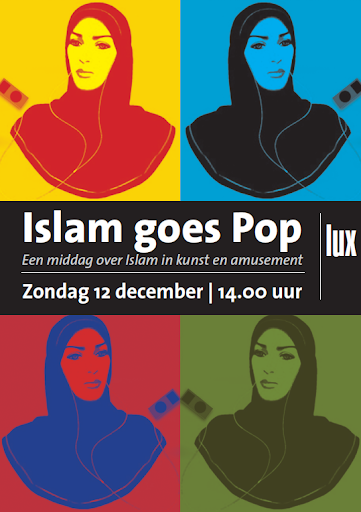 Zondag 12 december Van 14.00 tot 18.00 uur LUX, Mariënburg 38-39, Nijmegen
Halal-soaps, moslim-rap en een Afghaanse versie van American Idols. Hoe kijken mensen in de islamitische wereld eigenlijk naar dit soort vormen van ‘populaire cultuur’? Combinaties van kunst en amusement met religiositeit zijn voor hen niet altijd evident. Marokkaanse heavy metal fans en -muzikanten werden bijvoorbeeld gearresteerd op verdenking van Satanisme. In vele landen in de islamitische wereld vinden er debatten plaats tussen moslimgeleerden, politici, kunstenaars en publiek over de relatie tussen kunst en islam. Wat is toelaatbaar? Welke muziek mag je wel en niet maken? Mag een artiest een religieuze boodschap overdragen via punk-muziek of rap? Welke instrumenten mogen er wel of niet gebruikt worden? Wie bepaalt dat? Hoe pop is islam?
Het door de Nederlandse Organisatie voor Wetenschappelijk Onderzoek (NWO) gefinancierde onderzoeksproject ‘Islam and the performing arts in Europe and the Middle East’, uitgevoerd door de afdeling Islam en Arabisch aan de Radboud universiteit, onderzoekt deze en andere vragen. Met de Egyptische filmmaker Ismail Elmokadem over zijn nieuwste film Pop goes Islam, de islamitische muziekgroep El Waefa uit Den Haag en met Joseph Alagha, Nina ter Laan en Karin van Nieuwkerk van Islam en Arabisch aan de Radboud universiteit. Gespreksleiding is in handen van Chris Keulemans, voormalig directeur van De Balie.
Zondag 12 december Van 14.00 tot 18.00 uur LUX, Mariënburg 38-39, Nijmegen
Entree € 7,50 (€ 2,50 voor studenten op vertoon van collegekaart of OV-jaarkaart) Reserveren via 0900-5894636 (kassa LUX)
Meer info op www.lux-nijmegen.nl.
Georganiseerd i.s.m. Elan, expertisecentrum voor integratie, emancipatie en participatie.
Global is een project van LUX, lokaalmondiaal en het CIDIN van de Radboud Universiteit over globalisering en internationale samenwerking. Dit project is mogelijk gemaakt door de NCDO. Informatie over dit project vindt u op www.globaldebat.nl.
Cartoonesque 17: That is (not) funny!
Posted on November 9th, 2010 by martijn.
Categories: anthropology, ISIM/RU Research, Public Islam.
Jokes can be funny, or not. What matters is who has the power to define what is funny and what the position of the target of the joke is. It is the transgressive quality of jokes that makes them funny but also very suitable for political uses. Which jokes are made and the responses to these jokes reveal important processes, hierarchies and discourses in society.
In the next video you will see a famous (at least in the Netherlands) Dutch speed skater: Sven Kramer. He, of course, wins the race and then rips his suit so you can see his behind. The video is in Dutch, but is nevertheless comprehensible for non-Dutch speaking as well, I think. Try it:
The pizza guy in the last scene of the commercial says ‘What a failure’ and then the other people stop laughing. What is happening here? First you see how Kramer’s girlfriend laughs at him and then she plays the video again for her friends and then, I think, for the entire neighbourhood. All of them sort of belonging to the ingroup; friends, neighbours laughing amongst each other because of the failure of one them. The pizza guy who is there can laugh with them but he is an outsider and when in the end he says a little too loud ‘What a failure’ he transgresses the line. According to anthropologist Radcliffe-Brown the best joking relationship exists when two groups have ‘both attachment and separation, both social conjunction and social disjunction’. Take for example the Dutch jokes on the Belgians in which the latter group usually features as the dumb ones. The Dutch and Belgians are neighbours, they share each others language (between the Dutch and the Flemish anyway), they share a large part of history that still lives in on both countries. Nevertheless, or maybe because of those shared features, they also are separated and occupy different political and cultural positions nowadays. In the Belgian jokes, the Belgians become the stupid and funny versions of the Dutch.
Anthropology of Laughter and Humor – Open Anthropology Cooperative
Carty & Musharbash (2008) call a ‘sense of humour’ the “strangely nebulous heart of understanding, and belonging, within social relationships” (p. 209). Humour is seen as a boundary between in- and outgroups: “Laughter is a boundary thrown up around those laughing, those sharing the joke. Its role is demarcating difference, of collectively identifying against an Other, is as bound to processes of social exclusion as to inclusion” (p. 214, emphasis by the authors). And although humour and laughter are universals, “they remain intimately and often elusively localised in their nuance and content” (p. 213).
The video shows both: humor as a way to demarcate difference between the pizza guy as an outsider and the others as insiders. And among the insiders humor as a way to bond: they even get some food to share with each other and watch the video. Humor also draws people together. Depending on the context humor can be offensive (and in fact the offense is often part of the joke as it is intended to ridicule a particular group) but humor can also be protective against outsiders (when intended to protect the group from ridicule) and can be both at the same as well.
Humor is often build on stereotypes:
European Heaven And Hell
In Heaven…
* the mechanics are German
* the chefs are French
* the police are British
* the lovers are Italian
* and everything is organized by the Swiss.In Hell…
* the mechanics are French
* the police are German
* the chefs are British
* the lovers are Swiss
* and everything is organized by the Italians.
And consider the next joke used by Don L.F. Nilsen in a class about humor:
Why aren’t Jews concerned about the abortion controversy?
Because they don’t consider a fetus viable until after it graduates from medical school.
According to Nilsen if the tellers or listeners of this joke are gentiles, it may be anti-semitic, criticizing Jews as being overly ambitious and arrogant. But if the tellers or listeners are Jews, it may be an expression of Jewish pride and the extraordinarily high standards of child rearing. Nilsen goes on by saying:
When a group member tells an ethnic or religious joke, it opens the door for inner-group communication and invites group members to examine their attitudes and behavior.
But if outsiders tell the same joke, the effect is the opposite, because the outsider focuses on the group’s most obvious characteristics and implies that these characteristics belong to everyone in the group.
This is something that directly pertains to the video as well of course. And as mentioned before ridicule is often part of the joke because the ridicule is what makes it funny for one and offensive for the other. What is funny for one crosses the boundary of what is acceptable for the other. This means that power is also part of joking. Usually the targets of jokes are those groups that are at the periphery of society as Nilsen explains: migrants, ‘white trash’, mentally ill and so on. If these outsiders feel offended and complain about the jokes they ‘just can stand a joke’ sometimes attributed to their lack of integration, education or individual pathology. We could witness this phenomenon during the Muhammad Cartoons affair in which during the debates Muslims were sometimes envisaged as the ultimate Other and backward because they lack any sense of humor, fun and joy and therefore cannot laugh at themselves. Such a discourse makes people blind to the long standing traditions of jokes and humor that every group has, including Muslims with regard to religious matters but also in relation to politics. The discourse about Muslims without humor therefore served to strenghten the Muslims as being outside our ‘normal”secular’ ‘rational’ ‘modern’ public sphere. At the same time among the opponents of the cartoons often all of the cartoons were seen as offensive while in reality many people exhibit different responses to the different cartoons; some were really funny others were offensive and most of them are ambiguous. It shows the political uses of humor. Giselinde Kuipers in a very interesting exposé on the Muhammad Cartoons (asking herself why is it that cartoons are so important in this case) for example shows how every society knows it past controversies about humor going to far, social movements using humor and mockery to state their claims or opposing to particular forms of humor that transgres the boundaries of what, according to them, should be acceptable. In another article Asef Bayat shows how islamists use humor (or forbid or regulate fun) for their political messages.
Humor is a powerful political tactic because, as Kuipers explains, it leaves the target with only few elegant responses. In the above mentioned video skater Sven Kramer chooses to laugh along with the joke that is at his expense. What else can he do? An angry reaction would have made it only more funny, a violent reaction or forcing to not show the video anymore would have made the situation only more ridiculous for him. Because it is a joke people can say, come on this is only a joke, don’t take it so personally. If he objects he makes clear that is not ‘in on the joke’ the same way as some Muslims made clear that they were not in on the joke of the Muhammad cartoons. Not in on the joke results in saying I’m not in to your social conventions. And why are they not in to ‘our’ social conventions? Because they have a strict religiosity and religiosity is at odds with fun and humor according to some Islam pundits but also according to some religious puritans. Ignoring and laughing along are, according to Kuipers, the typical reactions of those with little power and objecting to humor by demonstrations, going to court or whatever, is the strategy of groups that aim to empower their constituency and at the same time a sign of a growing consciousness about themselves as part of a group that is being mocked. Responding, in particular by joking back, requires power as Kuipers explains, also because apparently some people have the power define what is humor and what is not, while others are in a subaltern position.
Of course, jokes can be used as well against people in power for example in the past when in the Netherlands humor was used to disparage the churches or, still, people in government. In that sense humor also has the quality the empower and is also a sign of already apparent self-respect and confidence. The difference is that the latter is part of a countermovement against those in power while Muslims in the West opposing to the Muhammad cartoons are the outsiders targeted by those who belong to the dominant majority. Now the Muhammad cartoons were, partly, produced as a result of an attempt to teach Muslims a lesson: that they should comply do the Danish standards of humor and religion criticism. But as Nilsen explains “because outsiders have little power to bring about internal change, the effect is to stereotype the group, and this lessens the chances for change”. If that is correct, the cartoons produced the opposite of what was intended actually by the pundits which as a result (for them) proves their point once more.
Nilsen, Alleen Pace, and Don L. F. Nilsen. “Just How Ethnic is Ethnic Humour?” Canadian Ethnic Studies/Études Ethniques au Canada 38.1 (2006): 131-139.
Nilsen, Alleen Pace, and Don L. F. Nilsen. “Ethnic Humor.” Encyclopedia of 20th Century American Humor. Westport, CT: Greenwood, 2000, 115-118.
Nilsen, Alleen Pace, and Don L. F. Nilsen, Eds. “Names and Ethnicity.” a Special Issue of Names 56.1 (March 2008): 1-54.
Nilsen, Don L. F. “Ethnic Humor.” New Mexico English Journal 6.2 (1991): 20-25.
Nilsen, Don L. F. Humor in Irish Literature: A Reference Guide. Westport, CT: Greenwood Press, 1996.
Rappoport, Leon. Punchlines: The Case for Racial, Ethnic, and Gender Humor. Westport, CT: Prager, 2005.
Image bites – The Great Burqa Robbery and other political ads
Posted on September 26th, 2010 by martijn.
Categories: Multiculti Issues, Public Islam.
The visual features of much of the modern mass media is important in understanding the use of films for distributing ones messages and signify a trend in which politics and public debate are not only about verbal arguments but also about visual narrative representations. The visual message literally makes visible the preferred perspective, while obscuring potential alternatives. In a compelling campaign the verbal and visual messages are carefully constructed and interact with social and cultural environments in ways which maximize their acceptance. At the same time given the ambiguity of visual communication the visual narrative is also vague and broad enough to enable to interpret the message in their own way. These features becomes clear for example when we look at a recent ad in the election campaign of anti-islam politician Geert Wilders:
Wilders beats the drum of mass migration directly linking it to Islam, Islamization and linking that to insecurity, crime, social welfare, rejecting ‘Dutch’ values and terrorist attacks by a combination of textual and visual narratives. DeLuca (1999) uses the phrase “image event” to refer to the media tactics of social movements. Such films were I think not meant by him as an ‘image event’ (take Greenpeace’s campaigns in media as prime example of such staged events) but Deluca’s analysis which shows that such events are examples of rhetoric that combines the verbal with the visual in order to achieve “critique through spectacle” (DeLuca 1999:22) is applicable here as well. Such ‘image’ events are usually about providing ‘fragments of arguments’ that break away from the established order, in this case on the one hand it taps into ‘common sense’ ideas about multiculturalism and Islamization while offering an alternative to analysis and explanations coming from what is perceived as the political elite. Showing airplanes (from a foreigh company) bringing in waves of migrants. Visual examples of mass migration such as women with headscarves and mosques, showing prisons, socialist politicians (in particular social democrat Cohen) that are lenient, sleepy and ‘drinking tea’ (as the metaphor of being too lenient and tolerant) and a showing a mosque under construction resonate with fears of people for Islamization and with anger about politicians who are too tolerant about intolerance and who are giving ‘our’ culture away.
Another ‘fine’ example is the recent ad by the Swedish Democrats:
While the counter in the video shows Sweden’s declining budget in this time of economic crisis, Sweden is swept by Muslim immigration visualized by Muslim women in burqa’s and with baby carriages. The particular images used in ‘image events’ can be seen as ‘image bites’ having similar persuasive effects as sound bites on viewers and their political understandings, in particular when it involves negative compelling images that elicit danger, fear, or disgust. The power of the visual rhetoric is, among other things, that it makes the message almost incontestable because reality is reduced in such a way as to be seen as inherent in the way things are. It turns complex issues into messages that appeal to people’s common sense.
Other videos invoke memories of the past in which Muslims conquered Jerusalem, Constantinopel and Cordoba and equating it with contemporary issues such as Park51:
This rhetoric, because it refers back to actual incidents and/or fears in which Muslims played a role and is informed by the widespread logic of culture talk, is predictable at the same time that it provides authority to the central message that Islam is a religion that incites to violence and hatred and that the native citizens will be the victims of Islamization.
H/T: Foreign Policy Blog, JH and MB
Wilders drags up outdated colonial rhetoric
Posted on August 20th, 2010 by martijn.
Categories: Guest authors, Multiculti Issues, Public Islam.
Wilders drags up outdated colonial rhetoric
Guest author: Michel Hoebink
‘Why did you become anti-Islamic and what is your message to Muslims? These questions were asked by Muslimsdebate.com to the Dutch politician Geert Wilders. In his reply, Mr Wilders describes Islam as fatalist, tyrannical, violent and irrational and as such as the cause of the lack of democracy and development in the Muslim World. All this in sharp contrast to Christianity and Judaism, which religions according to Mr Wilders encourage their followers to be rational and free. Only by liberating themselves from their religion, he says, Muslims will be able to develop their real potential.
Wilders’ argument is a perfect sample of 19th century ‘orientalist’ rhetoric. Apparently, the leader of the Dutch Freedom Party is unaware of the fact that this type of reasoning was effectively defeated in the 1970s by critics such as the Palestinian Edward Said. Such critics rightfully argued that world religions such as Islam do not have an unchanging essence which is either violent or peaceful or what ever. Throughout the ages, these religions have given rise to a great variety of currents and interpretations. Sure, there are violent currents in Islam, but there have also been plenty of believers who preached pacifism in the name of the same religion. And positive, there are fatalistic tendencies in Islam but there are also currents that preach individual freedom and responsibility, basing themselves on the very same sources. The Koran and the Prophetic traditions are so rich that anybody can always find something to support his case. In short, you can’t limit Islam to one of its historical appearances.
In the academic world, essentialist arguments such as those of Wilders and his 19th century predecessors are out. Individuals who have been following this academic debate since the 1970s, are perplexed when Wilders and his fellow contemporary Islam critics start to bring up these arguments again, as if nothing ever happened.
You can say it even more simple: History decisively proves that Wilders is wrong. If Islam would necessarily lead to fatalism, tyranny and underdevelopment, how is it possible that, from the 8th to the 14th centuries, powerful empires emerged under Islam where science, philosophy, art and architecture flourished on a level that left Europe far behind? And if Judaism and Christianity necessarily produce free and rational individuals, how to explain the Crusades and Inquisition in Medieval times and Nazism and Stalinism in the modern era?
What Wilders does in his argument is applying a classical but rather cheap rhetorical trick: Comparing one’s own virtues to the vices of the other. Following the same formula, rancid islamist authors in the Middle East write books about a despicable religion called Christianity which calls for murder and bloodshed in its sacred texts and whose followers practised these calls during the Crusades and in the present wars in Iraq and Afghanistan.
Wilders attributes economic and social failures in the Muslim World to Islam, which he views as a religion but also as a culture. In itself there is nothing wrong with such cultural explanations. Culture and religion may very well be forwarded as causes of economic and social failures, but the discussion should always be about a particular historical appearance of the culture of religion in question, not about a culture or religion as an unchangeable essence. That is where Wilders is wrong.
Interestingly, many Muslim reformers agree with Geert Wilders when he says that Islam is a ‘backward religion’. However, they speak about the present appearance of traditional Islam and not about an a-historical essence. They believe that the dominant form of traditional Islam, as it is followed by millions of contemporary Muslims, is in need of reform and modernisation. According to Wilders this is not possible. Islam, in his view, can never be reconciled with modernity. If Muslims want to modernise, if they want to embrace democracy and human rights, they will have to give up Islam.
The irony is that Wilders in this sense completely agrees with the fundamentalists, who just like him believe that Muslims have to choose between their religion and the modern world. And indeed: for Wilders, fundamentalist Islam is the only true Islam. ‘Pure Islam’, he calls it, following his mentor the controversial Dutch arabist Hans Jansen, who in turn shamelessly took it from the fundamentalists themselves. All other currents in Islam, in particular the more moderate and modern ones, are considered by Wilders and his mentor as ‘impure’ forms of Islam they prefer not to associate with. The late Egyptian Muslim reformer Nasr Hamid Abu Zayd, who pleaded for a historical reading of the Koran, was abhorrent to them.
In fact Wilders behaves like a believer. He takes side in a religious debate that as an unbeliever he could only describe. The Dutch arabist Robbert Woltering once made fun of this attitude in an ironic commentary in the Dutch daily NRC Handelsblad. It was about the Somali born Dutch MP Ayaan Hirsi Ali, who also frequently used the term ‘pure Islam’, just like Wilders following Hans Jansen.
Woltering is obviously amused. Ever since the coming of Islam, he writes, Muslims have been quarrelling about the question as to what is the correct interpretation of Koran and the Prophetic Traditions. Now, at a time that the answer seems further away than ever, this historical quest has come to an unexpected apotheosis in – of all possible places – the Dutch parliament, where Ms Hirsi Ali recently revealed that she herself has discovered the True Doctrine of Pure Islam!
Ayaan Hirsi Ali’s discovery, Mr Woltering continues, will most probably please Mohammed Bouyeri, the man who murdered film maker Theo van Gogh in the name of Islam. But it will be a disappointment for all those Muslims who mistakenly thought that Islam respects the rights of women and tells them to live in peace with their non-Muslim neighbours.
Mr Woltering, we like to hear more from you.
A well-known prophetic Tradition about fatalism versus the taking charge of one’s own fate: The prophet Mohammed was asked: ‘Should I tie my camel or should I trust God?’ The prophet answered: ‘Tie your camel and trust God.’
Michel Hoebink works for the Arabic department of Radio Netherlands World (RNW).
This article first appeared at Muslimsdebate.com. A version in Dutch can be found at Maroc.nl
De betwiste vrijheid van meningsuiting
Posted on May 6th, 2010 by martijn.
Categories: ISIM/RU Research, Multiculti Issues, Public Islam.
1. VvM betwist maar niet bedreigd
Wie durft tegenwoordig te pleiten voor het afschaffen van de vrijheid van meningsuiting? Enkele jaren geleden waren er her en der nog pleidooien te horen om de vrijheid van onderwijs af te schaffen en zelfs het verbod op discriminatie. Een enkeling durfde het zelfs aan om te bepleiten de vrijheid van religie maar af te schaffen. Dat heb ik bij de vrijheid van meningsuiting nog niet gehoord. Natuurlijk er zijn pleidooien om de vrijheid van meningsuiting te beperken, maar zelfs degenen die daartoe het lef hebben, komen woorden tekort om te benadrukken hoezeer zij houden van en belang hechten aan de vrijheid van meningsuiting. Het principe van de vrijheid van meningsuiting staat daarmee als een huis en zelfs de sterkste orkaan lijkt het niet omver te kunnen blazen. Integendeel, voortdurend wordt benadrukt dat de vrijheid van meningsuiting de kern is van onze democratie, meer nog van onze cultuur, Westerse waarden en identiteit.
Nou is de vrijheid van meningsuiting een transcendent begrip; het verwijst niet naar iets concreets, maar naar iets abstracts, iets dan groter is dan onszelf en tegelijkertijd de kern vormt van ons bestaan in het alhier. Om het concreet en tastbaar te maken en daarmee open voor betekenisgeving (en de betwisting daarover) heeft de vrijheid van meningsuiting martelaren gekregen in de personen van Pim Fortuyn en Theo van Gogh. De vrijheid van meningsuiting heeft haar reeks van heilige iconen; namelijk de Mohammed Cartoons. Kenmerk van iconen is dat zij niet zomaar staan voor de vrijheid van meningsuiting, maar dat zij de vrijheid van meningsuiting zelf zijn geworden en, omgekeerd, dat hun kenmerken ook weer de kenmerken zijn geworden van de vrijheid van meningsuiting. Natuurlijk is er censuur, maar probeer zelf even een afbeelding van de profeet Mohammed-in-berenpak van South Park te vinden. Het kostte mij 50 seconden. South Park speelde zelf al, geniaal, met zelfcensuur door de profeet niet te laten zien maar hem een berenpak aan te trekken. Die zelfgecensureerde afbeelding van de profeet werd vervolgens gecensureerd en is overal terug te vinden. Wat een zege voor de vrijheid van meningsuiting en wat een lange neus. Die martelaren en iconisering zijn belangrijk zoals gesteld want daarmee wordt de vrijheid van meningsuiting open voor betekenisgeving en tegelijkertijd ook voor twisten over die betekenisgeving. Vooral liberale secularisten lijken daarbij de opvatting te huldigen dat vrijheid van meningsuiting iets is dat geclaimd kan worden in plaats van toegekend. Maar als de claim van een absolute vrijheid van meningsuiting (dus zonder grenzen) tegenover die van anderen wordt gesteld die een nagenoeg onbeperkte vrijheid van godsdienst claimen of een onbeperkt verbod op discriminatie, dan zal dat debat alleen maar leiden tot patstellingen in plaats van oplossingen.
2. Gevalletje censuur en DeJaap
Een recente discussie DeJaap naar aanleiding van een gevalletje censuur van de South Park aflevering met de profeet Mohammed is exemplarisch. Dit gevalletje censuur gebeurde na dreigementen door radicale moslims…twee om precies te zijn. Joep Smaling stelde daarbij het volgende:
Een langzame knieval | DeJaap
De bewijzen stapelen zich op: bijna iedere dag vindt er wel ergens een zelfmoordaanslag plaats. Criticasters als Wilders, Hirsi Ali, Westergaard, Rusdie en nu zelfs de makers van South Park, moeten en zullen buigen voor de wetten van de radicale islam. De critici krijgen keer op keer gelijk. Maak in een cartoon duidelijk dat de islam velen tot geweld inspireert en je krijgt een golf van haat over je heen. Het pijnlijkste: de rij van bange politici en intellectuelen die zelfcensuur toepassen (onder het mom van ‘moraliteit’) en diegenen die dat niet doen en bedreigd worden, wordt steeds langer.
Verzet
Wat is de toekomst van het vrije woord? Overheden kunnen moeilijk iedereen met een pittige mening gaan beveiligen. Daar ligt de oplossing niet. De enige uitweg, het enige verzet dat vruchtbaar zal blijken, is massale solidariteit. Een enkel moedig individu dat de islam openbaar durft te kritiseren is weerloos en een makkelijk doelwit. Wordt het massaal gedaan en tonen media en andere partijen onderlinge verbondenheid, dan hebben de barbaren geen kans. Of toch wel: eventueel kunnen ze hun acties uitbreiden, bomaanslagen plegen, nog meer dood en verderf zaaien. Dan zal het leger moeten optreden. Het westen heeft maar een keuze: solidair verzet of knielen, een middenweg is er niet.
In feite roept Smaling daarbij op tot solidariteit met de bedreigden of zelfs oorlog tegen de ‘vijfde colonne’ die volgens hem daadwerkelijk actief is in Nederland bijvoorbeeld in de Moslimbroederschap. De reactie, ook op De Jaap, van Linda Duits was spot on:
Ultralinkse socioloog weigert weg te kijken | DeJaap
Het stuk van Joep Smaling is debiel vanwege de gechargeerde samenvoegingen die het bevat. Mensen die zeggen dat vrijheid van meningsuiting niet betekent dat je respect en fatsoen moet laten varen, worden door Smaling weggezet als tegenstanders van die vrijheid van meningsuiting. Hij noemt ze medestrijders van radicale islamieten. Hij maakt geen onderscheid tussen Islam en radicale Islam, tussen orthodoxe en militante Moslims. De aanwezigheid van Het Moslimbroederschap in Nederland is voor hem bewijs dat de vijand die Islam heet er in slaagt de Westerse samenleving van binnenuit uit te hollen.
Het stuk is onzinnig vanwege die apocalyptische visie op de staat waarin vrijheid verkeert in Nederland. Naast het feitelijk maken van een vijfde colonne, doet Smaling alsof er in Nederland een taboe heerst op zeggen wat je denkt. Critici van Islam zouden hun hoofd buigen en hun mond houden. Smaling zelf is als dat kleine dorpje in Gallië echter dapper. Hij durft wel nou eindelijk eens te zeggen waar het op staat. Applaus voor Smaling, ridder van het vrije woord. Smaling doorbreekt echter helemaal geen taboe. Op vele plaatsen spreken mensen dezelfde angst uit als Smaling. Op vele plaatsen wordt de Islam bekritiseerd. De vrijheid van meningsuiting wordt in Nederland uitgebreid verdedigd en besproken. Dat deze een farce zou zijn is niet waar.
Wat Smaling inderdaad doet is de vrijheid van meningsuiting verbinden aan de ‘ons’ categorie en intolerantie aan de ‘zij’ categorie: moslims. Daarmee hanteert hij een opvatting van de vrijheid van meningsuiting die als een recht dat geclaimd kan (en moet) worden in plaats van iets dat toegekend kan worden om een arena van vrije discussie te genereren en gewelddadige conflicten te voorkomen. Opvallend is daarbij dat destijds het publiceren van de Mohammed cartoons op basis van de vrijheid van meningsuiting juist leidde tot enkele gewelddadigheden in het Midden-Oosten. Verbonden met die vrijheid van meningsuiting als claim is het punt dat zowel religieuzen als secularisten de publieke ruimte betreden met claims van hun eigenheid, in het geval van Smaling en anderen is de vrijheid van meningsuiting centraal in die eigenheid. Daar horen moralistische claims en eisen bij zoals een teken van moslims dat zij hun loyaliteit aan de vrijheid van meningsuiting betuigen en daarmee aan ‘onze’ waarden en zo het sein afgeven dat zij aan de ‘goede’ kant staan. De vrijheid van meningsuiting krijgt daarmee totalitaire trekjes en komt los te staan van de oorspronkelijke bedoeling van vreedzame conflictbeslechting en kritisch debat in een open democratie. Zo stelde Hirsi Ali naar aanleiding van de rustige reacties van moslimorganisaties op de film Fitna:
Fitna is een blamage voor het kabinet – Opinie – de Volkskrant
Fitna heeft zijn waarde al bewezen. En het blijft niet bij de wijze woorden van Aboutaleb alleen; andere islamitische groepen in Nederland zijn al bezig een tegenfilm te maken. Een tegenfilm, geen bloedvergieten! Woorden met woorden, beelden met beelden. Provocatie werkt dus.
Zes jaar geleden vond Aboutaleb kritische vragen over de islam ‘pissen in het eigen nest’. En nu spreekt hij de enige juiste woorden. Zonder provocerende vragen te stellen, hadden we dit nooit bereikt.
Het afwijzen van kritiek op islam is dus fout en Aboutaleb’s reactie laat zien dat hij dat geleerd zou hebben na de vele provocaties. Of, zoals een reaguurder op Geenstijl recent zei, bek houden en eelt kweken. De vrijheid van meningsuiting wordt ingezet om moslims de mond te snoeren in een situatie, mede geschapen door de zogenaamde islam-critici, waarin de wij-zij tegenstelling hoogtij viert. Dat verklaart waarschijnlijk mede de denigrerende reacties aan het adres van Linda Duits, niet in het minst door Joep Smaling zelf in zijn repliek:
Een langzame knieval (2) | DeJaap
Zoals een collega erudiet omschreef: daarvan moet ik in een hoekje gaan staan kotsen. Puur uit onbegrip en machteloosheid. Als ik een radicale islamiet was zou ik nu hele nare dingen met Linda willen doen, er zijn veel precedenten die tot de verbeelding spreken, maar dat ben ik niet. Ik kan een betoog gaan houden en argumenteren tot ik blauw zie, maar waarom zou ik niet gewoon de feiten laten spreken? Daaraan vooraf wil ik – genuanceerd als ik ben – toevoegen: feiten hebben duiding nodig en moeten in de context geplaatst worden. Toch neemt dat niet weg dat concrete aanvallen op het vrije woord alomtegenwoordig zijn.
[…]
Ik kan natuurlijk nog even doorgaan, maar ik hoop dat mijn punt duidelijk is. De vrijheid van meningsuiting staat onder druk. Natuurlijk zijn er ook bedreigingen geuit door niet-moslims. Ook zij brengen het vrije woord in gevaar. Zelfs Wilders, met zijn domme oproep de Koran te verbieden, is een bedreiging voor de vrijheid van meningsuiting.
Is mijn visie apocalyptisch? Misschien, maar is de werkelijkheid en de toekomst van het vrije woord niet in gevaar? Zeer zeker. Wil je dat ontkennen? Prima, maar besef wel dat je de vrijheid van meningsuiting in de rug steekt.Er vierkant achter staan
Natuurlijk zegt Duits: “Dat doet niets af aan het belang die vrijheid van meningsuiting te beschermen. Het doet niets af aan het belang doodsbedreiging te veroordelen. Ik sta daar vierkant achter.” Het is een nogal aparte manier van er vierkant achter staan. Het is tegelijk een hele typische manier van ‘er achter staan.’ Op die manier staan heel veel mensen ‘achter’ de vrijheid van meningsuiting. Het is het bagatelliseren van de feiten, het in de steek laten van die vrijheid, het voor lief nemen van die vrijheid en maar niet willen inzien dat die onder druk staat.
In feite wordt daarmee de integriteit van Duits in twijfel getrokken; een nogal laag bij de grondse streek voor iemand die inderdaad zeer eenzijdig het probleem bij de moslim legt. Als Smaling serieus zou zijn geweest in zijn verdediging van de vrijheid van meningsuiting had hij ook de dreigementen richting Abdul-Jabbar van de Ven meegenomen, de pogingen om Khalid Yasin het spreken onmogelijk te maken, de geslaagde poging om Tariq Ramadan eruit te werken, de inmiddels indrukwekkende reeks van brandstichtingen van moskeeën, het feit dat ik (schreef de gek) schijnbaar geen lezing op de VU kan houden zonder dat er extra beveiliging moet zijn vanwege reacties uit radicaal-rechtse hoek of het feit dat Geenstijl bewust naar mijn en andere websites linkt om die plat te leggen, de oproepen in het verleden om de AEL te verbieden (alvoor die in Nederland gevestigd was), het uitzetten van imams omdat hun preken onwelgevallig zouden zijn, de commotie over de ‘banned frank’ kaart van boomerang, de veroordeling in het parlement van de politie die het gewaagd had om een student te arresteren die jihad-vlaggen weg had gehaald en zo kunnen we nog wel even door gaan. Niets van dat alles. Met name de controverse over de jihad-vlaggen en Anne Frank tonen aan dat ook aan seculiere zijde mensen beledigd kunnen worden en actie ondernemen om hun gevoel maatgevend te maken voor wat er in een publieke ruimte te zien of te horen mag zijn. Of zijn die inperkingen van de vrijheid van meningsuiting wel legitiem? En wat te denken van andere vormen van beperking zoals de wetgeving over copyright, sex met kinderen, belediging, smaad en laster enzovoorts.
3. Vrijheid van Meningsuiting uit balans
De grootste bedreiging voor de vrijheid van meningsuiting zijn niet zozeer de radicale moslims met (hun dreiging van) geweld; zij maken de waarde van de vrijheid van meningsuiting als heilig symbool alleen maar sterker. De grootste bedreiging wordt gevormd door degenen die de wij-zij tegenstellingen aanwakkeren door eerst over de kook te raken van dreigementen van twee moslims en vervolgens alle moslims daarvoor verantwoordelijk te maken. Zij sluiten hen buiten sluiten van onze morele gemeenschap en iedereen die een tussenpositie in neemt (of geen positie) wordt ingedeeld in het kamp van de vijand die uiteindelijk met geweld bevochten dient te worden.
De controverse die iedere keer ontstaat na publicatie van een van de Mohammed cartoons of ditmaal South Park (of de censuur daarop) is dan ook niet alleen te herleiden tot gekwetste gevoelens over de bespotting van een profeet die als dierbaar gezien wordt, maar ook tot pogingen van ‘verlichte Westerse denkers en staten’ om moslims en hun gevoeligheden te onderwerpen. Dit laatste zorgt ervoor dat er vaak een veel grotere groep moslims zich druk maakt in die controverse dan die enkele militante activist. Controverses zoals deze zijn onderdeel van een veel breder conflict over de inrichting en aanzicht van de public sphere waarbij militante religieuze groepen zich weigeren neer te leggen bij het idee dat religie privé hoort te zijn en secularisten zich beijveren tot een homogenisering van de public sphere door verdergaande secularisering en het eisen van loyaliteit aan een ideale voorstelling van wat westerse seculiere waarden zouden zijn.
Dat grondrechten (bijv. de vrijheid van meningsuiting en vrijheid van godsdienst en het verbod op discriminatie) voortdurend botsen, is geen probleem. Sterker nog, dat is het hele idee. Het gaat juist om het in balans houden van de verschillende rechten die mensen hebben en er voor te zorgen dat geen van de rechten absoluut wordt ten koste van de ander. Die erkenning lijkt er nauwelijks te zijn in het verhaal van mensen als Smaling. Integendeel er hoeven maar twee moslims iets te roepen over een televisieprogramma en men ervaart een zoveelste frontale aanval op de vrijheid van meningsuiting. Smaling manoeuvreert zich daarmee in de positie van slachtoffer, de onderliggende partij, precies zoals die twee radicale moslims die protesteerden tegen deze South Park aflevering ook deden. Het is van beide zijden een tactiek in de publieke discussies die voorkomt dat men inhoudelijk moet in gaan op elkaars zaak (en daarmee onvermijdelijk nuances gaat aanbrengen zoals Linda Duits wel doet). Het is een tactiek die ertoe leidt dat de mening van de ander irrelevant wordt als zijnde een kwestie van intolerantie, haat, angst en irrationeel gedrag; niet de moeite waard om mee te discussiëren. Dit maakt de vrijheid van meningsuiting tot een volledig leeg en overbodig begrip; daar zit wel degelijk een dreiging dus voor de vrijheid van meningsuiting. Temeer omdat seclaristen een overheid achter zich hebben die wel degelijk vooral (maar zeker niet alleen) moslims de dupe maakt van een bestrijding van radicale ideeën (bijvoorbeeld door de uitzettingen en politici die proberen bepaalde geestelijke leiders tegen te houden, het burqa/niqab verbod, veroordelingen tot terrorisme mede op basis van het hebben van jihad-lectuur). Dat maakt hen gevaarlijker voor de vrijheid van meningsuiting dan die twee moslims die boos waren over South Park.
Ik schreef al eerder over een stuk naar aanleiding van de genoemde discussie op DeJaap; ook de status van sociaal-wetenschappelijke kennis kwam daar namelijk aan bod. Daar kunt u HIER over lezen.
BBC Heart and Soul – Muslims in Amsterdam
Posted on April 27th, 2010 by martijn.
Categories: Multiculti Issues, Murder on theo Van Gogh and related issues, Public Islam, Religious and Political Radicalization, Ritual and Religious Experience, Young Muslims.
Roger Hardy is one of the best journalists when it comes to religion and how religion affects people’s daily lives. Right after the murder of Theo van Gogh he made a program about Dutch Muslims. He also documented his findings in a book the Muslim Revolt. A few weeks ago he returned to the Netherlands:
BBC – BBC World Service Programmes – Heart And Soul, Muslims in Amsterdam 28/04/2010
to see how the Moroccan Muslim community has fared since – and to meet a group that seldom makes the headlines: Moroccan Muslim women.
Among them, he finds young, highly successful power women.
Among them Fatima Elatik, mayor of the multi-cultural district of Zeeburg, who combines her headscarf with a determination not to let young Muslims to be restricted by the Islam label;
and Samira Bouchibti, an MP who speaks on gay rights for the Dutch Labour party – a highly unusual brief for a Muslim woman.
But Roger also wins the trust of women from very traditional backgrounds – like Rahma, a grandmother who’s learning how to read and write in her 70s.
Join him and find out why in 21st century Amsterdam, it’s easier to be called Fatima than Mohammed.
Illustration above of Fatima Elatik, the young and outspoken district mayor of Zeeburg in Amsterdam.
On Wednesday 28 March 2010 his report will be broadcast on BBC’s Heart and Soul at 12.32 (GMT+1), after the show you listen to the podcast available at the website.
UPDATE
The podcast is available now. You can download it HERE.
Re-inventing Islamic law practices in the Netherlands
Posted on April 26th, 2010 by martijn.
Categories: Multiculti Issues, Public Islam.
In order to understand contemporary practices of Sharia we have to look at the interplay between legal discourse and social practices. Do legal discourses have a decisive impact on people’s lives or are the legal texts irrelevant and how do the daily practices of people influence legal texts? How does the plurality of practices relate to people’s differences in geographic and ethnic backgrounds, local practices, interpretations and traditions and migration histories. For example with regard to marriages a few Muslims in the Netherlands have introduced the concept of Islamic marriages whereby a couple gets married in the presence of an imam. Viewed as obligatory according to Islamic law to have an imam present, this is actually a new practice that differs from practices in let’s say Morocco or Pakistan. We have little systematic knowledge of this re-invention of law practices in the Netherlands and we should view the report as the authors have stated as well, as a first step. Other researches for example pertain to Islamic house purchase loans in Britain and Shiite perspectives on Kinship and New Reproductive techniques.
In recent years in particular the development of a jurisprudence of minorities, fiqh al-aqalliyat has sparked much interest among Islamic scholars. It is the result of an acknowledgement among these scholars that classic Islamic law does not provide answers and solutions for Muslims living in countries without a Muslim majority. The fiqh al-aqalliyat is an attempt to reconstruct Islamic legal theories pertaining to questions of Islamic law among for example Muslims living in Europe. Nevertheless, many issues discussed under the label of jurisprudence of minorities are heavily debated in Muslim majority countries as well and fiqh al aqalliyat seems to make European Muslims as an exception instead of a case that might lead to a change in Islamic law as a whole. An important authoritative body in this regard is the European Council for Fatwa and Research headed by Yusuf al Qaradawi. ISIM Newsletter 12 contains some information and several references about this fiqh al-aqalliyat).
Since the reconstruction of Islamic law by Muslim minorities is partly based upon the questions and challenges they meet in their daily lives in Europe, this reconstruction cannot be understood without taking into account the debates about Sharia in wider society. The concept of Sharia is interpreted in the Netherlands in a very negative way. A few years ago when the then Minister of Justice Donner stated that if two-thirds of the country wants sharia, the Netherlands will have a sharia, he caused a very fierce and emotional debate in Dutch society. Although for many Muslims, but certainly not all, sharia means progress, dignity, justice and righteousness, order instead of chaos for many Dutch people Sharia is associated with medieval practices. And indeed to some extent Islamic laws are at odds with international human rights. On the other hand however the negative picture of sharia is unjustified because the reality of Islamic law practices is not as black and white as some critics suggest and for example application of sharia rules in some cases does not lead to restrictions for women (as is often feared) but also to a stronger position of women for example with regard to forced marriages. Also Islamic laws have mostly been very flexible throughout the ages and very easy to integrate with common law practices and some scholars therefore state that is no problem to integrate Islamic law with human rights. Furthermore, although it is quite understandable that the public focuses on cutting off hands, stoning women and son, sharia is mostly about how a believer prays, fasts, pays the alms tax, or performs the pilgrimage and other aspects involving people’s daily lives.
One of the issues at stake of course is whether we want to allow religious groups to settle their affairs amongst themselves or do we require them to go to civil courts for every issue? Should the Netherlands have a unitary legal system? If that really is the plea of the opponents of an Islamic legal system, then we should ban the Jewish courts and the courts of the Catholic church (as well as their pastoral services) as well. The Netherlands as many other European countries already have legal pluralism certainly when we take into account that informal local norms have always existed side by side and interacting with formal law. Important in this regard is that there has never been a call by Dutch Muslims to have separate family laws only for Muslims. Some practices such as polygamy have been dealt with in the past but there is no plea for a coherent legal system for Muslims. Even in the case of advice and mediation European laws in most cases define the answers given by Islamic scholars and imams for example in the case of divorce where the ECFR follows the principles of European law and have stated that Muslims must comply with the law of the country of residence. A research conducted a few years ago half of the research population of Muslims opted for a political party of Muslims and one third of them wanted the party based upon sharia; the answers however they gave on what exactly sharia is are so diverse that is impossible to define what it means if they say they want a party to be based upon sharia. The same differences in opinion were visible in a tv program about the report where the researchers discussed the item with other people. In this tv program British scholar Haitham al-Haddad was interviewed who stated that he was in favour of introducing Islamic legal system in Europe but that it was not feasible. His view was supported by one Muslim in the audience but contested by others who stated that they did not want to live under such interpretation of sharia (an interpretation that included penal laws such as cutting off hands) and who thought that harsh and cruel punishments are not necessary in contemporary circumstances.
There are of course real legal issues pertaining to minorities who, for example, with regard to marriage and divorce still have deal with both the legal system of the country of residence and of the country from which they come from. Sometimes these national laws are influenced by Islamic legal doctrines. It is to forbid polygamy in one country even when it is allowed (albeit restricted) in the country of birth. But what to do with the children a man has with his 2nd, 3rd or 4th wife? Islamic marriages may or may not be allowed, but the fact is that it is very easy to circumvent restrictive measures in a country such as the Netherlands that recognizes sustained, non-religious informal ways of co-habitating between people. It is easy to shout no to Sharia or be in favour of a unitary law, but reality on the ground is much more complex. At the same we already have special laws, or plans to that effect, pertaining to Muslims such as the ban on the burqa and niqab in schools, debates about a law against female circumcision (although not specifically an Islamic practice, in the Netherlands often Muslims (as an ethnic background) are involved) and debates about a law forbidding forced marriages). The crude Dutch debate over sharia that seem to be informed more by anxieties and frustrations, partly based upon misunderstandings of (the reconstruction of) Islamic law practices among Muslims, a one-sided negative portrayal of sharia in the media and fear of Islam and Islamization in general, blocks a thorough debate over those issues. This is nothing new of course, read for example Anna Korteweg’s article on the Sharia debate in Ontario,Canada, Katja Jansen Fredriksen’s article on Sharia in Norwegian Courtrooms,. A reasonable at this moment seems to be impossible because every little compromise over Islamic law practices is interpreted as a sign of islamization and a breach of Dutch culture.
![Reblog this post [with Zemanta]](http://img.zemanta.com/reblog_e.png?x-id=92f88fe2-da7c-452b-aead-631a003a7dd8)
De toelaatbaarheid van zelfmoordaanslagen
Posted on April 21st, 2010 by martijn.
Categories: International Terrorism, Multiculti Issues, Public Islam, Religious and Political Radicalization.
Er is ophef over FIOE conferentie in mei in Amsterdam. De Telegraaf weet te melden dat Amsterdam een ‘broedplaats‘ is voor beruchte moslimbroeders en dat de conferentie mede wordt georganiseerd door de International Union of Muslim Scholars die geleid zou worden door sheikh Yusuf al-Qaradawi die (oh jee) fatwa’s uitgevaardigd zou hebben waarin zelfmoordaanslagen worden goedgekeurd. Een klein overzichtje:
Spoeddebat over Islamconferentie – Binnenland – Telegraaf.nl [24 uur actueel, ook mobiel] [binnenland]
e Tweede Kamer wil een spoeddebat met minister Ernst Hirsch Ballin (Justitie) over een conferentie eind mei in Amsterdam over de toekomst van de islam in Nederland. PVV’er Raymond de Roon, die het initiatief nam tot het debat, wil weten wat de betrokkenheid is van de fundamentalistische Moslimbroederschap bij de bijeenkomst.
Ook vraagt de PVV of buitenlandse deelnemers kunnen worden geweerd door hun geen visa te geven. De Kamer wil er voor eind mei met de minister over praten.
Nederland Moslimgidsland | De Dagelijkse Standaard
Welkom in Nederland. Hier krijgt u alle ruimte de kuff?r te beledigen en andersdenkenden te bedreigen. Ga gerust uw gang. Maak van uw hart geen moordkuil. In dit land van tolerantie zijn er verscheidene linkse politieke partijen die luid applaudisserend uw gedachtegoed zullen sponsoren en tot wet verheffen.
Conferentie Moslimbroederschap in de RAI – AmsterdamPost
Een internationale bijeenkomst van o.a. de beruchte Moslim Broederschap vindt komende maand plaats in Amsterdam. De conferentie wordt georganiseerd door de Federatie Islamitische Organisaties Nederland (FION) op 28, 29 en 30 mei 2010 in de RAI. Doel is een constructieve dialoog op gang te brengen tussen moslims en andere religieuze, politieke en intellectuele bewegingen in Nederland. De Moslim Broederschap organiseert een programma-onderdeel. Een woordvoerder van de FION weerspreekt dat tegen AT5. Het is echter niet uit te sluiten dat aan de broederschap gelieerde personen aanwezig zullen zijn, zo zegt hij.
CAPRICIO ITALIANO: LIEVE KLEINE MUZEL-LIEVERDJES
Er zeker van te zijn dat er niemand van ons die Muzel-lieverdjes een strobreed in de weg zou leggen, al houden die nog zoveel bijeenkomsten! Wij weten dat (bij ons) de Staatsvuiligheid maar ook het CGKR waakt. Daarvoor oefenen wij al geruime tijd om ons hoofd zodanig te slapen te leggen, dat wij binnenkort hopen te kunnen slapen op beide oren. Mocht U deze houding eveneens verkiezen uit te proberen weet dan dat er anatomisch gezien, gevaar dreigt voor verstikking. Ik denk dat hier een brede markt open ligt voor hoofdkussens (oorkussens?) die tegemoet k;omen aan de dringende behoefte (zolang de Moslim-dreiging niet acuut is) om te kunnen slapen op beide oren. Eenmaal die dreiging omgezet is in werkelijkheid is de noodzaak om op die manier te slapen dan ook niet meer nodig. Als U überhaupt dan nog goesting hebt om te slapen. Want er zal moeten gewerkt wordn!
Ja, natuurlijk, de Nederlandse ‘Recherche’ (AIVD) en sommige racistische politici in Polderland zien graten in een bijeenkomst, geleid door een fatwa-zieke sjeik, maar zolang Geert Wilders daar geen FITNA-film over maakt, is er geen vuiltje aan de lucht. Misdaden begaan wordt in Polderlad, net als bij ons, door de vingers gezien, of vergoelijkt. Maar die misdaden aanklagen! Hola! Daar staan strenge straffen wegens racisme en haatzaaierij op, en jaren eenzame opsluiting. Uiteraard zonder hoofdkussen om op beide oren te slapen.
Alleen zijn er, wat die Moslims blijkbaar niet goed beseffen, in onze contreien zo van die ongelukkige wetten. En beweren dat de Holocaust een straf is/was van God (dewelke? Naam en adres? Getuigen?) : daarmee wordt niet gelachen! Zes miljoen doden, als straf van Allah : daarvoor is de negatie-wet uitgevonden en daarin staat niets over eender welke God!
Met Araben echter moet men altijd uit de doppen kijken! Met ‘een straf van God’ bedoelen ze misschien ‘een straf van Hitler’, zodat ze impliciet daarmee bedoelen dat Hitler gehandeld heeft als een God, ja zelfs misschien een God was/is….En aangezien ze een hoge dunk hebben van zichzelf, gaan ze de Holocaust misschien nog eens overdoen. Want, staat op hun opschriften, de echte Holocaust moet nog komen!
howardommel: Kamer wil spoeddebat over Islamconferentie
“Hierdoor wordt duidelijk aangezet tot geweld”, concludeert De Roon. “En dat kunnen we in Nederland natuurlijk niet hebben.” Hij wil opheldering over wat de regering weet over dit congres. Als het aan de PVV’er ligt, worden er geen visa uitgedeeld aan congresgangers die de oproep van de sjeik steunen.
De Moslims Komen! – The Amazing Retecool, Sursum in Vestri Rectum
Uiteraard zijn er wederom geen concrete aanwijzingen voor gevaar, maar vervalt ook de AIVD, net als haar collega’s van NCTB in veronderstellingen: ““…Hoewel de Moslimbroederschap vooral lijkt te streven naar het creëren van een moslimvriendelijk klimaat in Europa, is het voorstelbaar dat de zeer orthodoxe interpretatie van de islam op gespannen voet komt te staan met de beginselen van de democratische rechtsorde…””. Officieel heeft de Moslimbroederschap overigens geweld afgezworen, maar haar motto zegt genoeg: ““…Allah is ons doel, de profeet is onze leider, de Koran is onze wet, Jihad is onze manier, sterven voor Allah is onze grootste hoop…””.
hoeiboei: Het stadsdeel, de moskee en de Moslimbroeders
Hoewel de Moslimbroederschap vooral lijkt te streven naar het creëren van een moslimvriendelijk klimaat in Europa, is het voorstelbaar dat de zeer orthodoxe interpretatie van de islam op gespannen voet komt te staan met de beginselen van de democratische rechtsorde.”
Genoemde FION is de Nederlandse tak van de Europese Moslimbroederschap. Daarover kan ondanks enkele door Bouyafa gewonnen processen geen enkele twijfel meer bestaan sinds 21 april 2009, toen minister Guusje ter Horst (PvdA) Kamervragen beantwoordde van SP, VVD en PVV. De Kamerleden wilden meer weten over de bemoeienis van de FION met een nieuwe moskee in het Amsterdamse stadsdeel Slotervaart. Ter Horst destijds: “Op Europees niveau heeft de Moslimbroederschap zich vooral georganiseerd via de Federatie Islamitische Organisaties Europa (FIOE). De Federatie Islamitische Organisaties Nederland (FION) is aangesloten bij deze Europese koepelorganisatie.”
Nederland, weer een stapje achteruit | Geen Nieuws
En terwijl in Frankrijk, zoals vandaag bekend werd de wetgeving t.a.v. het dragen van de Burka en de Niqab er doorheen gaat komen, de wet geniet de ruggesteun van de meerderheid van het parlement, gaan wij zoals de zaken er nu voor staan, in ons land er weer een stapje op achteruit, door een van extremistische gedachten en daden verdachte organisatie in Amsterdam toe te laten voor een vergadering,
Plein 2010: Nederland, het Centrum van de Islam (Voor Even)
Terwijl de Algemene Inlichtingen en Veiligheidsdienst (AIVD) net het sein ‘brand meester’ had gegeven voor wat betreft de nationale veiligheid, worden we er vandaag al weer aan herinnerd, dat in bredere zin de veenbrand onderminderd door woedt. De teller van aanslagen gepleegd sinds 9/11 in naam van de ‘religion of peace pieces’ staat vandaag op 15.152.
De Telegraaf meldt ons dat Nederland zich erin mag verheugen volgende week het toneel te zijn van een heuse conventie van de Moslim Broederschap
Nou zijn de meeste van deze sites niet al te serieus te nemen wanneer het gaat om islam, moslims en de moslimbroederschap. Zoals ik vorige week al vermeldde toen ik de desbetreffende conferentie hier al aankondigde:
C L O S E R » Blog Archive » Muslim Brotherhoods in the Netherlands
Also, contrary to popular belief, the Muslim Brotherhood is not a hierarchical organization that is organized in one particular centre. Given the ‘considerable‘ variation between the group’s different branches and tendencies (at least in competition with each other and sometimes hostile) that should not be conflated, it is therefore better to talk about networks of Muslim Brotherhoods.
De interne verschillen zijn daarbij inmiddels zo groot geworden, onder meer over de toelaatbaarheid van geweld en de positie van moslims in Europa, dat de naam Moslimbroederschap vooral nog iets zegt over wortels en inspiratie van de netwerken, maar niet noodzakelijkerwijze nog iets over de daadwerkelijke praktijken. Wat voortdurend naar voren komt in ieder geval is wel de relatie tussen de moslimbroederschap en geweld en die tussen Qaradawi en de toelaatbaarheid van zelfmoordaanslagen. Laten we in ieder geval die van Qaradawi hier eens onder de loep nemen, maar eerst wat meer in het algemeen over zelfmoordaanslagen.
Het is niet natuurlijk niet voor niets dat er voortdurend een verwijzing is naar zelfmoordaanslagen. Klaarblijkelijk is dat een strategie die onze haren recht overeind doet staat. Eentje die daarom te onderscheiden valt van reguliere en legitieme vormen van oorlogsvoering. Dat laatste kan soms noodzakelijk zijn, maar terrorisme is altijd fout en zelfmoordaanslagen misschien wel het allerfoutst. Antropoloog Talal Asad heeft daar in een exposé ‘on suicide bombing’ belangrijke dingen over geschreven:
Talal Asad: Thinking about “Just War”
In liberal political thought the modern sovereign state has an absolute right to defend itself, a defense that may — as the International Court of Justice has held — legitimately involve the use of nuclear weapons. Hence suicidal war with incalculable global consequences exists in the liberal imagination as a legitimate form of self-defense.
This leads me to the thought that the suicide bomber belongs in an important sense to a liberal tradition of armed conflict for the establishment or defense of a national community: To save the nation (or to found its state) in confronting a dangerous enemy, it may be necessary to act without being bound by ordinary moral constraints. To recognize that there are moral absolutes and at the same time to agree that sometimes they must be set aside is a well-known contradiction central to liberalism.
[…]
First, an unexpected suicide is always shocking, especially so when it also occurs in public, and when it involves the shattering of other human bodies and their belongings, a sudden disruption of the patterns of everyday life, a violence in which death is unregulated by the nation state. Warfare, of course, is an even greater violation of civilian “innocence,” but ideas have sedimented in us so that we regard war in principle as legitimate even when civilians are killed — in principle deaths in war (however horrible) are necessary for the defense of “our form of life.”The second reason is that crime and punishment, loss and restitution, are impossible to separate when the act of killing is also the act that removes the killer beyond justice. Since that separation is essential to the functioning of modern law on which liberal identities — and freedoms — depend, deaths in suicide operations are especially intolerable.
Third, there are the tensions that typically hold modern subjectivity together: between individual autonomy and collective obedience to the law, between reverence for human life and its legitimate destruction, between the promise of immortality through political community and the inexorability of decay and death in individual life. These tensions are necessary to the liberal democratic state, the sovereign representative of a social body, but they threaten to breakdown completely when a sudden suicide operation takes place publicly and when its politics is seen not to spell redemption but mutual disaster.
Finally, I suggest the possibility that a highly emotional thought may impose itself on witnesses belonging to the secular Judeo-Christian tradition: the thought that the meaning of life is death and only death, that it is not death that is contingent but life. Catastrophic and brutal death could therefore be, as the crucifixion taught believing Christians, an occasion of love for all the dead, but for reasons I have just enumerated above this is impossible on the occasion of a suicide bombing.
Ook al lijkt Asad in zijn boek soms wat al te zeer in beslag genomen te zijn door zijn woede over de Amerikaanse oorlogsmisdaden en verschrikkingen en over collega wetenschappers die dat niet ter discussie stellen, is het boek zeer aan te raden. Asad stelt eigenlijk het onderscheid tussen soldaten en terroristen ter discussie, vraagt zich af wat terrorisme nu eigenlijk is en waarom welke vormen van geweld legitiemer lijken te zijn dan anderen in relatie tot ideeen over beschaafd en barbaars, westers en niet-westers, seculier en religieus.
Qaradawi’s standpunten over de legitimiteit van geweld en zelfmoordaanslagen roepen dan ook begrijpelijkerwijze veel weerstand op en het is ook geen wonder dat de nuance in zijn standpunten volledig verloren gaat. Kort samengevat borduurt hij voort op het klassieke onderscheid tussen een offensieve en defensieve geweldadige jihad. De eerste is volgens hem in onbruik geraakt aangezien moderne media het mogelijk maken dat de islam op vreedzame wijze verspreid wordt zoals in vroegere tijden ook wel via de handel gebeurde. De tweede, defensieve jihad, verwijst naar specifieke gebieden zoals Israël, Tsjetsjenië en Kashmir waar moslims volgens hem aangevallen worden. Qaradawi heeft de aanslagen van 9/11 e.d. afgewezen, maar in bijvoorbeeld het geval van Israël ziet hij het verzet niet alleen als legitiem maar zelfs verplicht en zijn zelfmoordaanslagen toegestaan. In het geval van Israël namelijk gaat het om ‘gemilitariseerde’ forenzen, terwijl het in het geval van de bomaanslagen in London bijvoorbeeld gaat om onschuldige burgers volgens Qaradawi.:
Must Innocents Die? The Islamic Debate over Suicide Attacks :: Middle East Quarterly
“I am astonished that some sheikhs deliver fatwas that betray the mujahideen, instead of supporting them and urging them to sacrifice and martyrdom,” announced Qaradawi.[8] Responding specifically to the imam of Mecca, Qaradawi stated, “It is unfortunate to hear that the grand imam has said it was not permissible to kill civilians in any country or state, even in Israel.”[9] Qaradawi based his opposition to these fatwas on the premise that Israelis were not civilians but rather combatants in a war of occupation waged against the Palestinians. He argued that
Israeli society was completely military in its make-up and did not include any civilians … How can the head of Al-Azhar incriminate mujahideen who fight against aggressors? How can he consider these aggressors as innocent civilians?[10]
While sanctioning suicide attacks against Israelis, Qaradawi quickly condemned the September 11 attacks against American civilians, claiming that “such martyrdom operations should not be carried out outside of the Palestinian territories.” Attempting to differentiate between terrorism and “martyrdom,” Qaradawi declared, “The Palestinian who blows himself up is a person who is defending his homeland. When he attacks an occupier enemy, he is attacking a legitimate target. This is different from someone who leaves his country and goes to strike a target with which he has no dispute.”[11] Qaradawi distinguished “martyrdom operations” from terrorism as an act of self-defense and thus a legitimate form of resistance. He continues: “The Palestinians have a right to defend their land and property from which they were driven out unjustly…the Palestinians have a right to resist this usurping colonialism with all the means and methods they have. This is a legitimate right endorsed by the divine laws, international laws, and human values.”[12]
Qaradawi was also at pains to distinguish between suicide and martyrdom. Islam clearly prohibits suicide, yet views martyrdom as a noble act, assuring individuals a place in heaven. In an interview with al-Jazeera, Qaradawi rejected the term “suicide operations.”
This is an unjust and misleading name because these are heroic commando and martyrdom attacks and should not be called suicide operations or be attributed to suicide under any circumstances.[13]
He clarified that the term suicide applies to someone who kills himself for personal reasons and is therefore a coward. In contrast, an attack against Israel is defined as martyrdom and therefore legitimized as a brave, unselfish sacrifice carried out on behalf of the entire Muslim community.
Nu valt er op dat standpunt genoeg af te dingen, maar de commotie erover blijft opmerkelijk zeker als we het aantal slachtoffers van zelfmoordaanslagen vergelijken met dat van conventionele vormen van oorlogsvoering. De VS, mede ondersteund door Nederland, heeft in Irak en Afghanistan meer burgerslachtoffers gemaakt en Israël meer onder de Palestijnen dan alle zelfmoordaanslagen bij elkaar. Op de één of andere manier lijkt afstand ertoe te doen. Niet in geografische termen (hoewel dat met London en Madrid natuurlijk een rol speelde), maar de slachtoffers bijvoorbeeld van de aanval van de VS op de Reuter journalisten, lijken bijna poppetjes in een videospel. Hetzelfde kan gezegd worden van zogenaamde precisie bombardementen, maar waarschijnlijk zelfs van fosfor- en clusterbomaanvallen. Het gebeurt allemaal van een afstand en de identificatie komt pas tot stand na de vernietiging. De pleger van zelfmoordaanslagen daarentegen begeeft zich onder ‘ons’ en neemt ons, onaangekondigd, mee in zijn dood. Tegelijkertijd is mijn inschatting dat de ophef over de zelfmoordaanslagen door de Tamil Tijgers toch ook minder controverse oproepen. Asad wijst er ook op dat de plegers van zelfmoordaanslagen niet meer ter verantwoording zijn te roepen (iets wat in theorie wel met soldaten zou kunnen en soms ook, vaak erg mild, ook gebeurt).
Hoewel Qaradawi’s standpunt zeker niet ongebruikelijk is in het Midden-Oosten, is er zeker de laatste jaren vrij veel discussie over jihad en zelfmoordaanslagen. Diverse fatwa’s zijn er geproduceerd die de ontoelaatbaarheid van zelfmoordaanslagen en terrorisme benadrukken. De meest vergaande lijkt het recente edict te zijn van de Muhammad Tahir ul-Qadri waarin hij terroristen en plegers van zelfmoordaanslagen tot ongelovigen bestempeld (takfir). Het is niet de eerste zoals gesteld en waarschijnlijk ook niet de laatste en niet iedereen zal er naar luisteren. De gehele tekst is HIER te lezen. Een ander voorbeeld van een recente discussie over jihad is de her-interpretatie van een beroemde jihad fatwa van Ibn Taymiyya door vooraanstaande islam geleerden. Juist deze ‘Mardin Fatwa‘ werd vaak gebruikt om burgerslachtoffers te legitimeren, maar volgens onder meer de Bosnische mufti, kan deze niet gebruikt worden in de hedendaagse wereld.
Qaradawi’s positie zit tussen die van Al Qaeda (die de mardin fatwa regelmatig ter legitimering gebruikt) en van Muhammad Tahir ul-Qadri in met daarbij de kanttekening dat gezien de voorwaarden die Qaradawi stelt voor jihad, hij in de praktijk dichter bij die laatste zal zitten behalve in het geval van Israël (is mijn inschatting). Dat maakt hem omstreden (mensen willen waarschijnlijk een ondubbelzinnige verwerping van zelfmoordaanslagen of juist een ondubbelzinnige goedkeuring), maar ook populair en interessant als een voorbeeld van de ‘middenweg’ die hij zelf ook propageert.
Cultuur, keuzes en hoofddoek
Posted on April 20th, 2010 by martijn.
Categories: Gender, Kinship & Marriage Issues, My Research, Public Islam.
Een groep moslima studentes schreven in de Volkskrant een stuk over de meerduidigheid en meerzinnigheid van de hoofddoek:
C L O S E R » Blog Archive » Brief: Lieve hoofddoekvrezenden, vrees ons niet, maar heb ons lief
Lieve hoofddoekvrezenden, wij hebben u lief, omdat wij weten dat u gewoon angstig bent en die angst op onze hoofddoek projecteert. Maar u hoeft ons niet te vrezen. Wij zijn het niet die de wijken van Gouda terroriseren, dat zijn andere allochtone jongeren waar wij niets mee hebben. Richt daarom je pijlen op hen en niet op onze hoofddoek. Soms horen wij mensen zeggen dat ze onze hoofddoek tolereren. Dat suggereert dat iedereen op ieder moment voor zichzelf kan beslissen of hij ons die vrijheid gunt of ter plekke besluit de hoofddoek van ons hoofd te rukken. Het lijkt om een gunst te gaan in plaats van een recht. Het is daarom zaak dat Wilders en andere hoofddoekvrezenden beseffen dat het hier om een verworven recht gaat dat niet onderhandelbaar is.
Lieve hoofddoekvrezenden, wij weten ook wel dat er moslima’s zijn die een hoofddoek op moeten en onderdrukt worden. Dat vinden wij heel erg. Want gedwongen worden je hoofddoek op te doen, is net zo erg als gedwongen worden je hoofddoek af te doen. Wij zouden graag zien dat de hoofddoek in de beeldvorming wordt losgekoppeld van onderdrukking. Want niet alle hoofddoekdragende moslima’s zijn zielig en worden onderdrukt.
[…]
Om onze eigen redenen, en die zijn net zo gecompliceerd en divers als wij zelf, dragen wij een hoofddoek. De betekenis ervan verandert steeds en is zeker niet voor iedereen gelijk. Voor de een is hij een culturele uiting, voor de ander een religieuze, voor een derde een strategische zet en voor een vierde een hip fashion statement.Gehoofddoekte moslima’s zijn mondig, vechten voor hun vrijheid en dus ook voor de vrijheid een hoofddoek te dragen, en zij beschikken heus over een flink stel hersens die soms overuren draaien.
Naima Azough reageerde daar als volgt op:
C L O S E R » Blog Archive » Naima Azough – Meer eer met een hoofddoek?
moet ik daarom de hoofddoek liefhebben? Mag er uit solidariteit geen discussie meer zijn over diezelfde hoofddoek?
Wilders en consorten lijken elk diepergaand debat onder moslims zelf stil te hebben gelegd. Helaas, want er is – zonder het recht op dragen ter discussie te stellen – wel degelijk aanleiding voor vragen. Niet alleen over de dwang tot dragen waar de schrijfsters kort naar verwijzen. Want dwang daar is ieder weldenkend mens tegen. Makkelijk zat. Maar ook vragen als waarom zij heur haar moet bedekken, zodat hij niet overrompeld wordt door zijn driften? Wat zegt het over respect voor meiden zonder hoofddoek, als meiden mét hoofddoek stellen daarmee ‘respect af te dwingen’. Waarom kan een gesluierde vrouw geen seksuele voorlichting op Youtube geven, zonder dat ze daarmee haar hoofddoek zou onteren? Heb je dan meer eer met hoofddoek? Allemaal vragen over sociale druk die een serieuze discussie verdienen. En zoals ik niet snap waarom meisjes van zeven voorgevormde bikini’s wordt aangesmeerd, zo begrijp ik evenmin waarom meisjes van zeven een hoofddoekje dragen. Omdat mama hem draagt, omdat al hun vriendinnetjes hem dragen, omdat het moet? In beide gevallen maken we een vrouw van een jong kind. Maak je als vijfjarige een bewust fashion statement, politiek of religieus statement? Welke meerduidige betekenis heeft een bedekt kinderhoofdje volgens de schrijfsters? Of zouden ouders niet gewoon moeten zeggen: lieverd, wacht maar even tot je wat ouder bent.
De hoofddoek is – zolang er sprake is van vrije wil – in principe een privé zaak, dat ben ik met de schrijfsters eens. Zij hebben meer te doen dan hun recht op de hoofddoek te verdedigen. Want ik word er soms ook hoofddoekmoe van. Maar toch. Als moslimvrouwen met òf zonder hoofddoek niet meer het debat over die hoofddoek over hun hoofd willen laten verlopen, dan moeten ze dat debat vooral zelf voeren en ingewikkelde vragen niet uit de weg gaan.
In beide stukken staan de begrippen vrijheid en eigen keuze cq vrije wil centraal. De groep studentes claimt om verschillende redenen te kunnen kiezen voor een hoofddoek (zonder overigens dwang te ontkennen) en Azough wijst op de sociale druk die een rol kan spelen, maar stelt eveneens dat een hoofddoek gedragen uit vrije wil geen probleem zou moeten zijn.
Het is aardig om eens stil te staan bij vrije wil en vrije keuze. Hoe groot is het gedeelte van ons leven dat we niet zelf kiezen? Bepaalde taboes, kledingvoorschriften en uiterlijke zaken worden deels opgelegd. We kunnen er natuurlijk voor kiezen taboes te doorbreken, alternatieve kledingstijlen te dragen of geen bril te dragen (of ja een andere), maar toch is het niet zo simpel. De keuzes die mensen maken zijn namelijk altijd ingebed in een sociale omgeving en mensen maken keuzes in relatie tot anderen. Machtsverhoudingen, al dan niet openlijk, spelen daarbij een rol. Het is makkelijker om een wildvreemd iemand iets te weigeren, dan nee te zeggen tegen je eigen moeder of partner. Kinderen kunnen per definitie al niet doen wat zij willen. Als ze willen kunnen ze niet stemmen, zo moeten zo en zo laat thuis zijn, ze moeten naar school, ze moeten spruitjes eten (yakkes) en ze mogen boven een bepaalde leeftijd ook niet meer naakt of in luier op straat rondlopen. We dringen kinderen keuzes op die ze zelf niet zouden maken en wij hebben daar als kinderen ook mee te maken gehad. Op latere leeftijd hebben we deze beslissingen ge-internaliseerd en zouden we misschien hetzelfde doen of er ons juist tegen verzetten maar waarschijnlijker proberen om een middenweg te vinden.
Juist omdat keuzes gemaakt worden in een sociale omgeving en dus niet helemaal vrij zijn maar deels opgelegd, krijgen ze hun betekenis. Die betekenis ontstaat namelijk in interactie; een hoofddoek betekent niets wanneer er geen relatie is met een sociale omgeving. Het is de onvermijdelijkheid of de schijn ervan door druk, drang of dwang die een bepaalde handeling (of het nalaten ervan) betekenis verleent en ze zo krachtig kan maken. Het weigeren om een sluier te dragen in Saoedi-Arabië is iets heel anders dan een dergelijke weigering in het Nederland van nu en dat laatste is ook weer anders dan een weigering in het Nederland van de jaren ’50. Het dragen van een hoofddoek of niqab in Nederland is iets anders dan in Saoedi-Arabië of Frankrijk. Dit betekent ook dat keuzes maken in feite draait om onderhandelingen van mensen over definities en interpretaties van voorstellingen, praktijken en ervaringen en over de situaties waarin die voorstellingen, praktijken en ervaringen betekenisvol zijn.
Het beroep op de vrije keuze en vrije wil moet daarom ook niet in absolute termen worden gezien. Er bestaat niet zoiets als een vrije keuze. De opvatting dat een vrouw zich moet sluieren is door mensen ge-internaliseerd en kan daarom ervaren worden als vrije keuze. Datzelfde geldt voor de opvatting dat een vrouw zich niet hoort te sluieren teneinde de grillige man ter gewille te zijn en alleen uit vrije wil of zelfs dat niet. De nadruk op vrije keuze maakt wel enkele zaken duidelijk.
De constructie van moslimidentiteit is het resultaat van reflectie. Dit is deels een process waar jongeren bewust mee bezig zijn, maar het is ook gebaseerd op onbewuste routines en disposities. Deze reflectie wordt wel gezien als de kern van een moderne identiteit en heeft betrekking op het Zelf: de voorstelling die iemand heeft van zijn of haar eigen ik. Een voorwaarde voor deze reflexiviteit is dat het Zelf kan worden waargenomen vanuit een bepaalde distantie. Dit geldt niet alleen voor het Zelf, maar ook voor tradities en cultuur. Zowel het Zelf als de cultuur wordt geobjectiveerd; beide worden onderwerp van studie en reflective en het gevolg is dat beide gezien worden als verschijnselen met duidelijk herkenbare kenmerken, die kunnen worden onderscheiden van andere verschijnselen, die statisch zijn en met een duidelijke authentieke kern (de ‘eigen’ ik of de ‘zuivere’ islam). Reflecteren en kiezen zijn culturele processen die jongeren doormaken als een manier om zich te kunnen verhouden tot de veranderende omgeving. Bepaalde kenmerken van moderniteit, zoals individualisme, het streven naar zelfverwezenlijking en de nadruk op het zelf nadenken en religieus pluralisme evenals het huidige islamdebat versterken de noodzaak tot reflectie ook al omdat de nadruk op zelfreflectie en keuzes maken iets is wat jongeren aangeleerd wordt en er een zekere dwang/drang/sociale druk is tot het zelfstandig maken van keuzes.
De consequentie hiervan is dat de keuze voor een moslimidentiteit niet vanzelfsprekend is voor jongeren, maar ervaren wordt als een bewuste keuze uit meerdere opties waarover gereflecteerd wordt. Tegelijkertijd is reflectie op de eigen identiteit een manier om ‘trouw’ te zijn aan het eigenlijke Zelf en staat daarbij in het teken van de constructie van een authentiek Zelf. Authenticiteit betekent dat iemands wijze van bestaan aansluit bij zijn of haar ‘echte’ identiteit en natuur. In het geval van moslims kan dit bijvoorbeeld betekenen dat een persoon niet bepaalde leefregels volgt omdat dat ‘zo hoort’ of omdat anderen dat zeggen, maar omdat hij of zij dat zelf wil. Hierbij creëren mensen een identiteit rondom noties als echtheid en geloofwaardigheid. een claim die in het openbaar gemaakt kan worden door het benadrukken van de eigen vrije keuze juist in een omgeving en/of tijd waarin mensen hen die vrijheid ontzeggen of in twijfel trekken dat men vrije (en dus authentieke) individuen zijn. De claim op een hoofddoek als eigen keuze is dus betekenisvol juist omdat er vrouwen zijn die gedwongen worden en er een zekere mate van sociale druk is om het te dragen en omdat er een sociale druk is om het niet te dragen en er vrouwen zijn die erom lastig gevallen worden en vrouwen die gedwongen worden om het niet te dragen. De claim is evenzeer betekenisvol omdat het idee zou bestaan dat vrouwen met een hoofddoek deze per definitie zouden dragen omdat ze ertoe gedwongen zouden worden waarmee hen dus een eigen capaciteit tot handelen en betekenis geven (agency) ontzegt wordt.
Waar men het in dit hele debat dus wel over eens is, is het belang van vrije wil en vrije keuze. Terwijl daar nu dus juist vraagtekens bij gezet kunnen worden voor iedereen (niet alleen voor moslims dus) en niet alleen door antropologen en sociologen maar bijvoorbeeld ook door psychologen en sociaal-psychologen. De samenleving lijkt dus verenigd op basis van een illusie van vrije wil en vrije keuze. Een krachtige en soms ook nuttige illusie.
Naima Azough – Meer eer met een hoofddoek?
Posted on April 19th, 2010 by martijn.
Categories: Gender, Kinship & Marriage Issues, Public Islam, Young Muslims.
Naima Azough reageerde op een brief van een groep studentes over meerzinnigheid en meerduidigheid van de hoofddoek:
Waarom moet zij heur haar bedekken tegen zijn driften? – Opinie – de Volkskrant. Hieronder volgt de uitgebreide versie (via Allochtonen.web-log.nl)
Heb je meer eer met een hoofddoek?
Heel soms verlang ik naar een hoofddoek. Als mijn haar slecht zit, als ik koude oren heb of met natte haren door guur weer fiets. Maar die gedachte beklijft een seconde of twee en daarna waait hij over. Misschien zou ik er langer over denken als ik een puber van zestien was, om zo een figuurlijke middelvinger naar de tijdsgeest op te kunnen steken. Maar om de hele dag een politiek statement op mijn hoofd te dragen, gaat mij weer te ver.In het artikel ‘Vrees ons niet, maar heb ons lief’ maandag jl. schreven een aantal moslima’s dat de hoofddoek meerzinnig en meerduidig is. Dat klopt. Er zijn altijd al vele redenen geweest voor de hoofddoek. Zo droegen vrije vrouwen in Athene een sluier om zich te onderscheiden van slavinnen. Als symbool van zedigheid en toebehoren aan de gemeenschap. In zekere zin is dat nog altijd de meest traditionele betekenis. Ook in Nederland anno 2010. Daarnaast had en heeft de hoofddoek ook een maatschappelijke en politieke functie. Waar er in de jaren zestig en zeventig bijvoorbeeld nauwelijks hoofddoeken op de universiteiten van Caïro en Ankara te zien waren, beschrijven sociologen vanaf de jaren tachtig een toename aan hoogopgeleide, gesluierde moslimvrouwen die uitgesproken assertief optraden. In het streng seculiere Turkije leidde en leidt deze religieuze assertiviteit tot ophef. Voor de seculiere elite was dit nieuwe fenomeen onbegrijpelijk. Natuurlijk was er het oude, traditionele hoofddoekje van de laagopgeleide vrouw, maar dat was een overblijfsel uit voorbije tijden waar verder geen waarde aan hoefde te worden gehecht. Maar diezelfde laagopgeleide vrouwen waren met hun mannen van het platteland naar de grote steden verhuisd. Scholing en werk creëerden een nieuwe middenklasse, tussen traditionele volksislam en seculiere elite in. En diens dochters tooiden zich met de hoofddoek als het symbool van deze jonge middenklasse. Tegelijk waren ze daardoor vrij, in tegenstelling tot hun moeders, om zich een weg te banen in de buitenwereld. Omdat ze zich met de hoofddoek goede moslimdochters betonen. Een beetje zoals voor meiden in Amsterdam-Slotervaart soms geldt.
Ook in Nederland heeft de hoofddoek een politieke betekenis. Enerzijds zet Wilders de hoofddoek neer als belichaming van islamitische achterlijkheid en de onderdrukking van de moslimvrouw die hij wil dwingen tot ‘bevrijding’. Anderzijds positioneren orthodoxe moslims de zedige moslima als het symbool van superioriteit tegenover het decadente verseksualiseerde westen.
Niets nieuws onder de zon. Begin vorige eeuw, rond 1900, was de hoofddoek inzet van een felle strijd tussen koloniale heersers in het Midden-Oosten en een deel van het verzet tegen het koloniale bewind. Aan de ene kant zette de anti-koloniale moslimbeweging in Egypte de hoofddoek in als geuzenteken van het verzet. Een patriottische vrouw was een gesluierde vrouw. Aan de andere kant meende de Britse consul-generaal Lord Cromer, dat de Egyptische vrouw met dwang ontdaan moest worden van haar man èn de sluier. Ze kon zich zelfs beter bekeren tot het christendom, want respect voor vrouwen was volgens hem inherent aan dit geloof. Een pleidooi dat kort geleden door Ayaan Hirsi Ali werd herhaald. Ironisch genoeg, was diezelfde Lord Cromer in eigen land een verklaard tegenstander van vrouwenrechten en vooral vrouwenkiesrecht.
Dus terecht concluderen Nora Kasrioui e.a. dat de hoofddoek vele betekenissen heeft. Er zijn moslima’s die uit religieuze zin voor de hoofddoek kiezen en tot een nieuwe lichting feministen behoren. Er zijn moslimvrouwen die uit culturele traditie een hoofddoek dragen. Er zijn ook meiden die hippe hoofddoeken combineren met een skinny en hoge hakken. Hun recht op een hoofddoek staat buiten kijf. Net als het recht er geen dragen. De dag dat de smerige term kopvoddentax in de handelingen van de Tweede Kamer werd bijgeschreven, was een inktzwarte dag voor onze democratie. Want mijn moeder draagt een hoofddoek, mijn tantes, nichtjes. Ik heb hun lief en zij mij. Maar moet ik daarom de hoofddoek liefhebben? Mag er uit solidariteit geen discussie meer zijn over diezelfde hoofddoek?
Wilders en consorten lijken elk diepergaand debat onder moslims zelf stil te hebben gelegd. Helaas, want er is – zonder het recht op dragen ter discussie te stellen – wel degelijk aanleiding voor vragen. Niet alleen over de dwang tot dragen waar de schrijfsters kort naar verwijzen. Want dwang daar is ieder weldenkend mens tegen. Makkelijk zat. Maar ook vragen als waarom zij heur haar moet bedekken, zodat hij niet overrompeld wordt door zijn driften? Wat zegt het over respect voor meiden zonder hoofddoek, als meiden mét hoofddoek stellen daarmee ‘respect af te dwingen’. Waarom kan een gesluierde vrouw geen seksuele voorlichting op Youtube geven, zonder dat ze daarmee haar hoofddoek zou onteren? Heb je dan meer eer met hoofddoek? Allemaal vragen over sociale druk die een serieuze discussie verdienen. En zoals ik niet snap waarom meisjes van zeven voorgevormde bikini’s wordt aangesmeerd, zo begrijp ik evenmin waarom meisjes van zeven een hoofddoekje dragen. Omdat mama hem draagt, omdat al hun vriendinnetjes hem dragen, omdat het moet? In beide gevallen maken we een vrouw van een jong kind. Maak je als vijfjarige een bewust fashion statement, politiek of religieus statement? Welke meerduidige betekenis heeft een bedekt kinderhoofdje volgens de schrijfsters? Of zouden ouders niet gewoon moeten zeggen: lieverd, wacht maar even tot je wat ouder bent.
De hoofddoek is – zolang er sprake is van vrije wil – in principe een privé zaak, dat ben ik met de schrijfsters eens. Zij hebben meer te doen dan hun recht op de hoofddoek te verdedigen. Want ik word er soms ook hoofddoekmoe van. Maar toch. Als moslimvrouwen met òf zonder hoofddoek niet meer het debat over die hoofddoek over hun hoofd willen laten verlopen, dan moeten ze dat debat vooral zelf voeren en ingewikkelde vragen niet uit de weg gaan.
Brief: Lieve hoofddoekvrezenden, vrees ons niet, maar heb ons lief
Posted on April 13th, 2010 by martijn.
Categories: Gender, Kinship & Marriage Issues, Public Islam, Young Muslims.
Een interessante brief van een groep politiek actieve moslima studentes in de Volkskrant die de debatten over secularisme en feminisme oppakt in relatie tot de hoofddoek.
Vrees ons niet, maar heb ons lief – Opinie – de Volkskrant
Hoofddoeken zijn meerzinnig en meerduidig!
Het lijkt alsof onze hoofddoek steeds meer gevreesd wordt. Uit de discussie over de hoofddoek in Frankrijk, België en Nederland, leiden wij af dat het dragen van een hoofddoek een belangrijk vraagstuk voor de toekomst wordt. En als het over onze hoofddoeken gaat, willen wij daar graag bij zijn want we zien het klimaat steeds grimmiger worden, zonder dat wij daar een stem in hebben.
De laatste maanden wordt er over onze hoofddoek veel geroepen en we constateren dat er mensen en politieke partijen zijn die onze hoofddoek vrezen, ‘de hoofddoekvrezenden’, hebben dingen over ons geroepen waar wij ons geenszins in herkennen, bijvoorbeeld dat wij onderdrukt worden en zielig zijn. En dat wij tegen de Nederlandse normen en waarden zijn en met ons gedrag onze onderdrukkende broers en vaders ondersteunen.
Seculier
Ook seculiere feministen vielen over ons heen. Zij accepteren niet dat hoofddoekdragende moslima’s zich feminist noemen. Maar waarom zou dat niet mogen? Wij staan een feminisme voor waar ook ruimte is voor vrijwillig gehoofddoekte moslimfeministen. In de nieuwe feministische stroming 3.0 gaan hoofddoek en feminisme zeer goed samen.Wij constateren dat er accentverschuiving is in het debat rondom de islam en dat de pijlen nu op de hoofddoekdragende moslima’s gericht zijn. Het klimaat jegens hoofddoekdragende moslima’s is bij een deel van de bevolking zo vijandig, dat de PVV vindt dat de straten hoofddoekvrij moeten worden. Ze heeft het vernederende begrip kopvoddentax geïntroduceerd. De PVV’ers en andere hoofddoekvrezenden hebben geprobeerd de maatschappij tegen ons op te zetten zodat wij in de verdediging zijn gedrongen.
Op straat en internetfora wordt geroepen: ‘Hé, vind je het heerlijk je hoofd met zo’n vod te bedekken?’ Het dragen van de hoofddoek is bij de vox populi nog geen geaccepteerd recht. Genoeg moslima’s moeten zich in het maatschappelijke discours verantwoorden voor het dragen van een hoofddoek.
Angstig
Lieve hoofddoekvrezenden, wij hebben u lief, omdat wij weten dat u gewoon angstig bent en die angst op onze hoofddoek projecteert. Maar u hoeft ons niet te vrezen. Wij zijn het niet die de wijken van Gouda terroriseren, dat zijn andere allochtone jongeren waar wij niets mee hebben. Richt daarom je pijlen op hen en niet op onze hoofddoek. Soms horen wij mensen zeggen dat ze onze hoofddoek tolereren. Dat suggereert dat iedereen op ieder moment voor zichzelf kan beslissen of hij ons die vrijheid gunt of ter plekke besluit de hoofddoek van ons hoofd te rukken. Het lijkt om een gunst te gaan in plaats van een recht. Het is daarom zaak dat Wilders en andere hoofddoekvrezenden beseffen dat het hier om een verworven recht gaat dat niet onderhandelbaar is.Lieve hoofddoekvrezenden, wij weten ook wel dat er moslima’s zijn die een hoofddoek op moeten en onderdrukt worden. Dat vinden wij heel erg. Want gedwongen worden je hoofddoek op te doen, is net zo erg als gedwongen worden je hoofddoek af te doen. Wij zouden graag zien dat de hoofddoek in de beeldvorming wordt losgekoppeld van onderdrukking. Want niet alle hoofddoekdragende moslima’s zijn zielig en worden onderdrukt.
Razendsnel
Genoeg moslima’s gaan naar universiteit en hogeschool en emanciperen razendsnel. Genoeg moslima’s ervaren de hoofddoek als een hip fashion statement, als een onderdeel van onze identiteit. Dat wij van onze hoofddoek houden, is geen teken van achterlijkheid of analfabetisme. Om onze eigen redenen, en die zijn net zo gecompliceerd en divers als wij zelf, dragen wij een hoofddoek. De betekenis ervan verandert steeds en is zeker niet voor iedereen gelijk. Voor de een is hij een culturele uiting, voor de ander een religieuze, voor een derde een strategische zet en voor een vierde een hip fashion statement.Gehoofddoekte moslima’s zijn mondig, vechten voor hun vrijheid en dus ook voor de vrijheid een hoofddoek te dragen, en zij beschikken heus over een flink stel hersens die soms overuren draaien. Politici moeten weten dat het accepteren van de hoofddoek geen teken van barmhartigheid of verdraagzaamheid is waar je stemmen mee kunt winnen, maar een wettelijke plicht.
Lieve hoofddoekvrezenden, wij hebben er oprecht over nagedacht waar uw angst vandaan komt. om onze hoofdbedekking gevreesd wordt. misschien denken jullie dat wij de hoofddoek van onze broers en zussen op moeten of dat we aanhangers zijn van een fundamentalistische islam, die de democratische rechtsstaat omver wil werpen. Helaas komt het nog teveel voor dat wij onze tijd en energie steken in het verdedigen van ons recht een hoofddoek te dragen. Wij zouden die liever blijven steken in onze emancipatiestrijd en het ondersteunen van vrouwen die belemmeringen ondervinden bij die strijd, of dat nu door vaders, broers of rechtse actoren komt.
Omarmen
Wij omarmen de Nederlandse rechtsstaat en hebben vooral een hekel aan onderdrukkende broers want zij zijn het die het voor ons, hoofddoekmeiden, versjteren. Wij ontkennen niet dat er ook gehoofddoekte moslimvrouwen zijn die onderdrukt worden. En evenmin dat er moslima’s zijn die louter op bevel van hun broers een hoofddoek dragen. Wij kennen deze moslima’s en we komen voor hen op.Maar het is niet in overeenstemming met de complexe realiteit, als de hoofddoek altijd en overal gezien wordt als een symbool van onderdrukking. De hoofddoek is meerzinnig en meerduidig!
Nora Kasrioui, Student Bestuurskunde Erasmus Universiteit Rotterdam en Opzij columnist.
Rachida Belhadj, Student Bestuurskunde Erasmus Universiteit Rotterdam.
Barbara Chalghaf, Student Public International Law Rijksuniversiteit Leiden.
Hayet Ezzarfani, Student Bedrijfseconomie Avans Hogeschool Breda.
Sheima Farag, Student Geneeskunde Universiteit van Amsterdam.
Aouatif Tawfik, Student Rechten Vrije Universiteit en Arabist.
Zie ook de reacties en discussies hierover op
God voor Dommen
UPDATE
Zie ook de reactie van Naïma Azough (GroenLinks) in de Volkskrant: Waarom moet zij heur haar bedekken tegen zijn driften? U vindt de uitgebreide versie op deze site: HIER.
Muslim Brotherhoods in the Netherlands
Posted on April 11th, 2010 by martijn.
Categories: ISIM/RU Research, Public Islam.

Logo of the FION - Dutch branch of the FIOE
There is a lot of attention for the Muslim Brotherhood, for being the mother of all (violent) Islamists whereas among radical islamists they are condemned for rejecting jihad and embracing democracy. Also, contrary to popular belief, the Muslim Brotherhood is not a hierarchical organization that is organized in one particular centre. Given the ‘considerable‘ variation between the group’s different branches and tendencies (at least in competition with each other and sometimes hostile) that should not be conflated, it is therefore better to talk about networks of Muslim Brotherhoods. The Muslim Brotherhood has been active in the Netherlands for quite some time now. The NEFA Foundation has published a rather flawed report (because mostly based on flawed publications in the press) about the influence of the Muslim Brotherhood in the Netherlands.
One of the organisations listed as a Muslim Brotherhood organisation is the Federation of Islamic Organisations in Europe (FIOE) that is related to Islamic scholar Yusuf al Qaradawi. The FIOE has a Dutch branch the FION apparently headed by Yahia Bouyafa who is very active in a national umbrella organisation of Muslims and previously also played a role in the recent controversies about public broadcasting for Muslims. Bouyafa was involved in an initiative the establish a new Islamic broadcasting company that, contrary to the old ones) would also include other branches of Islam such as Shia and Ahmadiyya. In the past Dutch newspaper Telegraaf had to issue a rectification for its allegations that Bouyafa was part of the Muslim Brotherhood. A while ago the FIOE announced the establishment of a new organisation for Muslim youth and students in the Netherlands. Also activists and scholars affiliated with FIOE haven regularly visited the Netherlands, for example last year Gamal Badawi who held a lecture at a Rotterdam students organization.
The FIOE also has announced that, in cooperation with the FION it is organizing a conference in Amsterdam from 28-30 May 2010: Islam in Holland – Meditating on the Present and Future Horizons. According to the FIOE:
The International Support Organization in Collaboration with the Federation of Islamic Organizations in Holland
his conference aims at initiating positive methodological dialogue between Muslims and Dutch political, intellectual and religious activists, hoping to clarify opinions and remove misunderstandings around controversial or critical issues pertaining to Muslims or other segments, in order to achieve positive communication and strengthen social co-existence and support cooperation amongst members of the community, to serve the general good within the context of citizenship. The conference will issue a concluding statement under the title of the “Document of Diverse Consensus” which will be presented in the final session, after deliberations with all participating parties in the conference, such that it tackles all points which were under discussion in brief summaries. These results will be considered as starting points for work and collaboration in society during the period after the conference as well as the possibility of cascading them to societies and institutions to gain their endorsement of this document, so that it could become like a constitution of common effort in Dutch society.
Following is a list of intellectuals who were invited to attend the conference from various European regions:
Dr.Salman Bin Fahd Al Ouda
Dr.Ali Al Kardaghy
Dr.Gamal Badawy
Dr.Gaafar Al Sheikh Idrees
Dr.Ahmed Gab Allah
Dr.Heba Raouf Ezzat
Dr.Fouad Elwy
Dr.Adel Al Fallah
Dr.Mutlak Al Karawy
Dr.Adel Salahy
Invitees from Holland
Professor Wassef Shedid – University of Tilburg
Professor Terboch – University of Leiden
Professor Peter Van Koningsfeld – University of Leiden
Professor Rod Peter – University of Amsterdam (I think Professor Ruud Peters is meant here, MdK)
Professor Kassem Al Samaraey – University of Leiden
Dr.Mohamed Ghaly – University of Leiden
It is not very remarkable that much of the controversy about Muslim Brotherhoods in the Netherlands focus in the FIOE and its Dutch branch. It is clearly an organization with a strong presence in the Islamic representational infrastructure and one of the most clearly visible branches (that European organization that is) on the world wide web. It is remarkable though that another branch of the Muslim Brotherhoods is neglected in most of the news reports and analysis. The offshoot of that branch (although not connected anymore to any Muslim Brotherhoods branch) merits much more scrutiny in my opinion than the alledged connection of the FIOE with Muslim Brotherhoods. Maybe I will write something more about that in the future.
The FIOE and several other organizations in Europe have profited from the European preference work with formal organized groups to establish organisations for representation of Muslims in order to co-opt ethnic and religious elites. Such a policy is (indeed) elitist and severly restricts democratic participation of individuals and organisations that to not have the same resources as for example the FIOE. Nevertheless the FIOE has made some interesting contributions among and about Muslim life in Europe and it is worthwhile to see what this conference will bring.
Barnard vs. Sharia4Belgium: Met de vuist op tafel
Posted on April 6th, 2010 by martijn.
Categories: Public Islam.
Ik heb zo het idee dat de mannen en vrouwen van Sharia4Belgium vorige week met verbazing, plezier en tevredenheid gekeken hebben naar commotie over het verstoren van een lezing van schrijver Benno Barnard. Zie hier een korte reportage over deze gebeurtenis door Netwerk.tv:
Het ging dus allemaal om zijn lezing Leve God, weg met Allah die u volledig kunt lezen bij
Knack.beLeve God, weg met Allah – Benno Barnard – Blogs – Knack Boekenburen
ik ben niet gekomen om de vrijzinnigheid te prijzen, ik ben gekomen om haar fundamentele vergissing te begraven. Die denkfout luidt dat ‘religie’ de vijand is van iedere intellectuele onafhankelijkheid en geestelijke progressie. En de premisse van deze denkfout luidt dat je de erfenis van Mozes en Christus op soortgelijke wijze zou kunnen interpreteren als de erfenis van de Profeet.
Ik wil aantonen dat dit gevaarlijke onzin is, dat de vrijzinnigheid nu juist een logisch product is van de Joodse en christelijke traditie; ja, dat ook het atheïsme bijbelse wortels heeft.
[…]
De dood van God is niet perse rampzalig voor de westerse beschaving; maar de ondergang van de religie is dat naar ik meen wel: met haar sterft een wereld van verhalen en gebruiken die ons met onze voorouders verbinden. Mijn ergernis over de godloochenaars is niet dat ze God loochenen, maar dat ze hun verlichte toestand als een bevrijding uit de Joods-christelijke geschiedenis beschouwen. Of anders gezegd: ik heb geen probleem met godloochenaars, ik heb een probleem met christendomloochenaars.
Barnard komt in dat stuk onder meer met de grootst mogelijke onzin over dat islam geen scheiding van kerk en staat zou kennen en het christendom wel. Dat is ook zo’n verhaal dat voortdurend wordt nageblaat. Je zou van iemand die pretendeert zich in christendom en islam te hebben verdiept verwachten dat hij iets kritischer zou zijn, maar daar zal ik binnenkort maar eens op ingaan. Barnard schreef eerder over de islam:
Joost Niemöller » Benno Barnard over de islam
Een chanterende omstandigheid is dat extreem-rechts zich tegen de islam kant (en dus de juiste analyse aan de verkeerde motivatie paart). Links zwijgt. En als links niet zwijgt, wordt het voor rechts uitgemaakt. Non sequitur – maar het is de prijs die je betaalt voor het bestrijden van een inhumane ideologie, die de Hebreeër haat, de vrouw instrumentaliseert en de dood in de armen valt.
Hij plaatst, of probeert dat althans, om zich daarmee in het rijtje van islamcritici te plaatsen die niet extreem-rechts zijn, maar zouden opkomen voor de vrijheid van de Westerse samenleving.
De aangekondigde lezing was tegen het zere been van Sharia4Belgium die op hun website de volgende oproep plaatste:
Assalam alaykoem wa rahmatoelah wa barakatoehoe,
Beste moslimbroeder/zusterDe vijand van onze religie hebben weer een stap dichterbij gezet naar hun openlijke belediging van de islam en zijn volgelingen.
Op woensdag 31 maart 2010 organiseert de vrijzinnige dienst van de Universiteit Antwerpen een lezing met als titel:Islamdebat van Benno Barnard
Assalam alaykoem wa rahmatoelah wa barakatoehoe,
Beste moslimbroeder/zuster
De vijand van onze religie hebben weer een stap dichterbij gezet naar hun openlijke belediging van de islam en zijn volgelingen.
Op woensdag 31 maart 2010 organiseert de vrijzinnige dienst van de Universiteit Antwerpen een lezing met als titel:
“Het islamdebat: lang leve god, weg met Allah!”
Gastspreker is de nederlandse dichter Benno Barnard, die voor de rest bekend staat als één van de meest radicale islam-bashers in de lage landen, of om met hun mooie woorden te zeggen: één van de toonaangevende islamcritici!
Centraal in de lezing staat de “politieke” islam, die volgens hem de oorzaak is van de onverzoenlijkheid met de westerse ideologieën, met aan het hoofd het humanisme (of vrijzinnigheid)
De titel verraadt echter zijn intenties en is een zoveelste klap in het gezicht van de moslimgemeenschap!
En zo wordt het aangekondigd op de website van Liberales (liberale denktank met goede contacten binnen de Universiteit Antwerpen):
Benno Barnard over “Het islamdebat. Lang leve god, weg met Allah”
Vanzelfsprekend is iedere moslim, zoals ieder ander mens, een vat vol invloeden, waarvan de Belgische niet de minst belangrijkste zijn. Maar datzelfde vat kan door de trechter van de traditie met springstof gevuld worden… Onze onverzoenlijkheid moet een ideologie betreffen! Die van de politieke islam namelijk, die helaas zo moeilijk te scheiden valt van de islam überhaupt.” Dit is de zesde lezing in de reeks ‘Onze waarden. Welke toekomst voor het humanisme?’ Lokatie: stadscampus van de Universiteit Antwerpen, Rodestraat 14 te Antwerpen, toegang gratis.
Laten wij als moslims dit zomaar begaan of beantwoorden wij deze zuivere provocatie met een scherpe tong…?
Bekijk alvast hoe onze moslimbroeders in de Verenigde Staten zulke “gasten” aanpakken:
En dus verstoorden diverse moslim activisten (in, ik quote Barnard, “extremistische, salafistische kledij”) de lezing (daar zit nog een verhaal achter, maar ook dat laat ik even zitten). Wat valt nu op in deze zaak? Allereerst dat er sprake zou zijn van een uitzonderlijke situatie. Zo stelt Bert Brussen op Hp/De Tijd:
Schokkende video: moslimradicalen verstoren lezing Nederlandse dichter – HP/De Tijd
Nog nooit vertoond: extremistische moslims die niet blij zijn met de vrijheid van meningsuiting en een kunstenaar dus maar de mond snoeren. Slachtoffer was deze keer de Nederlandse dichter Benno Barnard
Het sarcasme druipt er vanaf, maar waar het om gaat is de suggestie dat er iets bijzonders aan de hand is. Natuurlijk is het verstoren van een lezing op deze manier een opmerkelijke aangelegenheid en de aandacht ervoor is op zich niet vreemd. Ware het niet dat het zo vaak voor komt en verschillende commentatoren in België hebben daar ook opgewezen
De Morgen Standpunt – Vrijheid (1088231)
Enkele maanden geleden modereerde ik een politiek debat voor de liberale studenten aan de VUB. Een van de deelnemers was minister van Binnenlandse Zaken Annemie Turtelboom en dat bleek niet naar de zin van een aantal pro-asielbetogers, die met veel geschreeuw, lawaai, megafoons, claxons en zelfs met met wat duwen en trekken verhinderden dat het debat kon plaatsvinden. Ik heb me daar die avond behoorlijk boos over gemaakt: wanneer universiteitsstudenten hun eigen grote gelijk belangrijker vinden dan vrije meningsuiting en open discussie, hebben ze hun waarden niet helemaal op een juist rijtje.
Desmet signaleert dat deze incidenten identiteit zijn behalve wanneer het gaat om media-aandacht. Volgens Kluveld is die gelijkenis niet terecht:
Zalig Pasen! – Opinie – de Volkskrant
Al is het maar omdat Barnard geen bewindspersoon is met een beleid waartegen gedemonstreerd kan worden. Barnard is een schrijver en een denker die een academische lezing wilde houden. Hij is niet beschermd door een ambt, zoals de minister dat is. Bij Turtelboom werd geprotesteerd tegen een beleid, bij Barnard tegen zijn opvattingen.
Maar dat niet alleen. Men is tegen zijn recht om te spreken en tegen de vrijheden die hij als deelnemer aan het publieke debat in een democratie heeft. Dat werd gedaan door mensen die vanuit hun islamitisch geloof uw rechtsstaat afwijzen en hun eigen regels willen invoeren. Ziet u het verschil niet? Als u het niet ziet dan denkt u er dus hetzelfde over als Samira Azabar van de actiegroep Boeh! (Baas over Eigen Hoofd).
Het is een nogal kunstmatig onderscheid want dezelfde overwegingen kunnen ook gemaakt worden in het geval van mevr. Turtelboom. Kluveld wijst op het optreden van Samira Azabar in het programma TerZake van de VRT. Ook daarin wordt gedaan of dit iets unieks is: hoe ver is het gekomen dat een groep moslims komt verhinderen dat iemand spreekt? Ook andere uitspraken in dat gesprek zijn exemplarisch voor het tweede opvallende punt. Uitspraken zoals
‘kan u begrijpen dat vele Vlamingen denken: dit hoeven wij niet te pikken’, ‘ik begrijp dat u hier geen afstand van neemt’, ‘betoging/tegenbetoging kennen de vlamingen, maar hier gaat het om moslims die een lezing verstoren’, ‘kan u zich vinden in de propaganda van Sharia4Belgium?’, ‘ik ga ervan uit dat u een welmenende moslim bent en u hier geen afstand van neemt, dat de islam in belgië dan met een groot probleem zit’.
Samira Azabar probeert in dat gesprek dat wij-zij denken te vermijden en te spreken vanuit algemene, secularistische kaders waarin de Belgische wetgeving, vormen van militant activisme, democratie, gelijkwaardigheid, progressieve weg en het kader van de openbare orde centraal staan. Daarbij wijst zij op de pogingen van ‘islam-bashers’ om hun meningen te ventileren in de publieke ruimte en ingang te doen laten vinden en het gegeven dat sharia4belgium dat ook probeert te doen. De vraag of zij er afstand van neemt komt daarbij voortdurend terug en haar beroep op die democratische kaders wordt in veel commentaren als onvoldoende gezien: zij had afstand moeten nemen van sharia4belgium:
Carel Brendel: Omkering
Voor de omkering van alle waarden moesten we vanavond (1 april) zijn bij het programma Terzake van de Belgische zender Canvas. Daar werd een reactie gevraagd aan Samira Azabar van de actiegroep Boeh! Baas over eigen hoofd. Ze draaide alles om onder het aanroepen van de democratische vrijheden, die Sharia4Belgium zo snel mogelijk wil vernietigen. De verstoorders van de lezing maakten gebruik van de vrijheid van meningsuiting en het recht op demonstratie. De titel van de lezing was provocerend. Niet de door Choudary aangestuurde radicalen, die het shariastrafrecht willen invoeren, maar intellectuelen als Barnard en Etienne Vermeersch (schrijver van De islam en de hoofddoek in België), die hier tegen waarschuwen, zijn de extremisten volgens de redenering van Azabar. De interviewster van Canvas had net zo goed tegen een blok beton kunnen praten. Azabar viel niet af te brengen van de logica van de sharia.
Het sterke wij-zij denken en het presenteren van islam en moslims als een exceptionele casus draagt op deze manier bij aan een systeem van betekenisgeving waarbij individuele burgers gecategoriseerd worden op basis van een religie zelfs zover dat het lijkt alsof men bezeten is door een religie. Dat is precies wat sommige van die zogenaamde islamcritici, zoals Barnard, ook doen en de discussie over deze zaak laat vooral zien in welke mate een dergelijke betekenisgeving courant is geworden. De roep om ‘weldenkende’ of ‘gematigde’ moslims die afstand moeten nemen van soortgelijke acties als die van sharia4belgium klinkt niet alleen aan radicaal rechtse zijde of bij islamcritici, maar ook bij progressieven in de samenleving. Dat gezegd hebbende moet ik wel aan toevoegen dat ik het lange tijd ook belangrijk heb gevonden dat zogenaamde gematigde moslims publiekelijk afstand namen van bepaalde praktijken, bijvoorbeeld na de moord op Theo van Gogh. Intussen ben ik wat dat betreft aardig van mening verandert. Om twee redenen. Als moslims dat doen trappen zij eigenlijk in de ‘wij-zij val’; zij conformeren zich aan een systeem dat mensen, ongeacht hun beleving, persoonlijke omstandigheden e.d.’ classificeert als moslims. Een categorie waarmee per definitie een probleem zou zijn (onder meer omdat de islam geen scheiding kerk staat zou kennen) en waar zij zich niet aan kunnen onttrekken (zoals Azabar probeert te doen). Een tweede reden is dat het eigenlijk geen enkel nut heeft. Er zijn complete lijsten op internet van moslimleiders die bijvoorbeeld de aanslagen van 9/11 veroordelen. Na de moord op Theo van Gogh zijn er diverse verklaringen geweest van organisaties en individuen die afstand namen. Ook in deze zaak. En nog vraagt men zich af waar de ‘gematigde’ moslims zijn die bepaalde gebeurtenissen veroordelen. Die moslims zijn er, de vraag is alleen waarom dat niet erkend wordt. De combinatie leidt ertoe dat de loyaliteit voortdurend in twijfel wordt getrokken. En voor de goede orde, er zijn genoeg niet-moslims die de gedachte dat islam/moslims zo’n exceptionele casus zou zijn, eveneens ter discussie stellen; de wij-zij tegenstelling gaat nooit helemaal op. Niettemin blijft het mechanisme zeer sterk zoals dat kernachtig is uitgelegd door Jan Blommaert:
Vrijheid, meningen, en schelden: de déja-vu van Benno Barnard | DeWereldMorgen.be
uitgaande van irrelevante stereotypen en in een eenzijdig model waarbij elke Moslim die afwijkt van die stereotypen meteen afgedaan wordt als niet-representatief, of erger nog, als een huichelaar die zich open en democratisch voordoet maar onderhuids denkt in termen van Sharia en theocratie. Men heeft voor dit laatste nu een leuke naam gevonden, een naam die suggereert dat het hier om een Islamitische doctrine gaat: de taqqiya, de strategische huichelarij van de mujahedin die erop gericht is de ongelovigen te misleiden en zo de jihad te winnen. Deze tweeledige beweging – ‘goede’ Moslims als niet-representatief zien, of ze in termen van taqqiya als ‘mollen’ discrediteren – zorgt ervoor dat er geen enkele Moslim als een degelijke gesprekspartner wordt aanvaard. Gematigden spreken enkel voor zichzelf, anderen praten ons na om ons achteraf te misleiden, en enkel zij die de stereotypen uitdragen – denk aan de gebaarde en getulbande militanten van sharia4belgium – vallen binnen ons blikveld. Niemand is een echte Moslim, in de zin dat hij/zij spreekt voor alle Moslims of de Islam, tenzij hij/zij beantwoordt aan het beeld dat in ons kraam past, en dat beeld is dat van een vijand, erop uit ons te verpletteren, vernederen, en terug te drijven naar een atavisme dat wij beschouwen als de ontkenning van alles waar wij voor staan.
Iedere poging van moslims van welke groep dan ook om een bepaalde uiting van islamkritiek te hinderen, wordt in dit zwart-schema meteen gezien als het wegbrullen (of erger) van het vrije woord. Dat is aantoonbare onzin, de boodschap van Barnard is nog nooit zo duidelijk over gekomen als nu en dat is misschien ook wel een punt waar sommige moslim activisten zich in vergissen; het hinderen of zelfs onmogelijk maken laat de boodschap niet verdwijnen, maar zorgt ervoor dat deze in een andere vorm weer opduikt. De media speelt daarbij een belangrijke rol en dan niet alleen met informatie overdracht. Men heeft eigenlijk niet eens zoveel informatie overgedragen, maar vooral iedereen de ruimte gegeven om zijn of haar mening te geven.
Het gaat in deze discussie niet alleen om het feit dat mensen in het openbaar hun mening uiten (of dat nu Barnard is of Sharia4belgium). Bekijk de volgende uitspraken:
Sharia4Belgium:
De vijand van onze religie hebben weer een stap dichterbij gezet naar hun openlijke belediging van de islam en zijn volgelingen.
[…]Gastspreker is de nederlandse dichter Benno Barnard, die voor de rest bekend staat als één van de meest radicale islam-bashers in de lage landen, of om met hun mooie woorden te zeggen: één van de toonaangevende islamcritici!
[…]
De titel verraadt echter zijn intenties en is een zoveelste klap in het gezicht van de moslimgemeenschap!
[…]Laten wij als moslims dit zomaar begaan of beantwoorden wij deze zuivere provocatie met een scherpe tong…?
De Morgen De Gedachte – In mijn land, het vrije woord weggebruld (1088237)
Wat met Benno Barnard is gebeurd, heeft een naam. Het heet barbarij. Het is de barbarij van een stoottroep binnen een wereldgodsdienst die vindt dat je overspelige vrouwen moet stenigen, dat je homo’s en afvalligen mag vermoorden en dat de sharia toegepast dient te worden in de hele wereld. Voor wie mij niet gelooft, ga kijken naar hun webstekken, binnenlandse webstekken trouwens, en lees.
Zalig Pasen! – Opinie – de Volkskrant
Benno Barnard die een horde barbaren op zich af ziet stormen en zijn podium moet verlaten.
De Morgen De Gedachte – Niet langer tolerant voor de intoleranten (1088240)
Ondergetekende heeft voor diezelfde vrijzinnige dienst aan diezelfde Universiteit van Antwerpen enkele weken voordien wél vrijelijk een kritische lezing kunnen geven over “Pius XII en de vernietiging van de Joden”. Na mijn lezing volgde een vragenronde en een debat met de aanwezigen. Soms op het scherp van de snede, maar steeds met respect voor elkaars argumenten, hoffelijk en respectvol. Zo moet het in de toekomst verder kunnen gaan. Woord en wederwoord, kritiek en zelfkritiek zijn essentieel voor een open samenleving.
Termen als barbaren, belediging, hoffelijk, respect laten zien dat het hier ook gaat om de moraal van een publiekelijk optreden. Dat is misschien ook wel de reden waarom het optreden van sharia4belgium in brede kring (zeker niet alleen zogenaamde islam-critici) op kritiek kan rekenen. Hun optreden is een schending van wat wij zien als een passend optreden in de publieke ruimte. Een scherpe term als barbaars, maakt duidelijk dat het gaat om goed of fout. Sharia4belgium aan de aan de andere kant (en daarin staan ze zeker niet alleen) vindt een uitspraak als ‘weg met Allah’ in strijd met hoe er in het openbaar over islam mag worden gesproken en ook andere moslims zijn ontevreden met wat zij zien als voortdurende beledigingen aan het adres van moslims en islam. De discussie over de toon van het islamdebat gaat dus (bepaald niet nieuw ik weet het) ook over hoe je dient op te treden in het openbaar en wat de omgangsvormen dienen te zijn. Islamcritici hanteren daarbij een wij-zij tegenstelling (wij is beschaafd, respectvol, open, eerlijk en zij is irrationeel, bozig, intolerant) en sommige moslimactivisten doen dat eveneens (wij is dan beschaafd, op het rechtschapen pad en zij zijn van god los en erop gericht de islam te vernietigen). En beide wij-zij tegenstellingen voeden elkaar door dergelijke publieke optredens omdat er over en weer sprake is van zendingsdrift. Overigens zijn er ook zogenaamde radicale activisten die de werkwijze van sharia4islam afkeuren. De ‘takbeer’ die men roept in een dergelijke bijeenkomst wordt gezien als nieuwlichterij evenals het roepen van ‘er is geen god behalve Allah’, schelden wordt gezien als haram en de wijze van demonstratie wordt door sommigen gezien als het imiteren van niet-moslims; iets dat ongewenst is en ook niet zo passen bij moslims. Ook daar gaat het voortdurend om de ‘beschaafdheid’ en ‘terughoudendheid’ in het publieke optreden en het idee dat de tegenpartij dat niet heeft. Die discussie over moraal geldt voor iedereen; niet alleen dus voor moslims en over islam. Wel is het zo dat wanneer het om islam gaat de zaak enorme proporties krijgt; uiteindelijk is dat het enige echt exceptionele aan islam.
Moslima's van Al Wahda maken een loflied voor vrouwen met hoofddoek
Posted on March 31st, 2010 by martijn.
Categories: Multiculti Issues, Public Islam, Young Muslims.
Interessant liedje als het gaat om het uitdragen van islam. Mounia Abbadi (33), de moeder van het jongste meisje schreef het liedje.Het liedje is door haar geschreven, zo zegt ze, vanwege de ‘zusters’ die zich onprettig zouden bij de blikken en opmerkingen die ze zouden krijgen op straat. Opvallend is dat het bijna overal aangekondigd wordt als ‘hoofddoeklied‘ of pro-hoofddoeklied. Het is echter geen lied dat het dragen van een hoofddoek propageert; één van de meiden draagt niet eens een hoofddoek. Nu zingt Al Wahda (waar de meisjes in de video deel van uit maken) gewoonlijk lofliederen of de islam en de profeet Mohammed. Dit specifieke lied, een combinatie van anasheed met muziekinstrumenten en rap, is vooral te zien als een loflied op de islam en meer in het bijzonder de positie van de vrouw in de islam. Het is, volgens de zangeressen, de islam die de vrouw een ‘naam’ gegeven heeft en die de vrouw rechten gegeven heeft. Het hele filmpje ademt het idee van empowerment (met meiden die een vechtsport beoefenen bijv.) en probeert vrouwen met een hoofddoek een steun in de rug te geven door te stellen dat men zich niets moet aantrekken van negatieve blikken en commentaren. De wat meer impliciete boodschap is dat het dragen van de hoofddoek daarmee een beproeving wordt en van een beproeving kan het geloof sterker worden wanneer men zich de boodschap van empowerment in de islam ter harte zou nemen. Het bekritiseert de Nederlandse samenleving voor haar vermeende intolerantie, maar laat ook zien dat de Nederlandse samenleving wel degelijk ruimte biedt voor vrouwen met een hoofddoek op het gebied van sport en carrière maken. Daarnaast richt het zich op het creeeren van zusterschap door onder meer de verwijzing naar ‘zusters’ : solidariteit met praktiserende moslimvrouwen (op die manier draagt het wel de boodschap over dat bij het praktiseren eigenlijk ook de hoofddoek hoort). Het filmpje is daarmee een mooi voorbeeld van het, behalve tekstueel, ook visueel en lichamelijk uitdragen van islam en het op die manier maken van een statement.
Moslima’s van Al Wahda maken een loflied voor vrouwen met hoofddoek
Posted on March 31st, 2010 by martijn.
Categories: Multiculti Issues, Public Islam, Young Muslims.
Interessant liedje als het gaat om het uitdragen van islam. Mounia Abbadi (33), de moeder van het jongste meisje schreef het liedje.Het liedje is door haar geschreven, zo zegt ze, vanwege de ‘zusters’ die zich onprettig zouden bij de blikken en opmerkingen die ze zouden krijgen op straat. Opvallend is dat het bijna overal aangekondigd wordt als ‘hoofddoeklied‘ of pro-hoofddoeklied. Het is echter geen lied dat het dragen van een hoofddoek propageert; één van de meiden draagt niet eens een hoofddoek. Nu zingt Al Wahda (waar de meisjes in de video deel van uit maken) gewoonlijk lofliederen of de islam en de profeet Mohammed. Dit specifieke lied, een combinatie van anasheed met muziekinstrumenten en rap, is vooral te zien als een loflied op de islam en meer in het bijzonder de positie van de vrouw in de islam. Het is, volgens de zangeressen, de islam die de vrouw een ‘naam’ gegeven heeft en die de vrouw rechten gegeven heeft. Het hele filmpje ademt het idee van empowerment (met meiden die een vechtsport beoefenen bijv.) en probeert vrouwen met een hoofddoek een steun in de rug te geven door te stellen dat men zich niets moet aantrekken van negatieve blikken en commentaren. De wat meer impliciete boodschap is dat het dragen van de hoofddoek daarmee een beproeving wordt en van een beproeving kan het geloof sterker worden wanneer men zich de boodschap van empowerment in de islam ter harte zou nemen. Het bekritiseert de Nederlandse samenleving voor haar vermeende intolerantie, maar laat ook zien dat de Nederlandse samenleving wel degelijk ruimte biedt voor vrouwen met een hoofddoek op het gebied van sport en carrière maken. Daarnaast richt het zich op het creeeren van zusterschap door onder meer de verwijzing naar ‘zusters’ : solidariteit met praktiserende moslimvrouwen (op die manier draagt het wel de boodschap over dat bij het praktiseren eigenlijk ook de hoofddoek hoort). Het filmpje is daarmee een mooi voorbeeld van het, behalve tekstueel, ook visueel en lichamelijk uitdragen van islam en het op die manier maken van een statement.
Cartoonesque 15 – Muhammad Cartoons and Public Anthropology
Posted on March 27th, 2010 by martijn.
Categories: anthropology, Blogosphere, ISIM/RU Research, Public Islam.
Also on the side of Fawaz (a salafi imam, MdK) is religion researcher Martijn de Koning, anthropologist at Radboud University. Minister Hirsch Ballin trusted Radboud University to do research on sharia courts in the Netherlands. I hope Martijn de Koning is not conducting this research because one might as well let Willem Holleeder (a well known convicted leader of organized crime, MdK) do research about organized crime.
Note: all translations of Dutch quotes are mine.
As an anthropologist on Muslim youth, Salafism, public Islam, radicalization and multicultural issues I think it is important to take up a role in public as well. As I have explained earlier:C L O S E R » Blog Archive » Public Anthropology – 10 Years from Researchpages to Closer (1999/2000 – 2009/2010)
public science and addressing public issues is not just giving answers to questions the public has. It is as much, or even more, about questioning why particular issues are addressed in the way they are addressed by particular people and what the consequences of that are. How are particular issues and the way they are debated related to (changing) historical and cultural contexts, what is taken-for-granted and what does it mean?
Now as my regular readers now, last week in the Netherlands we had a mini-cartoon crisis after the publication of one of the Muhammad cartoons by a Dutch newspaper in a story about an alleged terrorist plot against Swedish cartoonist Lars Vilks. A group of Muslims protested against it and the newspaper withdrew the cartoon because they no longer deemed it relevant to publish it. Other newspapers, websites and magazines reported this withdrawal and with it published the same cartoon. This was followed by another action by the same Muslim group. One of their actions was a second video in which Salafi imam Fawaz appeared with several others, including myself.
This yielded a lot of criticism even more so because the comment above was copied by Dutch shocklog (yes that is me in the picture! like the blouse too?) in order to disqualify me:
GeenStijl : ZondagMiddagEssay: Carel Brendel over de CartoonRel
dr Martijn de Koning, the Albert Verlinde (A Dutch gossip king, MdK) van Islam.TV
.
It seems that my appearance on that video makes a me a ‘dhimmi‘ similar the newspaper AD for removing the cartoon after complaints:
The Dhimmi News From the Netherlands
This video would almost be as hilarious as a Monty Python sketch, if it were not deadly serious. No one in the video rejects the death threats against Lars Vilks, nor, most importantly, do they reject the Muslim plot to murder him.
[…]
Daily Standard comments in their article “Cowardly internet editors ofAlgemeen Dagblad remove Muhammad-cartoon after complaints by hate-imam”: “Above all, by removing the cartoon the Algemeen Dagblad reveals itself to be the Dutch version of the Danish Politiken. With the only difference being that the AD yielded to only a few angry e-mails, whereas Politiken at least was waited for some Muslim violence.”
From the same site (and also at Gates of Vienna), this is a transcript of my contribution:
The Dhimmi News From the Netherlands
01:16.00 I think the way this business is going now is a typical example of…
01:20.00 how the debate on Islam now taking shape in the Netherlands, especially also…
01:24.00 with these cartoons.
01:28.00 The AD [Algemeen Dagblad] has posted it. You may indeed wonder why…
01:32.00 and whether in any case they considered at all why they had…
01:36.00 to post that cartoon. Islam.tv and others have responded to it…
01:40.00 and partly as a result, AD removed this cartoon…
01:45.00 and now the AD gets the blame for having removed the cartoon.
01:50.00 In this way freedom of speech is placed against freedom…
01:54.00 of religion, in which the posting of this cartoon…
01:58.00 in fact only has one purpose, namely to teach the other, …
02:02.00 in this case the Muslim, a lesson about who in this country…
02:06.00 is the boss. Nah, you might wonder whether that…
02:10.00 is the meaning of freedom of speech or freedom of eh… religion.
Now according to some this is no less then a plea to limit the freedom of speech (and therefore to make that freedom void) or even more so a plea for preventive censorship. I don’t want to go into that because I think I have clarified my position already in a previous post (Cartoonesque 14), where you also can find more information about this whole event. I want to adress a few issues here that I think are relevant for debates about public anthropology.
- First of all, it is (and should) be clear that the video of Islaam.tv was part of their campaign against these cartoons. So why did I appear in that? Well to begin with a reject the notion of ‘guilt by association’ and if I was asked for example by Elsevier to comment upon them publishing the cartoon I would have said the same. A possible appearance in that magazine does not imply that I’m in favour of publishing the cartoon (as they did), nor does my appearance in the Islaam.tv imply the opposite (and to be fair other bloggers such as Ewoud Butter and Prediker at webmagazine FrontaalNaakt recognized that and criticized me being compared to a criminal). In my opinion anyway. Of course, as said, the video was part of the campaign, and the makers of the video were very upfront about that. So I knew what I was going into. Those who have read Cartoonesque 14 carefully know that I reject the way the publication is framed by the imam (and more implicitly also stated that in the film). In the video I tried to reflect upon the issue by asking myself what does this whole chain of events say about the current Islam debate in the Netherlands. Islaam.tv gave me the opportunity to do this without any restriction or directions from their side. It should be noted that several commenters at the shocklog and also on other websites fully acknowledged that (with or without fully endorsing my view).
- There is another good reason for me as an anthropologist to take requests such as those of Islaam.tv into consideration and to respond positively to it. The group of which Islaam.tv is part of, Muslims claiming to be part of the Salafi manhaj, is the group of my current research. The central question in this research is why do Muslims turn to Salafi sources of knowledge and take part in Salafi ‘knowledge practices’ to acquire their sense of what Islam ‘really’ is? This means I visit the mosques and other meetingplaces where lectures, courses and other types of meetings are held, I conduct formal and informal interviews with participants on a regular base and I publish in scientific magazins and editted volumes. Share my views on particular issues with them and for them is, as I see it, part as my obligation as an anthropologist. When I would by definition say no to such requests it would mean that I would not do my work properly; sharing anthropological knowledge with outsiders of the scientific community is necessary and important and people among whom I do research or about who I write are always among the first of that responsibility. So yes, next time I would seriously consider doing it again because I see it as an important part of public accountability and reciprocity.
- What does this event tell us about the Islam debate. Most of it of course I have already explained in the video and in my previous Cartoonesque post. But also the debate about my appearance tell us something I think. The most obvious of course is the escalation of us vs. them. The representation of Islam is public seems to divide that same public in two: us (the freedom loving Dutch) vs. them (the angry easy to irritate Muslim who cares more for his God and prophet than freedom).GreenLeft know-it-all ‘Tofu’ Dibi limits freedom « indedelta.nl:
Then (based upon my comments in the video, see transcript, MdK) you show that you do not get it, De Koning! Itis not about making an opposition between issues; it is about correcting the one-sided nonsens of radical Islam with reasonable arguments. It is about the fact that there are people in this country who feel that this irrational religious stuff and in particular the intolerant Islam, is ridiculous and want to share that! With the matching illustrations! In ALL freedom!
If it is not freedom of speech vs freedom of religion than it certainly shows idea of a (radical) Islam (intolerant) or religion (irrational) vs. freedom of speech (reason, tolerance, not one-sided) whereby the latter is learning the former to become reasonable. The title of the piece (‘Tofik Dibi limits freedom) refers to a Moroccan-Dutch MP who cautioned the publishing of these cartoons and called for restrained; interpreted by the person who wrote the comment, as well as did others, as an attack on the freedom of speech or (based upon the title of the piece of the first comment of this post) ‘throwing away the DNA of the Netherlands‘ to imam Fawaz. The critique on Tofik Dibi is important because he presents himself, and is seen as such by many, as a liberal. Earlier he stated that he (re-)discovered the DNA of the Netherlands: freedom of speech, right of self-determination, non-discrimination, equality of men and women and the separation of church and state). According to his critics, he is exposed here as a tool of intolerant Islam and a supporter of radical Islam and radical Muslim community. The freedom of speech is sacred and every restriction is seen as an attack with the Muhammad Cartoons as ‘icons of freedom speech’: they symbolize as I have explained the freedom of speech. Removing them after complaints of religious Muslims is therefore an attack on the freedom of speech, making the freedom of speech even more sacred because it is under attack. Hence the headline at the shocklog about ‘solidarity’ with the newspaper and magazine who received complaints by Muslims. Freedom of speech is absolute, hence the claims of people having the right to insult. Having a closer look reveals however that the situation is more complex. Also people who hold the freedom of speech as very important for Dutch society, do sometimes agree with my viewpoints and I have received emails from Muslims who, although agreeing for a large part with my viewpoints, think it is necessary to publish these cartoons as much as possible until radical Muslims keep silent about it and also at Islaam.tv one can read several comments by non-Muslims who support their action. And again, and I cannot say it often enough, the depiction of the Netherlands as a country trapped in that us vs. them dichotomy does not do justice to the social realities out here.
- And to close this post: what does this tell us about public anthropology? The debate about public anthropology could have been given a boost by a recent publication in American Anthropologist that featured three blogs: Savage Minds, Zero Anthropology and AAA Blogs. Unfortunately it wasn’t anything more than a crash course about blogs for the digitally challenged. Certainly the first two deserved the attention: the are the best anthropological blogs have to offer in my opinion. In fact the comments on Savage Minds‘ following the publication are more insightful about public anthropology than the article in the journal. (For a strong but fair critique read Finds and Features and Ancient World Bloggers Group.With two colleagues of mine (E.B. and D.K) I’m preparing an article for a special issue of Fieldwork in Religion about well…fieldwork and religion. The article we are writing is about the politicization of the field. What are the consequences for researchers when their research field politicizes while the research takes place. One of the themes in this article is the issue of neutrality. People want neutral researchers and for some critics simply appearing in such video is compromising my neutrality. Interestingly, for others (and not only Muslims) it increases my neutrality because I know all sides of the conflict from within: as a native citizen and as a person who frequently mingles among so-called radical Muslims. For those who see the freedom of speech as sacred and absolute, my appearance is enough to question my neutrality not only in this research but also in the sharia research of which they think I’m the researcher as well (which is not the case by the way). It appears that saying that neutrality does not exist is enough; as we conclude (as some other researchers did as well) neutrality itself appears to be subject of interpretation. This situation becomes more complicated because of how people understand anthropological research. One of the things I did for example was announce on my Twitter account that I was going to a mosque. Indeed I went to the mosque that day to attend a lecture. The notice itself was seen as a sign of islamization and me going to the mosque as a lack of distance. The very fact of trying to inmerse oneself, to observe and, as far as (ethically) possible to participate, invalidates my research according to those people. In his classic study Time and the Other: How anthropology makes its object (1983) Fabian writes:
“[Anthropology] patrols, so to speak, the frontiers of western culture. In fact it has always been a Grenzwissenschaft, concerned with boundaries: those of one race against another, those between one culture and another, and finally those between culture and nature. Those liminal concerns have prevented anthropology from settling down in any one accepted domain of knowledge other than the residual field of ‘social science'”
I think, or like to believe anyway, that this is exactly what I’m doing and this is also exactly what is unsettling about anthropological research. I try to move back and forth in a world that is for some people dominated by us vs. them and therefore as a native man I transgress the boundaries of ‘us’. The fact that in the video I did not defend ‘freedom of speech’ against acts of ‘radical’ imams (although the team of Islaam.tv knows my views about it) or at least was not clear about own position probably contributed to that feeling of uneasiness, the fear that I secretly belong to ‘the other side’ or even the conviction that I am (which according to some makes me a ‘traitor’). For example in another post I questioned a British research about the Muslim Arbitrage Tribunals in the UK. I stated that regulating Islamic arbitration might be a good idea in order to monitor such practices and prevent problems but that religious arbitration (even when regulated) also has several problems attached to it. This comment contributed to the idea that I was in favour of sharia courts in the Netherlands, full stop. Hence, the comment quoted in the beginning of this post. What is a position of distance to me, for them is an attack and for those who objected to the cartoons it was a sign of neutral comments or maybe even friendly towards Muslims. This does not make public anthropology any easier but it does make it more necessary and relevant as Jovan Maud also stated at Culture Matters. And indeed, it will not give anthropologists a high ranking in popularity contests.
Cartoonesque 14 – Muhammad Cartoons and Dutch media
Posted on March 21st, 2010 by martijn.
Categories: ISIM/RU Research, Multiculti Issues, Public Islam.
One of the most pressing issues in todays secular pluralist countries is how to prevent escalation in conflicts. Many conflicts pertain to religious people being offended by representations of their religion by others. The Muhammad Cartoons are one such case and they are in the center of attention again after the arrests of Jihad Jane and others for plotting an attack on Swedish cartoonist Lars Vilks. Dutch newspaper AD reported about the death threats against Vilks and in that same article also showed the cartoon he draw. This led to complaints in some Muslim circles.
So far nothing new, except those complaints. Not the complaints itself but the fact that is was done in a much more professional way than in the past. In the past there have been a few individual complaints combined with public statements from imams and in the case of the Muhammad Cartoons in 2006 three badly run demonstrations. During the affair with Fitna the Movie almost all imams (including Salafi imams) only called upon people to remain calm. This is not to say that people were not angry, offended or whatever. They were. And they turned to the imams for advice on what to do. The advice to remain calm helped in most cases but was not sufficient for a large group who saw the imams as acquiescing when they should stood up for their interests. This time however the Dutch site Islaam.tv (a Salafi media site) launched a small campaign with the film ‘Everything but the prophet‘ while Al-Yaqeen (a Salafi site belong the As Soennah mosque with imam Fawaz in The Hague) published a statement (as they did before). Both Islaam.tv and Al-Yaqeen framed the article of AD as ‘disgraceful’ and a ‘new provocation’ and ‘mockery’ against Muslims in the name of journalism. Under the guise of freedom of speech ‘they’ keep offending and hurting the prophet by depicting him in the most awful ways. According to them by using the freedom of speech as an instrument for deliberate insult journalists do not unite society but attack its social cohesion. They called upon the newspaper to remove the cartoon and asked Muslims and sympathizers to send an email to the AD with the request to take the cartoon of the site. The content of this message shows a classic blasphemy approach whereby the protection of holy symbols is aimed at protecting social cohesion in society. The protection of holy symbols is twofold: first of all the symbol itself that should not be desecrated but second (and in modern times more so) the feelings of believers that should not be offended. The accusation of offense in this sense is a way of protecting the status quo within a group and of protecting the status of a group within society. There is reason however to doubt the framing of the newspaper as deliberately offending and provocative. My idea is, also based upon earlier experiences with this newspaper, that they did not really think about it that much. They published it without thinking about the possible consequences just because they needed a picture with the article and not with the intend to offend people. More on that below.
The newspaper AD, after having received several complaints, removed the cartoon from its site. With a very interesting logic. According to them the complaints direct our attention to a sensitive topic but they are not the reason for removing it. After internal debate the newspaper came to the conclusion that they had decided too quickly that this was a fitting illustration. Now they think the picture is not relevant. Earlier they did show the cartoon when ‘it was functional.’ Apparently giving in to such complaints based upon offended religious feeling and maybe also statements of solidarity by non-Muslims, is not the correct way of handling this. Decisions should be based upon relevance and functionality which appear to be neutral and rational arguments instead of the irrational and one-sided complaints by Muslims. Although this particular frame is easy to criticize because they probably would not have removed the cartoon if they received no complaints. That has been picked up by others as well, such as Elsevier, who severly criticized AD for being cowards, bowing for radical Muslims, another step back, and complaints were seen as the birth of an Islamic vice police and ‘mail from talibanistan‘. All these sites and newspaper De Pers use the cartoon in their articles except shocklog Geenstijl in an article about ‘wining Muslims‘. What do these comments along with the publishing of the cartoon mean? Does the defense of the freedom of speech mean that those cartoons have to be published because otherwise one is a coward and giving in to Muslims?
The Salafi websites Al-Yaqeen and Islaam.tv in turn responded to the publications in De Pers and Elsevier. Al Yaqeen sees at the last straw for De Pers (a newspaper in trouble) and an attempt to do something with so-called ‘real journalism’. Their hate against Muslims is so big that they seize every opportunity to hurt Muslims (again, I doubt this). They call upon people not to read this free newspaper. Islaam.tv published another film called ‘Do we remain silent?‘. The title is I think chosen very well because it mirrors the feeling among many Muslims (not only Salafi) that there are limits and that it is about time to speak up. The fact that Al Yaqeen and Islaam.tv are both at the front of this campaign seems to indicate that also the imams have slightly shifted their stance from harsh condemnations in the past (until 2002-2004) to acquiescence and calls for restraint (2004-2009) to moderate collective action via the internet. The content of the last video (in which I’m also giving my similar view on the whole thing) does show this. Imam Fawaz is calling for action based upon the principle of commanding good and forbidding evil: “If one of you sees something wrong, let him change it with his hand; if he cannot, then with his tongue, if he cannot, then with his heart” based upon a hadith. The way Fawaz does this is open for interpretation. At FrontaalNaakt (criticizing shocklog Geenstijl.nl for publishing the cartoon out of solidarity) it stated that Fawaz and others such as rapper Appa appear to be agitated in the film while Elsevier interprets it as ranting. In both cases emphasizing the idea that when going public one should do that in a moderate way withouth screaming. In the film the writer Fawaz calls upon people here to change things with their hand. If Muslims cannot change things, such as in a minority situation, they should express their disapproval. This is important because as a real social movement the Islaam.tv network and Al Yaqeen network do not only frame the particular grievances: in the caption belonging to this film on the site, again reference is made to publishing this cartoon as a provocation. They also direct the focus to those against whom claims for compensation should be made. And, very important in the process of politicization, they seek allies among Muslims and non-Muslims for example by publishing sympathy statements on Al-Yaqeen of Maurice Berger, professor of Islam in the West at University Leiden, lawyer Gerard Spong and spokseman of the national organization of employers Roelf van der Kooy. Furthermore they also provide people the ‘correct’ way for expressing their grievances; correct in their view about Islam (not necessarily shared by other Muslims) but also suitable for the Dutch political culture.
The second action has led to response (of course). This time shocklog Geenstijl.nl states its solidarity with De Pers and Elsevier and does publish the cartoon. One of the reasons for publishing it this time is that they also got criticized for being cowards a day earlier when they did not publish the cartoon. It seems that the Muhammad Cartoons have become icons for the freedom of speech. Usually icons are religious artifacts or more broadly objects that are more than just representations of a particular person; it represents the person itself and it becomes the person itself. It seems that the discussion is not about the content of the cartoons itself anymore but the cartoons represent the freedom of speech and have become the freedom of speech itself. The importance, value and meaning attached to the freedom of speech passed over to the cartoons during the affair in 2006 and now the meaning attached to those cartoons (and the idea that they are under siege by angry Muslims) transfers back to the freedom of speech. We can see God as a transcendent concept, it is not ‘really’ here in the sense that we can touch, see or smell. The same goes for the freedom of speech: a concept of secular societies with transcendent qualities. The cartoons make this elusive concept ‘real’, imaginable and concrete and therefore open to signification. The concept of freedom of speech has been sacralized and (as with blasphemy) accusing others of threatening the freedom of speech can therefore be seen as an attempt to preserve the status quo of society; in this case against the perceived islamization of society. The freedom of speech has become a disciplining frame and the repeated publishing of the cartoons after complaints against it by Muslims, can be seen as an attempt to teach those Muslims who is boss here. A conflict such as this reveals the moral underpinnings of dealing with religious feelings and of secularist and believers going public in a time of islamophobia and the rise of religious movements that do not without conditions surrender to the secular truce.
![Reblog this post [with Zemanta]](http://img.zemanta.com/reblog_e.png?x-id=51e9b4ec-58e4-4633-8421-9b535a97d2d4)
Een wekelijks portie burgerschap 11 – Niet op zn plaats: een vuil stukje
Posted on March 15th, 2010 by martijn.
Categories: Burgerschapserie 2010, Public Islam.
Uit de burgerschapskalender:
“Hou zelf toezicht op de publieke ruimte”, zei iemand in Almere. “Niet de gemeente bellen van: hé, er ligt hier een oude fiets voor de deur, maar zelf even die fiets opruimen.” Dat zou inderdaad helpen. De Landelijke Opschoondag op 20 maart is een mooi begin daarvoor. Deze valt samen met de vrijwilligersdag NL DOET. Want dat opschonen, dat gaat allemaal met vrijwilligers.
19-20 maart NL DOET – www.nldoet.nl
20 maart Opschoondag – www.nederlandschoon.nl
Antropologen kunnen sinds het werk van Mary Douglas nooit meer onbevangen naar ‘vuil’ en ‘vuiligheid’ kijken. Antropologe Douglas had in feite twee stellingen hierover:
1) Vuil is een relatief begrip. Er bestaat niet zoiets als ‘absoluut vuil’ maar het hangt allemaal af van waar ‘het spul’ wordt gevonden: vuil is spul dat niet op z’n plaats is. Wat schoon is op één plek, kan ergens anders vuil zijn.
2) Onze afkeer van vuil komt niet zozeer (of toch niet alleen) vanwege gezondheidsredenen (hygiëne), van een instinctieve afkeer van zaken die gevaarlijk zijn voor onze gezondheid. Deze afkeer is beter te begrijpen als symbolisch gedrag zo lezen we bij antropoloog Sjaak van der Geest:
If we can abstract pathogenicity and hygiene from our notion of dirt, we are left with the old definition of dirt as matter out of place…. It implies two conditions: a set of ordered relations and a contravention of that order. Dirt, then, is never a unique, isolated event. Where there is dirt, there is a system. Dirt is the byproduct of a systematic ordering and classification of matter, in so far as ordering involves rejecting inappropriate elements. This idea of dirt takes us straight into the field of symbolism […]
(Douglas 1970: 48)
Dit symbolisme betekent concreter dat het categoriseren en verwijderen van vuil (zoals grafiti in de foto van de burgerschapskalender) handelingen zijn die wijzen op het observeren en herstellen van de gewenste orde. Op die manier zegt vuil iets over het leven in bredere zin. Meer in het bijzonder zegt het iets over macht zoals antropoloog Sjaak van der Geest duidelijk maakt. Want veel belangrijker dan de vraag waar een bepaald object gevonden wordt, is de vraag wie bepaalt wanneer een bepaald object misplaatst is? Als ik met de schoenen op de bank zit in mijn eigen huis is dat geen probleem; in de trein is het dat wel en daar heb ik weinig over te zeggen.
De oproep om de openbare ruimte schoon te houden is op diverse manieren veelzeggend zoals we ook kunnen lezen op Hiphoparea. Schoon, ordentelijk en veilig; zo willen we ‘onze’ publieke ruimte ervaren en dat is ook waar de overheid op in zet. De aanwezigheid van graffiti is dan niet overeenstemming met die esthetische wensen. Graffiti wordt gezien onnatuurlijk en bedreigend voor het behoud van de controle op de openbare ruimte. Hoe deze ruimte er uit moet zien is volgens antropoloog John Rennie in feite een conflict over de betekenis van de openbare ruimte, wat (en wie) het vertegenwoordigd en wat het zou moeten verbeelden. De esthetische kwaliteiten van de openbare ruimte zijn cruciaal voor de identificatie van mensen met die openbare ruimte, dat heeft de overheid goed begrepen, maar ook de graffiti-artiesten die hun tag achterlaten en zo een deel van de ruimte claimen. Voor de overheid (en daarin staat ze zeker niet alleen) is graffiti een vorm van vervuiling die hun idee van esthetiek bedreigd. Termen als vuil, geklieder, verloedering komen dan naar voren en op deze manier wordt het idee van esthetiek van de overheid verbonden met een roep tot mobilisatie van het publiek: opschonen. Het opschonen moet ervoor zorgen dat de sociale werkelijkheid overeenkomt met het esthetische ideaal dat de overheid ons oplegt en dat niet noodzakelijkerwijze gedeeld hoeft te worden door anderen die bijvoorbeeld de openbare ruimte zien als dé plek voor hun aller-individueelste expressie.
Het is niet voor niets dat graffiti wordt uitgekozen als passende afbeelding bij het thema van deze week. Graffiti is bijna een symbool van losgeslagen jeugd en straatcultuur verbonden met bendes, vernieling, zinloosheid, geweld, bozigheid, geïsoleerdheid en jongeren. Graffiti is een symbool van afwijkend gedrag dat regelrecht ingaat tegen de normen en waarden die idealiter typisch Nederlands zouden zijn. Graffiti is dan meer dan een vervelend akkefietje voor eigenaren van kantoorgebouwen en huizen, maar iets wat ‘ons’ allemaal aangaat en dat vraagt om een antwoord. Dat graffiti ook een middel is om een buurt te transformeren van een gedisciplineerde, homogeniserende reflectie van de samenleving, naar een weerspiegeling van de veelkleurigheid van de buurt die jongeren van elkaar onderscheid (met verschillen in tekeningen en tags) en met elkaar verbind.
Die drang naar opschonen en het publiek indoctrineren met een idee van esthetiek waar de overheid de voorkeur aangeeft, past binnen een bredere ontwikkeling waarin de controle van de openbare ruimte centraal staat. Denk aan de recente verkiezingscampagnes met posters in Turks en Arabisch en de door vele politici geuite stelling dat dat onwenselijk is. Denk ook aan de toename van camera’s die de openbaarheid surveilleren, aan de mosquito die, tegen alle mensenrechten in, jongeren moet verdrijven uit bepaalde plekken (en waarschijnlijk ook al zal verdwijnen want er zijn genoeg andere methoden om ‘hangjongeren uiteen te jagen‘). Denk ook aan de discussie over de boerka en niqab. Het interessante is dat deze vrouwen met hun kledij zich, al dan niet bewust, aan die pogingen om een bepaalde esthetiek van de publieke ruimte op te dringen doordat hun kledij wordt aangemerkt als niet passend in het straatbeeld of de ge-idealiseerde Nederlandse cultuur. Volgens sommige politici dienen niet-Europeanen daarin verder te assimileren dan Europeanen. Door hun onherkenbaarheid onttrekken zij zich eveneens aan de poging om meer controle te houden over die openbare ruimte. Op deze twee manieren oefenen zij macht uit in de openbare ruimte, want nog meer een reden is om hen aan te pakken want al te assertieve (opzichtelijke) vormen van islamitische identiteit worden als bedreigend ervaren.
Wil je het deze week dus echt te bont maken dan dien je in boerka de straat op te gaan, je rommel op straat te gooien en daarbij een tag te spuiten.
Linda Herrera and Arjan de Haan – A court case and an election: Letter from The Hague
Posted on March 13th, 2010 by martijn.
Categories: Multiculti Issues, Public Islam.
This letter has been written by Arjan de Haan and Linda Herrera, both working at the International Institute of Social Studies.
A court case and an election: Letter from The Hague
11 March 2010
The Hague, the international city of Peace and Justice and home of the International Institute of Social Studies (ISS), has of late been in the international spotlight because of a high profile criminal trial and a local election. At the International Criminal Tribunal for the former Yugoslavia (ICTY) Radovan Karadzic is currently standing trial charged with war crimes, genocide, and crimes against humanity. He is most famously known for allegedly ordering the massacre of some 8000 Bosnian Muslim men, one episode in a wave of ethnic cleansing atrocities that took place during the civil war in the former Yugoslavia (1992-1995). On March 3rd 2010 in the municipal elections of The Hague Geert Wilders’ party the PVV (Party for Freedom) ran on relentless anti-Islam and partly anti-immigration platform. The PVV gained 16.8 % of the votes making it the second largest party in The Hague after the PvdA.
The two authors of this letter, colleagues working at the ISS in the field of international development studies, have both witnessed anti-immigrant and racists displays in regions of the global South where we work, and of late in our local neighborhoods here in the Hague. The campaign flyers from PVV which circulated in our streets essentially promised to keep harassing and otherizing Dutch Muslims by means such as banning the headscarf in public functions, closing down Islamic schools, promising zero-tolerance vis-à-vis ‘street-terror’ (referring to street behavior of Moroccan male youth). It denigrated the rival PvdA leaders for pursuing dialogue with the local Muslim community with the words, “you can offer as many goats as you like, and you can ritually sacrifice our country as often as you can.”
Over the last ten years, Dutch society has undergone radical changes, and we witness with alarm how already marginalized groups get crushed under the weight of hateful language and intolerant public practices in Dit Mooie Land (This Beautiful Country), as the book of Kader Abdolah is called, and de ‘mooie stad achter de duinen’ (‘beautiful city behind the dunes’), as the refrain about The Hague goes. The Hague at this moment is a microcosm for Europe, which is attempting a reconciliation of crimes and mistakes of Europe’s recent past, but at the same time is possibly reproducing the conditions that make such crimes possible in the first place.
There are at the same time strong voices of assertion of rights of citizens in this country, like the increasing number of representatives of ethnic minority groups. We believe it is our duty to condemn the forces that perpetuate racial and cultural divisions and support these counter voices in the interest of democracy in the Netherlands, in Europe, and in our world.