| M | T | W | T | F | S | S |
|---|---|---|---|---|---|---|
| « Sep | ||||||
| 1 | 2 | 3 | 4 | |||
| 5 | 6 | 7 | 8 | 9 | 10 | 11 |
| 12 | 13 | 14 | 15 | 16 | 17 | 18 |
| 19 | 20 | 21 | 22 | 23 | 24 | 25 |
| 26 | 27 | 28 | 29 | 30 | 31 | |
Pages
- About
- C L O S E R moves to….C L O S E R
- Contact Me
- Interventions – Forces that Bind or Divide
- ISIM Review via Closer
- Publications
- Research
Categories
- (Upcoming) Events (33)
- [Online] Publications (26)
- Activism (117)
- anthropology (113)
- Method (13)
- Arts & culture (88)
- Asides (2)
- Blind Horses (33)
- Blogosphere (192)
- Burgerschapserie 2010 (50)
- Citizenship Carnival (5)
- Dudok (1)
- Featured (5)
- Gender, Kinship & Marriage Issues (265)
- Gouda Issues (91)
- Guest authors (58)
- Headline (76)
- Important Publications (159)
- Internal Debates (275)
- International Terrorism (437)
- ISIM Leiden (5)
- ISIM Research II (4)
- ISIM/RU Research (171)
- Islam in European History (2)
- Islam in the Netherlands (219)
- Islamnews (56)
- islamophobia (59)
- Joy Category (56)
- Marriage (1)
- Misc. News (891)
- Morocco (70)
- Multiculti Issues (749)
- Murder on theo Van Gogh and related issues (326)
- My Research (118)
- Notes from the Field (82)
- Panoptic Surveillance (4)
- Public Islam (244)
- Religion Other (109)
- Religious and Political Radicalization (635)
- Religious Movements (54)
- Research International (55)
- Research Tools (3)
- Ritual and Religious Experience (58)
- Society & Politics in the Middle East (159)
- Some personal considerations (146)
- Deep in the woods… (18)
- Stadsdebat Rotterdam (3)
- State of Science (5)
- Twitwa (5)
- Uncategorized (74)
- Young Muslims (459)
- Youth culture (as a practice) (157)
General
- ‘In the name of Allah, Most Gracious, Most Merciful’
- – Lotfi Haddi –
- …Kelaat Mgouna…….Ait Ouarchdik…
- ::–}{Nour Al-Islam}{–::
- Al-islam.nl De ware godsdienst voor Allah is de Islam
- Allah Is In The House
- Almaas
- amanullah.org
- Amr Khaled Official Website
- An Islam start page and Islamic search engine – Musalman.com
- arabesque.web-log.nl
- As-Siraat.net
- assadaaka.tk
- Assembley for the Protection of Hijab
- Authentieke Kennis
- Azaytouna – Meknes Azaytouna
- berichten over allochtonen in nederland – web-log.nl
- Bladi.net : Le Portail de la diaspora marocaine
- Bnai Avraham
- BrechtjesBlogje
- Classical Values
- De islam
- DimaDima.nl / De ware godsdienst? bij allah is de islam
- emel – the muslim lifestyle magazine
- Ethnically Incorrect
- fernaci
- Free Muslim Coalition Against Terrorism
- Frontaal Naakt. Ongesluierde opinies, interviews & achtergronden
- Hedendaagse wetenswaardigheden…
- History News Network
- Homepage Al Nisa
- hoofddoek.tk – Een hoofddoek, je goed recht?
- IMRA: International Muslima Rights Association
- Informed Comment
- Insight to Religions
- Instapundit.com
- Interesting Times
- Intro van Abdullah Biesheuvel
- islaam
- Islam Ijtihad World Politics Religion Liberal Islam Muslim Quran Islam in America
- Islam Ijtihad World Politics Religion Liberal Islam Muslim Quran Islam in America
- Islam Website: Islam, Islamic Studies, Arabic, Religion
- Islamforum
- Islamic Philosophy Online
- Islamica Magazine
- islamicate
- Islamophobia Watch
- Islamsevrouw.web-log.nl
- Islamwereld-alles wat je over de Islam wil weten…
- Jihad: War, Terrorism, and Peace in Islam
- JPilot Chat Room
- Madrid11.net
- Marocstart.nl – De marokkaanse startpagina!
- Maryams.Net – Muslim Women and their Islam
- Michel
- Modern Muslima.com
- Moslimjongeren Amsterdam
- Moslimjongeren.nl
- Muslim Peace Fellowship
- Muslim WakeUp! Sex & The Umma
- Muslimah Connection
- Muslims Against Terrorism (MAT)
- Mutma’inaa
- namira
- Otowi!
- Ramadan.NL
- Religion, World Religions, Comparative Religion – Just the facts on the world\’s religions.
- Ryan
- Sahabah
- Salafi Start Siden – The Salafi Start Page
- seifoullah.tk
- Sheikh Abd al Qadir Jilani Home Page
- Sidi Ahmed Ibn Mustafa Al Alawi Radhiya Allahu T’aala ‘Anhu (Islam, tasawuf – Sufism – Soufisme)
- Stichting Vangnet
- Storiesofmalika.web-log.nl
- Support Sanity – Israel / Palestine
- Tekenen van Allah\’s Bestaan op en in ons Lichaam
- Terrorism Unveiled
- The Coffee House | TPMCafe
- The Inter Faith Network for the UK
- The Ni’ma Foundation
- The Traveller’s Souk
- The \’Hofstad\’ terrorism trial – developments
- Thoughts & Readings
- Uitgeverij Momtazah | Helmond
- Un-veiled.net || Un-veiled Reflections
- Watan.nl
- Welkom bij Islamic webservices
- Welkom bij vangnet. De site voor islamitische jongeren!
- welkom moslim en niet moslims
- Yabiladi Maroc – Portail des Marocains dans le Monde
Dutch [Muslims] Blogs
- Hedendaagse wetenswaardigheden…
- Abdelhakim.nl
- Abdellah.nl
- Abdulwadud.web-log.nl
- Abou Jabir – web-log.nl
- Abu Bakker
- Abu Marwan Media Publikaties
- Acta Academica Tijdschrift voor Islam en Dialoog
- Ahamdoellilah – web-log.nl
- Ahlu Soennah – Abou Yunus
- Ahlul Hadeeth
- Ahlul Hadeeth
- Al Moudjahideen
- Al-Adzaan
- Al-Islaam: Bismilaahi Rahmaani Rahiem
- Alesha
- Alfeth.com
- Anoniempje.web-log.nl
- Ansaar at-Tawheed
- At-Tibyan Nederland
- beni-said.tk
- Blog van moemina3 – Skyrock.com
- bouchra
- CyberDjihad
- DE SCHRIJVENDE MOSLIMS
- DE VROLIJKE MOSLIM ;)
- Dewereldwachtopmij.web-log.nl
- Dien~oel~Islaam
- Eali.web-log.nl
- Een genade voor de werelden
- Enige wapen tegen de Waarheid is de leugen…
- ErTaN
- ewa
- Ezel & Os v2
- Gizoh.tk [.::De Site Voor Jou::.]
- Grappige, wijze verhalen van Nasreddin Hodja. Turkse humor.
- Hanifa Lillah
- hayya~ala~assalaah!
- Het laatste nieuws lees je als eerst op Maroc-Media
- Homow Universalizzz
- Ibn al-Qayyim
- IslaamLive Mail
- IslaamLive Mail
- Islam Blog – Juli 2007
- Islam in het Nieuws – web-log.nl
- Islam, een religie
- Islam, een religie
- Islamic Sisters – web-log.nl
- Islamiway’s Weblog
- Islamtawheed’s Blog
- Jihaad
- Jihad
- Journalista
- La Hawla Wa La Quwatta Illa Billah
- M O S L I M J O N G E R E N
- M.J.Ede – Moslimjongeren Ede
- Mahdi\’s Weblog | Vrijheid en het vrije woord | punt.nl: Je eigen gratis weblog, gratis fotoalbum, webmail, startpagina enz
- Maktab.nl (Zawaj – islamitische trouwsite)
- Marocdream.nl – Home
- Marokkaanse.web-log.nl
- Marokkanen Weblog
- Master Soul
- Miboon
- Miesjelle.web-log.nl
- Mijn Schatjes
- Moaz
- moeminway – web-log.nl
- Moslima_Y – web-log.nl
- mosta3inabilaah – web-log.nl
- Muhaajir in islamitisch Zuid-Oost Azië
- Mumin al-Bayda (English)
- Mustafa786.web-log.nl
- Oprecht – Poort tot de kennis
- Said.nl
- saifullah.nl – Jihad al-Haq begint hier!
- Salaam Aleikum
- Sayfoudien – web-log.nl
- soebhanAllah
- Soerah19.web-log.nl – web-log.nl
- Steun Palestina
- Stichting Moslimanetwerk
- Stories of Malika
- supermaroc
- Ummah Nieuws – web-log.nl
- Volkskrant Weblog — Alib Bondon
- Volkskrant Weblog — Moslima Journalista
- Vraag en antwoord…
- wat is Islam
- Wat is islam?
- Weblog – a la Maroc style
- website van Jamal
- Wij Blijven Hier
- Wij Blijven Hier
- www.BenAyad.be – Islam en Actua
- www.moslima.web-log.nl
- Yakini Time
- Youth Of Islam
- Youth Of Islam
- [fikra]
Non-Dutch Muslims Blogs
- Lanallah __Islamic BlogZine__
- This journey ends but only with The Beginning
- ‘the middle place’
- …Never Judge a Person By His or Her Blog…
- …under the tree…
- A Comment on PMUNA
- A Dervish’s Du`a’
- A Family in Baghdad
- A Garden of Children
- A Muslim Mother’s Thoughts / Islamic Parenting
- A Struggle in Uncertainty, Such is Life
- About Afghanistan
- adnan.org: good design, bad idea
- Afiyah
- Ahmeds World of Islam
- Al Musawwir
- Al-Musharaka
- Almiraya tBLOG – O, happy the soul that saw its own faults
- Almusawwir
- an open window
- Anak Alam
- aNaRcHo AkBaR
- Anthology
- AnthroGal’s World
- Arabian Passion
- ArRihla
- Articles Blog
- Asylum Seeker
- avari-nameh
- Baghdad Burning
- Being Noor Javed
- Bismillah
- bloggin’ muslimz.. Linking Muslim bloggers around the globe
- Blogging Islamic Perspective
- Chapati Mystery
- City of Brass – Principled pragmatism at the maghrib of one age, the fajr of another
- COUNTERCOLUMN: All Your Bias Are Belong to Us
- d i z z y l i m i t s . c o m >> muslim sisters united w e b r i n g
- Dar-al-Masnavi
- Day in the life of an American Muslim Woman
- Don’t Shoot!…
- eat-halal guy
- Eye on Gay Muslims
- Eye on Gay Muslims
- Figuring it all out for nearly one quarter of a century
- Free Alaa!
- Friends, Romans, Countrymen…. lend me 5 bux!
- From Peer to Peer ~ A Weblog about P2P File & Idea Sharing and More…
- Ghost of a flea
- Ginny’s Thoughts and Things
- God, Faith, and a Pen: The Official Blog of Dr. Hesham A. Hassaballa
- Golublog
- Green Data
- gulfreporter
- Hadeeth Blog
- Hadouta
- Hello from the land of the Pharaoh
- Hello From the land of the Pharaohs Egypt
- Hijabi Madness
- Hijabified
- HijabMan’s Blog
- Ihsan-net
- Inactivity
- Indigo Jo Blogs
- Iraq Blog Count
- Islam 4 Real
- Islamiblog
- Islamicly Locked
- Izzy Mo’s Blog
- Izzy Mo’s Blog
- Jaded Soul…….Unplugged…..
- Jeneva un-Kay-jed- My Bad Behavior Sanctuary
- K-A-L-E-I-D-O-S-C-O-P-E
- Lawrence of Cyberia
- Letter From Bahrain
- Life of an American Muslim SAHM whose dh is working in Iraq
- Manal and Alaa\’s bit bucket | free speech from the bletches
- Me Vs. MysElF
- Mental Mayhem
- Mere Islam
- Mind, Body, Soul : Blog
- Mohammad Ali Abtahi Webnevesht
- MoorishGirl
- Muslim Apple
- muslim blogs
- Muslims Under Progress…
- My heart speaks
- My Little Bubble
- My Thoughts
- Myself | Hossein Derakhshan’s weblog (English)
- neurotic Iraqi wife
- NINHAJABA
- Niqaabi Forever, Insha-Allah Blog with Islamic nasheeds and lectures from traditional Islamic scholars
- Niqabified: Irrelevant
- O Muhammad!
- Otowi!
- Pak Positive – Pakistani News for the Rest of Us
- Periphery
- Pictures in Baghdad
- PM’s World
- Positive Muslim News
- Procrastination
- Prophet Muhammad
- Queer Jihad
- Radical Muslim
- Raed in the Middle
- RAMBLING MONOLOGUES
- Rendering Islam
- Renegade Masjid
- Rooznegar, Sina Motallebi’s WebGard
- Sabbah’s Blog
- Salam Pax – The Baghdad Blog
- Saracen.nu
- Scarlet Thisbe
- Searching for Truth in a World of Mirrors
- Seeing the Dawn
- Seeker’s Digest
- Seekersdigest.org
- shut up you fat whiner!
- Simply Islam
- Sister Scorpion
- Sister Soljah
- Sister Surviving
- Slow Motion in Style
- Sunni Sister: Blahg Blahg Blahg
- Suzzy’s id is breaking loose…
- tell me a secret
- The Arab Street Files
- The Beirut Spring
- The Islamic Feminista
- The Land of Sad Oranges
- The Muslim Contrarian
- The Muslim Postcolonial
- The Progressive Muslims Union North America Debate
- The Rosetta Stone
- The Traceless Warrior
- The Wayfarer
- TheDesertTimes
- think halal: the muslim group weblog
- Thoughts & Readings
- Through Muslim Eyes
- Turkish Torque
- Uncertainty:Iman and Farid’s Iranian weblog
- UNMEDIA: principled pragmatism
- UNN – Usayd Network News
- Uzer.Aurjee?
- Various blogs by Muslims in the West. – Google Co-op
- washed away memories…
- Welcome to MythandCulture.com and to daily Arrows – Mythologist, Maggie Macary’s blog
- word gets around
- Writeous Sister
- Writersblot Home Page
- www.BenAyad.be – Islam en Actua
- www.Mas’ud’s blog
- \’Aqoul
- ~*choco-bean*~
General Islam Sites
- :: Islam Channel :: – Welcome to IslamChannel Official Website
- Ad3iyah(smeekbeden)
- Al-maktoum Islamic Centre Rotterdam
- Assalamoe Aleikoem Warhmatoe Allahi Wa Barakatuhoe.
- BouG.tk
- Dades Islam en Youngsterdam
- Haq Islam – One stop portal for Islam on the web!
- Hight School Teacher Muhammad al-Harbi\’s Case
- Ibn Taymiyah Pages
- Iskandri
- Islam
- Islam Always Tomorrow Yesterday Today
- Islam denounces terrorism.com
- Islam Home
- islam-internet.nl
- Islamic Artists Society
- Leicester~Muslims
- Mere Islam
- MuslimSpace.com | MuslimSpace.com, The Premiere Muslim Portal
- Safra Project
- Saleel.com
- Sparkly Water
- Statements Against Terror
- Understand Islam
- Welcome to Imaan UK website
Islamic Scholars
Social Sciences Scholars
- ‘ilm al-insaan: Talking About the Talk
- :: .. :: zerzaust :: .. ::
- After Sept. 11: Perspectives from the Social Sciences
- Andrea Ben Lassoued
- Anth 310 – Islam in the Modern World (Spring 2002)
- anthro:politico
- AnthroBase – Social and Cultural Anthropology – A searchable database of anthropological texts
- AnthroBlogs
- AnthroBoundaries
- Anthropologist Community
- anthropology blogs
- antropologi.info – Social and Cultural Anthropology in the News
- Arabist Jansen
- Between Secularization and Religionization Vrije Universiteit Amsterdam
- Bin Gregory Productions
- Blog van het Blaise Pascal Instituut
- Boas Blog
- Causes of Conflict – Thoughts on Religion, Identity and the Middle East (David Hume)
- Cicilie among the Parisians
- Cognitive Anthropology
- Comunidade Imaginada
- Cosmic Variance
- Critical Muslims
- danah boyd
- Deep Thought
- Dienekes’ Anthropology Blog
- Digital Islam
- Erkan\’s field diary
- Ethno::log
- Evamaria\’s ramblings –
- Evan F. Kohlmann – International Terrorism Consultant
- Experimental Philosophy
- For the record
- Forum Fridinum [Religionresearch.org]
- Fragments weblog
- From an Anthropological Perspective
- Gregory Bateson
- Islam & Muslims in Europe *)
- Islam, Islamic Studies, Arabic, Religion
- Islam, Muslims, and an Anthropologist
- Jeremy’s Weblog
- JourneyWoman
- Juan Cole – ‘Documents on Terrorist Abu Musab al-Zarqawi’
- Keywords
- Kijken naar de pers
- languagehat.com
- Left2Right
- Leiter Reports
- Levinas and multicultural society
- Links on Islam and Muslims
- log.squig.org
- Making Anthropology Public
- Martijn de Koning Research Pages / Onderzoekspaginas
- Material World
- MensenStreken
- Modern Mass Media, Religion and the Imagination of Communities
- Moroccan Politics and Perspectives
- Multicultural Netherlands
- My blog’s in Cambridge, but my heart is in Accra
- National Study of Youth and Religion
- Natures/Cultures
- Nomadic Thoughts
- On the Human
- Philip Greenspun’s Weblog:
- Photoethnography.com home page – a resource for photoethnographers
- Qahwa Sada
- RACIAL REALITY BLOG
- Religion Gateway – Academic Info
- Religion News Blog
- Religion Newswriters Association
- Religion Research
- rikcoolsaet.be – Rik Coolsaet – Homepage
- Rites [Religionresearch.org]
- Savage Minds: Notes and Queries in Anthropology – A Group Blog
- Somatosphere
- Space and Culture
- Strange Doctrines
- TayoBlog
- Teaching Anthropology
- The Angry Anthropologist
- The Gadflyer
- The Immanent Frame | Secularism, religion and the public sphere
- The Onion
- The Panda\’s Thumb
- TheAnthroGeek
- This Blog Sits at the
- This Blog Sits at the intersection of Anthropology & Economics
- verbal privilege
- Virtually Islamic: Research and News about Islam in the Digital Age
- Wanna be an Anthropologist
- Welcome to Framing Muslims – International Research Network
- Yahya Birt
Women's Blogs / Sites
- * DURRA * Danielle Durst Britt
- -Fear Allah as He should be Feared-
- a literary silhouette
- a literary silhouette
- A Thought in the Kingdom of Lunacy
- AlMaas – Diamant
- altmuslimah.com – exploring both sides of the gender divide
- Assalaam oe allaikoum Nour al Islam
- Atralnada (Morning Dew)
- ayla\’s perspective shifts
- Beautiful Amygdala
- bouchra
- Boulevard of Broken Dreams
- Chadia17
- Claiming Equal Citizenship
- Dervish
- Fantasy web-log – web-log.nl
- Farah\’s Sowaleef
- Green Tea
- hayya~ala~assalaah!
- Hilsen Fra …
- Islamucation
- kaleidomuslima: fragments of my life
- Laila Lalami
- Marhaban.web-log.nl – web-log.nl
- Moslima_Y – web-log.nl
- Muslim-Refusenik The official website of Irshad Manji
- Myrtus
- Noor al-Islaam – web-log.nl
- Oh You Who Believe…
- Raising Yousuf: a diary of a mother under occupation
- SAFspace
- Salika Sufisticate
- Saloua.nl
- Saudi Eve
- SOUL, HEART, MIND, AND BODY…
- Spirit21 – Shelina Zahra Janmohamed
- Sweep the Sunshine | the mundane is the edge of glory
- Taslima Nasrin
- The Color of Rain
- The Muslimah
- Thoughts Of A Traveller
- Volkskrant Weblog — Islam, een goed geloof
- Weblog Raja Felgata | Koffie Verkeerd – The Battle | punt.nl: Je eigen gratis weblog, gratis fotoalbum, webmail, startpagina enz
- Weblog Raja Felgata | WRF
- Writing is Busy Idleness
- www.moslima.web-log.nl
- Zeitgeistgirl
- Zusters in Islam
- ~:: MARYAM ::~ Tasawwuf Blog
Ritueel en religieuze beleving Nederland
- – Alfeth.com – NL
- :: Al Basair ::
- Abu Marwan Media Publikaties
- Ahlalbait Jongeren
- Ahlul Hadeeth
- Ahlul Hadeeth
- Al-Amien… De Betrouwbare – Home
- Al-Ummah
- Al-Ummah
- Al-Ummah
- Al-Wasatiyyah.com – Home
- Anwaar al-Islaam
- anwaaralislaam.tk
- Aqiedah’s Weblog
- Arabische Lessen – Home
- Arabische Lessen – Home
- Arrayaan.net
- At-taqwa.nl
- Begrijp Islam
- Bismillaah – deboodschap.com
- Citaten van de Salaf
- Dar al-Tarjama WebSite
- Dawah-online.com
- de koraan
- de koraan
- De Koran . net – Het Islaamitische Fundament op het Net – Home
- De Leidraad, een leidraad voor je leven
- Dien~oel~Islaam
- Dien~oel~Islaam
- Faadi Community
- Ghimaar
- hayya~ala~assalaah!
- hayya~ala~assalaah!
- Ibn al-Qayyim
- IMAM-MALIK-Alles over Islam
- IQRA ROOM – Koran studie groep
- Islaam voor iedereen
- Islaam voor iedereen
- Islaam: Terugkeer naar het Boek (Qor-aan) en de Soennah volgens het begrip van de Vrome Voorgangers… – Home
- Islaam: Terugkeer naar het Boek (Qor-aan) en de Soennah volgens het begrip van de Vrome Voorgangers… – Home
- IslaamLive Mail
- IslaamLive Mail
- IslaamLive Mail
- islam :: messageboard
- Islam City NL, Islam en meer
- Islam, een religie
- Islamia.nl – Islamic Shop – Islamitische Winkel
- Islamitische kleding
- Islamitische kleding
- Islamitische smeekbedes
- islamtoday
- islamvoorjou – Informatie over Islam, Koran en Soenah
- kebdani.tk
- KoranOnline.NL
- Lees de Koran – Een Openbaring voor de Mensheid
- Lifemakers NL
- Marocstart.nl | Islam & Koran Startpagina
- Miesbahoel Islam Zwolle
- Mocrodream Forums
- Moslims in Almere
- Moslims online jong en vernieuwend
- Nihedmoslima
- Oprecht – Poort tot de kennis
- Quraan.nl :: quran koran kuran koeran quran-voice alquran :: Luister online naar de Quraan
- Quraan.nl online quraan recitaties :: Koran quran islam allah mohammed god al-islam moslim
- Selefie Nederland
- Stichting Al Hoeda Wa Noer
- Stichting Al Islah
- StION Stichting Islamitische Organisatie Nederland – Ahlus Sunnat Wal Djama\’ah
- Sunni Publicaties
- Sunni.nl – Home
- Teksten van Aboe Ismaiel
- Terug Naar De Dien – Home
- Terug Naar De Dien – Home
- Terug Naar De Dien – Home
- Uw Keuze
- www.ahloelhadieth.com
- www.ahloelhadieth.com
- www.al-thabaat.com
- www.hijaab.com
- www.uwkeuze.net
- Youth Of Islam
- Zegswijzen van de Wijzen
- \’\’ Leid ons op het rechte pad het pad degenen aan wie Gij gunsten hebt geschonken\’\’
Muslim News
Moslims & Maatschappij
Arts & Culture
- : : SamiYusuf.com : : Copyright Awakening 2006 : :
- amir normandi, photographer – bio
- Ani – SINGING FOR THE SOUL OF ISLAM – HOME
- ARTEEAST.ORG
- AZIZ
- Enter into The Home Website Of Mecca2Medina
- Kalima Translation – Reviving Translation in the Arab world
- lemonaa.tk
- MWNF – Museum With No Frontiers – Discover Islamic Art
- Nader Sadek
Misc.
'Fundamentalism'
Islam & commerce
2
Morocco
[Online] Publications
- ACVZ :: | Preliminary Studies | About marriage: choosing a spouse and the issue of forced marriages among Maroccans, Turks and Hindostani in the Netherlands
- ACVZ :: | Voorstudies | Over het huwelijk gesproken: partnerkeuze en gedwongen huwelijken onder Marokkaanse, Turkse en Hindostaanse Nederlanders
- Kennislink – ‘Dit is geen poep wat ik praat’
- Kennislink – Nederlandse moslims
Religious Movements
- :: Al Basair ::
- :: al Haqq :: de waarheid van de Islam ::
- ::Kalamullah.Com::
- Ahloelhadieth.com
- Ahlul Hadeeth
- al-Madinah (Medina) The City of Prophecy ; Islamic University of Madinah (Medina), Life in Madinah (Medina), Saudi Arabia
- American Students in Madinah
- Aqiedah’s Weblog
- Dar al-Tarjama WebSite
- Faith Over Fear – Feiz Muhammad
- Instituut voor Opvoeding & Educatie
- IslaamLive Mail
- IslaamLive Mail
- islamtoday
- Moderate Muslims Refuted
- Rise And Fall Of Salafi Movement in the US by Umar Lee
- Selefie Dawah Nederland
- Selefie Nederland
- Selefienederland
- Stichting Al Hoeda Wa Noer
- Teksten van Aboe Ismaiel
- www.ahloelhadieth.com
- www.BenAyad.be – Islam en Actua
- Youth Of Islam

Joumana Haddad – Realities of Arab Women and Inventing the Arab Woman
Posted on January 31st, 2012 by martijn.
Categories: Activism, Gender, Kinship & Marriage Issues, Multiculti Issues, Public Islam, Religion Other, Society & Politics in the Middle East.
Joumana Haddad is a Lebanese writer and poet. In 2010 she published I Killed Scheherazade: Confessions of An Angry Arab Woman. In this book she challenges prejudice, hypocrisy and religious bigotry; an effort (as she explains it) of self-criticism by taking on the dilemma’s and challenges of women in the Arab world and the Western stereotypes they are confronted with such as the suffering, oppressed woman. In doing so she asks tough questions but unfortunately also reinforces particular stereotypes with phrases such as ‘the Arab mind’ and constructing a dichtotomy between being religious on the one side and being liberated and emancipated on the other side. At the same time she tries to show the existence of multiple realities, the liberated Arab women exist as well as the oppressed (in her view similar as veiled) Arab women. This dual reality becomes her call to the West to stop generalizing and to Arab women to stand up and fight.
Last Sunday she was on Dutch TV. You can see the video below. The introduction is in Dutch, but the interview in English starts after 30 seconds.
Notwithstanding the critique that is certainly valid I liked her book. And although she is not the first and probably not the last Arab woman writing about controversial issues around sex, religion and oppression and challenging patriarchal norms and expectations in the Middle east, it is interesting how and why she became a sort of darling of the Western media likening to for example Carrie Bradshaw of Sex and the City and with profiles consisting of much attention to how she looks (unveiled, self-confident sexy). Ow did I mention she looks pretty?
Help, de rolmodellen komen eraan!
Posted on January 3rd, 2012 by martijn.
Categories: Activism, ISIM/RU Research, Multiculti Issues, Notes from the Field, Public Islam.
De As Soennah moskee maakte vorige week bekend zich te willen ‘inzetten voor een veilig Oud & Nieuw’. Het initiatief was gericht op enerzijds een signaal afgeven aan brandstichters/vandalen en andere onruststokers zo viel te lezen in een oproep voor vrijwilligers. Anderzijds wilde men de buurt veilighouden en onruststokers aanspreken. Het initiatief hiertoe komt vanuit gemeente Den Haag en het politiekorps Haaglanden. Het is geen uniek initiatief. De politie vraagt wel vaker aan moskeeën om met oudejaarsnacht open te zijn en te surveilleren. Dit jaar echter is het wel breder getrokken. Zelforganisaties van migranten krijgen portofoons mee en kunnen ongeregeldheden direct melden aan de meldkamer. Ondernemers zoals Lidl, McDonalds sponsoren het project. Ook sportclubs, woningbouwcorporaties Staedion Haag Wonen, Vestia en ROC’s zoals Mondriaan College zijn nu betrokken bij het zogeheten rolmodellen project dat al drie jaar loopt. Het is dus geen burgerinitiatief, maar komt wel tegemoet aan veel ongenoegen onder burgers over schade, vernielingen en rellen. Volgens deelnemers is het effect in andere jaren goed te merken door een daling in de overlast en ook doordat jongeren aangeven mee te willen doen met de surveillances en een rolmodel te zijn. Effectief is ook dat door de deelname van de vrijwilligers ouders direct geconfronteerd worden met hun kinderen die overlast veroorzaken. Het is een project waar diverse moskeeën (niet alleen As Soennah maar bijvoorbeeld ook de jongerenafdeling van moskee El Islam), hindoe- en christelijke organisaties, ondernemers en bewonersorganisaties aan deelnemen. Zie de volgende reportage van de lancering:
De discussie
Toen ik het eerste bericht daarover hoorde, vroeg ik me al af of dat niet tot commotie zou leiden. De Haagse As Soennah moskee die op verzoek van de politie in haar wijk gaat surveilleren. Nu is het rellen tijdens oudejaarsnacht een goed Nederlands gebruik en ook burgeroptreden daartegen is dat. Zowel de relschoppers als de moskee gedragen zich dus keurig volgens de Nederlandse tradities zou je kunnen stellen. Maar zo simpel is het natuurlijk niet. Burgerjournalisten stuurde een brandbrief naar de politie over de inzet van ‘salafistische moslimextremisten’ als ‘hulptroepen’ en hoopte dat dit een ‘verschrikkelijk misverstand’ was. De PVV kwam natuurlijk met kamervragen. Daarin vraagt men zich af of het bericht klopt en wat het betekent dat de As Soennah moskee stelt dat het als voorwaarde hanteert dat men een en ander met behoud van eigen identiteit en op eigen wijze zal organiseren. Met vreest dat deze samenwerking het signaal geeft dat samenwerken met de islamitische gemeenschap en haar vertegenwoordigers onvermijdelijk is en dat dit gezien moet worden als een vorm van islamitische annexatiepolitiek die de facto een ondermijning van het gezag van de politie is. Volgens hen mag de openbare orde nooit in handen worden gelegd van ‘organisaties die homohaat, vrouwenonderdrukking, aanzetten tot pedofilie en antisemitisme als uitgangspunten’ zouden kennen. Wethouder Marnix Norder zag dat als het demoniseren van ‘burgerminnende, goedwillende moslims‘.
De As Soennah moskee voelde zich genoodzaakt een en ander op te helderen. Ze benadrukte dat het niet de bedoeling was ‘voor politie te gaan spelen’ en men wilde slechts ‘een steentje bijdragen aan het veiligmaken van onze buurt en stad’: Opheldering artikel ‘Een veilige Schildersbuurt’. Dat kan niet iedereen geruststellen. Of eigenlijk niemand die al bezwaren had, zo stelt Carel Brendel: Sjeik Fawaz werpt zich op als religieuze ordedienst en schrikt van het rumoer. Ook op burgerjournalisten worden op nieuw vragen gesteld. De crux van dat verhaal: men vertrouwt het voor geen meter en vreest het begin van het ontstaan van een sharia-zone als onderdeel van een groter islamitisch project: As soennah – de barmhartigheid zelve!!!. Helemaal onbegrijpelijk is de commotie natuurlijk niet. Zo zou Abdurrahmaan Kat van Al Hidaya (verbonden met de As Soennah moskee) tijdens de bijeenkomst in Opera over het Rolmodellen project gezegd hebben:
Actieve bewoners? Shariapolitie! | De Posthoorn | dé Weekkrant
“Eerder zeiden we ‘nee’ omdat we het gevoel hadden dat ‘ze’ ons vroegen om ‘hun’ problemen op te lossen.” Tijdens de bijeenkomst bezigde Kat ook hardere taal en repte van een “maatschappij die is gestoeld op een goddeloos fundament” en die in het teken staat van de ‘Universele rechten van de mens’. “En de rechten van de mens, daar geloven wij niet in…” Dat de stichting As Soenah dit jaar wel meedoet is omdat, zegt Kat, “om te laten zien dat als ze ons vragen dat wij het wel veilig krijgen. Betrek de moskeeën erbij als je wat wilt bereiken in de wijken.”
Dat soort opmerkingen is natuurlijk olie op het vuur van diegenen die toch al een probleem hebben met de manifestatie van islam en/of moslims in de publieke ruimte en zeker als dat gebeurt door zogenaamde salafistische moslims. Wanneer je als overheid wil samenwerken met buurtbewoners, een op zich niet onverstandig gegeven, dan zal men dat over het algemeen doen met organisaties (in het algemeen, niet persé religieuze) en niet met individuen en tijdelijke losse netwerkjes. Organisaties werpen zich bijna per definitie op als dé vertegenwoordiger van hun achterban zonder dat altijd duidelijk is of dat wel terecht is. Daarbij komt nog dat veel organisaties vaak in het verlengde liggen of zelfs direct verbonden zijn met grotere politieke organisaties. In het geval van burgerprotesten tegen bijvoorbeeld lokale bezuinigingen is de SP vaak erg actief in het organiseren van lokalo’s in comité’s en bezorgde burgers tegen moskeeën zijn nogal eens ondersteund door radicaal-rechtse elementen. De diversiteit in de achterban wordt daarmee vaak geen recht gedaan, iets waar Nausicaa Marbe in haar Volkskrant column op wees ‘Gaat het wel goed bij de politie?’
Het is inderdaad zo dat de As Soennah de laatste paar jaar de nodige oppositie krijgt van andere moslims zoals Tofik Dibi, Ahmed Marcouch en Khadija Arib die, net als zij, ook proberen de stem van ‘de moslims’ te vertolken. Zo stelde Khadija Arib dat de betrokkenheid van As Soennah betekent dat deze moskee meer aan terrein wint. (Edit: zie ook HIER en HIER) Het gaat er enerzijds om dat de islamitische identiteit zoals de As Soennah moskee die zou voorstaan een andere kan zijn dan zoals andere moslims die zien. Anderzijds gaat het om het gegeven dat een religieuze organisatie met haar eigen morele opvattingen over goed en deugdzaam gedrag gaat optreden namens de overheid en andere moslims die er andere of zelfs tegenstrijdige opvattingen kunnen hebben, zoals Hassan Bahara verwoordt in zijn blog Shariapolitie.
Anderen echter, onder wie ook mensen die zeer kritisch staan ten opzichte van de As Soennah moskee, waarderen het feit dat men zich wil inzetten als burger voor de veiligheid van de stad. Dat is natuurlijk ook het idee van het rolmodellenproject. Dat de As Soennah moskee moslims wil aanspreken op hun islamitische identiteit en dat dat helpt om jongeren zich verantwoordelijk te laten gedragen en dat dat ook het doel is. De geluiden over ‘shariapolitie’, het aanspreken cq lastigvallen van vrouwen of mensen als ze alleen al drinken zou volgens hen getuigen van een bijna paranoïde maar toch op zijn minst kinderachtige mentaliteit ten opzichte van islam of ten opzichte van religie in het algemeen. Het idee bestaat dat de As Soennah moskee het zo nooit goed kan doen. Als men weigert mee te doen met dit soort activiteiten zou men zichzelf en haar achterban isoleren en als men wel meedoet zou dit wijzen op een sharia-infiltratie. Burgemeester Van Aartsen wees in een reactie erop dat de macht niet wordt over gedragen aan een ‘shariapolitie’ en dat de verantwoordelijkheid voor de ordehandhaving ‘voor de volle 100 procent‘ bij de politie blijft. Dat was voor veel tegenstanders aan dovemansoren gericht gezien enkele tweets op oudejaars dag: Christen, Joden, homo’s en vrouwen die maar beter kunnen oppassen, we zijn verloren!, handen af hakken en stenigen, islamisten die lopen te terroriseren, lawinepijlen naar de shariapolitie.
Vanuit de genoemde moslimorganisaties is er gereageerd op de discussie. Mumtaaz, een onafhankelijke site die zich bezighoudt met burgerjournalistiek en een alternatieve stem wil laten horen (edit in overleg, MdK), plaatste een stuk in reactie op Arib en Bahara waarin beiden in weinig vleiende bewoordingen werden weggezet als resp. ‘buikspreekpop’ en ‘drogredenaar’. De houding van ‘het is ook echt nooit goed’ klinkt hier door. Arib wordt verweten, net als Marcouch, niet op te komen voor de moslimgemeenschap. De auteur verwijt Arib en Marcouch wantrouwen te zaaien jegens moslims en Bahara zou van te voren al ingevuld hebben hoe de surveillance door de vrijwilligers zou verlopen met een controle op dames en op drank (Edit in overleg, MdK). Het gaat, volgens het bericht op Mumtaaz, echter om veiligheid en om het aanspreken van gedrag van zowel mannen als vrouwen die de veiligheid in gevaar zouden brengen. Dat verwijt op Mumtaaz is niet onterecht lijkt me. De naam shariapolitie is niet voor niets opgedoken in de discussies. Vele criticasters hebben al een invulling van de praktijk gemaakt alvorens deze te kennen en, zo lijkt me, zonder het ook maar iemand zelf te vragen.
Heel anders is het vertoog onder deelnemende vrijwilligers. Waar voor de tegenstanders het eerste bericht op Al Yaqeen wellicht erg triomfalistisch was, is de deelname voor vrijwilligers juist iets om trots op te zijn. In totaal zouden er 1000 vrijwilligers zijn (voor het hele project) onder wie 25 moslimvrouwen van Steunpunt Sabr die samenwerkte met de jongerenafdeling van de El Islam moskee. Het idee is dat men iets doet voor de buurt en een bijdrage levert aan Oud en Nieuw in de Schildersbuurt en het was duidelijk dat men zich vooraf al erg verheugde om dit te kunnen en mogen doen. Het gaat hen daarbij niet alleen om veiligheid maar ook om saamhorigheid in de buurt. De negatieve berichtgeving deed daar weinig aan af of eerder misschien zelfs andersom; men wilde juist bewijzen dat de inzet van vrijwilligers goed werkte en er geen sprake was van ‘shariapolitie’ (wat dat dan ook moge zijn).
Oud en Nieuw
Rond half vier ‘s middags begonnen vrijwilligers met alles klaar zetten (er waren rustpunten waar men koffie en thee kon krijgen en oliebollen en broodjes) en ging men de wijken. Burgemeester van Aartsen kwam rond half zes langs en zou later verklaren dat hij erg tevreden was. Er waren journalisten van de Volkskrant aanwezig maar die vonden dat er niet echt veel spannende verhalen op te tekenen waren. De journalisten gingen de wijken in en vonden klaarblijkelijk niets wat op een shariapolitie zou kunnen lijken. Over het algemeen bleef in het in Transvaal en Schilderwijk redelijk rustig. Opvallend genoeg waren er wel incidenten in wijken waren de Rolmodellen niet actief waren. Een causaal verband is altijd moeilijk te leggen mede ook omdat het erop lijkt dat het sowieso een relatief rustige oudejaarsavond en -nacht was. Op het Kaapseplein moest de politie wel ingrijpen maar wist de onrust in de kiem te smoren en ook zou er een plan geweest zijn om de politie met molotovcocktails te bestoken. Er was veel ‘blauw op straat’ hetgeen er voor zorgde dat de vrijwilligers zich eveneens veilig voelden. PvdA Tweede Kamerlid Ahmed Marcouch was ook aanwezig in de wijk met de vrijwilligers. (Edit: zie ook zijn tweets: HIER, HIER en HIER)
Belangrijk bij initiatieven als Rolmodellen is dat de personen die als rolmodel de straat opgaan wel enige aansluiting hebben bij de degene die ze moeten aanspreken en tegelijkertijd ook genoeg gezag moeten hebben om de aangesprokene zijn / haar gedrag te laten veranderen. Dit zou zeker het geval zijn geweest zo heb ik begrepen; er was een ‘klik’ met de rolmodellen. In de woorden van één van de betrokkenen: “Rolmodel ben je niet zomaar. Men heeft respect voor je om bepaalde redenen en ze merken gewoon dat je ze positieve aandacht geeft, dus niet met repressie maar aandacht en in gesprek gaan werkt wel. Je spreekt jongeren aan, van hoe gaat het hier en betrekt ze bij de veiligheid van de wijk. Dan werkt het als sneeuwbaleffect. Rolmodellen hebben ook een bepaald gezag en de jongeren zien ze niet als overheid of politie.”
Tot Slot
Het project Rolmodellen lijkt dit jaar wederom een succes. In ieder geval is er sprake van weinig overlast en geven ook vrijwilligers aan zich veilig te voelen. Bij echt grootschalige onlusten zal dit project weinig kunnen uithalen vrees ik. Maar dat is volgens mij ook niet de bedoeling. Het gaat er meer om de meer kleinschalige overlast te beperken en signalen van ernstigere verstoringen vroegtijdig te kunnen oppikken en eventueel in de kiem te smoren. Dat de politie hiervoor burgers in zet is volgens mij niet zo bijzonder. Voor een effectief optreden is de politie altijd afhankelijk van de waakzaamheid en medewerking van burgers; in dit project gebeurt dat in een meer ge-institutionaliseerde vorm. Het samenwerken met religieuze organisaties is ook niet zo nieuw; al decennialang wordt met religieuze organisaties die ook vinden dat zij een maatschappelijke taak hebben samengewerkt. De As Soennah moskee wordt daarbij, zo blijkt wel, gezien als een bijzondere organisatie waarvan velen dat je er eigenlijk niet mee zou moeten samenwerken. De moskee heeft daar met haar eerdere bericht ook niet echt handig op ingespeeld en uitspraken die eerder gedaan zouden zijn over bijvoorbeeld democratie, rechtstaat, rechten van de mens enzovoorts maken dat ook niet makkelijker.
Niettemin vind ik de vrees, zoals verwoord door Hassan Bahara bijvoorbeeld, dat men vooral vrouwen zou aanspreken op hun gedrag, uiterlijk en dergelijke niet erg gegrond. Men weet ook wel dat men dat maar één keer hoeft te doen en dan is het afgelopen, daarbij komt nog dat dat over het algemeen niet de wijze is waarop deze organisaties in Nederland werken. Men kan de boodschap van de islam, zoals zij die zien, namelijk uitstekend uitdragen door dit type vrijwilligerswerk. Juist het idee van rolmodellen sluit goed aan bij een type dawah (missie) activiteit; daarbij gaat men niet zozeer direct anderen aanspreken maar eerder zelf het goede voorbeeld geven. Dit vrijwilligerswerk zit daar enigszins tussenin. Wellicht dat dit type organisaties het erg zou waarderen als Nederland een islamitische samenleving wordt (naar hun invulling), maar dit is niet waar de prioriteit ligt. Als men dat zou willen dan zou men de nieuwjaarsviering wel onmogelijk maken; aan zowel de datum als het verspillen van geld en wat dies meer zij is weinig islamitisch aan in hun ogen. Dat doet men echter niet. Men verhoudt zich tot de realiteit in Nederland en probeert daarbinnen te manoeuvreren en zich zowel aan te passen als ruimte te scheppen. De meerwaarde van dit project is daarbij dat dit niet alleen religieuze organisaties van diverse gezindten bij elkaar brengt, inclusief de zogenaamde salafisten, maar ook bewonersorganisaties, ondernemers e.d.; net die netwerken die een belangrijk deel van het dagelijks leven in een wijk bepalen maar vaak toch redelijk gescheiden door het leven gaan. De keuze is vrij simpel; of je betrekt ze erbij en bepaalt een compromis dat recht doet aan ieders verantwoordelijkheid, bevoegdheid en moreel kader, of je sluit ze uit en gaat dan niet zeuren over het zich isoleren door dit soort organisaties. Lijkt mij zo.
Manji, Dibi and S4H/S4B – Not the back of the bus
Posted on December 12th, 2011 by martijn.
Categories: Activism, Internal Debates, ISIM/RU Research, Notes from the Field.
Introduction:

Source: Flickr / Irshad Manji
Irshad Manji is on tour to promote her new book Allah, Liberty and Love – The Courage to Reconcile Faith and Freedom. She was in the Netherlands this week and during a debate with Green Left MP Tofik Dibi in De Balie a group of about 20 Muslim activists entered the room and disturbed the debate. Here I will attempt to give a brief overview of what happened and what the reactions were whereby I will treat both Manji’s appearance and the action of Shariah4Belgium and Shariah4Holland in terms in activism. In particular with regard to the latter I will treat their mode of activism not just as a reaction to particular circumstances, but as a tactic of creating a spectacle that belongs to theatrical resistance that dramatizes their project of both refusing the Dutch state’s and Muslim’s endeavour to produce liberal Muslims and their aim to achieve justice (how they understand it). The drama is also designed to evoke a reaction of moral outrage that actually confirms their project.
What happened?
According to some they are ‘salafists‘, according to others ‘radicals‘ and according the national news they were Muslims. It appears that they are part of a Belgian, Flemish, organization called Shariah4Belgium. This organization affiliated with the British Islam4Uk and with a Dutch branch, Shariah4Holland, wants to imply Sharia law in their countries of residence. It is not entirely clear what they mean with this, but for now it seems to work mainly as a powerful slogan.
They came in and shouted at both Dibi and Manji but:
Muslim Reformers vs Extremists
The speakers refused to leave the stage. Their discussion on the modernisation of Islam resumed after the police arrested a number of the extremists. Stated Manji, “I never felt afraid. Not once. Neither did Tofik. In fact, all of us refused to leave, even when police asked. We wouldn’t play on Jihadi terms. Some things are simply more important than fear.”
Emphasized Dutch MP, Tofik Dibi, “the disruption shows that even in the Netherlands it is necessary to continue the debate on reforming Islam.”
In several reports it was mentioned that the activists shouted ‘Takfir!‘ which Manji interpreted as an execution order. She also claims that the protesters pledged to break her neck (we can hear the latter indeed in the videos). Based upon the available footage however I do not recognize the ‘takfir’ call. What they do shout is ‘takbir’. It is a phrase well known and usually when someone shouts ‘takbir’ the audience responds with ‘Allahu Akhbar’. Which is exactly what happened as you could have seen in the video above. But of course the videos may not cover all what has been said. Nevertheless it would be strange if they shouted ‘takfir’ because that word is never used as a slogan, public outcry or the like. The combination of using Arab and Dutch/English slogans is interesting. The Arab slogans, as my colleague CB (checking the slogans for me) also noted, were mainly standard general religious slogans often used in protests. The Dutch/English slogans and calls were more specific for this occasion.
The next video does clarify a few of the issues mentioned above. It is in Dutch and made by the activists themselves. It appears from the video that the action was initiated by Shariah4Holland and that they asked support from Shariah4Belgium. In the video you will see the leader of Shariah4Belgium and some of their footage of them disturbing the debate:
Both the leader and the activists explain that they reject people who they regard as ‘murtadeen’ (apostates) to talk about Islam. They (Manji and Dibi) have the right to speak but then S4H and S4B have the right to protest and to object (‘verbally not physical’). They see the practices of Manji and Dibi as perverse among other things. According to Abu Imraan the mood in the debate room changed when his people entered and the speakers started to challenge them (Maybe he refers to Manji’s phrase: ‘the voices of sensationalism’?), which they responded to in a fierce manner.
Motives, means and objectives
For my Dutch readers here is the radio interview by Fouad Sidali with Abu Imraan, the leader of S4H:
According to him the hypocrites and apostates (Dibi and Manji) mock Islam and they wanted to make a statement that the mockery should be over. He says Dibi and Manji didn’t take them serious in the debate so they resorted to plan B: ‘a little takbir and a little takfir’. The interviewer ‘criticized’ the protesters also for spitting at Dibi and Manji but according to Abu Imraan they do not deserve respect. Abu Imraan declared Dibi an infidel but also claimed that this was no problem for him as long as they did not hurt him with his infidelity. He also refers to a debate on Tuesday 13 December where S4H might appear and says the police to be ready for them. They will defend Islam and not be afraid.
The next scene
The reactions in the media about the S4H/S4B action were very negative and often portrayed as a clash between Muslim reformers and extremists and on anti-Islam sites it is regarded as a demonstration of ‘true’ Islam whilst so-called moderates are only lying or indulging in some kind of fantasy islam and therefore, at least in the case of Dibi, the action was regarded as an ironic twist of fate. The more mainstream reactions however were more in line with the reformist vs. extremist or moderate vs. radical Islam/Muslims dichotomy. Some referred to S4H/S4B as barbarians or religious hooligans and praised Manji for being brave.
It appears that the dichotomy moderate vs. radical is used to not only alienate other Muslims from mainstream society but also used as a mobilizing frame. While S4H and S4B here use mobilizing frames such as ‘true Islam’ and ‘insults against Islam and the prophet’ people like Manji and Dibi use ‘moderate’, ‘liberal’ or ‘reformist’ Islam / Muslims as a way to call Muslims to stand up against intolerance and bigotry. The next part of the Dutch TV program Halve Maan which features Irshad Manji is not only very clear about the dichotomy but also about the attempt to mobilize people (the introduction is in Dutch, the interview in English begins after 30 seconds):
The problem according to Manji, and many others with her I think, is that too many ‘self-declared moderates’ do not stand up against these radicals. And if they don’t, or because they don’t, they are not only complicit to ‘this problem’ but she even challenges their self-definition of the moderates by saying ‘what is moderate about you when you are allowing these gangsters to define what Islam is’. She is therefore asking the moderates where their insistence and humility is to call upon the radicals to show their humility to God: “I want to hear your voices”. Such frames are used to inspire, mobilize and legitimate social movement activities and campaigns but ultimately always reduce the multi-dimensional realities. The dichotomies used by Manji but also by S4H and S4B do not cover, for example, the wide range of reactions among Muslims with regard to the actions of S4H and S4B. The same happens with people like Manji and Dibi of course. By some seen as collaborators (or traitors) with the infidels, by others seen as still too Muslim even though she tries to resist such reductionist views.
The reactions among Muslims I have seen so far are mixed but with a clear dominance of rejecting and disapproval. For my Dutch readers, watch here the debate at De Halve Maan, the girl you see on the videos vehemently opposing S4B/S4H is also in this debate:
I also have checked some of my informants and websites. Many see the attack as intimidating and agressive. Others think that the tactic goes against Islam; the tactic of intimidating but also throwing food (eggs) at Tofik Dibi. Several people think that an action such as this will only result in an increasing stigmatization of Muslims. Others however, although not approving the action, are a little more supportive since they see S4B as an organizations that ‘at least tries’ (without specifying what) with trial and error. And again others although some even disapproving the action say it is nevertheless necessary to support ‘the brothers’ against the infidels reagardless of what they do. And several support both the ideas and actions of S4H but also call for a ‘MuslimsAgainstShariah4Belgium‘. Several condemn the action, not because they agree with Dibi and Manji (on the contrary) but because it is against Islam, against tolerance and taints the image of Islam and Muslims. One calling them hooligans and a disgrace. Others condemn the action but also emphasize the need for reflection on the question if we do not have something of Abu Imraan as part of our self. Supporters of Manji define her insistence to remain on the stage during the protest as a ‘Rosa Parks‘ moment: “she didn’t move to the back of the bus”. Interestingly that is actually the statement of S4H and S4B as well: they dont want to be moved to the back of the bus (albeit with different tactics, aesthetics, frames and political identities).
Theater and Spectacle
It is not the first time S4B disrupts a meeting and I’ve written about it earlier as well. Every time the reactions among many Muslims are very negative even among those who do not necessarily object to the messages of S4B. The amount of support remains rather low in my impression. What is the use of tactics like these then? I guess we can look at it in terms of theatre and spectacle. What is happening here is that protestors orchestrate an event that breaks the usual order of things in debates and debating rooms. They do this in such a way, with dramatic acts of rupture, that dramatizes injustice experienced by the protesters and engages with media conventions in which the sensational is prioritized and whereby continuously social problems, enemies, leaders and followers are constructed, prioritized and pacified. So when, almost in a parade, they enter the debating room )with its highly formalized and stylized conventions for both speakers and audience), creating rwina (chaos, when things are not going the way they are supposed to go) they produce a stark contrast with what people expect and accept in such an environment. Violence is such a tactic, standing up and shouting in a debate is another one, spitting, threatening and so on are other tactics as well as using Arab slogans. And it works, immediately after the event the hunt for eye-witness accounts and video footage began.
The idea, also apparent among opponents of S4H, that no one is standing up for Muslims and against injustice, is significant. What S4H tries to do with this theatre and spectacle is to pursue visibility; both for their cause (injustice) as well as for themselves (as the true representatives of the oppressed). At the same time they try to render invisible any disagreement and weakness on their part or among Muslims in general. As such they use the media and how the media covers such an event is just as much part of the spectacle as the actions themselves as can be seen from Abu Imraan speech who turns the use of the label ‘radicals’ or ‘extremists’ against his opponents.
The media’s reaction confirms the S4B/S4H worldview and this theatrical resistance is meant to create that interplay because they know their message and performance will be interpreted through prevailing frames, concerns and norms. I wouldn’t be surprised therefore if they actually would agree with the Dutch intelligence service that fears a growing radicalization. I don’t. This is what we have seen before; a whole series of oppositional, provocative and militant disruptive spectacles that, taken together, can be seen as theatrical resistance. Using a video camera and Youtube shows they perfectly understand the power of theatre, spectacle and sensationalism in the age of social media.
At the same time however this spectacle is a site of contestation where different actors use the spectacle for their own agenda and interests; therefore the understandable fear among opponents that S4B/S4H only serves to legitimate islamophobia and to denounce all Muslims as freaks, barbarians and terrorist-in-disguise. Which is indeed what happens, showing that it is difficult to escape the islamophobic and anti-religious attitude whether one engages in such militant actions, responds to such militant actions, or not respond at all; actions designed to challenge the existing order may end up confirming them. Within this perspective, the insistence of Dibi and Manji to remain on the stage was by the way highly effective. Not only in the sense that the debate could go on but also in the sense of performance: by remaining steadfast within the ethic and aesthetic terms of the usual debate (not shouting, being supported by others) and by foregrounding themselves as defenders of free speech.
Closing the week 45 – Featuring Faith in Occupy
Posted on November 13th, 2011 by martijn.
Categories: Activism, Blogosphere.
Most popular on Closer last week
- Voor jonge Turken doet Nederland er niet toe door Zihni Özdil
- Sex slaven in Amsterdam
- Islamoloog Joas Wagemakers krijgt Erasmus studieprijs
- Performing Eid: Eidhearts
Featuring faith in occupy
A spark lit in Tunisia ignites the world – CBS News
And so Tunisia erupted and overthrew its government, and Egypt caught fire, as did Bahrain, Syria, Yemen, and Libya, where the nonviolent protests elsewhere turned into a civil war the rebels have almost won after several bloody months. Who could have imagined a Middle East without Ben Ali of Tunisia, without Mubarak, without Gaddafi? And yet here we are, in the unimaginable world. Again. And almost everywhere.
Japan was literally shaken loose from its plans and arrangements by the March 11th earthquake and tsunami, and that country has undergone profound soul-searching about values and priorities. China is turbulent, and no one knows how much longer the discontent of the repressed middle class and the hungry poor there will remain containable. India: who knows? The Saudi government is so frightened it even gave women a few new rights. Syrians wouldn’t go home even when their army began to shoot them down. Crowds of up to a million Italians have been protesting austerity measures in recent months. The Greeks, well, if you’ve been following events, you know about the Greeks. Have I forgotten Israel? Huge demonstrations against the economic status quo there lasted all summer and into this fall.
Occupy Wall Street Meets Tahrir Square – NYTimes.com
At the risk of being obvious, let us list the ways that Occupy Wall Street is not like Tahrir Square: no protesters have been killed, there have been no demands for the president to step down and no crowds swelling above six figures. The protesters are in far less danger, and seem to pose far less danger to the powerful, than in Egypt.
But it’s worth pausing for a moment on this point: Here in Lower Manhattan, and around the country, protesters have embraced a movement springing from the Arab world as a model of freedom, democracy and nonviolence.
“Are you ready for a Tahrir moment?” an initial call to action demanded. Now, newcomers to Zuccotti Park are given leaflets explicitly connecting the movements: “We are using the revolutionary Arab Spring occupation tactics to achieve our ends and we encourage the use of nonviolence to maximize the safety of all participants.”
Interfaith groups embrace Occupy Wall Street – Charleston Spirituality | Examiner.com
All over the country, including here in Charleston and surrounding cities, the Occupy Wall Street movement has spread to shocking proportions; and, whether protestors are religious or not, to rally requires a leap of faith.
An Open Letter to Occupy : Indybay
What these groups have in common is a connection to practice: of prayer, of meditation, of centering, to embody their values. Values that translate beyond personal interest into collective concern. Thus, we propose explicitly reaching out to communities of faith, spirit and transformation to broaden and deepen support for Occupy. This will succeed in creating space for the many families, church groups, synagogues, mosques and temples that are committed to justice, while showing that the Occupy movement extends its invitation to those that are most often not invited.
Christians, Jews and Muslims at “Occupy Wall Street” | Everyday Citizen
As the “Occupy Wall Street” protests have continued in the last couple of weeks, more religious people from many different religions have begun to join and make their presence felt. This is important, as religious people have made important contributions to past movements for social change, such as the civil rights movement, the woman’s suffrage movement, the abolition movement, and the labor movement. The three Abrahamic religions, Christianity, Judaism, and Islam, have especially have a historic concern for the plight of the poor and the marginalized that fits well with the concerns of the “Occupy Wall Street” protesters. Religious figures like Martin Luther King Jr., Rabbi Joshua Heschel, Malcolm X, Bayard Rustin, James Farmer, William Sloane Coffin, Pauli Murray, and others have all fought for similar economic justice issues that the “Occupy Wall Street” protests are fighting for today.
Diverse Faith Involvement in Occupy Wall Street
From New Haven, Connecticut to San Francisco, California, clergy and people of faith are standing in solidarity with Occupy Wall Street protesters. Despite the occasional story trumpeting the Occupy Movement as a “largely secular” undertaking, there is a far-reaching consensus from both the mainstream and religious media that the faith community is a dynamic partner in the Occupy movement.
Below is a media roundup detailing faith’s fitting (and growing) role in the Occupy Movement:
The Associated Press: Religion claims its place in Occupy Wall Street
No shoes are allowed in the “Sacred Space” tent here, but you can bring just about any faith or spiritual tradition.
A day’s schedule finds people balancing their chakras, a “compassion meditation” and a discussion of a biblical passage in Luke. Inside, a Buddha statue sits near a picture of Jesus, while a hand-lettered sign in the corner points toward Mecca.
The tent is one way protesters here and in other cities have taken pains to include a spiritual component in their occupations. Still, Occupy Wall Street is not a religious movement, and signs of spiritually aren’t evident at all protest sites.
GOD OCCUPIES WALL STREET – YouTube
GOD OCCUPIES WALL STREET
Occupy Wall Street: Faith on The Street – YouTube
Occupy Wall Street: Faith on The Street
Faith Communities and Occupy Wall Street – YouTube
Faith Communities and Occupy Wall Street
Video: Religion at Occupy Wall Street | Watch Religion & Ethics NewsWeekly Online | PBS Video
Watch Religion at Occupy Wall Street on PBS. See more from RELIGION & ETHICS NEWSWEEKLY.
Christian
At Occupy Protests, Bearing Witness Without Preaching — Beliefs by Mark Oppenheimer – NYTimes.com
There are Christians, too, eager to be seen as Christians. They face a special challenge. They want to make the church visible, so they wear clerical collars or other religious garb, like the albs, or white robes, that lay Christians may also wear.
But they know that many,
Clergy providing spiritual support for Occupy Chicago masses – chicagotribune.com
Standing among the pickets and chanting crowds of Occupy Chicago, Lutheran pastor Tom Gaulke doesn’t hoist a sign denouncing greed or pleading for money to buy a congressman.
Gaulke simply dons his vestments. He believes his robe and stole say it all.
10 Things Christians Should Know & Do about the “Occupy” Protests | Faith Forward
After weeks with a notable lack of media coverage about it, American Christians are learning about an amazing phenomenon that is taking place on Wall Street in New York that has birthed a movement that’s spreading across the land. Hundreds of thousands of our fellow citizens are showing up en mass to parks and city squares to protest corporate fraud and exploitation and to express their outrage. But what should Christians make of all of this? We like “lists of 10” so I’d like to offer the following action items for us to consider:
Communion Service @ Occupy Boston – YouTube
Communion Service @ Occupy Boston
Jews
Occupy Wall Street Jews… JPost – Jewish World – Jewish Features
Jews in the Occupy Wall Street movement are finding Jewish inspiration for their protests, and setting their sights on rethinking Jewish institutions.
Young U.S. Jews aim ‘occupy’ movement at Birthright Israel – Haaretz Daily Newspaper | Israel News
As the various “occupy” movements spread across the United States, headed by the massive Occupy Wall Street events, a group of young Jewish Americans is taking the notion of the “99%” against the ruling “1%” to debunk what they see as the hypocritical U.S. Jewish leadership.
In a mission statement titled “Occupy the Occupiers: A Jewish Call to Action,” the Young, Jewish, and Proud (YJP), described as the youth wing of the left-leaning Jewish Voice for Peace movement, called out to young Jews to “stand up to the 1% in our own community, the powerful institutions that support Israel’s corporate-backed military control of the Palestinian people and act as the gatekeepers for our community.”
Group hoists Jewish tent at Occupy Oakland | j. the Jewish news weekly of Northern California
Amid the many tents already dotting Frank Ogawa Plaza, a Jewish tent went up this week in support of the Occupy Oakland movement.
A group calling itself the Occupy Oakland Jewish Contingent placed a canopy in the plaza Nov. 2 to guarantee a Jewish presence in the ongoing protest.
“Jews have been a part of [Occupy Oakland] from the beginning,” said Daniella Salzman, one of the organizers of the group. “We are open to all people who identify as Jewish, whether affiliated with a synagogue or whatever their level of observance. We are setting up a tent for an open and visible Jewish space to invite [Jews] to join in dialogue.”
Jewish liberals defend Occupy Wall Street from anti-Semitism claims | JTA – Jewish & Israel News
A group of liberal Jewish activists, former politicians and union leaders released a statement denouncing opponents of Occupy Wall Street for accusing the movement of anti-Semitism.
“We are publicly engaged American Jews who support both Israel and the ideas behind Occupy Wall Street, and who also strongly oppose right-wing attempts to smear that movement with false charges of anti-Semitism,” the statement said.
Amy B. Dean: What’s a Jew to Do?
Today, in economic and social conditions reminiscent of the 1930s, Occupy Wall Street (OWS) is generating considerable excitement and some nervousness among American Jews. On the one hand, its critique of economic inequality and of a political system that excludes most voices from civic discourse resonates with the community’s liberal majority. On the other hand, Jews have often been scapegoated during economic crises, accused of being puppet masters behind the scenes.
So, what’s a Jew to do?
We can take a lesson from the 1930s, and advance an aggressive reform agenda that addresses the critique of structural inequality put forward by Occupy Wall Street.
Vein of anti-Semitism within Occupy demonstrations have Jewish leaders concerned | abc7chicago.com
As Occupy Wall Street nears the six-week mark, a vein of anti-Semitism flowing through the movement has reached Chicago. Jewish leaders say they are concerned.
This is the ugly underbelly of Occupy Wall Street: Recycled anti-Jewish prejudices from small but vocal segments of the movement whose hatred on the picket lines is being magnified on the Internet.
Now, anti-Semitic sign bearers and speakers who have latched onto the Occupy demonstrations have Jewish leaders in Chicago concerned.
Occupy Wall Street: Does anyone care about the anti-Semitism? – Right Turn – The Washington Post
In the millions of pixels devoted to the radical Occupy Wall Streeters, virtually nothing has been said about its anti-Semitic elements. The conservative Emergency Committee for Israel is out with an eye-popping ad:
Jewish Groups Rally in Sukkah at Occupy Los Angeles – YouTube
Jewish Groups Rally in Sukkah at Occupy Los Angeles
OCCUPY WALL STREET -ZUCCOTTI PARK ON SUCCOS IN NYC – YouTube
OCCUPY WALL STREET -ZUCCOTTI PARK ON SUCCOS IN NYC
Muslim
Occupy Movements: Where are the Muslims? | Al-Talib News Magazine
We were surprised to find the protest packed. The crowd was very diverse and various different kinds of signs could be seen, from “I am 17—what is my future going to cost me?” to “I am an Afghan child, please stop dropping bombs on me.”
But, some people were missing… Where were my Muslim brothers and sisters at?
Dr. David Liepert: Should Muslims Occupy Wall Street Too?
The growing Occupy Wall Street movement has gained attention as a popular expression of general discontent with the inequities evident in modern western finance. However, it has been criticized for lacking focus and presenting no coherent alternative.
Could more Muslim participation be of further help?
Because without question the movement was inspired by the non-violent, world changing protests of Egypt’s heroic citizens in Tahrir Square.
‘Occupy Wall Street’ Wins Muslim Support – Americas – News – OnIslam.net
NEW YORK – Joining the ranks of fellow Americans in protesting economic inequality, US Muslim groups have thrown their weight behind the ‘Occupy Wall Street’ protest movement against social injustice in the United States.
Video: Muslim Groups Back Occupy Wall Street Protesters (CAIR) – YouTube
Muslim Groups Back Occupy Wall Street Protesters (CAIR)
Jummah prayer at Occupy Wall Street – YouTube
Jummah prayer at Occupy Wall Street
Photos of Occupy Boston — After one month
A group of supporters left Occupy Boston and walked in the early morning rain to US District Court where Tarek Mehanna, of Sudbury, accused of supporting Al-Qaeda, was starting trial (this photo is from the previous day). Jacob Dinklage, 22, said via the Boston Anarchists Against Militarism (BAAM) announcement list, “The FBI and the Massachusetts US Attorney are accusing Dr. Mehanna of ‘material support for terrorism’ and related charges. His real offense in the eyes of the US government was his courage as a Muslim and a man of conscience: his opposition to wars in Afghanistan and Iraq; his vocal support for other Muslims falsely imprisoned by the US government and; his refusal to work as an informant for the FBI in the Muslim community. For these stands he now faces the possibility of life in prison.” Occupy Boston participants had previously shown support for Mehanna in an October 9 rally which drew national criticism from the Far Right.
Misc.
Triggering Global Debates – Qantara.de
In Germany, Islamic theology is being introduced as a university course – a much debated issue in academic terms, but also politically. In this interview, Mathias Rohe, Germany’s most renowned academic expert on Sharia law, talks about what this means for the development of Islam in Germany and, potentially, on a global level
Is the U.S. ready for Muslims on reality TV? | The Stream – Al Jazeera English
On November 13, the U.S. network TLC is scheduled to premiere the first reality television show exclusively featuring a Muslim-American community. The eight-part series, “All-American Muslim,” was filmed in Dearborn, Michigan, home to the largest population of Arab-Americans in the U.S. While about a third of Dearborn residents are of Arab descent, Arab-Americans are less than one per cent of the total U.S. population.
The programme follows five different Arab-American Muslim families and will portray the community “struggling to balance faith and nationality in a post 9/11 world” while challenging stereotypes about Muslims in the U.S.
NYPD Surveillance Angers Muslims (VIDEO)
After an undercover NYPD officer infiltrated their group at Brooklyn College, Muslim students there are learning to protect themselves. And dozens of similar “know your rights” seminars are being held across New York City following an AP report that revealed the police department’s widespread surveillance of the Muslim population.
Pickled Politics » Wusses from Muslims Against Crusades back out of protest
So… Muslims Against Crusades have been banned as of midnight. For people not aware of the context, this isn’t new. Anjem Choudhary’s two previous reincarnations of the same sect – Al-Muhajiroun and Islam4UK – were also banned in the past.
For young Muslims, Hajj pilgrimage reawakens Islamic values – CNN.com
For this year’s Hajj, iReporters from around the world documented their journeys, describing their experiences as they complete this Islamic sacrament. Thanks to the power of social media and platforms like CNN’s iReport, they’ve been able to share their faith with the world, giving Muslims and non-Muslims alike a glimpse of the significance of this powerful and transformative event.
The 2011 Hajj also holds special significance for Muslims in the wake of the Arab Spring this year. Though the pilgrimage has traditionally been thought of as an undertaking for middle-aged or senior Muslims, increasing numbers of young pilgrims have been making the trip to Mecca in the past decade.
Despite the impact that Muslims have had on election campaigns and their roles in various political institutions, research on this topic remains scant. Indeed, much of the existing work was couched within the broader areas of the participation of ethnic minorities or the impact of race on electoral politics. The conference hopes to address this lacuna and thereby highlight current research that deals with Muslims and political participation in Britain, whether at local, regional or national levels. It seeks to pay particular attention to how this participation has changed over recent years and identify new trends for the future, although historical reflections are also welcome.
Dutch
Straat-Dawah.NL – 23 oktober 2011 – Amsterdam « Islam4Europe
De broeders van Straat-Dawah.NL zijn dawah gaan verrichten in de hoofdstad van Nederland, Amsterdam
Bekijk de videobeelden en krijg een impressie van hoe de dag eruit zag op zondag 23 oktober 2011
Bankieren moslims verstandiger? « Nieuwsblog nrc.next
Of heeft islamitisch bankieren ook voordelen in onzekere financiële tijden?
Aan de rand van het door de Occupy-beweging bezette Beursplein in Amsterdam stonden vorige week zaterdag drie Arabische jongens rond een krakkemikkig tafeltje. Ze vielen op zijn zachtst gezegd een beetje uit de toon. Onder de bezetters op het plein is de kledingcode capuchons, kistjes en dreads. Deze jongens droegen lange Arabische gewaden, zonnebrillen, arafatsjaals en borstelige baarden. Navraag leerde dat ze zich inzetten voor de verspreiding van de sharia, het islamitisch recht, in Nederland.
Wat heeft de sharia te maken met de Occupy-beweging?
Apocalyptisch wereldbeeld van Breivik en Wilders heeft niets met Islam te maken | Sargasso
Moslims zijn vanouds niet anti-joods en anti-homo. De westerse agressie tegen hen mist elke grond, zegt Frits van Veen, journalist, gespecialiseerd in Noord-Afrika en het Midden-Oosten.
Gelijkwaardigheid van man en vrouw in de islam : Nieuwemoskee
Het gegeven dat moslimvrouwen zich tot kort geleden niet of nauwelijks bezighielden met koranexegese (tafsir) is waarschijnlijk een belangrijke oorzaak van het aanhoudende beeld dat in de islam de vrouw ondergeschikt is aan de man. De afgelopen decennia hebben verschillende vrouwelijke moslimintellectuelen aangetoond dat meer aandacht voor vrouwelijke aspecten in de openbaringsteksten en ruimte voor de stem van vrouwen bij de interpretatie daarvan, belangrijk zijn om recht te doen aan de feitelijke koranische boodschap van rechtvaardigheid en gelijkwaardigheid. Culturele aspecten hebben overigens waarschijnlijk nog meer invloed op het halsstarrige beeld van de ondergeschikte moslimvrouw. Vooralsnog blijken namelijk vooral cultuurgebonden opvattingen en praktijken behoorlijk resistent te zijn tegen de zich snel verspreidende nieuwe religieuze inzichten.
Postcard from Birmingham: Paradoxes of the North Sea Triangle
Posted on November 2nd, 2011 by martijn.
Categories: Activism, ISIM/RU Research, Notes from the Field.
This is my second and last postcard from Birmingham. I have been in the UK for nine days (including two days in London, one in Leicester and one morning in Manchester) mainly to explore possibilities for future research comparing the UK and the Netherlands in terms of Muslim activism and its relation to every day life. The idea is that this builds on my current research on Salafism in the Netherlands, but includes a broader range of Muslims in both countries and does not immediately take their Muslim identity as their primary identity or even single identity, excluding other modes of identity and belonging.
I have spend my time in the UK talking to some colleagues and individual spokespersons of various networks and organizations. But most of my time I have been trying to establish contacts with those Muslims who migrated from the Netherlands to the UK and of course meeting them. Although I have spoken to about 10 people, more than I expected because I did not have that many contacts when I came to the UK, I will certainly try to speak with more men and women the next time I’m here. What I give you now is an impression of the main themes coming up during my conversations with these people. Do not expect too much in terms of reflection and analysis, it is just meant to give you some idea of what came up and the themes that might be explored in further research.
Snapshots from the UK
- Almost all of the Dutch migrants I have been talking to have been born in the Netherlands. A few of them elsewhere, but also they lived for most of their, young, lives in the Netherlands.
- They have been living in the UK for 5-7 years, a few of them a little longer (8-10 years).
- All of them refer to both the UK and the Netherlands as important for who they are now, but also point to a third or fourth identification (sometimes used interchangeably) as Muslim or a particular ethnic group: Somali, Iraqi, Moroccan or otherwise. (This together with the Dutch and English identification, makes up for what I tentatively call the North Sea Triangle).
- Several of them came voluntarily to the UK but also many came to the UK with their parents. The former group came to the UK expecting that their life as a Muslim would be easier and in some cases that they could easily connect to other people from the same ethnic group (Somali, Egyptian, Moroccan, Iraqi, Dutch). In the case of the latter, these parents moved because most of their relatives were living in the UK and/or because they were unhappy with life in the Netherland, in particular the lack of opportunities the country had to offer and/or because in some cases there were problems in schools. Also among them one can find the motive of having a ‘better religious life’ in the UK.
- “So tell me what you think about England, except that it is dirty” is probably the question that was asked to me the most. According to almost all the migrants I talked to England is much dirtier than the Netherlands. Certainly some areas in the cities I visited gave rise to a similar experience on my account. The ‘Dutch’ pre-occupation with orderliness and cleanliness is important for them too? This of course can have something to do with the type of neighbourhoods they live in; mostly old, somewhat degraded poor urban areas with bad housing. But there is more to it than that, I think:
- Life in the Netherlands is better in many ways according to many migrants. It is much better organized, people are blunt but honest (while in the UK they seem to be polite but might be backstabbing you), public services are much better, people are more helpful and the housing is much much better. They seem to be idealizing Dutch society, at least as they remember it.
- Many of them (regardless of their ethnic background) refer to themselves as Dutch or at least state that they are proud to ‘come from Holland’. Some state that when they refer to themselves as ‘Dutch’ they mean Dutch in ways of doing or acting, not necessarily as an identity, meaning that for them at least there is a difference between both. I would say that there is a difference between overcommunicating and undercommunicating different modes of identity in different situations.
- Several of them, when together with others from the Netherlands, talk Dutch. Many of the conversations I had were mixed Dutch and English language.
- Among Somalis people distinguish between those coming from, for example, Denmark, Sweden and the Netherlands.
- Several of them told me they needed time to get used to English food. They in particular missed the peanut butter, Dutch cheese, liquorice and sliced (!) meat.
- Some of them go the Netherlands on a regular bases, to meet friends and family and because they ‘like to come back’ every now and then. A few go at least once a year.
- I have the impression that this (5-10) experience came about after they moved to the UK, but this is something I have to look into more closely.
- What is better in the UK according to everyone of them is the religious life. Many of their friends here (UK) are Muslim and many live in predominantly Muslim neighbourhoods. According to them being a good Muslim is easier, it is more relaxed and ‘it is more fun here to do things that are not haram’, there are more mosques. In a number cases this also produced a more religious lifestyle once being settled in the UK. A few of them, in the Salafi circles, state that there is much more social control which is very helpful ‘to remain steadfast and consistent’.
- And here we see a kind of paradox. While many people experience religious life in the UK as more easy going, more embedded in daily life and being treated with less suspicion than in the Netherlands, there are also reports of people returning to the Netherlands from the UK. These appear to be Salafi Muslims who feel they are much more targeted under the Prevention of Terrorism Act (PTA) and much more harassed by the authorities. This clearly needs a follow up.
- Some of them state that in the UK Muslims and/or migrants are much better protected by anti-discrimination laws. On the one hand this means that people do not dare to discriminate and are very careful on that level (while being more blunt and outspoken in the Netherlands) but on the other hand it means that you are not sure what people actually think, creating the accusation that people are hypocrite (while being honest in the Netherlands).
- In particular Salafi Muslims seem to perceive their stay in the UK as temporary; they want to move (doing hijra) to an ‘islamic country’ later on. There have been statements by a Salafi shaykhs that moving to in particular Birmingham amounts to doing hijra. This is also controversial however.
- And another paradox: the former (15) is somewhat inconsistent with this one: there is much more racial discrimination (and people feel more being discriminated against because of their race) than people have experienced in the Netherlands. A few of them however state that also in the Netherlands there is a lot of racism only people hide it better. I think the difference with the UK have a strong ‘race talk’ while the Netherlands has a strong ‘culture talk’ tradition is related to this, somehow. Of course, this leads to another type of discrimination so maybe that is why some say they are more discriminated against because they are black, while not experiencing much discrimination for being Muslim.
- Whereas the Netherlands is the land of cleanliness and orderliness, the UK is the land of opportunities. According to the people I talked with here everyone gets a chance to make something out of their lives and people are much quicker accepted as part of society than in the Netherlands. Many of them appear to think that they wouldn’t be where they are now (in university for example) when they would have stayed in the Netherlands.
- In some circles, in particular Salafi, there seems to be a fear that things in the UK will move into the same direction as (what they perceive as) in the Netherlands where people look with fear and suspicion to Muslims and where policy is becoming more and more restrictive for Muslims (who are clearly visible as such).
- According to some people I talked with (not the migrants from the Netherlands) one of the reasons Muslims feel rather protected still and (migrants) feel religious life is easier in the UK, is because of the strong position Muslims have build up themselves with regard to representation, politics and economy and also (in some cities such at as Leicester) the strong interfaith dialogue.
- The Dutch migrants see clear fault lines within the native British. They distinguish between higher educated and lower educated and/or ignorant people, the latter sometimes referred to (by the younger men and women) as ‘chavs’. Certainly when referring to ‘chavs’ they very clearly picked up the English class talk among their peers.
- An interesting note for my salafism research is that in Birmingham, in particular in and around Small Heath there are so many Salafi bookshops, it almost looks as if the label ‘Salafi’ has become a brand. It clearly distinguishes people and organisations from others, and sends very specific messages to the audience.
Note that these are just 22 tentative issues that have come up in mostly informal, exploratory talks. This is by no means exhaustive nor representative or approaching any final conclusion, but just gives an idea of the themes and issues I’m focusing on now and might do in the future. What the list makes clear is that this North Sea Triangle (consisting of a Dutch part, English part and another ethnic or Muslim identity) is highly interesting and complicates much of the discussions on identity, integration and the role and position of Muslims in society and towards wider society. People clearly use different modes of identity, all of them with both positive and negative and often contradictory evaluations. Their often very positive evaluation of Dutch identity or a sense of belonging to Holland appears to have come up once they arrived (or shortly before) in the UK. All of them appreciate the opportunities they have in the UK to develop themselves both in terms of education, career as well as being a person and a Muslim, but research also shows that there is a lot of distrust and people suffer from being targeted as a group. At the same time there are many de-escalation processes at work.
Certainly for Salafi Muslims it is much easier to live here with more mosques, more organizations, living in areas like Small Heath provides some social control as well as protection against agressive anti-Muslim behaviour, but they also find themselves in a situation where there are many more networks than in the Netherlands offering all kinds of Islamic knowledge like the Barelwi, Deobandi, Hizb ut Tahrir and so on. The research on ‘suspect communities‘ makes clear that Muslims as a group are affected in every day life by the counter-terrorism measures, but this may have more negative consequences for a particular group of Salafi Muslims than for other Muslims (speculating here).
All of this means that the puzzle of the relationship between the islam and integration debates on the one hand and daily life of Muslims on the other hand is very complicated and contradictory and as such also the relation with high and low profile modes of Muslim activism. Research on Muslim activism then requires attention to different levels: media, policy-making and every day life and should not start with Muslim identity as a given, but exploring how it relates to the different local and national contexts as well as how it is influenced by and influences other modes of identity and activism.
Thanks to all the people in the UK who were willing to meet (or otherwise communicate) with me, and in particular the people in Small Heath, Birmingham, for their hospitality. Also thanks to all the people who responded on twitter and facebook (in private or public): greatly appreciated and very helpful.
Postcard from Birmingham: islam and ethnicity in everyday life
Posted on October 30th, 2011 by martijn.
Categories: Activism, anthropology, ISIM/RU Research, Notes from the Field, Public Islam.
Right now Im making a trip in the UK, visiting London, Birmingham, Leicester and Manchester. The aim of this trip is twofold. Firstly, tying up some loose ends for my Salafism research. I am mainly interested in the lives of Salafi men and women, regardless their ethnic background, who migrated from the Netherlands to the UK. Some of them see this as a mode of doing hijra (lit. migration); migrating to an Islamic country. Certainly Birmingham is seen, in some Salafi circles, as a city where Muslims can practice their faith without almost any restrictions and without much prejudice and racism against Muslims.
Secondly, I’m planning to do new comparative research focusing on activism among Muslims (not only Salafi) in the UK and the Netherlands. It focuses on the various and multiple positions Muslims have taken up with respect to contested public events and conflicts in terms of Muslim activism. So far little is known about how such conflicts involving Islam are discussed among Muslims, let alone how they affect the level of lived experience. While the public, and hence easily accessible, dimension of these conflicts is important, we need to understand and investigate both how Muslims conceptualize and understand freedom of speech and freedom of religion, as well as the practices and processes of turning grievances and claims into public issues. Focusing on different modalities of Muslim activism, we understand Muslim activism as producing forms of social and political mobilisation aimed at contesting the exclusion of Islam from the public domain and of claiming a Muslim voice. Activism is a way for people to express their moral visions for themselves and on behalf of what they view as the common good, mobilizing others to share these moral visions.
Whereas much work on a Muslim public presence oscillates between a focus on highly radical/orthodox or very liberal Muslims, this research project engages with a far broader range of positions. It recognizes that religion needs to be taken seriously, but cannot be assumed to structure Muslims‘ engagement with the public completely. Starting from the concept of multiple positionalities that may well be ambiguous, ambivalent and at times contradictory, it also takes other aspects of people‘s everyday life serious. This then raises the question under which conditions Muslims engage in higher profile forms of public participation.
My trip to England is therefore intented to learn about the practices and experience of Salafi Muslim men and women in the UK after they migrated there from the Netherlands and to explore the field and getting to know new people for possibly future research. I will be staying in Birmingham most of the time, more in particular in the Small Heath area, known for its large share of migrants: Somalians and Asians and also as the headquarters for one of the Salafi branches in Europe: Salafipublications.
In both researches the realm of the every day life is very important. This makes research among Dutch Muslim migrants in the UK so interesting. It is in particular Salafi islam, in which it is emphasized that Islam is significant for all spheres of life, have the risk of reifying ‘Islam’ as the principal identity for Muslims and making Muslims ‘all about Islam’. A focus on the everyday life identity politics of Salafi Muslims in the Netherlands, brings about a more ambiguous and ambivalent interplay between local and transnational politics and between overcommunication and undercommunication of religious identity and ethnic identity. Many studies on European Muslims taking up the idea of Islam as a primary identity marker, are influenced by some sort of ‘groupism’ in which, for example, Salafi Muslims by definition are seen as upholding Muslim as a primary identity and rejecting ethnic identities because that is what being Salafi Muslim is all about. ‘Groupist’ readings take the existence of groups in society for granted and neglect that ethnicity and other types of social identities are part and parcel of processes of categorization and identification (Brubakers, Jenkins). Groupism is, following Brubaker, ’ the tendency to treat ethnic groups, nations and races as substantial entities to which interests and agency can be attributed.’ It conflates social categories with groups and groups with organizations that appear to speak on their behalf. In research this would mean ignoring how ethnicity works (as in how people attach particular meanings to social relationships) in daily life.
An approach that starts from the everyday life experiences of people in the case of the Salafi movement, means that I start with, following Ammerman’s writing on everyday religion, the experiences of nonexperts, the people who do not make a living being religious or thinking and writing about religious ideas or as political entrepeneurs. The official discourses are important of course, but only when they are used by the people themselves. Everyday also means activities outside religious institutions or movements according to Ammerman but without exluding those institutions and movements all together. Everyday ethnicity and religion can be related to mundane activities but also with crisis and special events. It means that we look as to how religion and ethnicity are interwoven with the lives of people we observe. In the case of ethnic and religious identity it means what Brubakers and others called the politics of categorization: how categories are proposed, propagated, imposed and articulated top down and how at a grass roots level they are appropriated, internalized, subverted, evaded or how transformed. It means to look at how, why and when particular social categories emerge or not, how these categories are used to mobilize people, how the provide people with a sense of belonging and self-understanding, and how they are used to communicate differences and similarities and so on. Or in other words, how religion and ethnicity make sense in daily life.
A focus on how ethnicity and religion make sense, or not, in daily lives of people, shows a more ambiguous side of the identity politics in which both overcommunication and undercommunication of ethnic identity and religious identity appear at the same time, where categories that are dominant at the national level are trickling down in daily interactions, get appropriated, transformed and subverted. Instead of being a game of one identity replacing the other, or coexisting hybrid identities, strong over- and under-communication is also part of identity negotiations.
A new postcard is due on Tuesday or Wednesday.
Creationisme in beweging: Harun Yahya op de Rotterdamse tram
Posted on October 24th, 2011 by martijn.
Categories: Activism, Internal Debates, Notes from the Field, Public Islam.
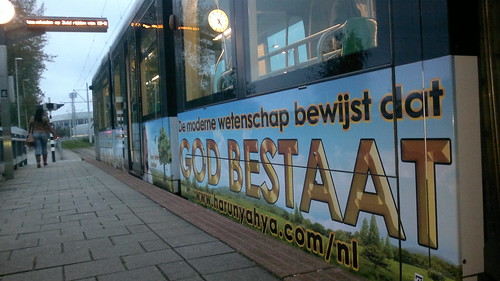
Foto via: saracoglu_burak / Flickr
Harun Yahya is het pseudoniem van Adnan Oktar, een Turkse voorvechter van een vorm van creationisme waarin wordt gesteld dat de evolutieleer niet klopt en dat de wereld is geschapen door God. Ik heb al eens eerder over hem geschreven:
Moslim Creationisme
Harun Yahya is, voor zover ik weet, een voorvechter van tafsir ilmi, de koranuitleg die spectaculaire natuurverschijnselen en vooral hypermoderne natuurwetenschappelijke kennis in de koran terugleest om vervolgens de goddelijke oorsprong van het heilige boek te bewijzen.
[…]
Yahya, zegt Riexinger, specialist in islamitisch creationisme, probeert vanuit een ultraconservatief standpunt en vooral op basis van Amerikaanse christelijk creationistische literatuur de feilen van de darwinistische leer aan te tonen. ‘Daarbij schildert hij de evolutietheorie af als summum van westers materialisme. Yayha staat bol van antiwesters, antidemocratisch en ook antisemitisch sentiment.’
Yahya’s boeken zijn gericht op (jonge) moslims in de westerse diaspora, zegt de Turks-Amerikaanse fysicus dr. Taner Edis (Truman State University, Kirksville Missouri). ‘Ze worden niet in het Arabisch, maar wel in vele westerse talen vertaald. Het is een verdediging tegen westers atheisme, vanuit een minderwaardigheidsgevoel tegenover de westerse wetenschap. De boodschap is: he, die evolutietheorie is een westerse dwaling, wij moslims weten beter. Dat biedt jonge moslims de kans om hun identiteit te versterken.’
Islamitisch creationisme is een bij uitstek modern verschijnsel, zegt godsdienstwetenschapper prof. dr. Abdelkader Tayob (Radboud Universiteit Nijmegen), dat opkomt in landen waar een sterk religieuze traditie in aanraking komt met moderne wetenschap. zoals in Turkije. ‘Men zoekt een houding tegenover die wetenschap terwijl men tegelijk wil vasthouden aan de eigen religieuze traditie.’
Opmerkelijk genoeg is evolutietheorie eigenlijk amper een thema binnen de islam, zeggen islamologen. Darwins ideeën hebben nooit meer dan een kleine seculiere bovenlaag bereikt. De consensus onder moslims is dan ook dat God de wereld en de mens geschapen heeft – iets wat 50 procent van de Amerikanen overigens ook denkt, hoewel deze ook nog precies weten wanneer: tienduizend jaar geleden – en zich in zijn schepping voortdurend laat gelden. Hoe dat gebeurt, eventueel via natuurwetten of evolutie, daarover zijn meerdere opvattingen, omdat de koran geen echt uitsluitsel biedt.
Volgens de islamoloog prof. dr. Sjoerd van Koningsveld (Universiteit Leiden) biedt de islam in theorie meer ruimte voor evolutie dan het christendom. ‘De goddelijke almacht en de scheppingsgedachte zijn weliswaar fundamenteel maar ook tamelijk abstract. De details uit Genesis, de zesdaagse schepping, Adam en Eva, de zondvloed, vind je in de minder belangrijke geschriften, niet in de koran. Zelfs de big bang-kosmologie kan probleemloos mee, met Allah als onbewogen beweger die de zaak aan het rollen brengt.’
Van Koningsveld meent echter dat expliciet moslim-creationisme vooral afkomstig is uit ideologisch gemotiveerde fundamentalistische kring. ‘
UPDATE: Voor de helderheid, hiermee is niet gezegd dat Van Koningsveld stelt dat de islam de evolutieleer zou promoten. De Koran, en dat stelt hij ook, is zeer stellig in de opvatting dat de wereld geschapen is.
Destijds schreef ik dat naar aanleiding van het bericht dat Yahya zijn Atlas of the Creation verspreidde in Nederland. Zijn site heeft ook een Nederlands deel met daarop vertaalde teksten en filmpjes:
Momenteel loopt er een campagne in Nederland. Ik weet niet precies of de organisatie van Yahya daar achter zit of dat het een initiatief is van Nederlandse aanhangers. In de volgende video zien we de aankondiging:
En hier zien we de reactie van Harun Yahya op de Rotterdamse trams met daarop zijn gezicht en zijn boodschap: ‘De Moderne Wetenschap Bewijst: God bestaat’:
Waarschijnlijk hangt deze campagne samen met de Harun Yahya conferenties enkele weken geleden in België. Eerder dit jaar was er al een conferentie in Rotterdam en één in Amsterdam. Yahya is overigens onder moslims omstreden. Sommigen claimen dat zijn opvattingen niet stroken met islamitische doctrines en dat (salafi opvatting) de sufi opvatting zou hanteren dat God in ons allemaal huist. Anderen maken zich daarover veel minder druk en waarderen het werk dat hij zou doen in het aantonen van wat men ziet als de de waarheid van de islam. Deze tramcampagne vertoont wel wat gelijkenis met de Atheist Bus Campaign in onder andere Engeland die ook (op kleine schaal) navolging kreeg in Nederland. Maar ook voor Nederland zijn dergelijke campagnes niet nieuw. Denk bijvoorbeeld aan de campagnes van de Bond tegen het Vloeken en de campagnes van de stichting Stevan.
Pot, ketel en neo-cliëntelisme
Posted on October 18th, 2011 by martijn.
Categories: Activism, ISIM/RU Research, Notes from the Field, Public Islam.
In de Volkskrant stelde Wasif Shadid, naar aanleiding van Tofik Dibi’s Final Fatwa, dat allochtone politici het vertoog van de zogenaamde islamcritici overnemen. Hoewel allochtone politici weliswaar niet anti-islam zijn, lijken ze de grondgedachte dat er iets mis is met islam te delen. Daarmee zouden ze kiezers in de steek laten en misleiden.
‘Allochtone politici bevestigen populisten’ – opinie – VK
Het negatief afschilderen van de eigen cultuur en achterban in situaties van onderschikking, zoals hierboven is beschreven, wordt in het boek Black Skin, White Masks van de Franse psychiater Frantz Fanon getypeerd als ‘de internalisering van inferioriteit’. Daarvan is volgens hem sprake wanneer mensen niet alleen de opgedrongen gedachte van achterlijkheid van hun cultuur accepteren, maar die ook in eigen opvattingen gaan verwerken en verder verspreiden.
Naast hun bijdrage aan stigmatisering maken genoemde allochtone politici zich ook indirect schuldig aan een vorm van kiezersmisleiding. Wat belangenbehartiging betreft, blijven ze in gebreke en vertolken ze ook niet de allochtone stem, maar een echo van autochtone critici. Ze maken als het ware een knieval voor het heersende populisme doordat ze kernaspecten van de eigen identiteit zoveel mogelijk proberen te camoufleren.
Naar aanleiding van dit stuk evolueerde de discussie zich naar een debat over cliëntelisme bij politici van allochtone afkomst. Zie bijvoorbeeld de reactie van Afshin Ellian die spreekt van een ‘schandalige, primitieve, en in zekere zin tribale aanval op de integriteit van democratisch gekozen Kamerleden uit naam van de islam en het multiculturalisme’:
Elsevier.nl – Weblog – Een tribale aanval op Dibi en Marcouch
Shadid propageert juist cliëntelisme: terug naar de woestijnperiode, vorm een eigen clan! Shadid snapt niets van democratie en rechtsstaat.
Dit was precies het probleem met de oude garde van multiculturalisten, die de gebreken en problemen in een multiculturele samenleving desnoods met leugens verborgen. Wie de problemen niet verdoezelde, was een racist.
Onze samenleving heeft al lang afscheid genomen van het multiculturele paradijs. Shadid eist van politici met islamitische achtergrond dat zij elke anti-islamretoriek bestrijden. Waarom moeten ze dat doen? Shadid verwart de Nederlandse Kamerleden met imams en moefti’s die juist tot taak hebben om hun religie te verdedigen.
Zie bijvoorbeeld ook de reactie van Zeki Baran (PvdA): Beoordeel politici op hun daden, niet op hun afkomst
Mensen beoordelen op hun gedrag en hun daden en niet op hun afkomst of religie. Dat zou men ook wat vaker bij politici moeten doen. Het inhoudelijk weerspreken van anti-islamretoriek moet niet voorbehouden zijn aan allochtone politici of politici van islamitische afkomst, maar het weerspreken van anti-islamretoriek is een taak van alle politici, ongeacht hun afkomst of religie.
Het ideaal in een liberale democratie is dat deelbelangen niet het algemene belang overschaduwen: niet in de politiek en helemaal niet in het beleid. Dat vind ik, persoonlijk, wel een mooi ideaal. Maar zo werkt het natuurlijk niet. De islam speelt natuurlijk een rol, net zo goed als etniciteit. Daar wees Latif Hasnaoui op in een nieuwe reactie in de Volkskrant:‘Islamitische politici komen niet op voor hun achterban’ – opinie – VK
Ten eerste is een Kamerlid een volksvertegenwoordiger. Hij of zij vertegenwoordigt dat deel van het electoraat dat op hem of haar heeft gestemd. Politieke partijen zetten niet voor niets moslims, allochtonen, vrouwen of katholieken op de kieslijst.
Menig politicus van een bepaald geslacht, afkomst of religie is door voorkeurstemmen in een gemeenteraad of in de Tweede Kamer gekomen. Kiezers stemmen op een bepaald persoon omdat ze verwachten dat hij of zij opkomt voor hun sociaaleconomische belangen en groepsrechten. Dit geldt ook voor allochtonen met een islamitische achtergrond. Het feit dat ze moslim zijn, heeft er in veel gevallen voor gezorgd dat ze op de kandidatenlijst zijn gekomen. Want ook moslims kiezen voor een kandidaat omdat zij zich met hem of haar identificeren.
Dat leverde een debatje op bij Pauw en Witteman:
Wat is nu eigenlijk het probleem met cliëntelisme? Dienen politici niet dichter bij het volk te staan zo horen we de laatste jaren voortdurend? Op basis van een recent artikel in the Annual Review of Political Science, kunnen we stellen dat cliëntelisme gebaseerd is op de volgende kenmerken:
- het gaat om een relatie tussen actoren met ongelijke status en macht
- het is gebaseerd op wederkerigheid: het gaat om een voortdurende en zich herhalende uitwisseling van belangen, goederen, en diensten die gebaseerd is op de opbrengst die de ene persoon denkt te krijgen van de ander. De relatie houdt op te bestaan wanneer één partij er niet in slaagt de goederen en diensten te leveren. In de politiek gaat het daarbij maar om één ding: de stem in het stemhokje.
- De relatie is vaak niet publiek en gebaseerd op deelbelangen en heeft vaak slechts een beperkte relatie met wet en de waarden en normen van de gemeenschap.
Bij dit alles dient de relatie niet eenmalig te zijn, maar over een langere tijd en een voortdurende herhaling van de uitwisseling.
Nu is wat Hasnaoui bepleitte strikt genomen geen cliëntelisme. Politieke partijen en politici maken altijd programmatische pakketjes die bedoeld zijn om specifieke groepen stemmers aan te trekken. Men kan daarbij refereren aan etnische, religieuze, regionale identiteiten. Politici kunnen bepaalde groepen bepaalde voordelen beloven zoals belastingverlaging voor werkgevers, economische vrijstellingen voor boeren en beperking van de bezuinigingen voor grote gezinnen. Populisten kunnen bepaalde voordeeltjes voor elkaar proberen te krijgen voor de gemarginaliseerde groepen in de samenleving zoals ‘Henk en Ingrid’. Hierbij reikt men de hand naar specifieke groepen en negeert men specifieke andere groepen en allemaal met electorale motieven. Bij cliëntelisme gaat het om politieke steun, om de stem in het stemhokje. Een politicus doet iets voor degene die op hem gestemd heeft. In het geval van Hasnaoui is dat niet noodzakelijkerwijze het geval. Hij wijst in zijn argument immers op zijn en Dibi’s identiteit als Nederlander, Marokkaan en moslim. Ongeacht of alle moslims op hem en Dibi gestemd hebben, wil hij opkomen voor moslims. Bij cliëntelisme zou Hasnaoui alleen opkomen voor degenen die op hem gestemd hebben of beloven dat te doen en moet er ook sprake zijn van een lange relatie tussen patroon en cliënt.
Clientelisme is een rationale afweging van welbegrepen economisch en/of politiek eigen belang; een instrumentele vriendschap tussen ongelijken waar beide partijen iets naar hun gading vinden (al dan niet met een dreiging van dwang zoals geweld). In het ideaalbeeld staat democratie hier natuurlijk heel ver van af. Een democratie is idealiter gebaseerd op transparante en wettelijk bepaalde procedures die voor iedereen gelijk zijn. Politieke macht is in handen van gekozen functionarissen en hun positie is betwist in open, vrije verkiezingen waar in iedereen het recht heeft om te stemmen. Iemands gezag is gebaseerd op zijn/haar officiële positie, niet op wie hij of zij is en welke achtergrond hij of zij is. Dat laatste geeft overigens wel aan waarom sommigen Hasnaoui’s pleidooi, per vergissing, aanzien voor een pleidooi voor cliëntelisme. Dus laten we dat voor de discussie maar even aanhouden en het voor de helderheid even neo-cliëntelisme noemen.
Hierboven staat cliëntelisme haaks op democratie. Het is geenszins zo dat rijke, westerse landen geen cliëntelisme zouden kennen ook al lijkt dat soms wel verondersteld te worden. Met de komst van migranten zou cliëntelisme dan ook hier (weer) haar intrede doen zo wordt soms wel gesteld:
Rotterdam: zwart zit links, wit rechts – Politiek – VK
Cliëntelisme ligt op de loer; veel allochtone kiezers verwachten iets terug van degenen die zij met voorkeurstemmen in het zadel hebben geholpen. Zo gaat dat in het thuisland immers ook.
Maar zo kent de VS het systeem van ‘constituent service’ waarbij volkvertegenwoordigers interveniëren namens hun individuen in hun achterban die problemen hebben met betrekking tot belastingen, sociale zekerheid, verblijfsvergunningen, bouw van fabrieken enzovoorts. Het is een plus voor deze volksvertegenwoordigers als zij op deze manier kunnen laten zien dichtbij hun achterban te staan. En wat bijvoorbeeld te denken van de druk die vanuit Zeeland is uitgeoefend in verband met het onder water zetten van een polder? Of de ‘Beste Els‘ brief van Bolkestein en andere zaken die te maken hebben met de nevenfuncties van politici (wie is dan hun achterban?). En is de mogelijk benoeming van Donner nu echt alleen gebaseerd op zijn kwaliteiten of heeft het ook te maken met de juiste politieke kleur en connecties? Als dat laatste bij benoemingen geen enkele rol speelt, waarom leren we dan allemaal dat het zo belangrijk is om de juiste mensen te kennen? Dat noemen we weliswaar ‘netwerken’ in plaats van cliëntelisme, maar het onderscheid is hoogstens gradueel. Zouden de klachten over de negatieve aspecten van het bestuur in Nederland (gebrek aan openheid, elitisme, onduidelijkheid bij benoemingen, enzovoorts) veroorzaakt worden door iets anders dan een vorm van (neo-)cliëntelisme?
Er zijn goede redenen om tegen cliëntelisme te zijn. Het opent de deur voor machtsmisbruik, men laat weliswaar de oren teveel hangen naar één groep in de samenleving maar is doof en blind voor de noden van anderen, het leidt tot een verstoring in de investeringen en verdeling van publieke middelen en er is nauwelijks democratische verantwoording mogelijk. Maar het bestaat niet voor niets nog in Nederland en andere landen. Cliëntelisme levert de nodige voordelen op. Het zorgt ervoor dat de elite zichzelf in stand houdt en er niet één groep is die er buiten valt, de ‘gewone’ man en vrouw heeft de mogelijkheid om politieke besluitvorming te beïnvloeden en zich op z’n minst gehoord en erkend te voelen. De bureaucratie die is opgezet in democratieën leidt er namelijk toe dat mensen als nummers worden gezien. Het onpersoonlijke beleid leidt er vaak toe dat mensen worden ingedeeld in bureaucratische hokjes: allochtoon, illegaal, uitkeringsgerechtigde, scholier, waarbij we de mens erachter vergeten. Cliëntelisme heft dat deels op. Mensen kunnen er banen, geld en status door verkrijgen, het kan bijdragen aan stabiliteit doordat conflicten vaak niet hoog opgespeeld worden. In diverse Afrikaanse en Latijns-Amerikaanse landen zien we bijvoorbeeld dat beleid dat cliëntelisme moet bestrijden vaak wel voordelig is voor de midden klasse, maar niet voor de echte armen.
Cliëntelisme kan dus een belangrijke ‘safety valve’ zijn. Wanneer echter één groep echt de macht heeft en geen rekening houdt met de vaak ingewikkelde patronage relaties met minderbedeelden, kan de situatie wel heel scheef groeien. En dat laatste dreigt nu in Nederland. Het grote probleem is namelijk dat openlijk etnisch cliëntelisme al lang haar intrede heeft gedaan en wel onder bepaalde autochtone politici en onder politieke partijen. De oproep van zowel Shadid als Hasnaoui komt in een tijd waarin de premier Nederland wil teruggeven aan de Nederlanders (en iets zegt mij dat daar geen allochtonen of moslims mee bedoeld worden), waarin minister Verhagen zegt de angst voor buitenlanders ‘begrijpelijk en terecht‘ te vinden, waarin het integratie beleid bijna alleen de nadruk legt op integratie in de ‘Nederlandse’ cultuur (en waarbij het zich houden aan de wet onvoldoende is voor allochtonen) en waarin de overheid mensen classificeert als 100 % outsider zelfs als deze van deels autochtone afkomst zijn.
We vinden het begrijpelijk wanneer autochtone Nederlanders vragen om erkenning en herkenning van hun Nederlandse cultuur in de politiek en het is dan ook normaal om te ervoor te pleiten dat PVV-stemmers het recht hebben om gehoord te worden. Wanneer het beleid in hun richting aangepast wordt, horen we niemand over cliëntelisme terwijl het toch echt gaat om het bevoordelen van een specifieke etnische groep: autochtonen (en dan nog meer in het bijzonder de niet-moslims daarbinnen). De scherpste kanten aan de retoriek die daarbij komt kijken noemen we populisme of anti-islam gedachtegoed, maar het is duidelijk dat de tegenstelling moslim – autochtoon mainstream is geworden. Jarenlang heeft dat niet geleid tot specifiek anti-islam beleid (wel tot specifiek beleid pro autochtone Nederlandse cultuur zoals inburgeringsbeleid en afschaffing ‘allochtone talen’ onderwijs), maar nu met de PVV als gedoger van het kabinet, de maatregel tegen ritueel slachten en het mogelijke ‘boerka-verbod’ is er wel een situatie ontstaan waarin specifiek moslims object van beleid en uitsluiting zijn geworden. Wenselijk of niet, een dergelijke situatie roept wel de reactie op onder moslims of er eigenlijk nog iemand is in de politiek die voor hun belangen opkomt? En roept ook de situatie op waarin moslimpolitici zich hetzelfde afvragen en enigszins vervreemd rondkijken naar hun moslim en niet-moslim collega’s. Tegelijkertijd is het opmerkelijk, zoals Jean Tillie laat zien (toegegeven in 2006), dat de etnische factor in stemgedrag weliswaar zeker aanwezig is, maar ook afneemt. Allochtone kiezers kijken eerst naar de partij en vervolgens naar de aanwezigheid van etnische kandidaten. En de invloed van dat laatste neemt af.
Hasnaoui’s oproep lijkt dus aan dovemansoren gericht. Deels wellicht omdat, zoals Shadid dat stelde, men het vertoog van moslim en/of allochtoon als probleemcategorie heeft geïnternaliseerd, deels wellicht omdat de etnische factor in het stemmen wel aanwezig is maar kleiner wordt, deels omdat moslims in Nederland nauwelijks een traditie lijken te hebben van groepsspecifieke politiek. Dit in tegenstelling dus tot de Nederlandse politieke partijen en vele politici. Het is een beetje vreemd om dit nu Hasnaoui te verwijten (los of zijn pleidooi nu wel of niet wenselijk is). In de Nederlandse geschiedenis hebben moslims niet of slechts zeer zelden pleidooien gehouden voor specifieke voorzieningen voor moslims en terwijl er voortdurend wordt geweeklaagd over de islam en moslims tot op het beledigende aan toe. Nu is er één moslim die ervoor pleit dat zijn Nederlandse, Marokkaanse en moslimcollega’s het nu eindelijk eens opnemen voor moslims, en dan zou hij zich schuldig maken aan cliëntelisme? Zou dit type reacties er mede toe leiden dat moslims eigenlijk nagenoeg onzichtbaar zijn in het publieke debat over islam?
'Zien en horen' – Impressie van protest tegen verbod gezichtssluier
Posted on October 8th, 2011 by martijn.
Categories: Activism, Gender, Kinship & Marriage Issues, Notes from the Field, Public Islam, Religious and Political Radicalization.

Foto: De Pers.nl
Gisteren, vrijdag 7 oktober, was er een demonstratie tegen de kabinetsplannen voor een verbod op gezichtssluiers (‘boerka’). De demonstratie was het initiatief van een vrouw, maar gaandeweg de weken voorafgaand aan de demonstratie over genomen door de organisatie Behind-Bars. Deze komt onder meer op voor gevangenen in Marokko. Ik heb daar eerder over geschreven met betrekking tot Saddek Sbaa. De demonstratie was onder moslims zeker niet omstreden. Er waren mensen die erop wezen dat demonstraties niet thuis horen in de islam, anderen zien Behind-Bars als een soort Nederlandse afdeling van Shariah4Belgium (aangeduid met de term takfir4belgium en takfir4holland, waarmee men aangeeft dat deze moslims zonder enige restrictie anderen verketteren en tot ongelovige zouden verklaren) en weer anderen moeten zelf niets hebben van de gezichtssluier. Nogal wat mensen vonden dat demonstranten een verkeerd beeld neerzetten van moslims en islam. (Ik heb overigens geen idee of Behind-Bars een Nederlandse afdeling is van Shariah4Holland of daar aan verbonden is. Er was wel iemand van Shariah4Belgium aanwezig.) UPDATE: Behind-Bars geeft zelf nadrukkelijk te kennen geen onderdeel te zijn van Shariah4Belgium en Shariah4Holland.
Koud en nat, dat was het in Den Haag op het Plein. In totaal waren er op het hoogtepunt van de demonstratie zo’n 30 vrouwen en 30 mannen aanwezig (update: volgens één bron 34 vrouwen en 59 mannen). De mannen en vrouwen stonden apart van elkaar in twee groepen. Het grootste deel van de vrouwen droeg een gezichtssluier, maar enkelen hadden ook mondkapjes op en een enkeling alleen hijab. Niet alle vrouwen overigens dragen altijd de gezichtssluier. Er was een duidelijke rolverdeling tussen mannen en vrouwen. Waar de vrouwen zwegen, maar hun stem lieten ‘zien’ via hun kleding en protestborden met slogans zoals ‘blijf van mijn lijf’, hielden de mannen verschillende voordrachten. Daarnaast kon men diverse malen de kreet ‘takbir’ horen gevolgd door ‘Allahu Akbar’. Tijdens de demonstratie was dit vooral een teken van instemming met wat de sprekers zeiden. De reacties op de terrassen bij het Plein in het begin, gaven aan dat het niet-moslim publiek het vooral zag als een strijdkreet. De volgende reportage van de Arabische redactie van de Wereldomroep geeft een goede indruk van de demo en de eisen van de demonstranten:
Eigenlijk was het protest niet zozeer een beroep op de Nederlandse politiek om het geplande verbod op de gezichtssluier te laten varen, maar men probeerde de boodschap af te geven; tot hier en niet verder: wij gaan ons niet aan het verbod houden. Sprekers wezen op het, volgens hen, ondemocratische en racistische karakter van de Nederlandse samenleving, de problemen met de economie die alleen met meer islam opgelost zouden worden, het gebrek aan actie onder de eerste generatie moslims die jongeren al radicaal zouden vinden als ze alleen maar hun baard laten staan en er werden voortdurend vergelijkingen getrokken met de opmaat van de Tweede Wereldoorlog en de jodenvervolging. Het openingswoord van de perswoordvoeder dat al voor het protest werd verspreid bevat deze elementen allemaal:
Dé oorlog is begonnen! | Behind-Bars
De politiek heeft ons de oorlog verklaard! Het westen heeft geen weg of middel geschuwd om ons te terroriseren. En nu?! Nederland komt met deze wetgeving aan onze vrouwen. Jullie willen gaan bepalen hoe onze vrouwen zich moeten kleden. Wilders en zijn duivelskliekje willen zelfs gaan bepalen wat wij moeten vinden! Zijn jullie daardoor niet erger dan Stalin, Mao, Castro, Mussolini of Hitler!?
Wij trekken de lijn. Wij trekken hier en nu de lijn! Wij zullen het niet toestaan dat jullie die lijn passeren. Onze vrouwen gaan hun gezichtssluier niet af doen. Nu niet. Morgen niet. Nooit niet! Blijf van onze vrouwen af! Blijf van onze religie af! Blijf van onze vrijheid van godsdienst af! Blijf er met jullie poten er vanaf!
Wij zullen ons niet laten verdrijven. Wij zullen onze deuren en ramen niet dichttimmeren. En wij zullen niet gaan schuilen en wachten totdat we uitgemoord worden. Wij zijn moslims. Wij zijn daar trots op en wij zullen dat altijd uitdragen. Mét baard, mét gezichtssluier en met de Qur’an als állerhoogste Woord!
De kritiek op de democratie moet niet verward worden met steun voor een democratisch bestel; althans niet bij alle sprekers (niet alle sprekers waren verbonden aan Behind-Bars volgens mij) in ieder geval. Tegen het einde van het protest maakten enkele sprekers duidelijk dat zij sharia willen in plaats van democratie en dat zij islam als oplossing zien. Dit zijn bekende slogans voor iedereen die een beetje thuis is in de wereld van dergelijke actiegroepen, maar die ongetwijfeld de nodige wenkbrauwen zullen doen fronsen bij buitenstaanders. Het is vrij helder dat de organisatoren daar niet zo mee zitten. Zij waren erop uit om een krachtig statement te geven aan de Nederlandse politiek en, meer indirect, ook aan andere moslimorganisaties (regulier en salafiyyah): wij komen op voor moslims en wij trekken de lijn en wij doen het zoals wij denken dat het goed (islamitisch) is. Andere aanwezigen hadden over dit onderwerp overigens wel de nodige reserves.
Af en toe waren er voorbijgangers die even bleven kijken. De meesten voor zover ik dat zag bleven rustig staan en liepen dan door. Anderen waren meer afkeurend. Zo riepen twee vrouwen richting de vrouwelijke demonstranten dat zij zich eens moesten aanpassen en een andere man liep hoofdschuddend weg en verzuchtte ‘tsjonge jonge’. Na ongeveer 45 minuten deed zich een incidentje voor met Pownews. De organisatie had van tevoren ‘huisregels’ opgesteld die onder meer inhielden dat de demonstranten zich netjes dienden te gedragen, hun eigen troep moesten opruimen en niet mochten discrimineren (‘wij eisen van anderen dat ze ons niet discrimineren, maar wij mogen hen ook niet discrimineren’). Daar was ook de regel bij dat men niet met de pers mocht praten en de organisatie had aangekondigd dat er om zes uur een moment zou zijn voor de pers. De pers mocht verder wel filmen en foto’s maken. De huisregels voor de pers:
Wij zijn erg blij met uw aanwezigheid, u zult vandaag ervaren dat wij radiostilte zullen houden tijdens onze protest. Wij hebben hiervoor gekozen omdat wij alle aandacht willen hebben voor de zaak waarvoor wij staan. Tevens hebben wij hiervoor gekozen omdat wij een goed georganiseerde protestactie willen leiden. Als er te veel rumoer is dan vrezen wij dat onze doelen niet bereikt worden en dat is niet waar onze voorkeur naar uitgaat.
Daarbij hebben wij een woordvoerder die u graag te woord zal staan. Wij als Behind Bars hebben ervoor gekozen om de laatste half uur van onze protest, dat is vanaf 18.00 – 18.30, een persconferentie te houden. Deze zal plaatsvinden op het plein.
Wilt u het deze protestactie of een andere zaak die Behind Bars gerelateerd is uitgebreid verslaan dan zijn wij bereid om u na onze protest alsnog te woord te staan.
Onze perschef is Abu Sa’ied, hij zal u ontvangen en u te woord staan, bij hem kunt u terecht voor al uw vragen. Hij zal u tijdens onze protest begeleiden. Als u contact met ons wilt onderhouden kan dat via behindbarsnet@gmail.com of de telefoonnummer die u bij onze perschef kunt opvragen.
Nu kun je dat soort huisregels best opstellen, maar je kunt niet verwachten dat de pers zich daar ook aan houdt. De Wereldomroep deed dat wel, maar die kwamen ook voor een inhoudelijk verhaal. Novum nieuws drong al meer aan en die andere insteek is ook te zien in hun reportage:
Nadat Novum het tevergeefs geprobeerd had, probeerde Pownews het. Ook Pownews gaat het natuurlijk niet om een feitelijke reportage, maar men wil laten zien hoe ‘achterlijk’ deze ‘haatbaarden’ en ‘boerkababes’ zijn. Als men tot het einde gewacht had, had men nog wat smeuiige quotes mee kunnen nemen denk ik, maar waarschijnlijk vanwege het slechte weer waren de meeste journalisten al eerder weg; ook Pownews. Maar zij hadden dan ook hun beeld al:
Er is geen sprake van een uit de hand gelopen demonstratie. Er was wat geduw en getrek en ook al moeten mensen over en weer hun handen thuis houden, het was maar een klein opstootje en, naar mijn mening, suste de politie de gemoederen op een prima manier. Het had geen enkel nut gehad om dit uit de hand te laten lopen. De verslaggever beroept zich begrijpelijk op de persvrijheid (hij moet gewoon zijn werk kunnen doen), maar dat wil nog niet zeggen dat demonstranten de pers ook te woord moeten staan. Overigens had de demonstrant in het filmpje zich natuurlijk ook aan de huisregels van de organisatie moeten houden. Als hij niet met de verslaggever gesproken had, had Pownews weinig kans gehad: huisregels kan een organisatie alleen aan zichzelf opleggen in een publiek domein. Opvallend bij Pownews is de kop in het beeld ‘Boerka-fans denken de baas te zijn’. Daarmee ‘framede’ Pownews de demonstratie op een manier die eigenlijk goed aansluit bij de boodschap van de organisatie: ‘wij laten niet met ons sollen’. Zowel de speeches als de kleding van de demonstranten droegen die boodschap uit. Met andere woorden Pownews en in mindere mate Novum, bevestigden precies de boodschap van de demonstranten.
Het is nog maar de vraag wat de demonstranten precies bereiken met hun boodschap. Hun draagvlak onder moslims lijkt (nog?) niet zo groot en ik verwacht ook niet dat de politiek zich veel van hen zal aantrekken aangezien zij snel gekwalificeerd zullen worden als radicalen. Tegenover de ‘radicale islam’ staat het beeld van de ‘liberale islam’. De ‘liberale islam’ houdt zich aan de grenzen die voor haar gesteld zijn in de publieke ruimte, maar wanneer islam die publieke ruimte binnentreedt op een manier die gezien wordt als assertief of zelfs agressief, kan het gelabeld worden als ‘radicale islam’ die de moslimgemeenschap zou verdelen en ‘tolerante en liberale moslims’ in een kwaad daglicht zou stellen. Met de term ‘radicale islam’ verwerpen politici en opinieleiders niet slechts een publieke uiting van religie of een vorm van islam die mensen als vreemd ervaren. Het gaat om het verwerpen van wat wordt gezien als een assertieve, opdringerige vorm van islamitische religiositeit en als een opzichtige, provocatieve verwerping van de Nederlandse morele gemeenschap. (Ik heb daar meer over geschreven, zie HIER). Het protest van de demonstranten doet daar niks aan af en gezien de beelden bevestigt het waarschijnlijk alleen maar het dominante beeld. Tegelijkertijd leek het voor de demonstranten genoeg om een keer een vuist te maken en een statement af te geven.
UPDATES:
Persbericht n.a.v. foutief verslag Novum | Behind-Bars
Den Haag – 18-06-2011 – Naar aanleiding van de demonstratie van 18 juni 2010 van Behind-Bars.net in samenwerking met Team Free Saddik, kunnen wij melden dat de demonstratie geslaagd is. Daarnaast willen wij het en ander recht zetten wat in de media verschijnt.
GeenStijl : DenHagistan! Jozias al-Aartsen voert sharia in
Onderwerp: Politie optreden tijdens demonstratie Behind Bars 7 okt. 2011 Plein Den Haag
‘Politie Den Haag volgt Sharia’ – DePers.nl
Een journalist van persbureau Novum Nieuws heeft bij burgemeester Jozias van Aartsen van Den Haag een klacht ingediend omdat diens politiekorps Sharia-regels van moslimdemonstranten zou hebben opgevolgd. “Ik heb moeten constateren dat de politie Haaglanden deze Sharia wetgeving heeft aanvaard en opgevolgd.”
‘Zien en horen’ – Impressie van protest tegen verbod gezichtssluier
Posted on October 8th, 2011 by martijn.
Categories: Activism, Gender, Kinship & Marriage Issues, Notes from the Field, Public Islam, Religious and Political Radicalization.
Foto: De Pers.nl
Gisteren, vrijdag 7 oktober, was er een demonstratie tegen de kabinetsplannen voor een verbod op gezichtssluiers (‘boerka’). De demonstratie was het initiatief van een vrouw, maar gaandeweg de weken voorafgaand aan de demonstratie over genomen door de organisatie Behind-Bars. Deze komt onder meer op voor gevangenen in Marokko. Ik heb daar eerder over geschreven met betrekking tot Saddek Sbaa. De demonstratie was onder moslims zeker niet omstreden. Er waren mensen die erop wezen dat demonstraties niet thuis horen in de islam, anderen zien Behind-Bars als een soort Nederlandse afdeling van Shariah4Belgium (aangeduid met de term takfir4belgium en takfir4holland, waarmee men aangeeft dat deze moslims zonder enige restrictie anderen verketteren en tot ongelovige zouden verklaren) en weer anderen moeten zelf niets hebben van de gezichtssluier. Nogal wat mensen vonden dat demonstranten een verkeerd beeld neerzetten van moslims en islam. (Ik heb overigens geen idee of Behind-Bars een Nederlandse afdeling is van Shariah4Holland of daar aan verbonden is. Er was wel iemand van Shariah4Belgium aanwezig.) UPDATE: Behind-Bars geeft zelf nadrukkelijk te kennen geen onderdeel te zijn van Shariah4Belgium en Shariah4Holland.
Koud en nat, dat was het in Den Haag op het Plein. In totaal waren er op het hoogtepunt van de demonstratie zo’n 30 vrouwen en 30 mannen aanwezig (update: volgens één bron 34 vrouwen en 59 mannen). De mannen en vrouwen stonden apart van elkaar in twee groepen. Het grootste deel van de vrouwen droeg een gezichtssluier, maar enkelen hadden ook mondkapjes op en een enkeling alleen hijab. Niet alle vrouwen overigens dragen altijd de gezichtssluier. Er was een duidelijke rolverdeling tussen mannen en vrouwen. Waar de vrouwen zwegen, maar hun stem lieten ‘zien’ via hun kleding en protestborden met slogans zoals ‘blijf van mijn lijf’, hielden de mannen verschillende voordrachten. Daarnaast kon men diverse malen de kreet ‘takbir’ horen gevolgd door ‘Allahu Akbar’. Tijdens de demonstratie was dit vooral een teken van instemming met wat de sprekers zeiden. De reacties op de terrassen bij het Plein in het begin, gaven aan dat het niet-moslim publiek het vooral zag als een strijdkreet. De volgende reportage van de Arabische redactie van de Wereldomroep geeft een goede indruk van de demo en de eisen van de demonstranten:
Eigenlijk was het protest niet zozeer een beroep op de Nederlandse politiek om het geplande verbod op de gezichtssluier te laten varen, maar men probeerde de boodschap af te geven; tot hier en niet verder: wij gaan ons niet aan het verbod houden. Sprekers wezen op het, volgens hen, ondemocratische en racistische karakter van de Nederlandse samenleving, de problemen met de economie die alleen met meer islam opgelost zouden worden, het gebrek aan actie onder de eerste generatie moslims die jongeren al radicaal zouden vinden als ze alleen maar hun baard laten staan en er werden voortdurend vergelijkingen getrokken met de opmaat van de Tweede Wereldoorlog en de jodenvervolging. Het openingswoord van de perswoordvoeder dat al voor het protest werd verspreid bevat deze elementen allemaal:
Dé oorlog is begonnen! | Behind-Bars
De politiek heeft ons de oorlog verklaard! Het westen heeft geen weg of middel geschuwd om ons te terroriseren. En nu?! Nederland komt met deze wetgeving aan onze vrouwen. Jullie willen gaan bepalen hoe onze vrouwen zich moeten kleden. Wilders en zijn duivelskliekje willen zelfs gaan bepalen wat wij moeten vinden! Zijn jullie daardoor niet erger dan Stalin, Mao, Castro, Mussolini of Hitler!?
Wij trekken de lijn. Wij trekken hier en nu de lijn! Wij zullen het niet toestaan dat jullie die lijn passeren. Onze vrouwen gaan hun gezichtssluier niet af doen. Nu niet. Morgen niet. Nooit niet! Blijf van onze vrouwen af! Blijf van onze religie af! Blijf van onze vrijheid van godsdienst af! Blijf er met jullie poten er vanaf!
Wij zullen ons niet laten verdrijven. Wij zullen onze deuren en ramen niet dichttimmeren. En wij zullen niet gaan schuilen en wachten totdat we uitgemoord worden. Wij zijn moslims. Wij zijn daar trots op en wij zullen dat altijd uitdragen. Mét baard, mét gezichtssluier en met de Qur’an als állerhoogste Woord!
De kritiek op de democratie moet niet verward worden met steun voor een democratisch bestel; althans niet bij alle sprekers (niet alle sprekers waren verbonden aan Behind-Bars volgens mij) in ieder geval. Tegen het einde van het protest maakten enkele sprekers duidelijk dat zij sharia willen in plaats van democratie en dat zij islam als oplossing zien. Dit zijn bekende slogans voor iedereen die een beetje thuis is in de wereld van dergelijke actiegroepen, maar die ongetwijfeld de nodige wenkbrauwen zullen doen fronsen bij buitenstaanders. Het is vrij helder dat de organisatoren daar niet zo mee zitten. Zij waren erop uit om een krachtig statement te geven aan de Nederlandse politiek en, meer indirect, ook aan andere moslimorganisaties (regulier en salafiyyah): wij komen op voor moslims en wij trekken de lijn en wij doen het zoals wij denken dat het goed (islamitisch) is. Andere aanwezigen hadden over dit onderwerp overigens wel de nodige reserves.
Af en toe waren er voorbijgangers die even bleven kijken. De meesten voor zover ik dat zag bleven rustig staan en liepen dan door. Anderen waren meer afkeurend. Zo riepen twee vrouwen richting de vrouwelijke demonstranten dat zij zich eens moesten aanpassen en een andere man liep hoofdschuddend weg en verzuchtte ‘tsjonge jonge’. Na ongeveer 45 minuten deed zich een incidentje voor met Pownews. De organisatie had van tevoren ‘huisregels’ opgesteld die onder meer inhielden dat de demonstranten zich netjes dienden te gedragen, hun eigen troep moesten opruimen en niet mochten discrimineren (‘wij eisen van anderen dat ze ons niet discrimineren, maar wij mogen hen ook niet discrimineren’). Daar was ook de regel bij dat men niet met de pers mocht praten en de organisatie had aangekondigd dat er om zes uur een moment zou zijn voor de pers. De pers mocht verder wel filmen en foto’s maken. De huisregels voor de pers:
Wij zijn erg blij met uw aanwezigheid, u zult vandaag ervaren dat wij radiostilte zullen houden tijdens onze protest. Wij hebben hiervoor gekozen omdat wij alle aandacht willen hebben voor de zaak waarvoor wij staan. Tevens hebben wij hiervoor gekozen omdat wij een goed georganiseerde protestactie willen leiden. Als er te veel rumoer is dan vrezen wij dat onze doelen niet bereikt worden en dat is niet waar onze voorkeur naar uitgaat.
Daarbij hebben wij een woordvoerder die u graag te woord zal staan. Wij als Behind Bars hebben ervoor gekozen om de laatste half uur van onze protest, dat is vanaf 18.00 – 18.30, een persconferentie te houden. Deze zal plaatsvinden op het plein.
Wilt u het deze protestactie of een andere zaak die Behind Bars gerelateerd is uitgebreid verslaan dan zijn wij bereid om u na onze protest alsnog te woord te staan.
Onze perschef is Abu Sa’ied, hij zal u ontvangen en u te woord staan, bij hem kunt u terecht voor al uw vragen. Hij zal u tijdens onze protest begeleiden. Als u contact met ons wilt onderhouden kan dat via behindbarsnet@gmail.com of de telefoonnummer die u bij onze perschef kunt opvragen.
Nu kun je dat soort huisregels best opstellen, maar je kunt niet verwachten dat de pers zich daar ook aan houdt. De Wereldomroep deed dat wel, maar die kwamen ook voor een inhoudelijk verhaal. Novum nieuws drong al meer aan en die andere insteek is ook te zien in hun reportage:
Nadat Novum het tevergeefs geprobeerd had, probeerde Pownews het. Ook Pownews gaat het natuurlijk niet om een feitelijke reportage, maar men wil laten zien hoe ‘achterlijk’ deze ‘haatbaarden’ en ‘boerkababes’ zijn. Als men tot het einde gewacht had, had men nog wat smeuiige quotes mee kunnen nemen denk ik, maar waarschijnlijk vanwege het slechte weer waren de meeste journalisten al eerder weg; ook Pownews. Maar zij hadden dan ook hun beeld al:
Er is geen sprake van een uit de hand gelopen demonstratie. Er was wat geduw en getrek en ook al moeten mensen over en weer hun handen thuis houden, het was maar een klein opstootje en, naar mijn mening, suste de politie de gemoederen op een prima manier. Het had geen enkel nut gehad om dit uit de hand te laten lopen. De verslaggever beroept zich begrijpelijk op de persvrijheid (hij moet gewoon zijn werk kunnen doen), maar dat wil nog niet zeggen dat demonstranten de pers ook te woord moeten staan. Overigens had de demonstrant in het filmpje zich natuurlijk ook aan de huisregels van de organisatie moeten houden. Als hij niet met de verslaggever gesproken had, had Pownews weinig kans gehad: huisregels kan een organisatie alleen aan zichzelf opleggen in een publiek domein. Opvallend bij Pownews is de kop in het beeld ‘Boerka-fans denken de baas te zijn’. Daarmee ‘framede’ Pownews de demonstratie op een manier die eigenlijk goed aansluit bij de boodschap van de organisatie: ‘wij laten niet met ons sollen’. Zowel de speeches als de kleding van de demonstranten droegen die boodschap uit. Met andere woorden Pownews en in mindere mate Novum, bevestigden precies de boodschap van de demonstranten.
Het is nog maar de vraag wat de demonstranten precies bereiken met hun boodschap. Hun draagvlak onder moslims lijkt (nog?) niet zo groot en ik verwacht ook niet dat de politiek zich veel van hen zal aantrekken aangezien zij snel gekwalificeerd zullen worden als radicalen. Tegenover de ‘radicale islam’ staat het beeld van de ‘liberale islam’. De ‘liberale islam’ houdt zich aan de grenzen die voor haar gesteld zijn in de publieke ruimte, maar wanneer islam die publieke ruimte binnentreedt op een manier die gezien wordt als assertief of zelfs agressief, kan het gelabeld worden als ‘radicale islam’ die de moslimgemeenschap zou verdelen en ‘tolerante en liberale moslims’ in een kwaad daglicht zou stellen. Met de term ‘radicale islam’ verwerpen politici en opinieleiders niet slechts een publieke uiting van religie of een vorm van islam die mensen als vreemd ervaren. Het gaat om het verwerpen van wat wordt gezien als een assertieve, opdringerige vorm van islamitische religiositeit en als een opzichtige, provocatieve verwerping van de Nederlandse morele gemeenschap. (Ik heb daar meer over geschreven, zie HIER). Het protest van de demonstranten doet daar niks aan af en gezien de beelden bevestigt het waarschijnlijk alleen maar het dominante beeld. Tegelijkertijd leek het voor de demonstranten genoeg om een keer een vuist te maken en een statement af te geven.
UPDATES:
Persbericht n.a.v. foutief verslag Novum | Behind-Bars
Den Haag – 18-06-2011 – Naar aanleiding van de demonstratie van 18 juni 2010 van Behind-Bars.net in samenwerking met Team Free Saddik, kunnen wij melden dat de demonstratie geslaagd is. Daarnaast willen wij het en ander recht zetten wat in de media verschijnt.
GeenStijl : DenHagistan! Jozias al-Aartsen voert sharia in
Onderwerp: Politie optreden tijdens demonstratie Behind Bars 7 okt. 2011 Plein Den Haag
‘Politie Den Haag volgt Sharia’ – DePers.nl
Een journalist van persbureau Novum Nieuws heeft bij burgemeester Jozias van Aartsen van Den Haag een klacht ingediend omdat diens politiekorps Sharia-regels van moslimdemonstranten zou hebben opgevolgd. “Ik heb moeten constateren dat de politie Haaglanden deze Sharia wetgeving heeft aanvaard en opgevolgd.”
Fear and Loathing in Europe
Posted on October 5th, 2011 by martijn.
Categories: Activism, International Terrorism, Murder on theo Van Gogh and related issues, Religious and Political Radicalization, Some personal considerations.
The following text was used for a spoken column at the ICCT’s expert meeting on Freedom from Fear: Answering Terrorism with Public Resilience on 3 October 2011. In this expert meeting the dilemma between fighting terrorism effectively by high-profile policies and the consequence that such measures might instil fear in the public was central in the contributions and debates.
 It was probably in September 1219, almost 800 years ago, when a Christian monk stood before the sultan of Egypt, Malik al-Kamil. It was the time of the Crusades and this monk had the audacity of telling the sultan in his own quarters that he was on the wrong path, misled by a false prophet and that in order to preserve his own soul he’d better convert to Christianity. The monk had renounced his riches and his heritage to pursue a life of poverty and preaching modelled on that of the Apostles in which martyrdom was the highest reward. This monk like many who followed him tried to convert Muslims not by engaging in a dialogue with restraint and eloquence but by insulting and hoping those aggressive Muslims would kill them and allowing them to go to heaven as a martyr. Those following this monk for example went to the Caliph in Spain and attempted to convert the Caliph by saying many bad things about Muhammad and his damnable law. They were imprisoned and tortured but persevered in their insults and sacrilege. Through their determination they succeeded in becoming martyrs and when the monk heard the news of his five brothers he stated that:‘Now I can truly say that I have five brothers’. Other sources however claim that he responded by saying ‘‘let everyone be glorified by his own martyrdom and not by that of others!’’. Apparently the martyrs caused ambivalent emotions whereby some look with doubt at this active embrace of suicide by preaching while others held great admiration for such an active quest of martyrdom.
Nowadays such people would be seen as fanatic, erratic people threatening the social fabric of society at least but also fearing that such a fanatic search for martyrdom may lead up to horrible events such as 9/11 and the killing of Theo van Gogh. It is people like them and the fear of what they do or might do that has led to what my colleague Beatrice de Graaf has called a securitization of society. Such a securitization occurs after tragic events that are perceived as exceptional, threatening an order that is good, just and beneficial. Such events produce fear and these fears in turn create the need of risk containment in which phenomena that are perceived as different or even incompatible with what is normal and acceptable, are framed as security risks. Of course bad things have happened and fear is a normal, natural human emotion, even very sensible when you are faced with danger. But this naturalization of fear renders invisible that political entrepreneurs connect fear with existing social fault lines such as inequality, ethnicity and religion. The risk of an economic meltdown becomes a fear for the callousness of the Greek, feelings of insecurity caused by young boys hanging about on streets and apparently engaging in useless chatter and boredom becomes fear for Moroccan streetterrorists and fear for terror attacks becomes fear for Muslims.
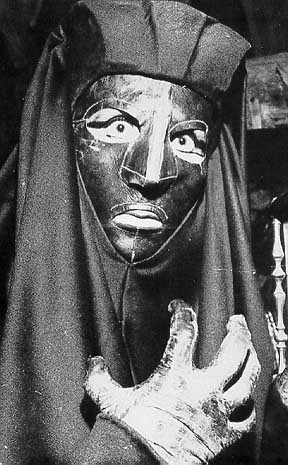 Although in the Netherlands there are more problems reported by schools and police with radical right wing youth and we have on average one mosque or Islamic school being vandalized or worse every 2 months, we have set up a policy that has to contain the threat coming from those Muslims. Take for example the recent proposal for banning the burqa in several European countries, including the Netherlands. One of the reasons is public safety; the apparent need to see each others faces in public. The ban however does not produce safety, it produces fear. Where only about 300 women wear the face veil in the Netherlands, the public now is convinced that we can see them everywhere and that tens of thousands of Muslim women wear it.
Other measures to increase public safety include more leeway for intelligence services to monitor and disturb people’s lives; even when there is no official charge, the US last week killed an American civilian Anwar al-Awlaki believed to be an Al Qaeda leader on foreign soil with no official charge or proof, the Dutch evicted several Muslim migrants being implicated in terrorist activities without any charge, the Dutch are active of supporters of the war on terror that caused the deaths of thousands and thousands innocent civilians in Iraq, Afghanistan and Africa. So if we talk about fear and safety, whose fear and whose safety do we actually mean? After 9/11 the whole risk management idea has turned into a political and commercial ritual that intends to magically reinforce safety but produces feelings of fear and aversion. In the preface of one of my favourite novels, Fear and loathing in Las Vegas, English writer Samuel Johnsson is quoted stating: “He who makes a beast of himself gets rid of the pain of being a man.” The quote refers to the book’s main character’s drug abuse in trying to escape the harsh vulnerabilities of American life and to the books main theme the failure of American counterculture to provide a lasting answer to the harsh realities. Fear is a drug, and policies and management tactics combined with politicians who use feelings of insecurity and plead loudly for ever harder measures to resolve fear, are nothing less than socially accepted models to achieve ritualistic highs and illusions of safety that in the end do nothing except than cultivate that fear.
The “Wave Speech” from Justin Grevich on Vimeo.
The cultivation of fear does not only affect people’s daily lives directly, but also our memories that keep the fear for the Other alive. This year on 9/11 the Moroccan-Dutch goalkeeper of a Dutch soccer team, Khalid Sinouh, tweeted he wanted ‘to concentrate on the present’ and that he ‘felt a little tired of all that 9/11 propaganda’ and closed it with ‘pffff’. The soccer team, Philips Sports Association (PSV) distanced itself from his statements and emphasized the goalkeeper made his statement as a private person (and therefore not as a representative of PSV). The case refers to the monopolization of meaning and memory whereby the purpose of such ceremonials, as French historian Renan has noted, is nothing but the reaffirming of group loyalty rather than the establishing of historical accuracy, let alone the presenting of an event in all its moral and political complexity. To remember is not just grieving it may also mean to harbor a vision of securing justice or vengeance long after it is time to put the guns away. Part of what happens in this production of memory and solidarity is the monopolization of the meaning of ’9/11?. I saw many people on twitter saying now is not the time of saying but let’s think of the thousands of children in Africa dying or let’s think about the victims of the War on Terror. If we say our thoughts go to the victims of 9/11, we of course mean to victims of the terrorist attack that hit the US that day, not other people in the US or elsewhere. The negative, and sometimes downright hostile, comments on the tweets of the Moroccan-Dutch goalie show that we ought to remember 9/11 in a particular way; with our thoughts focused on one particular event, one particular category of victims. The commemoration shows a world caught in arms, hate, and fear.
Now of course there is nothing wrong with risk management, counter-radicalization policies and public commemorations perse, but we should recognize that with the attempt to produce safety we also produce meaning. Given the intended and unintended negative consequences of public risk management and such commemorations, alternatives should be considered. This is possible. Remember the monk I was talking about in the beginning? This man desperately looking for salvation through martyrdom is now presented as an animal lover, pacifist and a Christian committed to dialogue. It maybe hard to believe that he once affirmed the false idea that it was a ‘a Muslim belief’ apparently widespread ‘at that time’ that to kill a Christian was a sure path to salvation. It may be hard to imagine that one day we actually celebrate a feast dedicated to the monk. But that is what we do. Tomorrow we on October 4 we celebrate the Feast of St Francis of Assisi. It is a also a day for animals, in Dutch dierendag, a popular day for pets to be “blessed”. I wish you a blessed day as well.

Dreams, Fear, Passion, Love and a 'Fokking' Golden Calf
Posted on October 3rd, 2011 by martijn.
Categories: Activism, Arts & culture.
Last week the Gala of the Golden Calf took place in the Netherlands. This is the Dutch equivalent for the Oscar Night with awards for best films, actors and so on. One of the movies nominated was Rabat, a roadmovie about three friends who have to bring a taxi to Rabat, Morocco. First Nadir (Nasrdin Dchar) wants to go on his own but his friends Abdel (Achmed Akkabi) and Zakaria (Marwan Kenzari) invite themselves (as good friends do of course). During their travel through Holland, Belgium, France, Spain and Morocco they fall in love, get arrested and abused by the police, rejected into a club because they are foreigners. Their friendship gets a blow when it is discovered that Nadir has kept a secret from his two mates for life. Looks like an ordinary roadmovie as we have seen before, and to a certain extend it is. But it is a very good one, in particular showing the evolution of friendship.
(Watch the trailer with English subtitles HERE)
Nasrdin Dchar won the Golden Calf for best leading actor and delivered a strong speech in which he told the youth in the Netherlands to keep dreaming and live life to the max. He referred to a recent statement made by Dutch minister of Foreign Affairs who stated according to him (it was a little more nuanced) that it is understandable that people are afraid of foreigners. Dchar also testified his passion and his love for several people including his parents who were clearly touched. See his speech here (apologies for the poor English subtitles, but they to capture what he said):
His speech evoked many reactions; some applauding him for his stance others criticizing him for bringing politics into this evening and others who stated that this was incitement to hatred. And again for others he was the representation of the Dutch multicultural generation and the other Netherlands, an answer to Geert Wilders and minister Verhagen.
Note: ‘Fokking’ is Dutch slang for the F-word
Dreams, Fear, Passion, Love and a ‘Fokking’ Golden Calf
Posted on October 3rd, 2011 by martijn.
Categories: Activism, Arts & culture.
Last week the Gala of the Golden Calf took place in the Netherlands. This is the Dutch equivalent for the Oscar Night with awards for best films, actors and so on. One of the movies nominated was Rabat, a roadmovie about three friends who have to bring a taxi to Rabat, Morocco. First Nadir (Nasrdin Dchar) wants to go on his own but his friends Abdel (Achmed Akkabi) and Zakaria (Marwan Kenzari) invite themselves (as good friends do of course). During their travel through Holland, Belgium, France, Spain and Morocco they fall in love, get arrested and abused by the police, rejected into a club because they are foreigners. Their friendship gets a blow when it is discovered that Nadir has kept a secret from his two mates for life. Looks like an ordinary roadmovie as we have seen before, and to a certain extend it is. But it is a very good one, in particular showing the evolution of friendship.
(Watch the trailer with English subtitles HERE)
Nasrdin Dchar won the Golden Calf for best leading actor and delivered a strong speech in which he told the youth in the Netherlands to keep dreaming and live life to the max. He referred to a recent statement made by Dutch minister of Foreign Affairs who stated according to him (it was a little more nuanced) that it is understandable that people are afraid of foreigners. Dchar also testified his passion and his love for several people including his parents who were clearly touched. See his speech here (apologies for the poor English subtitles, but they to capture what he said):
His speech evoked many reactions; some applauding him for his stance others criticizing him for bringing politics into this evening and others who stated that this was incitement to hatred. And again for others he was the representation of the Dutch multicultural generation and the other Netherlands, an answer to Geert Wilders and minister Verhagen.
Note: ‘Fokking’ is Dutch slang for the F-word
Protest tegen mogelijk verbod gezichtssluiers
Posted on September 27th, 2011 by martijn.
Categories: Activism, Gender, Kinship & Marriage Issues, ISIM/RU Research, Notes from the Field, Public Islam.
Over de recente plannen voor een verbod op gezichtssluier in het openbaar:
 Op Facebook is een pagina geopend naar aanleiding van de recente plannen voor een verbod op gezichtssluiers dat in zou moeten gaan op 1 januari 2013. Op deze pagina wordt opgeroepen tot een protest actie tegen de plannen:
PROTEST ACTIE TEGEN NIQAAB VERBOD BIJ 2de KAMER!
Time
07 October · 16:00 – 18:30
Location
Den HaagMet de wil en toestemming van Allaah zullen wij op vrijdag 7 oktober van 16.00 – 18.30 een actie houden. Daarin zullen wij onze ongenoegen uiten en dit verwerpen. Wij attenderen onze geliefde achterban dan ook om een gaatje vrij te houden op deze mooie vrijdag.
De protestactie zal plaatsvinden bij het Binnenhof.
Daarnaast is er een petitie opgesteld tegen de plannen:
Nee tegen boerkaverbod | petities.nl
Nee tegen boerkaverbod
4udtaMinister Donner wil het boerkaverbod gaan invoeren. Hij is van mening dat de boerka niet past in onze open samenleving en dat vrouwen met de gezichtssluier niet volwaardig mee kunnen doen.
Voor een papieren versie mail naar tegenboerkaverbod@hotmail.nl en wij sturen u zo snel mogelijk een pdf.
VERGEET UW ONDERTEKENING NIET TE BEVESTIGEN VIA EMAIL
PETITIE
Wijwillen dat moslima’s die hiervoor kiezen de vrijheid hebben de gezichtssluier te dragen.
constaterenWij constateren dat moslima’s met dit verbod fundamenteel in hun vrijheid worden beperkt. Wij willen erop wijzen dat een groot deel van deze vrouwen Nederlandse bekeerlingen zijn (en dus niet gedwongen zijn door familie).
Wij denken dat een verbod deze vrouwen zal stigmatiseren en hen buiten de maatschappij zal plaatsen.
Wij willen wijzen op Groot Brittannië waar vrouwen met de gezichtssluier gewoon meedraaien in de samenleving.
en verzoekenWij wensen dat het boerkaverbod niet door de kamer wordt aangenomen.
Wij willen de religieuze vrijheid om de gezichtssluier in Nederland te dragen zonder hiervoor boetes te ontvangen.


Zie ook het KRO-programma De Wandeling waarin Shaista Khan aan het woord komt die een niqab draagt.:
In tegenstelling tot minister Donner volgens wie de gezichtssluier geen religieus gebruik is, stelt Shaista Khan in die uitzending het tegendeel. Op Wijblijvenhier.nl benadrukt Malika Mouhdi het belang van keuzevrijheid voor vrouwen:
De keuze is aan mij alleen | Wijblijvenhier.nl
Hoewel ik ‘verleidelijke’ kleding absoluut niet iets vind dat je buitenshuis zou moeten dragen, is het niet aan mannen of andere vrouwen zoals ik om besluiten te maken over wat iemand moet dragen. Of het nou gaat om een kort rokje of een niqaab, het is en blijft eenieders eigen keuze. Het is immers mijn lichaam en er is niemand die er iets over te zeggen heeft behalve ikzelf. Zeker niet een of andere gouverneur, een minister Donner of een groep zogenaamde feministen die zo verbitterd zijn dat ze niet kunnen inzien waarom iemand zichzelf wel wil bedekken. It’s my body and my choice, deal with it!
Ik zal de verschillende vormen van activisme blijven volgen. Reacties en tips zijn welkom natuurlijk.
'Burqa ban' in Europe
Posted on September 26th, 2011 by martijn.
Categories: Activism, Gender, Kinship & Marriage Issues, Public Islam.
 video platformvideo managementvideo solutionsvideo player
France’s Burqa Ban: Two Women Fined for Covering Faces – ABC News
“The problem is not the fine,” their lawyer told the German news agency DPA on Thursday. “The problem is that these women are effectively under house arrest. That’s the real punishment.”
The French proceedings were closely followed by governments around Europe. Italy and Belgium have passed similar legislation, while Denmark, the Netherlands and Germany have debated them. A number of nations already forbid face-covering garments for state employees while they’re on the job — including teachers — but a full ban has never been tested by modern European democracies.
“(The ban) simply violates my individual freedom, my freedom of thought, of religious expression and practice,” Ahmas told the Daily Telegraph, “and I have absolutely no intention of applying it.”
The French law has popular support, and some politicians claim they want to save Muslim women from the backward influence of religiously conservative men.
“There are extremist gurus out there and we must stop their influence and barbaric ideologies,” a Communist Party lawmaker named André Gerin told reporters last year, according to USA Today. “Covering one’s face undermines one’s identity, a woman’s femininity and gender equality.”
But the French law makes no reference to religion or gender. It forbids face coverings but makes a number of exceptions — for motorcycle helmets, for example, or fencing and ski masks.
‘Burqa ban’ in Europe
Posted on September 26th, 2011 by martijn.
Categories: Activism, Gender, Kinship & Marriage Issues, Public Islam.
France’s Burqa Ban: Two Women Fined for Covering Faces – ABC News
“The problem is not the fine,” their lawyer told the German news agency DPA on Thursday. “The problem is that these women are effectively under house arrest. That’s the real punishment.”
The French proceedings were closely followed by governments around Europe. Italy and Belgium have passed similar legislation, while Denmark, the Netherlands and Germany have debated them. A number of nations already forbid face-covering garments for state employees while they’re on the job — including teachers — but a full ban has never been tested by modern European democracies.
“(The ban) simply violates my individual freedom, my freedom of thought, of religious expression and practice,” Ahmas told the Daily Telegraph, “and I have absolutely no intention of applying it.”
The French law has popular support, and some politicians claim they want to save Muslim women from the backward influence of religiously conservative men.
“There are extremist gurus out there and we must stop their influence and barbaric ideologies,” a Communist Party lawmaker named André Gerin told reporters last year, according to USA Today. “Covering one’s face undermines one’s identity, a woman’s femininity and gender equality.”
But the French law makes no reference to religion or gender. It forbids face coverings but makes a number of exceptions — for motorcycle helmets, for example, or fencing and ski masks.
Wikileaks: de VS, Nederlandse moslims en (anti-)radicalisering
Posted on September 10th, 2011 by martijn.
Categories: Activism, International Terrorism, ISIM/RU Research, Murder on theo Van Gogh and related issues, Notes from the Field, Public Islam, Religious and Political Radicalization, Young Muslims.
Na de aanslagen van 11 september stond terrorisme natuurlijk hoog op de politieke agenda. En dan met name terreuraanslagen (mogelijkerwijze) gepleegd door moslims. Na 9/11 werden moslims dan ook nauwgezet gemonitored door de Nederlandse staat zoals blijkt uit een recent vrijgegeven ‘secret cable‘ bij Wikileaks. Het beeld is ontluisterend. (more…)