Religious and Political Radicalization
You are looking at posts in the category Religious and Political Radicalization.
| M | T | W | T | F | S | S |
|---|---|---|---|---|---|---|
| « Sep | ||||||
| 1 | 2 | 3 | 4 | |||
| 5 | 6 | 7 | 8 | 9 | 10 | 11 |
| 12 | 13 | 14 | 15 | 16 | 17 | 18 |
| 19 | 20 | 21 | 22 | 23 | 24 | 25 |
| 26 | 27 | 28 | 29 | 30 | 31 | |
Pages
- About
- C L O S E R moves to….C L O S E R
- Contact Me
- Interventions – Forces that Bind or Divide
- ISIM Review via Closer
- Publications
- Research
Categories
- (Upcoming) Events (33)
- [Online] Publications (26)
- Activism (117)
- anthropology (113)
- Method (13)
- Arts & culture (88)
- Asides (2)
- Blind Horses (33)
- Blogosphere (192)
- Burgerschapserie 2010 (50)
- Citizenship Carnival (5)
- Dudok (1)
- Featured (5)
- Gender, Kinship & Marriage Issues (265)
- Gouda Issues (91)
- Guest authors (58)
- Headline (76)
- Important Publications (159)
- Internal Debates (275)
- International Terrorism (437)
- ISIM Leiden (5)
- ISIM Research II (4)
- ISIM/RU Research (171)
- Islam in European History (2)
- Islam in the Netherlands (219)
- Islamnews (56)
- islamophobia (59)
- Joy Category (56)
- Marriage (1)
- Misc. News (891)
- Morocco (70)
- Multiculti Issues (749)
- Murder on theo Van Gogh and related issues (326)
- My Research (118)
- Notes from the Field (82)
- Panoptic Surveillance (4)
- Public Islam (244)
- Religion Other (109)
- Religious and Political Radicalization (635)
- Religious Movements (54)
- Research International (55)
- Research Tools (3)
- Ritual and Religious Experience (58)
- Society & Politics in the Middle East (159)
- Some personal considerations (146)
- Deep in the woods… (18)
- Stadsdebat Rotterdam (3)
- State of Science (5)
- Twitwa (5)
- Uncategorized (74)
- Young Muslims (459)
- Youth culture (as a practice) (157)
General
- ‘In the name of Allah, Most Gracious, Most Merciful’
- – Lotfi Haddi –
- …Kelaat Mgouna…….Ait Ouarchdik…
- ::–}{Nour Al-Islam}{–::
- Al-islam.nl De ware godsdienst voor Allah is de Islam
- Allah Is In The House
- Almaas
- amanullah.org
- Amr Khaled Official Website
- An Islam start page and Islamic search engine – Musalman.com
- arabesque.web-log.nl
- As-Siraat.net
- assadaaka.tk
- Assembley for the Protection of Hijab
- Authentieke Kennis
- Azaytouna – Meknes Azaytouna
- berichten over allochtonen in nederland – web-log.nl
- Bladi.net : Le Portail de la diaspora marocaine
- Bnai Avraham
- BrechtjesBlogje
- Classical Values
- De islam
- DimaDima.nl / De ware godsdienst? bij allah is de islam
- emel – the muslim lifestyle magazine
- Ethnically Incorrect
- fernaci
- Free Muslim Coalition Against Terrorism
- Frontaal Naakt. Ongesluierde opinies, interviews & achtergronden
- Hedendaagse wetenswaardigheden…
- History News Network
- Homepage Al Nisa
- hoofddoek.tk – Een hoofddoek, je goed recht?
- IMRA: International Muslima Rights Association
- Informed Comment
- Insight to Religions
- Instapundit.com
- Interesting Times
- Intro van Abdullah Biesheuvel
- islaam
- Islam Ijtihad World Politics Religion Liberal Islam Muslim Quran Islam in America
- Islam Ijtihad World Politics Religion Liberal Islam Muslim Quran Islam in America
- Islam Website: Islam, Islamic Studies, Arabic, Religion
- Islamforum
- Islamic Philosophy Online
- Islamica Magazine
- islamicate
- Islamophobia Watch
- Islamsevrouw.web-log.nl
- Islamwereld-alles wat je over de Islam wil weten…
- Jihad: War, Terrorism, and Peace in Islam
- JPilot Chat Room
- Madrid11.net
- Marocstart.nl – De marokkaanse startpagina!
- Maryams.Net – Muslim Women and their Islam
- Michel
- Modern Muslima.com
- Moslimjongeren Amsterdam
- Moslimjongeren.nl
- Muslim Peace Fellowship
- Muslim WakeUp! Sex & The Umma
- Muslimah Connection
- Muslims Against Terrorism (MAT)
- Mutma’inaa
- namira
- Otowi!
- Ramadan.NL
- Religion, World Religions, Comparative Religion – Just the facts on the world\’s religions.
- Ryan
- Sahabah
- Salafi Start Siden – The Salafi Start Page
- seifoullah.tk
- Sheikh Abd al Qadir Jilani Home Page
- Sidi Ahmed Ibn Mustafa Al Alawi Radhiya Allahu T’aala ‘Anhu (Islam, tasawuf – Sufism – Soufisme)
- Stichting Vangnet
- Storiesofmalika.web-log.nl
- Support Sanity – Israel / Palestine
- Tekenen van Allah\’s Bestaan op en in ons Lichaam
- Terrorism Unveiled
- The Coffee House | TPMCafe
- The Inter Faith Network for the UK
- The Ni’ma Foundation
- The Traveller’s Souk
- The \’Hofstad\’ terrorism trial – developments
- Thoughts & Readings
- Uitgeverij Momtazah | Helmond
- Un-veiled.net || Un-veiled Reflections
- Watan.nl
- Welkom bij Islamic webservices
- Welkom bij vangnet. De site voor islamitische jongeren!
- welkom moslim en niet moslims
- Yabiladi Maroc – Portail des Marocains dans le Monde
Dutch [Muslims] Blogs
- Hedendaagse wetenswaardigheden…
- Abdelhakim.nl
- Abdellah.nl
- Abdulwadud.web-log.nl
- Abou Jabir – web-log.nl
- Abu Bakker
- Abu Marwan Media Publikaties
- Acta Academica Tijdschrift voor Islam en Dialoog
- Ahamdoellilah – web-log.nl
- Ahlu Soennah – Abou Yunus
- Ahlul Hadeeth
- Ahlul Hadeeth
- Al Moudjahideen
- Al-Adzaan
- Al-Islaam: Bismilaahi Rahmaani Rahiem
- Alesha
- Alfeth.com
- Anoniempje.web-log.nl
- Ansaar at-Tawheed
- At-Tibyan Nederland
- beni-said.tk
- Blog van moemina3 – Skyrock.com
- bouchra
- CyberDjihad
- DE SCHRIJVENDE MOSLIMS
- DE VROLIJKE MOSLIM ;)
- Dewereldwachtopmij.web-log.nl
- Dien~oel~Islaam
- Eali.web-log.nl
- Een genade voor de werelden
- Enige wapen tegen de Waarheid is de leugen…
- ErTaN
- ewa
- Ezel & Os v2
- Gizoh.tk [.::De Site Voor Jou::.]
- Grappige, wijze verhalen van Nasreddin Hodja. Turkse humor.
- Hanifa Lillah
- hayya~ala~assalaah!
- Het laatste nieuws lees je als eerst op Maroc-Media
- Homow Universalizzz
- Ibn al-Qayyim
- IslaamLive Mail
- IslaamLive Mail
- Islam Blog – Juli 2007
- Islam in het Nieuws – web-log.nl
- Islam, een religie
- Islam, een religie
- Islamic Sisters – web-log.nl
- Islamiway’s Weblog
- Islamtawheed’s Blog
- Jihaad
- Jihad
- Journalista
- La Hawla Wa La Quwatta Illa Billah
- M O S L I M J O N G E R E N
- M.J.Ede – Moslimjongeren Ede
- Mahdi\’s Weblog | Vrijheid en het vrije woord | punt.nl: Je eigen gratis weblog, gratis fotoalbum, webmail, startpagina enz
- Maktab.nl (Zawaj – islamitische trouwsite)
- Marocdream.nl – Home
- Marokkaanse.web-log.nl
- Marokkanen Weblog
- Master Soul
- Miboon
- Miesjelle.web-log.nl
- Mijn Schatjes
- Moaz
- moeminway – web-log.nl
- Moslima_Y – web-log.nl
- mosta3inabilaah – web-log.nl
- Muhaajir in islamitisch Zuid-Oost Azië
- Mumin al-Bayda (English)
- Mustafa786.web-log.nl
- Oprecht – Poort tot de kennis
- Said.nl
- saifullah.nl – Jihad al-Haq begint hier!
- Salaam Aleikum
- Sayfoudien – web-log.nl
- soebhanAllah
- Soerah19.web-log.nl – web-log.nl
- Steun Palestina
- Stichting Moslimanetwerk
- Stories of Malika
- supermaroc
- Ummah Nieuws – web-log.nl
- Volkskrant Weblog — Alib Bondon
- Volkskrant Weblog — Moslima Journalista
- Vraag en antwoord…
- wat is Islam
- Wat is islam?
- Weblog – a la Maroc style
- website van Jamal
- Wij Blijven Hier
- Wij Blijven Hier
- www.BenAyad.be – Islam en Actua
- www.moslima.web-log.nl
- Yakini Time
- Youth Of Islam
- Youth Of Islam
- [fikra]
Non-Dutch Muslims Blogs
- Lanallah __Islamic BlogZine__
- This journey ends but only with The Beginning
- ‘the middle place’
- …Never Judge a Person By His or Her Blog…
- …under the tree…
- A Comment on PMUNA
- A Dervish’s Du`a’
- A Family in Baghdad
- A Garden of Children
- A Muslim Mother’s Thoughts / Islamic Parenting
- A Struggle in Uncertainty, Such is Life
- About Afghanistan
- adnan.org: good design, bad idea
- Afiyah
- Ahmeds World of Islam
- Al Musawwir
- Al-Musharaka
- Almiraya tBLOG – O, happy the soul that saw its own faults
- Almusawwir
- an open window
- Anak Alam
- aNaRcHo AkBaR
- Anthology
- AnthroGal’s World
- Arabian Passion
- ArRihla
- Articles Blog
- Asylum Seeker
- avari-nameh
- Baghdad Burning
- Being Noor Javed
- Bismillah
- bloggin’ muslimz.. Linking Muslim bloggers around the globe
- Blogging Islamic Perspective
- Chapati Mystery
- City of Brass – Principled pragmatism at the maghrib of one age, the fajr of another
- COUNTERCOLUMN: All Your Bias Are Belong to Us
- d i z z y l i m i t s . c o m >> muslim sisters united w e b r i n g
- Dar-al-Masnavi
- Day in the life of an American Muslim Woman
- Don’t Shoot!…
- eat-halal guy
- Eye on Gay Muslims
- Eye on Gay Muslims
- Figuring it all out for nearly one quarter of a century
- Free Alaa!
- Friends, Romans, Countrymen…. lend me 5 bux!
- From Peer to Peer ~ A Weblog about P2P File & Idea Sharing and More…
- Ghost of a flea
- Ginny’s Thoughts and Things
- God, Faith, and a Pen: The Official Blog of Dr. Hesham A. Hassaballa
- Golublog
- Green Data
- gulfreporter
- Hadeeth Blog
- Hadouta
- Hello from the land of the Pharaoh
- Hello From the land of the Pharaohs Egypt
- Hijabi Madness
- Hijabified
- HijabMan’s Blog
- Ihsan-net
- Inactivity
- Indigo Jo Blogs
- Iraq Blog Count
- Islam 4 Real
- Islamiblog
- Islamicly Locked
- Izzy Mo’s Blog
- Izzy Mo’s Blog
- Jaded Soul…….Unplugged…..
- Jeneva un-Kay-jed- My Bad Behavior Sanctuary
- K-A-L-E-I-D-O-S-C-O-P-E
- Lawrence of Cyberia
- Letter From Bahrain
- Life of an American Muslim SAHM whose dh is working in Iraq
- Manal and Alaa\’s bit bucket | free speech from the bletches
- Me Vs. MysElF
- Mental Mayhem
- Mere Islam
- Mind, Body, Soul : Blog
- Mohammad Ali Abtahi Webnevesht
- MoorishGirl
- Muslim Apple
- muslim blogs
- Muslims Under Progress…
- My heart speaks
- My Little Bubble
- My Thoughts
- Myself | Hossein Derakhshan’s weblog (English)
- neurotic Iraqi wife
- NINHAJABA
- Niqaabi Forever, Insha-Allah Blog with Islamic nasheeds and lectures from traditional Islamic scholars
- Niqabified: Irrelevant
- O Muhammad!
- Otowi!
- Pak Positive – Pakistani News for the Rest of Us
- Periphery
- Pictures in Baghdad
- PM’s World
- Positive Muslim News
- Procrastination
- Prophet Muhammad
- Queer Jihad
- Radical Muslim
- Raed in the Middle
- RAMBLING MONOLOGUES
- Rendering Islam
- Renegade Masjid
- Rooznegar, Sina Motallebi’s WebGard
- Sabbah’s Blog
- Salam Pax – The Baghdad Blog
- Saracen.nu
- Scarlet Thisbe
- Searching for Truth in a World of Mirrors
- Seeing the Dawn
- Seeker’s Digest
- Seekersdigest.org
- shut up you fat whiner!
- Simply Islam
- Sister Scorpion
- Sister Soljah
- Sister Surviving
- Slow Motion in Style
- Sunni Sister: Blahg Blahg Blahg
- Suzzy’s id is breaking loose…
- tell me a secret
- The Arab Street Files
- The Beirut Spring
- The Islamic Feminista
- The Land of Sad Oranges
- The Muslim Contrarian
- The Muslim Postcolonial
- The Progressive Muslims Union North America Debate
- The Rosetta Stone
- The Traceless Warrior
- The Wayfarer
- TheDesertTimes
- think halal: the muslim group weblog
- Thoughts & Readings
- Through Muslim Eyes
- Turkish Torque
- Uncertainty:Iman and Farid’s Iranian weblog
- UNMEDIA: principled pragmatism
- UNN – Usayd Network News
- Uzer.Aurjee?
- Various blogs by Muslims in the West. – Google Co-op
- washed away memories…
- Welcome to MythandCulture.com and to daily Arrows – Mythologist, Maggie Macary’s blog
- word gets around
- Writeous Sister
- Writersblot Home Page
- www.BenAyad.be – Islam en Actua
- www.Mas’ud’s blog
- \’Aqoul
- ~*choco-bean*~
General Islam Sites
- :: Islam Channel :: – Welcome to IslamChannel Official Website
- Ad3iyah(smeekbeden)
- Al-maktoum Islamic Centre Rotterdam
- Assalamoe Aleikoem Warhmatoe Allahi Wa Barakatuhoe.
- BouG.tk
- Dades Islam en Youngsterdam
- Haq Islam – One stop portal for Islam on the web!
- Hight School Teacher Muhammad al-Harbi\’s Case
- Ibn Taymiyah Pages
- Iskandri
- Islam
- Islam Always Tomorrow Yesterday Today
- Islam denounces terrorism.com
- Islam Home
- islam-internet.nl
- Islamic Artists Society
- Leicester~Muslims
- Mere Islam
- MuslimSpace.com | MuslimSpace.com, The Premiere Muslim Portal
- Safra Project
- Saleel.com
- Sparkly Water
- Statements Against Terror
- Understand Islam
- Welcome to Imaan UK website
Islamic Scholars
Social Sciences Scholars
- ‘ilm al-insaan: Talking About the Talk
- :: .. :: zerzaust :: .. ::
- After Sept. 11: Perspectives from the Social Sciences
- Andrea Ben Lassoued
- Anth 310 – Islam in the Modern World (Spring 2002)
- anthro:politico
- AnthroBase – Social and Cultural Anthropology – A searchable database of anthropological texts
- AnthroBlogs
- AnthroBoundaries
- Anthropologist Community
- anthropology blogs
- antropologi.info – Social and Cultural Anthropology in the News
- Arabist Jansen
- Between Secularization and Religionization Vrije Universiteit Amsterdam
- Bin Gregory Productions
- Blog van het Blaise Pascal Instituut
- Boas Blog
- Causes of Conflict – Thoughts on Religion, Identity and the Middle East (David Hume)
- Cicilie among the Parisians
- Cognitive Anthropology
- Comunidade Imaginada
- Cosmic Variance
- Critical Muslims
- danah boyd
- Deep Thought
- Dienekes’ Anthropology Blog
- Digital Islam
- Erkan\’s field diary
- Ethno::log
- Evamaria\’s ramblings –
- Evan F. Kohlmann – International Terrorism Consultant
- Experimental Philosophy
- For the record
- Forum Fridinum [Religionresearch.org]
- Fragments weblog
- From an Anthropological Perspective
- Gregory Bateson
- Islam & Muslims in Europe *)
- Islam, Islamic Studies, Arabic, Religion
- Islam, Muslims, and an Anthropologist
- Jeremy’s Weblog
- JourneyWoman
- Juan Cole – ‘Documents on Terrorist Abu Musab al-Zarqawi’
- Keywords
- Kijken naar de pers
- languagehat.com
- Left2Right
- Leiter Reports
- Levinas and multicultural society
- Links on Islam and Muslims
- log.squig.org
- Making Anthropology Public
- Martijn de Koning Research Pages / Onderzoekspaginas
- Material World
- MensenStreken
- Modern Mass Media, Religion and the Imagination of Communities
- Moroccan Politics and Perspectives
- Multicultural Netherlands
- My blog’s in Cambridge, but my heart is in Accra
- National Study of Youth and Religion
- Natures/Cultures
- Nomadic Thoughts
- On the Human
- Philip Greenspun’s Weblog:
- Photoethnography.com home page – a resource for photoethnographers
- Qahwa Sada
- RACIAL REALITY BLOG
- Religion Gateway – Academic Info
- Religion News Blog
- Religion Newswriters Association
- Religion Research
- rikcoolsaet.be – Rik Coolsaet – Homepage
- Rites [Religionresearch.org]
- Savage Minds: Notes and Queries in Anthropology – A Group Blog
- Somatosphere
- Space and Culture
- Strange Doctrines
- TayoBlog
- Teaching Anthropology
- The Angry Anthropologist
- The Gadflyer
- The Immanent Frame | Secularism, religion and the public sphere
- The Onion
- The Panda\’s Thumb
- TheAnthroGeek
- This Blog Sits at the
- This Blog Sits at the intersection of Anthropology & Economics
- verbal privilege
- Virtually Islamic: Research and News about Islam in the Digital Age
- Wanna be an Anthropologist
- Welcome to Framing Muslims – International Research Network
- Yahya Birt
Women's Blogs / Sites
- * DURRA * Danielle Durst Britt
- -Fear Allah as He should be Feared-
- a literary silhouette
- a literary silhouette
- A Thought in the Kingdom of Lunacy
- AlMaas – Diamant
- altmuslimah.com – exploring both sides of the gender divide
- Assalaam oe allaikoum Nour al Islam
- Atralnada (Morning Dew)
- ayla\’s perspective shifts
- Beautiful Amygdala
- bouchra
- Boulevard of Broken Dreams
- Chadia17
- Claiming Equal Citizenship
- Dervish
- Fantasy web-log – web-log.nl
- Farah\’s Sowaleef
- Green Tea
- hayya~ala~assalaah!
- Hilsen Fra …
- Islamucation
- kaleidomuslima: fragments of my life
- Laila Lalami
- Marhaban.web-log.nl – web-log.nl
- Moslima_Y – web-log.nl
- Muslim-Refusenik The official website of Irshad Manji
- Myrtus
- Noor al-Islaam – web-log.nl
- Oh You Who Believe…
- Raising Yousuf: a diary of a mother under occupation
- SAFspace
- Salika Sufisticate
- Saloua.nl
- Saudi Eve
- SOUL, HEART, MIND, AND BODY…
- Spirit21 – Shelina Zahra Janmohamed
- Sweep the Sunshine | the mundane is the edge of glory
- Taslima Nasrin
- The Color of Rain
- The Muslimah
- Thoughts Of A Traveller
- Volkskrant Weblog — Islam, een goed geloof
- Weblog Raja Felgata | Koffie Verkeerd – The Battle | punt.nl: Je eigen gratis weblog, gratis fotoalbum, webmail, startpagina enz
- Weblog Raja Felgata | WRF
- Writing is Busy Idleness
- www.moslima.web-log.nl
- Zeitgeistgirl
- Zusters in Islam
- ~:: MARYAM ::~ Tasawwuf Blog
Ritueel en religieuze beleving Nederland
- – Alfeth.com – NL
- :: Al Basair ::
- Abu Marwan Media Publikaties
- Ahlalbait Jongeren
- Ahlul Hadeeth
- Ahlul Hadeeth
- Al-Amien… De Betrouwbare – Home
- Al-Ummah
- Al-Ummah
- Al-Ummah
- Al-Wasatiyyah.com – Home
- Anwaar al-Islaam
- anwaaralislaam.tk
- Aqiedah’s Weblog
- Arabische Lessen – Home
- Arabische Lessen – Home
- Arrayaan.net
- At-taqwa.nl
- Begrijp Islam
- Bismillaah – deboodschap.com
- Citaten van de Salaf
- Dar al-Tarjama WebSite
- Dawah-online.com
- de koraan
- de koraan
- De Koran . net – Het Islaamitische Fundament op het Net – Home
- De Leidraad, een leidraad voor je leven
- Dien~oel~Islaam
- Dien~oel~Islaam
- Faadi Community
- Ghimaar
- hayya~ala~assalaah!
- hayya~ala~assalaah!
- Ibn al-Qayyim
- IMAM-MALIK-Alles over Islam
- IQRA ROOM – Koran studie groep
- Islaam voor iedereen
- Islaam voor iedereen
- Islaam: Terugkeer naar het Boek (Qor-aan) en de Soennah volgens het begrip van de Vrome Voorgangers… – Home
- Islaam: Terugkeer naar het Boek (Qor-aan) en de Soennah volgens het begrip van de Vrome Voorgangers… – Home
- IslaamLive Mail
- IslaamLive Mail
- IslaamLive Mail
- islam :: messageboard
- Islam City NL, Islam en meer
- Islam, een religie
- Islamia.nl – Islamic Shop – Islamitische Winkel
- Islamitische kleding
- Islamitische kleding
- Islamitische smeekbedes
- islamtoday
- islamvoorjou – Informatie over Islam, Koran en Soenah
- kebdani.tk
- KoranOnline.NL
- Lees de Koran – Een Openbaring voor de Mensheid
- Lifemakers NL
- Marocstart.nl | Islam & Koran Startpagina
- Miesbahoel Islam Zwolle
- Mocrodream Forums
- Moslims in Almere
- Moslims online jong en vernieuwend
- Nihedmoslima
- Oprecht – Poort tot de kennis
- Quraan.nl :: quran koran kuran koeran quran-voice alquran :: Luister online naar de Quraan
- Quraan.nl online quraan recitaties :: Koran quran islam allah mohammed god al-islam moslim
- Selefie Nederland
- Stichting Al Hoeda Wa Noer
- Stichting Al Islah
- StION Stichting Islamitische Organisatie Nederland – Ahlus Sunnat Wal Djama\’ah
- Sunni Publicaties
- Sunni.nl – Home
- Teksten van Aboe Ismaiel
- Terug Naar De Dien – Home
- Terug Naar De Dien – Home
- Terug Naar De Dien – Home
- Uw Keuze
- www.ahloelhadieth.com
- www.ahloelhadieth.com
- www.al-thabaat.com
- www.hijaab.com
- www.uwkeuze.net
- Youth Of Islam
- Zegswijzen van de Wijzen
- \’\’ Leid ons op het rechte pad het pad degenen aan wie Gij gunsten hebt geschonken\’\’
Muslim News
Moslims & Maatschappij
Arts & Culture
- : : SamiYusuf.com : : Copyright Awakening 2006 : :
- amir normandi, photographer – bio
- Ani – SINGING FOR THE SOUL OF ISLAM – HOME
- ARTEEAST.ORG
- AZIZ
- Enter into The Home Website Of Mecca2Medina
- Kalima Translation – Reviving Translation in the Arab world
- lemonaa.tk
- MWNF – Museum With No Frontiers – Discover Islamic Art
- Nader Sadek
Misc.
'Fundamentalism'
Islam & commerce
2
Morocco
[Online] Publications
- ACVZ :: | Preliminary Studies | About marriage: choosing a spouse and the issue of forced marriages among Maroccans, Turks and Hindostani in the Netherlands
- ACVZ :: | Voorstudies | Over het huwelijk gesproken: partnerkeuze en gedwongen huwelijken onder Marokkaanse, Turkse en Hindostaanse Nederlanders
- Kennislink – ‘Dit is geen poep wat ik praat’
- Kennislink – Nederlandse moslims
Religious Movements
- :: Al Basair ::
- :: al Haqq :: de waarheid van de Islam ::
- ::Kalamullah.Com::
- Ahloelhadieth.com
- Ahlul Hadeeth
- al-Madinah (Medina) The City of Prophecy ; Islamic University of Madinah (Medina), Life in Madinah (Medina), Saudi Arabia
- American Students in Madinah
- Aqiedah’s Weblog
- Dar al-Tarjama WebSite
- Faith Over Fear – Feiz Muhammad
- Instituut voor Opvoeding & Educatie
- IslaamLive Mail
- IslaamLive Mail
- islamtoday
- Moderate Muslims Refuted
- Rise And Fall Of Salafi Movement in the US by Umar Lee
- Selefie Dawah Nederland
- Selefie Nederland
- Selefienederland
- Stichting Al Hoeda Wa Noer
- Teksten van Aboe Ismaiel
- www.ahloelhadieth.com
- www.BenAyad.be – Islam en Actua
- Youth Of Islam

'Laughing Killer': Bouyeri and the Murder of Theo van Gogh
Posted on November 2nd, 2012 by martijn.
Categories: International Terrorism, Murder on theo Van Gogh and related issues, Notes from the Field, Religious and Political Radicalization.
On 2 November 2004 Mohammed Bouyeri killed Dutch writer and film director Theo van Gogh. He shot him, slit his throat and planted a knife in his chest with a letter to Ayaan Hirsi Ali attached to it. In Bouyeri’s view, violence against the infidels was not only allowed by Islam, or necessary to free Muslims from oppression by the ‘infidels’, but a direct command from Allah. According to him this order is clear and prescribed in the text ‘The Obligation’ referring to the obligation to kill ‘those who insult the Prophet’. This text is based upon the writings of Ibn Taymiyyah, an Islamic scholar who lived at the height of the Mongol threat and whose work was translated by Mohammed Bouyeri. Bouyeri’s reading of that text convinced him that comments such as uttered by Hirsi Ali, Wilders and Van Gogh about Islam and the prophet Muhammad, were insults such as Ibn Taymiyyah had referred to, and that consequentially the only proper response was to kill them. Such a punishment is thus not inspired by the insult of Muslims as such. If that were the case, the Muslim doing the executions would be following his own impulses. Instead, what he should be doing is obeying Allah’s will. After all, it was Allah Himself who had ordained this punishment. Any ‘good’ Muslim would have to act upon this order, or end up being an infidel. His reading of this text was heavily disputed by Salafi Muslims but at that time he and his group were already outside the circles of the Salafi in the Netherlands to a large extent.
Bouyeri clearly saw himself as an instrument of Allah and in his open letter to Hirsi Ali pinned upon Van Gogh’s body he claimed following the footsteps of the Prophet Muhammad. One of the most remarkable references in his letter (and again strongly contested by other Muslims) was to the Prophet as the ‘laughing killer’: Peace and Blessings on the Amir of the Mujahidin, the Laughing Killer Mohammed the Prophet of God (God’s Peace be Upon him) [Vrede en zegeningen op de Emir van de Mujahideen, de lachende doder Mohammed Rasoeloe Allah (Sala Allaho alaihie wa Sallam)]. This is a very unusual epithet, so unusual that it is worthwhile to have a look where it might have come from since it apparently does not appear in any of the accepted hadith books.
A similar reference is found after Bouyeri’s act in the letter claiming responsibility for the London bombings: ‘In the name of God, the Merciful, the Compassionate, may peace be upon the cheerful one and undaunted fighter, Prophet Muhammad, God’s peace be upon him.’ The phrase in Arabic (ad-Dahûk al-Qattâl), can be translated as ‘the cheerful one and undaunted fighter’, meaning constantly laughing and lethal and ‘murderous, deadly, lethal’. An interesting reference to this text comes from Iraqi suicide bombers since a similar text can be found among them: ‘May peace be upon the cheerful one and undaunted fighter, Prophet Muhammad, God’s peace be upon him.’ Furthermore, Bouyeri’s reference may also be based upon a statement by Omar Bakri, former leader of the radical Al Muhajiroun in the UK. In an interview with Jamestown Foundation he was asked about the 9/11 attacks and whether they were Islamic or not. Omar Bakri Mohammed responded:
The Jamestown Foundation: Al-Muhajiroun in the UK: An Interview with Sheikh Omar Bakri Mohammed
A: The Prophet Muhammad once said to the enemy: I have come to terrorize you; he said: “O, people of Qureish I have come to slaughter you’; in another quote he said: ‘I am the Prophet who kills while laughing’.
Q: Are you sure these traits are attributable to the Prophet Muhammad?
A: I can quote to you the authentic references. Anyway for me “terrorism” is not necessarily a bad word; it depends on the context and whether it is based on the commands of Allah.
and on Living Islam I found this:
Various Shorter Texts by Shaykh Gibril Haddad
he [referring to Omar Bakri, MdK) states:
“ana al-dhahUk al-qattAl”
which i have seen translated as “i am the cheerful one, the dauntless fighter and would this be the most accurate rendering into english?
Ana al-dahuk al-qattal: “I am the oft-smiling one and I am the fierce warrior.”
Yes, this is related with its chain from Ibn `Abbas by the Shafi`i and Maliki philologist and litterateur Ahmad ibn Faris (d. 395) in his brief _Asma’u Rasulillah (salla Allahu `alayhi wa-Sallam) wa- Ma`aniha_ (Kuwait: Markaz al-Makhtutat, 1989). Al-Suyuti adduces the latter’s chain in his _Riyad al-Aniqa_ and al-Dhahabi mentions the report in the volume on Sira of his massive _Tarikh al-Islam_.
Note: “Dahuk” is germane to “qattal” in the sense that “al-dahhak,” which also means “the oft-smiling one,” is synonymous with “he of scathing courage in battle” as mentioned by al-Qastallani according to al-Nabhani in _al-Asma fima li-Sayyidina Muhammadin min al-Asma_.
Blessings and peace on the Prophet, his Family, and his Companions.
gibril
[SP 2006-05-12]
As said this was heavily disputed by other Muslims (including Salafis) and I haven’t found a reference anywhere in the major sources. It also doesn’t really matter. What matters here is what Bouyeri meant to do, meant to perform with this statement. By the term ‘laughing killer’ Bouyeri probably meant to be a ‘cheerful and undaunted fighter’, a person who goes to battle cheerfully and undaunted because he ‘knows’ God supports him. He does not fight because of feelings of rage against his enemies but because God wants him to. With this Bouyeri at the same time demonstrates his attempt to emulate his personal idea of the prophet and to build on the tradition of (what he saw as) contemporary true Muslims: the freedom fighters in Iraq. For him it was of crucial importance not to fight out of anger or frustration but solely because God asked him; he re-defined himself as an instrument of God.
This explanation of the Van Gogh’s murder can be sustained by an analysis of the particular form of the deed, performed as a ritual killing, and by the expectations of the perpetrator to be killed afterwards by policemen. The ritual killing of Van Gogh can be seen as a sacrifice for Allah and the expectations to be killed can be seen as a way to look for the status of martyr by Bouyeri. The West often refers to Islamic ‘suicide bombers’. According to Bouyeari and others fighters and victims of the occupation by the United States and Israel, people who kill themselves are ‘martyrs’ and not suicide bombers. A sacrifice gives a life that can not be reinstated but it is given to request new or alternative forms of live, health, birth of a child etc. Muslims have gone astray according the Bouyeri and the likes and reciprocity in the sacrifice makes it possible to restore the relation with Allah. From the point of view that a sacrifice as a ritual reasserts the norms, the murder can be seen as a peace offering, a gift with which a return can be claimed. Moreover, the intention of Bouyeri was offering his life for the cause of defending Islam in such a way as to achieve the most favourable return. The martyr has the assurance of paradise, the act alone automatically gives entrance to heaven.
For Bouyeri and his fellow members of the Hofstad network, their ideology as displayed in their texts, shows a fusion between global and local contexts and a mixture of all kinds of influences and re-interpretations of text of Hizb ut Tahrir, Salafiyya and American Christian Fundamentalists. They are clearly inspired by identification with the global ummah and the concomitant transnational religious movements, but also with a global public platform, perceived to be hostile towards Islam. This combination echoes in their assessment of the significance of the expressions of specific Dutch protagonists of which Hirsi Ali was, in this analysis, the principal actor. The group’s interpretation of Islam can be seen as a reversal of the main message in the Dutch Islam debates we addressed above. In particular, it is a turnaround of the views of Hirsi Ali; the negative image of Muslims is transferred into a strong and assertive one, providing, for Bouyeri and his companions, for a positive identification. Bouyeri’s radicalized version of Islamic activism based upon transnational and local influences is therefore a way to give meaning to the social realities surrounding him and can be seen as a cross-fertilization between an idealized Islamic past and a dark present.
A large part of this text is based upon, and taken from:
New Book: Local Battles- Global Stakes
Edien Bartels and Martijn de Koning, abstract
Submission and a Ritual Murder; The transnational aspects of a local conflict and protest
On 2 November 2004, Theo van Gogh, a Dutch columnist, filmmaker and producer of the film Submission was murdered in Amsterdam by a Moroccan-Dutch Muslim. However in order to understand the significance of the film Submission and the murder of its producer, Theo van Gogh, we should look beyond these local and national frames, and beyond the local significance of this conflict. In this chapter we will show how a transnational take on both topics, the film Submission and the murder of Theo van Gogh, can contribute to a better understanding of how and why these local events occurred.
Innocence of Muslims – Humiliation, Rage and Subordination
Posted on September 20th, 2012 by martijn.
Categories: Activism, International Terrorism, islamophobia, Multiculti Issues, Notes from the Field, Public Islam, Religious and Political Radicalization, Society & Politics in the Middle East.
In the debates on the Innocence of Muslims I came across an interesting argument after learning that the French magazine Charlie Hebdo would publish cartoons about the prophet Muhammad. Several people on my Twitter told this was a great idea, ‘we should publish cartoons and films mocking Islam over and over again until the Muslims learn that they should not protest (violently) against it’. The most clear example is Pat Condell’s older video:
But also others, usually less islamophobic, people have expressed such sentiment: let’s teach them.
What do I mean by teaching them? governmentality | Tumblr
“Liberal democratic polities place limits upon direct coercive interventions into individual lives by the power of the state; government of subjectivity thus demands that authorities act upon the choices, wishes, values, and conduct of the individual in an indirect manner… The citizens of a liberal democracy are to regulate themselves… Citizens shape their lives through the choices they make about family life, work, leisure, lifestyle, and personality and its expression. Government works by ‘acting at a distance’ upon these choices, forging a symmetry between the attempts of individuals to make life worthwhile for themselves, and the political values of consumption, profitability, efficiency, and social order… The government of the soul depends upon our recognition of ourselves as ideally and potentially certain sorts of person, the unease generated by a normative judgement of what we are and could become, and the incitement offered to overcome this discrepancy by following the advice of experts in the management of the self. The irony is that we believe, in making our subjectivity the principle of our personal lives, our ethical systems, and our political evaluations, that we are, freely, choosing our freedom.”
— Nikolas Rose, Governing the Soul: The Shaping of the Private Self
It is about teaching citizens to become liberal subjects not by repression and direct power, but by making clear what normal behaviour is and what is deviant and by making them realize for themselves that it is better for them to be ‘normal’. The argument of free speech is often combined with saying something ‘Look, if you are offended by watching the film, then just don’t watch it’ (somewhat later followed by condemning those Muslims who protest but ‘didn’t even saw the film’). Now if magazines like Charlie Hebdo really were concerned with freedom of speech / freedom of the press they probably should consider running the photo’s of a naked Kate Middleton as well together with, for example, cartoons made by the Arab European League depicting Anne Frank with Hitler (they were fined for publishing these). But that is not what they or others do. It is directed at Islam and Muslims.
There seems to be this idea that it is religious people in general but in particular Muslims who feel offended (too) easily. Therefore ‘we’ make videos, cartoons and so on in order to make more thick-skinned. These videos and cartoons do not just depict Muslims or key symbols of Islam but they represent them in a way the makers know can be taken as an insult: terrorists, sexmaniacs and so on; the classic orientalist visualizations often like in the Innocence of Muslims by sexual references. In order to teach them the blame for all the reactions against the insult is put on the target of the insult:
The Innocence of White People – StumbleUpon
Innocence is simply the playground bully calling your mother a slut after already breaking your jaw, and then wondering why you can’t take a joke.
As I explained earlier in the case of the Qur’an burning by Jones:
The Ritual of Provocation I – Burn, burn the Quran – C L O S E R — C L O S E R
the insult, provocation or criticism is a ritual form of teaching a group subordination by way of humiliation (Guimarães 2003: 142). It is more or less like saying this is the way we do things here, and you better acknowledge that and act accordingly. It not only expresses and reproduces the desired social order but also reproduces and legitimizes the hierarchy between Muslims and non-Muslims and is form of including individuals Muslims in the group as long as they meet certain criteria that are determined by the dominant groups in society. At the same time the accusations by some Muslims that these films and the Quran burning constitute blasphemy is an attempt to block the transgression from the side of the secular or Christian politicians and opinion leaders.
Releasing ‘offending and provocative’ films and other performances is a means to express, legitimize and naturalize elements of the social order that are deemed fundamental in the discourses about how a society should be (non-Islamic), in times when these same elements are perceived as threatened (by Islam).
This already shows to some extent how humiliation may work. Joel Robbins, elaborating on Marshall Sahlins work on the study of cultural change in Melanesia, takes us a step further not only seeing humiliation as a psychological factor but also a cultural one. According to Robbins in Sahlins model humiliation gives an answer to the question as to why people ’embrace’ so-called Western values and development instead of maintaining cultural continuity. Humiliation instils a ‘global inferiority complex’ that results in people themselves wanting to change and to accommodate to Western dominance in multiple ways. But as Sahlins also explains this humiliation can also lead to a self-consciousness that makes people resist Western dominance. It should be clear then that humiliation is, apart from being psychological, also a social fact (as Robbins explains based upon other writers such as Rorty and Margalit) shaping experiences, expectations, motivations and social processes for example how people search for belonging and connections (and where). The emphasis on integration and becoming liberal subjects makes clear what Muslims ‘lack’ (according to some) but also gives the promise that it is possible to overcome it; much in the same way as religion, ic Islam, does. The latter can be used by militant activists as a way to mobilise people, while the former can be used by secularists to subordinate people.
An interesting way to dilute the power of humiliation is, I speculate, using humour. As their Dutch counterparts already did, Charlie Hebdo and Newsweek appear to have discovered that using particular stereotypes on Muslims sells. Newsweek came with the headline Muslim Rage featuring so-called angry Muslims on their cover (and with a piece by Ayaan Hirsi Ali). Instead of getting angry, many Muslims on Twitter turned the #muslimrage hashtag into a joke. Or does this form of resistance come about after discovering that getting angry is indeed less beneficiary? It remains to be seen what happens furthermore of course, on Monday ads will appear in the New York metro saying that civilized people should support Israel and counter jihad.
De Onschuld der Moslims – In Tien Vragen en Antwoorden II
Posted on September 17th, 2012 by martijn.
Categories: Activism, International Terrorism, Multiculti Issues, Notes from the Field, Public Islam, Religious and Political Radicalization, Society & Politics in the Middle East.
6. Zijn de rellen irrationeel, zinloos en doelloos?
De meeste aandacht in relatie tot The Innocence of Muslims gaat uit naar de rellen. Termen als ‘haatbaarden’, ‘moslimgekkies’, ‘booslims’, en ‘wilde moslimmannen’ doen veelvuldig de ronde en ook de kwalificaties voor de makers van de film zijn geen haar beter. Alsof deze mensen alleen gedreven worden door haat en collectieve gekte en een ‘achterlijke’, ‘pre-moderne’, religie of ‘domrechtse’ ideologie. Rellen zijn echter zelden volledig spontaan en hebben vaak heldere doelen en regels en zijn in die zin, zoals veel onderzoekers al hebben laten zien, te vergelijken met rituelen.
Dat geldt ook voor de film. Net als Submission I, de Mohammed cartoons, het verbranden van de Quran en Fitna is de film gebaseerd op een provocatie ritueel dat meestal drie stappen kent: een selectie wordt gemaakt van de centrale symbolen die staan voor een bepaalde groep en vervolgens wordt de manier gekozen om die symbolen te ontheiligen. Als derde stap wordt de schuld voor alle reacties op die ontheiliging geschoven op het bordje van die bepaalde groep. Het is hun schuld dat er wordt geprotesteerd en dat er rellen zijn, de provocateurs staan daar los van. Het doel van deze provocatie is om een sterke wij-zij tegenstelling te scheppen op basis van bekende stereotype beelden die het hele verhaal een zeker logisch karakter verlenen omdat ze verwijzen naar reële personen of gebeurtenissen.
Demonstraties en rellen doen iets soortgelijks. Zij dragen eveneens een specifieke identiteit uit en hebben als doel deze tegelijkertijd te creeeren door significante plekken te bezetten of aan te vallen. Soms valt dit samen met een provocatie-ritueel; denk aan de Oranjemarsen in Noord-Ierland. Iets dergelijks kan puur symbolisch machtsvertoon zijn, maar ook de ‘zuivering’ van bepaalde publieke ruimten als doel hebben door ‘vreemde’ (als in niet-behorend tot of zelfs vijandig aan de eigen groep) elementen te verwijderen. Bijvoorbeeld door het aanvallen, plunderen en in de brand steken van bepaalde gebouwen. Daarbij gaat het ook om de controle van de publieke ruimte; wie is er de baas van de publieke ruimte en wie heeft zeggenschap / beschermt bepaalde symbolen? En daarmee ook wie heeft het voor het zeggen in de wijdere samenleving? (Zie bijvoorbeeld de reactie op ongeregeldheden in Antwerpen en de reactie in de VS op de gebeurtenissen in het Midden-Oosten.). Geweld en demonstraties kunnen zich ook op de eigen groep richten wanneer er mensen zijn die weigeren om mee te doen. Veel vaker overigens zie je ook dat organisatoren er juist op hameren dat er geen geweld gebruikt mag worden. In beide gevallen dienen demonstraties en (het gebrek aan) geweld ook om de eigen mensen te disciplineren.
Kijk je naar de film en naar de slogans van de demonstranten zie je verder dat de ‘tegenstander’ gedemoniseerd wordt door deze te presenteren als een bedreiging voor de integriteit, waardigheid en culturele waarden van de eigen groep. Hoe dit gebeurt of moet gebeuren is vaak weer onderwerp van heftige interne debatten. De rituele constructie van provocaties, demonstraties en rellen heeft dus als doel de eigen identiteit te presenteren, te versterken en te vormen. Tegelijkertijd maken ze gebruik van al eerder bestaande sjablonen: moslims kunnen niet tegen kritiek en vrijheid van meningsuiting / Het Westen, de VS, is anti-islam. Dat er geweld bij komt kijken is te betreuren, maar niet zo vreemd. Het vormen van een eigen identiteit gebeurt helaas ook vaak met behulp van geweld. Cynisch gesteld, er zijn weinig dingen zo goed voor een sterke eigen identiteit als betrokken zijn bij een gewelddadig conflict. Of dit nu de War on Terror is of the Global Jihad.
Tot slot, iedereen die in discussies, analyses, media en dergelijke ingaat op een dergelijk conflict wordt onderdeel van het ritueel op het moment dat men geen afstand houdt tot het wij-zij denken. Afbeeldingen en films zijn uitstekend materiaal in de propaganda strijd. We denken te weten wat we zien, maar in feite zijn het vaak krachtige verstoringen van de realiteit van de straat. We mogen de indruk hebben dat de halve wereld in brand staat, in werkelijkheid gaat het maar om een zeer klein aantal demonstranten. Mediaberichtgeving in termen van ‘de moslims’ of ‘de koptische christenen’ zijn geen weergave van wat er aan de hand is, of een duiding en analyse van de fenomenen, maar worden onderdeel van de strategieeen van verschillende groepen om de wij-zij tegenstelling op te roepen en te bestendigen.
7. Hoeveel slachtoffers zijn er nu?
Naast de Amerikaanse ambassadeur in Libië, zijn er helaas nog zeven slachtoffers te betreuren (and counting wellicht). Zet dat overigens ook even af tegen de ongeveer 100.000 doden tijdens de opstanden. Naast deze doden zijn de belangrijkste slachtoffers de Syrische burgers. Want wie heeft het nu nog over hen?
8. Hoe zit het met de vrijheid van meningsuiting?
In zijn algemeenheid, in het Westen, goed. Elders minder. Dat mensen het recht hebben een dergelijke film te maken, lijkt bij de veel opiniemakers buiten kijf te staan (maar zie Imran Khan). Er zijn pogingen geweest om ook op wereldschaal (bij de VN) het belasteren en belachelijk maken (defamation) van religie te verbieden. Je kunt inderdaad stellen dat de internationale mensenrechten een weerspiegeling zijn van seculiere liberale en democratische waarden, in plaats van die van religieuze (hoewel ze nauw verbonden zijn met christelijk erfgoed). Wat overigens niet wil zeggen dat religieuze mensen de huidige internationale mensenrechten niet willen (daar gingen onder meer de opstanden over in het Midden-Oosten). Een bescherming van religieuze waarden onder het mom van mensenrechten zou gezien kunnen worden als een correctie ten gunste van religies, maar dit is niet gelukt. Ook de Amerikaanse wet biedt geen mogelijkheden een dergelijke film te verbieden.
Ingewikkelder wordt het als vrijheid van meningsuiting onderdeel wordt van het spel van de politieke en religieuze entrepeneurs. Dan wordt het onderdeel van de wij-zij tegenstelling waarbij ‘wij’ westerlingen natuurlijk geen lange tenen hebben en voor de vrijheid staan terwijl ‘hullie’ moslims gewoon nergens tegenkunnen. Dan wordt een vreedzame demonstratie van moslims tegen de film ook al snel een demonstratie van extremisten puur vanwege het feit dat ze tegen een film demonstreren. En dan wordt iemand die de vrijheid van meningsuiting verdedigd al snel iemand die ook de film goedkeurt. Het is ook in dit licht dat we het maken van deze film moeten zien. Degene die film maakte, wilde scoren over de hoofden van Israelische joden tegen moslims en weet zich daarbij beschermd door de vrijheid van meningsuiting en de film wordt gezien als consequentie van de vrijheid van meningsuiting. De demonstraties van moslims klaarblijkelijk niet altijd.
9. Wat zegt dit over de Arabische Lente?
De term Arabische Lente is zo fout dat ik er een aparte post aan zou moeten wijden; andere keer misschien. Laten we het nu maar even gebruiken als label voor de golf aan opstanden in de Arabische wereld. Is dit nu het resultaat van de Arabische Lente? Is dit nu het gevolg van democratie in het Midden-Oosten? Dat soort commentaren zie je geregeld voorbij komen en de spijt en treurnis druipen ervan af; spijt en treurnis over Westerse belangen overigens in het algemeen. Maar als de Arabische Lente iets wegheeft van bijvoorbeeld de Val van de Muur of de Franse Revolutie dan weten we dat dit soort opstanden nooit direct leidt naar vrijheid en democratie, maar vaak nog een terugslag krijgt die juist haaks staat op de ontwikkeling naar democratie (mijn hemel je mag toch hopen dat men niet het patroon van na de Franse Revolutie gaat volgen…). De omwentelingen, of pogingen daartoe, zijn nog een maar amper een jaar oud en heel veel zinnigs valt er dus niet over te zeggen over de toekomst. Dergelijke opvattingen verraden vooral het racistische idee dat men vindt dat de moslim of de Arabier toch echt een andere mentaliteit heeft dan de Europeaan. En ieder geval zijn die Arabieren in dat gedachtegoed erg ondankbaar, want ‘we’ hebben ‘ze’ toch zo goed geholpen en nu vermoorden ‘ze’ ‘onze’ ambassadeur; kunnen ze niet wat dankbaarder zijn?
10. Wat gebeurt er in Europa?
Ik beperk me tot Engeland en Nederland aangezien dat de landen zijn die ik volg. In beide landen zijn er inmiddels demonstraties geweest, maar in beide landen zijn er ook grote twijfels of men wel de straat op moet gaan. Sommigen vrezen voor rellen, anderen zien er het nut er niet van in, anderen vrezen vereenzelvigd te worden met radicalen (zie hiervoor) en velen zijn ook teleurgesteld over de gewelddadige reacties die volgens hen meer kwaad doen aan de islam dan de film. Anderen vragen zich af of demonstreren wel des islams is, hoewel dat nu toch maar een beperkt sentiment lijkt te zijn.
In Engeland zijn tal van groepjes de straat op gegaan met allerlei flyers, brochures en boekjes over de islam en in het bijzonder de profeet Mohammed. Daarnaast was er een demonstratie in Londen, van ongeveer 150 man, bij de Amerikaanse ambassade waarbij betogers anti-Amerikaanse leuzen riepen en de Amerikaanse vlag verbrandden. In Nederland was er vrijdag op de Dam een kleine demonstratie van enkele tientallen mensen. Aanvankelijk wilde men naar het Museumplein, waar het Amerikaanse consulaat is, maar daar zag men toch van af. De demonstratie op de Dam verliep in mijn ogen (ik was aanwezig) rustig. De manifestatie was georganiseerd door stichting Cleopatra die zich overwegend bezighoudt met multiculturele activiteiten in de vorm van kooklessen en andere cursussen. Ik ken de organisatie niet, maar op het eerste gezicht heeft de club niet een heel erg politiek karakter behalve wellicht dan dat men zich erg verbonden voelt met de situatie in Egypte in soms niet mis te verstane (of juist wel?) teksten. Dit zeggen ze zelf over hun stichting:
Belangrijker denk ik overigens zijn de debatten op social media onder moslims over de film, over de daaropvolgende reacties in het Midden-Oosten en over de mogelijkheid om in Nederland en Engeland te demonstreren. Groepen als The Arrivalists keuren zowel de film als de gewelddadige protesten af en op WijBlijvenHier kunnen we iets soortgelijks vinden. De reactie van Hizb ut Tahrir daarentegen is veel militanter. Anderen verspreiden via Twitter en Facebook bijvoorbeeld de volgende flyers:


Op zondag 16 september was er een demonstratie op het Museumplein georganiseerd door Behind Bars. Er was veel pers aanwezig, ik schat zeker zo’n 40 journalisten. Daarnaast waren er zichtbaar zeker 25 agenten aanwezig, maar waarschijnlijk meer aan de hoeveelheid mannen met oortjes te zien. Het aantal demonstranten bedroeg zo’n 120, over de hele dag schat ik zo’n 150; ongeveer het aantal dat ik verwacht had. De demonstratie bestond uit diverse toespraken en het roepen van slogans. De gebruikelijke slogans, maar ook de slogan: obama obama, wij zijn allemaal osama. De woordvoerder erkent dat dit een gevoelige slogan is, maar ‘Jullie zoeken de grens op, dan wij ook.’ Met grens verwijst hij naar de profeet Mohammed. Volgens hem hebben ‘jullie’ (het westen, amerika) onze grondstoffen al, onze landen, onze vrouwen (hij verwijst naar Aafia Siddiqui), maar van onze profeet blijf je af. Dit hoorde ik ook tijdens de toespraken waarin voortdurend verwezen werd naar het onrecht in de moslimlanden, de aanvallen van Amerika: Maar niet onze profeet!
In die zin (zie ook één van de commentaren op het stuk van gisteren) is het terecht om in de verklaringen en analyses van de protesten niet te snel gevoelens over de film naar de prullenbak te verwijzen en alleen te kijken naar de politieke context, war on terror en het werk van politieke entrepeneurs. Je hoeft in analyses niet klakkeloos de uitlatingen van respondenten over te nemen, maar ze volkomen negeren en alleen verwijzen naar de politieke context betekent dat je de uitlatingen van mensen ook niet erg serieus neemt en eigenlijk stelt dat men leidt aan een vals bewustzijn. De uitlatingen van de woordvoerder zijn in die zin dan ook zeer verhelderend doordat ze het ongenoegen over de film en het beschimpen van de profeet plaatsen in die politieke context. In de toespraken werd ook voortdurend een beroep gedaan op moslims als ‘broeders’ om op te komen voor elkaar in de ‘oorlog tegen moslims’ en in de strijd van de moslims tegen de ‘tirannen’. Met name de verwijzingen naar Jemen waren legio waar Amerika voortdurend aanvallen uitvoert met drones. Af en toe waren er verwijzingen naar de Nederlandse politiek, in het bijzonder Wilders. Hier twee korte impressies die op Youtube geplaatst zijn (als u even goed kijkt, ziet u uw favoriete antropoloog ook nog heel even):
(Later deze week volgt een uitgebreider verslag van deze demo)
Deel 1 en Deel 2 zijn gebaseerd op eigen waarnemingen en gesprekken. Daarnaast is gebruik gemaakt van de volgende uitstekende bronnen:
“Was the Arab Spring Really Worth It?”: The Fascinating Arrogance of Power
Libya Recap: Snapshots from Social Media
“The Innocence of Muslims”: Rights, Responsibilities, and Cultural (and Political) Impositions | Castan Centre for Human Rights Law
An Annotated Map of Today’s Protests and of the ‘Muslim World’ – Max Fisher – The Atlantic
Of Stupid Men and Smart Machines
Romney Jumps the Shark: Libya, Egypt and the Butterfly Effect | Informed Comment
#NoToViolence (with images, tweets) · islamoyankee · Storify
Embassy attacks in Libya and Egypt are about more than religion – latimes.com
Beyond religion: Getting to the heart of the violence – CBS News
YouTube Terrorism | Culture | Religion Dispatches
tabsir.net » The “Muslim” Problem
(1) Wall Photos
Riots and Rituals: The Construction of Violence and Public Space in Hindu Nationalism – Peter van der Veer
Blowback of the ugliest kind: The lessons no one will learn from Benghazi – Opinion – Al Jazeera English
Activism in the Coptic Diaspora: A Brief Introduction
Dreaming of the Apocalypse – Opinion – Al Jazeera English
De uiteindelijke weergave en interpretatie is natuurlijk geheel mijn verantwoording. Wellicht volgt er eind van de week nog een update en dan wel over de Onschuld der Moslims als anti-semitische film.
Moslims & Verkiezingen 2012: Laat je stem horen, of niet
Posted on September 13th, 2012 by martijn.
Categories: Activism, islamophobia, Multiculti Issues, Notes from the Field, Public Islam, Religious and Political Radicalization.
Verkiezingen 2012: Neo-liberalisme & nationalisme

affiche 2010
Deze verkiezingen draaien vooral om Europa en de economie. Het moge lijken dat islam, immigratie en integratie naar de achtergrond verdwenen zijn, maar dat is slechts ten dele. Het PVV programma maakt een directe link tussen de EU en de immigratie van moslims en vrijwel alle partijen hebben in hun programma’s opmerkingen over religie die (als het al niet specifiek vermeld wordt) in het algemeen gaan over islam en moslims. Slechts een enkele partij weet daarbij een positieve opmerking te maken maar meestal toch snel gevolgd door zoiets als ‘…maar er zijn ook veel problemen.’ Onder moslims leefden deze verkiezingen aardig volgens mij en draaiden ook om de thema’s EU en economie én om hun positie als moslim in de samenleving. Hier een overzicht.
Debat in de moskee
Op de site van Amsterdam-West stond het volgende te lezen:
Groot verkiezingsdebat in de Badr Moskee – Stadsdeel West
Laat uw stem horen tijdens het grote verkiezingsdebat op 6 september in de Badr Moskee in Amsterdam West.
Laat uw stem horen tijdens het verkiezingsdebat in moskee Badr? Dat zullen de mannen van sharia4belgium en sharia4holland ook hebben gedacht:
Op youtube vinden we hun impressie van ‘De slag van Badr’ met uitleg voor hun actie:
Ik heb veel afwijzende reacties gezien op twitter en facebook van moslims tegen deze actie. Anderen (niet S4B of S4H) probeerden hun afwijzing van de democratie op een andere wijze uit te leggen:
Onder andere moslims die de democratie afwijzen kon de actie van S4H/S4B ook op afwijzing rekenen. De kritiek in zijn algemeenheid luidde dat dit niet de manier was om dawah (missie) te verrichten. Waarbij ik me overigens afvraag of S4H/S4B dit wel als dawah ziet. Ik denk dat zij dit beschouwen als deel van een religieuze plicht om ‘het goede te bevorderen en te waarschuwen voor het kwade’. Dat kan samenvallen met dawah volgens mij maar dat hoeft niet. In dit geval was dat denk ik niet zo omdat de kritiek van van S4H/S4B en enkele anderen ook tegen de moskee gericht was die een dergelijke bijeenkomst organiseerde. De kritiek en ook het weerwoord van S4H/S4B symphatisanten was veel specifieker en gedetailleerder soms, maar dit is niet de plek om daarop in te gaan. Wel kon ik vaststellen dat zowel het debat als de actie van S4H/S4B leidde tot discussies over democratie van een dusdanig niveau dat ik nog niet vaak gezien heb.
Andere organisaties waren zeer stellig in hun afwijzing van de verstoring, zie bijvoorbeeld de volgende verklaring:
‘Sharia4belgium, genoeg is genoeg’
“Deze groepen spelen op die manier ook andere extremisten uit bijvoorbeeld extreem rechts in de kaart door een hetze te ontketenen en door negatieve beeldvorming over de islam en de moslimgemeenschap aan te wakkeren. De actie van Sharia4Belgium vormt een bedreiging voor onze democratie en onze rechtsstaat.”
De organisaties van de Turkse en Marokkaanse gemeenschap verklaren te staan voor tolerantie, respect en democratie. Zij roepen daarom een ieder op zich niet te laten intimideren door de acties van deze extremistische groepen en op 12 september massaal naar de stembus te gaan.
Ze geven daarbij een stemadvies door te adviseren om te stemmen voor:
“- Een volwaardig burgerschap, voor sociale cohesie en solidariteit
– Tegen segregatie, sociale uitsluiting, racisme en alle vormen van discriminatie
– Een verloren stem is een stem op intolerantie, sociale uitsluiting en polarisatie”De verklaring is ondertekend door:
de Unie van Marokkaanse Moslim Organisaties (UMMON)
Turkse Arbeidersvereniging in Nederland HTIB
Stichting Aknarij
Inspraakorgaan Marokkanen Amsterdam (IOMA)
Euro Mediterraan Centrum voor Migratie en Ontwikkeling (EMCEMO)
Collectief tegen Islamofobie en Discriminatie (CTID)
Raad van Marokkaanse Moskeeën Noord Holland (RVM)
Opvallend was dat in de media de aandacht vooral uitgaat naar het incident met sharia4belgium. Dat doet mij denken aan een demonstratie waar journalisten in grote getalen op af kwamen (ongeveer even veel als demonstranten) en waar onder meer de heren van Novum nieuws en Powned vertrokken toen het wat langdradig werd onder het mom van ‘er gebeurt toch niets meer’. Dat de media erover berichten is logisch, dat we in de verslagen nauwelijks iets teruglezen over de inhoud van het debat is zonder meer kwalijk. ‘Media moeten zich niet laten gijzelen door een piepkleine groep boze islamitische mannen’ – Lars Anderson – VK
na de korte chaos volgde een interessante discussie tussen politici die wilden vertellen waarom zij een stem verdienen, en een publiek dat wilde weten aan wie het zijn stem moet geven. De islam was daarin geen leidende factor. Ze wilden weten hoe ze het beter kunnen krijgen in de wijk, hoe het onderwijs kan worden vernieuwd of wat de plannen zijn van de partijen om de economie weer uit het slop te trekken.
De schrijver van bovenstaand citaat, Lars Anderson (debatleider in Badr) wijt het optreden van sharia4belgium aan slachtoffergedrag; dat is mij wat al te simpel maar waar hij hier op wijst wordt telkens door vrijwel al het onderzoek gestaafd. Moslims zoeken naar pragmatische manieren om moslim te zijn en de moslims in Nederland vooruit te helpen op sociaal, economisch, cultureel en religieus gebied. Ook Carel Brendel besteedt aandacht aan de inhoud ‘Wat doen jullie voor moslims?’ was de vraag van het debat. Daarbij ging het om discriminatie, banen voor mannen met baarden en vrouwen met hoofddoeken, enz; ook hier het sociaal-pragmatisme al waren er (ook na het rumoer) mensen met een andere opstelling zoals u boven in het tweede filmpje al kon zien. Dichtbij.nl geeft ook een aardige impressie:
Mediagepruts
Met name Het Parool heeft er afgelopen weken een potje van gemaakt met de berichtgeving van moslims en verkiezingen. Eerst was er het stuk met ‘moslimprominenten‘ die teleurgesteld zouden zijn in de politiek. De Telegraaf maakte er meteen dat moslims waarschuwen voor rellen. Volgens Carel Brendel (die erg negatief is over de mogelijke link tussen de PvdA en allochtonen/moslims als dat leidt tot het aantasten van de seculiere uitgangspunten): PvdA maakt zich los uit de greep van de ‘moslimprominenten’ « CarelBrendel.nl
Het letterlijke citaat was niet op internet te vinden, maar alleen in het papieren Parool. In het groepsgesprek met Badr-bezoekers kwam de 31-jarige Tarik (zonder achternaam) aan het woord. “Het gebrek aan politieke vertegenwoordiging komt bovenop de uitwerking van slechte scholing en de hoge werkloosheid bij jongeren uit eigen gemeenschap en dat leidt tot een explosieve situatie. Zo krijg je over een paar jaar Franse toestanden in Amsterdam.” De andere mannen knikten instemmend bij deze uitspraak, aldus de Parool-reportage.
Bij het gesprek zat ‘islamoloog, docent en voorganger’ Said Amrani. “We hadden net zo goed op Wilders kunnen stemmen,” aldus de imam. “De PvdA ging mee in het voorstel van de PVV om halal slachten te verbieden.” Gemor is er ook over de sluiting van het Islamitisch College Amsterdam (wegens gebrek aan kwaliteit, CB), waarvoor de Badr-jongeren de PvdA-politici Sharon Dijksma en wethouder Lodewijk Asscher verantwoordelijk stellen. Moslimpolitici zouden in de praktijk te weinig zichtbaar zijn en alleen rond verkiezingstijd aandacht hebben voor moslims. Amrani: “Bij de vorige verkiezingen deed ik bij het vrijdaggebed een oproep aan tweeduizend bezoekers om vooral te gaan stemmen om tegenwicht te bieden aan de PVV. Dat ga ik dit jaar niet meer doen.”
Niet bij het groepsgesprek aanwezig maar wel om commentaar gevraagd werd Yahia Bouyafa, voorzitter van de Raad van Marokkaanse Moskeeën Nederland. “We proberen alles te doen om mensen naar de stembus te krijgen, maar vooral oudere moslims zijn in de war,” aldus Bouyafa. “Ze hebben altijd PvdA gestemd maar sinds die voor het verbod op ritueel slachten heeft gestemd, willen ze dat niet meer.”
Brendel ziet een positieve ontwikkeling, weg van ‘religieus clientelisme’; meer over ‘de moslimlobby’ bij de PvdA: zie HIER. Zijn bezwaar gaat vooral over wat hij ziet als een mogelijke aantasting van de seculiere uitgangspunten van de PvdA; niet tegen allochtone / moslim politici an sich. Hij stelt terecht vraagtekens bij de term ‘moslimprominenten’; dat suggereert dat de personen in de reportage heel vooraanstaande posities innemen in het Nederlandse moslimlandschap. Dat wordt in de reportage op geen enkele manier waar gemaakt en is ook niet. Wat overigens niets afdoet aan hun overwegingen, Amrani ligt nog eens toe:
Vervolgens prutst Het Parool verder met een fatwa die stemmen tot een religieuze plicht maakt. Nourdeen Wildeman maakt op Wijblijvenhier waarom er geen sprake is van religieuze plicht (in de zin zoals vasten of bidden dat wel zou zijn) of fatwa. De religieuze overwegingen daargelaten het stuk van de Nederlandse Moslim Raad dat Wildeman aanhaalt is voldoende om te zien waarom Het Parool onzin uitkraamt.
Pragmatische overwegingen
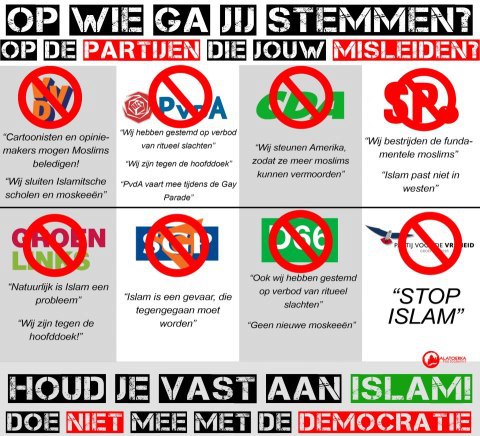 Een veelgehoorde overweging is dat velen niet goed weten op wie ze moeten stemmen en weinig zin hebben om te stemmen op een partij die islam en moslims toch niet ziet zitten. Daarmee bedoelen zij geen PVV, maar alle andere politieke partijen. Waarom stemmen op een partij die ons haat? Daar voegt men soms aan toe dat het wel eens ‘haram’ zou kunnen zijn, er direct bij vermeldend dat er geleerden zijn die het wel toestaan. Twee van de filmpjes die laatste inzichtelijk maken vind je hieronder:
&
Tegenstanders daarentegen stelden dat democratie zelf een religie is. Stemmen is volgens hen dan ook tegen de islam. Naast een principieel standpunt zit hier ook enige pragmatiek tussen en men wijst bijvoorbeeld op de ‘vijandige citaten van politici‘. Tegenover de twijfelaars en de afkerigen van stemmen staan degenen die wel overtuigd zijn van de noodzaak te stemmen. Ik heb veel oproepen om te stemmen langs zien komen zoals deze van Hasib Moukaddim. Zie ook dit filmpje van SMN die een speciale verkiezingssite maakte:

Daarnaast waren er opiniestukken in kranten zoals deze van Mustafa Amhaouch. De laatste is CDA-er en zijn stuk was gericht tegen de PvdA. Daar werd behoorlijk negatief op gereageerd; niet zozeer omdat het tegen de PvdA was maar omdat vele moslims in mijn FB en twitter een stemadvies niet zien zitten: do not tell us what to do. Andere sites zoals Moslimjongeren Coach met Jouw mening telt en Wij Blijven Hier hebben eveneens een positieve houding ten opzichte van stemmen. WBH heeft diverse discussies aangaande verkiezingen en islam (1, 2, 3) en twee stemwijzers: Palestina en Israel-stemwijzer en de moslimstemwijzer.
Tot slot
De controverse tijdens en na het Badr debat daargelaten, de meeste moslims die ik mijn netwerk (online en offline) voorbij heb zien komen, benaderen de zaak pragmatisch; zowel degenen die zijn gaan stemmen (de meesten) als degenen die niet gaan stemmen. Sommigen die zijn gaan stemmen doen dat vanuit een islamitische inspiratie, anderen stellen dat het eigenlijk niet kan in islam maar hebben andere overwegingen (economie, EU, positie van moslims) en hetzelfde zie je bij degenen die niet stemmen. Een enkeling stelt bij het wel of niet stemmen puur en alleen vanuit de islam te redeneren. Dit is niet om te zeggen dat de één meer of minder praktiserend of religieus is, maar om aan te geven dat er meerdere wijzen van praktiseren zijn voor de betrokkenen zelf. De uitslag met PvdA en VVD is met instemming begroet als in ieder geval een nederlaag van de PVV. Wat overigens bij enkelen wel de opmerking ontlokt dat de ‘heisa’ die sommigen maakten van de dreiging van de PVV ‘dus’ onterecht was. Iets waar ik overigens nog wel kanttekeningen bij heb. Inderdaad de extreem-nativistische anti-islam partij PVV heeft flink verloren, maar is allesbehalve dood. Haar islamofobe gedachtegoed is volgens mij op verschillende manieren geincorporeerd door alle(!) politieke partijen zie bijvoorbeeld het VVD programma over religie en (apart!) religieuze kleding (beide gerangschikt onder ‘immigratie en integratie’…). We zullen zien waartoe het leidt.
Ow ja, Wij Blijven Hier heeft een onderzoek gedaan naar mogelijk stemgedrag bij moslims. Resultaten vind je hier (overigens is het gebaseerd op slechts 200 personen).
Moslims & Verkiezingen 2012: Laat je stem horen, of niet
Posted on September 13th, 2012 by martijn.
Categories: Activism, islamophobia, Multiculti Issues, Notes from the Field, Public Islam, Religious and Political Radicalization.
Verkiezingen 2012: Neo-liberalisme & nationalisme
affiche 2010
Deze verkiezingen draaien vooral om Europa en de economie. Het moge lijken dat islam, immigratie en integratie naar de achtergrond verdwenen zijn, maar dat is slechts ten dele. Het PVV programma maakt een directe link tussen de EU en de immigratie van moslims en vrijwel alle partijen hebben in hun programma’s opmerkingen over religie die (als het al niet specifiek vermeld wordt) in het algemeen gaan over islam en moslims. Slechts een enkele partij weet daarbij een positieve opmerking te maken maar meestal toch snel gevolgd door zoiets als ‘…maar er zijn ook veel problemen.’ Onder moslims leefden deze verkiezingen aardig volgens mij en draaiden ook om de thema’s EU en economie én om hun positie als moslim in de samenleving. Hier een overzicht.
Debat in de moskee
Op de site van Amsterdam-West stond het volgende te lezen:
Groot verkiezingsdebat in de Badr Moskee – Stadsdeel West
Laat uw stem horen tijdens het grote verkiezingsdebat op 6 september in de Badr Moskee in Amsterdam West.
Laat uw stem horen tijdens het verkiezingsdebat in moskee Badr? Dat zullen de mannen van sharia4belgium en sharia4holland ook hebben gedacht:
Op youtube vinden we hun impressie van ‘De slag van Badr’ met uitleg voor hun actie:
Ik heb veel afwijzende reacties gezien op twitter en facebook van moslims tegen deze actie. Anderen (niet S4B of S4H) probeerden hun afwijzing van de democratie op een andere wijze uit te leggen:
Onder andere moslims die de democratie afwijzen kon de actie van S4H/S4B ook op afwijzing rekenen. De kritiek in zijn algemeenheid luidde dat dit niet de manier was om dawah (missie) te verrichten. Waarbij ik me overigens afvraag of S4H/S4B dit wel als dawah ziet. Ik denk dat zij dit beschouwen als deel van een religieuze plicht om ‘het goede te bevorderen en te waarschuwen voor het kwade’. Dat kan samenvallen met dawah volgens mij maar dat hoeft niet. In dit geval was dat denk ik niet zo omdat de kritiek van van S4H/S4B en enkele anderen ook tegen de moskee gericht was die een dergelijke bijeenkomst organiseerde. De kritiek en ook het weerwoord van S4H/S4B symphatisanten was veel specifieker en gedetailleerder soms, maar dit is niet de plek om daarop in te gaan. Wel kon ik vaststellen dat zowel het debat als de actie van S4H/S4B leidde tot discussies over democratie van een dusdanig niveau dat ik nog niet vaak gezien heb.
Andere organisaties waren zeer stellig in hun afwijzing van de verstoring, zie bijvoorbeeld de volgende verklaring:
‘Sharia4belgium, genoeg is genoeg’
“Deze groepen spelen op die manier ook andere extremisten uit bijvoorbeeld extreem rechts in de kaart door een hetze te ontketenen en door negatieve beeldvorming over de islam en de moslimgemeenschap aan te wakkeren. De actie van Sharia4Belgium vormt een bedreiging voor onze democratie en onze rechtsstaat.”
De organisaties van de Turkse en Marokkaanse gemeenschap verklaren te staan voor tolerantie, respect en democratie. Zij roepen daarom een ieder op zich niet te laten intimideren door de acties van deze extremistische groepen en op 12 september massaal naar de stembus te gaan.
Ze geven daarbij een stemadvies door te adviseren om te stemmen voor:
“- Een volwaardig burgerschap, voor sociale cohesie en solidariteit
– Tegen segregatie, sociale uitsluiting, racisme en alle vormen van discriminatie
– Een verloren stem is een stem op intolerantie, sociale uitsluiting en polarisatie”De verklaring is ondertekend door:
de Unie van Marokkaanse Moslim Organisaties (UMMON)
Turkse Arbeidersvereniging in Nederland HTIB
Stichting Aknarij
Inspraakorgaan Marokkanen Amsterdam (IOMA)
Euro Mediterraan Centrum voor Migratie en Ontwikkeling (EMCEMO)
Collectief tegen Islamofobie en Discriminatie (CTID)
Raad van Marokkaanse Moskeeën Noord Holland (RVM)
Opvallend was dat in de media de aandacht vooral uitgaat naar het incident met sharia4belgium. Dat doet mij denken aan een demonstratie waar journalisten in grote getalen op af kwamen (ongeveer even veel als demonstranten) en waar onder meer de heren van Novum nieuws en Powned vertrokken toen het wat langdradig werd onder het mom van ‘er gebeurt toch niets meer’. Dat de media erover berichten is logisch, dat we in de verslagen nauwelijks iets teruglezen over de inhoud van het debat is zonder meer kwalijk. ‘Media moeten zich niet laten gijzelen door een piepkleine groep boze islamitische mannen’ – Lars Anderson – VK
na de korte chaos volgde een interessante discussie tussen politici die wilden vertellen waarom zij een stem verdienen, en een publiek dat wilde weten aan wie het zijn stem moet geven. De islam was daarin geen leidende factor. Ze wilden weten hoe ze het beter kunnen krijgen in de wijk, hoe het onderwijs kan worden vernieuwd of wat de plannen zijn van de partijen om de economie weer uit het slop te trekken.
De schrijver van bovenstaand citaat, Lars Anderson (debatleider in Badr) wijt het optreden van sharia4belgium aan slachtoffergedrag; dat is mij wat al te simpel maar waar hij hier op wijst wordt telkens door vrijwel al het onderzoek gestaafd. Moslims zoeken naar pragmatische manieren om moslim te zijn en de moslims in Nederland vooruit te helpen op sociaal, economisch, cultureel en religieus gebied. Ook Carel Brendel besteedt aandacht aan de inhoud ‘Wat doen jullie voor moslims?’ was de vraag van het debat. Daarbij ging het om discriminatie, banen voor mannen met baarden en vrouwen met hoofddoeken, enz; ook hier het sociaal-pragmatisme al waren er (ook na het rumoer) mensen met een andere opstelling zoals u boven in het tweede filmpje al kon zien. Dichtbij.nl geeft ook een aardige impressie:
Mediagepruts
Met name Het Parool heeft er afgelopen weken een potje van gemaakt met de berichtgeving van moslims en verkiezingen. Eerst was er het stuk met ‘moslimprominenten‘ die teleurgesteld zouden zijn in de politiek. De Telegraaf maakte er meteen dat moslims waarschuwen voor rellen. Volgens Carel Brendel (die erg negatief is over de mogelijke link tussen de PvdA en allochtonen/moslims als dat leidt tot het aantasten van de seculiere uitgangspunten): PvdA maakt zich los uit de greep van de ‘moslimprominenten’ « CarelBrendel.nl
Het letterlijke citaat was niet op internet te vinden, maar alleen in het papieren Parool. In het groepsgesprek met Badr-bezoekers kwam de 31-jarige Tarik (zonder achternaam) aan het woord. “Het gebrek aan politieke vertegenwoordiging komt bovenop de uitwerking van slechte scholing en de hoge werkloosheid bij jongeren uit eigen gemeenschap en dat leidt tot een explosieve situatie. Zo krijg je over een paar jaar Franse toestanden in Amsterdam.” De andere mannen knikten instemmend bij deze uitspraak, aldus de Parool-reportage.
Bij het gesprek zat ‘islamoloog, docent en voorganger’ Said Amrani. “We hadden net zo goed op Wilders kunnen stemmen,” aldus de imam. “De PvdA ging mee in het voorstel van de PVV om halal slachten te verbieden.” Gemor is er ook over de sluiting van het Islamitisch College Amsterdam (wegens gebrek aan kwaliteit, CB), waarvoor de Badr-jongeren de PvdA-politici Sharon Dijksma en wethouder Lodewijk Asscher verantwoordelijk stellen. Moslimpolitici zouden in de praktijk te weinig zichtbaar zijn en alleen rond verkiezingstijd aandacht hebben voor moslims. Amrani: “Bij de vorige verkiezingen deed ik bij het vrijdaggebed een oproep aan tweeduizend bezoekers om vooral te gaan stemmen om tegenwicht te bieden aan de PVV. Dat ga ik dit jaar niet meer doen.”
Niet bij het groepsgesprek aanwezig maar wel om commentaar gevraagd werd Yahia Bouyafa, voorzitter van de Raad van Marokkaanse Moskeeën Nederland. “We proberen alles te doen om mensen naar de stembus te krijgen, maar vooral oudere moslims zijn in de war,” aldus Bouyafa. “Ze hebben altijd PvdA gestemd maar sinds die voor het verbod op ritueel slachten heeft gestemd, willen ze dat niet meer.”
Brendel ziet een positieve ontwikkeling, weg van ‘religieus clientelisme’; meer over ‘de moslimlobby’ bij de PvdA: zie HIER. Zijn bezwaar gaat vooral over wat hij ziet als een mogelijke aantasting van de seculiere uitgangspunten van de PvdA; niet tegen allochtone / moslim politici an sich. Hij stelt terecht vraagtekens bij de term ‘moslimprominenten’; dat suggereert dat de personen in de reportage heel vooraanstaande posities innemen in het Nederlandse moslimlandschap. Dat wordt in de reportage op geen enkele manier waar gemaakt en is ook niet. Wat overigens niets afdoet aan hun overwegingen, Amrani ligt nog eens toe:
Vervolgens prutst Het Parool verder met een fatwa die stemmen tot een religieuze plicht maakt. Nourdeen Wildeman maakt op Wijblijvenhier waarom er geen sprake is van religieuze plicht (in de zin zoals vasten of bidden dat wel zou zijn) of fatwa. De religieuze overwegingen daargelaten het stuk van de Nederlandse Moslim Raad dat Wildeman aanhaalt is voldoende om te zien waarom Het Parool onzin uitkraamt.
Pragmatische overwegingen
Een veelgehoorde overweging is dat velen niet goed weten op wie ze moeten stemmen en weinig zin hebben om te stemmen op een partij die islam en moslims toch niet ziet zitten. Daarmee bedoelen zij geen PVV, maar alle andere politieke partijen. Waarom stemmen op een partij die ons haat? Daar voegt men soms aan toe dat het wel eens ‘haram’ zou kunnen zijn, er direct bij vermeldend dat er geleerden zijn die het wel toestaan. Twee van de filmpjes die laatste inzichtelijk maken vind je hieronder:
&
Tegenstanders daarentegen stelden dat democratie zelf een religie is. Stemmen is volgens hen dan ook tegen de islam. Naast een principieel standpunt zit hier ook enige pragmatiek tussen en men wijst bijvoorbeeld op de ‘vijandige citaten van politici‘. Tegenover de twijfelaars en de afkerigen van stemmen staan degenen die wel overtuigd zijn van de noodzaak te stemmen. Ik heb veel oproepen om te stemmen langs zien komen zoals deze van Hasib Moukaddim. Zie ook dit filmpje van SMN die een speciale verkiezingssite maakte:
Daarnaast waren er opiniestukken in kranten zoals deze van Mustafa Amhaouch. De laatste is CDA-er en zijn stuk was gericht tegen de PvdA. Daar werd behoorlijk negatief op gereageerd; niet zozeer omdat het tegen de PvdA was maar omdat vele moslims in mijn FB en twitter een stemadvies niet zien zitten: do not tell us what to do. Andere sites zoals Moslimjongeren Coach met Jouw mening telt en Wij Blijven Hier hebben eveneens een positieve houding ten opzichte van stemmen. WBH heeft diverse discussies aangaande verkiezingen en islam (1, 2, 3) en twee stemwijzers: Palestina en Israel-stemwijzer en de moslimstemwijzer.
Tot slot
De controverse tijdens en na het Badr debat daargelaten, de meeste moslims die ik mijn netwerk (online en offline) voorbij heb zien komen, benaderen de zaak pragmatisch; zowel degenen die zijn gaan stemmen (de meesten) als degenen die niet gaan stemmen. Sommigen die zijn gaan stemmen doen dat vanuit een islamitische inspiratie, anderen stellen dat het eigenlijk niet kan in islam maar hebben andere overwegingen (economie, EU, positie van moslims) en hetzelfde zie je bij degenen die niet stemmen. Een enkeling stelt bij het wel of niet stemmen puur en alleen vanuit de islam te redeneren. Dit is niet om te zeggen dat de één meer of minder praktiserend of religieus is, maar om aan te geven dat er meerdere wijzen van praktiseren zijn voor de betrokkenen zelf. De uitslag met PvdA en VVD is met instemming begroet als in ieder geval een nederlaag van de PVV. Wat overigens bij enkelen wel de opmerking ontlokt dat de ‘heisa’ die sommigen maakten van de dreiging van de PVV ‘dus’ onterecht was. Iets waar ik overigens nog wel kanttekeningen bij heb. Inderdaad de extreem-nativistische anti-islam partij PVV heeft flink verloren, maar is allesbehalve dood. Haar islamofobe gedachtegoed is volgens mij op verschillende manieren geincorporeerd door alle(!) politieke partijen zie bijvoorbeeld het VVD programma over religie en (apart!) religieuze kleding (beide gerangschikt onder ‘immigratie en integratie’…). We zullen zien waartoe het leidt.
Ow ja, Wij Blijven Hier heeft een onderzoek gedaan naar mogelijk stemgedrag bij moslims. Resultaten vind je hier (overigens is het gebaseerd op slechts 200 personen).
Closing the week 29 – Featuring Breivik: One Year After
Posted on July 22nd, 2012 by martijn.
Categories: Blogosphere, International Terrorism, Multiculti Issues, Religious and Political Radicalization.
Most popular on Closer this week:
- Van praktijk naar publieke actie: niet-vasten tijdens de vasten
- Islamophobia and the Politics of Hate in Europe – Liz Fekete
- Ramadan in Europe – A Youtube Essay I: First Day
Featuring One Year After Breivik
The Victims
Rest In Peace, Mona Abdinur – Utøya 22. juli 2011
Daily Kos: ….and there was LOVE
This girl of Bosnian origin survived by swimming away from Utøya, allthough she didn´t consider herself a good swimmer and the water was very cold (she got eventually picked up by a boat). Her father who had experienced the Serbian bombings of Sarajevo used to forever thankful for having found refugee in a peaceful and functional country and it was of couse surreal for him that his daughter should experience a grave terror attack in Norway. Like many others who was at Utøya she sent SMS to her family in the middle of the attack when she still didn´t know what was happening or whether she would survive.
Utøya one year on: victim’s family describe their loss – video | World news | guardian.co.uk
Bano Rashid, 18, was among the 69 people who died in a shooting spree by Anders Behring Breivik at a Labour youth camp on Utøya island on 22 July 2011. Days later she was the first victim to be laid to rest. A year on, her sister Lara, who survived the attack, and her parents, who had brought the family to Norway from Iraq in search of peace, are trying to cope with their loss.
Victims of the Norway Attacks – Multimedia Feature – NYTimes.com
Anders Behring Breivik, an anti-Muslim extremist, is accused of killing 77 people in an Oslo bombing and a shooting rampage at a summer camp for young political activists on July 22, 2011. Learn more about the victims by clicking on the images below.
Learning From Norway’s Tragedy – NYTimes.com
Remembering
As Norway’s foreign minister, I have been frequently confronted with these questions over the past year. Without prejudice to the ongoing legal proceedings, I believe these are key questions. How we, as independent nations and as an international community, should fight violent political extremism is at the heart of politics in the 21st century. I also believe that Norway’s experience after the attack has important lessons that may be relevant beyond our borders.
In Oslo, Evil Demystified With Civility – NYTimes.com
As the trial of Anders Behring Breivik opened in Oslo last week, a friend e-mailed from New York with a question: Was it not a bit weird, he asked, that officers of the court took time to shake his hand, offering courtesy, deference even, to a man who had openly boasted of killing 77 people last summer in Norway’s worst peacetime atrocity?
Norwegian king shows multiculturalism support / News / The Foreigner — Norwegian News in English.
Professor of Anthropology, Thomas Hylland Eriksen, told Dagsavisen about the King’s fourth visit to the area in less than a month that, “Groruddalen has long been considered as a stepchild in Norwegian society.”
“The fact the King is travelling here at this time is a clear message from the Royal family about the kind of society they want. One might quote the King’s grandfather, King Haakon, who said, ‘I am also the Communists’ King’. King Harald is doing something similar. In this way, he is showing that he is king for all people.”
Norway’s trial, and a democratic lesson | openDemocracy
The legal procedure in the case of Anders Behring Breivik, the perpetrator of the Norwegian massacre of July 2011, is a case-study of democratic values – in particular, that democracy is not a “what” but a “how”, says Thomas Hylland Eriksen.
Norway defies Breivik one year on « World On Sunday
“The bomb and the shots were intended to change Norway. People responded by embracing our values. He failed, the people won,” Prime Minister Jens Stoltenberg told the crowds, carrying red and white roses at the memorial in central Oslo.
The prime minister, Jens Stoltenberg, says the massacre has not succeeded in changing Norway and the Norwegian people. Stoltenberg spoke at a memorial service on Sunday, attended by members of the royal family, on the first anniversary of the attacks in Oslo and Utøya in which Anders Behring Breivik killed 77 people and injured hundreds more
Reflection
Norway – one year after: an open wound | openDemocracy
Populist right-wing politicians expressing extreme views on immigration, Islam and Muslims, have in general been confronted in the mediated public spheres to a much greater extent than before 22/7, as have extreme-right wingers. But how much else has moved on?
In the speech, flagged by the website Loonwatch, Hirsi Ali noted that she herself appeared in Breivik’s 1,500-word manifesto (Breivik reprinted a European right-wing article saying Hirsi Ali should win the Nobel Peace Prize). While she denounced Breivik’s views as an “abhorrant” form of “neo-fascism,” she then postulated that Breivik was driven to violence because his militant anti-multicultural views were not given a fair airing in the public discourse.
Anders Behring Breivik Attacks: Norway Remembers Massacre Victims On Anniversary
Norway on Sunday paused to commemorate the 77 victims of a bomb and gun massacre that shocked the peaceful nation one year ago, a tragedy that the prime minister said had brought Norwegians together in defense of democracy and tolerance.
From my blog
Belief and Violence: Anders Breivik and Wilders’ Freedom Party – C L O S E R — C L O S E R
As soon as it became clear that the perpetrator was a white Norwegian guy with some nativist and Wilders’ Freedom Party sympathies another game emerged. The link with Wilders’ ideology and rhetoric was immediately picked up by his opponents. Well first I should add that as soon as it appeared that the shooter was a blonde white guy the staunch anti-racists of the conservative and liberal right wing stated that this did not mean it wasn’t a Muslim and people discussed the alledged radical outlook of converts. After that proved to be nonsense in this case, the debate on the Internet turned to Wilders and his ideology. His supporters denying any responsibility by Wilders for the terrible attacks. A minority however, after the condemning the attack when they still thought it was Al Qaeda, were actually supporting the attacks for example by stating: ‘As things turn out now, the perpertrator is a right wing extremist. In that case the attack is the only correct answer to a totalitarian leftist state where right wing people are silenced‘. Another person stated on his photoshop blog (where he frequently attacks left wing and Muslim politicians in satirical photoshops) that the perpetrator should enlist in a new course: “Choosing sensible targets as an anti-islamist” thereby showing a picture of, what appears to be, an attack on the Kaaba in Mecca and the people who go there to the Hajj“. Satire of course. But these people constitute a minority as far as I can tell. Others condemn the attacks and as far as I can tell now most Freedom Party supporters I know abhor the attacks. The reactions on Twitter and Facebook however are starting to resemble the reactions towards (salafiyyah) Muslims after the murder on Van Gogh in 2004.
Radicalization Series V: Freedom Fighters, Conflict and Culture Talk – C L O S E R — C L O S E R
It is important I think to see how his ideas (but not his actions) not only are derived from bloggers and politicians but also who they resonate with and are grounded on a grassroots everyday level. I also think the Netherlands can give some clues to that and is relevant here since Breivik partly derived his inspiration from Wilders’ Freedom Party ideology. In this blog therefore I will present some material of the Dutch section of the Ethnobarometer research in which we held focus group discussions on issues of security and culture after 9/11, the murder of Van Gogh and the French riots and Muhammad Cartoons. The research was conducted in 2005 and 2006 and the focus groups consisted all of both Moroccan-Dutch and native Dutch citizens of Gouda (except one group that was a moderate right wing group of native Dutch citizens). We did not aim for a representative sample but for an even division with regard to age, gender and political preferences. I will focus mostly here on the statements of the native Dutch participants. It shows how people struggle with tolerance on the one hand (seen as an important part of Dutch identity) and fear of Islamization and Muslims on the other hand expressed by different modalities of culture talk. While in the case of Bawer, Breilvik and Wilders the presence of Islam and Muslims are seen as the cause of conflict and by definition leading to conflicts, the Ethnobarometer research also revealed mechanisms that can de-escalate conflicts.
'Make some noise and do some dawa' 4Sharia
Posted on June 11th, 2012 by martijn.
Categories: Multiculti Issues, Notes from the Field, Religious and Political Radicalization.
A few weeks ago the organizations Sharia4Belgium and Sharia4Holland organized the Global Khilafah conference. Sharia4Belgium and Sharia4Holland are both linked to Islam4UK led by Anjem Choudhary (which is to be traced back to the British Al Muhajiroun organizations). Sharia4Belgium and Sharia4Holland can both be seen as militant organizations in a political sense meaning that they engage in the political debates with a confrontational style, often experienced by outsiders as extremely provocative. In their ideology they appear to aim at a total transformation of society in line with their politico-religious convictions in which tawhid (unity and uniqueness of God) is central and which is translated into a call to implement sharia (without being very clear as to what that actually means). In several incidents, for example by disturbing a debate between Irshad Manji and Dutch politician Tofik Dibi, they have shown to be prepared to use force in pursuit of their politico-religious agenda. This is in line with their ideology that states that Islam is not only something one has to believe in and to practice in all spheres of life but also to struggle and sacrifice for by proselytizing (daw’ah) and jihad.
The conference immediately made headlines because the presence of Abu Imraan, the leader of the Belgian Sharia4Holland, was announced. The Dutch Freedom Party of radical nativism and anti-Islam Geert Wilders asked questions in Parliament to which the Dutch minister Opstelten (Home Office) announced that he did not expect Abu Imraan to come. In 2008 Morocco requested Abu Imraan to be extradited to Morocco. Belgium does not comply to such requests but for the Netherlands there would be no problem, according to the Dutch minister. Dutch newspaper Telegraaf mentioned that the reply by Abu Imraan was that Opstelten ‘could go to hell’ and that he would come anyway.
On Friday 25 May Sharia4Holland held a press conference at Dam Square; a significant place because they did it in front of the National Liberation Monument.
Dutch newspaper Telegraaf saw this as ‘insulting the Netherlands‘; a feeling shared by many commenters on that article and elsewhere for example at anti-Islam site Gates of Vienna. The next quote:
And for those who made it their job to insult Allah and Mohammed, like the dog of the Romans, Geert Wilders. As the Khalifa takes over the Netherlands, then we shall deal with you, as the Khalifas have dealt with those kinds of people in the past.So learn from it, also from the case of Theo van Gogh.
was taken as a death threat by Wilders (since Van Gogh was murdered in 2004 by a Moroccan-Dutch man claiming to act on behalf of Islam). There was critique on the police who took a man stepping up to spokesperson Aboel Qaasim and saying: ‘You are just an asshole’. They arrested him because he was harassing journalists at the demonstrations as well. Flos, the leader of the conservative liberals (VVD) in the municipal council saw a clear death threat in the comments about Wilders and Van Gogh and they should have arrested Abdoel Qaasim. Flos stated he was shocked that ‘At our monument of freedom, such a message of unfreedom (my translation, MdK) was preached‘. Also Wilders’ Freedom Party stated they would ask questions to the minister again. In these questions they make clear that they view Sharia4Holland as an ‘extremist’ group calling for violence that should be banned and the person who made the ‘death threat’ should be prosecuted, denaturalized and evicted. According to the Freedom Party all organizations that want the implementation of sharia ‘and therefore call for violence against women, Jews, people who hold different beliefs’ should always be banned.Aboel Qaasim was arrested the next day and released as well but he will have to appear before court on 11 July. According to Sharia4Holland / Belgium Abu Qaasim there is no death threat. According to them Wilders should not be surprised if there will be a Muslim who cannot control himself any longer if Wilders continue like this. You can watch the next video in Dutch where Abu Qaasim explains:
The Dutch minister stated however that Sharia4Holland cannot be banned because it does not exist as an organization. Individuals however can be prosecuted. This minister also stated that there is a risk that sympathizers or hardcore participants of Sharia4Holland will use violence. ‘There is a risk. I totally recognize that’. You can see his answer with regard to that in full in here (Dutch, no subtitles):
The conference took place on Saturday and you can watch it entirely here:
You see: Abu Qaasim (NL), Abu Abdullah Al-Britani (UK), Abu Imran (BE), Saiful Islam (UK) and Anjem Choudary (UK). And no, I’m not going to summarize it. I actually think Abu Qaasim’s press conference on Dam Square is a very good summary, as well as Abu Imraan’s phrase that I think nicely catches the strategy of Sharia4Belgium: ‘make some noise and do some dawa’. Of those people Anjem Choudary is the most renowned one given his status in the UK and his past with Al Muhajiroun. According to Choudary the ‘Holland Regime’ used ‘oppressive measures against Sharia4Holland’. He later released a statement on Twitter containing 13 points that more or less sum up his views:
- Calling for the Shari’ah (Islam) as a superior way of life, is an obligation upon Muslims wherever they are, whether in the East or West;
- The Shari’ah is a total way of life & the perfect & final revelation from Allah to the whole of mankind via the Messenger Muhammad (saw)
- Islam means submission to Allah, the Muslim is the submitter & the whole world is the place for submitting to every rule of the Shari’ah!
- It is an act of apostasy to reject even 1 rule of the Shari’ah or turn ones back to even 1 verse or 1 narration of the Prophet e.g. Zakat
- Europe is not alien to the implementation of the Shari’ah e.g. in Spain, France, Austria, Switzerland, Crete, Rhodes, Cyprus & Greece etc
- The Messenger Muhammad (saw) informed us that our authority will 1 day be over the East & West i.e. US, Russia, India, China, UK & France
- Izhar ud-Deen (the domination of the world by Islam) is the objective of every practising Muslim as stated in the Qur’an, see [EMQ 9:33]
- The hatred faced by Muslims in the West when they call for the Shari’ah is expected & a test from Allah but Islam will eventually prevail
- Only the Shari’ah can resolve the economic, political & social calamity that Europe has been plunged into. It will remove all oppression!
- The uprising in the Middle East against the puppets of the West has exposed the reality of Democracy/Freedom & its other face hypocrisy
- Muslims must take the opportunity wherever they are to reject the decadence of manmade law & call for the divine alternative of Shari’ah
- The fruits of Western Democracy are there for all to see; prostitution, gambling, usury, alcohol/drugs etc.. Islam will eradicate these!
- May Allah (SWT) help the Muslims wherever they are to remove the oppressive regimes & implement the perfect system of Islam i.e Khilafah
Among Muslims Sharia4Holland is far from uncontested. Their disturbance last year of a debate between Green Left politician Tofik Dibi and Canadian activist Irshad Manji was shocking and severly criticized by many people. The main Dutch Muslim blog ‘Wij Blijven Hier’ (We are staying) published a piece (in Dutch) with the English title ‘We are all Abu Imran, aren’t we?‘ aimed against radicalism among Muslims. Among Dutch Salafis Sharia4Holland are labelled Khawarij; the name for an extreme sect within Islam often seen as extremists with a radical approach of ‘takfir’ (excommunication) that sets them apart from mainstream Muslims and from those often categorized under the label Salafism.
Now more recently it appears that Sharia4Belgium has moved to another level of activism. In Belgium Stéphanie Djato, who converted to Islam four years ago, was arrested in the Brussels area Molenbeek when she wore a face-veil (niqab). When, according to reports, ms. Djato (now dubbed ‘niqabgirl’ in Belgian media) was arrested for refusing to take it off (wearing the face-veil is not allowed in Belgium) she was arrested. She then resisted because, according to her, the police attacked her and assaulted her. The police claims the arrest was according to the book even after she put up a resistance. Whatever the story is, it lead to unrest in the Molenbeek area after Sharia4Belgium called for protest against this ‘police brutality’. These protests got out of hand and riots ensued. The unrest reached a critical point when last Friday a man from Paris was arrested at the Brussels public transport and subsequently attacked both police officers involved in the arrest ending up with one of them being severely wounded by his knife. The perpetrator claimed to wanted to protest against the Belgian politics on Muslims (whatever that means). Because it was suspected that the Sharia4Belgium leader Abu Imraan was behind the unrest and was inciting to hatred and violence he was arrested later. Sharia4Belgium on their part denied having incited to violence. They claim to be a peaceful organisation (in my memory, correct me if I’m wrong, the first time they say that) although they believe that there is a struggle going on between Muslims and ‘your democracy’. What they are trying to do is to ‘unmask’ democracy. Often they point do instances of double standards such as the recent call by radical right wing leader Winters to hand in those Muslim women who wear the face-veil. Something that made the S4B spokesman think of the times of “Hitler”. The violence has led to Belgium increasing the level of threat to national safety and strong and clear rejection of the actions by Muslim organizations, imams and other spokespersons.
I have no idea how this is going to work out. Whether or not Sharia4Belgium had called for violence or not, their rhetoric is dangerous up to a certain level and I think the riots in Molenbeek and the action of the Parisien man has proven that. Even if they did not call for violence, it was part of the protests they wanted anyway. If anything they might have underestimated the impact of their own words. Another problematic aspect of this whole event is that the reaction among so-called islam-critical sites and some popular sites in Flandres and the Netherlands has been almost equally uncareful and incautious in particular focusing on the area of Molenbeek (even though that both ms. Djato and the male attacker of the police come from elsewhere). It may not be the rhetoric on one side alone that is dangerous but it could be the mutually constitutive spiral of inciting speech that has the potential of being dangerous.
‘Make some noise and do some dawa’ 4Sharia
Posted on June 11th, 2012 by martijn.
Categories: Multiculti Issues, Notes from the Field, Religious and Political Radicalization.
A few weeks ago the organizations Sharia4Belgium and Sharia4Holland organized the Global Khilafah conference. Sharia4Belgium and Sharia4Holland are both linked to Islam4UK led by Anjem Choudhary (which is to be traced back to the British Al Muhajiroun organizations). Sharia4Belgium and Sharia4Holland can both be seen as militant organizations in a political sense meaning that they engage in the political debates with a confrontational style, often experienced by outsiders as extremely provocative. In their ideology they appear to aim at a total transformation of society in line with their politico-religious convictions in which tawhid (unity and uniqueness of God) is central and which is translated into a call to implement sharia (without being very clear as to what that actually means). In several incidents, for example by disturbing a debate between Irshad Manji and Dutch politician Tofik Dibi, they have shown to be prepared to use force in pursuit of their politico-religious agenda. This is in line with their ideology that states that Islam is not only something one has to believe in and to practice in all spheres of life but also to struggle and sacrifice for by proselytizing (daw’ah) and jihad.
The conference immediately made headlines because the presence of Abu Imraan, the leader of the Belgian Sharia4Holland, was announced. The Dutch Freedom Party of radical nativism and anti-Islam Geert Wilders asked questions in Parliament to which the Dutch minister Opstelten (Home Office) announced that he did not expect Abu Imraan to come. In 2008 Morocco requested Abu Imraan to be extradited to Morocco. Belgium does not comply to such requests but for the Netherlands there would be no problem, according to the Dutch minister. Dutch newspaper Telegraaf mentioned that the reply by Abu Imraan was that Opstelten ‘could go to hell’ and that he would come anyway.
On Friday 25 May Sharia4Holland held a press conference at Dam Square; a significant place because they did it in front of the National Liberation Monument.
Dutch newspaper Telegraaf saw this as ‘insulting the Netherlands‘; a feeling shared by many commenters on that article and elsewhere for example at anti-Islam site Gates of Vienna. The next quote:
And for those who made it their job to insult Allah and Mohammed, like the dog of the Romans, Geert Wilders. As the Khalifa takes over the Netherlands, then we shall deal with you, as the Khalifas have dealt with those kinds of people in the past.So learn from it, also from the case of Theo van Gogh.
was taken as a death threat by Wilders (since Van Gogh was murdered in 2004 by a Moroccan-Dutch man claiming to act on behalf of Islam). There was critique on the police who took a man stepping up to spokesperson Aboel Qaasim and saying: ‘You are just an asshole’. They arrested him because he was harassing journalists at the demonstrations as well. Flos, the leader of the conservative liberals (VVD) in the municipal council saw a clear death threat in the comments about Wilders and Van Gogh and they should have arrested Abdoel Qaasim. Flos stated he was shocked that ‘At our monument of freedom, such a message of unfreedom (my translation, MdK) was preached‘. Also Wilders’ Freedom Party stated they would ask questions to the minister again. In these questions they make clear that they view Sharia4Holland as an ‘extremist’ group calling for violence that should be banned and the person who made the ‘death threat’ should be prosecuted, denaturalized and evicted. According to the Freedom Party all organizations that want the implementation of sharia ‘and therefore call for violence against women, Jews, people who hold different beliefs’ should always be banned.Aboel Qaasim was arrested the next day and released as well but he will have to appear before court on 11 July. According to Sharia4Holland / Belgium Abu Qaasim there is no death threat. According to them Wilders should not be surprised if there will be a Muslim who cannot control himself any longer if Wilders continue like this. You can watch the next video in Dutch where Abu Qaasim explains:
The Dutch minister stated however that Sharia4Holland cannot be banned because it does not exist as an organization. Individuals however can be prosecuted. This minister also stated that there is a risk that sympathizers or hardcore participants of Sharia4Holland will use violence. ‘There is a risk. I totally recognize that’. You can see his answer with regard to that in full in here (Dutch, no subtitles):
The conference took place on Saturday and you can watch it entirely here:
You see: Abu Qaasim (NL), Abu Abdullah Al-Britani (UK), Abu Imran (BE), Saiful Islam (UK) and Anjem Choudary (UK). And no, I’m not going to summarize it. I actually think Abu Qaasim’s press conference on Dam Square is a very good summary, as well as Abu Imraan’s phrase that I think nicely catches the strategy of Sharia4Belgium: ‘make some noise and do some dawa’. Of those people Anjem Choudary is the most renowned one given his status in the UK and his past with Al Muhajiroun. According to Choudary the ‘Holland Regime’ used ‘oppressive measures against Sharia4Holland’. He later released a statement on Twitter containing 13 points that more or less sum up his views:
- Calling for the Shari’ah (Islam) as a superior way of life, is an obligation upon Muslims wherever they are, whether in the East or West;
- The Shari’ah is a total way of life & the perfect & final revelation from Allah to the whole of mankind via the Messenger Muhammad (saw)
- Islam means submission to Allah, the Muslim is the submitter & the whole world is the place for submitting to every rule of the Shari’ah!
- It is an act of apostasy to reject even 1 rule of the Shari’ah or turn ones back to even 1 verse or 1 narration of the Prophet e.g. Zakat
- Europe is not alien to the implementation of the Shari’ah e.g. in Spain, France, Austria, Switzerland, Crete, Rhodes, Cyprus & Greece etc
- The Messenger Muhammad (saw) informed us that our authority will 1 day be over the East & West i.e. US, Russia, India, China, UK & France
- Izhar ud-Deen (the domination of the world by Islam) is the objective of every practising Muslim as stated in the Qur’an, see [EMQ 9:33]
- The hatred faced by Muslims in the West when they call for the Shari’ah is expected & a test from Allah but Islam will eventually prevail
- Only the Shari’ah can resolve the economic, political & social calamity that Europe has been plunged into. It will remove all oppression!
- The uprising in the Middle East against the puppets of the West has exposed the reality of Democracy/Freedom & its other face hypocrisy
- Muslims must take the opportunity wherever they are to reject the decadence of manmade law & call for the divine alternative of Shari’ah
- The fruits of Western Democracy are there for all to see; prostitution, gambling, usury, alcohol/drugs etc.. Islam will eradicate these!
- May Allah (SWT) help the Muslims wherever they are to remove the oppressive regimes & implement the perfect system of Islam i.e Khilafah
Among Muslims Sharia4Holland is far from uncontested. Their disturbance last year of a debate between Green Left politician Tofik Dibi and Canadian activist Irshad Manji was shocking and severly criticized by many people. The main Dutch Muslim blog ‘Wij Blijven Hier’ (We are staying) published a piece (in Dutch) with the English title ‘We are all Abu Imran, aren’t we?‘ aimed against radicalism among Muslims. Among Dutch Salafis Sharia4Holland are labelled Khawarij; the name for an extreme sect within Islam often seen as extremists with a radical approach of ‘takfir’ (excommunication) that sets them apart from mainstream Muslims and from those often categorized under the label Salafism.
Now more recently it appears that Sharia4Belgium has moved to another level of activism. In Belgium Stéphanie Djato, who converted to Islam four years ago, was arrested in the Brussels area Molenbeek when she wore a face-veil (niqab). When, according to reports, ms. Djato (now dubbed ‘niqabgirl’ in Belgian media) was arrested for refusing to take it off (wearing the face-veil is not allowed in Belgium) she was arrested. She then resisted because, according to her, the police attacked her and assaulted her. The police claims the arrest was according to the book even after she put up a resistance. Whatever the story is, it lead to unrest in the Molenbeek area after Sharia4Belgium called for protest against this ‘police brutality’. These protests got out of hand and riots ensued. The unrest reached a critical point when last Friday a man from Paris was arrested at the Brussels public transport and subsequently attacked both police officers involved in the arrest ending up with one of them being severely wounded by his knife. The perpetrator claimed to wanted to protest against the Belgian politics on Muslims (whatever that means). Because it was suspected that the Sharia4Belgium leader Abu Imraan was behind the unrest and was inciting to hatred and violence he was arrested later. Sharia4Belgium on their part denied having incited to violence. They claim to be a peaceful organisation (in my memory, correct me if I’m wrong, the first time they say that) although they believe that there is a struggle going on between Muslims and ‘your democracy’. What they are trying to do is to ‘unmask’ democracy. Often they point do instances of double standards such as the recent call by radical right wing leader Winters to hand in those Muslim women who wear the face-veil. Something that made the S4B spokesman think of the times of “Hitler”. The violence has led to Belgium increasing the level of threat to national safety and strong and clear rejection of the actions by Muslim organizations, imams and other spokespersons.
I have no idea how this is going to work out. Whether or not Sharia4Belgium had called for violence or not, their rhetoric is dangerous up to a certain level and I think the riots in Molenbeek and the action of the Parisien man has proven that. Even if they did not call for violence, it was part of the protests they wanted anyway. If anything they might have underestimated the impact of their own words. Another problematic aspect of this whole event is that the reaction among so-called islam-critical sites and some popular sites in Flandres and the Netherlands has been almost equally uncareful and incautious in particular focusing on the area of Molenbeek (even though that both ms. Djato and the male attacker of the police come from elsewhere). It may not be the rhetoric on one side alone that is dangerous but it could be the mutually constitutive spiral of inciting speech that has the potential of being dangerous.
Godsdienstvrijheid onder druk? Vrijheid, angst en conflict
Posted on May 3rd, 2012 by martijn.
Categories: Important Publications, ISIM/RU Research, Religious and Political Radicalization.
Op vrijdag 1 juni wordt in Amsterdam het symposium Godsdienst onder druk? Vrijheid, angst en conflict gehouden. Nederland kent een traditie van grote godsdienstvrijheid. Toch staan de laatste jaren diverse religieuze verworvenheden ter discussie. In de politiek is de praktijk van rituele slacht onderwerp van debat, maar ook is er regelmatig discussie over de vrijheid van onderwijs (acceptatieplicht), de zondagsrust, het verbod op blasfemie, de tolerantie van ‘weigerambtenaren’ die geen homoseksuelen willen trouwen en het dragen van religieuze kleding en symbolen. In het kader van haar emancipatie-, sociale cohesie- of veiligheidsbeleid lijkt de overheid zich vaker te bemoeien met religieuze groeperingen. Tevens lijken seculiere en orthodox-religieuze bevolkingsgroepen scherper tegenover elkaar te staan. Dit symposium is erop gericht dieper inzicht te krijgen in de veranderende opstelling ten opzichte van religie in Nederland. Staat religie in Nederland inderdaad onder druk? En als dit het geval is, waaraan is dat dan toe te schrijven? Moet de toenemende druk vooral gezien worden als een poging van seculiere krachten om de rechten van seculiere en gelovige burgers gelijk te trekken of is er meer aan de hand en speelt bijvoorbeeld angst voor religie een rol? En zo ja, waar heeft dat dan mee te maken? Met een groeiende onbekendheid met religie, met een sterke behoefte aan culturele homogeniteit in een globaliserende wereld, of spelen andere factoren een rol? Hoe reageren orthodox-religieuze groepen op religiekritiek? En wat zijn de maatschappelijke effecten van de toenemende druk op religie? Spelen verschillen mee tussen ‘oude’ en ‘nieuwe’ religies?
Programma
10.00 uur – ontvangst met koffie
10.30 uur – opening
10.35 uur – mr. André Rouvoet: Overheid en godsdienst: een moeizame relatie
11.05 uur – discussie
11.20 uur – koffiepauze
11.45 uur – prof. dr. Paul Dekker: Christenen als buren? Religieuze tolerantie in Nederland in historisch en Europees perspectief
12.15 uur – discussie
12.30 uur – lunchpauze (lunch op eigen gelegenheid)
13.30 uur – parallelle workshops
Vrijheid
prof. dr. Gerard Wiegers: Religie onder druk? Reacties van islamitische en niet-islamitische organisaties in Nederland op het Zwitserse minarettenverbod
dr. Tineke Nugteren: Vuur, as en water: Grenzen aan de hindoestaanse crematierituelen in Nederland
dr. Bart Wallet: Ritueel slachten en godsdienstvrijheid in een seculiere samenleving
Angst
dr. Markha Valenta: Terror as Tsunami, Security as Dyke: Little Holland Takes on Global Religion
prof. dr. Judith Frishman: Mes en bloed: de angst voor joodse riten
dr. Martijn de Koning: ‘Salafisme is overal’ – Een radicale utopie en de constructie van angst
Conflict
dr. Sipco Vellenga: Religieuze tolerantie op retour? Hete discussies, kalme reacties en bedenkelijke effecten
prof. dr. Ruard Ganzevoort: Haatbaarden, kleuterneukers en een pannetje soep. De framing van traditioneel-religieuze groepen in het maatschappelijk domein
prof. dr. Beatrice de Graaf / prof. dr. George Harinck: Een probleem van orde. Religie op de nationale veiligheidsagenda, van 1813 tot heden
15.00 uur – koffiepauze
15.15 uur – plenaire bijeenkomst
15.55 uur – afsluiting dagvoorzitter
16.00 uur – borrel
Lokaties, aanmelding en overige info zie HIER.
‘Salafisme is overal’ – Een radicale utopie en de constructie van angst
In mijn bijdrage, die ook zal verschijnen in het tijdschrift Religie & Samenleving, zal ik in het bijzonder ingaan op de angst voor het salafisme. Ik zal dit analyseren aan de hand van het begrip islamofobie. Islamofobie beschouw ik als een structureel verschijnsel dat leidt tot het categoriseren en hiërarchiseren van groepen mensen die vervolgens de toegang tot de morele gemeenschap wordt gegund of juist ontzegd. Daarbij gaat het me niet zozeer om concrete uitingen van angst in de vorm van discriminatie en agressie (zie het rapport van Amnesty Choice and Prejudice – Discrimination against Muslims in Europe).
In mijn stuk gaat het om een analyse van verschuivingen in paradigma’s die we kunnen aantreffen in politiek, beleid en media en die betrekking hebben op migratie en het management van religie en in het bijzonder van moslims in Nederland. Vanaf het begin hebben alle natie-staten in Europa, en Nederland is geen uitzondering, programma’s om de bevolking op hun grondgebied te homogeniseren op het gebied van taal en cultuur. Iedere staat dient daarvoor insiders en outsiders aan te wijzen en deze vervolgens te reguleren. Deze categorisering en regularisering heeft met betrekking tot moslims een sterke islamofobische logica zo zal ik laten zien. Deze logica komt voort uit een drietal paradigmawisselingen. Als eerste het classificeren van migranten op basis van culturele (in plaats van sociaal-economische) kenmerken die aan hen toegeschreven worden in debat en beleid. Ten tweede de verschuiving in het idee van een morele gemeenschap. Waar dat idee voorheen gebaseerd was op het behoren bij een zuil, is er in de laatste dertig jaar een gemeenschapsidee opgekomen dat gebaseerd is op een ideaalbeeld van seculiere en seksuele vrijheden. Als derde en laatste de opkomst van het veiligheidsdenken: securitisering. Hierbij is islam tot veiligheidsissue verklaard. Die veiligheid heeft niet alleen betrekking op bescherming tegen mogelijke gewelddaden, maar richt zich ook op bescherming van het idee van de morele gemeenschap en op sociale cohesie.
Het salafisme heeft een plek heeft verworven als folk devil in de huidige morele paniek over ‘islamisering’ van de samenleving doordat het uitstekend past als exemplarisch voorbeeld van de ‘radicale islam’ tegenover de liberale islam die wel zou passen in Nederland als morele gemeenschap. Het salafisme, zo zal ik aantonen, wordt daarbij voorgesteld als een concrete manifestatie van die dreiging doordat het appelleert aan een aantal sterk gewortelde angsten die te maken hebben met migratie, etnische diversiteit en religie.
Revisiting the Clash of Civilizations
Posted on April 11th, 2012 by martijn.
Categories: International Terrorism, Multiculti Issues, Religion Other, Religious and Political Radicalization.
In 1993 Samuel Huntington would write an article in Foreign Affairs that became highly influential in global politics: The Clash of Civilizations? According to Huntington during the Cold War societies were divided by ideological differences, such as the struggle between democracy and communism. In 1993 a few years after the end of the Cold War he proposed an alternative hypothesis: “The most important distinctions among peoples are [no longer] ideological, political, or economic. They are cultural” In this article and subsequent book (note the difference in title) he ‘discovers’ eight civilizations:
- Sino: the common culture of China and Chinese communities in Southeast Asia, including Vietnam and Korea.
- Japanese: Japanese culture as distinctively different from the rest of Asia.
- Hindu: the core Indian civilization.
- Islamic: Originating on the Arabian Peninsula, spread across North Africa, Iberian Peninsula and Central Asia. Arab, Turkic, Persian and Malay are among the many distinct subdivisions within Islam.
- Orthodox: Russia. Separate from Western Christendom.
- Western: Europe and North America.
- Latin American: Central and South American countries with a past of a corporatist, authoritarian culture. Majority of countries are of a Catholic majority.
- Africa: He is not sure if Africa should be mentioned since it lacks a sense of a pan-African identity, nevertheless he claims that Africans are increasingly developing a sense of African Identity.
Watch here an interview with Huntington:
Since then his thesis has been widely discredited but gained new prominence after 9/11 that seemed to fulfil the prophecy of the clash of civilizations with regard to Islam (his reference to other civilizations has become blurred from the start). One of his main critics was Edward Said, who wrote the widely acclaimed and criticized Orientalism.
Said’s critique is valid and justified, nevertheless ‘the Clash’ is the basis of much contemporary thinking on Islam in politics ranging from left wing to radical nativist parties (albeit with important distinctions of course). When used in political rhetoric combined with atrocities such as 9/11 messages such as these become seemingly incontestable because reality is reduced in such a way as to be seen as inherent in the way things are. Because it refers back to actual incidents in which Muslims played a role and is informed by the widespread logic of essentialism, the rhetoric becomes predictable. At the same time such references provide authority to the central message that Islam is a religion that incites to violence and hatred. As such Huntington’s thesis contributes too, is part of and is the expression of a ‘culturalization of politics’:Slavoj Zizek- Tolerance as an Ideological Category
political differences, differences conditioned by political inequality, economic exploitation, etc., are naturalized/neutralized into “cultural” differences, different “ways of life,” which are something given, something that cannot be overcome, but merely “tolerated.” To this, of course, one should answer in Benjaminian terms: from culturalization of politics to politicization of culture.
It is the War on Terror that has become the symbolic enactment of the clash of civilizations. See the next documentary of Al Jazeera The 9/11 Decade – The Clash of Civilizations?:
Folk Devils: He is a Salafist!
Posted on March 29th, 2012 by martijn.
Categories: Activism, International Terrorism, ISIM/RU Research, Religious and Political Radicalization.
In the last twelve months several violent attacks have shocked Europe. In July there was the terrorist attack by Anders Breivik in Norway, in Germany a series of violent attacks against, among others, migrants have been revealed and in the last weeks an attack at a Shiite mosque in Brussels and the killings of two soldiers and a pupil and two teachers of a Jewish school in France sent shock waves through Europe. In the case of Brussels and France people quickly pointed out that the perpetrators were salafists as a synonym for radical Muslims and Islam. In the case of Breivik psychological factors have been a prominent frame to explain his behaviour (and his ideology is often seen as the result of his disturbed mind) and in the German case socio-economic factors have been discussed in relation to the neo-nazi ideology of the perpetrators. In the Belgian and French case however the reference to salafism seems to work as a sort of self-explanatory frame: ‘ahh, he is a salafist? No wonder he shoots Jews / Throws a bomb into a Shiite mosque’. This shows not only a limited understanding of Salafism but also how our perception of Islam, Muslims and violence on the one hand and the ideal European society on the other hand is limited by the dichotomy between liberal and radical Islam.
What is Salafism?
What Salafism is or does, is not so easy to point out. Salafism can refer to all kinds of movements in Islam claiming to represent an ‘authentic’ Islam as practiced by the first generations of Muslims. As such it is by definition heterogeneous and sometimes the differences among them are more important than their similarities. Salafism is also often conflated, wrongly so, with reformers such as ‘Abduh and Rida in the 19th and 20th century. Often labelled as a ‘radical’ ‘extremist’ ‘fundamentalist’ branch of Islam in my research I prefer to conceptualize it as a utopian movement with a clear imbrication of Salafism and Saudi Wahabism from the 1970s onwards:
Radicalization Series IV – Salafism as a Utopian Movement – C L O S E R — C L O S E R
a movement trying to revitalize Islam based upon a homogenuous ideal of Islam of the days of the first generation Muslims. The Salafi movement aims to cleanse Islam from so-called non-Islamic accretions, such as Sufism, Shi‘a Islam, or local practices and doctrines, which have sullied a “pure” Islam (Meijer, in Global Salafism). The only way to lead a pure and authentic life and to inherit paradise is to return to the period of the prophet Muhammad and his companions and to emulate their lives. The sources of the Islam, the Qur??n and the ?ad?th are seen as the written version of the authentic and pure Islam. All human action has to be covered by the sources of Islam to be legitimate, otherwise they are condemned as bid’a or worse: in some cases such illegitimate acts may lead to takfir. Moreover since the prophet Muhammad is considered to be an exemplary, perfect Muslim, the Sunna, a close reading of the Qurann and hadth are essential sources with guidelines for leading the correct life and staying on the righteous path. This applies to thought, behaviour as well as appearance. Based upon this ideal the movement tries to develop a lifestyle participants find more just and satisfying than at present. The transnational Salafi movement consists of local and global branches and is characterized by a loosely coupled network structure that is non-hierarchical and characterized by a segmentary-like mobilization and fission and fusion of several sub-networks. The different Salafi networks share the same doctrine of tawhid (the unity and uniqueness of God) as Wiktorowicz explains, but (contray to Wiktorowicz’ claim) do not agree on all aspects of this principle such as what constitutes belief and unbelief and how to interpret particular attributes of Allah. Furthermore, Salafi networks share the method of reading and interpreting the sources of Islam but they differ on the methods of worship and the manner of achieving their goals.
The Salafi movement is not a monolithic bloc or a homogeneous movement. The many diffences and antagonisms within the movement come about because of two tensions in Salafi doctrine and practice. Firstly, there is the question of how to deal with non-Muslims and Muslims who follow different doctrines and practice Islam differently. The claim of the Salafi movement that they teach and follow the ‘true’ Islam that should not be ‘contaminated’ by other influences makes them trying to shy away from others in order to protect Islam and Muslims against attacks. They idea however that they should proselytize makes it necessary that they also maintain an open and inviting attitude. Secondly, Salafi doctrines are based on a scriptural, literal and strict interpretation of Islam. There certainly is room for pragmatics but that does not really resolve the tension between the uncompromising moral standards in the doctrine and everyday life of Salafi Muslims where they encounter other people, ideas and rules.
On top of these tensions there is the issue of how engage the eternal and epic battle between right and wrong that characterizes much of the Salafi thought. The style and manner in which they try to resolve both tensions mentioned above, results from the answer they give to the latter question. Some networks completely shy away from engaging in politics while others have a strongly militant or violent way of solving the tensions while again others vehemently reject every form of political opposition and certainly violence. This means that the relation between Salafism and violence is not so self-evident. Recent research in the Netherlands by Roex, Van Stiphout and Tillie also shows that the relation between religious orthodoxy and political activism is rather weak. Certainly, religion or ideology can provide people with an agenda, sense of urgency, legitimization and inspiration for (violent) activism but in most cases engaging with Salafism and/or Jihadism pertains more to developing a sense of pride and empowerment than resulting in actions.
Salafi Islam as the new folk devil
A basic tenet of the recent debates and policies in Europe with regard to Islam and Muslims is treating both as outsiders who do not belong to the European moral community. This idea of community is based upon a homogenizing and idealized version of secular and sexual freedoms that underpin the idea of citizenship. Combined with recent changes in the public debates about Islam such as going from a consensual style to a confrontational style the dominant political praxis of secularism leads to stimulating and integrating a so-called ‘liberal’ Islam while excluding a more assertive version of Islam that is labelled as ‘radical. As such, while European secularism does not advocate the complete removal of religion in the public sphere, particular strands of visible Islam are categorized as ‘radical’ and therefore to be excluded from the public domain. One of the main functions of the distinction between ‘liberal’ and ‘radical’ Islam is to create unity among the political elites who are divided over the management of religion but agree that ‘radical’ Islam does not belong to Dutch society. In this context it is not difficult to understand why Salafism is controversial: face-veiling, inciting speeches, violent attacks justified by perpetrators who had affiliations with Salafi circles by referring to Islam and a transnational Muslim community are problematic for many people, including other Muslims. Also their views on for example homosexuality, the position of women, Shia Islam and sharia are at least controversial in the current context.
But there is more to it. At Connected in Cairo, Mark Allen Peterson points to Stanley Cohen’s work on ‘moral panics’ in a post on Mubarak, Salafis and Other Folk-Devils in Egypt’s Sectarian Violence « CONNECTED in CAIRO
Stanley Cohen discusses the ways in which complex social phenomena are converted into fairly straightforward narratives about the breakdown of some set of cultural values. What makes the narrative powerful is its ability to offload the breakdown onto some real or imagined group of people, who serve as “visible reminders of what we should not be” (Cohen 2002:2).
Why are so many issues with regard to Islam and Muslims perceived as problems coming from radical Islam instead of problems of inequality, injustice or psychologies? Why is the remedy that is sought liberal Islam instead of policies aiming to combat social and economic deprivation and to implement a sincere and true recognition of Islam as a European tradition of more than 1000 years? The reason for that is that the above mentioned culturalization naturalizes differences and problems into cultural differences and problems that to a certain extent can be tolerated but if they go to far they should be banned because they threaten the social cohesion and security of society. In this case Salafism has become the folk devil, the poster boy for radical Islam that threatens the cultural values; they are, in Cohen’s words, the visible reminders of what we should not be.
Doesn’t matter that Mohammed Merah exhibited some features that doesn’t really fit a Salafi lifestyle, or that he apparently decided to go to the Jewish school after being to late to carry out another attack on soldiers, the fact that he had some ties to a radical organization that somehow has some Salafi tendencies (among many other things), that many jihadi circles are against carrying out attacks against people in Europe (let alone children), that some Salafi circles clearly denounce any form of violence, the guy is a representative of radical Islam with practices from the Middle Ages. This media en political narrative of the Salafi folk devil allows the political elite ánd the violent militants to do several things.
- It excuses them from critically investigating their own policies and institutions. As Sarkozy has said, against the background of the upcoming elections, these are the crimes of a monster and a fanatic deserving no explanation and no excuses and certainly not a reflection about France, politics and institutions.
- It takes the ideology and claims of militants as self-explanatory and self-evident. They do it because of their fanatical ideology that creates a sense of belonging with Palestinian children. No matter what these children think about that or how plausible that claim is.
- It allows the political elite to appear as rational, realistic and tolerant at the same time, contrary to extreme nativists such as Le Pen and Wilders. They do not attack Islam in general or all Muslims, no they only attack radicals. Nevermind that stating that these radicals are fanatics, means that they only take Islam as it is to the extreme, but logical consequence. Again, a claim made by the radical themselves as well.
- It allows them to reduce the pluralistic nature of Islam and of the religiosity of Muslims into a simple opposition between liberal and radical and impose that opposition on Muslims. Research by Wendy Ann Pojmann shows a similar mechanism with regard to Muslim women’s associations in France and Italy. While the French organization has a strong platform as they accommodate to the existing discourse on liberty and equality, the Italian counterpart has the freedom to resist the idea of assimilation but has no platform. Both organizations and their performance are therefore the product of specific historical and contemporary political circumstances.
- It serves to treat Muslims and Islam still as outsiders: partly to be reformed and when they are politically submissive to be integrated, partly to be excluded. An easy framework that gives a sense of control in an age wherein because of individualization and globalization social cohesion is not that strong and wherein nation-states try to regain control by strict laws and security measures. It neglects that for example Muslims who serve in the army were victims in France as well; most of the attention is given to the victims at the Jewish school.
- It allows politicians to frame policies with regard to Islam as security issues and matters of tolerance; an attempt to de-politicize citizenship and power.
Note that the responses after the murders in Germany and in Norway produce similar results. Pointing to the psychological factors in Breivik’s case and to neo-nazi’s in the German care makes any reflection on whether our society systematically creates conditions for such horrific acts redundant or (given Sarkozy’s point of view) even immoral. Something similar pertains to Muslims. Commentators who argue that for example socio-economic conditions, exclusion and so on are not sufficient to explain these acts and that such explanations reduce Muslims to people without agency are correct. The imposition however of the good vs. bad Muslim dichtomy on Muslims makes internal debates very difficult. People who point to the risk of inciting speech, the need of reform, or other factors among Muslims that may or may not contribute to these acts, are quickly categorized as giving in to the racists. While the ones who counter such explorations and explanations are quickly seen as radicals or at least sympathizing with them. If people take up a middle way position or one that transcends the dichotomy their loyalties are questioned, both by insiders and outsiders. The dichotomy between liberal Islam and radical Islam therefore emphasizes the need for reform in Islam, but in practice actually prevents that. The dichotomy therefore says more about current society and politics in Europe than about Islam and Muslims.
Salafisme: de vijand die we graag haten
Posted on March 24th, 2012 by martijn.
Categories: International Terrorism, ISIM/RU Research, My Research, Religious and Political Radicalization.
De recente gewelddadige acties tegen een sji’itische moskee in Brussel en de schietpartijen in Frankrijk hebben veel mensen geschokt. In beide gevallen werd al snel in de richting van het ‘salafisme’ gewezen als synoniem voor de radicale islam. Er zijn niettemin genoeg signalen dat de vermeende dader in Toulouse er een levensstijl op na hield die wellicht niet zo salafistisch is (zoals uitgaan e.d.) en er is nauwelijks discussie over zijn psychische gesteldheid. Het lijkt alsof geweld door moslims altijd wordt herleid tot islam of salafisme en niet tot psychologische of sociale achtergronden.
Maar wat is salafisme eigenlijk? Dat laat zich niet zo makkelijk omschrijven maar in het algemeen kunnen we salafisme zien als een islamitisch utopische beweging. Een beweging die de islam wil revitaliseren op basis van een ideaalbeeld van de eerste drie generaties moslims. Met dat ideaalbeeld proberen salafisten een hedendaagse levensstijl te ontwikkelen die men bevredigender en rechtvaardiger vindt dan hun oude levensstijl. Het gaat om netwerken van moslims die proberen en claimen de islam, zoals die in deze tijd door moslims gepraktiseerd wordt, te zuiveren van allerlei tradities die oorspronkelijk niet tot de islam zouden behoren.
De salafibeweging of denkrichting is niet homogeen. De splitsingen binnen de salafibeweging komen voort uit een tweetal spanningen. Allereerst is er de vraag hoe om te gaan met andere moslims die een andere invulling van het geloof er op na houden. De claim van de aanhangers van de salafinetwerken dat zij de ware islam vertegenwoordigen en uitdragen, maakt dat zij afstand houden tot andere moslims (en tot niet-moslims). Tegelijkertijd nemen ze een zekere openheid in acht ten einde moslims en niet-moslims te kunnen bekeren tot de ‘ware’ islam. Ten tweede zijn de doctrines van salafisten gebaseerd op de geschreven bronnen van islam met een zeer strikte, letterlijke, uitleg. Dit stelt echter zware eisen aan de individuele moslim. Deze is immers op tal van verschillende terreinen actief waar andere mores heersen zoals werk en school. Daar komt bij dat binnen het salafisme het idee leeft dat men in een epische strijd tussen goed en kwaad is verwikkeld. De precieze invulling van dat idee, dat zowel spiritueel als politiek kan zijn, bepaalt of men in een meer militante of meer gematigde stijl omgaat met bovenstaande spanningen. Er zijn netwerken en groepen die zich compleet afzijdig houden van politiek, maar er zijn ook groepen die er een zeer militante en zelfs gewelddadige praktijk op na houden: de jihadisten. Het is met name deze laatste groep die een mogelijke dreiging oproept.
Uit bovengenoemde spanningen en daaruit voortvloeiende interne tegenstellingen blijkt al dat de relatie tussen salafisme en geweld niet zo eenduidig is als wel wordt gesuggereerd. In een recent onderzoek van Roex, Van Stiphout en Tillie bleek dat het verband tussen ‘religieuze orthodoxie’ en politiek activisme zwak is. Weliswaar kunnen mensen aan een religie of een ideologie inspiratie, een gevoel van urgentie en een legitimering voor gewelddaden ontlenen, maar in veel gevallen is een gevoel van ‘empowerment’ belangrijker dan de uitgevoerde of uit te voeren daden. Dat het salafisme in de huidige politieke context zoveel aversie oproept is overigens niet zo verwonderlijk. Er zijn enkele gewelddadige acties geweest van moslims die banden hadden met het salafistische circuit en zich beriepen op salafistische doctrines: denk aan Mohammed Bouyeri die Theo van Gogh vermoordde (ook al was zijn gedachtegoed een mengeling van diverse islamitische en christelijke stromingen). Ook de standpunten met betrekking tot homoseksualiteit, de positie van de vrouw, de sji’itische islam en sharia zijn in de huidige Europese context op z’n minst controversieel.
In de discussie over islam in Europa zien we dat een ideaalbeeld geschapen wordt van Europa als een bakermat van moderniteit, seculiere en seksuele vrijheden waarbij het zeer negatieve beeld over de islam de ultieme ‘ander’ is. Tegelijkertijd zien we dat er over het hele politieke spectrum (met uitzondering van nativistische partijen zoals de PVV en Front National) een onderscheid gemaakt wordt tussen de liberale en de radicale islam. De liberale islam zou in Europa geïntegreerd kunnen worden, terwijl de radicale islam hier niet thuishoort en bestreden zou moeten worden. Daarmee wordt het pluralisme dat de islam en de religieuze beleving van moslims kenmerkt, teruggebracht tot twee simpele opposities waar men zelf niet om gevraagd heeft: radicaal en liberaal. In beide gevallen blijven moslims buitenstaanders in Europa, hetgeen we terugzien in de belangstelling voor de politieke moorden in Frankrijk. Er is veel aandacht voor de schietpartij op de joodse school in Toulouse, maar de vermoorde moslim soldaten in Montauban komen amper over het voetlicht. Het salafisme is ‘the poster boy’ voor de tegenstelling radicale vs. liberale islam, een indeling die meer zegt over de huidige politieke situatie in Europa dan over salafisme zelf.
Zie ook:
Terrorist van Toulouse in het schemergebied van salafisme en jihadisme « CarelBrendel.nl
Ramadan is niet de enige die het religieuze aspect van de terreur van Toulouse probeert weg te wassen. Tevergeefs. Er valt namelijk niet te ontkomen aan de motivering van de terrorist, de claims van de jihadistische organisatie Jund al-Khilafah, en de biografie van Merah.
Toulouse, de Eenling en het Discours | Wijblijvenhier.nl
De manier waarop wij praten, schrijven, bloggen en tweeten over dit soort nare daden van mensen, is mede bepalend voor hoe wij onszelf en anderen definiëren.
De Ideologie van de PVV
Posted on March 2nd, 2012 by martijn.
Categories: Guest authors, Important Publications, Multiculti Issues, Religious and Political Radicalization.
Guest Author: Jan Jaap de Ruiter
Als dit blog verschijnt, zit ik in De Nieuwe Liefde in Amsterdam om daar het eerste exemplaar van mijn boek De ideologie van de PVV – Het kwade goed en het goede kwaad in ontvangst te nemen. Op het moment dat ik dit schrijf heb ik het fysieke product van mijn inspanningen nog niet in handen gehad. Spannend.
Het doorgronden van de ideologie van de PVV was een hersenkrakende exercitie. Het boek is een analyse en weerlegging van de gedachten en overwegingen die Martin Bosma, PVV’er van het eerste uur en thans Tweede Kamerlid, in zijn boek De schijn-élite van de valse munters onder woorden heeft gebracht. En deze zijn niet eenvoudig te volgen. Het zijn kromme paden die voorgesteld worden als recht. Je bewandelt zo’n pad, laat je als het ware meevoeren om aan het eind ervan vast te stellen dat je uitkomt bij een op zijn minst bijzondere uitkomst. Dan moet je terugredeneren waar het ‘fout’ ging en vervolgens proberen onder woorden te brengen hoe het dan wel zit.
Een voorbeeld? In zijn 22e hoofdstuk, getiteld Adolf Hitler, socialist, betoogt Bosma dat het huidige Links de erfgenaam is van het ‘linkse’ nationaal-socialisme, waarbij hij consequent het streepje tussen nationaal en socialisme weglaat en het liefst nationaal tussen haakjes zet. De PvdA van nu is dus het kleinkind van de NSDAP van Hitler, Himmler en Goebbels. Zoals ik het hier opschrijf is de redenering grotesk. Zonder meer. Maar zoals Bosma het opschrijft, loop je bijna in de val. Een goede manier om Bosma’s redeneringen te weerleggen is ze toe te passen op situaties die hij niet noemt, maar die wel met zijn overwegingen te maken hebben. Ik geef een voorbeeld naar aanleiding van de NSDAP-PvdA overwegingen. Er dus van uitgaand dat het socialisme van na de Tweede Wereldoorlog de erfgenaam is van het ‘socialisme’ van Hitler, wekt het op zijn minst bevreemding dat de staat Israel indertijd in 1960 ‘kameraad’ Eichmann uit Argentinië liet ontvoeren en berechten. Immers, Eichmann was lid van grootvaderpartij NSDAP en de regering van de joodse staat bestond uit een coalitie van diverse partijen waarvan de socialistische Mapaipartij van David Ben Goerion de grootste was. Dit is natuurlijk je reinste kolder, maar het is de consequentie van de PVV-manier van redeneren.
Het viel te verwachten dat Bosma het Eichmannvoorbeeld natuurlijk nooit in zijn boek zou opnemen. Bovendien zijn de joden en de staat Israel, aldus Bosma, bondgenoten in de strijd tegen de verfoeide islam en de massa-immigratie die ons land te grazen hebben genomen. Zou je aan Henk dan wel Ingrid vragen welke vlag er in het kantoor van Bosma in de Tweede Kamer hangt, dan denk ik dat ze zullen zeggen dat dat Neêrlands driekleur is. Niets is echter minder waar. Bosma heeft de grootste Israëlische vlag die hij op de markt van Tel Aviv kon vinden, gekocht en in zijn kantoor opgehangen om aan te geven dat ook zijn werkplek naar zijn zeggen ‘bevrijd gebied’ is: vrij van moslims en de islam.
Het boek van Bosma is een grote aaneenschakeling van beweringen en redeneringen die niet makkelijk te doorgronden zijn. Ze hebben echter alle een ding gemeen en dat zijn de strakke waardeoordelen die hij eraan hecht. Iets is goed of iets is slecht. Slecht zijn: de islam, de multiculturele samenleving en alles wat links is. Goed is het christendom, de joden en Israel en monoculturaliteit. Zo simpel is het. Hij heeft dan ook als motto voor zijn boek het vers Jesaja 5: 20 dat als volgt luidt:
‘Wee hen die het kwade goed noemen en het goede kwaad, die van het duister licht maken en van het licht duisternis, van bitter zoet en van zoet bitter’.
Het is jammer dat Bosma niet verder heeft gelezen want het op Jesaja 5:20 volgende vers 21 luidt als volgt:
‘Wee hun die wijs zijn in hun eigen ogen,
en verstandig naar hun eigen mening’.
Dit laatste vers is het motto van mijn boek en dat werd opgepikt door de media. De Volkskrant journalist die mij interviewde vroeg mij hoe ik in 140 tekens de essentie van mijn boek zou samenvatten. Geheel in lijn met het tijdperk van soundbites en tweets. Dit was mijn antwoord in slechts 62 tekens: ‘De waarheid bestaat niet uit zwartwit, maar uit grijstinten.’ Niet erg spannend, niet sexy, ik weet het. Maar zwart-wit leidt tot uitsluiting en bij grijs kan iedereen terecht. Het de Volkskrant interview is eveneens vandaag verschenen.
Inmiddels is mijn boek volop in de media geweest. Ik vreesde het ergste. Ik overwoog zelfs de hele zaak af te blazen. Dat laatste was vooral ingegeven door de rel die losbarstte over de tien die Jan Blommaert en ik gegeven hadden aan de bachelorthesis van Henk Bovekerk afgelopen januari. Bovekerk betoogt in die thesis dat de PVV fascistisch van aard is. Nu was het nooit de bedoeling dat die thesis in de openbaarheid kwam, maar het gebeurde en dat zij dan maar zo. Hoe dan ook, de pers was vernietigend, er kwamen hele nare emails en tweets binnen. Het was een rite de passage die elk mens blijkbaar moet ondergaan als hij zijn hoofd boven het maaiveld uitsteekt. Exemplarisch is dat ik tijdens de thesiskwestie met het uur tientallen nieuwe volgers op Twitter erbij kreeg, van 275 naar 430 en dat ik er deze week maar liefst negen bij mocht tellen: ik sta nu op 439. Over hijgerigheid gesproken.
Hoe dan ook, ik heb doorgezet. Ik wil graag bijdragen aan het debat, de tegenstand ten spijt. En ik moet zeggen dat het me meevalt. De reacties tot nu toe in de pers en de media zijn welwillend. Geen extremisme. Natuurlijk is het jammer te horen dat Martin Bosma niet met me in debat wil. EO’s Dit is de dag Radio 1 programma van 29 februari jl. had hem dat gevraagd, maar hij verklaarde dat ik geen ‘echte wetenschapper’ zou zijn en dat dat voor hem reden genoeg is niet met mij te praten. Ik heb toen in de ether voorgesteld dat hij in debat zou gaan met “citoyen de Ruiter”. God weet hoe we geprobeerd hebben een PVV’er naar Amsterdam te krijgen om het eerste exemplaar van het boek aan te bieden. Met een PVV-kamerlid ga ik op je-en-jij-basis om, maar het mocht allemaal niet baten. Nu wordt het een soort Ons Soort Mensenbijeenkomst en om eerlijk te zijn vind ik die maar al te saai. Wellicht bevindt zich in het publiek nog een frisse tegenstander en ook later zijn er nog debatten zoals in Tilburg op 13 maart. We gaan het zien.
De ideologie van de PVV is mijn bijdrage aan het debat over deze partij, de al of niet multiculturele samenleving en de islam in Nederland. Ik verwacht dat het boek lange tijd actueel zal blijven hoe tegenstrijdig dat ook klinkt. Immers, het denken van de PVV zal niet veranderen, dat is naar de aard van de partij onmogelijk. Daarom ben ik blij dat ik doorgezet heb en het boek op de markt heb gebracht. Toch het zou ook zo maar kunnen dat ik besluit dat dit ook mijn laatste bijdrage aan het debat is en het advies van collega-arabist Hans Jansen opvolg en een ‘mooi boek’ ga schrijven over ‘iets’ van de Arabische cultuur. Want je lichaam en je geest moeten er wel tegen kunnen: het debat rond de macht. Hoewel het tegelijkertijd ook erg verslavend is. We gaan het zien en voorlopig ligt de bal weer bij de tegenpartij, zoals het in een echte democratie hoort.
 Jan Jaap de Ruiter is Arabist en verbonden aan Tilburg University. Hij houdt zich bezig met de status en rol van het Arabisch en de islam in West-Europa en Marokko. Hij publiceert over beide thema’s in diverse talen, waaronder in het Frans, en gaat het debat erover aan in nationale en internationale context. De ideologie van de PVV is uitgebracht door Rozenberg Publishers. Het boek ligt vanaf 2 maart 2012 in de winkel en is op talloze boekhandelsites te bestellen.
Jessica Stern – Terror, Rape and Shame
Posted on January 24th, 2012 by martijn.
Categories: anthropology, Gender, Kinship & Marriage Issues, International Terrorism, Religious and Political Radicalization.
Why do researchers pick up a particular theme? How does their own life history influence their choices. We often assume and assert that our interest in particular topic is only motivated by the desire to do science. Often of course this is not entirely true. It is I think important to reflect upon our own histories, backgrounds in relation to the research we do. Does it create a particular bias, does it create particular blind spots and what can our research teach us about ourselves and vice versa?
One of the the world’s leading experts on violence and evil, Jessica Stern has lectured at Harvard about terrorism and is the author of a respected book, “Terror in the Name of God: Why Religious Militants Kill” (2003). Her book Denial: A Memoir of Terror is different from her earlier work. In this book she takes a different angle:
NYT – Books – Violence Expert Visits Her Dark Past
On Oct. 1, 1973, when Ms. Stern was 15 and her sister 14, the two of them, alone in a suburban house in leafy Concord, Mass., were raped by a man who cut the house’s telephone lines before walking inside and leading them upstairs.
Ms. Stern describes that evening in brutal detail. It was a night that changed her and taught her a dire lesson: “Shame can be sexually transmitted.” The crime wasn’t properly investigated. The police didn’t believe her when she said the rapist was a stranger. Because her story and those of others were not publicized or taken seriously enough by the police, the same man was able to rape some 44 girls — an incredible, heart-collapsing number — from 1971 to 1973. “The entire community,” she writes, “was in denial.”
The next video is from a Dutch TV program where Jessica Stern is interviewed. The start is in Dutch, but after about 30 seconds the talk will be in English.
Her book is not only a powerful complaint against people denying the experience of victims by ridiculizing, pressing them to move on, trivializing and so on and shows also how such mechanisms can have a strong social function as well (they indeed did move on).
This is not an easy endeavour as she herself explains:
I usually write about events in the political world. I am a witness. I do my best to report what I observe, objectively; and I often rely, at least in part, on other scholars’ previous work. People might disagree with my conclusions, but at least they can follow the trail of evidence and the logic of what I say. But here I am writing about what goes on in my own head. I am the sole expert. I cannot hide behind footnotes referring the reader to other scholars’ work. Nor can I share observations or test my conclusions against those of other experts. I play both roles: observer and observed. I have only myself to blame if I get it wrong or if I don’t push deep enough, past the layers of shame, toward a truth.
I was worried that writing about myself – not as an expert but as a victim – would make it harder for people to see me as an objective authority on terrorism. I find that when an “expert” reveals his biases and experiences to make clear to the reader that he knows the limits of his own objectivity, I trust him more, not less; but I’m not sure that all readers feel that way.
The interesting aspect of Stern’s account as that she uses her own emotions as an analytical instrument without reducing these emotions to mere typologies or products of cultural contexts. Emotions do not hinder good research or analysis, but can contribute to it; something that is certainly relevant for anthropologist (Stern is not) for whom the tensions of fieldwork produce particular emotions that are part of the experience of doing fieldwork.
The danger however with accounts such as these is that there is no way of making sure that her experience of fear, humiliation and shame are the same as those of rapists and terrorists. At the end of her memoir Stern proposes the thesis, connecting her experience with suffering and overcoming the trauma with her research, that many extremists have been sexually traumatized. The resulting shame and humiliation she suggests may be an important factor in the motivations of terrorists. This is not the most convincing part of her book. Now she may share particular meanings attached to her feelings, but her experiences and raw emotions can be different as well. Emotions have to be placed into a particular context and within a particular set of social relations and her personal story gives us some clue as to how to do that and in what particular context. Her story enables her and the reader to make sense of those emotions. Her personal experience as a tool to understand others is however less convincing because she does not adequately put her cases of the terrorists in their context. The emotions of terrorists may, or may not, be different even if all describe them in terms of shame. The fact, for example, that in the case of terrorists we are mainly talking about boys and men is probably one such difference.
This doesn’t mean it cannot work; using one’s own personal experiences as a starting point for an analysis. Anthropologist Beatty in a recent article in American Anthropologist refers to this when he criticizes different approaches regarding emotions in anthropology. He refers to different examples of ‘intimate ethnograpy’ from accounts on the holocaust that show:
the difficulties attending intimate ethnography: the complex negotiation of roles, the construction of a “truthful” account, and so on. What legitimizes the project in each case— and contrasts it with […]analogous experience— is the authors’ insider status as children of their informants, their necessary involvement in the reconstitution of personal history. Only when the stories are made to address broader themes do we feel the power of the original testimonies weakened as memories are distilled to familiar lessons about dehumanization and structural violence.
Based upon these examples Beatty pleas for relocating emotion in practice by using a narrative method. Indeed, as he acknowledges, not new but I think a necessary plea anyway. Also in the case of Stern’s book. Her book is a brave account that deserves to be read. There is a Dutch translation as well now. The book is a very useful step in analyzing emotions of the researcher and the researched. A narrative approach such as advocated by Beatty however may enable us to go beyond our own experiences (how useful they may be) but perhaps also to avoid reducing emotions to outward factors. Narratives, as Beatty explains, can show the personal significance of emotions while describing them in detail relating them to past social relations and particular events. In the end of course it will remain difficult to do justice to people’s emotions.
Purificatie & Verzet – Moslimfundamentalisten in Nederland
Posted on January 12th, 2012 by martijn.
Categories: ISIM/RU Research, Multiculti Issues, Public Islam, Religious and Political Radicalization.
Purification and Resistance: Glocal Meanings of Islamic Fundamentalism in the Netherlands
Promotoren:
Prof.dr. H.G. van de Bunt
Co-promotors:
Dr. D. Zaitch
Datum
13 januari 2012 11:30
Locatie:
Woudestein, senaatszaal
Faculteit
Erasmus School of Law (ESL)
Nederlandse moslimfundamentalisten vrij westers en modern
Promotieonderzoek aan Erasmus Universiteit Rotterdam
Nederlandse moslimfundamentalisten zijn in veel opzichten heel modern en westers. Dat is in tegenspraak met het beeld dat vooral radicale moslims door hun strikte overtuigingen erg van andere Nederlanders verschillen. Dit stelt criminologe Fiore Geelhoed in haar proefschrift ‘Purification and Resistance: Glocal Meanings of Islamic Fundamentalism in the Netherlands’. Ze promoveert op vrijdag 13 januari 2012 aan de Erasmus Universiteit Rotterdam (EUR).
De publieke opinie is dat radicale moslims door hun strikte overtuigingen erg van andere Nederlanders verschillen. Maar Fiore Geelhoed schetst in haar proefschrift een ander, meer genuanceerd beeld van moslimfundamentalisten, waaronder zowel rechtlijnige, niet-activistische orthodoxen als activistische radicalen en activistische extremisten die een gewelddadige jihad prediken worden verstaan.
De criminologe interviewde 40 moslims met verschillende religieuze oriëntaties, deed observaties in voornamelijk Salafistische moskeeën waar ze gesprekken had met een groot aantal aanwezigen en analyseerde online discussies op Marokko.nl. Moslimfundamentalisten blijken in veel opzichten juist heel modern en westers te zijn.
Moderne en westerse kenmerken
De moderne, Westerse trekken zijn in vier opzichten zichtbaar. Kijkend naar de religieuze en etnische achtergrond laat het onderzoek zien dat er onder Nederlandse fundamentalisten niet alleen jongeren uit moslimgezinnen zijn. Er zijn ook bekeerlingen met andere etnische achtergronden, zoals met een autochtone Nederlandse achtergrond.
Daarnaast zijn de overtuigen divers van aard. Moslimfundamentalisten lijken anti-westerse opvattingen uit te dragen die direct voortkomen uit fundamentalistische ideologieën. Maar de diverse soorten kritiek, en mate daarvan, die de moslims in dit onderzoek uiten, lijken juist deels gebaseerd op de erkenning van westerse grondrechten, zoals de vrijheid van meningsuiting. De respondenten bekritiseren Nederland en andere Westerse landen onder meer omdat ze vinden dat deze grondrechten in de westerse landen niet in gelijke mate voor moslims gelden.
Ook het gedrag is vaak westers en modern. Veel moslimfundamentalisten zonderen zich niet zo sterk af zoals wel wordt gedacht. Ze blijven allemaal tot op bepaalde hoogte participeren in het alledaagse leven in Nederland en komen via werk en vriendschappen met niet-moslims in aanraking. Daarnaast blijken ze vaak pragmatischer in de leer te zijn dan het begrip ‘fundamentalist’ doet vermoeden, bijvoorbeeld door toch een hand te geven aan een persoon van het andere geslacht als hun werksituatie dit vereist.
Tenslotte is ook de manier waarop sommige moslims in Nederland kiezen voor fundamentalisme westers en eigentijds. Deze keuze is namelijk vooral onderdeel van een continue zoektocht naar een passende identiteit, een zoektocht die ze delen met andere Westerse burgers. De veranderlijkheid van keuzes die deze zoektocht kenmerkt, blijkt uit het feit dat meerdere respondenten in de loop van het onderzoek (deels) terugkwamen op hun fundamentalistische visies en in sommige gevallen binnen korte tijd ‘deradicaliseerden’. Deze veranderlijkheid geldt even sterk voor keuzes die andere moderne Westerse burgers maken. Radicalisering is dus geen lineair proces, maar kan schoksgewijs verlopen en veel richtingen uitgaan (waaronder deradicalisering).
Verschil
Een andere bevinding van Geelhoed is dat er een verschil is tussen enerzijds de orthodoxe en anderzijds de radicale en extremistische moslims in dit onderzoek. Laatstgenoemde groepen geven blijk van een grotere gevoeligheid voor sociale uitsluiting en een gebrek aan erkenning. Veranderde belevingen en inzichten in de loop van de tijd wijzen er wel op dat deze gevoeligheid een momentopname kan zijn.
Volgens Geelhoed werkt het averechts om moslims over één (kritische) kam te scheren. Ook moet de indruk worden vermeden dat ze ongelijk worden behandeld ten opzichte van niet-moslims. Dit zou juist polarisatie en radicalisering kunnen vergroten. Om overmatige generalisaties te voorkomen, inclusief de termen ‘moslimfundamentalist’ en ‘radicaal’ zonder nadere differentiatie, is het onder meer nodig om orthodoxie, radicalisme en extremisme van elkaar te onderscheiden.
Daarnaast is het volgens de promovendus van belang om zich te blijven realiseren dat de stelling ‘eens een radicaal, altijd een radicaal’ niet opgaat. Radicale en extremistische denkbeelden kunnen in de loop van de tijd worden gematigd of zelfs volledig worden losgelaten.
Om polarisatie en radicalisering tegen te gaan, zou beleid meer uit moeten gaan van de belangrijke overeenkomsten die er tussen moslimfundamentalisten en andere Nederlandse burgers zijn.
Nadere informatie:
Persvoorlichting Erasmus Universiteit Rotterdam (EUR), (010) 408 1216 of press@eur.nl
vrijdag, 06 januari 2012
Bron: Persbericht EUR
Purificatie & Verzet – Moslimfundamentalisten in Nederland
Posted on January 12th, 2012 by martijn.
Categories: ISIM/RU Research, Multiculti Issues, Public Islam, Religious and Political Radicalization.
Purification and Resistance: Glocal Meanings of Islamic Fundamentalism in the Netherlands
Promotoren:
Prof.dr. H.G. van de Bunt
Co-promotors:
Dr. D. Zaitch
Datum
13 januari 2012 11:30
Locatie:
Woudestein, senaatszaal
Faculteit
Erasmus School of Law (ESL)
Nederlandse moslimfundamentalisten vrij westers en modern
Promotieonderzoek aan Erasmus Universiteit Rotterdam
Nederlandse moslimfundamentalisten zijn in veel opzichten heel modern en westers. Dat is in tegenspraak met het beeld dat vooral radicale moslims door hun strikte overtuigingen erg van andere Nederlanders verschillen. Dit stelt criminologe Fiore Geelhoed in haar proefschrift ‘Purification and Resistance: Glocal Meanings of Islamic Fundamentalism in the Netherlands’. Ze promoveert op vrijdag 13 januari 2012 aan de Erasmus Universiteit Rotterdam (EUR).
De publieke opinie is dat radicale moslims door hun strikte overtuigingen erg van andere Nederlanders verschillen. Maar Fiore Geelhoed schetst in haar proefschrift een ander, meer genuanceerd beeld van moslimfundamentalisten, waaronder zowel rechtlijnige, niet-activistische orthodoxen als activistische radicalen en activistische extremisten die een gewelddadige jihad prediken worden verstaan.
De criminologe interviewde 40 moslims met verschillende religieuze oriëntaties, deed observaties in voornamelijk Salafistische moskeeën waar ze gesprekken had met een groot aantal aanwezigen en analyseerde online discussies op Marokko.nl. Moslimfundamentalisten blijken in veel opzichten juist heel modern en westers te zijn.
Moderne en westerse kenmerken
De moderne, Westerse trekken zijn in vier opzichten zichtbaar. Kijkend naar de religieuze en etnische achtergrond laat het onderzoek zien dat er onder Nederlandse fundamentalisten niet alleen jongeren uit moslimgezinnen zijn. Er zijn ook bekeerlingen met andere etnische achtergronden, zoals met een autochtone Nederlandse achtergrond.
Daarnaast zijn de overtuigen divers van aard. Moslimfundamentalisten lijken anti-westerse opvattingen uit te dragen die direct voortkomen uit fundamentalistische ideologieën. Maar de diverse soorten kritiek, en mate daarvan, die de moslims in dit onderzoek uiten, lijken juist deels gebaseerd op de erkenning van westerse grondrechten, zoals de vrijheid van meningsuiting. De respondenten bekritiseren Nederland en andere Westerse landen onder meer omdat ze vinden dat deze grondrechten in de westerse landen niet in gelijke mate voor moslims gelden.
Ook het gedrag is vaak westers en modern. Veel moslimfundamentalisten zonderen zich niet zo sterk af zoals wel wordt gedacht. Ze blijven allemaal tot op bepaalde hoogte participeren in het alledaagse leven in Nederland en komen via werk en vriendschappen met niet-moslims in aanraking. Daarnaast blijken ze vaak pragmatischer in de leer te zijn dan het begrip ‘fundamentalist’ doet vermoeden, bijvoorbeeld door toch een hand te geven aan een persoon van het andere geslacht als hun werksituatie dit vereist.
Tenslotte is ook de manier waarop sommige moslims in Nederland kiezen voor fundamentalisme westers en eigentijds. Deze keuze is namelijk vooral onderdeel van een continue zoektocht naar een passende identiteit, een zoektocht die ze delen met andere Westerse burgers. De veranderlijkheid van keuzes die deze zoektocht kenmerkt, blijkt uit het feit dat meerdere respondenten in de loop van het onderzoek (deels) terugkwamen op hun fundamentalistische visies en in sommige gevallen binnen korte tijd ‘deradicaliseerden’. Deze veranderlijkheid geldt even sterk voor keuzes die andere moderne Westerse burgers maken. Radicalisering is dus geen lineair proces, maar kan schoksgewijs verlopen en veel richtingen uitgaan (waaronder deradicalisering).
Verschil
Een andere bevinding van Geelhoed is dat er een verschil is tussen enerzijds de orthodoxe en anderzijds de radicale en extremistische moslims in dit onderzoek. Laatstgenoemde groepen geven blijk van een grotere gevoeligheid voor sociale uitsluiting en een gebrek aan erkenning. Veranderde belevingen en inzichten in de loop van de tijd wijzen er wel op dat deze gevoeligheid een momentopname kan zijn.
Volgens Geelhoed werkt het averechts om moslims over één (kritische) kam te scheren. Ook moet de indruk worden vermeden dat ze ongelijk worden behandeld ten opzichte van niet-moslims. Dit zou juist polarisatie en radicalisering kunnen vergroten. Om overmatige generalisaties te voorkomen, inclusief de termen ‘moslimfundamentalist’ en ‘radicaal’ zonder nadere differentiatie, is het onder meer nodig om orthodoxie, radicalisme en extremisme van elkaar te onderscheiden.
Daarnaast is het volgens de promovendus van belang om zich te blijven realiseren dat de stelling ‘eens een radicaal, altijd een radicaal’ niet opgaat. Radicale en extremistische denkbeelden kunnen in de loop van de tijd worden gematigd of zelfs volledig worden losgelaten.
Om polarisatie en radicalisering tegen te gaan, zou beleid meer uit moeten gaan van de belangrijke overeenkomsten die er tussen moslimfundamentalisten en andere Nederlandse burgers zijn.
Nadere informatie:
Persvoorlichting Erasmus Universiteit Rotterdam (EUR), (010) 408 1216 of press@eur.nl
vrijdag, 06 januari 2012
Bron: Persbericht EUR
Islamoloog Joas Wagemakers krijgt Erasmus studieprijs
Posted on November 9th, 2011 by martijn.
Categories: Important Publications, ISIM/RU Research, Joy Category, Religious and Political Radicalization.
Stichting Praemium Erasmianum kent een studieprijs toe aan het proefschrift van Joas Wagemakers, onderzoeker en docent Islam & Arabisch aan de Radboud Universiteit. Wagemakers promoveerde in november 2010 cum laude op zijn dissertatie over de Jordaanse radicaal-islamitische ideoloog Abu Muhammad al-Maqdisi.
De Stichting Praemium Erasmianum kent jaarlijks maximaal vijf Studieprijzen toe voor bijzondere dissertaties op het gebied van geesteswetenschappen en maatschappij- en gedragswetenschappen. De Studieprijs bestaat uit een geldbedrag van € 3.000 en een oorkonde.
Gematigd-extreme ideoloog
Joas Wagemakers ontvangt de prijs voor zijn proefschrift A Quietist Jihadi-Salafi.The Ideology and Influence of Abu Muhammad al-Maqdisi. Het onderzoek gaat over de ideologie van de Jordaanse radicaal-islamitische Abu Muhammad al-Maqdisi in de context van het salafisme, een stroming binnen de islam. Salafisme wordt doorgaans in drie categorieën verdeeld: het quiëtisme, dat zich op missionaire activiteiten en onderwijs richt en politiek veelal mijdt; het politiek salafisme, dat juist zeer politiek geëngageerd is; en het jihadi-salafisme, dat zich, soms met geweld, tegen de bestaande regimes in de moslimwereld keert omdat deze niet-islamitisch zouden zijn vanwege het feit dat ze de islamitische wetgeving (sharia) niet of niet volledig invoeren. Wagemakers laat zien dat al-Maqdisi zowel in de quiëtistische (gematigde) als de jihadistische (extremistische) categorie thuishoort. Dit verklaart waarom deze ‘gematigde extremist’ in sommige contexten wel en in andere juist niet invloedrijk is geweest.
Breder belang
Belangrijk criterium voor de bekroning van een proefschrift met de Praemium Erasmianum is ‘de casusoverstijgende behandeling van het onderwerp en het bredere belang van het boek voor andere disciplines’, aldus het persbericht. Daarmee wordt, denkt Wagemakers, bedoeld dat zijn proefschrift niet alleen relevant is voor het leven en denken van al-Maqdisi, maar ook voor andere processen van radicalisering. ‘Mijn studie beschrijft hoe radicalisering in z’n werk gaat, hoe tekst en context, Koran en omgeving, elkaar beïnvloeden. Op zich is het geen spectaculaire ontdekking dát dat zo gaat, maar ik heb het wel voor het eerst heel systematisch aangetoond. Mijn proefschrift geeft bovendien een tot dan toe niet verschenen inkijk in de ideologische achtergrond van het salafisme. En het laat zien hoe ideologie – en dat stuk is zeker casusoverstijgend – evolueert.’
Veni
Wagemakers ontving in september een Veni-subsidie van de Nederlandse organisatie voor Wetenschappelijk Onderzoek (NWO) waarmee hij onderzoek gaat doen naar islamitische activisten (sociaal en/of politiek) in Jordanië. Wagemakers is als onderzoeker ook verbonden aan het instituut voor internationale betrekkingen Clingendael.
Uitreiking
De Studieprijzen Praemium Erasmianum worden op donderdag 15 december uitgereikt in Amsterdam.
(Tekst:Anja van Kessel, RU)
Mijn collega en (nog even) kamergenoot aan de Radboud Universiteit heeft eerder een stuk geschreven voor dit blog naar aanleiding van zijn proefschrift over Mohammed al Maqdisi:
The Ideology and Influence of Muhammad al Maqdisi
En hij heeft bijgedragen aan de volgende post over Al Maqdisi:
Het glazen huis – Al Maqdisi Jihadi Controverse en nieuwe publicatie
Een ‘Europese’ Islam
Posted on October 26th, 2011 by martijn.
Categories: Important Publications, ISIM/RU Research, Religious and Political Radicalization.
Het tijdschrift Internationale Spectator van Instituut Clingendael heeft een themanummer over ‘Europese’ Islam.
Inhoud:
Maurits Berger – Islamisering van het Westen, of verwesterlijking van de islam? (SUMMARY [EN]) Oktober 2011 – 65(10), p.503-507 – (129 Kb)
Niek Biegman, Soefisme als Politieke Factor (SUMMARY [EN])
Oktober 2011 – 65(10), p.508-511 -(abonnees)
Roel Meijer, De Moslim Broederschap in Europa (SUMMARY [EN])
Oktober 2011 – 65(10), p.512-515 – (99 Kb)
Inez Schippers, De Gülenbeweging: Turkse islam met twee gezichten (SUMMARY [EN]) Oktober 2011 – 65(10), p.521-524 -(abonnees)
Eelko Hooijmaajers, Tussen Tanzimat en Koran: Modernisering en islamisme in het Ottomaanse Rijk (SUMMARY [EN]) Oktober 2011 – 65(10), p.525-529 -(abonnees)
Martijn de Koning, De Transnationale Salafiyyahbeweging
(SUMMARY [EN]) Oktober 2011 – 65(10), p.516-520 -(abonnees)
Mijn artikel is hier te downloaden:
Engelse samenvatting
De transnationale salafiyyahbeweging
Martijn de Koning elaborates the Salafiyyah movement, an Islamic movement that aims to revitalize Islam based upon the utopian ideal of the prophet Muhammad and his companions. The author explores how the Salafiyyah movement consists of transnational social fields: net-works of networks where people, ideas, means and identities meet. First it is shown how international migration has made it possible to establish local Salafiyyah networks in the Netherlands and how in turn Dutch Salafiyyah Muslims use the transnational networks. Secondly the focus is on transnational debates about the nature of Islam in Europe and how these debates informed the fragmentation of the Dutch networks. The author subsequently shows how people create a sense of belonging to the transnational Salafiyyah movement. While the transnational dimension of the Salafiyyah runs counter to current integration policies, for the Salafiyyah movement the interplay between local and transnational networks is essential for the establishment of a global movement.
Download artikel HIER.
Een 'Europese' Islam
Posted on October 26th, 2011 by martijn.
Categories: Important Publications, ISIM/RU Research, Religious and Political Radicalization.
Het tijdschrift Internationale Spectator van Instituut Clingendael heeft een themanummer over ‘Europese’ Islam.
Inhoud:
Maurits Berger – Islamisering van het Westen, of verwesterlijking van de islam? (SUMMARY [EN]) Oktober 2011 – 65(10), p.503-507 – (129 Kb)
Niek Biegman, Soefisme als Politieke Factor (SUMMARY [EN])
Oktober 2011 – 65(10), p.508-511 -(abonnees)
Roel Meijer, De Moslim Broederschap in Europa (SUMMARY [EN])
Oktober 2011 – 65(10), p.512-515 – (99 Kb)
Inez Schippers, De Gülenbeweging: Turkse islam met twee gezichten (SUMMARY [EN]) Oktober 2011 – 65(10), p.521-524 -(abonnees)
Eelko Hooijmaajers, Tussen Tanzimat en Koran: Modernisering en islamisme in het Ottomaanse Rijk (SUMMARY [EN]) Oktober 2011 – 65(10), p.525-529 -(abonnees)
Martijn de Koning, De Transnationale Salafiyyahbeweging
(SUMMARY [EN]) Oktober 2011 – 65(10), p.516-520 -(abonnees)
Mijn artikel is hier te downloaden:
Engelse samenvatting
De transnationale salafiyyahbeweging
Martijn de Koning elaborates the Salafiyyah movement, an Islamic movement that aims to revitalize Islam based upon the utopian ideal of the prophet Muhammad and his companions. The author explores how the Salafiyyah movement consists of transnational social fields: net-works of networks where people, ideas, means and identities meet. First it is shown how international migration has made it possible to establish local Salafiyyah networks in the Netherlands and how in turn Dutch Salafiyyah Muslims use the transnational networks. Secondly the focus is on transnational debates about the nature of Islam in Europe and how these debates informed the fragmentation of the Dutch networks. The author subsequently shows how people create a sense of belonging to the transnational Salafiyyah movement. While the transnational dimension of the Salafiyyah runs counter to current integration policies, for the Salafiyyah movement the interplay between local and transnational networks is essential for the establishment of a global movement.
Download artikel HIER.
De PDF van dit artikel is met toestemming van de redactie overgenomen uit de Internationale Spectator, maandblad voor Internationale politiek, uitgegeven door de Koninklijke Van Gorcum te Assen namens het Nederlands Instituut voor Internationale Betrekkingen Clingendael te Den Haag.
'Zien en horen' – Impressie van protest tegen verbod gezichtssluier
Posted on October 8th, 2011 by martijn.
Categories: Activism, Gender, Kinship & Marriage Issues, Notes from the Field, Public Islam, Religious and Political Radicalization.

Foto: De Pers.nl
Gisteren, vrijdag 7 oktober, was er een demonstratie tegen de kabinetsplannen voor een verbod op gezichtssluiers (‘boerka’). De demonstratie was het initiatief van een vrouw, maar gaandeweg de weken voorafgaand aan de demonstratie over genomen door de organisatie Behind-Bars. Deze komt onder meer op voor gevangenen in Marokko. Ik heb daar eerder over geschreven met betrekking tot Saddek Sbaa. De demonstratie was onder moslims zeker niet omstreden. Er waren mensen die erop wezen dat demonstraties niet thuis horen in de islam, anderen zien Behind-Bars als een soort Nederlandse afdeling van Shariah4Belgium (aangeduid met de term takfir4belgium en takfir4holland, waarmee men aangeeft dat deze moslims zonder enige restrictie anderen verketteren en tot ongelovige zouden verklaren) en weer anderen moeten zelf niets hebben van de gezichtssluier. Nogal wat mensen vonden dat demonstranten een verkeerd beeld neerzetten van moslims en islam. (Ik heb overigens geen idee of Behind-Bars een Nederlandse afdeling is van Shariah4Holland of daar aan verbonden is. Er was wel iemand van Shariah4Belgium aanwezig.) UPDATE: Behind-Bars geeft zelf nadrukkelijk te kennen geen onderdeel te zijn van Shariah4Belgium en Shariah4Holland.
Koud en nat, dat was het in Den Haag op het Plein. In totaal waren er op het hoogtepunt van de demonstratie zo’n 30 vrouwen en 30 mannen aanwezig (update: volgens één bron 34 vrouwen en 59 mannen). De mannen en vrouwen stonden apart van elkaar in twee groepen. Het grootste deel van de vrouwen droeg een gezichtssluier, maar enkelen hadden ook mondkapjes op en een enkeling alleen hijab. Niet alle vrouwen overigens dragen altijd de gezichtssluier. Er was een duidelijke rolverdeling tussen mannen en vrouwen. Waar de vrouwen zwegen, maar hun stem lieten ‘zien’ via hun kleding en protestborden met slogans zoals ‘blijf van mijn lijf’, hielden de mannen verschillende voordrachten. Daarnaast kon men diverse malen de kreet ‘takbir’ horen gevolgd door ‘Allahu Akbar’. Tijdens de demonstratie was dit vooral een teken van instemming met wat de sprekers zeiden. De reacties op de terrassen bij het Plein in het begin, gaven aan dat het niet-moslim publiek het vooral zag als een strijdkreet. De volgende reportage van de Arabische redactie van de Wereldomroep geeft een goede indruk van de demo en de eisen van de demonstranten:
Eigenlijk was het protest niet zozeer een beroep op de Nederlandse politiek om het geplande verbod op de gezichtssluier te laten varen, maar men probeerde de boodschap af te geven; tot hier en niet verder: wij gaan ons niet aan het verbod houden. Sprekers wezen op het, volgens hen, ondemocratische en racistische karakter van de Nederlandse samenleving, de problemen met de economie die alleen met meer islam opgelost zouden worden, het gebrek aan actie onder de eerste generatie moslims die jongeren al radicaal zouden vinden als ze alleen maar hun baard laten staan en er werden voortdurend vergelijkingen getrokken met de opmaat van de Tweede Wereldoorlog en de jodenvervolging. Het openingswoord van de perswoordvoeder dat al voor het protest werd verspreid bevat deze elementen allemaal:
Dé oorlog is begonnen! | Behind-Bars
De politiek heeft ons de oorlog verklaard! Het westen heeft geen weg of middel geschuwd om ons te terroriseren. En nu?! Nederland komt met deze wetgeving aan onze vrouwen. Jullie willen gaan bepalen hoe onze vrouwen zich moeten kleden. Wilders en zijn duivelskliekje willen zelfs gaan bepalen wat wij moeten vinden! Zijn jullie daardoor niet erger dan Stalin, Mao, Castro, Mussolini of Hitler!?
Wij trekken de lijn. Wij trekken hier en nu de lijn! Wij zullen het niet toestaan dat jullie die lijn passeren. Onze vrouwen gaan hun gezichtssluier niet af doen. Nu niet. Morgen niet. Nooit niet! Blijf van onze vrouwen af! Blijf van onze religie af! Blijf van onze vrijheid van godsdienst af! Blijf er met jullie poten er vanaf!
Wij zullen ons niet laten verdrijven. Wij zullen onze deuren en ramen niet dichttimmeren. En wij zullen niet gaan schuilen en wachten totdat we uitgemoord worden. Wij zijn moslims. Wij zijn daar trots op en wij zullen dat altijd uitdragen. Mét baard, mét gezichtssluier en met de Qur’an als állerhoogste Woord!
De kritiek op de democratie moet niet verward worden met steun voor een democratisch bestel; althans niet bij alle sprekers (niet alle sprekers waren verbonden aan Behind-Bars volgens mij) in ieder geval. Tegen het einde van het protest maakten enkele sprekers duidelijk dat zij sharia willen in plaats van democratie en dat zij islam als oplossing zien. Dit zijn bekende slogans voor iedereen die een beetje thuis is in de wereld van dergelijke actiegroepen, maar die ongetwijfeld de nodige wenkbrauwen zullen doen fronsen bij buitenstaanders. Het is vrij helder dat de organisatoren daar niet zo mee zitten. Zij waren erop uit om een krachtig statement te geven aan de Nederlandse politiek en, meer indirect, ook aan andere moslimorganisaties (regulier en salafiyyah): wij komen op voor moslims en wij trekken de lijn en wij doen het zoals wij denken dat het goed (islamitisch) is. Andere aanwezigen hadden over dit onderwerp overigens wel de nodige reserves.
Af en toe waren er voorbijgangers die even bleven kijken. De meesten voor zover ik dat zag bleven rustig staan en liepen dan door. Anderen waren meer afkeurend. Zo riepen twee vrouwen richting de vrouwelijke demonstranten dat zij zich eens moesten aanpassen en een andere man liep hoofdschuddend weg en verzuchtte ‘tsjonge jonge’. Na ongeveer 45 minuten deed zich een incidentje voor met Pownews. De organisatie had van tevoren ‘huisregels’ opgesteld die onder meer inhielden dat de demonstranten zich netjes dienden te gedragen, hun eigen troep moesten opruimen en niet mochten discrimineren (‘wij eisen van anderen dat ze ons niet discrimineren, maar wij mogen hen ook niet discrimineren’). Daar was ook de regel bij dat men niet met de pers mocht praten en de organisatie had aangekondigd dat er om zes uur een moment zou zijn voor de pers. De pers mocht verder wel filmen en foto’s maken. De huisregels voor de pers:
Wij zijn erg blij met uw aanwezigheid, u zult vandaag ervaren dat wij radiostilte zullen houden tijdens onze protest. Wij hebben hiervoor gekozen omdat wij alle aandacht willen hebben voor de zaak waarvoor wij staan. Tevens hebben wij hiervoor gekozen omdat wij een goed georganiseerde protestactie willen leiden. Als er te veel rumoer is dan vrezen wij dat onze doelen niet bereikt worden en dat is niet waar onze voorkeur naar uitgaat.
Daarbij hebben wij een woordvoerder die u graag te woord zal staan. Wij als Behind Bars hebben ervoor gekozen om de laatste half uur van onze protest, dat is vanaf 18.00 – 18.30, een persconferentie te houden. Deze zal plaatsvinden op het plein.
Wilt u het deze protestactie of een andere zaak die Behind Bars gerelateerd is uitgebreid verslaan dan zijn wij bereid om u na onze protest alsnog te woord te staan.
Onze perschef is Abu Sa’ied, hij zal u ontvangen en u te woord staan, bij hem kunt u terecht voor al uw vragen. Hij zal u tijdens onze protest begeleiden. Als u contact met ons wilt onderhouden kan dat via behindbarsnet@gmail.com of de telefoonnummer die u bij onze perschef kunt opvragen.
Nu kun je dat soort huisregels best opstellen, maar je kunt niet verwachten dat de pers zich daar ook aan houdt. De Wereldomroep deed dat wel, maar die kwamen ook voor een inhoudelijk verhaal. Novum nieuws drong al meer aan en die andere insteek is ook te zien in hun reportage:
Nadat Novum het tevergeefs geprobeerd had, probeerde Pownews het. Ook Pownews gaat het natuurlijk niet om een feitelijke reportage, maar men wil laten zien hoe ‘achterlijk’ deze ‘haatbaarden’ en ‘boerkababes’ zijn. Als men tot het einde gewacht had, had men nog wat smeuiige quotes mee kunnen nemen denk ik, maar waarschijnlijk vanwege het slechte weer waren de meeste journalisten al eerder weg; ook Pownews. Maar zij hadden dan ook hun beeld al:
Er is geen sprake van een uit de hand gelopen demonstratie. Er was wat geduw en getrek en ook al moeten mensen over en weer hun handen thuis houden, het was maar een klein opstootje en, naar mijn mening, suste de politie de gemoederen op een prima manier. Het had geen enkel nut gehad om dit uit de hand te laten lopen. De verslaggever beroept zich begrijpelijk op de persvrijheid (hij moet gewoon zijn werk kunnen doen), maar dat wil nog niet zeggen dat demonstranten de pers ook te woord moeten staan. Overigens had de demonstrant in het filmpje zich natuurlijk ook aan de huisregels van de organisatie moeten houden. Als hij niet met de verslaggever gesproken had, had Pownews weinig kans gehad: huisregels kan een organisatie alleen aan zichzelf opleggen in een publiek domein. Opvallend bij Pownews is de kop in het beeld ‘Boerka-fans denken de baas te zijn’. Daarmee ‘framede’ Pownews de demonstratie op een manier die eigenlijk goed aansluit bij de boodschap van de organisatie: ‘wij laten niet met ons sollen’. Zowel de speeches als de kleding van de demonstranten droegen die boodschap uit. Met andere woorden Pownews en in mindere mate Novum, bevestigden precies de boodschap van de demonstranten.
Het is nog maar de vraag wat de demonstranten precies bereiken met hun boodschap. Hun draagvlak onder moslims lijkt (nog?) niet zo groot en ik verwacht ook niet dat de politiek zich veel van hen zal aantrekken aangezien zij snel gekwalificeerd zullen worden als radicalen. Tegenover de ‘radicale islam’ staat het beeld van de ‘liberale islam’. De ‘liberale islam’ houdt zich aan de grenzen die voor haar gesteld zijn in de publieke ruimte, maar wanneer islam die publieke ruimte binnentreedt op een manier die gezien wordt als assertief of zelfs agressief, kan het gelabeld worden als ‘radicale islam’ die de moslimgemeenschap zou verdelen en ‘tolerante en liberale moslims’ in een kwaad daglicht zou stellen. Met de term ‘radicale islam’ verwerpen politici en opinieleiders niet slechts een publieke uiting van religie of een vorm van islam die mensen als vreemd ervaren. Het gaat om het verwerpen van wat wordt gezien als een assertieve, opdringerige vorm van islamitische religiositeit en als een opzichtige, provocatieve verwerping van de Nederlandse morele gemeenschap. (Ik heb daar meer over geschreven, zie HIER). Het protest van de demonstranten doet daar niks aan af en gezien de beelden bevestigt het waarschijnlijk alleen maar het dominante beeld. Tegelijkertijd leek het voor de demonstranten genoeg om een keer een vuist te maken en een statement af te geven.
UPDATES:
Persbericht n.a.v. foutief verslag Novum | Behind-Bars
Den Haag – 18-06-2011 – Naar aanleiding van de demonstratie van 18 juni 2010 van Behind-Bars.net in samenwerking met Team Free Saddik, kunnen wij melden dat de demonstratie geslaagd is. Daarnaast willen wij het en ander recht zetten wat in de media verschijnt.
GeenStijl : DenHagistan! Jozias al-Aartsen voert sharia in
Onderwerp: Politie optreden tijdens demonstratie Behind Bars 7 okt. 2011 Plein Den Haag
‘Politie Den Haag volgt Sharia’ – DePers.nl
Een journalist van persbureau Novum Nieuws heeft bij burgemeester Jozias van Aartsen van Den Haag een klacht ingediend omdat diens politiekorps Sharia-regels van moslimdemonstranten zou hebben opgevolgd. “Ik heb moeten constateren dat de politie Haaglanden deze Sharia wetgeving heeft aanvaard en opgevolgd.”
‘Zien en horen’ – Impressie van protest tegen verbod gezichtssluier
Posted on October 8th, 2011 by martijn.
Categories: Activism, Gender, Kinship & Marriage Issues, Notes from the Field, Public Islam, Religious and Political Radicalization.
Foto: De Pers.nl
Gisteren, vrijdag 7 oktober, was er een demonstratie tegen de kabinetsplannen voor een verbod op gezichtssluiers (‘boerka’). De demonstratie was het initiatief van een vrouw, maar gaandeweg de weken voorafgaand aan de demonstratie over genomen door de organisatie Behind-Bars. Deze komt onder meer op voor gevangenen in Marokko. Ik heb daar eerder over geschreven met betrekking tot Saddek Sbaa. De demonstratie was onder moslims zeker niet omstreden. Er waren mensen die erop wezen dat demonstraties niet thuis horen in de islam, anderen zien Behind-Bars als een soort Nederlandse afdeling van Shariah4Belgium (aangeduid met de term takfir4belgium en takfir4holland, waarmee men aangeeft dat deze moslims zonder enige restrictie anderen verketteren en tot ongelovige zouden verklaren) en weer anderen moeten zelf niets hebben van de gezichtssluier. Nogal wat mensen vonden dat demonstranten een verkeerd beeld neerzetten van moslims en islam. (Ik heb overigens geen idee of Behind-Bars een Nederlandse afdeling is van Shariah4Holland of daar aan verbonden is. Er was wel iemand van Shariah4Belgium aanwezig.) UPDATE: Behind-Bars geeft zelf nadrukkelijk te kennen geen onderdeel te zijn van Shariah4Belgium en Shariah4Holland.
Koud en nat, dat was het in Den Haag op het Plein. In totaal waren er op het hoogtepunt van de demonstratie zo’n 30 vrouwen en 30 mannen aanwezig (update: volgens één bron 34 vrouwen en 59 mannen). De mannen en vrouwen stonden apart van elkaar in twee groepen. Het grootste deel van de vrouwen droeg een gezichtssluier, maar enkelen hadden ook mondkapjes op en een enkeling alleen hijab. Niet alle vrouwen overigens dragen altijd de gezichtssluier. Er was een duidelijke rolverdeling tussen mannen en vrouwen. Waar de vrouwen zwegen, maar hun stem lieten ‘zien’ via hun kleding en protestborden met slogans zoals ‘blijf van mijn lijf’, hielden de mannen verschillende voordrachten. Daarnaast kon men diverse malen de kreet ‘takbir’ horen gevolgd door ‘Allahu Akbar’. Tijdens de demonstratie was dit vooral een teken van instemming met wat de sprekers zeiden. De reacties op de terrassen bij het Plein in het begin, gaven aan dat het niet-moslim publiek het vooral zag als een strijdkreet. De volgende reportage van de Arabische redactie van de Wereldomroep geeft een goede indruk van de demo en de eisen van de demonstranten:
Eigenlijk was het protest niet zozeer een beroep op de Nederlandse politiek om het geplande verbod op de gezichtssluier te laten varen, maar men probeerde de boodschap af te geven; tot hier en niet verder: wij gaan ons niet aan het verbod houden. Sprekers wezen op het, volgens hen, ondemocratische en racistische karakter van de Nederlandse samenleving, de problemen met de economie die alleen met meer islam opgelost zouden worden, het gebrek aan actie onder de eerste generatie moslims die jongeren al radicaal zouden vinden als ze alleen maar hun baard laten staan en er werden voortdurend vergelijkingen getrokken met de opmaat van de Tweede Wereldoorlog en de jodenvervolging. Het openingswoord van de perswoordvoeder dat al voor het protest werd verspreid bevat deze elementen allemaal:
Dé oorlog is begonnen! | Behind-Bars
De politiek heeft ons de oorlog verklaard! Het westen heeft geen weg of middel geschuwd om ons te terroriseren. En nu?! Nederland komt met deze wetgeving aan onze vrouwen. Jullie willen gaan bepalen hoe onze vrouwen zich moeten kleden. Wilders en zijn duivelskliekje willen zelfs gaan bepalen wat wij moeten vinden! Zijn jullie daardoor niet erger dan Stalin, Mao, Castro, Mussolini of Hitler!?
Wij trekken de lijn. Wij trekken hier en nu de lijn! Wij zullen het niet toestaan dat jullie die lijn passeren. Onze vrouwen gaan hun gezichtssluier niet af doen. Nu niet. Morgen niet. Nooit niet! Blijf van onze vrouwen af! Blijf van onze religie af! Blijf van onze vrijheid van godsdienst af! Blijf er met jullie poten er vanaf!
Wij zullen ons niet laten verdrijven. Wij zullen onze deuren en ramen niet dichttimmeren. En wij zullen niet gaan schuilen en wachten totdat we uitgemoord worden. Wij zijn moslims. Wij zijn daar trots op en wij zullen dat altijd uitdragen. Mét baard, mét gezichtssluier en met de Qur’an als állerhoogste Woord!
De kritiek op de democratie moet niet verward worden met steun voor een democratisch bestel; althans niet bij alle sprekers (niet alle sprekers waren verbonden aan Behind-Bars volgens mij) in ieder geval. Tegen het einde van het protest maakten enkele sprekers duidelijk dat zij sharia willen in plaats van democratie en dat zij islam als oplossing zien. Dit zijn bekende slogans voor iedereen die een beetje thuis is in de wereld van dergelijke actiegroepen, maar die ongetwijfeld de nodige wenkbrauwen zullen doen fronsen bij buitenstaanders. Het is vrij helder dat de organisatoren daar niet zo mee zitten. Zij waren erop uit om een krachtig statement te geven aan de Nederlandse politiek en, meer indirect, ook aan andere moslimorganisaties (regulier en salafiyyah): wij komen op voor moslims en wij trekken de lijn en wij doen het zoals wij denken dat het goed (islamitisch) is. Andere aanwezigen hadden over dit onderwerp overigens wel de nodige reserves.
Af en toe waren er voorbijgangers die even bleven kijken. De meesten voor zover ik dat zag bleven rustig staan en liepen dan door. Anderen waren meer afkeurend. Zo riepen twee vrouwen richting de vrouwelijke demonstranten dat zij zich eens moesten aanpassen en een andere man liep hoofdschuddend weg en verzuchtte ‘tsjonge jonge’. Na ongeveer 45 minuten deed zich een incidentje voor met Pownews. De organisatie had van tevoren ‘huisregels’ opgesteld die onder meer inhielden dat de demonstranten zich netjes dienden te gedragen, hun eigen troep moesten opruimen en niet mochten discrimineren (‘wij eisen van anderen dat ze ons niet discrimineren, maar wij mogen hen ook niet discrimineren’). Daar was ook de regel bij dat men niet met de pers mocht praten en de organisatie had aangekondigd dat er om zes uur een moment zou zijn voor de pers. De pers mocht verder wel filmen en foto’s maken. De huisregels voor de pers:
Wij zijn erg blij met uw aanwezigheid, u zult vandaag ervaren dat wij radiostilte zullen houden tijdens onze protest. Wij hebben hiervoor gekozen omdat wij alle aandacht willen hebben voor de zaak waarvoor wij staan. Tevens hebben wij hiervoor gekozen omdat wij een goed georganiseerde protestactie willen leiden. Als er te veel rumoer is dan vrezen wij dat onze doelen niet bereikt worden en dat is niet waar onze voorkeur naar uitgaat.
Daarbij hebben wij een woordvoerder die u graag te woord zal staan. Wij als Behind Bars hebben ervoor gekozen om de laatste half uur van onze protest, dat is vanaf 18.00 – 18.30, een persconferentie te houden. Deze zal plaatsvinden op het plein.
Wilt u het deze protestactie of een andere zaak die Behind Bars gerelateerd is uitgebreid verslaan dan zijn wij bereid om u na onze protest alsnog te woord te staan.
Onze perschef is Abu Sa’ied, hij zal u ontvangen en u te woord staan, bij hem kunt u terecht voor al uw vragen. Hij zal u tijdens onze protest begeleiden. Als u contact met ons wilt onderhouden kan dat via behindbarsnet@gmail.com of de telefoonnummer die u bij onze perschef kunt opvragen.
Nu kun je dat soort huisregels best opstellen, maar je kunt niet verwachten dat de pers zich daar ook aan houdt. De Wereldomroep deed dat wel, maar die kwamen ook voor een inhoudelijk verhaal. Novum nieuws drong al meer aan en die andere insteek is ook te zien in hun reportage:
Nadat Novum het tevergeefs geprobeerd had, probeerde Pownews het. Ook Pownews gaat het natuurlijk niet om een feitelijke reportage, maar men wil laten zien hoe ‘achterlijk’ deze ‘haatbaarden’ en ‘boerkababes’ zijn. Als men tot het einde gewacht had, had men nog wat smeuiige quotes mee kunnen nemen denk ik, maar waarschijnlijk vanwege het slechte weer waren de meeste journalisten al eerder weg; ook Pownews. Maar zij hadden dan ook hun beeld al:
Er is geen sprake van een uit de hand gelopen demonstratie. Er was wat geduw en getrek en ook al moeten mensen over en weer hun handen thuis houden, het was maar een klein opstootje en, naar mijn mening, suste de politie de gemoederen op een prima manier. Het had geen enkel nut gehad om dit uit de hand te laten lopen. De verslaggever beroept zich begrijpelijk op de persvrijheid (hij moet gewoon zijn werk kunnen doen), maar dat wil nog niet zeggen dat demonstranten de pers ook te woord moeten staan. Overigens had de demonstrant in het filmpje zich natuurlijk ook aan de huisregels van de organisatie moeten houden. Als hij niet met de verslaggever gesproken had, had Pownews weinig kans gehad: huisregels kan een organisatie alleen aan zichzelf opleggen in een publiek domein. Opvallend bij Pownews is de kop in het beeld ‘Boerka-fans denken de baas te zijn’. Daarmee ‘framede’ Pownews de demonstratie op een manier die eigenlijk goed aansluit bij de boodschap van de organisatie: ‘wij laten niet met ons sollen’. Zowel de speeches als de kleding van de demonstranten droegen die boodschap uit. Met andere woorden Pownews en in mindere mate Novum, bevestigden precies de boodschap van de demonstranten.
Het is nog maar de vraag wat de demonstranten precies bereiken met hun boodschap. Hun draagvlak onder moslims lijkt (nog?) niet zo groot en ik verwacht ook niet dat de politiek zich veel van hen zal aantrekken aangezien zij snel gekwalificeerd zullen worden als radicalen. Tegenover de ‘radicale islam’ staat het beeld van de ‘liberale islam’. De ‘liberale islam’ houdt zich aan de grenzen die voor haar gesteld zijn in de publieke ruimte, maar wanneer islam die publieke ruimte binnentreedt op een manier die gezien wordt als assertief of zelfs agressief, kan het gelabeld worden als ‘radicale islam’ die de moslimgemeenschap zou verdelen en ‘tolerante en liberale moslims’ in een kwaad daglicht zou stellen. Met de term ‘radicale islam’ verwerpen politici en opinieleiders niet slechts een publieke uiting van religie of een vorm van islam die mensen als vreemd ervaren. Het gaat om het verwerpen van wat wordt gezien als een assertieve, opdringerige vorm van islamitische religiositeit en als een opzichtige, provocatieve verwerping van de Nederlandse morele gemeenschap. (Ik heb daar meer over geschreven, zie HIER). Het protest van de demonstranten doet daar niks aan af en gezien de beelden bevestigt het waarschijnlijk alleen maar het dominante beeld. Tegelijkertijd leek het voor de demonstranten genoeg om een keer een vuist te maken en een statement af te geven.
UPDATES:
Persbericht n.a.v. foutief verslag Novum | Behind-Bars
Den Haag – 18-06-2011 – Naar aanleiding van de demonstratie van 18 juni 2010 van Behind-Bars.net in samenwerking met Team Free Saddik, kunnen wij melden dat de demonstratie geslaagd is. Daarnaast willen wij het en ander recht zetten wat in de media verschijnt.
GeenStijl : DenHagistan! Jozias al-Aartsen voert sharia in
Onderwerp: Politie optreden tijdens demonstratie Behind Bars 7 okt. 2011 Plein Den Haag
‘Politie Den Haag volgt Sharia’ – DePers.nl
Een journalist van persbureau Novum Nieuws heeft bij burgemeester Jozias van Aartsen van Den Haag een klacht ingediend omdat diens politiekorps Sharia-regels van moslimdemonstranten zou hebben opgevolgd. “Ik heb moeten constateren dat de politie Haaglanden deze Sharia wetgeving heeft aanvaard en opgevolgd.”
Fear and Loathing in Europe
Posted on October 5th, 2011 by martijn.
Categories: Activism, International Terrorism, Murder on theo Van Gogh and related issues, Religious and Political Radicalization, Some personal considerations.
The following text was used for a spoken column at the ICCT’s expert meeting on Freedom from Fear: Answering Terrorism with Public Resilience on 3 October 2011. In this expert meeting the dilemma between fighting terrorism effectively by high-profile policies and the consequence that such measures might instil fear in the public was central in the contributions and debates.
 It was probably in September 1219, almost 800 years ago, when a Christian monk stood before the sultan of Egypt, Malik al-Kamil. It was the time of the Crusades and this monk had the audacity of telling the sultan in his own quarters that he was on the wrong path, misled by a false prophet and that in order to preserve his own soul he’d better convert to Christianity. The monk had renounced his riches and his heritage to pursue a life of poverty and preaching modelled on that of the Apostles in which martyrdom was the highest reward. This monk like many who followed him tried to convert Muslims not by engaging in a dialogue with restraint and eloquence but by insulting and hoping those aggressive Muslims would kill them and allowing them to go to heaven as a martyr. Those following this monk for example went to the Caliph in Spain and attempted to convert the Caliph by saying many bad things about Muhammad and his damnable law. They were imprisoned and tortured but persevered in their insults and sacrilege. Through their determination they succeeded in becoming martyrs and when the monk heard the news of his five brothers he stated that:‘Now I can truly say that I have five brothers’. Other sources however claim that he responded by saying ‘‘let everyone be glorified by his own martyrdom and not by that of others!’’. Apparently the martyrs caused ambivalent emotions whereby some look with doubt at this active embrace of suicide by preaching while others held great admiration for such an active quest of martyrdom.
Nowadays such people would be seen as fanatic, erratic people threatening the social fabric of society at least but also fearing that such a fanatic search for martyrdom may lead up to horrible events such as 9/11 and the killing of Theo van Gogh. It is people like them and the fear of what they do or might do that has led to what my colleague Beatrice de Graaf has called a securitization of society. Such a securitization occurs after tragic events that are perceived as exceptional, threatening an order that is good, just and beneficial. Such events produce fear and these fears in turn create the need of risk containment in which phenomena that are perceived as different or even incompatible with what is normal and acceptable, are framed as security risks. Of course bad things have happened and fear is a normal, natural human emotion, even very sensible when you are faced with danger. But this naturalization of fear renders invisible that political entrepreneurs connect fear with existing social fault lines such as inequality, ethnicity and religion. The risk of an economic meltdown becomes a fear for the callousness of the Greek, feelings of insecurity caused by young boys hanging about on streets and apparently engaging in useless chatter and boredom becomes fear for Moroccan streetterrorists and fear for terror attacks becomes fear for Muslims.
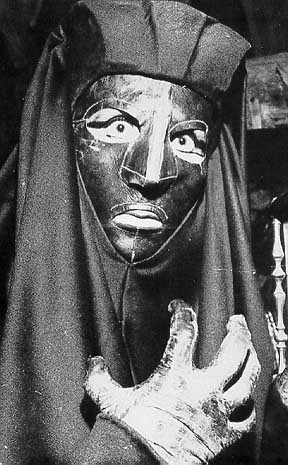 Although in the Netherlands there are more problems reported by schools and police with radical right wing youth and we have on average one mosque or Islamic school being vandalized or worse every 2 months, we have set up a policy that has to contain the threat coming from those Muslims. Take for example the recent proposal for banning the burqa in several European countries, including the Netherlands. One of the reasons is public safety; the apparent need to see each others faces in public. The ban however does not produce safety, it produces fear. Where only about 300 women wear the face veil in the Netherlands, the public now is convinced that we can see them everywhere and that tens of thousands of Muslim women wear it.
Other measures to increase public safety include more leeway for intelligence services to monitor and disturb people’s lives; even when there is no official charge, the US last week killed an American civilian Anwar al-Awlaki believed to be an Al Qaeda leader on foreign soil with no official charge or proof, the Dutch evicted several Muslim migrants being implicated in terrorist activities without any charge, the Dutch are active of supporters of the war on terror that caused the deaths of thousands and thousands innocent civilians in Iraq, Afghanistan and Africa. So if we talk about fear and safety, whose fear and whose safety do we actually mean? After 9/11 the whole risk management idea has turned into a political and commercial ritual that intends to magically reinforce safety but produces feelings of fear and aversion. In the preface of one of my favourite novels, Fear and loathing in Las Vegas, English writer Samuel Johnsson is quoted stating: “He who makes a beast of himself gets rid of the pain of being a man.” The quote refers to the book’s main character’s drug abuse in trying to escape the harsh vulnerabilities of American life and to the books main theme the failure of American counterculture to provide a lasting answer to the harsh realities. Fear is a drug, and policies and management tactics combined with politicians who use feelings of insecurity and plead loudly for ever harder measures to resolve fear, are nothing less than socially accepted models to achieve ritualistic highs and illusions of safety that in the end do nothing except than cultivate that fear.
The “Wave Speech” from Justin Grevich on Vimeo.
The cultivation of fear does not only affect people’s daily lives directly, but also our memories that keep the fear for the Other alive. This year on 9/11 the Moroccan-Dutch goalkeeper of a Dutch soccer team, Khalid Sinouh, tweeted he wanted ‘to concentrate on the present’ and that he ‘felt a little tired of all that 9/11 propaganda’ and closed it with ‘pffff’. The soccer team, Philips Sports Association (PSV) distanced itself from his statements and emphasized the goalkeeper made his statement as a private person (and therefore not as a representative of PSV). The case refers to the monopolization of meaning and memory whereby the purpose of such ceremonials, as French historian Renan has noted, is nothing but the reaffirming of group loyalty rather than the establishing of historical accuracy, let alone the presenting of an event in all its moral and political complexity. To remember is not just grieving it may also mean to harbor a vision of securing justice or vengeance long after it is time to put the guns away. Part of what happens in this production of memory and solidarity is the monopolization of the meaning of ’9/11?. I saw many people on twitter saying now is not the time of saying but let’s think of the thousands of children in Africa dying or let’s think about the victims of the War on Terror. If we say our thoughts go to the victims of 9/11, we of course mean to victims of the terrorist attack that hit the US that day, not other people in the US or elsewhere. The negative, and sometimes downright hostile, comments on the tweets of the Moroccan-Dutch goalie show that we ought to remember 9/11 in a particular way; with our thoughts focused on one particular event, one particular category of victims. The commemoration shows a world caught in arms, hate, and fear.
Now of course there is nothing wrong with risk management, counter-radicalization policies and public commemorations perse, but we should recognize that with the attempt to produce safety we also produce meaning. Given the intended and unintended negative consequences of public risk management and such commemorations, alternatives should be considered. This is possible. Remember the monk I was talking about in the beginning? This man desperately looking for salvation through martyrdom is now presented as an animal lover, pacifist and a Christian committed to dialogue. It maybe hard to believe that he once affirmed the false idea that it was a ‘a Muslim belief’ apparently widespread ‘at that time’ that to kill a Christian was a sure path to salvation. It may be hard to imagine that one day we actually celebrate a feast dedicated to the monk. But that is what we do. Tomorrow we on October 4 we celebrate the Feast of St Francis of Assisi. It is a also a day for animals, in Dutch dierendag, a popular day for pets to be “blessed”. I wish you a blessed day as well.

Veilige religie of religieuze vrijheid
Posted on September 20th, 2011 by martijn.
Categories: Important Publications, ISIM/RU Research, Religion Other, Religious and Political Radicalization.
Het wetenschappelijke tijdschrift voorReligie, Recht en Beleid heeft een themanummer over de relatie tussen religie en (gevoelens van) veiligheid. In dit themanummer, onder redactie van Beatrice de Graaf en Sipco Vellenga.
Aflevering 2, juli 2011
Redactioneel
Veilige religie, of religieuze veiligheid?
Trefwoorden: Editorial, Religion, Safety
Auteurs Maurits BergerReligie en Onveiligheid
Trefwoorden: Editorial, Religion, Safety
Auteurs Beatrice de Graaf en Sipco VellengaReligieuze orthodoxie als bedreiging – Verschuivingen in het publieke debat
Trefwoorden: public debate, religious orthodoxy, religion and violence
Auteurs Sipco VellengaReligie, criminaliteit en geweld: ambivalente bevindingen
Trefwoorden: religious commitment, fundamentalism, muslim-radicalism, crime, violence, prevention
Auteurs Bas van StokkomWanneer religie niet aan onze kant staat – Een cultuurpsychologische analyse van angst voor religie
Trefwoorden: religion, fear, cultural psychology, agency
Auteurs Mark Dechesne‘Moge Hij onze ogen openen’ – De radicale utopie van het ‘salafisme’
Trefwoorden: salafism, social movements, radicalisation, muslims
Auteurs Martijn de KoningReligion bites: religieuze orthodoxie op de nationale veiligheidsagenda
Trefwoorden: securitization, terrorism, securitization-framework, salafism
Auteurs Beatrice de GraafDiscussie: Drie visies op de relatie tussen religie en veiligheidsbeleid
Verslag van de expertmeeting ‘Angst voor religie?’ van de Commissie Religie in het Publieke Domein, 23 juni 2010, Den Haag
Trefwoorden government, safety policy, religious orthodoxy, counternarratives
Auteurs Ernst Hirsch Ballin, Peter Knoope en James KennedyReligie, veiligheid en de gedaanteverandering van religie
Trefwoorden: religious transformation, religion and safety, religion and lifestyle
Auteurs Erik BorgmanJurisprudentie
Het afdwingen van een islamitische verstoting
Trefwoorden: case law, divorce, Pakistan
Auteurs Maurits BergerKruisbeelden op openbare scholen in Italië (II)
De uitspraak van de Grand Chamber van het Europese Hof voor de Rechten van de Mens
Trefwoorden: case law, religion, Italy
Auteurs Carla Zoethout
Dit themanummer is het resultaat van een expert-meeting over religie en (on-)veiligheid georganiseerd door Forum. In mijn bijdrage probeer ik een kader te bieden dat een alternatief is voor bestaande radicaliseringsperspectieven op islam en op ‘salafisme’ in het bijzonder. Ik richt me daarbij in het bijzonder op het proces van betekenisgeving en laat zien dat veel praktijken van de ‘salafi’ beweging niet per definitie problematisch hoeven te zijn, maar vooral gericht zijn op het bieden van een alternatieve visie op de wereld hen heen en op het reorganiseren van het dagelijks leven van de participanten. Dit gebeurt dan wel op zo’n manier dat ze op gespannen voet kunnen staan met de visie van de Nederlandse staat op goed burgerschap dat sinds 9/11 steeds meer in het teken is komen te staan van veiligheid, seculiere en sexuele vrijheden.
U vindt meer informatie hier: 2 2011 · Tijdschrift voor Religie, Recht en Beleid · BJu Tijdschriften
Niet het laatste woord: debat de laatste fatwa in Argan
Posted on September 17th, 2011 by martijn.
Categories: Internal Debates, ISIM/RU Research, Multiculti Issues, Notes from the Field, Public Islam, Religious and Political Radicalization, Young Muslims.
Afgelopen vrijdag was er in jongerencentrum Argan in Amsterdam een debat over de ‘final fatwa’ van GroenLinks Tweede Kamerlid Tofik Dibi. Tijdens deze avond onder leiding van Nadia Bouras ging Tofik Dibi in debat met jongerenimam Yasin elForkani en met de zaal over de inhoud en vorm van Final Fatwa. Ik had de eer een inleiding te mogen geven. Hier de tekst van de inleiding en een korte impressie van de avond. (more…)
Closing the week 36 – The Remains of That Day 9/11
Posted on September 11th, 2011 by martijn.
Categories: Blogosphere, International Terrorism, Murder on theo Van Gogh and related issues, Religious and Political Radicalization.
Most popular on Closer this week
- Radicalization Series VI – Muslims and Radicalization: What do we know?
- Wikileaks: De VS, Nederlandse moslims en (anti-)radicalisering
- Moskee Slotervaart Amsterdam in Koeweit
If you want to stay updated and did not subscribe yet, you can do so HERE
You can follow me on Twitter: Martijn5155
Featuring The Remains of that Day: 9/11
Memory and relics
Daniel Silliman: 9/11 relics
Religion, Peter Berger once said, is the audacious proposal that human activities are cosmically meaningful.
In this sense, some of the remembrances and relics of 9/11 are deeply religious. Curiously so.
Memories of 9/11 tragedy preserved – Philly.com
“What you find at most archaeological sites, ancient and modern, are things that are mundane, a part of daily life, so that is our mission here,” said Kate Quinn, the Penn Museum’s director of exhibitions.
Quinn said the September 11 museum lent Penn things that fulfill that goal of everyday items transformed – eyeglasses, a computer keyboard, visitor badges – that were unearthed during the excavations at ground zero.
“Archaeology usually tells us something about ancient times, but this is history, too, even if it is only 10 years old,” Quinn said.
I knew I had to do it eventually, and I had to do it by today. When I saw that the VAMP theme for August was “Alternate Endings,” I knew exactly what to do. I wrote it in two hours; it exploded out of me. I’m sure it could be honed here and there, but I like the raw weirdness of it. What follows are my remarks as prepared for delivery. In the video, the last word is “possibility,” and I swallowed it for some reason. Also, I apologize for the sound quality; I don’t really know what I’m doing. Anyway:
Through the fragments of 9/11 » Knoxville News Sentinel
After the collapse of the south tower of the World Trade Center in New York, the first of the wounded, including four members of the New York City Medical Examiners Office, with Amy Mundorff, second from left, are brought via boat across the Hudson River to a triage area in Jersey City, N.J., September 11, 2001. Mundorff now teaches forensic anthropology at the University of Tennessee. (Chip East / Special to the News Sentinel)
The September 11th Industry | homophilosophicus
In the face of such horror however, a great hope was born on the streets ofManhattanten years ago today. On the television and on the radio inAmericaand around the world, millions witnessed the beautiful transformation of apparently cold New Yorkers into heroes and martyrs. Women and men in workaday suits and uniforms walked, often to certain death, into grave danger to reach the hands of other human beings whom they had never before met. In the sudden depths of catastrophe ordinary people took it upon themselves to become extraordinary. For all of our perceptions of the Big Apple as a cruel and hard place, it was the everyday New Yorker who reminded us that we are human. For all of the loss and the fear and the despair, there was a flash of something truly brilliant from the rubble and dust that day.
Reflecting on 9/11: Humanizing war
When I chose to enlist, I didn’t feel any great patriotic call. Our integrity as a nation never depended on me killing people in other countries. I didn’t have any college prospects—my GPA was a 1.17—and I didn’t want to end up as another pothead or meth-head in the rust belt. I wanted to blow shit up and kill people. Nobody in specific, no ethnic prejudice or anything stupid like that, I just wanted to shoot endless bad guys wearing the same clothes as each other, like in Goldeneye. Maybe pick up their ammo when I ran low.
‘A deeper meaning’: How 9/11 changed one Vermonter – for good: Rutland Herald Online
Ten years later, Michael realizes the eyewitness details he remembers were only the start of a larger story.
Column: Forgetting 9/11 Would Be a Tragedy – Long Valley, NJ Patch
Every person in this nation has differing opinions on the course of action America took in years following the deadliest attack on U.S. soil, but Sept. 11, 2001, in my opinion, is a day that cannot be forgotten.
9/11: Are We All Moral Monsters?
9/11 reveals often-hidden facts in our own anthropology: that we are all 9/11-enabled human beings, and we are all scared of our own mortality.
Marking the Tenth Anniversary of 9/11 : The New Yorker
For those in the immediate vicinity, the horror was of course immediate and unmistakable; it occurred in what we have learned to call real time, and in real space. For those farther away—whether a few dozen blocks or halfway around the world—who were made witnesses by the long lens of television, the events were seen as through a glass, brightly. Their reality was visible but not palpable. It took hours to begin to comprehend their magnitude; it is taking days for the defensive numbness they induced to wear off; it will take months—or years—to measure their impact and meaning.
The meaning of 9/11’s most controversial photo | Jonathan Jones | Comment is free | guardian.co.uk
http://static.guim.co.uk/sys-images/Guardian/Pix/pictures/2011/9/2/1314964814888/Young-people-chat-as-the–005.jpg In the photograph Thomas Hoepker took on 11 September 2001, a group of New Yorkers sit chatting in the sun in a park in Brooklyn. Behind them, across brilliant blue water, in an azure sky, a terrible cloud of smoke and dust rises above lower Manhattan from the place where two towers were struck by hijacked airliners this same morning and have collapsed, killing, by fire, smoke, falling or jumping or crushing and tearing and fragmentation in the buildings’ final fall, nearly 3,000 people.
Museum Anthropology: 9/11 Museum Human Remains Controversy
The brewing controversy over the unidentified human remains at the new 9/11 Museum has hit the news. Full disclosure, Dr. Chip has been involved with some of the grass-roots advocacy groups. We believe this is an important issue for all museum anthropologists, as it creates an important dialogue that asks about how the profession treats all human remains in the museum context, the intersection of memorials and museums, the nature and process of consultation, and how we might respond should another attack of such a magnitude come.
An Anthropological Preview of the Post-9/11 World « ZERO ANTHROPOLOGY
Imagine this scenario for 2002 – science fiction a short while ago, exceedingly likely now. The world had entered the paranoid phase of globalisation. Countries were neither at war nor not at war. Detailed surveillance of citizens and quixotic imprisonment of individuals became commonplace. Politicians eagerly elaborated on the imminent threat of terrorist attacks, thereby justifying ever more draconian measures. Radical humanist networks and human rights groups were ostracised for their lack of loyalty and structural similarities to terrorist groups. Yet everybody, including the politicians, knew in their heart of hearts that turning the citizenry into potential enemies would only aggravate the problem.
In the aftermath of a disaster, calls for the replacement, replication and reproduction of that which has been lost represent a yearning for a return to normal. Yet a full return to any pre-disaster “normal” is impossible as the physical and emotional rupture of tragedy transforms everything and everybody. That which has been lost is irreplaceable, even if what may appear to be the original form is rebuilt. There is no unadulterated replacement, only re/placement. To break down this word:
Watch Videos Online | Other 9/11s Remembered – DN! | Veoh.com
Watch Other 9/11s Remembered – DN! in News | View More Free Videos Online at Veoh.com
Social scientists on 9/11 and its aftermath
10 Years Later: Islam in the U.S. – YouTube
http://www.youtube.com/watch?v=ELKoWgKeSQo
Robert Hefner, professor of anthropology and director of the Institute on Culture, Religion, and World Affairs (CURA) at Boston University, discusses the state of Islam and Muslim society in the U.S. since the September 11th terrorist attacks.
Shaped by 9/11: UMBC Researchers Reflect – YouTube
http://www.youtube.com/watch?v=4VsXOjXJ7Nk
The events of September 11, 2001 changed course of history. To some faculty at the University of Maryland, Baltimore County (UMBC), particularly those early in their careers, they also changed the course of their life’s work. The attacks and subsequent wars in Iraq and Afghanistan led them to study new issues and respond to new needs. This video includes reflections from Dr. Rebecca Adelman, who examines imagery of the War on Terror, and Dr. Seth Messinger, who works with veterans recovering from limb loss.
Because the Sept. 11 attacks happened on U.S. soil, it makes sense that they might have had a more profound impact in the United States than in Western Europe.
John BowenBowen
But the location of the attacks isn’t the only reason for that, says John R. Bowen, PhD, an anthropology and religious studies professor, both in Arts & Sciences, at Washington University in St. Louis, who has spent the past 10 years studying Islam and civil law in France and England.
Key differences in how Muslims were perceived before 9/11 in the United States and Western Europe played a key role in how much — or how little — attitudes on Muslims changed after 9/11, Bowen says.
“After 9/11, many in the United States came to fear American Muslims for the first time; most knew nothing about Islam,” says Bowen, PhD, the Dunbar-Van Cleve Professor in Arts & Sciences. “But fear of Muslims already was present in parts of Europe.”
Al-Qaeda Is Winning – Daveed Gartenstein-Ross – International – The Atlantic
A decade after the attacks of September 11, 2001, national security opinion leaders are converging around the ideas that the threat of terrorism has been substantially reduced over the past 10 years, and that al-Qaeda is on its death bed. “Al-Qaeda is sort of on the ropes and taking a lot of shots to the body and the head,” White House counterterrorism chief John Brennan told the Associated Press on August 31. Defense secretary Leon Panetta said in July that the United States is “within reach” of “strategically defeating” the jihadi group, and the Washington Post has confirmed that his assessment is shared by many analysts. Commentators in the public sphere are increasingly adopting similar views. But my own research into the group has led me in a different direction: that this emerging consensus doesn’t just appear wrong, but obviously wrong. Al-Qaeda isn’t anywhere near defeated — for all our triumphalism, it appears to be winning.
10 Years Later: How We Won – William McCants & William Rosenau – International – The Atlantic
Ten years into our struggle against al-Qaeda, it’s time to acknowledge that the “war” is over and recognize that the United States and its international partners overreacted to the al-Qaeda threat. Terrorism, after all, is designed to elicit such overreactions. But the confluence of the recent death of bin Laden, harsh new economic realities, the democratic movements in the Middle East, and the ten-year anniversary of the September 11 attacks provide an ideal time to take stock of what it actually takes to deal with the al-Qaeda threat.
Some of my favorite thinkers have diametrically opposing pieces in The Atlantic today. Will McCants and William Rosenau write about How We Won the War on Terror, while Daveed Gartenstein-Ross writes that Al Qaeda is Winning.
Why Is The Middle East Still In Thrall To 9/11 Conspiracy Theories? | The New Republic
The 9/11 attacks catalyzed a tremendous shift in American foreign policy in the Middle East. Rather than prioritizing petrol, Washington targeted terrorist organizations, dethroned a dictator, and lobbied throughout the region for liberalization. Yet despite the billions of dollars spent policing Baghdad and protecting Benghazi, the unpopularity of the United States in the Arab world continues to be fueled by the belief that Islamist terrorists had nothing to do with 9/11, with many claiming the attacks were an American, Israeli, or joint American-Israeli conspiracy. In this sense, overcoming 9/11 revisionism is, perhaps, the greatest challenge facing American public diplomacy in the coming decade: So long as such conspiracy theories persist, Arabs will continue to view American policies aimed at preventing “another 9/11” as thoroughly illegitimate since, as they see it, 9/11 is just a big American lie.
Ten Years after 9/11, Do the Arabs value Democracy more than We do? | Informed Comment
The September 11 attacks have been revealed as a last gasp of a fading, cult-like twentieth-century vision, not as the wave of the future. They were the equivalent of the frenetic dashing to and fro of a chicken already beheaded. Al-Qaeda’s core assumptions have been refuted by subsequent events and above all in 2011 by the Arab Spring.
9/11: more security, less secure | openDemocracy
The world has been changed by the securitisation of everyday life and the Islamisation of security. The accompanying threat-complex has shifted American sensibilities, says Cas Mudde.
The roots of conflict | Education | The Guardian
Is western culture better than any other? Umberto Eco argues that what is important is not superiority but pluralism and toleration
My initial inclination was to wonder if this was a gag, or, having written several critiques of the Human Terrain Systems program describing why it is an ethical and practical anthropological disaster, whether someone was setting me up. While I’ve had several other Human Terrain social scientists write me with complaints about the program, it didn’t seem likely that Human Terrain Systems (HTS) would hire someone with John’s politically progressive views. But the email address was the same one John had used for years, and John’s story checked out and made sense, so I approached our correspondence along the lines of his initial request to help him organize his focus and to understand critiques of HTS. As he undertook his HTS training, we corresponded and I passed along articles, and offered friendship and critiques of what he was learning in this training; not that John needed help with this critique, the flaws in the program were pretty obvious to him.
David H. Price: Anthropology’s Military Shadow | The New Significance
Just as it was becoming passe to remark on anthropology’s status as colonialism’s wanton stepchild, George Bush’s Terror War rediscovered old militarized uses for culture, and invigorated new modernist dreams of harnessing anthropology and culture for the domination of others. Because I began in the early 1990s using the Freedom of Information Act, interviews, and archival research to document American anthropologists’ interactions with military and intelligence agencies, by the time the post-9/11 push by the Pentagon and CIA to again use anthropological knowledge as tools for intelligence, warfare and counterinsurgency, I had a decent head start on documenting and thinking about some of this history. By the time America got its terror war on, I had already documented the details of how this worked in the past, and had thought about the core of the ethical, political and theoretical fundamentals of a critical approach to questions relating to the weaponization of anthropology.
Wiley: Anthropology, History & Sociology
In the 10 years since the events of September 2001 a vast amount of scholarly research has been written on the impact of 9/11. We are pleased to share with you this collection of free book and journal content from the Anthropology, History & Sociology books and journals published by Wiley-Blackwell.
In the 10 years since the events of September 2001 a vast amount of scholarly research has been written on the impact of 9/11. We are pleased to share with you this collection of free book and journal content from the Religion & Theology books and journals published by Wiley-Blackwell.
The paradoxes of the re-Islamization of Muslim societies « The Immanent Frame
The 9/11 debate was centered on a single issue: Islam. Osama Bin Laden was taken at his own words by the West: Al-Qaeda, even if its methods were supposedly not approved by most Muslims, was seen as the vanguard or at least a symptom of “Muslim wrath” against the West, fueled by the fate of the Palestinians and by Western encroachments in the Middle East; and if this wrath, which has pervaded the contemporary history of the Middle East, has been cast in Islamic terms, it is because Islam is allegedly the main, if not the only, reference that has shaped Muslim minds and societies since the Prophet. This vertical genealogy obscured all the transversal connections (the fact, for instance, that Al-Qaeda systematized a concept of terrorism that was first developed by the Western European ultra-left of the seventies or the fact that most Al-Qaeda terrorists do not come from traditional Muslim societies but are recruited from among global, uprooted youth, with a huge proportion of converts).
10 Years After September 11, a digital collection recently launched by the Social Science Research Council. In the days immediately following 9/11/01, the Council invited a wide range of leading social scientists to write short essays for an online forum. Ten years later, these same contributors have been asked to reflect on what has changed and what remains the same. The result is an extraordinary collection of new essays, with contributions from Rajeev Bhargava, Mary Kaldor, David Held, Olivier Roy, Saskia Sassen, Veena Das, Richard Falk, and many others.—ed.
9/11 chronomania « The Immanent Frame
This post sketches out some of the ways the events of 9/11 altered time-consciousness and temporal rhetoric in the public sphere and follows how the attacks continue to frame the subjective experience of temporality. Beginning with the lexicon of the war on terror—with its temporally overdertemined rhetoric of “the homeland,” “preemption,” “fundamentalism,” and, of course, the name-date “9/11” itself—I consider a few cases of what I call 9/11 chronomania—the obsession with time and temporal disruption that characterizes representations of 9/11 across a variety of media forms. In the case of the 9/11 Commission Report, by refashioning disaster as chronology, the narrative aims to replace victims with knowers—first, by establishing an authorial subject in command of its perceptual, technological, and temporal fields, and second, by attempting to shape personal and collective understandings of 9/11 by securing events unfolding in multiple locations and witnessed in myriad ways on a single, immanent timeline. The goals of such a narrative are clear: the chronometric novella that begins the 9/11 Commission Report is in part a hook designed to catch a national audience primed by thrillers like the television series 24, but it is also an attempt to incrementalize and disaggregate horrific events into an easily understood linear plot as part of a self-professed attempt to salve the wounds of collective trauma.
Accounts of everyday life and politics
Aftershock and awe – Haaretz Daily Newspaper | Israel News
Usama Hasan, a devout Muslim of Pakistani origin , who grew up in Britain and was known to be active in radical circles, was at work in his Oxfordshire office on the day of the attacks on the World Trade Center.
muslims.
Hicham Yezza, an Algerian Muslim who came to England on a scholarship to study computing and management, was at home in Nottingham, getting ready to go to class.
British Muslims tell the terrorists they ‘failed’ on the tenth anniversary of 9/11
More than 50 Muslim community groups the length and breadth of Britain have united on the tenth anniversary of 9/11 to express their solidarity with victims of terrorism and to tell the terrorists that a decade on ‘they failed’ in seeking to divide society on religious grounds.
We have more Muslim MPs than ever. But there is a growing belief that dissent risks falling foul of terror laws
After 9/11: ‘You no longer have rights’ – extract | World news | The Guardian
What was it like for immigrant Muslims and Arab-Americans in the wake of 9/11? Ten years on, three people tell their stories
9/11 is No Excuse for Bashing Muslims – OtherWords
Violent jihadists don’t represent Islam any more than the Anders Breiviks of the world represent Christianity.
Book explores ‘Arab Detroit’ in decade since 9/11 | Detroit Free Press | freep.com
A book has been published that examines life in the Detroit area’s Arab-American community in the decade since the Sept. 11 terrorist attacks.
“Arab Detroit 9/11: Life in the Terror Decade” was released this past week and is published by Wayne State University Press. The book incorporates academic, artistic and everyday voices and viewpoints from one of the most well-known and largest communities of Arabs outside the Middle East.
The 9/11 Decade – How Interfaith Groups Built Bridges – NYTimes.com
Jews, Christians, Muslims come together, hoping to fight fear with familiarity. How it’s playing out in Syracuse.
Conversations with New Yorkers – The 9/11 Decade – Al Jazeera English
Al Jazeera speaks to people in New York about the 9/11 attack on their city and the events that followed.
http://www.youtube.com/watch?v=Y155rP6iTYo
Living with 9/11: the Muslim American | World news | The Guardian
Linda Sarsour lives in Brooklyn and is from a Palestinian American family. She has become increasingly involved in community activism since the September 11 attacks
Sept. 11 was just the start of family always being around. Casey remembers getting off the bus that day and being so confused because there were so many cars in her driveway. She said her mom told her they were having a party because it was the first week of school and they wanted to celebrate because they have to get back into their daily routines.
Misc
The criminalization of speech since 9/11 – War Room – Salon.com
The expanded use of the material-support law is an important part of the legacy of 9/11 and the legal regime erected in response to the attacks. To learn more about the history and use of the material-support statute, I spoke with Hina Shamsi, the director of the National Security Project at the American Civil Liberties Union.
Mahmood Mamdani: Good Muslim, Bad Muslim (Part 1) – YouTube
http://www.youtube.com/watch?v=w20DhY1O2j8
The HISTORY NEWS NETWORK (http://hnn.us) recorded this appearance of Mahmood Mamdani, Professor of Government and Professor of Anthropology Columbia University, at the annual meeting of the American Historical Association on January 6, 2007. He spoke as the guest of the Society for Historians of American Foreign Relations. The speech took place over lunch at Atlanta’s famous Pittypat’s Porch.
A US Soldier’s Experience in Iraq on 9/11 | Savage Minds
Here is a second interview with my friend serving his second term in Baghdad. We talk about his ‘cultural training’ exercises, Bradley Manning, and his engagement with the local Iraqis.
What was Osama bin-Laden for Muslims? | Islam, Muslims, and an Anthropologist
Yet what was bin-Laden for Muslims? This question is more difficult to answer than the previous one. First, I think we have to look at how western commentators, politicians, and of course the general public imagined what bin-Laden was for Muslims. Indeed, this is even more important than the former question since such perceptions have shaped how many people living in western countries saw and see Muslims. You only need to ask around in any European or US city and you will find people whom are strongly convinced that Muslims adore bin-Laden.
The Missing Martyrs — By Charles Kurzman — Book Review – NYTimes.com
In “The Missing Martyrs,” Charles Kurzman suggests that even before Osama bin Laden was killed, his movement had failed utterly. Al Qaeda’s ideological trademark is to exhort ordinary Muslims to engage in individual acts of violence against those deemed enemies of Islam, specifically Americans, Jews and the infidel rulers of Muslim-majority states. And yet very few such attacks have occurred in the United States since Sept. 11, and certainly none comparable to the devastating events of that day. To emphasize just how surprising this is, Kurzman cites a 2006 online manual for aspiring jihadists that lists 14 “simple tools” that “are easy to use and available for anyone who wants to fight the occupying enemy” — they include “running over someone with a car” and “setting fire to homes or rooms at sleep time.” Kurzman, a sociologist who has written widely about Islamic reform movements, asks: “If terrorist methods are as widely available as automobiles, why are there so few Islamist terrorists? In light of the death and devastation that terrorists have wrought, the question may seem absurd. But if there are more than a billion Muslims in the world, many of whom supposedly hate the West and desire martyrdom, why don’t we see terrorist attacks everywhere, every day?”
Al-Qaeda’s Past and Present « jihadica
The newest issue of Foreign Affairs on the ten-year anniversary of 9/11 includes an essay by me (free registration required) on the history of al-Qaeda and its prospects after the Arab Spring. The essay covers the reasons for al-Qaeda’s founding, its targeting of the United States, its strategic thinking under Zawahiri’s leadership, its concept of an Islamic state, and its enduring problem with Islamist parliamentary politics.
After the Massacre, Norway Reexamines Its Values and Fears – The Daily Beast
In the wake of a devastating massacre, Norway reexamines its values—and its fears.
Slow attempts at making sense: Oslo 22/7
This research diary has until now exclusively treated the various facets of my PhD research project in Paris. When the numbness began to lose its grip, I started to realise why I feel so terribly concerned. Of course, I think most Norwegians, many Europeans and even many, many fellow world citizens feel deep concern when an atrocity like this strikes, even when they or their closest aren’t struck personally. This concerns us as fellow humans (of both the victims and the perpetrator…), and it concerns us as political beings. But I also realised that this concerns me profoundly in terms of the career I’ve chosen: What good is it to devote my professional life to understanding nationalism, belonging, community cohesion, conceptions of difference and the like when I have done nothing to prevent the worst thinkable acts of violence to take place in my own country? Especially since I think – or I’m sure – that I’ve felt there was a need for worry (but of course, not to this unconceivable degree…). For several days now I’ve been thinking about how I can contribute. How can I contribute in the best way with my knowledge (of living with difference in Europe), my concern (for the future of us all) and my devotion (to work for a better world)? I know need to think much more about this in the coming days and weeks, and I know that I need to act.
Jihadi Suicide Bombers: The New Wave by Ahmed Rashid | The New York Review of Books
After September 11, 2001, readers around the world quickly learned about the basic tenets of jihad and its distortion by al-Qaeda. Now the shelves of Western bookshops are again filled with books on the subject, which gives no sign of going away. Jihad, which means struggle, is “recommended” rather than obligatory for all Muslims, but its interpretation is literally an open book—the lesser jihad to purify one’s soul and perform good deeds for the community, the greater jihad to defend Islam when it is under attack. Each major collection of Hadith, or the sayings of the Prophet Muhammad that were compiled by several Muslim scholars well after the Prophet’s death, contains its own descriptions of jihad, with the result that the discussion of jihad has always been a matter of differing interpretations rather than literal observance.
An ACLU report release to coincide with the 10th anniversary of 9/11 warns that a decade after the attacks, the United States is at risk of enshrining a permanent state of emergency in which core values must be subordinated to ever-expanding claims of national security. (More on Civil Liberties After 9/11 »)
Binary stereotypes silence Muslim women in post 9/11 America, but little has been written about how Muslim women’s leadership can enable voice. This article presents two leadership models based on the philosophy of ijtih?d (independent reasoning), which facilitate self-worth and solidarity, key elements of voice. The less visible spiritual colleague model, which has a followership of practising Muslim women, facilitates self-worth through ijtih?d, allowing women to seek self-definition through their own interpretation of the Qur’?n. As strategy, the leader converts her home into a space which is simultaneously sacred and political where such informal discussions take place around religious rituals. The public bridge-builder model creates solidarity between and among its following of practising and nonpractising Muslims and non-Muslim men and women. The strategy focuses on effective dialogue between different groups. Ijtih?d as discourse in pursuit of knowledge (‘ilm) creates equality and respect, the basis of sustainable alliances.
Anwar Al-Awlaki’s Links to the September 11 Hijackers – J.M. Berger – International – The Atlantic
In the timeline of the hijackers’ movements in the months before the attacks, New Mexico-born Awlaki and his followers seem to turn up nearly every step of the way
Zakaria: Why America Overreacted to 9/11 – The Daily Beast
Nine years after 9/11, can anyone doubt that Al Qaeda is simply not that deadly a threat? Since that gruesome day in 2001, once governments everywhere began serious countermeasures, Osama bin Laden’s terror network has been unable to launch a single major attack on high-value targets in the United States and Europe. While it has inspired a few much smaller attacks by local jihadis, it has been unable to execute a single one itself. Today, Al Qaeda’s best hope is to find a troubled young man who has been radicalized over the Internet, and teach him to stuff his underwear with explosives.
Yet there is much to praise in these volumes. One captures the grief and loss of the period with uncommon intimacy. One captures the disillusion of the decade with unusual anger. And the third retells those events with unbridled drama. None of these three – or the scores of other commemoratives, perhaps the only growth industry in publishing right now – is in itself a one-volume work that captures this period of pathos and personal powerlessness.
Thoughts on 9-11: On the Importance of Intolerance | Reuters
She was a producer who lived in downtown Manhattan and upon hearing the first collision had run up the stairs of an apartment building across from the towers and banged on doors until someone fleeing the building let her in to watch from their windows.
Dutch
NOS Nieuws – Moslim-jongeren praten over gevolgen 9/11
Praten over de gevolgen van de aanslagen van 11 september in Amerika voor Nederland. Dat gebeurde gisteravond in Amsterdam door moslim-jongeren. Maar ze kwamen vooral voor de mening van een bijzondere gast, merkte verslaggever Rienk Kamer.
Fotozondag: Tien jaar geleden | DeJaap
Tien jaar geleden is het vandaag, dat twee vliegtuigen zich kort na elkaar in de Twin Towers van het World Trade Center in New York City boorden. Een derde vliegtuig raakte het Pentagon en een vierde stortte neer in Pennsylvania. Bij deze terroristische aanslagen kwamen 2974 mensen om het leven. Onder hen 328 brandweermannen en 62 politiemensen die direct na de eerste inslag op zoek gingen naar slachtoffers.